Nivedita Mukerjee
Education consultancy for parents and schools
3-2-1 TUESDAYS WITH MS NIV
Issue #183, 9th January 2024
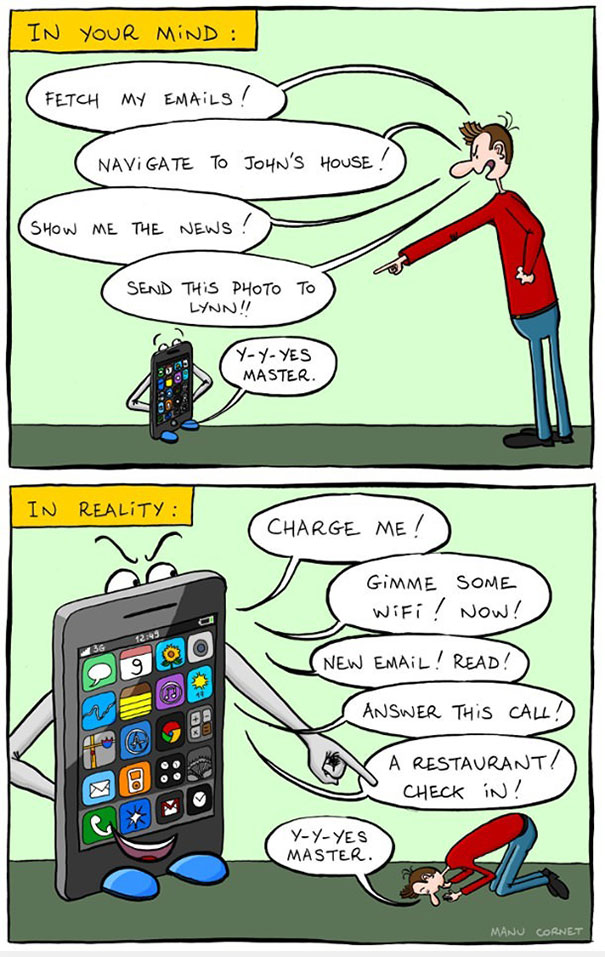
How is your, your child’s/ your student’s relationship to their cell phone? is it a tool, a device, or an attachment you/they can’t do without. Do you/they use it for learning something? finding something? connecting with someone? getting the work done? or is it the first and the last thing you/they look at when you/they go to sleep and wake up? Do you/they go for a walk anytime without your cell phone? or have an uninterrupted conversation without notification pinging your/their attention? When does it become an addiction that comes in your way of functioning instead of being an aid?
It is 2024, a brand new year has just begun. Let us do a reality check on our relationship with the phone.
This is a free-to-subscribe newsletter. So, if you like my content, please subscribe to it by putting in your email ID here.
Three images of the week


Two Thoughts of the Week
“Technology can be our best friend, and technology can also be the biggest party pooper of our lives. It interrupts our own story, interrupts our ability to have a thought or a daydream, to imagine something wonderful, because we’re too busy bridging the walk from the cafeteria back to the office on the cell phone.”- Steven Spielberg
“Would I buy a cell phone for my 12-year-old?… No. I should have closer control over my child than that. He really shouldn’t be in places where he needs to contact me by cell. ” – Stephen Baker
One Video of the Week
Tanner has a comedic and uncanny way of noticing everyday events. He draws people in while entertaining them about his personal experiences pertaining to social interactions and common cell phone usage amongst the youth of today. Tanner Welton is a grade 8 student from the Langley, British Columbia. He enjoys public speaking, hockey, drama the outdoors and socializing with friends. He is a very social kid who takes a keen interest in people. He is very personable and charismatic. He notices the more subtle ways people interact and loves to evaluate these relationships and share stories.
He is empathic and caring towards others and notices when others feel sad, lonely or not accepted in groups. He wants all to be accepted and cared for and strives for fairness and understanding in the world. He has learned to be resilient as he faces his own daily challenges and is learning to overcome obstacles and see the light in his future.
Guest Expert of the Week
Reading with Ms. Meenu
Transition Out of Decodables:
Decodable texts are like training wheels: Kids need them for only a short time. The goal is to transition away from them as soon as the child is ready. They are just a stepping stone for sure. Once students have a strong phonics base and no guessing habit, move them into authentic texts (i.e. trade books).
The percentage of decodable words in books should vary so you can gradually transition your students to trade books. Some books are highly decodable, containing at least 90 percent of words with sound-spelling correspondences that the students have learned. Other books are less decodable, containing closer to 75-80 percent. Having a range enables students to gradually move from books with a higher decodability percentage to books with a lower decodability percentage and then to authentic text. It ensures a smooth transition and gives me confidence that each student is ready to attack more difficult texts without relying on cueing strategies.
What to look for in a decodable book series:
· The series follows a logical scope and sequence that progresses from simple to complex phonics skills.
· Each book has plenty of words that follow the target skill.
· Each book has a limited number of irregular words.
· Each book’s language and storyline make sense.
Happy Reading!
Meenu Gera, Consulting home and school librarian and reading guide.
And Finally…
Dear reader,
I have been a research scientist, a journalist, and an educator for over 3 decades. I read and, I write. With this weekly newsletter, I share what I read, learn, and, experience. At the same time, I engage with students, parents, and teams of teachers across K-12 schools, higher education institutions, and ed-tech organizations.
3-2-1 Tuesdays with Ms. Niv is a newsletter you can subscribe to and enjoy your learning journey with me.
This newsletter is supported by:


 Nivedita Mukerjee