Nivedita Mukerjee
Education consultancy for parents and schools
3-2-1 Tuesdays with Ms Niv
Issue #330, 27th October 2026
Festival season is on us to celebrate with friends and family.
What does celebration mean to you? What does it mean for your students in school?
What does it mean for your family at home?
What makes holidays fun or overwhelming?
Demands on time, attention, energy, money?
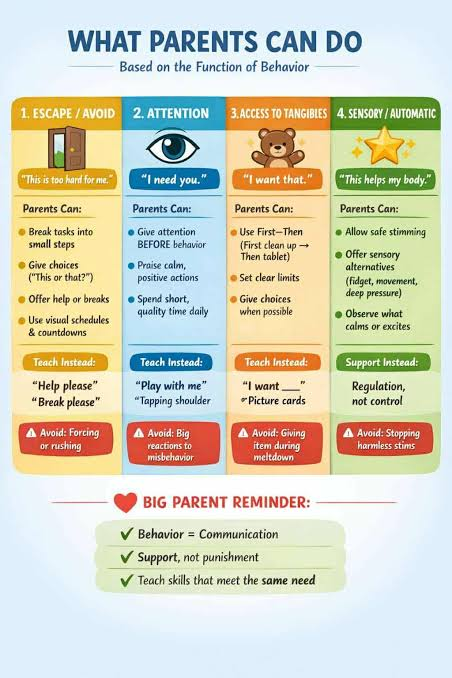
How do you equip yourselves and your students/children at school and at home to manage their expectations and behaviours?
This is a free newsletter for parents, educators, and students. If you like my content, please subscribe by entering your email address here.
Three Images of the Week
Two Thoughts of the Week
“Between stimulus and response there is a space. In that space is our power to choose our response. In our response lies our growth and our freedom.”
― Viktor E. Frankl
“Parents who discipline their child by discussing the consequences of their actions produce children who have better moral development , compared to children whose parents use authoritarian methods and punishment.”
― Simon Baron-Cohen, Zero Degrees of Empathy: A New Theory of Human Cruelty
One Video of the Week
Explore 5 tactics that retailers use to influence what you buy and what you’re willing to pay, and how to avoid being tricked.
You’re about to buy some bargain bin headphones when you spot another sale. A different pair that is more expensive, but selling for half their usual price. Which is the better buy? And how do you know you’re not falling for a retailer’s psychological tricks? Explore common tactics that retailers use to influence what you buy and what you’re willing to pay, and how you can avoid being tricked.
Directed by Homework Studio.
This video was made possible in collaboration with Nobel Prize Outreach, and with support from the Sloan Foundation
Reading with Ms Meenu: Tip of the Week
Reading Creates Thinkers, Dreamers and Empathetic Human Beings
In a world where information travels instantly and opinions are shared in seconds, the ability to think independently has become increasingly valuable.
Reading offers an opportunity to develop that ability.
Books invite readers to slow down, reflect on complex ideas and consider different perspectives. A thoughtful novel may challenge someone’s assumptions, while a biography can reveal the struggles and achievements of another person.
Stories are particularly powerful because they allow us to imagine experiences beyond our own.
A child reading about someone who faces discrimination, loneliness or unexpected challenges may begin asking how that character feels and why they behave in certain ways.
Researchers have examined whether reading fiction can support empathy and perspective-taking. A 2024 meta-analysis found small positive cognitive benefits associated with fiction reading, particularly in understanding other people’s thoughts and feelings. These effects were modest rather than universal.
https://pubmed.ncbi.nlm.nih.gov/38602788
Reading also creates space for reflection. Unlike information delivered through an endlessly changing feed, a book allows readers to stop, revisit passages and form their own interpretations.
This freedom encourages curiosity. Readers can question an author’s ideas, compare different viewpoints or imagine alternative endings.
As artificial intelligence becomes more capable and digital media more immersive, human qualities such as judgment, creativity and empathy remain essential.
Libraries help nurture these qualities by offering readers access to diverse voices and the freedom to explore unfamiliar ideas.
The message: Books do more than develop readers. They help cultivate curious, reflective and imaginative individuals.
Happy Reading!
For more information, please visit: placealibrary.ca
Meenu Gera, Consulting Home and School Library Reading Guide
I Think, I Wonder, I Ask
–Dr. Shreelakshmi Subbaswami, Academic Director, Vijaya School, Hassan, Karnataka; https://vijayaschoolhsn.in/
The Underrated Power of Vocabulary in Education
During my research days, I often heard practitioners comment that researchers and academicians introduce new jargon for ideas that are essentially the same. Some practitioners, may not always recognize the distinctions between these terms and the ideas they represent. However, as a practitioner and researcher, I see vocabulary differently. It is not merely about using the right words, it is about understanding the distinctions between concepts, the knowledge and skills associated with them, and how they translate into practice. A shared vocabulary helps us articulate our practices more precisely, discuss challenges meaningfully and build a common understanding of what we do and why we do it.
Just as a scientific term carries a specific meaning across contexts, we need to give equal importance to vocabulary in education. When teachers use terms such as formative assessment, differentiated instruction or integrated teaching, do they understand what each means and how it translates into practice? Formative assessment, for instance, is not just conducting a test; it involves using evidence of learning to adapt teaching. A shared vocabulary helps teachers discuss what works, identify gaps and improve practice collectively.
I notice something similar in students’ context. When children explain that they are estimating, classifying or inferring, they begin recognising the thinking behind their actions. Similarly, explicitly discussing what it means to be principled, balanced or open-minded helps children connect these attributes to everyday decisions, rather than treating them as words on a classroom display.
At home, too, vocabulary matters. Helping a child distinguish between feeling disappointed, frustrated, anxious and overwhelmed gives them more precise ways to express their needs. Instead of saying, “I am bad at maths,” a child might say, “I understand the concept but struggle to solve problems independently.” That distinction helps an educator/ parent support the learner effectively.
I have seen the impact of building a shared vocabulary among educators and students. When it is meaningfully embedded in everyday practice, it has strengthened communication, deepened learning and helped educators, students and parents work towards a common purpose.
Three questions for you…
- What are the words you use regularly without fully understanding their meaning or implications for practice?
- In what ways can we ensure that teachers share a common understanding of pedagogical terms, rather than merely using them in discussions and documentation?
- How can we help students use precise mathematical, scientific and emotional vocabulary to explain their thinking, rather than relying on generic words such as good, difficult or nice?
Showcase
Thrive, A STEAM project for young learners https://thrivesteam.com/
Facilitator: Pooja Khattar
PRE-LAUNCH: CAN YOU GUESS OUR NEW THEME?
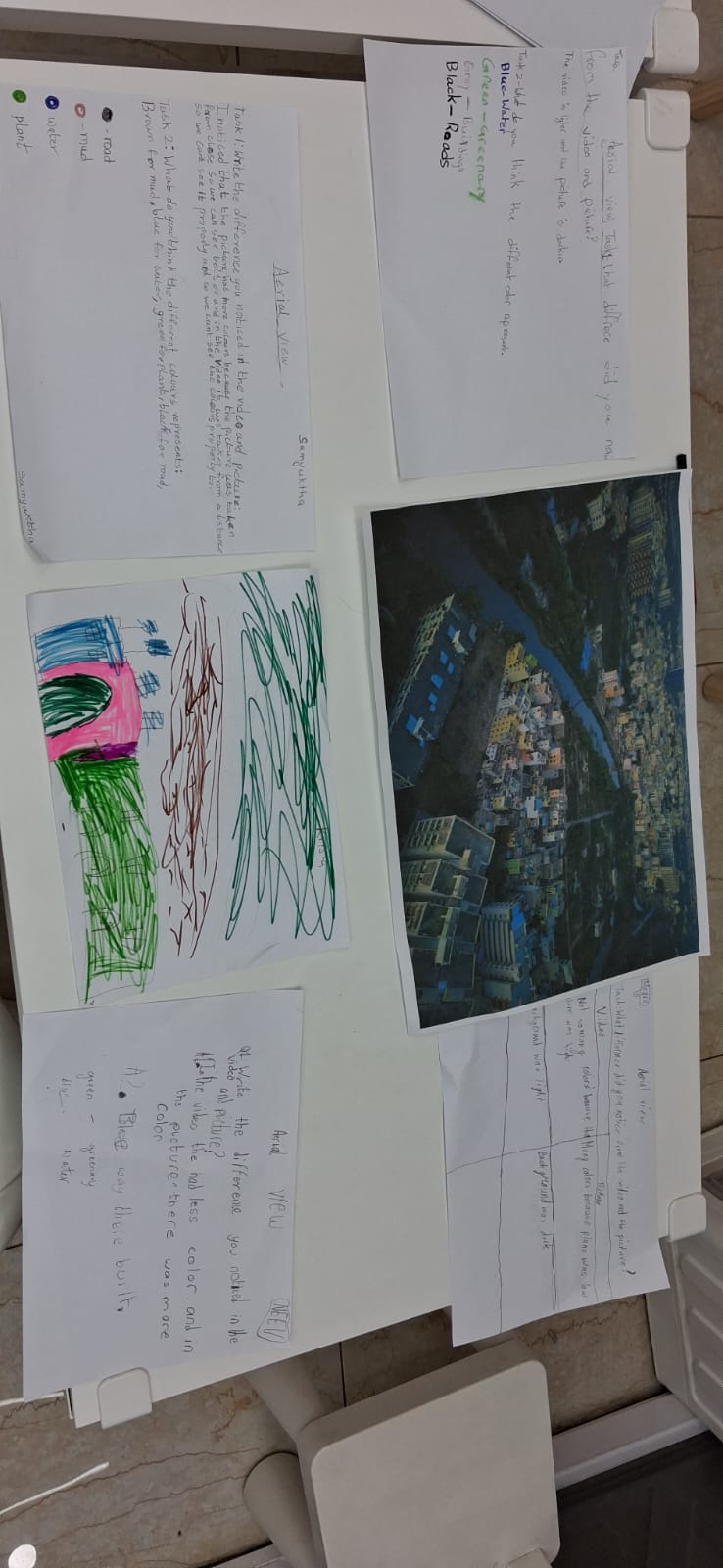
The children began the activity with a pretend aeroplane journey. An aeroplane cutout was attached to a chair to create the experience of sitting inside an aeroplane. As they sat on the chair, they listened to the sound of an aeroplane taking off and flying. They were then asked to look down through the window and observe how things on the ground might look from above.
To give the children a more realistic experience, large aerial-view pictures of Hyderabad were placed on the floor. The children gathered around the pictures and carefully observed what they could see. They noticed buildings, roads, water bodies and green spaces. They also explored the different colours, shapes and patterns in the pictures.
The children shared their observations and pointed out the areas that caught their attention. They used coloured pencils to mark different parts of the pictures and recorded their ideas through drawings and writing.
They noticed that some areas had many buildings close together, while others had more open spaces and greenery. They also identified blue areas as water bodies and observed the lines formed by roads.
Next, the children watched a video taken from an aeroplane. They observed how the ground looked from different heights and compared the video with the aerial pictures placed on the floor. They noticed that buildings and other features looked bigger and clearer when viewed from a lower height. As the aeroplane moved higher, the buildings appeared smaller, and the colours and details became less clear.
The children also recorded their observations about the colours in the aerial pictures. They identified blue as water, green as greenery, black as roads, and brown as soil and mud. They shared their ideas and explained what they thought the different colours represented.
Towards the end of the activity, the children were asked to guess the theme of the upcoming workshop. Based on their observations, they shared ideas such as buildings, aeroplanes, shapes and patterns.
Krisha – 4 years 5 months
Tara – 7 years
Neev & Mayra– 8 years 1 month
Samyuktha – 8 years 6 months
Dear reader,
My work in education includes designing learning ecosystems where students thrive, teachers grow, and schools build lasting cultures of excellence through innovative curriculum, evidence-based practice, and meaningful educational leadership.
Professional development with Ms Niv: Click below to find the teacher and student workshops and trainings I currently offer:
https://docs.google.com/presentation/d/1ypWO8KpVh56vhYqAMH4XoytLRKMXvwpCAfv3l3fryJQ/edit?usp=sharing
3-2-1 Tuesdays with Ms. Niv is a newsletter you can subscribe to and enjoy your learning journey with me.
3-2-1 Tuesdays with Ms Niv
Issue #329, 20th October 2026
Is my child/student learning the skills of skepticism, analysis, negotiation, argumentation, strategising, and contextualisation while predicting, checking assumptions, and being able to come up with unbiased reasoning? Am I providing enough opportunities for learning these skills in classroom and home environments? How can we bring our teachers’, parents ‘, and education policy makers’ focus on these? What can we do right now in our own schools and homes?
This is a free newsletter for parents, educators, and students. If you like my content, please subscribe by entering your email address here.
Three Images of the Week
Two Thoughts of the Week
“We learn more by looking for the answer to a question and not finding it than we do from learning the answer itself.”
— Lloyd Alexander
“It’s not that I’m so smart, it’s just that I stay with problems longer.”
— Albert Einstein
One Video of the Week
4 tips for developing critical thinking skills | Steve Pearlman, Ph.D. | TEDxCapeMay
“Critical thinking” increasingly stands as the most sought-after skill that has long been too fleeting to define. Employers rate it as a pinnacle skill, but one of which they see too little, and educators claim to teach it, but over half of Millennials recently failed a simple Mindedge critical thinking test. So, what is critical thinking? Analysis? Information literacy? Thinking outside the box? Informal logic? Problem-solving? Evaluating data? Decision science? What if all of our efforts to define critical thinking as above have been the core problem with teaching it?
What if, instead of using our brains to devise conceptions of critical thinking, we eliminated the noise and revolutionized a way to teach people how to think better by tracing critical thinking back to its core evolutionary survival mechanisms?
With over 35-years of experience in higher education, Steve founded the first academic office in higher education with a specialized focus on critical thinking. Author of America’s Critical Thinking Crisis, he has been featured on NPR, Fox News Radio, The Chronicle of Higher Education, The Atlanta Journal Constitution, CBS Atlanta, The Hill, and a plethora of podcasts. Steve founded The Critical Thinking Institute and is a keynote speaker on critical thinking for businesses, universities, conferences, and the U.S. military. With over 40-years of experience, Steve is also a sought-after martial arts instructor for his unique theoretical approach to training. Most of all, he’s a devoted father, an endeavor which stretches his own critical thinking most of all.
Reading with Ms Meenu: Tip of the Week
Why Young Adult Literature Matters
Young Adult literature is sometimes dismissed as simply an easier version of adult fiction. In reality, the genre often deals directly with one of adolescence’s central challenges: figuring out who you are.
YA novels frequently explore independence, friendship, family expectations, relationships, identity, belonging, responsibility and the transition toward adulthood.
Research examining commonly taught YA novels found that adolescent characters were often portrayed demonstrating independence, emotional discipline and adult-like responsibility. Researchers suggested that these books can challenge simplistic stereotypes of teenagers and provide opportunities for students to critically discuss how society views young people.
Another recent study asked secondary students themselves how they viewed representation in YA literature. Students described books as functioning like “mirrors” that reflected familiar experiences, “windows” into the lives of others and opportunities to imagine experiences different from their own.
That helps explain why representation in books matters.
Teenagers are at a stage when they are developing their values, relationships and sense of identity. Literature can give them a relatively safe space to explore difficult questions through fictional characters before encountering similar choices themselves.
A powerful YA novel does not tell teenagers who they should become.
Instead, it gives them another perspective from which to think about who they might become.
Happy Reading!
For more information, please visit: placealibrary.ca
Meenu Gera, Consulting Home and School Library Reading Guide
I Think, I Wonder, I Ask
–Dr. Shreelakshmi Subbaswami, Academic Director, Vijaya School, Hassan, Karnataka; https://vijayaschoolhsn.in/
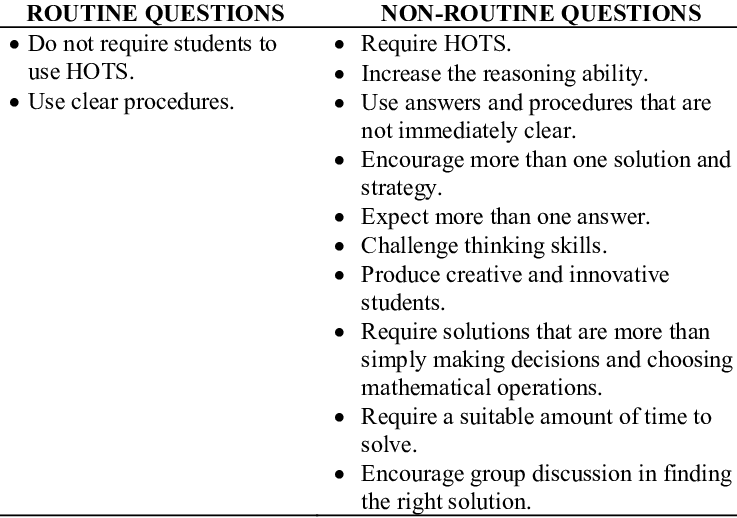
Possibilities of Non-Routine Learning
During the academic year, learning is often organised around specific learning outcomes, planned experiences, assignments and expected demonstrations of understanding. This structure is necessary, but learning need not always follow a predictable sequence. What if we reimagined vacations and holiday assignments as opportunities to learn beyond the routine?
Our homes and communities offer rich possibilities for non-routine learning. For instance, during Dussehra vacation, children can help make a torana, create rangoli patterns, arrange flowers, participate in festival preparations, assist with cooking or planning a trip. These experiences offer opportunities to explore mathematics through measurement, symmetry, patterns, proportions, map reading and time estimation. Literacy emerges when children read labels, follow recipes, write shopping lists, describe processes or ask questions about unfamiliar objects/places. Knowledge of the World develops as children investigate materials, tools, plants, places, occupations, cultural practices and the ways people live, work and celebrate.
However, if children only watch adults, follow instructions or imitate what they see, their participation may remain passive. The real learning begins when they have active conversations, make decisions, predict outcomes, solve problems, ask questions and reflect on what they discover. This is where I think, educators have an important role. Holiday engagements should not become another set of worksheets, instead, educators can offer parents thoughtful ideas, open-ended prompts and opportunities for children to participate meaningfully in everyday experiences.
Non-routine learning helps children use their knowledge and skills in unfamiliar contexts. The most valuable holiday assignment is not something a child completes independently on paper, but something they learn to notice, question, create and understand in the world around them.
Three questions for you…
- What are the top three activities you enjoy doing with your family/friends during vacations?
- What is one new experience you would like to try out/ introduce to your child during this vacation?
- In what ways can we move children from being passive observers of festivals and family traditions to active participants who ask questions, engage in conversations, and contribute to the planning and preparation?
And Finally…
Dear reader,
My work in education includes designing learning ecosystems where students thrive, teachers grow, and schools build lasting cultures of excellence through innovative curriculum, evidence-based practice, and meaningful educational leadership.
Professional development with Ms Niv: Click below to find the teacher and student workshops and trainings I currently offer:
https://docs.google.com/presentation/d/1ypWO8KpVh56vhYqAMH4XoytLRKMXvwpCAfv3l3fryJQ/edit?usp=sharing
3-2-1 Tuesdays with Ms. Niv is a newsletter you can subscribe to and enjoy your learning journey with me.
3-2-1 Tuesdays with Ms Niv
Issue #328, 13th October 2026
Do my students question the answers or just collect them? Could my students explain their ideas in their own words to a real person without a screen? Am I, as a teacher, rewarding the thinking process or only the polished final product?
Soft skills worth teaching at the age of AI are critical thinking, curiosity, empathy, communication, adaptability and ethical judgement. AI can mimic these but not originate or own.
Is our answer to any of these is “don’t know for sure” then we can start working on it now in right earnest. Syllabus and curriculum irrespective. What do you say?
This is a free newsletter for parents, educators, and students. If you like my content, please subscribe by entering your email address here.
Three Images of the Week
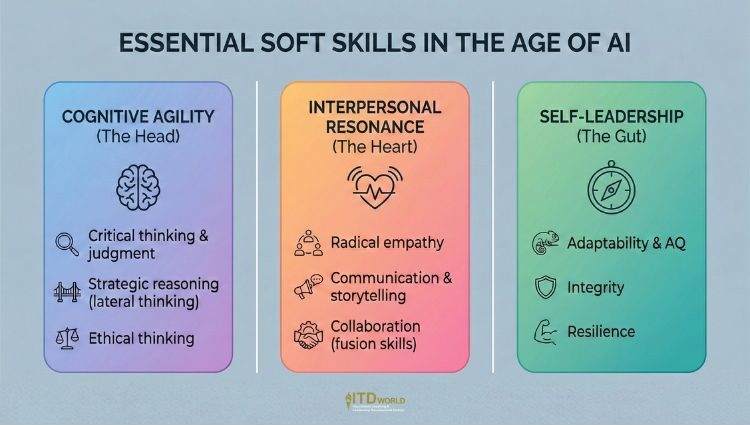
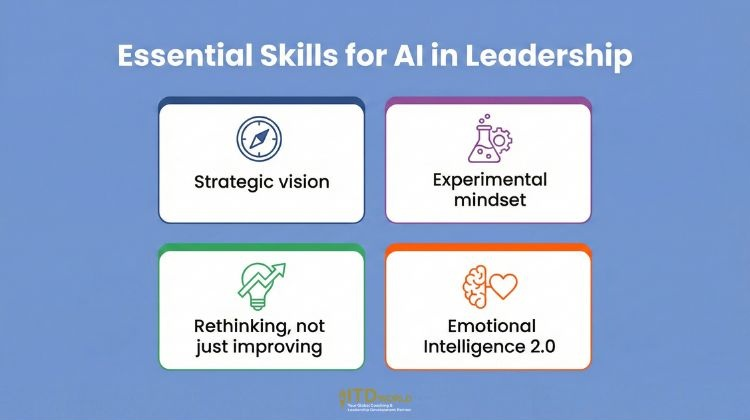
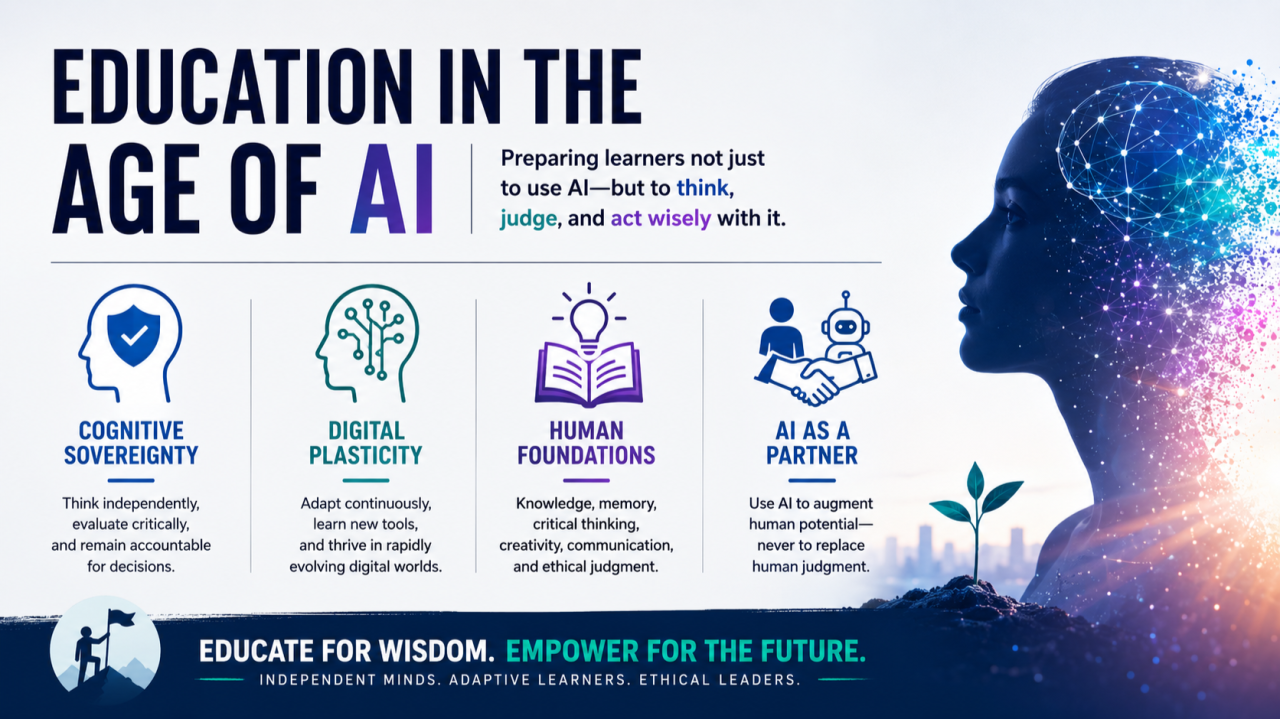
Two Thoughts of the Week
“The skills setting people apart today are not just technical, but human qualities such as creativity, curiosity, and adaptability.” — AI Strategist Saba
“In the next 30 years, artificial intelligence will outpace human knowledge… Companies will be looking for students with expertise in data analytics since this skill requires independent thinking.” — Jack Ma (Founder of Alibaba)
One Video of the Week
Douglas talks about the research on top students learning habits
Douglas is the founder and Global Chairman of Elevate Education. Douglas and Elevate has spent the last 13 years benchmarking the practices of the highest performing students in order to identify exactly what drives student performance. Today, Elevate works with over 1200 schools across Australia, the UK, South Africa and the US in order to raise student and school performance. Douglas has been profiled in a series of books on Australia’s top and emerging leaders.
Douglas on Elevate Education’i looja. Douglas ja Elevate on viimased 13 aastat uurinud heade tulemustega õpilaste harjumusi, et mõista, mis on nende edu võti. Täna töötab Elevate enam kui 1200 kooliga üle terve Austraalia, Suurbritannia, Lõuna-Aafrika Vabariigi ja Ameerika Ühendriikide, et tõsta õpilaste ja koolide taset. Douglast on mainitud ka Austraalia tõusvaid juhte tutvustavas kogumikus.
Reading with Ms Meenu: Tip of the Week
Reading and Teen Wellbeing: What Does the Research Say?
Many young people describe reading as a way to relax, escape stress and spend quiet time away from everyday pressures.
Research on adolescent reading supports the idea that books can support wellbeing, although reading should not replace professional mental-health care.
Interviews with teenagers have found that adolescents often describe reading as relaxing and immersive, and as a way to temporarily escape the pressures around them.
Researchers have also studied bibliotherapy, which involves using carefully selected written materials as part of psychological or educational interventions.
A meta-analysis involving 979 children and adolescents found that bibliotherapy interventions were associated with reductions in symptoms of depression and anxiety compared with control conditions, with particularly promising evidence for adolescents experiencing depression. The researchers also cautioned that relatively few studies were available.
A more recent review similarly found promising results for bibliotherapy in adolescent depression but emphasized limitations including small studies, differences between interventions and questions about long-term effects.
For most young readers, the benefit may be much simpler.
Reading can provide quiet time, emotional distance, and a chance to see difficult experiences reflected in stories.
Sometimes a book allows a teenager to recognize that other people have struggled with similar feelings—without requiring them to explain those feelings first.
Happy Reading!
For more information, please visit: placealibrary.ca
Meenu Gera, Consulting Home and School Library Reading Guide
I Think, I Wonder, I Ask
–Dr. Shreelakshmi Subbaswami, Academic Director, Vijaya School, Hassan, Karnataka; https://vijayaschoolhsn.in/
Small Habits, Lasting Impact: Decluttering and Organizing Our Learning Spaces
How often do we declutter our spaces- our work station, rooms, homes and classrooms?
Walk into a classroom and look around. Are resources lying around without labels? Do materials keep appearing in different places every day? Can children independently find what they need and return it to its place? These small observations tell us a great deal about how well a space is organised.
Decluttering and organising are often treated as housekeeping tasks, something to attend to when we have time. However, the physical space we operate in has a direct influence on our emotional and psychological space. An organised environment reduces unnecessary distractions, makes resources accessible and creates a sense of calm and readiness to learn.
In classrooms, this becomes even more important. When resources are categorised, labelled and stored in designated places, children begin to navigate their environment independently. They learn to make choices, take responsibility for the materials they use and return them after use. Without explicitly teaching these skills, we are creating opportunities for children to develop agency, self-management and respect for shared spaces. Yet, in most schools, organising resources is rarely seen as a pedagogical priority. It is a low-threshold, high-impact task that can transform the everyday classroom experience without requiring significant investment.
This festive season, how about making a conscious effort to declutter our classrooms, label resources and establish simple routines to maintain order and create a positive energy in the space? More importantly, let us involve children in the process. It is a valuable life skill through which they learn to take ownership of their environment and develop independence and responsibility as part of their everyday habits.
Three questions for you…
- What organisational habits are we implicitly teaching children through the way we do our classrooms?
- How can we involve children in decluttering and organising resources so that they develop ownership and responsibility for their environment?
- What is one simple, sustainable change we can introduce this week to make our classroom more organised, accessible and conducive to learning?
And Finally…
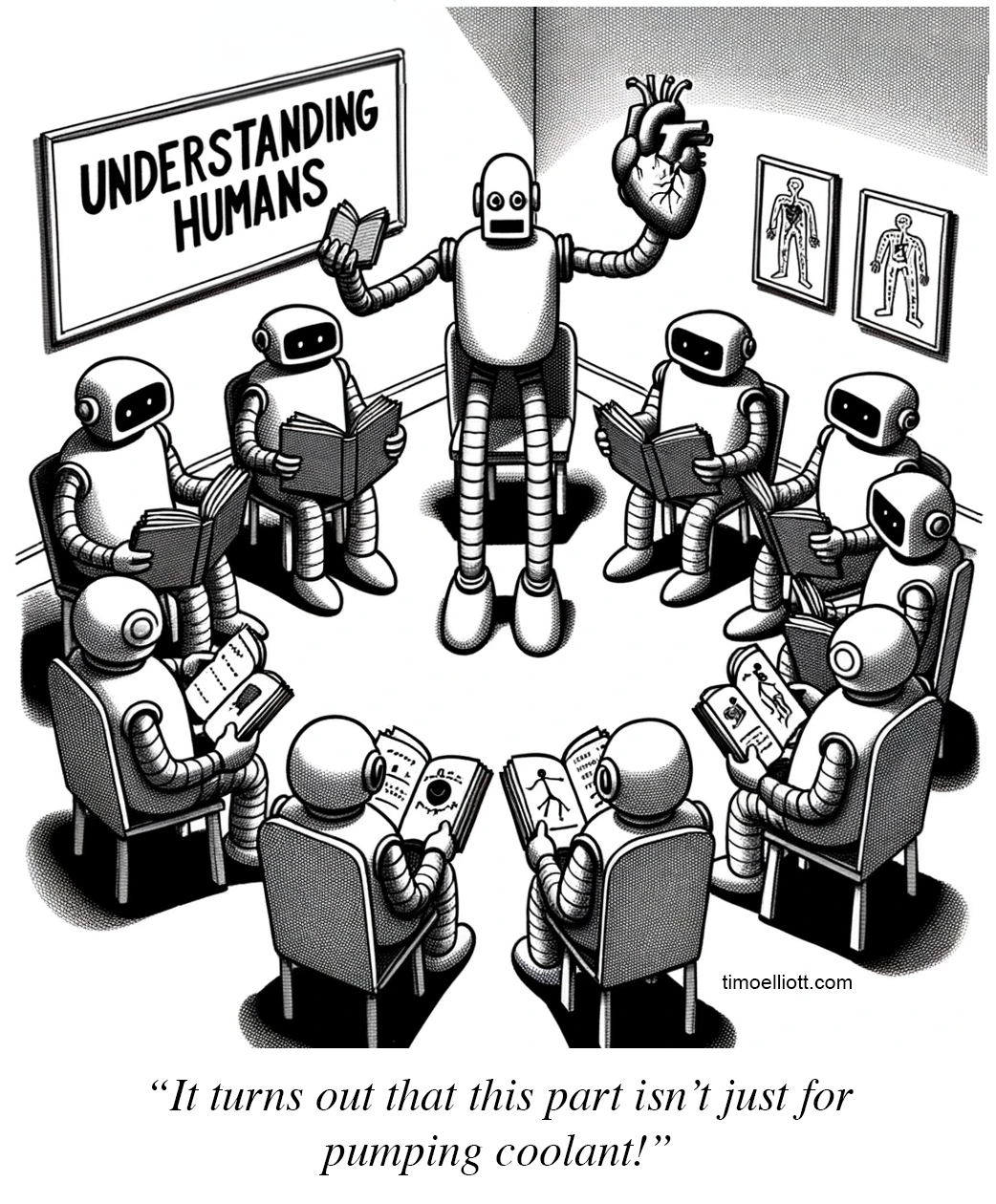
Dear reader,
My work in education includes designing learning ecosystems where students thrive, teachers grow, and schools build lasting cultures of excellence through innovative curriculum, evidence-based practice, and meaningful educational leadership.
Professional development with Ms Niv : Click below to find the teacher and student workshops and trainings I currently offer:
https://docs.google.com/presentation/d/1ypWO8KpVh56vhYqAMH4XoytLRKMXvwpCAfv3l3fryJQ/edit?usp=sharing
3-2-1 Tuesdays with Ms. Niv is a newsletter you can subscribe to and enjoy your learning journey with me.
3-2-1 Tuesdays with Ms Niv
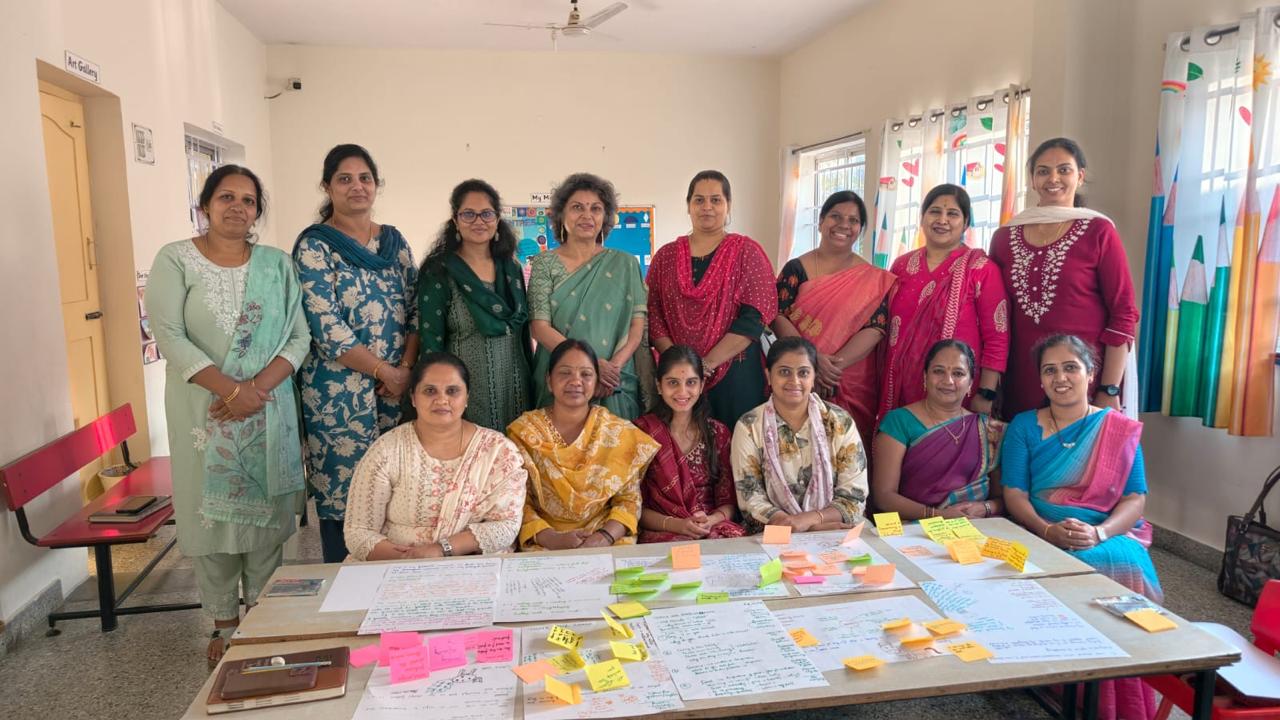
Issue #327, 6th October 2026
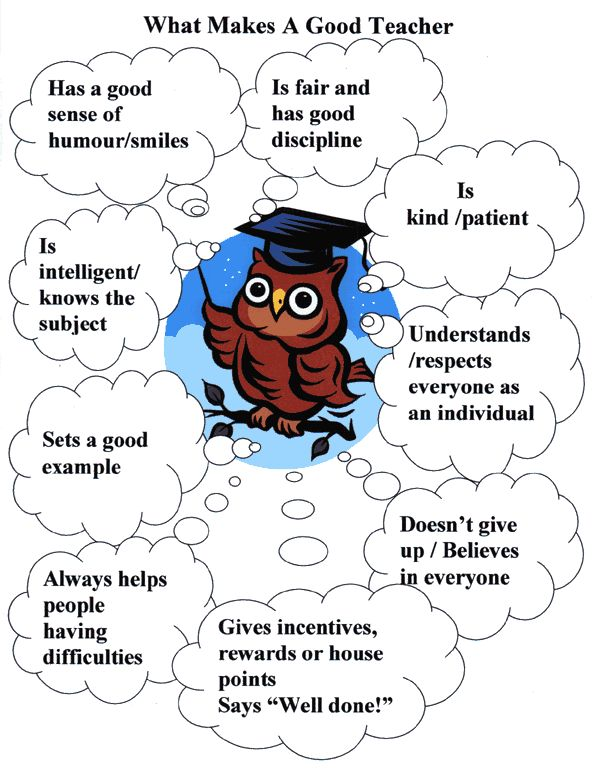
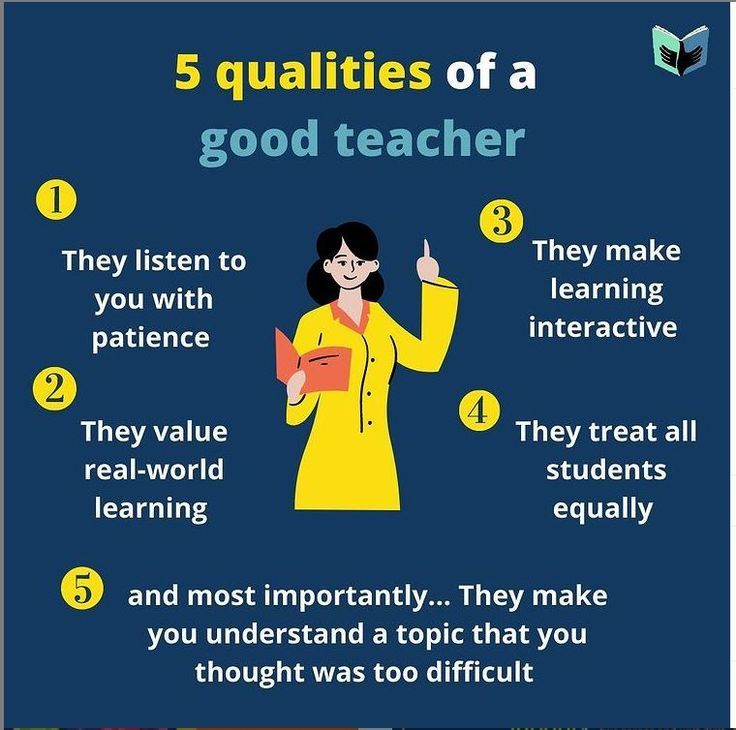
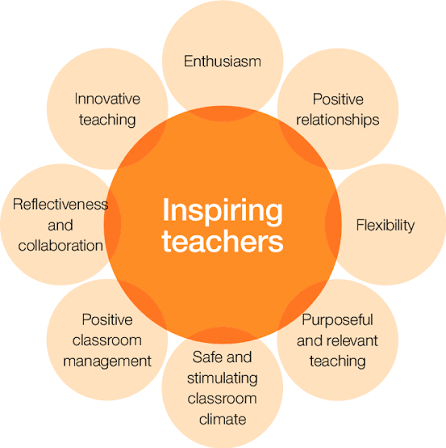
Do my students/children feel they can make mistakes, ask questions, and be themselves?
Are my students/children becoming more curious, confident, and independent?
Am I adapting my approach rather than expecting every student/child to learn the same way?
A good teacher and/or a good parent doesn’t have to get everything right. The real question is whether the child is growing because of the relationship and environment we create.
This is a free newsletter for parents, educators, and students. If you like my content, please subscribe by entering your email address here.
Three Images of the Week
Two Thoughts of the Week
“Better than a thousand days of diligent study is one day with a great teacher.” – Japanese proverb
“One book, one pen, one child, and one teacher can change the world.” – Malala Yousafzai.
One Video of the Week
I’ve been asking the question: What makes a good teacher great? for 24 years. I have collected 26,000 responses from 8 different schools and patterns have emerged.
For the last 24 years, he has repeatedly asked students the same question, “What makes a good teacher great?” Azul Terronez is the author of the best-selling book “The art of Apprenticeship” Azul has coached teachers and schools leaders around the world in Spain, Chile, Canada, India, United States and China and he is currently serves as a teacher coach at Shanghai American School.
Reading with Ms Meenu: Tip of the Week
Letting Teens Choose Their Books Could Make Them Want to Read More
One of the simplest ways to encourage teenagers to read may also be one of the most effective: let them choose what they read.
A recent experimental study examined whether having a choice of books affected people’s motivation to read. Researchers found that participants who were given a choice reported greater reading enjoyment. Having a choice also increased how much value participants placed on books.
The finding supports something librarians and teachers have observed for years. A teenager who is required to read a particular novel may see reading as another assignment, while a teenager who discovers a mystery, graphic novel, biography, fantasy series, or sports book that matches their interests may approach reading very differently.
Research into adolescent reading motivation also suggests that teenagers read for many reasons. Some want to escape into another world, some want to learn something new, while others enjoy discussing books with friends.
This means there is no single “right” book for a young reader.
Libraries can play an especially important role because they allow teenagers to browse without having to purchase every book they try. A reader can experiment with different authors and genres until something connects.
Encouraging reading may therefore require fewer rules about what young people should read and more opportunities for them to discover what they actually want to read.
Happy Reading!
For more information, please visit: placealibrary.ca
Meenu Gera, Consulting Home and School Library Reading Guide
I Think, I Wonder, I Ask
–Dr. Shreelakshmi Subbaswami, Academic Director, Vijaya School, Hassan, Karnataka; https://vijayaschoolhsn.in/
Beyond the Workshop: What Helps Teachers Implement?
How much of a professional development session is actually understood, retained, and translated into practice?
Have you experienced conducting a workshop, feeling that the discussion was meaningful, and then returning to classrooms a few weeks later, only to find little or no strand of the practice being implemented?
Have you wondered why this happens? Is it the relevance of the session? The teacher’s belief system? The ability to see where a new strategy fits into existing practice? Lack of confidence or skill? Inertia? Or simply the absence of follow-up?
I have heard school leaders and principals express a similar concerns- despite investing in several professional development sessions with experts, they often do not see the expected change in classroom practice. I have realised that professional development is not ‘a session’ but a process of learning and implementation.
Relevance is one starting point. When PD emerges from a genuine need identified within the team, teachers are more likely to connect new ideas with their existing experiences. A generic, top-down session may provide information, but a need-based session creates a reason to learn. But relevance alone is not enough. Teachers need opportunities to practise, observe, reflect and receive feedback. A short follow-up after the workshop, classroom observation, reflection on what was attempted, and discussion of the challenges can help reconnect practice with the original learning.
And of course, we cannot expect teachers to transform everything at once. In a year, we can only transform a handful of practices and develop them deeply.
Three questions for you…
- How can we identify the specific skills teachers need before designing a PD?
- What parameters in a professional development programme can help teachers retain and translate learning into practice?
- Which skills would you prioritize for professional development that have the greatest impact and can be translated into classroom practice immediately?
Showcase
Thrive, A STEAM project for young learners https://thrivesteam.com/
Facilitator: Pooja Kattar
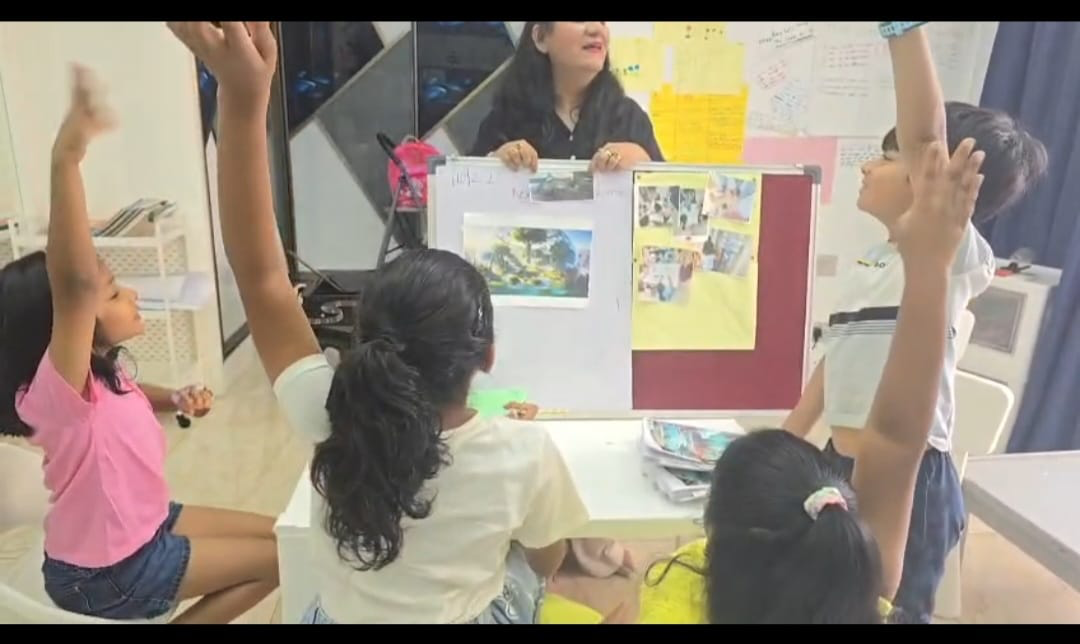
Reviewing the understanding of Biodome: The Thrivers began the workshop by looking at photographs from their previous biodome activities. They recognised their earlier work, including the biodome, soil activities and water cycle model, and shared what they remembered about each activity.
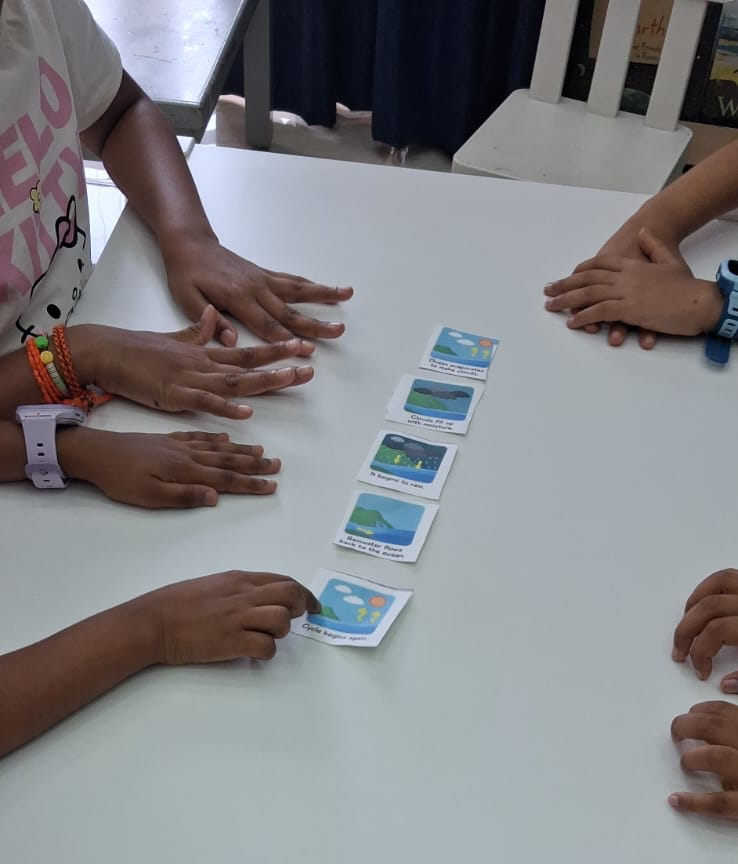
When the water cycle model was shown, the children were asked how it was connected to the biodome. They explained that water was an important part of the biodome and connected the model to how water moved through the environment. They shared that water evaporated, formed clouds and came back as rain, providing water for the plants and other living things in the biodome.
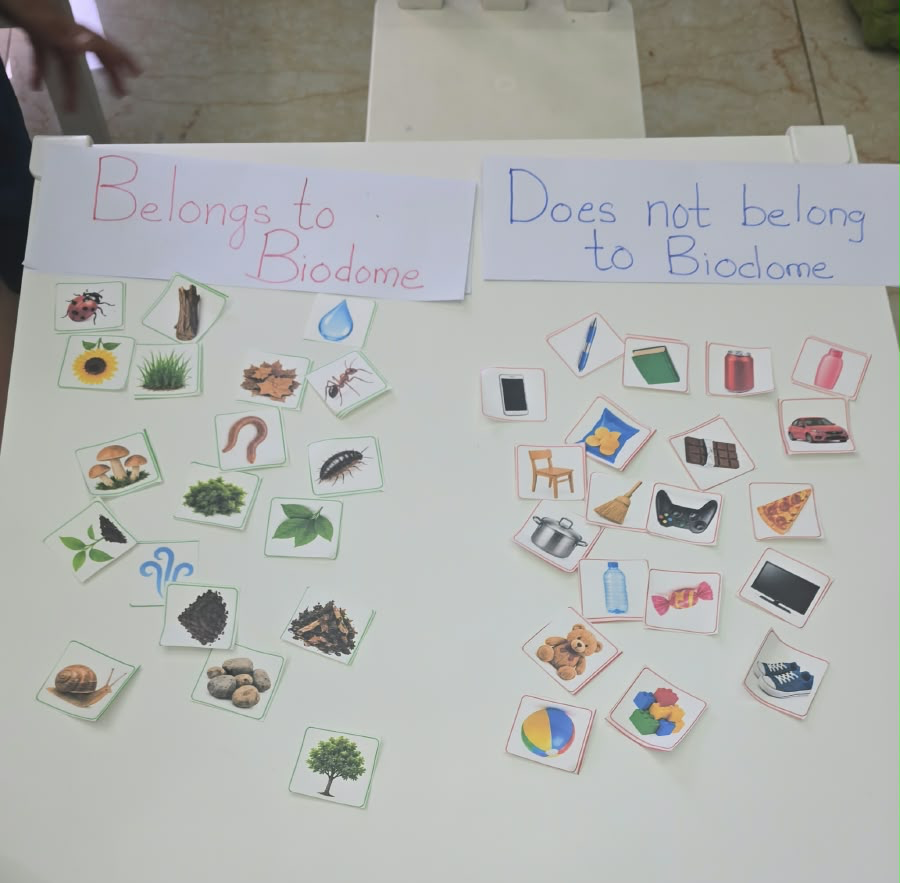
The children then sorted photographs into “Belongs to a Biodome” and “Does Not Belong to a Biodome.” They identified natural elements such as plants, insects, soil, rocks and water and separated them from human-made objects. They also identified different habitats from clues and arranged the stages of the water cycle in the correct order.
The activities helped the children recall their previous experiences and make connections between the water cycle and the biodome as a small ecosystem.
And Finally…

Dear reader,
My work in education includes designing learning ecosystems where students thrive, teachers grow, and schools build lasting cultures of excellence through innovative curriculum, evidence-based practice, and meaningful educational leadership.
Professional development with Ms Niv : Click below to find the teacher and student workshops and trainings I currently offer:
https://docs.google.com/presentation/d/1ypWO8KpVh56vhYqAMH4XoytLRKMXvwpCAfv3l3fryJQ/edit?usp=sharing
3-2-1 Tuesdays with Ms. Niv is a newsletter you can subscribe to and enjoy your learning journey with me.
3-2-1 Tuesdays with Ms Niv
Issue #326, 29th September 2026
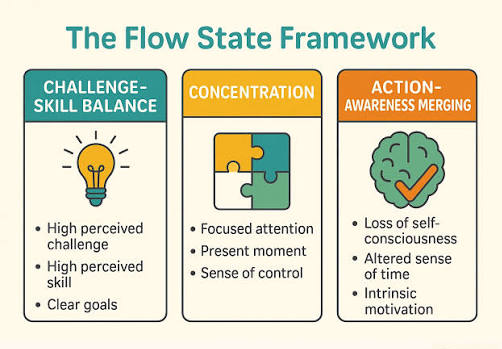
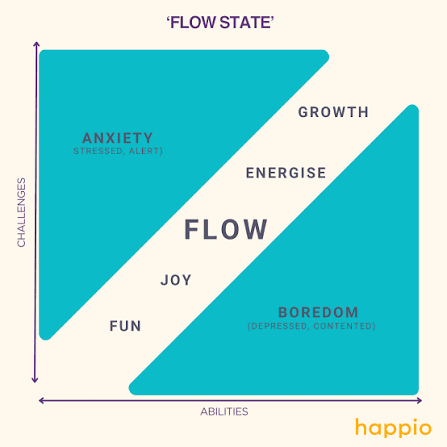
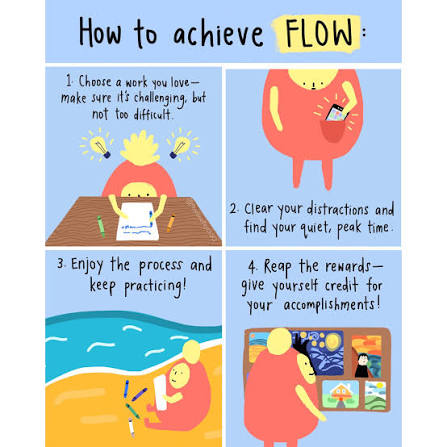
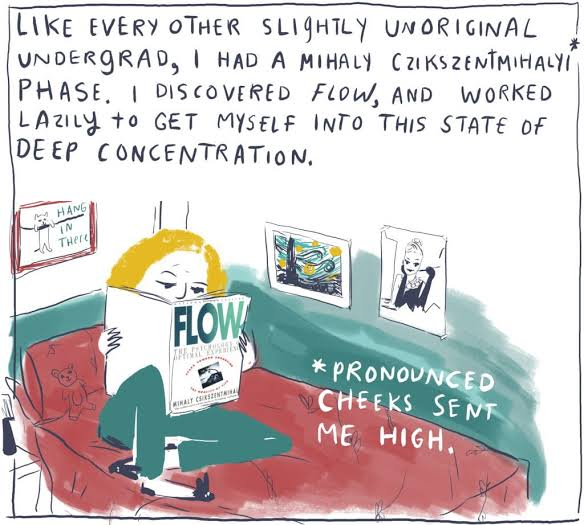
We are all students and teachers and thus have so much to learn from as well as teach each other about the positive power of flow. When was the last time you felt ‘Flow’? A fun way to feel more positive, get more done and get past our struggles with least anxiety and more joy?
This is a free newsletter for parents, educators, and students. If you like my content, please subscribe by entering your email address here.
Three Images of the Week
Two Thoughts of the Week
“Spend more time doing things that make you forget about the time.”
― Charlotte Eriksson
“Doing activities that you love to do, even a few minutes a day, can help you experience more flow, improve your well-being, and help you share your unique gifts with the world.”
― Laurie E. Smith
One Video of the Week
Mihaly Csikszentmihalyi explores how entering a state of complete engagement, or flow, transforms everyday activities into meaningful experiences. Through psychological research, they explain how balancing personal skills with challenges leads to heightened satisfaction and creativity.
Reading with Ms Meenu: Tip of the Week
‘I Can’t Afford to Buy All the Books I Read’: What Public Libraries Offer Leisure Readers
For frequent readers, buying every book they want to read can become expensive very quickly. Public libraries make reading more affordable while also giving people access to a much wider range of books, audiobooks, magazines, and digital materials.
Research by Philip Hider found that cost was one of the main reasons leisure readers used public libraries. Many participants simply read too much to justify purchasing every book. Borrowing allows readers to explore new authors, genres, and subjects without worrying about wasting money on something they may not enjoy.
Libraries also make discovery easier. Displays, staff recommendations, book clubs, and large collections help readers find books they might never have searched for themselves. Because borrowing is low-risk, readers can experiment more freely and become more adventurous in what they read.
The benefits go beyond entertainment. Participants in the study said leisure reading helped them learn new information, relax, gain new perspectives, and improve their literacy. Fiction and nonfiction alike can introduce readers to unfamiliar places, experiences, ideas, and ways of thinking.
Libraries also offer a more sustainable model of reading. One physical book can be shared by dozens of people rather than every reader needing to purchase their own copy. E-books and audiobooks further expand access by allowing people to read in different formats and from different locations.
For many participants, reading was not simply another hobby. It was an important part of their everyday lives.
Public libraries help make that reading life possible. They reduce financial barriers, provide choice, encourage discovery, and ensure that access to books does not depend on a person’s ability to buy them.
In the end, libraries do more than lend books. They make reading accessible to everyone.
Happy Reading!
For more information, please visit: placealibrary.ca
Meenu Gera, Consulting Home and School Library Reading Guide
I Think, I Wonder, I Ask
–Dr. Shreelakshmi Subbaswami, Academic Director, Vijaya School, Hassan, Karnataka; https://vijayaschoolhsn.in/
A good thematic exploration is when different disciplines come together to create a holistic learning experience for children. Literacy, numeracy, science, social science and art do not have to be learnt in isolation. Children can explore a big idea through the lens of different subjects, making connections along the way.
In the primary years, understanding the world has traditionally focused on learning facts and listening to teacher-led explanations. Inquiry-based learning, although not new to education, can appear easier to implement than it actually is.
The real shift is in the teacher’s mindset. Inquiry requires teachers to trust that children can learn when meaningful experiences are created for them. It requires us to change the questions we ask, move away from giving ready-made explanations and create space for children to observe, wonder, question, investigate and make sense of what they discover.
This is not always easy. We are so accustomed to explaining concepts that allowing children to struggle, explore and arrive at their own understanding can feel uncomfortable. There are no shortcuts to inquiry-based teaching. It requires patience, thoughtful planning and, most importantly, a willingness to give children agency.
Our thematic exploration of plants showed us this clearly. Children were not simply learning about plants; they were observing, questioning, connecting and confidently expressing their understanding. The learning went much deeper because they were part of creating it.
Three questions for you…
- How can we support teachers shift from explanation to facilitation?
- What strategies can help inquiry become a daily practice rather than an occasional activity?
- In what ways can we recognise and work through the hurdles teachers face while implementing inquiry-based learning?
Showcase
Thrive, A STEAM project for young learners https://thrivesteam.com/
Facilitator: Pooja Kattar
From Blueprint to Biodome
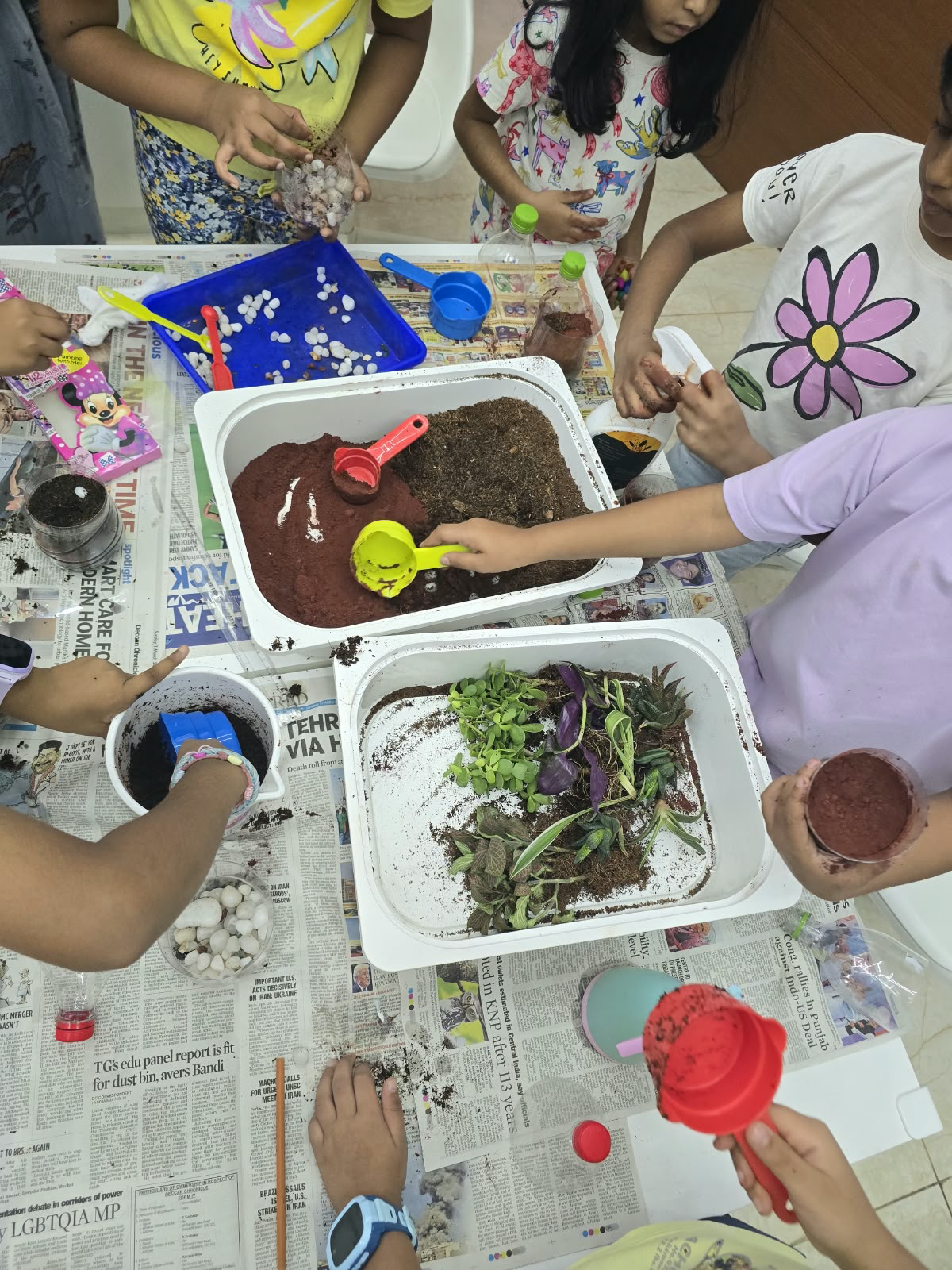
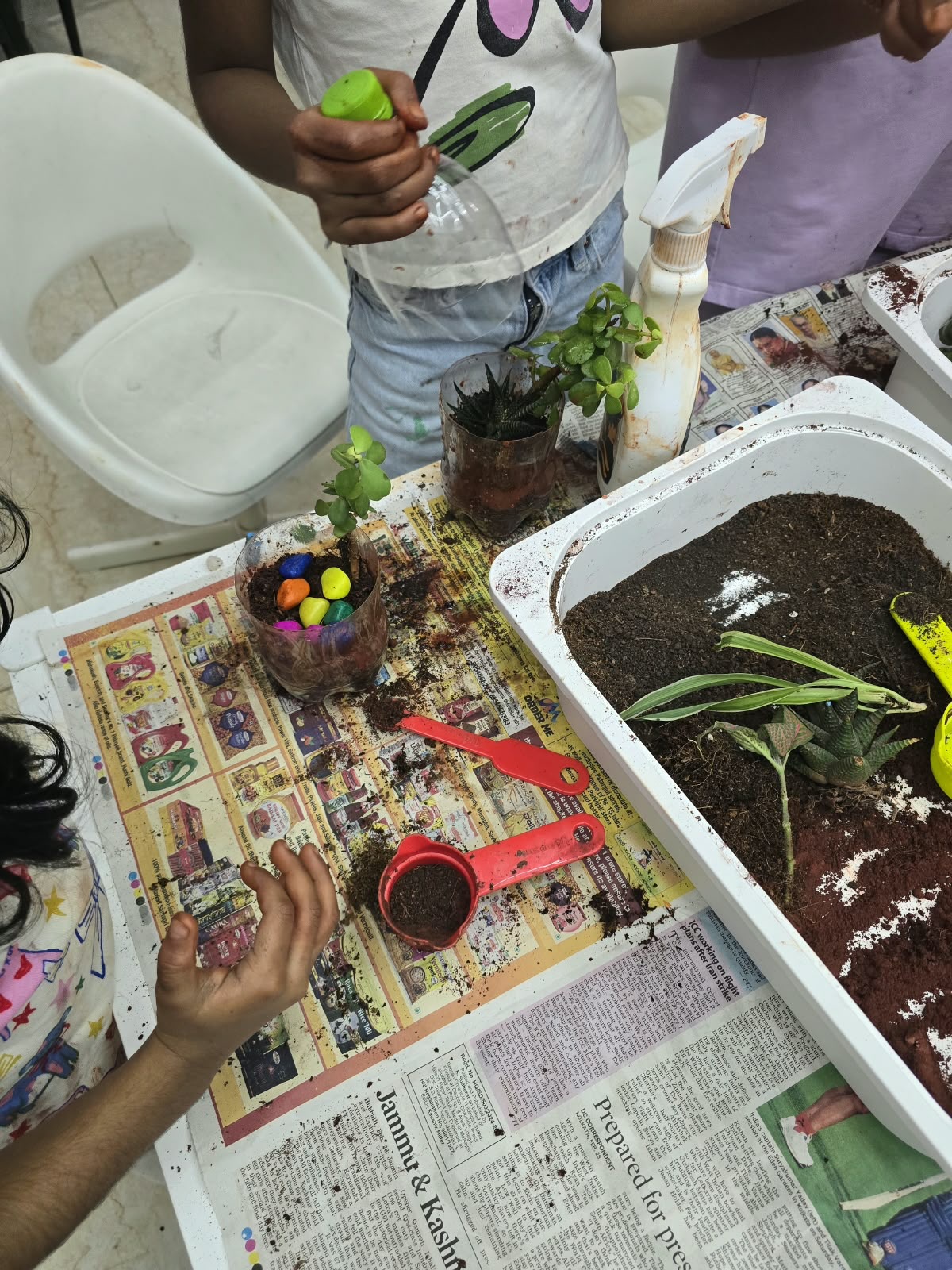
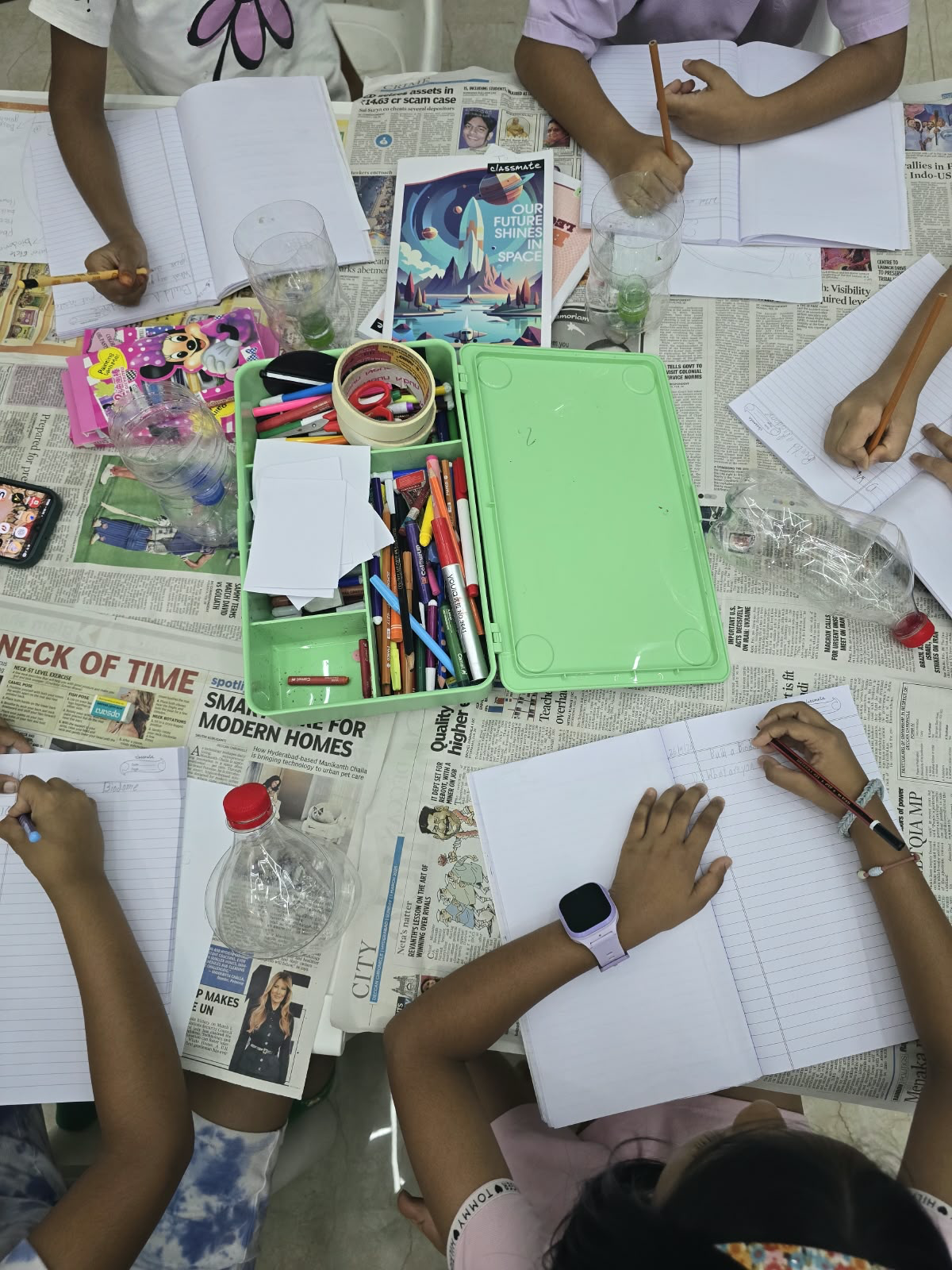
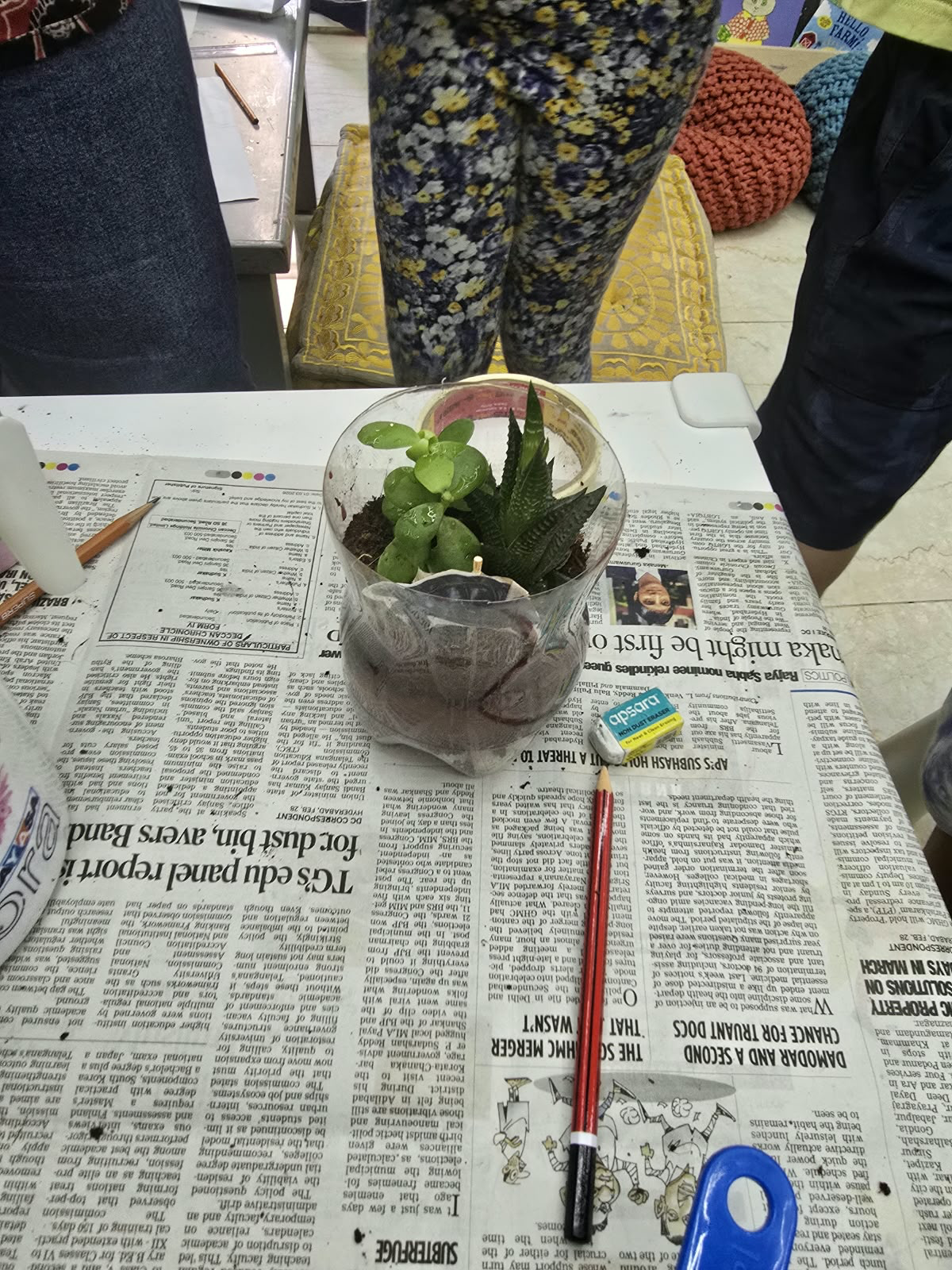
Building on their earlier experience of creating a mini biodome in jars, the children now explored how they could use old recycled plastic bottles to create a larger biodome model.
The children brought their previous learning about plants, soil, water, habitats and ecosystems into this activity. They remembered that plants need water, air and sunlight to grow and discussed why different materials were needed. They shared that gravel helped with drainage and soil provided a place for the plant to grow.
The children also thought about animal habitats while deciding where to place their animal models. They shared ideas such as, “The animal needs water,” “It needs a safe place to live,” and “It needs food.”
They referred to the blueprints they had created earlier and tried to follow their plans while building. When something did not work, they made changes and tried again. They also recalled their earlier learning about the water cycle and discussed how water could move within the biodome.
Through this hands-on experience, the children extended their understanding of living and non-living things, plants, animals, habitats, water and interdependence and applied their previous learning to create a new biodome model.
Krisha – 4 years 5 months
Maira Reddy – 6 years
Tara – 7 years
Yuvan, Mayra & Neev – 8 years
Havishka – 8 years 5 months
And Finally…
Dear reader,
My work in education includes designing learning ecosystems where students thrive, teachers grow, and schools build lasting cultures of excellence through innovative curriculum, evidence-based practice, and meaningful educational leadership.
Professional development with Ms Niv : Click below to find the teacher and student workshops and trainings I currently offer:
https://docs.google.com/presentation/d/1ypWO8KpVh56vhYqAMH4XoytLRKMXvwpCAfv3l3fryJQ/edit?usp=sharing
3-2-1 Tuesdays with Ms. Niv is a newsletter you can subscribe to and enjoy your learning journey with me.
3-2-1 Tuesdays with Ms Niv
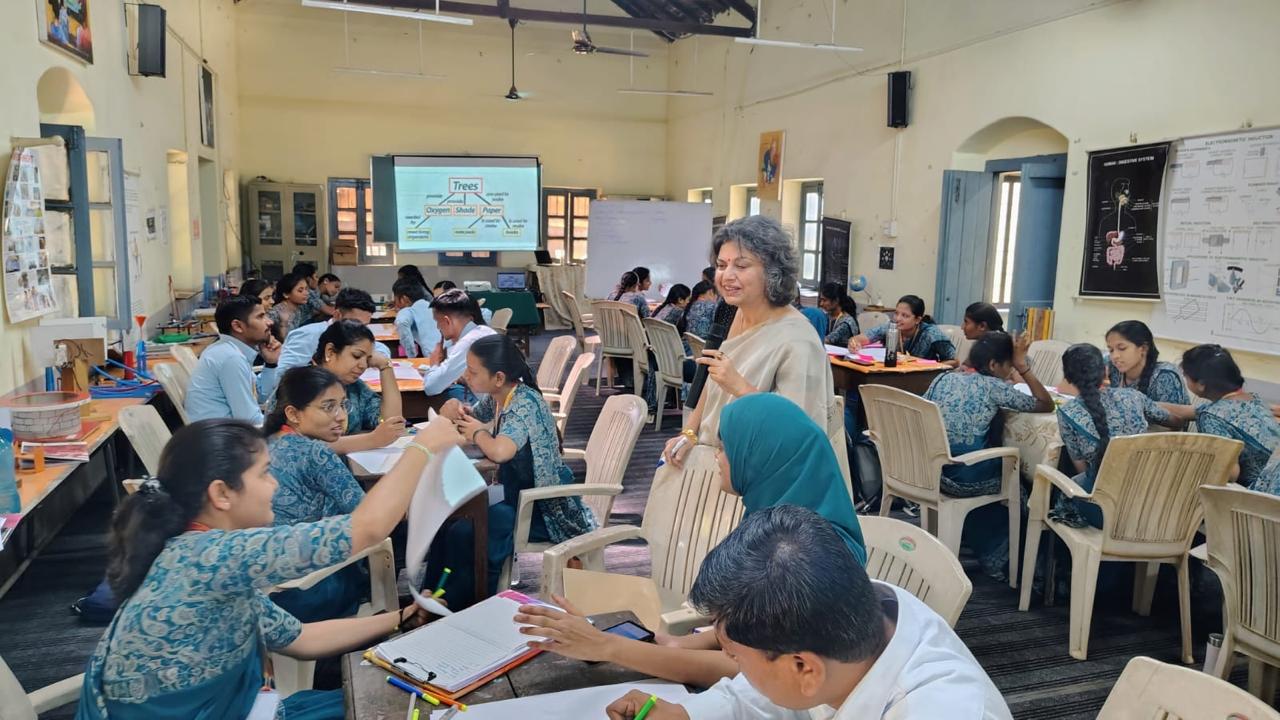
Issue #325, 22nd September 2026
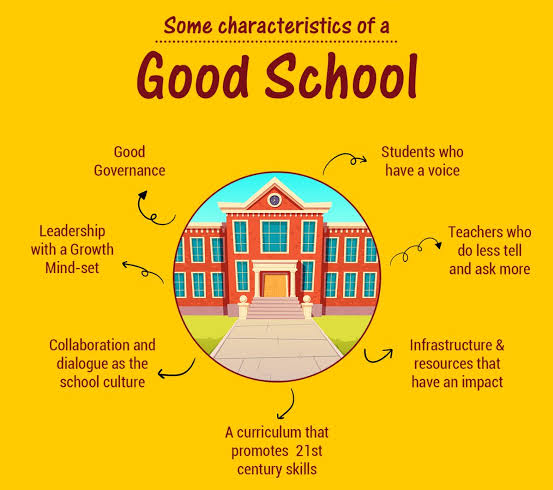
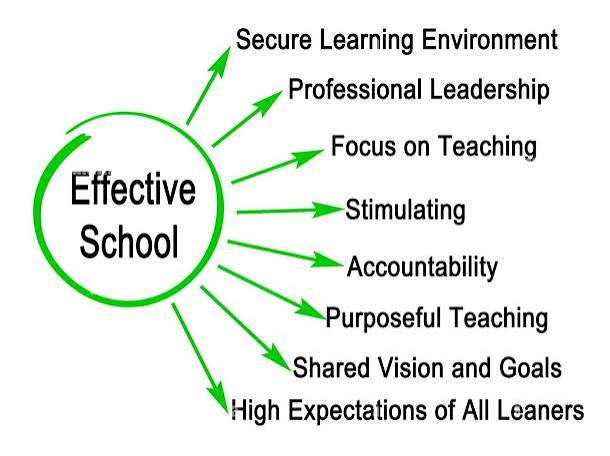
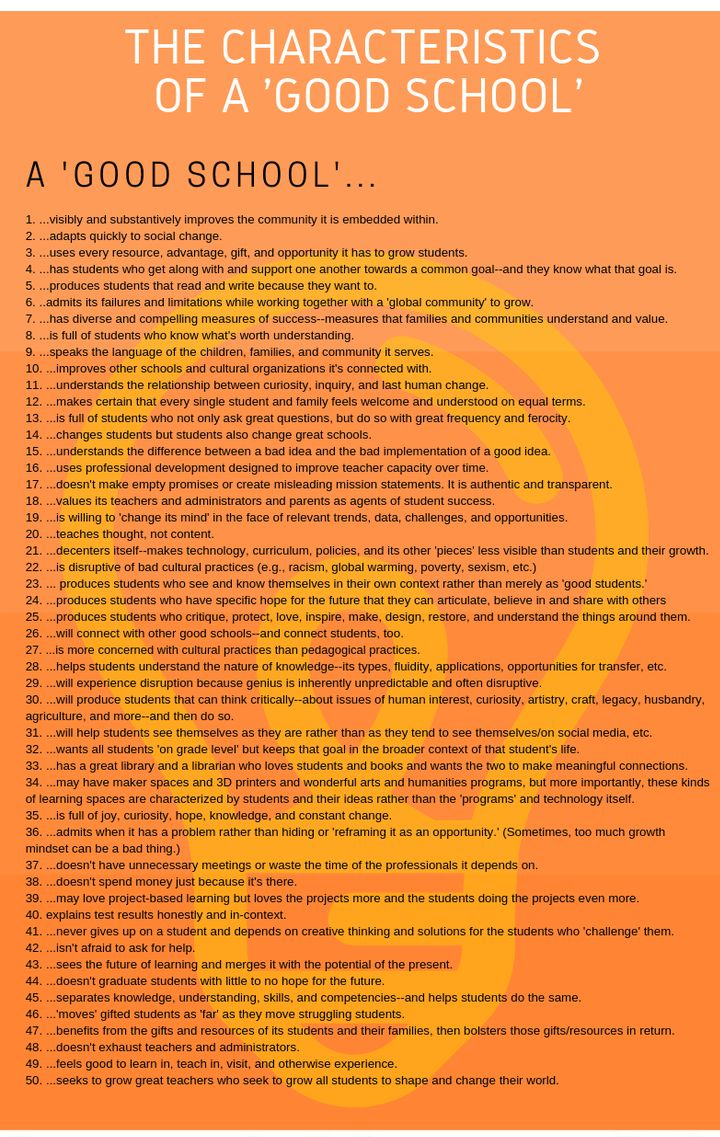
It is a long-term game for countries to invest in education and educational skills. What does good education look like? What does a good school look like? Is there an essentials list for an educational institution, apart from board affiliation and/or board results?
How do you, as a teacher, choose a school to work in? How do you, as a parent, choose a school for your child’s admission? Do you apply different criteria to choose the school when your child is going to a preschool? A primary school? A middle school? A secondary school? or a tertiary educational institution?
What kind of difference does teacher training brings to the quality of teaching-learning environment in an institution of learning? What role do school owners and leaders have in ensuring that teaching reaches all children? What is the overarching role of education policy and government?
This is a free newsletter for parents, educators, and students. If you like my content, please subscribe by entering your email address here.
Three Images of the Week
Two Thoughts of the Week
Children have to be educated, but they have also to be left to educate themselves. – Ernest Dimnet
Education is the most powerful weapon which you can use to change the world. – Nelson Mandela
One Video of the Week
Every few years, countries around the world compete in global rankings to see which nation is deemed to have the best school system in the world. Schools in Asia often get the best results, and other countries like Estonia and Canada are also highly praised. But in many parts of the world there are often huge barriers to getting children into the classroom at all, such as poverty, climate change, and war.
On this episode of The Global Story, Lucy Hockings speaks to the BBC’s Sean Coughlan and Professor John Jerrim, from University College London, about which countries have the most successful education systems in the world and what others can learn from them.
Reading with Ms Meenu: Tip of the Week
Child Reading Literacy and the Role of Public Libraries
Learning to read happens in many places.
Children develop literacy skills at school, at home, with caregivers, and through everyday experiences. But another institution plays an important role in connecting many of these environments: the public library.
Public libraries provide much more than shelves of books. They offer children free access to reading materials, literacy programs, trained staff, digital resources, and spaces where reading can become a regular and enjoyable part of life. They also help parents and caregivers support literacy at home and connect schools, families, and community organizations around a shared goal.
A 2026 report commissioned by the Institute of Museum and Library Services (IMLS) examined research on children’s reading engagement and the role public libraries play within the broader literacy ecosystem. The findings suggest that libraries can support literacy in several interconnected ways—not only by providing books, but by helping create the conditions that encourage children to become engaged readers.
Reading Engagement Is About More Than Reading Ability
When we think about literacy, it is easy to focus on whether a child can read the words on a page.
But reading engagement includes much more.
An engaged reader is interested in reading, motivated to continue, willing to choose books independently, and able to make reading part of everyday life. Developing these habits can be important because children need opportunities to actually use their reading skills.
A child may learn how to decode words in school, but becoming someone who voluntarily picks up a book requires motivation, access, confidence, and positive experiences with reading.
This is where libraries can make a meaningful contribution.
Unlike many formal learning environments, the public library allows children to explore books according to their own interests. They can move between fiction, nonfiction, graphic novels, audiobooks, comics, magazines, and digital materials without every reading experience being attached to a grade or assignment.
That freedom can help reading become something children choose rather than something they are simply required to do.
Libraries Put Reading Within Reach
Access is one of the most fundamental ways libraries support literacy.
Buying books can be expensive, particularly when children quickly move between reading levels and interests. Public libraries give families access to large collections without requiring them to purchase every book a child wants to explore.
That matters because developing readers often need variety.
A child might borrow a stack of books and discover that only one truly captures their attention. That is not necessarily a failure. It is part of discovering what kind of reader they are.
The IMLS report describes public libraries as resource hubs within the literacy ecosystem. Libraries provide books, multimedia materials, technology, physical spaces, and other resources that children and caregivers can use to support reading engagement.
The result is something difficult to replicate with a small collection at home: choice.
And choice can be a powerful motivator.
Libraries Turn Reading Into an Experience
Providing books is only one part of the library’s role.
Libraries also act as direct service providers, offering programs designed to encourage children to interact with books and literacy. These can include summer reading programs, storytimes, book discussions, tutoring, reading clubs, family literacy activities, and other events.
Previous research reviewed by IMLS found promising results from approaches involving read-aloud activities, book discussions, social interaction, support from adults, and community participation. These strategies can help strengthen both children’s reading skills and their motivation to read.
This social side of reading can be particularly important.
A child listening to a librarian dramatically read a picture book is not simply hearing words. They are seeing how stories work, listening to fluent reading, learning vocabulary, asking questions, and sharing the experience with other children.
A teenager participating in a book club is practising comprehension while also learning that reading can create conversation and connection.
Libraries can therefore help transform reading from an isolated academic activity into a social and enjoyable experience.
Supporting the Adults Who Support Children
Children’s literacy development does not stop when they leave school or the library.
Caregivers play an important role in creating environments where reading is encouraged at home. Yet not every parent knows which books are appropriate, how to encourage a reluctant reader, or what kinds of activities can strengthen early literacy.
Libraries can help bridge that gap.
Librarians can recommend books based on a child’s interests and abilities, introduce families to new authors and formats, and provide caregivers with information about reading development.
Storytimes and family literacy programs can also demonstrate simple practices adults can use at home—such as reading aloud, asking questions about a story, talking about pictures, or encouraging children to predict what happens next.
The IMLS research emphasizes that a healthy literacy ecosystem includes caregivers as well as libraries and other community organizations. It describes an effective system as one in which adults understand the importance of early reading and have access to the resources they need to encourage children’s engagement.
In other words, supporting children’s literacy sometimes means supporting the adults around them first.
Connecting Schools, Families, and Communities
No single organization can carry the entire responsibility for children’s literacy.
Schools provide formal reading instruction. Families provide daily encouragement and opportunities to practise. Community organizations may work with children who need additional support.
Libraries can help connect these different parts.
The IMLS report identifies a third important role for public libraries: acting as a convener of community organizations. Libraries can work alongside schools, early childhood programs, healthcare providers, nonprofits, and other organizations interested in children’s reading development.
A library might partner with a school to support summer reading. Another might distribute books through community organizations. A children’s librarian might work with early childhood educators or provide literacy materials that parents can take home.
These partnerships expand the reach of literacy initiatives beyond the library building itself.
This is what it means to think of literacy as an ecosystem. A child does not experience reading through one institution. Their habits are influenced by the combined environment created by families, teachers, librarians, peers, and the wider community.
Digital Reading Is Expanding the Library’s Role
The modern public library is also increasingly digital.
E-books, audiobooks, online databases, educational platforms, and other digital tools have expanded the ways children can access stories and information.
For some reluctant readers, these formats may make reading more approachable. Audiobooks can provide another way to experience complex stories, while e-books can make large collections accessible without requiring a physical visit to the library.
The IMLS review found that libraries have increasingly invested in resources such as e-books and audiobooks, often with the goal of reaching children who might otherwise be reluctant to read.
At the same time, the report highlights an important research gap. Although digital offerings have expanded, there is still limited evidence showing exactly how these resources are changing children’s reading engagement in public-library settings. More research is needed to understand which technologies are most effective, how children use them, and how libraries can combine digital and traditional resources successfully.
Technology therefore should not necessarily replace traditional reading experiences. Instead, it can provide another pathway into reading.
Libraries Can Help Make Reading More Equitable
Public libraries also have a distinctive advantage: their services are generally available without charge.
That makes them particularly important in communities where families may have fewer books at home or fewer opportunities to purchase educational resources.
A library card can open access to thousands of books, digital resources, educational programs, internet access, and knowledgeable staff.
The IMLS report describes public libraries as uniquely positioned to provide children and caregivers with opportunities to participate in reading and related activities at no cost.
However, the report also points to areas where more evidence is needed. Researchers still have important questions about how children’s engagement differs across communities, library systems, funding levels, and local circumstances.
Understanding those differences will be essential if libraries are to reach children who could benefit most from their services.
The Library as Part of a Bigger Picture
It would be unrealistic to expect libraries to solve children’s literacy challenges alone.
Reading development is influenced by education, family circumstances, access to resources, motivation, language, community support, and many other factors.
But public libraries occupy a valuable position within that larger system.
They can provide the books.
They can provide the space.
They can introduce a child to a librarian who knows exactly what book might capture their imagination.
They can show a parent how to make reading part of bedtime.
They can organize a summer reading program that keeps children engaged when school is out.
And they can bring together schools, families, and community organizations that might otherwise work separately.
The 2026 IMLS research ultimately presents public libraries as having three connected roles in children’s literacy: resource hub, direct service provider, and community convener.
Those roles reinforce one another.
A library cannot guarantee that every child who walks through its doors will become a lifelong reader. Research is still needed to determine which approaches produce the strongest outcomes and for whom.
But libraries can create something equally important: opportunity.
They can make books easier to find, reading easier to begin, and literacy something supported not only by schools, but by an entire community.
And sometimes a lifelong relationship with reading begins with something as simple as giving a child the freedom to choose the next book.
Happy Reading!
For more information, please visit: placealibrary.ca
Meenu Gera, Consulting Home and School Library Reading Guide
I Think, I Wonder, I Ask
–Dr. Shreelakshmi Subbaswami, Academic Director, Vijaya School, Hassan, Karnataka; https://vijayaschoolhsn.in/
In the Age of AI, Does Memorizing Still Matter?
Should our children still be memorising mathematical facts, formulas, identities, tables, physics concepts and biological facts in the age of AI?
In a recent interaction with students after their assessments, I noticed a strong resistance to learning some of the facts we once learnt by heart. Their question was simple- “Why should I learn this when I can just ask AI?”
I think, they are right in a way. We do not need to memorise everything. Many facts we once carried in our heads can now be accessed in seconds. But does that mean we should stop building knowledge in our memory? I don’t think so.
Think about a doctor. Knowing medicines, symptoms allows a doctor to think and respond without stopping to search for every piece of information. A musician needs scales and patterns at their fingertips. An architect needs measurements and spatial relationships. A programmer needs to know basic structures and concepts. A lawyer needs familiarity with laws, a teacher needs knowledge of children, curriculum and pedagogy readily available while making decisions.
The point is not memorisation for the sake of memorisation. Memorisation without understanding is rote learning. But when we understand and practise something enough for it to become part of our memory, we are able to retrieve that knowledge when we need it. In that sense, retrievable knowledge becomes a foundation for higher-order thinking. When we have essential knowledge readily available, we have more space to make connections, ask better questions, solve problems and think beyond the obvious.
As educators, when we look at a syllabus, we need to ask, “What is important enough for children to know deeply and retrieve with ease, and what can we confidently leave to the machine?” rather than simply asking, “What should children memorise?”
Three questions for you…
- What knowledge is important enough for children to carry with them, even when AI can retrieve it in seconds?
- How can we distinguish between meaningful knowledge-building and memorisation for an examination?
- What should children understand before they are encouraged to outsource the answer to AI?
Showcase
Thrive, A STEAM project for young learners https://thrivesteam.com/
Facilitator: Pooja Kattar
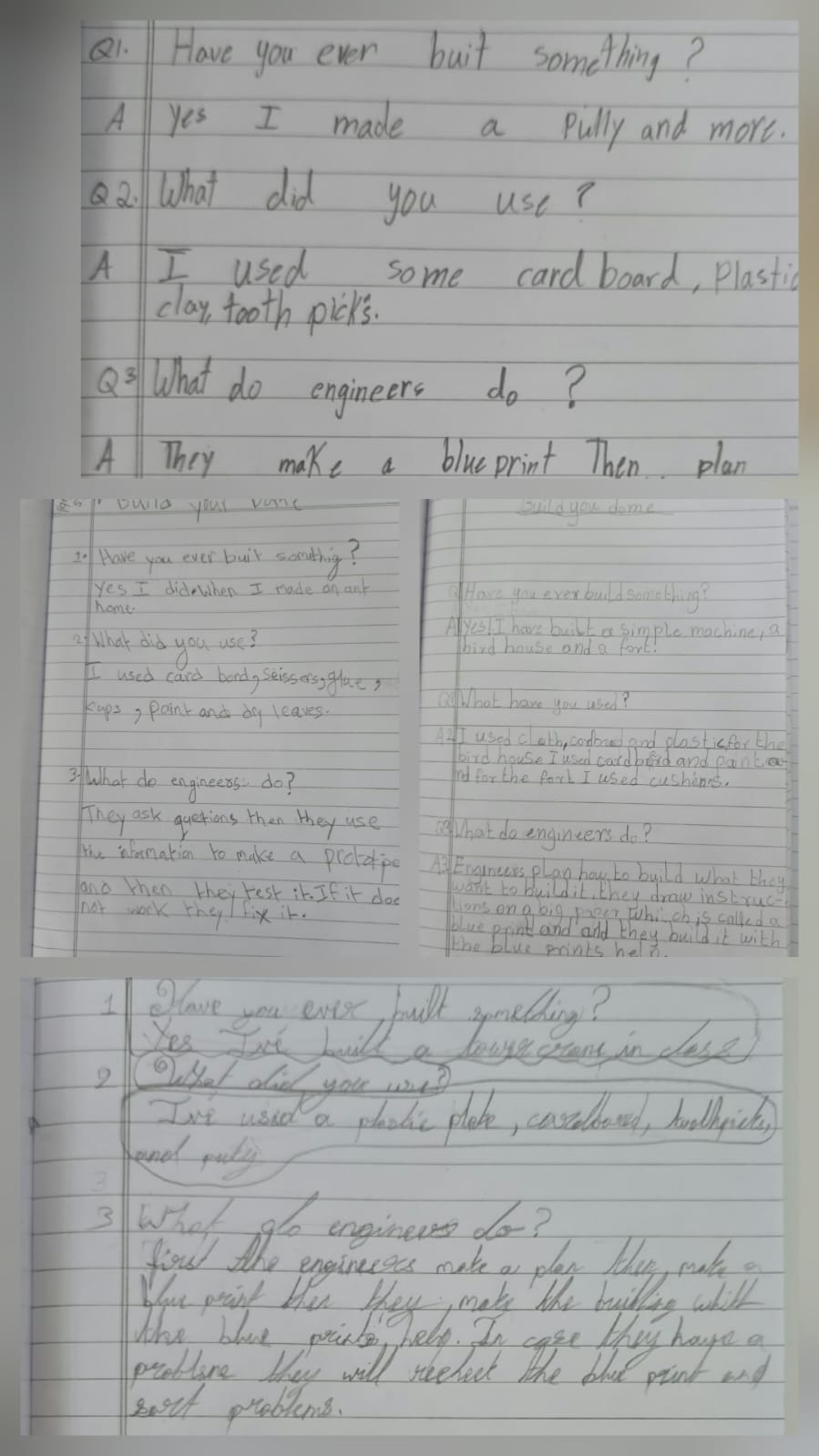
Building and Testing Biodomes
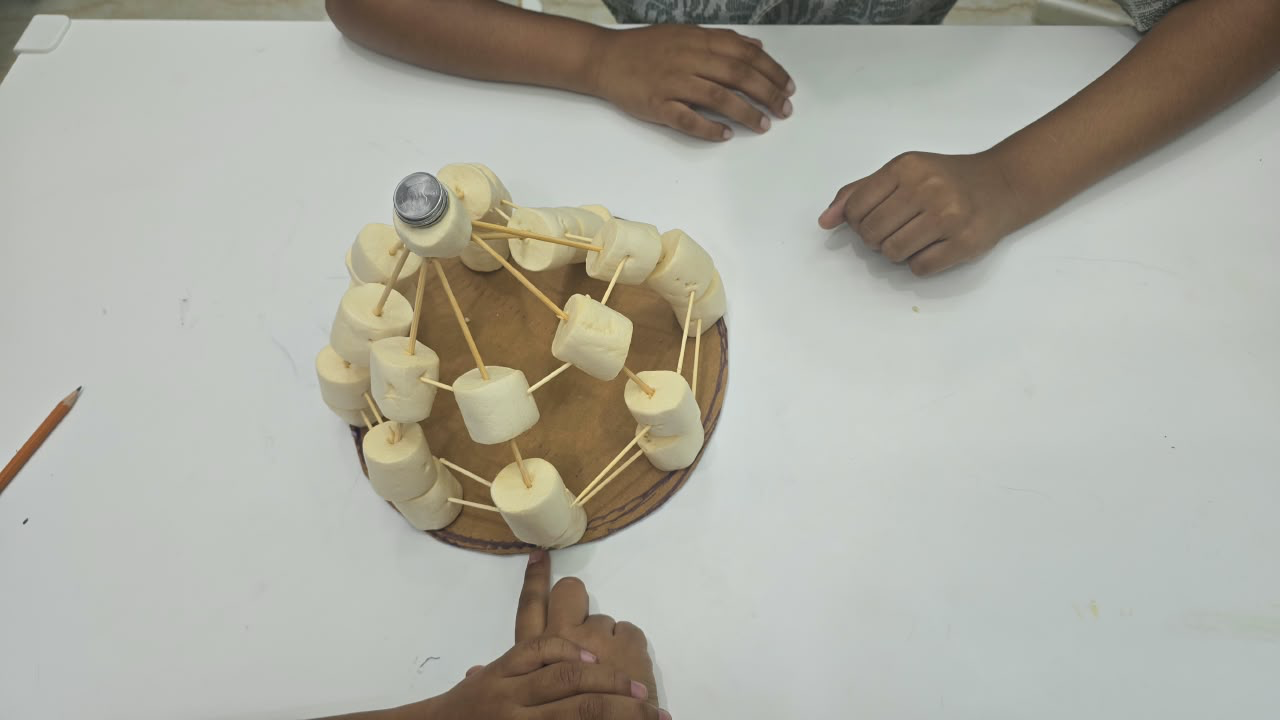
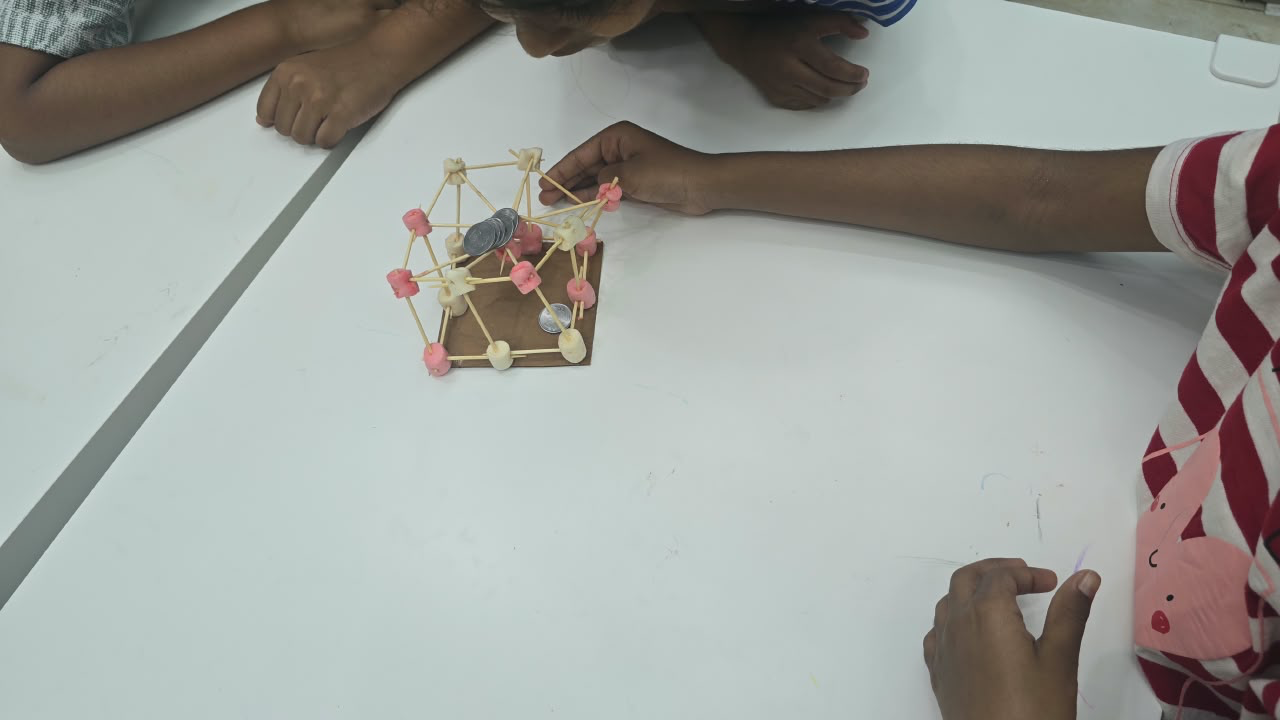
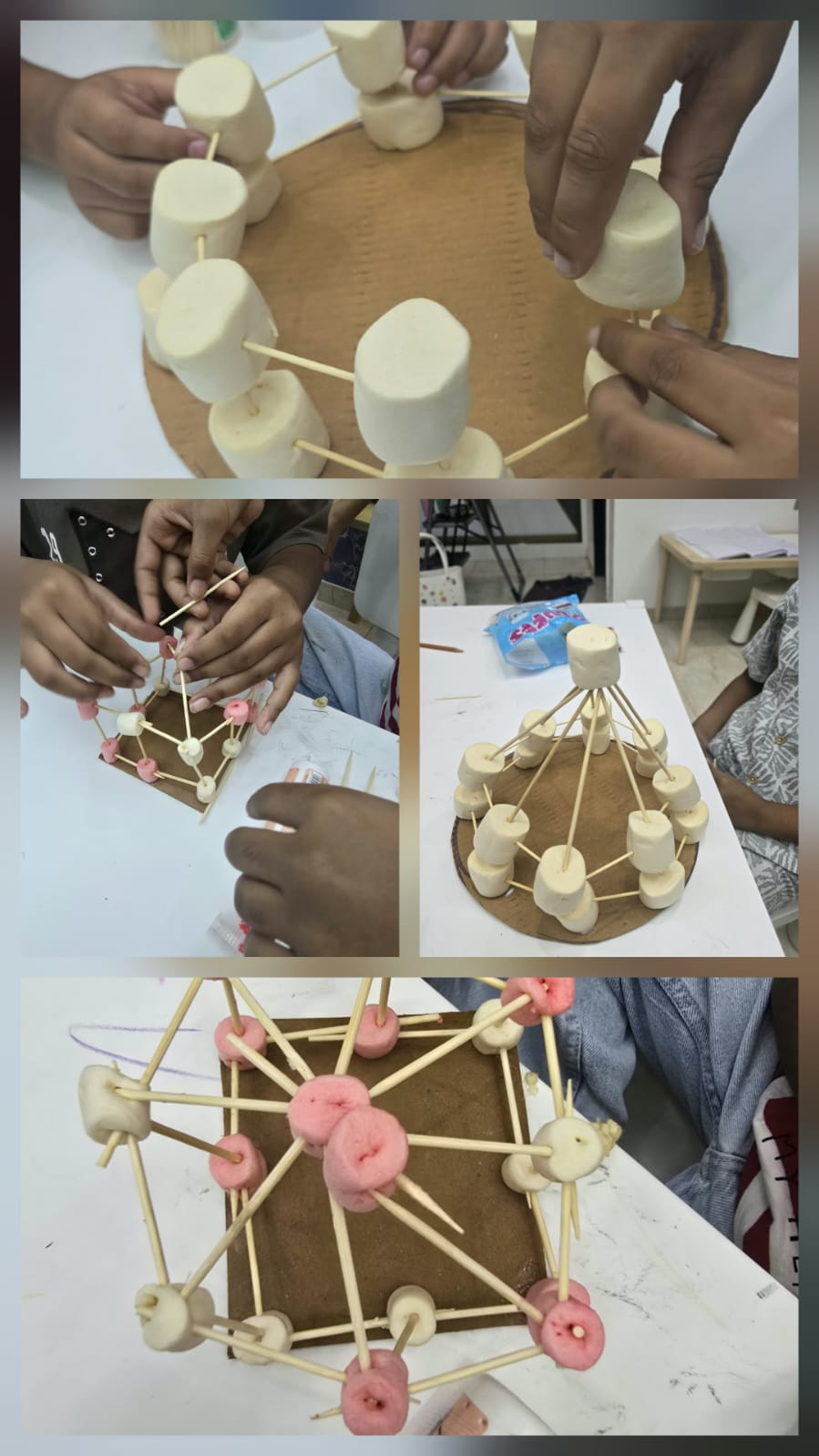
The children began by sharing their ideas about building, the materials they had used, and what engineers do. They then worked in two groups to build biodomes using toothpicks and marshmallows. One group created a circular dome, while the other built a square-based structure.
The children tested both structures by placing coins on them. The dome successfully held six coins, while the flat structure collapsed. Through this challenge, they discovered that shape and structure affect strength and stability, and that dome-shaped structures can spread weight more evenly.
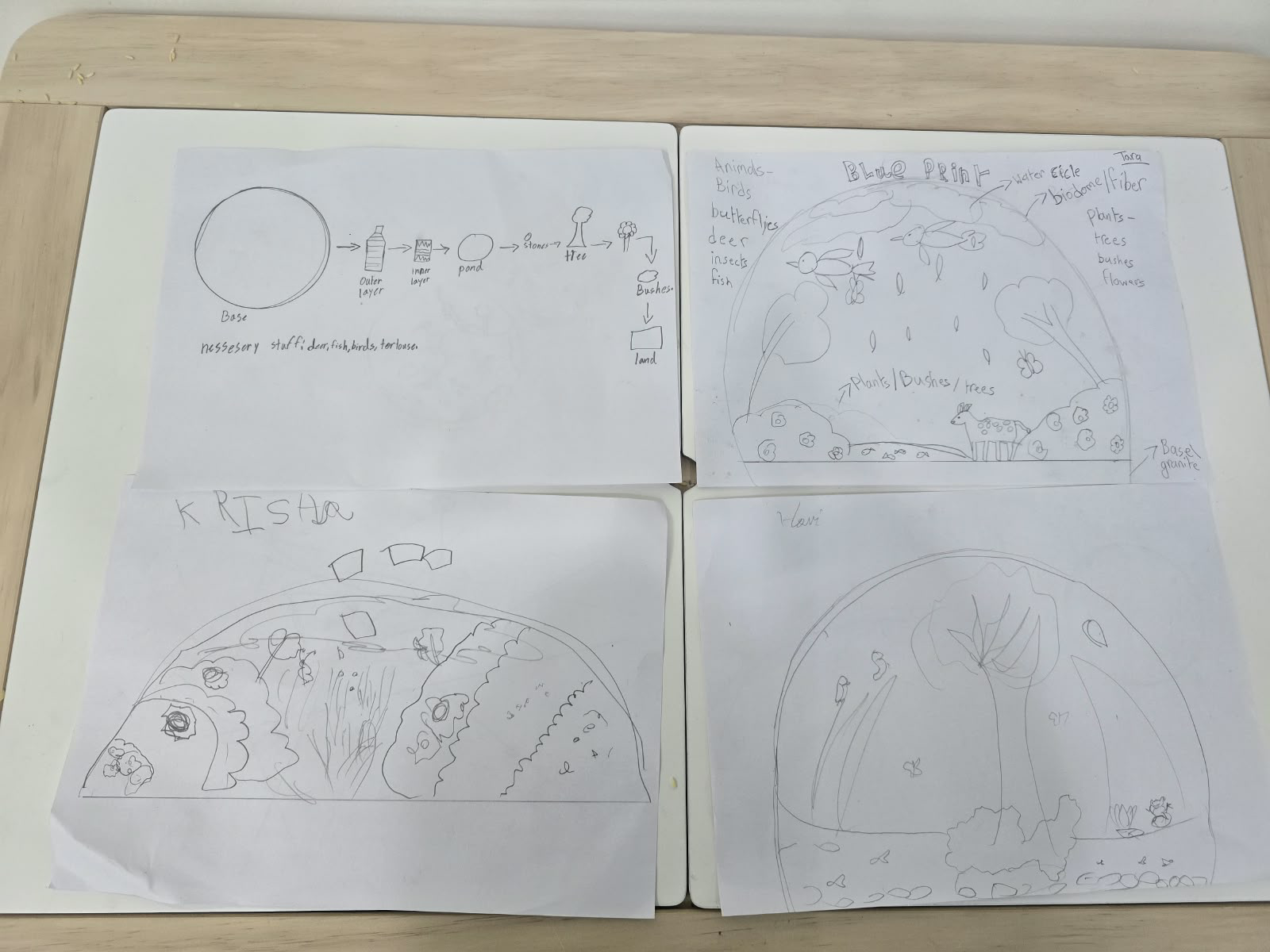
The children concluded the workshop by creating blueprints for their own biodomes, applying what they had learned about planning, building and testing designs.
Children: Krisha :4 years 4 months. Tara 7 years. Yuvaan 7 years 11 months. Havishka and Samyuktha 8 years 5 months.
And Finally…
Dear reader,
My work in education includes designing learning ecosystems where students thrive, teachers grow, and schools build lasting cultures of excellence through innovative curriculum, evidence-based practice, and meaningful educational leadership.
Professional development with Ms Niv : Click below to find the teacher and student workshops and trainings I currently offer:
https://docs.google.com/presentation/d/1ypWO8KpVh56vhYqAMH4XoytLRKMXvwpCAfv3l3fryJQ/edit?usp=sharing
3-2-1 Tuesdays with Ms. Niv is a newsletter you can subscribe to and enjoy your learning journey with me.
3-2-1 Tuesdays with Ms Niv
Issue #324, 15th September 2026
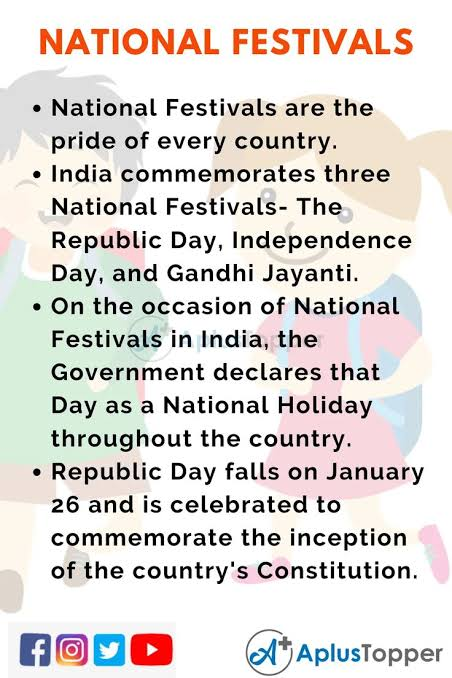
The festival season is here. Yay!
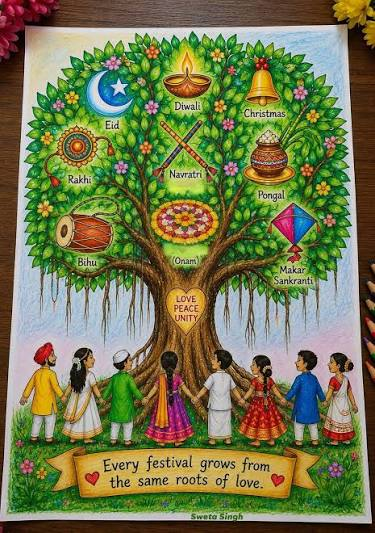
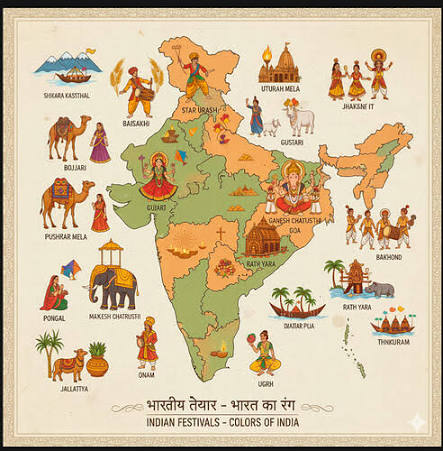
So what is your idea of celebrating festivals in school? Some of our festivals are national festivals, some are harvest festivals, and some are religious ones. What about those children who do not celebrate a particular festival at home? How do you introduce it to them in school? Do you have parents who object to their children being introduced to and/or participating in some festivals? Do you have colleagues who object to celebrating a festival in a particular way in the school? What do you plan as the learning outcome of the festival for children of different ages?
What about the fantastic art, music, dance, cinema, and theater festivals? Do you consider planning your trips to these festivals with your students/your own children? How do these connect in theme and spirit with the social fabric?
This is a free newsletter for parents, educators, and students. If you like my content, please subscribe by entering your email address here.
Three Images of the Week
Two Thoughts of the Week
“During the last fifty years, owing to the gradual impoverishment of the country and migration from the villages, these religious festivals have been considerably reduced and in some cases have ceased altogether. This has affected the circulation of money within the village economy and on the social side has made life dull and drab.”
― Subhas Chandra Bose, An Indian Pilgrim
“I am an Indian and we celebrate all festivals in every region of every religion. That is why it is called Incredible India!”
― Vinayak Muraleedharan
One Video of the Week
Meera shares her insights into the transformative power of narratives and her fervent role in the expansive Kala Ghoda Arts Festival. It takes a village to plan, curate and execute an Arts Festival. Meera’s Journey will take you through the rewarding chaos i.e Festival Production and the impact it has on our society. Get ready for an experience that will ignite your imagination and wonder! Meera, the stage is yours! Please welcome her with a huge round of applause. Meera Warrier is at the heart of the captivating Kala Ghoda Arts Festival, she embodies the spirit of creativity and culture. Meera’s boundless dedication and enthusiasm infuses this grand event with deeper resonance, seamlessly blending art, music, literature, and diverse talents.
Reading with Ms Meenu: Tip of the Week
How Can School and Classroom Libraries Support Struggling Readers?
For a struggling reader, picking up a book can sometimes feel less like an opportunity and more like a challenge.
When reading is difficult, students may begin to associate books with frustration, embarrassment, or schoolwork they cannot complete as easily as their classmates. Over time, this can affect not only reading ability, but also confidence and motivation.
School and classroom libraries can play an important role in changing that experience. A well-designed library gives students more than access to books. It can provide choice, encouragement, appropriate reading materials, and a safe environment in which students can develop as readers at their own pace.
Make Books Easy to Access
One of the simplest ways libraries can support struggling readers is by putting books within easy reach.
Students are more likely to read when books are part of their everyday environment rather than something they encounter only during a scheduled trip to the library. Classroom libraries allow students to browse during independent work, free time, or designated reading periods.
The easier it is to pick up a book, explore it, and put it back without pressure, the more opportunities students have to discover something that interests them.
Accessibility also means organizing books in a way students can understand. Categories such as humour, sports, animals, mysteries, graphic novels, adventure, and real-life stories may be more inviting than organizing everything strictly by reading level.
The goal is to help students think, “What would I like to read?” rather than, “What level am I allowed to read?”
Provide Books at Different Reading Levels
A classroom library should reflect the range of reading abilities found in a real classroom.
Struggling readers need books they can successfully read without feeling that those books are obviously intended for much younger children. This can be particularly important for older students whose reading ability may be below grade level but whose interests are not.
High-interest, lower-reading-level books can help bridge that gap. These books use accessible vocabulary and sentence structures while still exploring topics appropriate for older children and teenagers.
Graphic novels, illustrated nonfiction, short stories, magazines, poetry, and books with shorter chapters can also make reading feel more manageable.
The objective is not to make reading easier forever. It is to give students enough successful reading experiences that they develop the confidence and fluency needed to take on more challenging material.
Give Students Meaningful Choice
Choice can be especially powerful for students who already view reading as something adults make them do.
When every student is assigned the same book, struggling readers may quickly become aware that they are having a harder time than their classmates. Giving students a selection of books allows them to find something that matches both their interests and abilities.
A student fascinated by basketball may be more willing to work through a sports biography. Another might become absorbed in a graphic novel, mystery, comic, fantasy story, or book about animals.
Interest creates motivation, and motivation encourages practice.
Students who voluntarily read more often gain additional opportunities to build vocabulary, fluency, comprehension, and confidence.
Libraries therefore need variety. There should be many possible pathways into reading rather than one narrow definition of what counts as a “good” book.
Reduce the Stigma Around Reading Levels
Reading levels can be useful tools for educators, but they can become harmful when students begin to see them as labels.
A child who knows they are reading below grade level may avoid books altogether rather than risk classmates noticing what they are reading.
School and classroom libraries can help reduce this pressure by organizing collections primarily around subjects, genres, authors, and interests rather than publicly displaying ability levels.
Teachers can still guide students toward appropriate books privately.
This allows struggling readers to choose material that feels comfortable without broadcasting their reading ability to everyone around them.
Students should be able to experience reading as something personal rather than as a public measurement of performance.
Include Graphic Novels and Other Formats
There is sometimes a misconception that graphic novels, comics, audiobooks, or heavily illustrated books are somehow less valuable than traditional novels.
For struggling readers, they can be incredibly useful.
Pictures provide context that helps students understand unfamiliar words and follow the story. Shorter sections of text can make pages feel less overwhelming, while dialogue helps readers practise following conversations and understanding character emotions.
Nonfiction books with photographs, diagrams, captions, and short sections can offer similar benefits.
Audiobooks can also support students by allowing them to hear fluent reading while following along with the text. This can help with pronunciation, expression, vocabulary, and comprehension.
Supporting literacy does not require every student to interact with text in exactly the same way.
Create Opportunities for Reading Success
Students who struggle with reading often receive plenty of reminders about what they cannot yet do.
Libraries can give them opportunities to experience what they can do.
Finishing a short book, discovering a favourite author, understanding a difficult passage, or recommending a story to a friend may seem like small accomplishments, but they can gradually reshape a student’s relationship with reading.
Teachers can support these experiences by helping students select books that provide an appropriate level of challenge.
A book should not be so difficult that every page becomes frustrating, but it should not necessarily be so simple that it provides no opportunity for growth.
Finding that balance can help students gradually strengthen their skills while continuing to enjoy the experience.
Let Students Talk About Books
Reading does not have to be a solitary activity.
Informal conversations about books can help struggling readers develop comprehension without making the experience feel like another test.
Teachers might ask simple questions such as:
- What was your favourite part?
- Which character did you like?
- Was anything surprising?
- Would you recommend this book to someone else?
- What do you think will happen next?
These questions encourage students to think about what they have read without requiring lengthy written responses.
Book clubs, partner discussions, reading circles, and peer recommendations can also help students see reading as a social activity.
When classmates talk enthusiastically about books, reading becomes part of the culture of the classroom rather than simply another academic requirement.
Make Time for Reading
Access to books matters, but students also need time to use them.
A classroom can contain hundreds of excellent books, but they will have little impact if students rarely have opportunities to read.
Dedicated independent reading time gives struggling readers something particularly valuable: practice.
Reading is a skill that develops partly through repeated use. Students need regular opportunities to encounter words, sentences, stories, and ideas.
Even relatively short periods of consistent reading can create a routine.
Teachers can strengthen that routine by reading themselves during independent reading periods or regularly discussing books they enjoy. When adults visibly treat reading as something worthwhile and enjoyable, students receive a different message than they do when reading is presented only as an assignment.
Use the Library to Build Confidence
Perhaps the most important thing a classroom or school library can offer a struggling reader is confidence.
Reading difficulties can easily become part of how a student sees themselves.
A child may move from thinking, “This book is difficult,” to thinking, “I am bad at reading.”
That difference matters.
Libraries can help interrupt that cycle by providing books students can understand, topics they care about, formats they enjoy, and opportunities to make their own choices.
Over time, successful experiences can begin to replace frustration.
Happy Reading!
For more information, please visit: placealibrary.ca
Meenu Gera, Consulting Home and School Library Reading Guide
I Think, I Wonder, I Ask
–Dr. Shreelakshmi Subbaswami, Academic Director, Vijaya School, Hassan, Karnataka; https://vijayaschoolhsn.in/
Spirit of Festivals: Learning Beyond Celebration
India’s diversity is not merely something we read about in textbooks in schools. It is lived through our festivals, traditions, languages and ways of life. In a secular country like ours, celebrating festivals across religions can be an important way for a school to acknowledge, respect and learn from this diversity.
More often festival celebration in schools become another event on the calendar. A speech on the significance of the festival, a few songs, some dances, some rituals and we move on to the next celebration. For children who follow the festival, it may hold personal meaning. For others, it can become just another programme with music and dance.
I believe, our responsibility as educators is to look beyond the procedures and rituals and highlight the spirit of festivals for children. Every festival has its own stories, symbols, rituals and traditions that make it unique. Yet beneath these differences are ideas that often connect us as human beings like- gratitude, sacrifice, compassion, forgiveness, courage, renewal, sharing, hope, togetherness and respect for life. This is where celebration can become education.
At school, before children begin planning songs, dances or decorations, they can discuss and dialogue about the spirit of the festival. What does it invite us to think about? What values does it hold? How might we see those values in our own lives? Subject integrations can then deepen these conversations rather than becoming an additional activity.
The purpose of celebrating festivals in school is not simply to know how people celebrate, but to understand why they celebrate and what these celebrations can teach us about being humans…
Three questions for you…
- How can we shift festival celebrations from performance and participation to reflection and dialogue?
- In what ways can we make festival celebrations meaningful even for children who may not celebrate that festival at home?
- How can we move from celebrating the differences between religions to exploring what connects them?
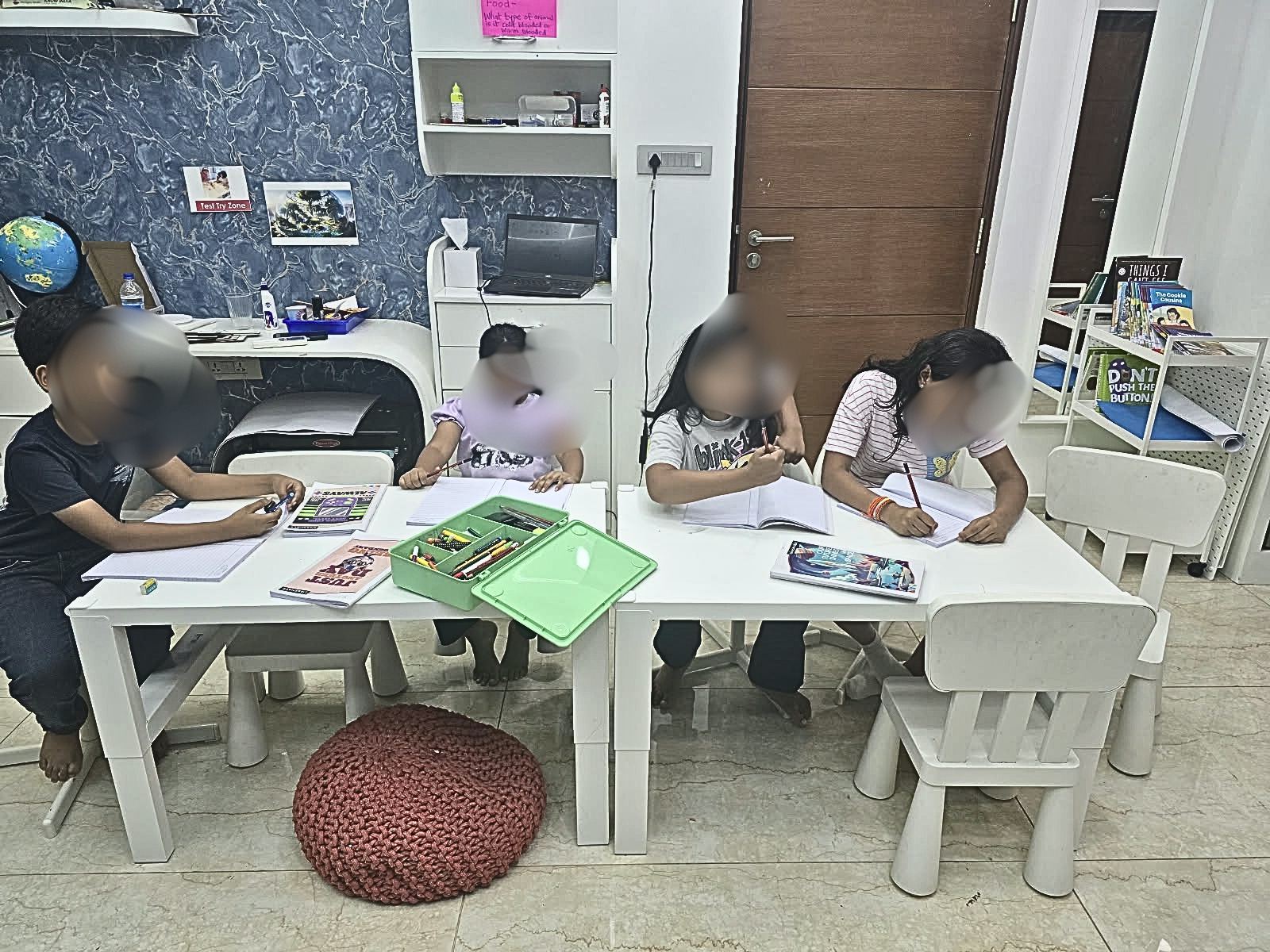
Showcase: Thrive STEAM project, Hyderabad; https://thrivesteam.com/
Food Web & Interdependence
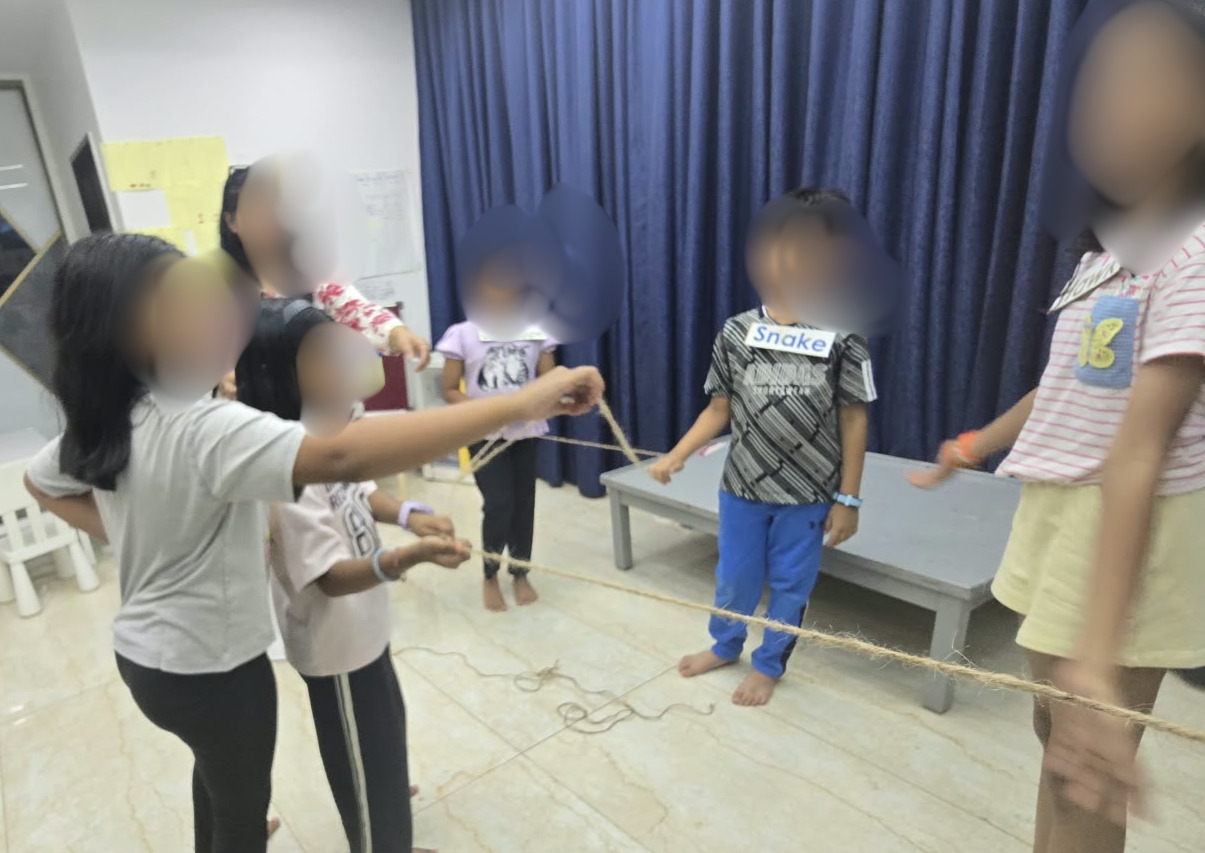
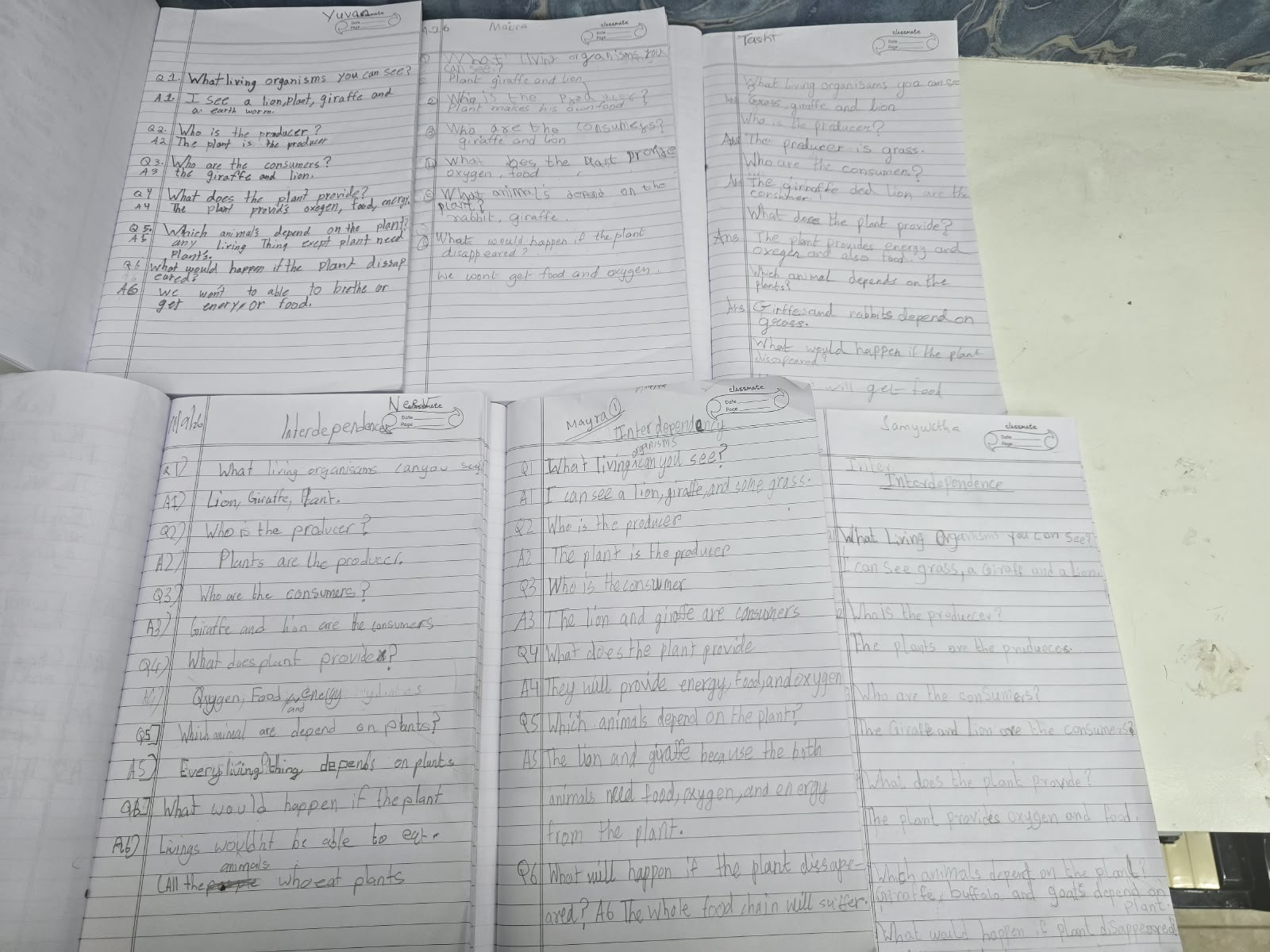
Today, the children revisited the food web and recalled what they had learned earlier. They identified the plant as the producer and animals such as the giraffe and lion as consumers. They understood that plants provide food, energy, and oxygen and that animals depend on plants to survive.
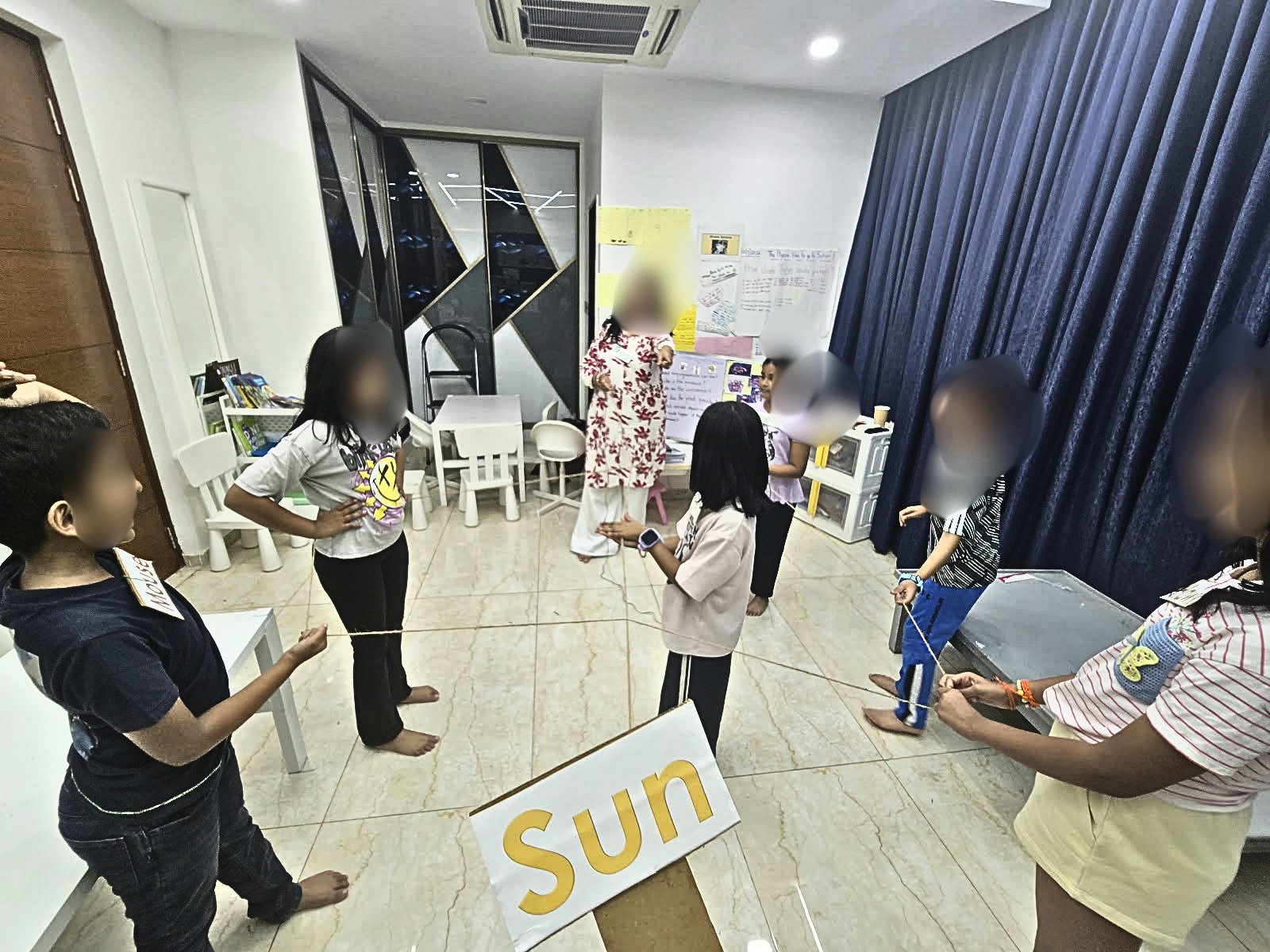
The children then took part in a Human Food Web Game. Each child became an organism and stood in a circle. They used yarn to connect the organisms and showed who eats whom. This helped them see that all living things are connected.
The children also observed what happened when one organism was removed from the food web. They understood that if one living thing disappears, it can affect other living things in the food web.
The activity helped the children understand food webs, connections, and interdependence in a fun and hands-on way. They participated actively, answered questions, and shared their ideas with the group.
Maira – 6 years old
Yuvan – 7 years 11 months old
Tashi, Neev & Mayra – 8 years old
Samyuktha – 8 years 5 months old
And Finally…
Dear reader,
My work in education includes designing learning ecosystems where students thrive, teachers grow, and schools build lasting cultures of excellence through innovative curriculum, evidence-based practice, and meaningful educational leadership.
Professional development with Ms Niv : Click below to find the teacher and student workshops and trainings I currently offer:
https://docs.google.com/presentation/d/1ypWO8KpVh56vhYqAMH4XoytLRKMXvwpCAfv3l3fryJQ/edit?usp=sharing
3-2-1 Tuesdays with Ms. Niv is a newsletter you can subscribe to and enjoy your learning journey with me.
3-2-1 Tuesdays with Ms Niv
Issue #323, 8th September 2026
The big questions that were running through my mind this year on Teacher’s Day were :
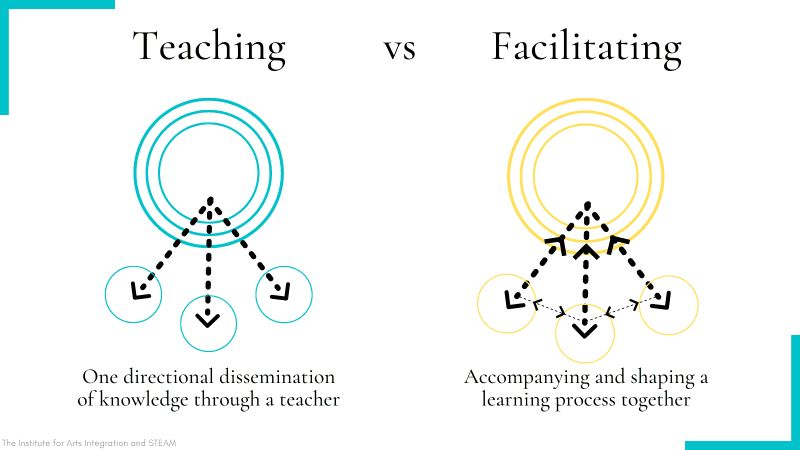
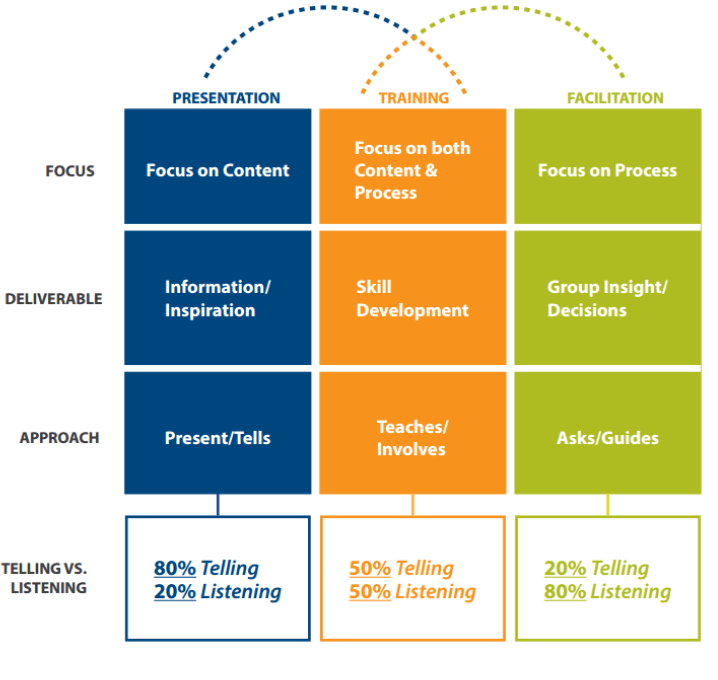
In my sessions of teacher training or classroom teaching, who is doing most of the thinking? Am I doing all the explaining, demonstrating, and giving the answers, or are the children/trainee teachers observing, questioning, trying, discussing, and making meaning? If I stopped talking for 5 minutes, would learning still be happening? Am I asking questions to get the answer I already know or to genuinely discover what children and/or trainee teachers are thinking? Am I trying to make every child and/or trainee teacher reach the same answer in the same way, or am I creating conditions for different ways of thinking and responding?
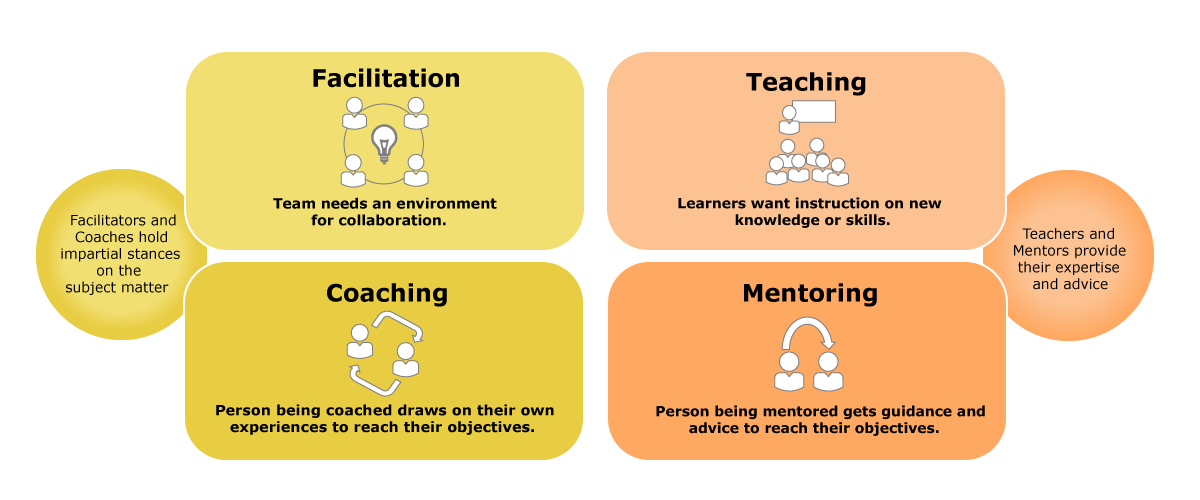
If I am the most active person in the room, I am probably teaching. If the learners are the most active people in the room, I am probably facilitating. What do you think of this one line test question for yourselves as teachers?
Happy Teachers Day! Let there be learning and growth for each one of us.
This is a free newsletter for parents, educators, and students. If you like my content, please subscribe by entering your email address here.
Three Images of the Week
Two Thoughts of the Week
“The principal goal of education in the schools should be creating men and women who are capable of doing new things, not simply repeating what other generations have done.” – Jean Piaget
“The teacher must adopt the role of facilitator not content provider.” – Lev Vygostky
One Video of the Week
Sir Ken Robinson on role of a teacher
Reading with Ms Meenu: Tip of the Week
What We Lose When We Stop Reading
Reading is more than a way to pass the time. It helps us think, imagine, understand others, and make sense of the world. As people spend less time reading books and more time consuming short-form digital content, we risk losing important skills and experiences that develop through sustained reading.
One of the biggest things we lose is our ability to focus deeply. Reading a book requires patience and concentration. We have to follow characters, ideas, and arguments over many pages. When we become used to quickly scrolling through short videos, posts, and headlines, it can become harder to stay focused on one task for a long period of time.
We may also lose some of our critical-thinking skills. Books often present complicated ideas that cannot be understood in a few seconds. Readers have to question information, make connections, notice patterns, and form their own opinions. Long-form reading encourages us to think carefully instead of simply reacting to whatever appears next on a screen.
Reading also builds vocabulary and communication skills. People who read regularly are exposed to new words, sentence structures, and ways of expressing ideas. Over time, this can improve writing, speaking, and comprehension. When reading decreases, we may have fewer opportunities to develop these skills naturally.
Another important loss is imagination. A book does not show us every detail the way a movie or video does. Readers have to picture the characters, settings, sounds, and events themselves. This active use of imagination can strengthen creativity and help people become better at developing original ideas.
We also risk losing empathy and understanding. Stories allow us to experience life through someone else’s perspective. We can enter different cultures, time periods, communities, and personal experiences without leaving our homes. Reading about people whose lives are different from our own can help us become more thoughtful and open-minded.
There is also something valuable about the slower pace of reading. A book gives us space to reflect. We can stop, reread a sentence, think about an idea, or simply sit quietly with a story. In a world filled with notifications and constant entertainment, reading can provide a rare opportunity to slow down and be fully present.
When fewer people read, society may also lose some of its connection to history, knowledge, and culture. Books preserve ideas and experiences across generations. They allow us to learn from people who lived hundreds of years ago and to understand how societies have changed over time. Without strong reading habits, it becomes easier for important knowledge and perspectives to be overlooked.
This does not mean that technology or digital media are harmful. Videos, podcasts, social media, and other forms of communication can all be useful and enjoyable. The problem comes when they completely replace deeper forms of reading.
When we stop reading, we do not simply lose books. We risk losing concentration, curiosity, imagination, empathy, and the ability to engage deeply with complex ideas. Protecting time for reading is therefore not about rejecting technology. It is about preserving a habit that continues to strengthen how we think, communicate, and understand the world.
Happy Reading!
For more information, please visit: placealibrary.ca
Meenu Gera, Consulting Home and School Library Reading Guide
I Think, I Wonder, I Ask
–Dr. Shreelakshmi Subbaswami, Academic Director, Vijaya School, Hassan, Karnataka; https://vijayaschoolhsn.in/
A Teacher Today
India has a long history of the guru-shishya parampara, where the teacher-student relationship was deeply valued. At its heart was the belief that education was more than the transmission of information and the teacher’s value extended beyond the knowledge they possessed.
Over the decades, however, our systems of education have changed. With the emergence of a more neoliberal system, education has increasingly become commodified, and teachers are often viewed as service providers.
Now, we have entered another significant shift where knowledge is no longer difficult to find.
A child can ask a question and receive an answer within seconds. There are online courses, YouTube educators, learning platforms and AI tutors that can explain a mathematical concept, teach a language, demonstrate an experiment or tell a story to thousands of children without ever entering a classroom.
So, what is it that a teacher in a school offers that cannot simply be delivered through a screen?
A simple answer is- our presence. A teacher in a school does not meet a child only for the 40 minutes of a lesson. We see the child as they enter the classroom, how they respond, how they participate, how they learn and sometimes, even when they are not learning. We notice the things that may never appear in an assignment or a test.
A teacher also creates a social world in the classroom. We teach children how to disagree without disrespecting one another, how to listen, how to wait, how to collaborate, how to respond when someone makes a mistake and how to navigate relationships and learn to be part of a community.
A content provider gives access to knowledge.
An educator helps a child make meaning from it.
A content provider can explain.
A teacher can notice.
A content provider can give feedback on an assignment.
A teacher knows when that feedback needs to be encouraging, challenging, gentle or direct.
A screen can provide information.
A teacher becomes part of a child’s lived experience of learning.
This does not mean that online learning, technology or AI have no value. In many ways, they have opened up possibilities for learning that we could not have imagined before. They can expand access, provide multiple ways of understanding a concept and allow children to learn beyond the boundaries of their immediate environment.
Today, the teacher in a school is no longer only a transmitter of content, our role is increasingly about creating connection, nurturing curiosity, facilitating conversations, providing context, offering care, and building a community of learners.
Three questions for you…
- To what degree are we knowledge transmitters, and to what degree are we designers of learning experiences?
- What do we want children to remember about our presence, not just about what we taught them?
- As the role of the teacher continues to change, what parts of our identity as educators do we need to let go of, and what do we need to hold on to?
Showcase: Thrive STEAM project, Hyderabad; https://thrivesteam.com/
Pooja Khatter, Facilitator
Photosynthesis in Action and Solar Energy
The children revisited and recalled their learning about photosynthesis from the previous week. They remembered that plants needed sunlight, water, carbon dioxide and chlorophyll to make their own food. They also recalled that sunlight provided energy and that water travelled from the soil to the leaves.
As a buddy activity, the children explored the aquatic bubble experiment. They observed tiny bubbles around the leaves under strong light and linked this to the oxygen released during photosynthesis.
The children also recalled that humans and other living things release carbon dioxide, while plants release oxygen. They discussed why oxygen was important for people and animals.
To showcase their learning, the children created A3 photosynthesis posters, using drawings and labels to represent sunlight, water, carbon dioxide, food and oxygen.
Maira – 6 years old
Yuvaan – 7 years 11 months old
Neev & Mayra – 8 years old
Samyuktha & Havishka – 8 years 4 months old
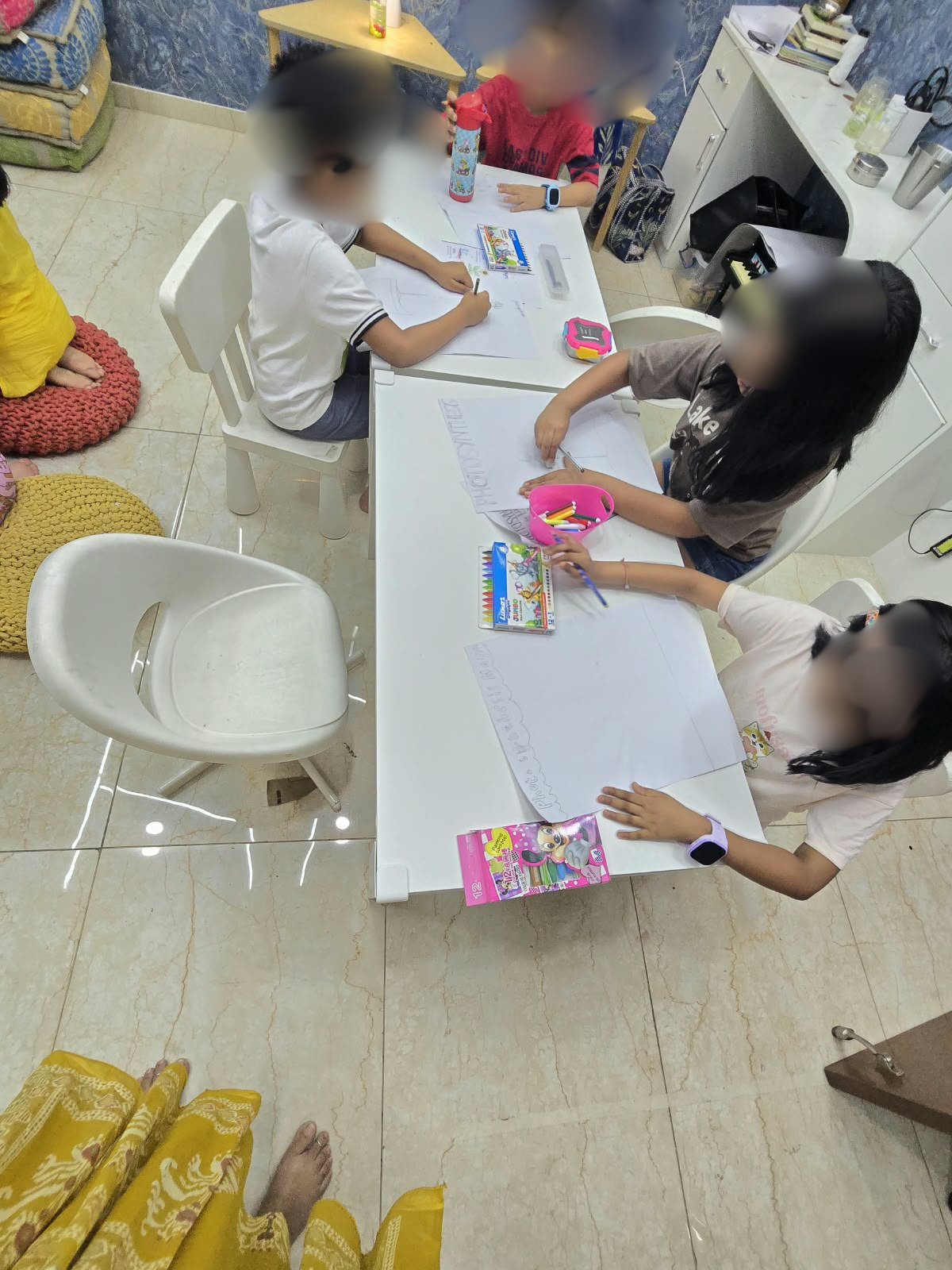
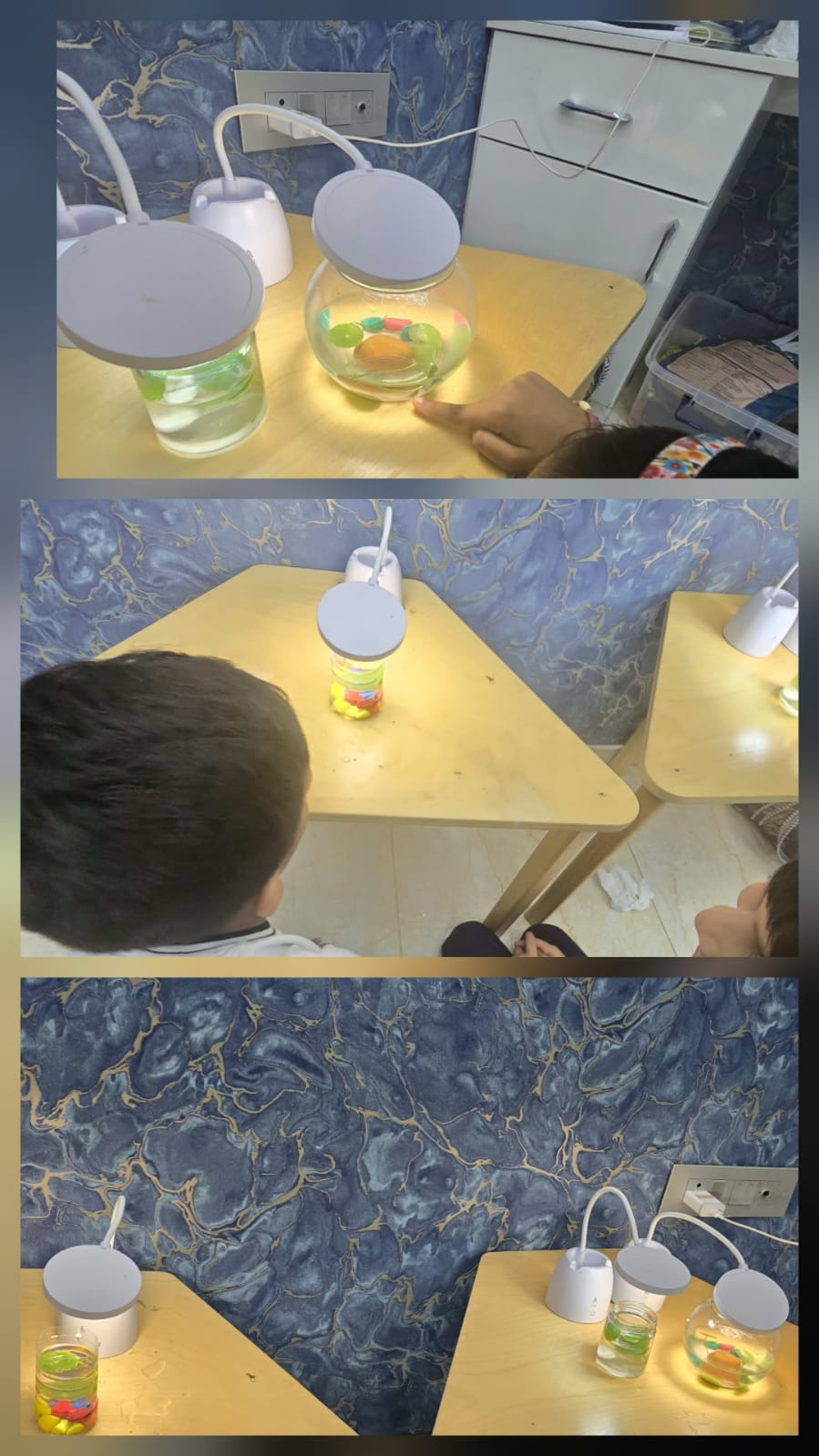
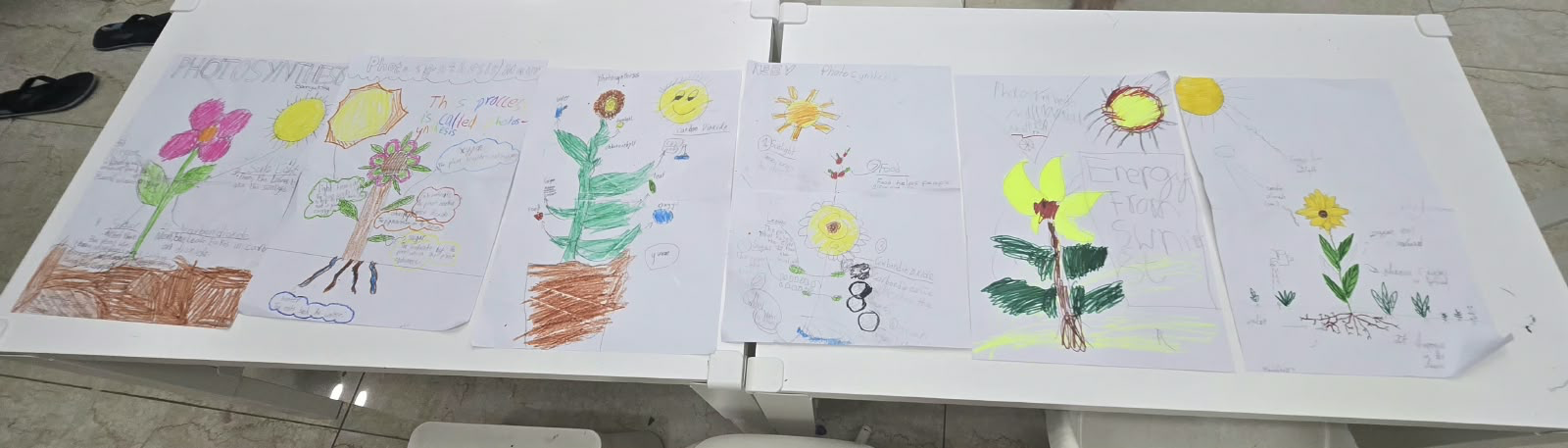
And Finally…
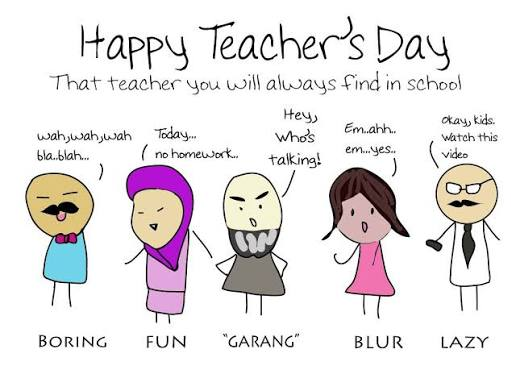
Dear reader,
My work in education includes designing learning ecosystems where students thrive, teachers grow, and schools build lasting cultures of excellence through innovative curriculum, evidence-based practice, and meaningful educational leadership.
Professional development with Ms Niv : Click below to find the teacher and student workshops and trainings I currently offer:
https://docs.google.com/presentation/d/1ypWO8KpVh56vhYqAMH4XoytLRKMXvwpCAfv3l3fryJQ/edit?usp=sharing
3-2-1 Tuesdays with Ms. Niv is a newsletter you can subscribe to and enjoy your learning journey with me.
3-2-1 Tuesdays with Ms Niv
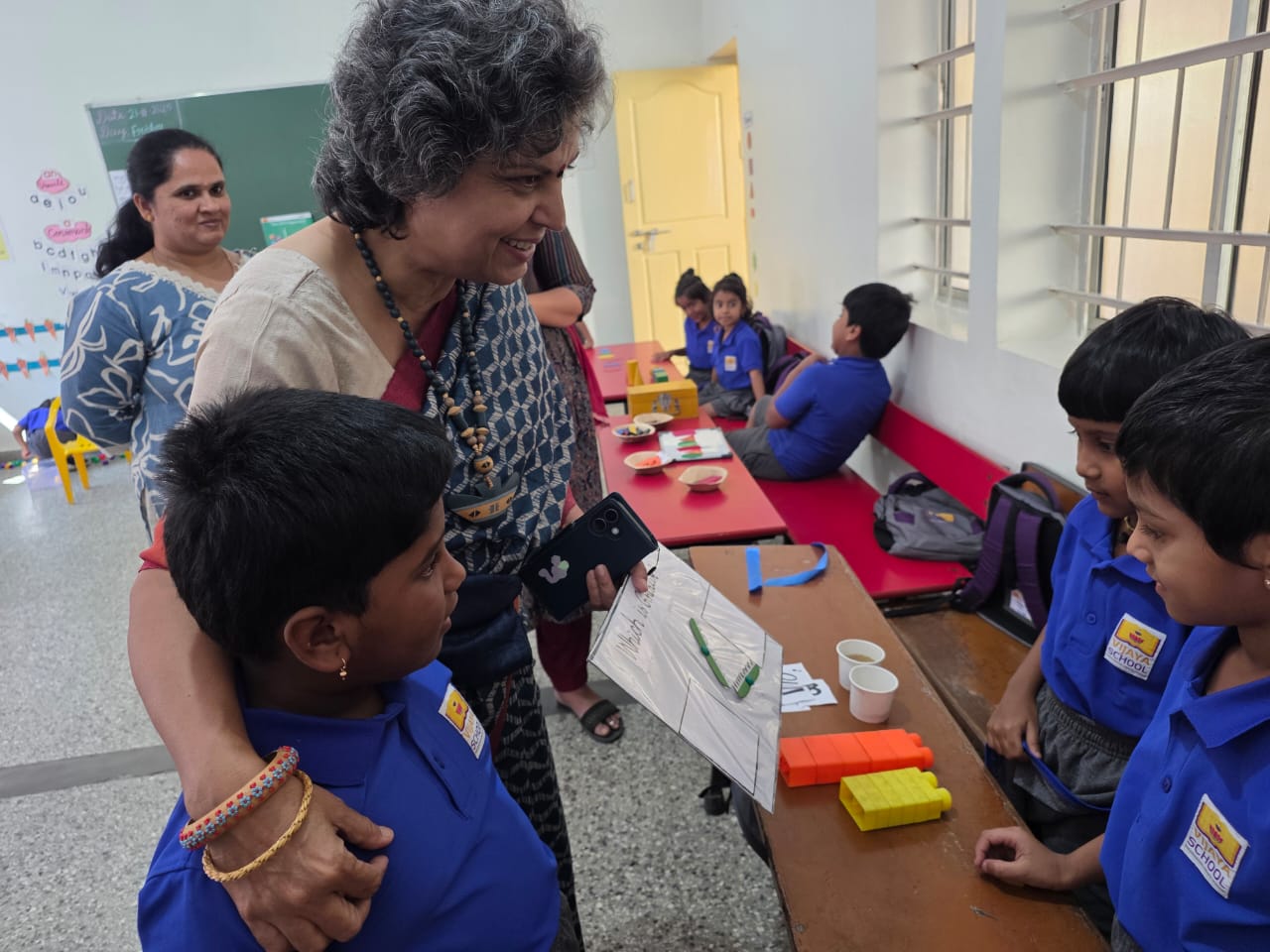
Issue #322, 1st September 2026
What are your thoughts on ‘Free Range Kids’? The kind that we, our parents, were? Who did quite a few things on our own, without major supervision or adult company? Like going to the neighbourhood store and getting groceries/vegetables, or going on a cycle ride around the city, or going for a picnic nearby on their own without adults? Growing up, we used to regularly go with our neighbourhood kids of varying age groups to cycle around the city with some picnic packed and return by late afternoon after spending the entire day hanging out, playing, eating, chatting, climbing little hills, discovering new roads in the small towns of Jaipur and Gwalior where I grew up.
What about free play with no supervision in school? We used to play in the school grounds completely unsupervised while waiting for the second trip of the bus back home, or in the morning when we were on the first trip of the bus and would reach school a good hour before the second trip would come in and the school would actually start.
Is there a scope of this in today’s very anxiety-ridden parenting and school scheduling? Where every minute of every K-12 child is accounted for and organised and supervised by a teacher/parent/assigned adult? What does it do to the development of a child?
Do the children have a right to roam? Have the cities become less child-centric? Have the schools become more restrictive?
This is a free newsletter for parents, educators, and students. If you like my content, please subscribe by entering your email address here.
Three Images of the Week
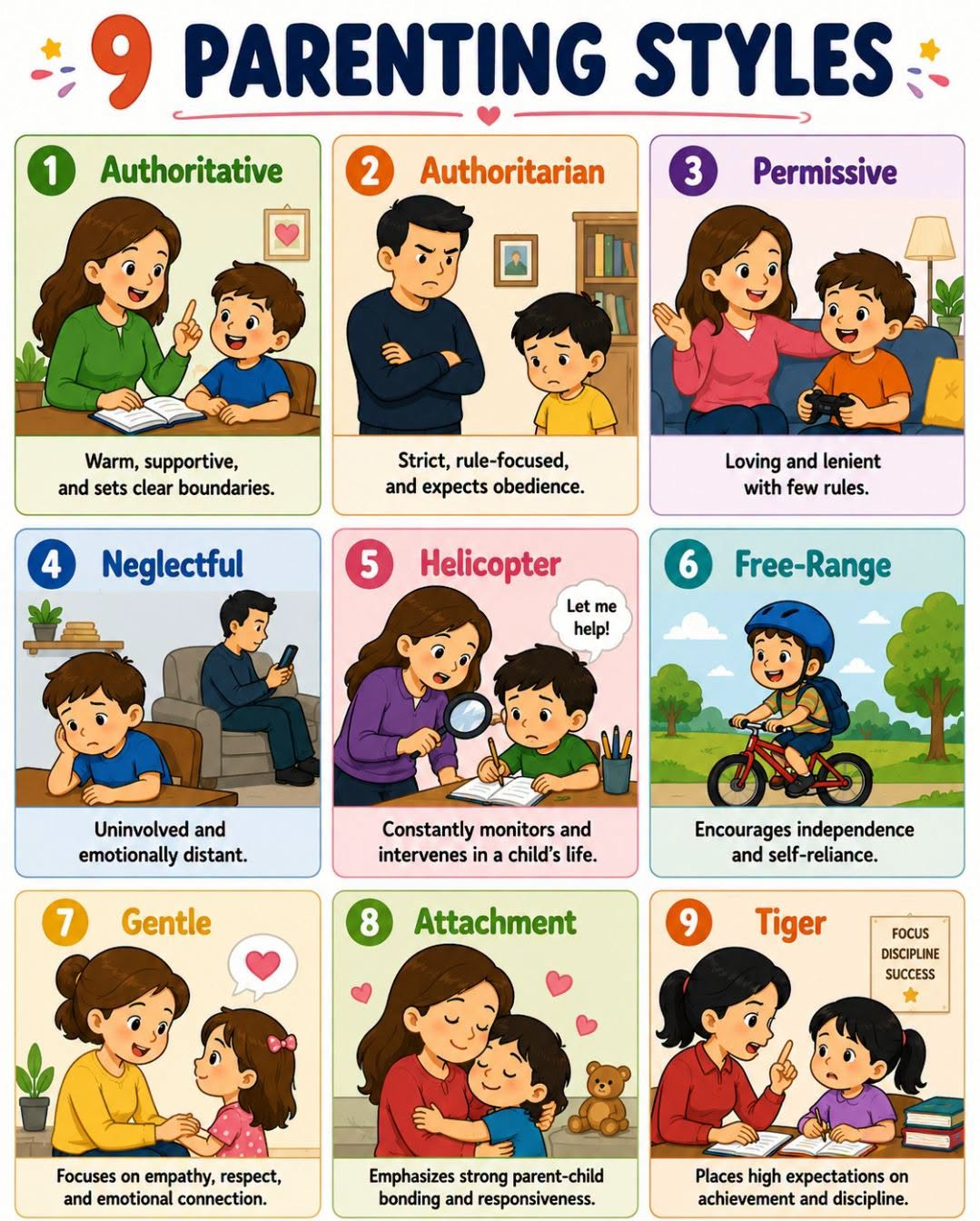
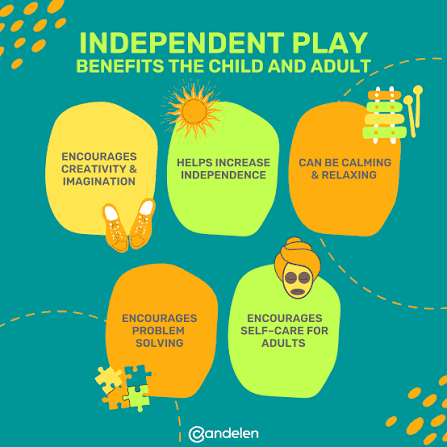
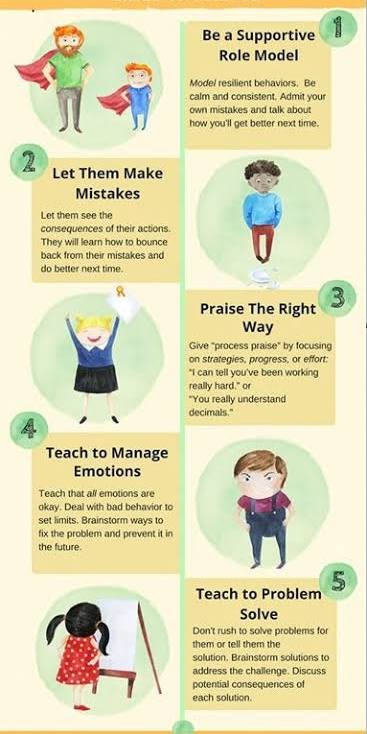
Two Thoughts of the Week
“You don’t remember the times your dad held your handle bars. You remember the day he let go.”
― Lenore Skenazy, Free-Range Kids: Giving Our Children the Freedom We Had Without Going Nuts With Worry
“The child does not work in order to move or in order to become intelligent. He works to adapt to his environment. It is essential that he has many experiences in the environment if he is to do this. ”
Maria Montessori
The 1946 London Lectures
One Video of the Week
The secret to reducing childhood anxiety is actually quite simple: just let kids do more stuff on their own, says Lenore Skenazy, cofounder and president of Let Grow, an organization dedicated to normalizing childhood independence. In conversation with TED’s Whitney Pennington Rodgers, Skenazy discusses why parenting has become more demanding in our safety-obsessed world — and offers a more joyful, trusting alternative to helicopter parenting, with tangible steps for how to start safely (and sanely) letting your kids grow.
Reading with Ms Meenu: Tip of the Week
The Reading Crisis: Why Long-Form Reading Is Disappearing
For generations, reading a novel, biography, or other long-form book was a common way to spend free time. Today, however, fewer people are choosing to read for pleasure. Researchers, educators, librarians, and publishers have increasingly described this trend as a “reading crisis”—a significant decline in the amount of time people spend reading books and other lengthy texts outside of school or work.
One of the biggest reasons for this decline is the rise of digital entertainment. Smartphones, social media, streaming services, video games, and short-form video platforms offer an almost endless supply of entertainment. Unlike books, which require sustained concentration, digital platforms are designed to provide information and entertainment in seconds. As people become accustomed to quickly scrolling between videos, posts, and notifications, spending several hours focused on a single book can feel increasingly difficult.
This change has also affected attention spans and reading habits. Many people still read throughout the day, but much of that reading consists of text messages, social media posts, headlines, emails, and short online articles. This means people are not necessarily reading fewer words—they are reading in a different way. Long-form reading requires readers to follow complex arguments, remember characters and ideas, and remain focused for extended periods. These skills can weaken when they are used less frequently.
Young people have been particularly affected by this shift. Children and teenagers now grow up surrounded by screens and instant entertainment. Reading must compete with platforms specifically designed to capture and hold their attention. When reading is mainly associated with homework, tests, and mandatory school assignments, students may also begin to see books as work rather than something enjoyable.
Busy lifestyles contribute to the problem as well. Between school, work, commuting, extracurricular activities, and social responsibilities, many people feel that they do not have enough time to read. When free time becomes available, watching a short video or an episode of a television show often requires less effort than beginning a 300-page novel.
The decline in reading for pleasure matters because long-form reading provides benefits that other forms of media may not fully replace. Reading can strengthen vocabulary, comprehension, critical thinking, imagination, and the ability to concentrate. Fiction also allows readers to experience situations from the perspectives of different characters, while nonfiction gives people the opportunity to explore complicated subjects in much greater depth than a short social media post.
Libraries, schools, families, and communities therefore have an important role to play in rebuilding a culture of reading. One solution is to give young people more freedom to choose what they read. Graphic novels, fantasy books, sports biographies, mysteries, comics, and even audiobooks can all serve as gateways into reading. Libraries are also changing by creating comfortable social spaces, hosting book clubs and events, offering digital collections, and connecting books with interests such as technology, gaming, art, and popular culture.
Technology itself does not have to be the enemy of reading. E-books, audiobooks, online reading communities, and social media movements focused on books can introduce new audiences to literature. The challenge is finding ways to use technology to encourage deeper engagement rather than allowing constant digital distractions to replace sustained reading entirely.
The reading crisis is therefore about more than declining book sales or fewer trips to the library. It reflects a broader change in how people consume information and spend their attention. Reversing the trend will require making reading feel relevant, accessible, and enjoyable again. In a world increasingly built around speed and short-form content, choosing to slow down and become absorbed in a book may be more valuable than ever.
Happy Reading!
For more information please visit: placealibrary.ca
Meenu Gera
Consulting Home and School Library Reading Guide
I Think, I Wonder, I Ask
–Dr. Shreelakshmi Subbaswami, Academic Director, Vijaya School, Hassan, Karnataka; https://vijayaschoolhsn.in/
When We Write, We Think Better
Unlike my research writings, over the past year, I have been writing more often, my thoughts, questions, classroom practices, observations and sometimes even the things I am still trying to make sense of. Evidently, writing has made me a better thinker.
Writing was not my go-to tool, but somewhere along the way, it became a thinking tool for me. Just as reading helps us think, writing has helped me slow down, organise my thoughts and make sense of ideas that often feel complicated in my head. It has helped me to pause, question and connect ideas. It also leaves behind a record of how my thinking has evolved. This got me thinking about educators.
How often do educators write? And what do they write?
Some write blogs and reflections, some prepare newsletters, some document classroom experiences and some design worksheets, lesson plans and curriculum materials. When educators actively write about and around the curriculum, they are not merely implementing a curriculum created by someone else. They are also creating, interpreting and shaping curriculum. Perhaps writing can become a professional learning practice, not because every teacher needs to become a writer, but because every teacher needs opportunities to think deeply about what they do.
Three questions for you…
- When was the last time you wrote something that made you think?
- What would you write today if nobody was going to evaluate it?
- How can we provide enough opportunities for teachers to document and share their thinking?
Showcase: Thrive STEAM project, Hyderabad; https://thrivesteam.com/
Pooja Khatter, Facilitator
Exploring Sunlight, Energy and Plants
The workshop began by asking the children what they needed to have energy. They responded with food, water, carbohydrates, proteins and fibre. When asked what gave them energy, they mainly mentioned food and water. They identified water, sunlight, soil and air as things plants needed to grow.
The teacher explained that, unlike humans, plants did not get their food from a kitchen. They used sunlight to help make their own food. The children observed a solar panel and understood the connection between solar panels and leaves, as both use sunlight as an energy source.
Using a globe and light source, the children identified the light as the Sun. They observed that the part of the globe facing the light received sunlight, while the opposite side remained dark. They understood that sunlight was an important source of energy for plants and predicted that without sunlight, plants might become weak, stop growing, dry up or die.
The children then compared two plants—one kept in sunlight and the other in a dark cupboard. They noticed differences in the colour and appearance of the leaves. They observed that the plant kept in sunlight looked greener and healthier, while the plant kept in darkness looked weak and lacked energy because it did not receive enough sunlight, water and air. They predicted that the plant kept in darkness might become weaker or die over time.
During the leaf exploration, the children noticed that leaves differed in size, shape and texture. They identified the lines on the leaves as veins and learned that veins helped transport water to different parts of the leaf.
Through the leaf-rubbing activity, the children observed the outlines and vein patterns of different leaves. They noticed that some leaves had thicker main veins, while others had smaller and more branched veins.
Overall, the children were actively engaged and curious throughout the workshop. They shared their ideas, made predictions and connected their observations to their learning. They understood that plants need sunlight, water and air to grow, and that leaves use sunlight and water to help plants make their own food through photosynthesis. Maira:6 years Yuvaan: 7 years 11 months Neev & Mayra: 8 years old Samyuktha & Havishka: 8 years 4 months old
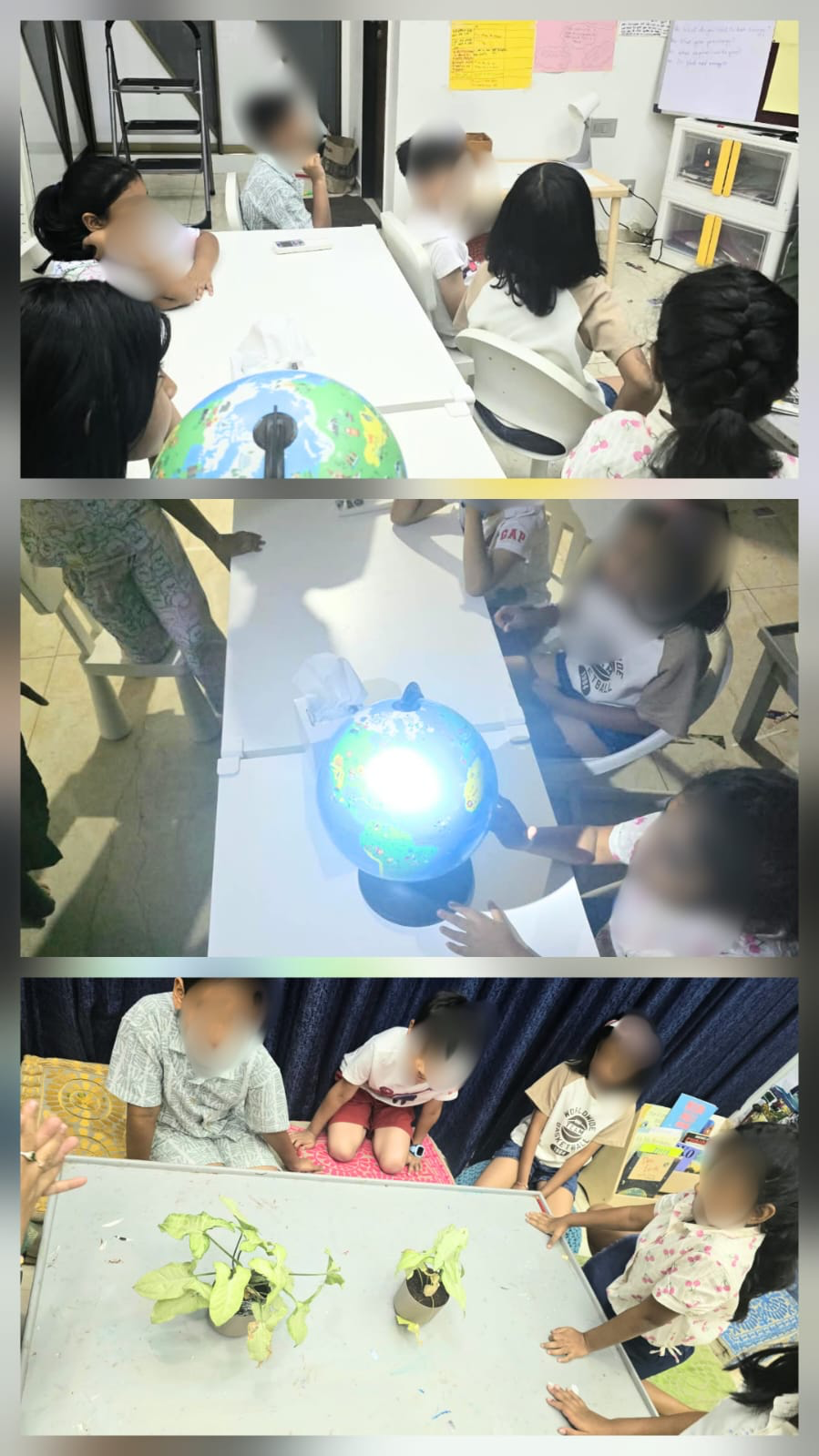
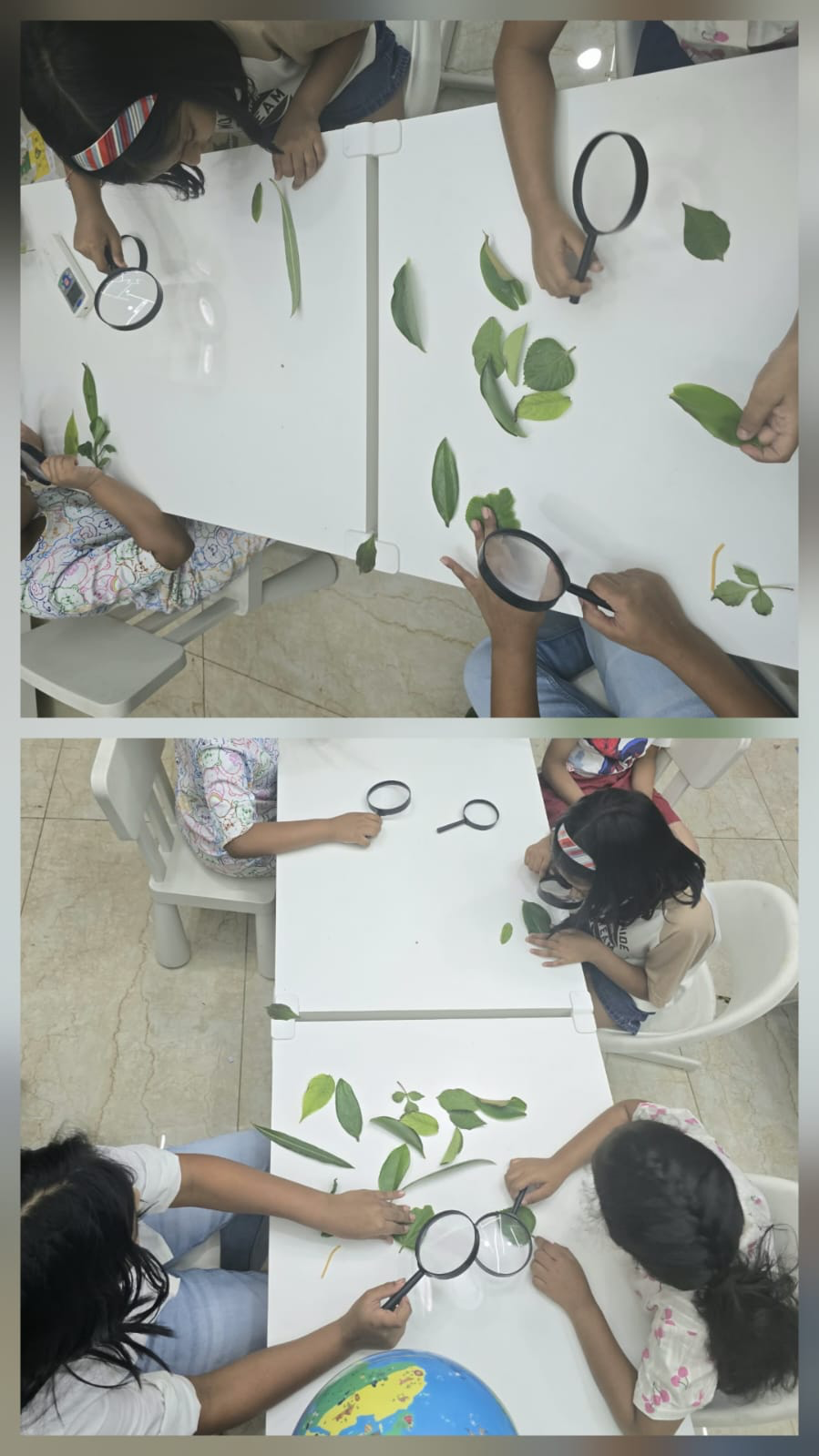
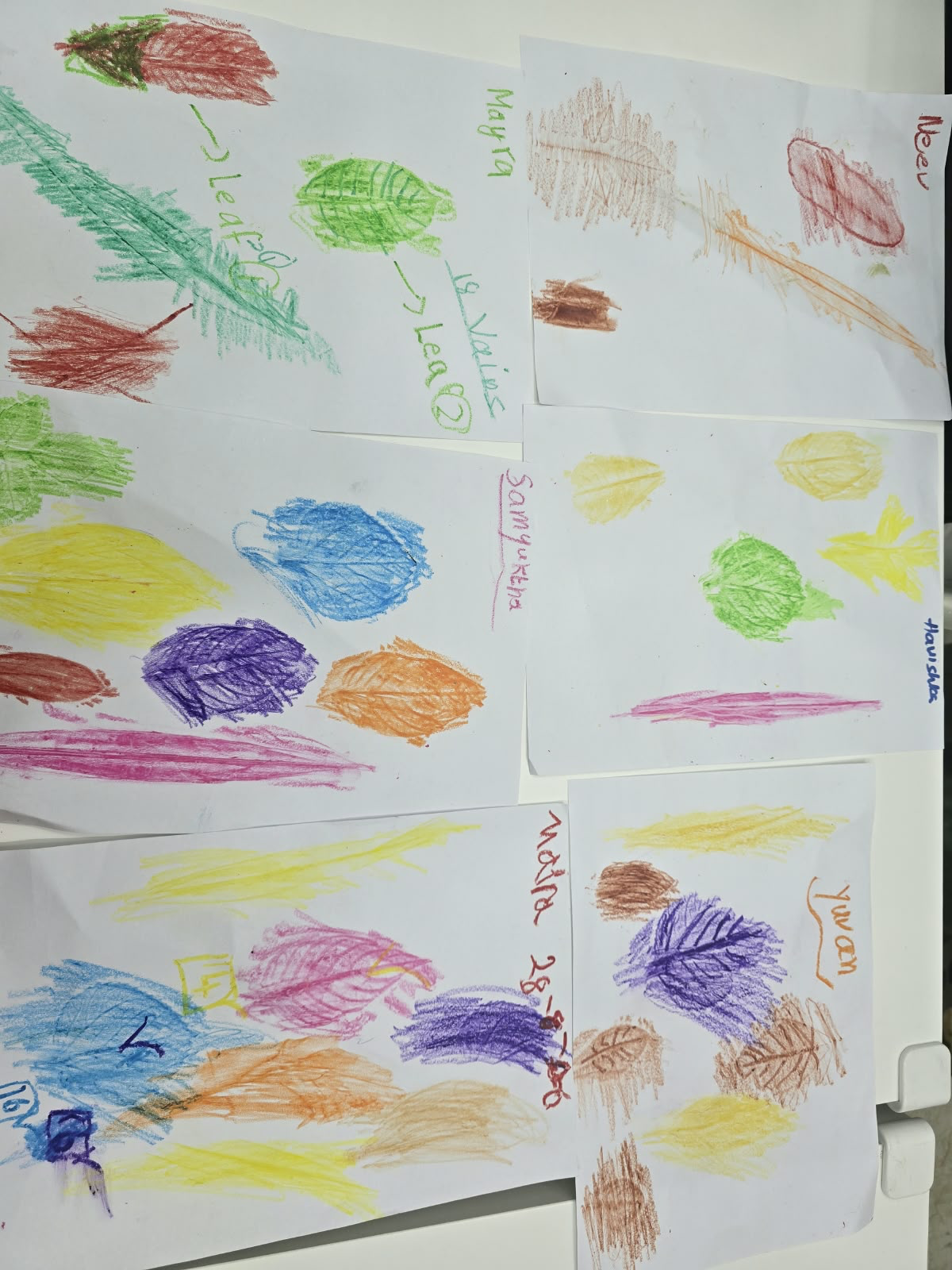
And Finally…
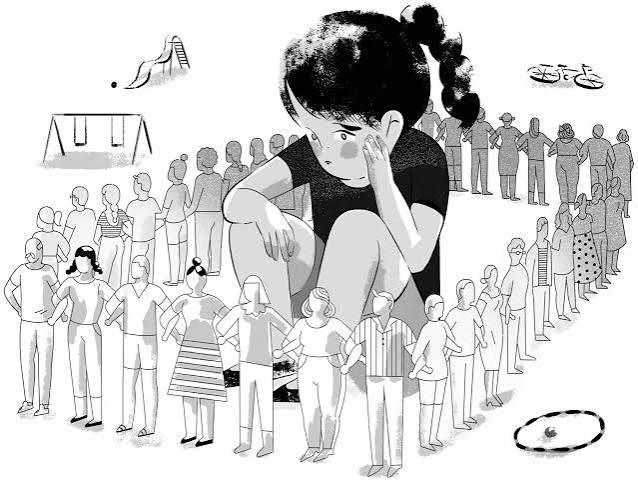
Dear reader,
My work in education includes designing learning ecosystems where students thrive, teachers grow, and schools build lasting cultures of excellence through innovative curriculum, evidence-based practice, and meaningful educational leadership.
Professional development with Ms Niv : Click below to find the teacher and student workshops and trainings I currently offer:
https://docs.google.com/presentation/d/1ypWO8KpVh56vhYqAMH4XoytLRKMXvwpCAfv3l3fryJQ/edit?usp=sharing
3-2-1 Tuesdays with Ms. Niv is a newsletter you can subscribe to and enjoy your learning journey with me.
3-2-1 Tuesdays with Ms Niv
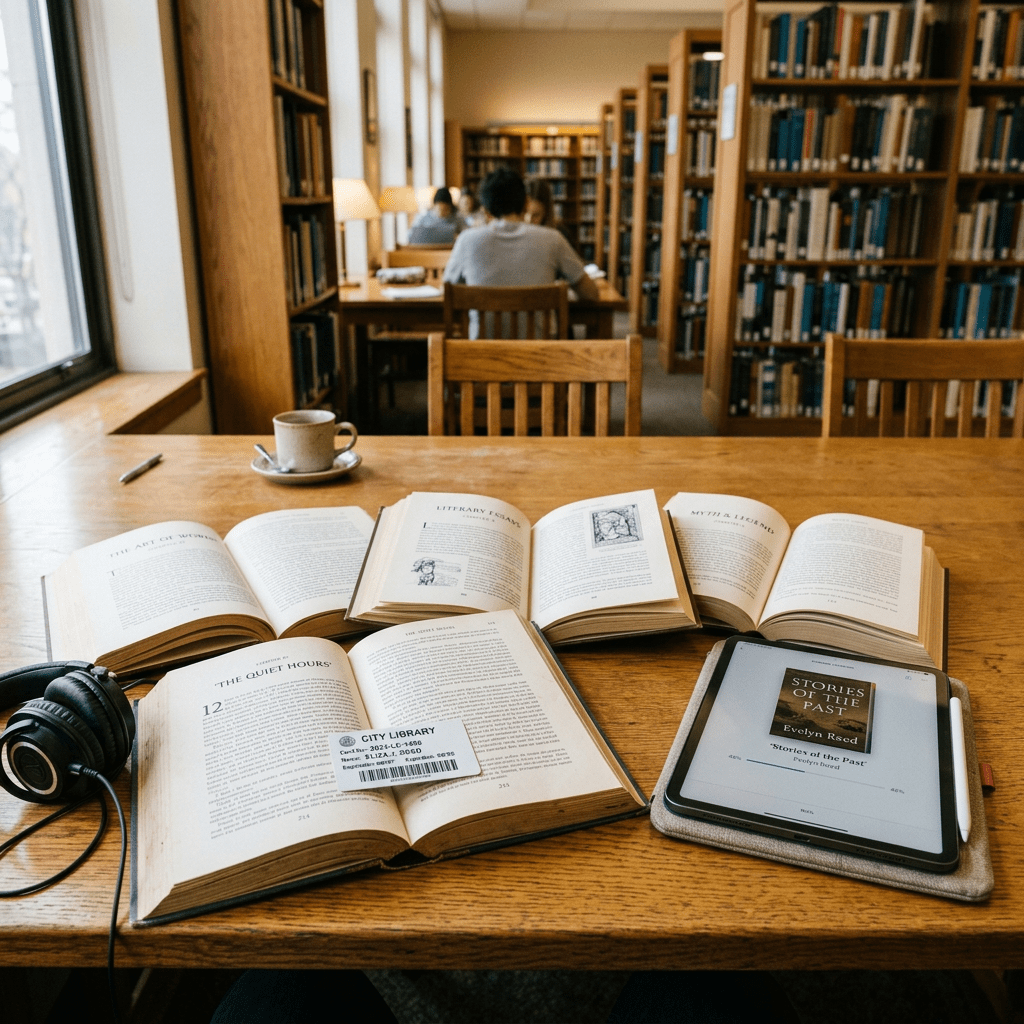
Issue #321, 25th August 2026
Read when? Read what? Read where? Read how?
Are you reading yourself as a teacher, as a parent? Your child and/or your student will take a leaf out of your book of reading habits 🙂
This is a free newsletter for parents, educators, and students. If you like my content, please subscribe by entering your email address here.
Three Images of the Week


Two Thoughts of the Week
“Books are a uniquely portable magic.”
― Stephen King, On Writing: A Memoir of the Craft
“You don’t have to burn books to destroy a culture. Just get people to stop reading them.”
― Ray Bradbury
One Video of the Week
Speaking is already in our genes. But reading is not. Until about 100 years ago most people didn’t do it all. When we read fiction especially, we create new pathways in our brain. Reading 30 pages of fiction every night, gets the pathways thicker and thicker. Our brain needs a workout just like our body.
Rita Carter is a writer, broadcaster and journalist who specializes in the workings of the human brain. Her books include the first layman’s guide to neuroscience: Mapping the Mind, which has been translated into 14 languages. For seven years she presented London’s nightly news programme, “Thames News” , and has written for magazines and newspapers throughout the world, including the London Times, Telegraph, Guardian and New Scientist. She has a deep interest in bringing art and science together and is a Patron at the influential London-based Foundation “Art and Mind”. Rita Carter is a writer, broadcaster and journalist who specializes in the workings of the human brain. Her books include the first layman’s guide to neuroscience: Mapping the Mind, which has been translated into 14 languages. For seven years she presented London’s nightly news programme, “Thames News” , and has written for magazines and newspapers throughout the world, including the London Times, Telegraph, Guardian and New Scientist. She has won many awards for her work, including, on three occasions, the Medical Journalists Association award for excellence and she holds an Honorary PhD in Brain science from Leuven University – one of Europe’s oldest academic institutions.
Reading with Ms Meenu: Tip of the Week
How Reading Habits are Changing
Reading is still an important part of everyday life, but the way people read is changing rapidly. Printed books are no longer the only option. Today, readers move between physical books, e-books, audiobooks, websites, social media, and other digital platforms. These changes are reshaping not only what people read, but also how long they read and why they choose certain types of content.
One of the biggest changes is the growth of digital reading. Smartphones, tablets, and e-readers make it possible to carry thousands of books and articles in one device. People can read while travelling, waiting for an appointment, or taking a break at work. Digital access has made reading more convenient, especially for people who may not have easy access to a bookstore or library.
At the same time, people are increasingly reading shorter pieces of content. Social media posts, news summaries, text messages, blogs, and online articles have become a major part of daily reading. Instead of spending an hour focused on one book, many readers now consume information in shorter bursts throughout the day. This can make it harder to develop the concentration needed for long-form reading.
Audiobooks have also become much more popular. They allow people to experience books while driving, exercising, cooking, or completing other tasks. For busy readers, audiobooks can make literature more accessible and easier to fit into everyday routines. They have also expanded the idea of what it means to “read” a book.
Social media is influencing reading habits as well. Online communities such as BookTok, BookTube, and book-focused Instagram accounts have introduced millions of people to new authors and titles. A recommendation from a popular creator can quickly turn an older or lesser-known book into a bestseller. Reading is becoming more social, with readers sharing reviews, reactions, recommendations, and reading challenges online.
People are also becoming more selective about what they read. With so many entertainment choices available, readers often choose books that closely match their personal interests. Young readers in particular may be drawn to fantasy, graphic novels, manga, romance, sports stories, or books connected to movies and television. Giving readers more choice can help make reading feel enjoyable rather than simply an academic responsibility.
Libraries are adapting to these changes too. Many now offer e-books, audiobooks, online databases, technology programs, community events, and digital lending services alongside traditional books. Instead of being places used only to borrow books, libraries are becoming broader learning and community spaces.
However, the shift toward digital and short-form content also presents challenges. Constant notifications and endless scrolling can make sustained concentration more difficult. Readers may become accustomed to quickly switching between pieces of information instead of spending long periods exploring one story or idea. Long-form reading therefore has to compete for attention in a way that it did not in the past.
Reading is not necessarily disappearing. Instead, it is becoming more digital, flexible, personalized, and social. The challenge is finding a balance between the convenience of modern reading and the deeper concentration that books can provide. As technology continues to develop, reading habits will continue to change, but the desire to learn, explore stories, and connect with new ideas is likely to remain.
Happy Reading!
For more information please visit: placealibrary.ca
Meenu Gera
Consulting Home and School Library Reading Guide
I Think, I Wonder, I Ask
–Dr. Shreelakshmi Subbaswami, Academic Director, Vijaya School, Hassan, Karnataka; https://vijayaschoolhsn.in/
Are Children Really Reading?
Have you ever seen a child read a passage fluently, only to realise, when you ask what it means or ask them to retell it, that they have no idea?
In the foundational years, children are learning to sound out words, blend them, read fluently and, most importantly, make meaning from what they read. Yet, one practice that continues to prevail in classrooms is repeated reading of the same text. The danger is that children can become so familiar with a passage that they can recite it without really looking at the words. Many may mistake this fluency for reading. But reading is not simply saying the words aloud. It is making sense of them.
For years, mass reading, repeated chanting and memorising texts have been used with the belief that more repetition automatically leads to better learning. But repetition without comprehension takes away the very skill children need to build- to think, infer, question and connect with a text.
This year, we are consciously trying to change this in our classrooms. Before moving a child to a new text, we check whether they can retell the story, answer simple questions and use new words in their own conversations. For children who need more support, instead of repeatedly practising the same passage, we used key vocabulary from the syllabus to create short passages and stories. We curated books, used AI thoughtfully and provided opportunities to read different texts.
The goal was simple: more reading, not more repetition; more meaning, not just more words.
We deliberately change the question we ask- “Can the child read this?” to “What did the child understand from what they read?”
Three questions for you…
- How can we create reading experiences where children are not just decoding words, but questioning, predicting, connecting, interpreting and responding to what they read?
- In what ways might our classroom practices be teaching children to perform reading rather than actually read?
- What opportunities are we giving children to read unfamiliar texts and apply what they know?
Showcase: Thrive STEAM project, Hyderabad; https://thrivesteam.com/
Pooja Khatter, Facilitator
Nature’s Recyclers:The children revisited their learning about soil, seeds, and plant growth by observing the soil-layer jars and germination cups they had prepared earlier. They shared what they remembered about the different soil layers and discussed what seeds needed to grow. They shared that seeds needed air, water, sunlight, and a suitable place to grow. Samyuktha also added that seeds needed soil to grow.
The children discussed the plant life cycle and recalled the stages in the correct sequence: seed, germination, sprout, seedling, adult plant, flowers, and fruits. They connected the stages of the life cycle to their understanding of how healthy soil supported plant growth.
The children then watched a video about earthworms and learned how these little helpers supported healthy soil. After watching the video, they also observed real earthworms. They carefully watched how the worms moved through the soil and shared their observations. They understood that earthworms created tunnels in the soil, which helped air and water reach the plant roots. They also learned that earthworms helped break down dead leaves and other plant materials, adding nutrients back into the soil.
To extend their learning, the children made a decomposition jar using soil, dry leaves, twigs, and small worms. They learned that natural materials slowly break down and return nutrients to the soil, helping plants grow. The children will observe their decomposition jars next week to see what changes have taken place in the dry leaves, twigs, and other materials. This hands-on activity helped them understand how earthworms and decomposers play an important role in keeping soil healthy and supporting plant growth.
Krisha 4 years, Maira and Tara 6 years 11 months, Yuvaan and Tashi 7 years 11 months, Neev and Mayra 8 years, and Samyuktha 8 years 3 months.
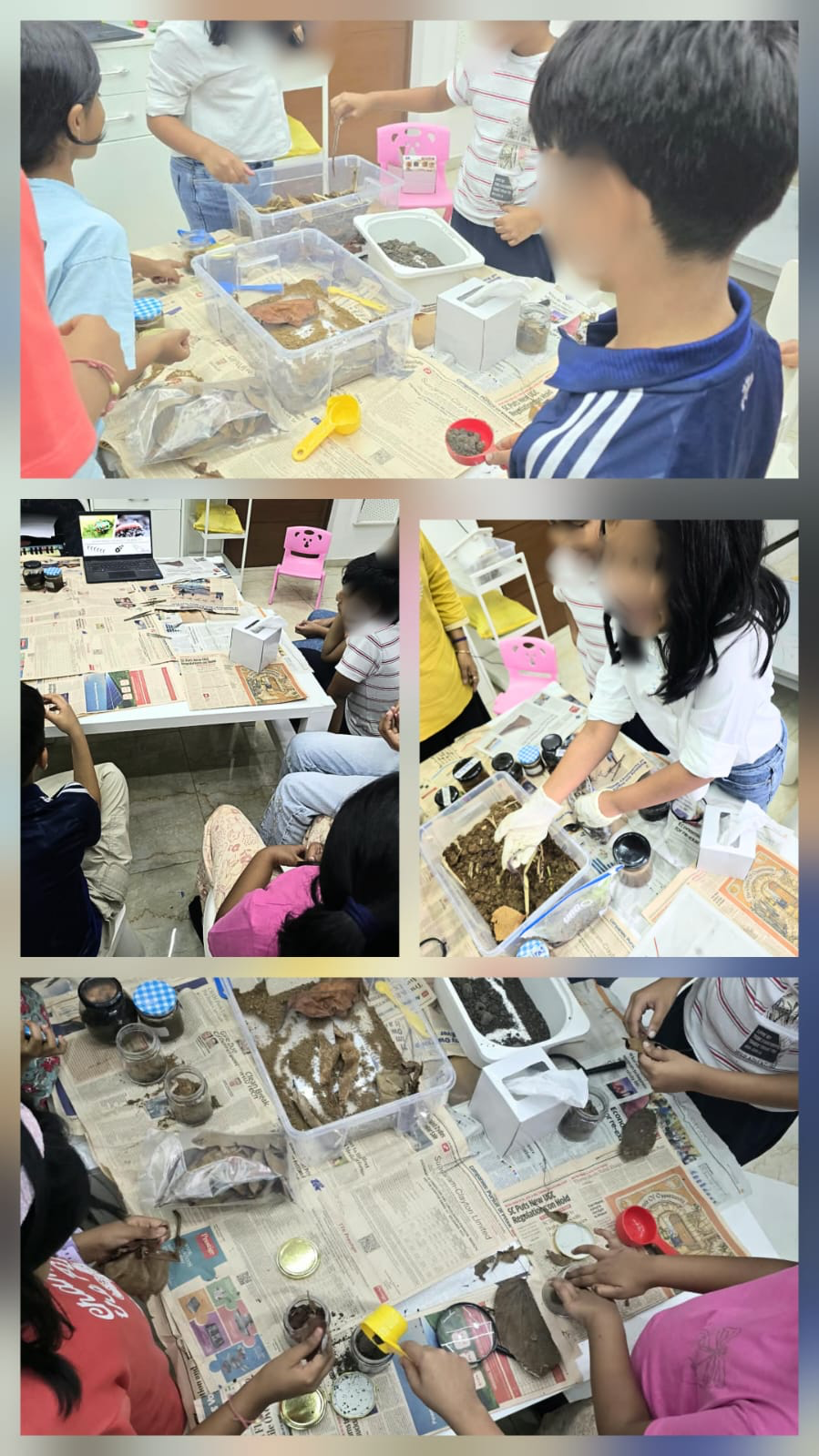
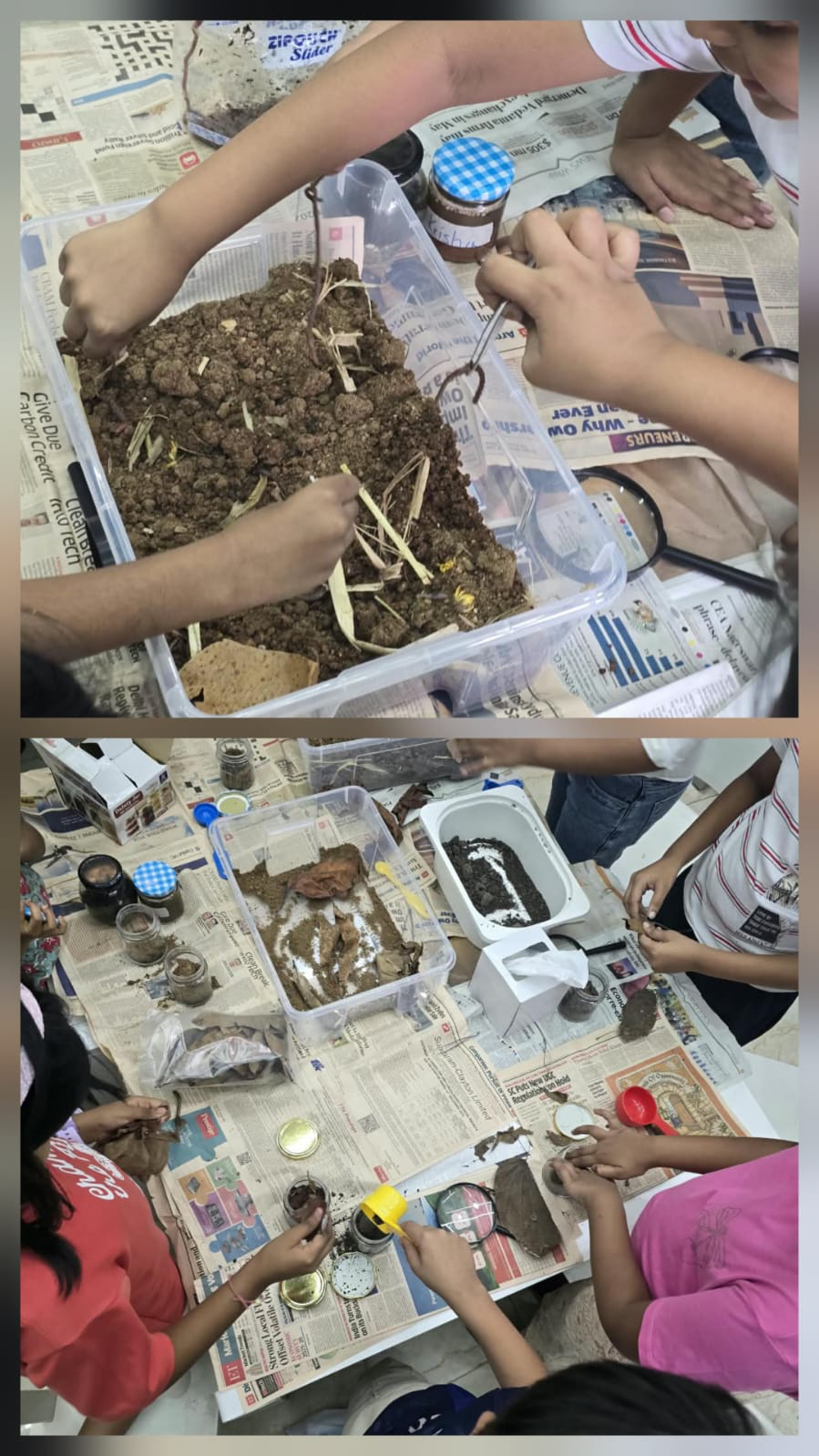
Teacher for Teachers
Riddhi Goswami, Facilitator
Exploring Animal Habitats
Our little learners had a wonderful time discovering where different animals live! The class began with a picture discussion featuring various animals and their habitats. Rudra (4 years) and Myra (6 years) enthusiastically shared what they knew about several animals and where they made their homes.
A special moment came when Myra (6 years) sketched a habitat, while Rudra (4 years), busy pasting pictures of sea animals, made a lovely connection — recalling his trip to Singapore and excitedly talking about seeing sharks and touching dolphins this discussion and activities built awareness and understanding of different animals and their natural habitats, expanded vocabulary related to animals, environments, and habitats, enhanced fine motor and creative skills through sketching and pasting activities Fostered the ability to relate classroom learning to real-life experiences.
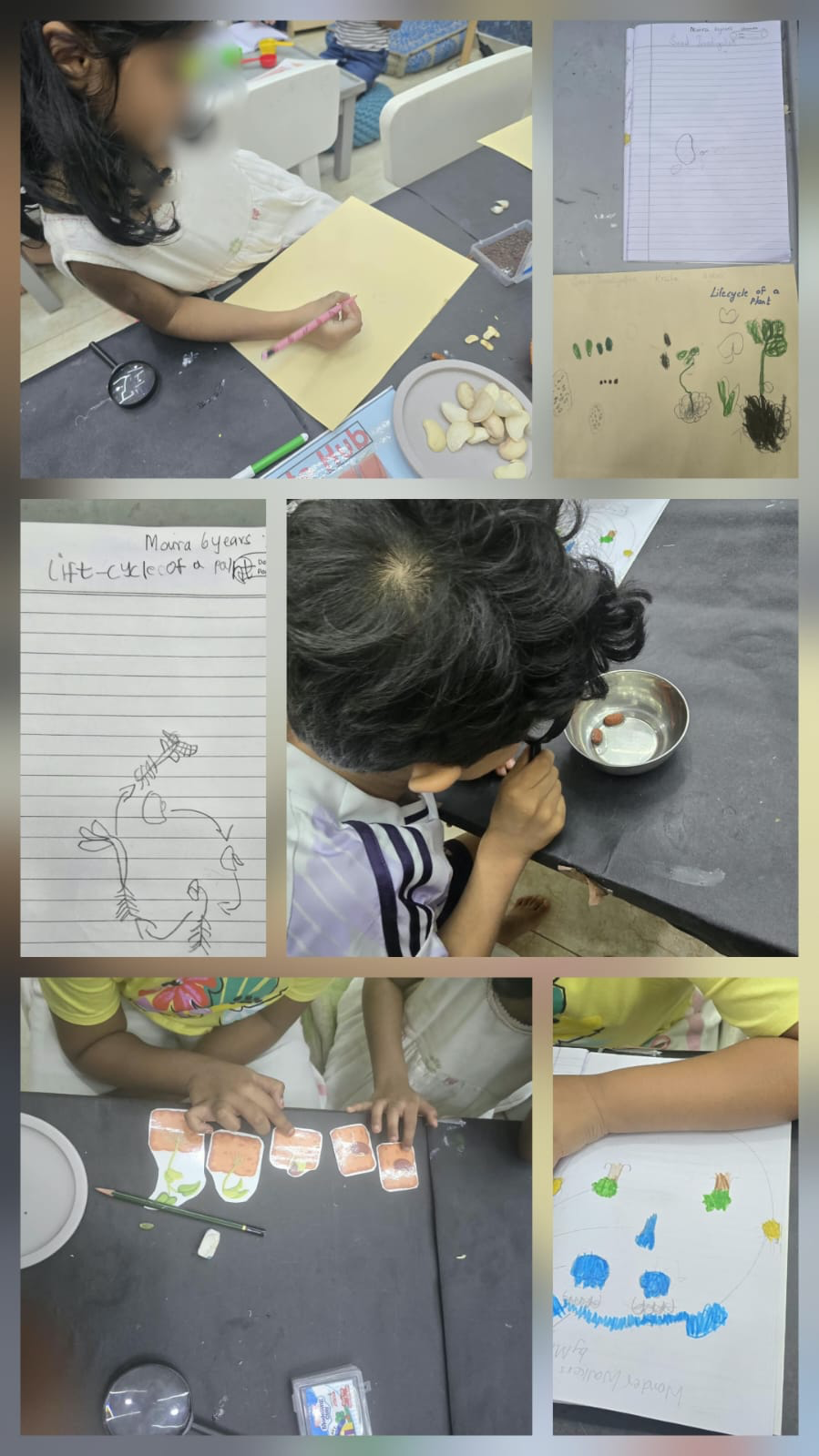
Dear reader,
My work in education includes designing learning ecosystems where students thrive, teachers grow, and schools build lasting cultures of excellence through innovative curriculum, evidence-based practice, and meaningful educational leadership.
Professional development with Ms Niv : Click below to find the teacher and student workshops and trainings I currently offer:
https://docs.google.com/presentation/d/1ypWO8KpVh56vhYqAMH4XoytLRKMXvwpCAfv3l3fryJQ/edit?usp=sharing
3-2-1 Tuesdays with Ms. Niv is a newsletter you can subscribe to and enjoy your learning journey with me.

