Nivedita Mukerjee
Education consultancy for parents and schools
3-2-1 TUESDAYS WITH MS NIV
Issue #189, 20th February 2024
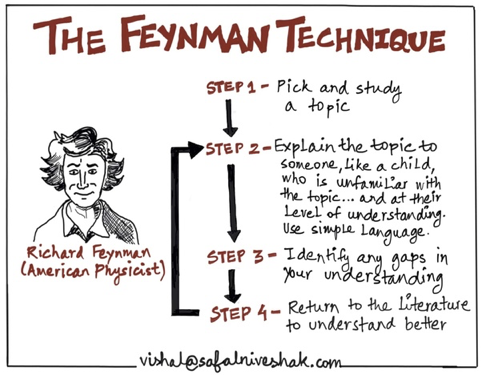
How well does your recall work? How much time does it take to commit a new learning to memory? What are your ‘go-to’ methods for learning something new? Do you know what works for you, your student, or your child? Here are a few study methods and tips for continuing to learn lifelong. While brain development is maximum until age 5 the 21st century demands new skills to be learned every so often right? To learn faster and retain more has become a life skill.
This is a free-to-subscribe newsletter. So, if you like my content, please subscribe to it by putting in your email ID here.
Three images of the week


Two Thoughts of the Week
“Take care of all your memories. For you cannot relive them. ” Bob Dylan
“I think the brain is essentially a computer and consciousness is like a computer program. It will cease to run when the computer is turned off. Theoretically, it could be re-created on a neural network, but that would be very difficult, as it would require all one’s memories.” Stephen Hawking
One Video of the Week
Sharing the secrets to productive learning, backed by neuroscience. Dr Lila Landowski explains the methods that can be used to allow us to learn faster. Dr Lila Landowski is a multi-award-winning neuroscientist and lecturer who expertly arms people with an understanding of how their brain works to help them make better life choices. She is also a Director of the Australian Society for Medical Research, a Director of Epilepsy Tasmania, and a regular guest expert science communicator for the ABC.
Guest Expert of the Week
Reading with Ms. Meenu
Reading to Comprehension:
Teaching students to generate and answer their questions about the text encourages them to process it more actively. Questions can range from literal to inferential. We should start with literal questions, writing who, what, where, when, why, and how on the board. Then, after reading a page or two of the text ask questions like “Who can think of a when question? Generating questions takes lots of practice. If students struggle with it, take things to the sentence level by showing them how to flip a statement into a question.
For example: “Frog live at the pond.”
Then model how to flip that statement into a question “Where do frogs live”.
By generating further comprehension tasks allows them to think beyond.
Here is an example of a title “Frog and Toad, A Lost Button.”
Who: Frog and Toad,
Where: meadow, woods
When: Afternoon,
What: Toad lost his button,
How: The Frog helps him find it.
It is recommended to practice these tools while reading.
These strategies have been suggested in the professional resource “7 Mighty Moves” by Lindsay Kemeny.
Happy Reading!
Meenu Gera
Consulting home and school librarian and reading guide.
And Finally…

Dear reader,
I have been a research scientist, a journalist, and an educator for over 3 decades. I read and, I write. With this weekly newsletter, I share what I read, learn, and, experience. At the same time, I engage with students, parents, and teams of teachers across K-12 schools, higher education institutions, and ed-tech organizations.
3-2-1 Tuesdays with Ms. Niv is a newsletter you can subscribe to and enjoy your learning journey with me.
This newsletter is supported by:


 Nivedita Mukerjee