Nivedita Mukerjee
Education consultancy for parents and schools
3-2-1 TUESDAYS WITH MS NIV
Issue #222, 8th October 2024
What are my core values and beliefs? What activities or subjects am I most passionate about? How do I define success for myself? What kind of person do I want to become? What are my strengths and weaknesses? How do my cultural background and experiences shape who I am? What relationships and communities are most important to me? How do I want to contribute to the world? What fears or insecurities hold me back? How do I handle challenges and setbacks?
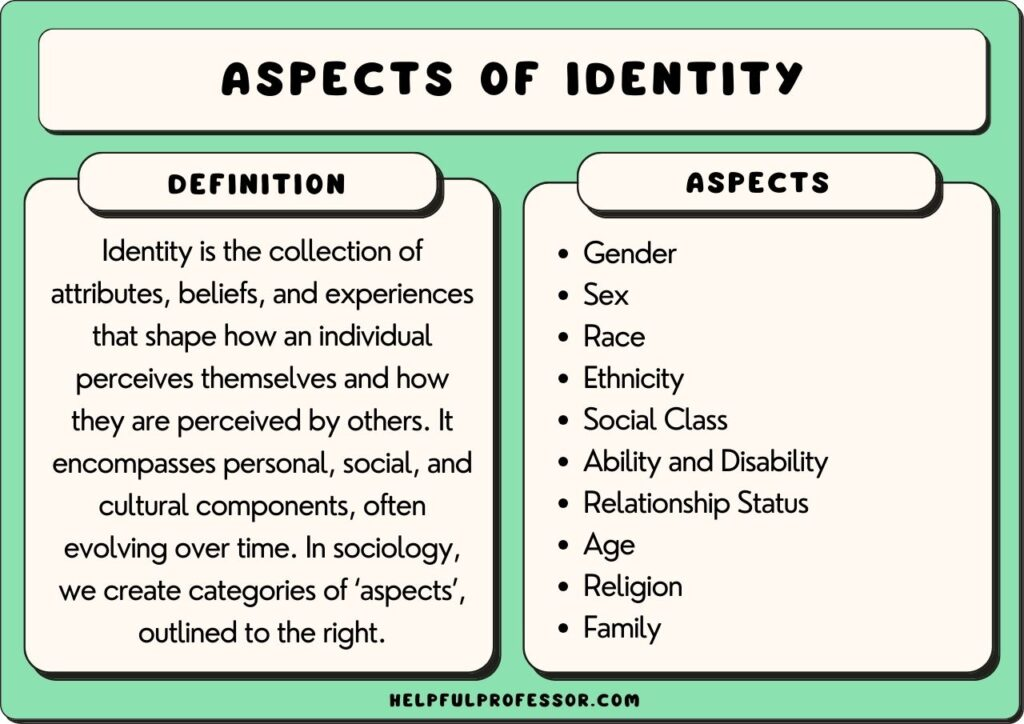
What all aspects make my identity? Here are some thoughts to ponder upon as a student, teacher, parent and, as an individual.
This is a free newsletter. If you like my content, please subscribe by entering your email ID here.
Three images of the week


Two Thoughts of the Week
“I am no bird; and no net ensnares me: I am a free human being with an independent will.”
― Charlotte Brontë, Jane Eyre
“Most people are other people. Their thoughts are someone else’s opinions, their lives a mimicry, their passions a quotation.”
― Oscar Wilde, De Profundis
One Video of the Week
What is identity, and why is it so important? In this TEDx Talk, Sidney Muntean dives into her own personal experiences with identity, and why, ultimately, accepting ourselves is enough. Sidney Muntean is a junior studying Creative Writing at OCSA. She enjoys writing poetry, prose, screenplays, and hybrid forms. She is particularly interested in the intersections between varying creative art forms and believes that creativity is the best representation of humanity. Sidney is also passionate about teaching, as she holds creative writing workshops for children at her local library in addition to teaching English as a second language for children in Southeast Asia. When she’s not writing or teaching, Sidney can be found curled up with a book, off on a picnic, or dancing in the rain.
Reading with Ms. Meenu: Tip of the week
Establishing a Framework:
Think about yourself as a reader. You probably choose what you want to read for a variety of purposes. You have opportunities to read for long periods of time. You respond mostly through reflection, conversation, and collaboration. Sometimes you share your thinking and insights with others. In a reading workshop children have daily opportunities to learn how to do the same.
Reading workshop is a simple framework for teaching and learning that beautifully accommodates my beliefs about how children learn. A workshop format is based on the principles of time, choice, and response. It allows for in-depth techniques for teaching and learning. This format also provides flexibility and differentiation. Ultimately, it creates an independent reader.
Reading workshops give them strategies on what to read and how to reflect on it.
Since it is Dussehra Break here are some of the book recommendations about to read:
· The Secret Life of Trees (Butterfield 2020)
· Ten ways to hear snow (Camper 2021)
· Stick and stone (Ferry 2021)
· The Beeman (Krebs 2020)
· Planting the Wild Garden (Galbraith 2011)
Keep Reading!
Meenu Gera
Consulting home and school librarian and reading guide.
Career guidance and placement strategies:
Career Redesign for a Working Professional, 2017
Abbas is a civil engineer by qualification. He gained one year of on-site experience. Then, he transitioned to customer support at Amazon. Within two years, he was promoted to team lead. He approached us to plan his master’s degree in Business Analytics from Canada, seeking guidance on the process. A career counseling session was arranged with a Fermata expert.
During the session, Abbas expressed his desire to pursue a master’s in Business Analytics. He explained that he no longer wished to return to civil engineering. He did not enjoy the daily tasks of monitoring construction work, and he found the career growth uninspiring. However, he was uncertain whether Business Analytics was the right field for him.
The career expert advised Abbas to enroll in a short-term Business Analytics program. Pursuing higher education requires a significant investment of time. It also demands a substantial amount of money. The program would help him explore the field. It would give him a clearer understanding of its demands. The expert also provided a few options to choose from. After completing the foundational course, Abbas gained the clarity and confidence to pursue a career in Business Analytics. He then took the next step by identifying a suitable university and beginning his new journey.
Case study provided by:Team Fermata, www.fermataco.com
Student Speak:
What changes a person’s identity?
Is it our surroundings, relationships, behavior, or all of the above?
As people, we do not always realize how seriously these factors affect our behavior. The changes happen so slowly. By the time we even suspect something like this, we would have changed so much. We won’t be able to comprehend it on our own. Not everyone is fortunate to have others notice these important changes. They are often the ones who make those changes happen. If this happens later on in a person’s life, the consequences are amendable. This is because they can know their identity by looking back to the past. The past shows them what they are as an individual and guides them to their original self. But when it happens at a young age we don’t know our identity, therefore our potential, personality, self-knowledge, and discovery will all be dictated by our environment.
So how does this happen with young adults and on what scale does it affect them . as a student there are very few things that are expected grades, academic achievements, and sometimes extracurriculars. Simple enough right? Sure, when you write it down or hear it getting done it sounds easy but achieving it is anything but that. To them, the pressure directly or indirectly overwhelms everything else. They dedicate so much to it that they don’t realize it’s stripping away their childhood, a time when they should explore, live, and learn. Some people think the disabled or backbenchers have it the hardest. Believe it or not, toppers suffer the most. I know ironic right? How are the people who do everything they are supposed to do have it the hardest? Let me explain. This particular group of kids has been pleasing others their whole life. Whether it is because of peer pressure or anything else, they feel the need to achieve and please others so badly. They are willing to put their childhood in jeopardy to do so. Of course, some may gently have an interest in studies but the majority of them are directly or indirectly doing it because of the influence of others or because they think that is what the world expects them to do. When these children grow up 85% of them become introverts, depressed, and unsatisfied with their lives. This happens due to two main reasons. First, they don’t know who they are without their work. Second, they don’t know how to interact with others as they never allowed themselves that exposure at a young age. They don’t make friends because they become nervous when they meet unfamiliar people. This causes them to act closed off and not try to connect with others. All of this happens because they endure pressure as children. This pressure is initially put on them to become successful adults. Is this really the definition of success they are talking about? Sure they get huge respected jobs and high titles but at what cost? Is it worth losing everything just for a respected job and title?
Between the ages of 8 to 20, we humans are supposed to learn and explore. We make mistakes and, most importantly, find out who we are as a person. We discover where we stand in this world of ours. This is what shapes our identity that lasts us throughout our lives. We don’t get this exposure by sitting behind a book or taking exams. We get it by going out to play. We make mistakes, take risks, and finally face the consequences. We may think that getting good grades will give us a good job. However, it won’t land us the contentment that knowing who we are will bring. After all, in the end, people won’t remember you for how much you earned annually. They will remember you for what you do with that money and what that money did to you.
Likitha Aaradhya
Student of grade 7
Dear reader,
I work with the school leadership team as an advisor. I work with teachers as a pedagogical trainer and with parents as a parenting counselor. I engage one-on-one with students as a personal guide and mentor. I share what I read, learn, and experience with this weekly newsletter.
3-2-1 Tuesdays with Ms. Niv is a newsletter you can subscribe to and enjoy your learning journey with me.
And Finally…

 Nivedita Mukerjee