Nivedita Mukerjee
Education consultancy for parents and schools
3-2-1 TUESDAYS WITH MS NIV
Issue #238, 28th January 2025
Do you have a scout mindset? or a soldier mindset? Do you yearn to defend your own beliefs? Or do you want to see the world as clearly as you possibly can?
Here are some ways that can lead to a scout mindset whether you are a student/parent/educator.
- Be Skeptical of Your Own Assumptions
Regularly reflect on your beliefs and biases. Consider: What if I’m wrong? - Stay Curious
Continuously seek to understand other perspectives and learn new things. - Embrace Discomfort
Acknowledge that facing evidence or opinions that challenge your worldview can be uncomfortable but is crucial for growth. - Celebrate Change
View changing your mind as a strength and a sign of intellectual maturity, not weakness.
This is a free newsletter. If you like my content, please subscribe by entering your email ID here.
Three Images of the Week

Two Thoughts of the Week
If the words you spoke appeared on your skin, would you still be beautiful?
None of us is as smart as all of us.
One Video of the Week
Perspective is everything, especially when it comes to examining your beliefs. Are you a soldier, prone to defending your viewpoint at all costs — or a scout, spurred by curiosity? Julia Galef examines the motivations behind these two mindsets and how they shape the way we interpret information, interweaved with a compelling history lesson from 19th-century France.
When your steadfast opinions are tested, Galef asks: “What do you most yearn for? Do you yearn to defend your own beliefs or do you yearn to see the world as clearly as you possibly can?”
Reading with Ms. Meenu: Tip of the week
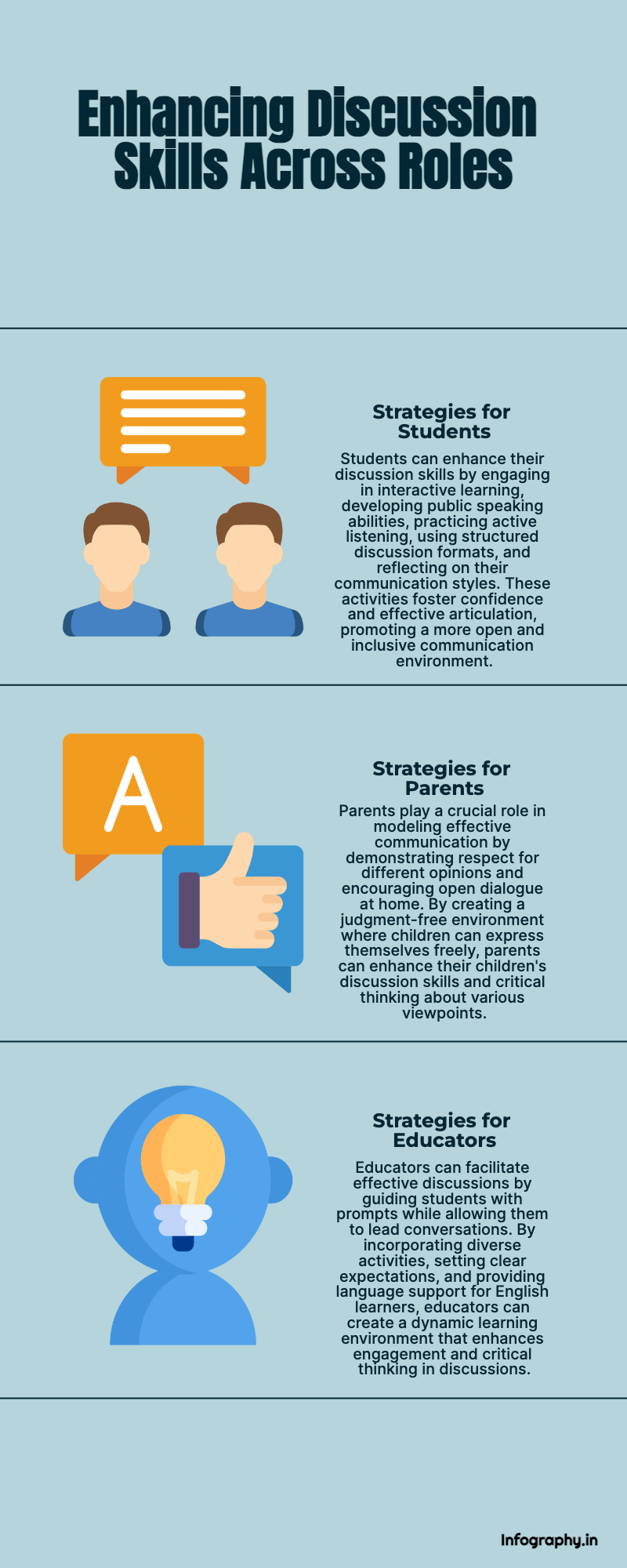
Refining Discussion Skills: Creating Deeper Comprehension
The quality and depth of student book club meetings is high on a teacher’s list of concerns. When kids digress from the text, get stuck on superficial plot details, skip over important elements, or act rudely towards each other, we all get nervous. After all the work we have done to set up literature circles – choosing books, forming groups, creating schedules and beginning the reading – we want to be sure that ensuring discussions are of high quality ; thoughtful, sustained, and genuinely collaborative.
As we admitted earlier, the initial training we provided, however careful, is never enough. To further support kid’s conversation development, we as educators might start the next few meetings with mini lessons aimed at sharpening a key discussion skill, such as:
· Asking good questions
· Asking follow up questions
· Getting everyone involved
· Grounding arguments in the book
· Practicing individual discussion skills
· Using notes more effectively to feed discussions
The first two skills listed above are especially critical because they directly address the way we want students to talk to each other. They show that open-ended well-chosen questions can drive the conversation in book clubs just as they do in life. Indeed, the quality and quantity of questions that members have for each other determines, to a great extent, the success of any discussion group. The other four skills address somewhat narrower discussion skills, and you would choose among them by noticing what your group needs next. Always, monitor the skill as kids put it to work in class, and then debrief it at the end of the meetings.
Happy Reading!
Meenu Gera, Consulting home and school librarian and reading guide.
Career assessment, guidance, and placement strategies:
‘University Readiness’ Signature Program
Our journey with Rohan began in grade 8 when he and his mother sought guidance on planning his academic path for Grades 9 and 10 while aligning it with his dream of attending a top-tier university. After completing grade 10, Rohan enrolled in our comprehensive 2-year ‘University Readiness’ Signature Program.
This program provides him personalized guidance through sessions with profile-building experts, research guides, and career counselors, ensuring he stays on track in his university preparation journey. Rohan’s research work focuses on ‘Entrepreneurship’ and is scheduled for completion by June 2025, with plans to publish it in a research journal.
Our career mentors support Rohan in maintaining academic excellence while strengthening other key aspects of his profile, ensuring he stands out in the competitive university admissions landscape.
Case study provided by: Team Fermata, www.fermataco.com
Showcase:
Thrive Beyond School – A unique project for very young children in STEAM education, Hyderabad, Andhra Pradesh

Students learned about spider anatomy, including two body parts, eight legs, multiple eyes, and an exoskeleton for protection.
In the “Build-a-Spider” activity, they made spider models with egg cartons, pipe cleaners, and googly eyes, combining creativity with science.
They discovered how spiders hunt, build webs, and use their adaptations to survive.

In the “Spider’s Web Home” project, students learned how webs help spiders survive by catching prey and providing protection. Using yarn, paper, and leaves, they explored spider habitats and behaviors while blending creativity with science.
Tashi & Havishka 6.5 years old, Arnav 5.5 years old
Dear reader,
I work with the school leadership team as an advisor. I collaborate with teachers as a pedagogical trainer. I help parents as a parenting counselor. I engage one-on-one with students as a personal guide and mentor. This weekly newsletter shares what I read, learn, and experience.
3-2-1 Tuesdays with Ms. Niv is a newsletter you can subscribe to and enjoy your learning journey with me.
 Nivedita Mukerjee