Nivedita Mukerjee
Education consultancy for parents and schools
3-2-1 TUESDAYS WITH MS NIV
Issue #239, 04th Feb 2025
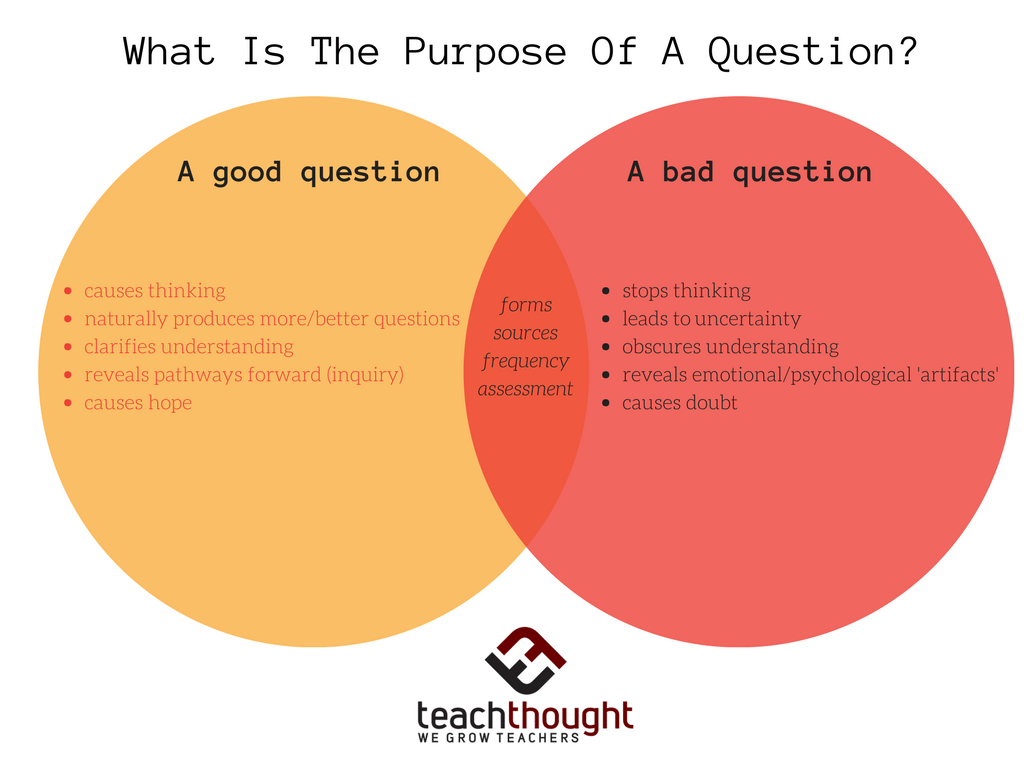
Asking questions whose answers will make a difference is a science, an art, and a learned skill. How can we ask great questions—to our students, our peers, and ourselves? Are you curious? Read on for some cues.
This is a free newsletter. If you like my content, please subscribe by entering your email ID here.
Three Images of the Week


Two Thoughts of the Week
“A prudent question is one half of wisdom.” – Francis Bacon
“What are you trying to do – one of the easiest to ask and most difficult to answer of questions.” – Robert K. Greenleaf
One Video of the Week
We live in a society which seeks answers, but do we need more focus on asking the right questions? It’s something Andrew ponders each day, both in his professional life and beyond the workplace. He questions the wisdom of a tick-box world which asks only, ‘yes or no?’ ‘In or out?’ If you’re curious to know more, it seems you’ve got the right mind-set.
Andrew Vincent is the co-owner of a market research consultancy, examiner for the UK Market Research Society’s postgraduate level Diploma in Market and Social Research Practice, and visiting lecturer at the IE University in Madrid.
Reading with Ms. Meenu: Tip of the week
Asking Good Questions:
Readers often have difficulty coming up with good questions for discussion. Questions that require extended and complicated answers seldom work because answering them requires individual kids to take a greater risk. And even if a brave student speaks up, an extended focus on one person often loses the attention of the rest of the class. Since most students have experienced few models of the kind of questioning that works best for small group discussions, directly addressing this skill is vital. Have a detailed discussion about what could be good questions and their characteristics:
Good Questions:
· Are not easily answered – make you think.
· Have more than one possible answer.
· Lead to different opinions/viewpoints.
· Make you predict the ending or future problems.
· Pose comparisons.
· Get you emotionally involved.
· Bring up controversial ideas.
Bad Questions:
· Have a yes or no answer.
· You can easily find the answer.
· Ask for one specific detail – Not much to talk about.
· Nothing to disagree or argue about.
· Only one opinion is possible.
· Are too vague, too general.
· Ask about something that isn’t important to the story.
· Have obvious answers; don’t take much thinking.
Developing good questions is the most important skill even students have to research. Being able to review how interesting questions come to their mind will enhance their understanding on certain topics.
Happy Reading!
Meenu Gera, Consulting home and school librarian and reading guide.
Career assessment, guidance, and placement strategies:
Building a Competitive College Profile: Ansh’s Research on Autoimmune Diseases; Batch of 2030
Ansh’s parents contacted us for guidance in building his profile for his dream university. At the time, Ansh had just started grade 11 at an IB curriculum school. Our intervention began with understanding his HL and SL subjects and the major he aspired to pursue in college.
One key aspect of profile building that we focus on is research work. Our in-house research guides include professors and Ph.D mentors in esteemed universities in India. Choosing a research topic involves brainstorming sessions focused students on passions, hobbies, academic interests, and global issues they care about.
After 2-4 sessions, Ansh decided to conduct his research on ‘auto-immune diseases’, a topic close to him as he has been dealing with this condition from a young age. His research is currently in progress, and the published paper will be available upon request after September 2025.
Case study provided by: Team Fermata, www.fermataco.com
Showcase:
Thrive Beyond School – A unique project for very young children in STEAM education, Hyderabad, Andhra Pradesh

Children learned about the important roles ants play in nature. They explored how ants work together in a colony, with each ant having a specific job: the Queen lays eggs, workers gather food, and soldiers protect the colony. Children also discovered the three main parts of an ant’s body—head, thorax, and abdomen. Through activities like observing live ants and building their own ant models, children gained a deeper understanding of these tiny but mighty insects.
Tashi, Neev& Mayra 6.5 years old Arnav & Tara 5.5 years old
Dear reader,
I work with the school leadership team as an advisor. I collaborate with teachers as a pedagogical trainer. I help parents as a parenting counselor. I engage one-on-one with students as a personal guide and mentor. This weekly newsletter shares what I read, learn, and experience.
3-2-1 Tuesdays with Ms. Niv is a newsletter you can subscribe to and enjoy your learning journey with me.
 Nivedita Mukerjee