Nivedita Mukerjee
Education consultancy for parents and schools
3-2-1 TUESDAYS WITH MS NIV
Issue #246, 25th March 2025
1. Is the problem human-centered?
2. Is the problem ill-defined or complex?
3. Does the problem require innovative solutions?
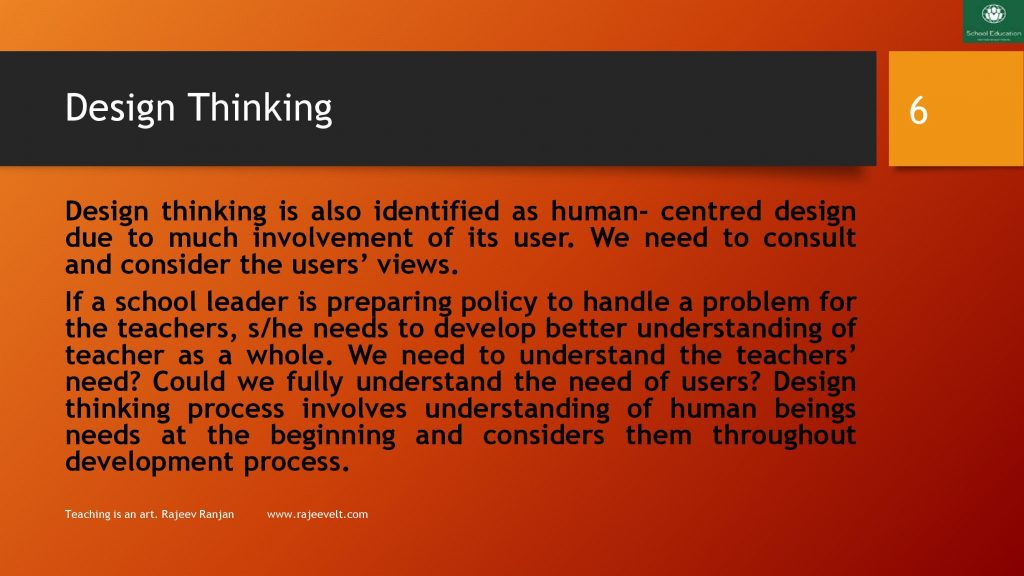
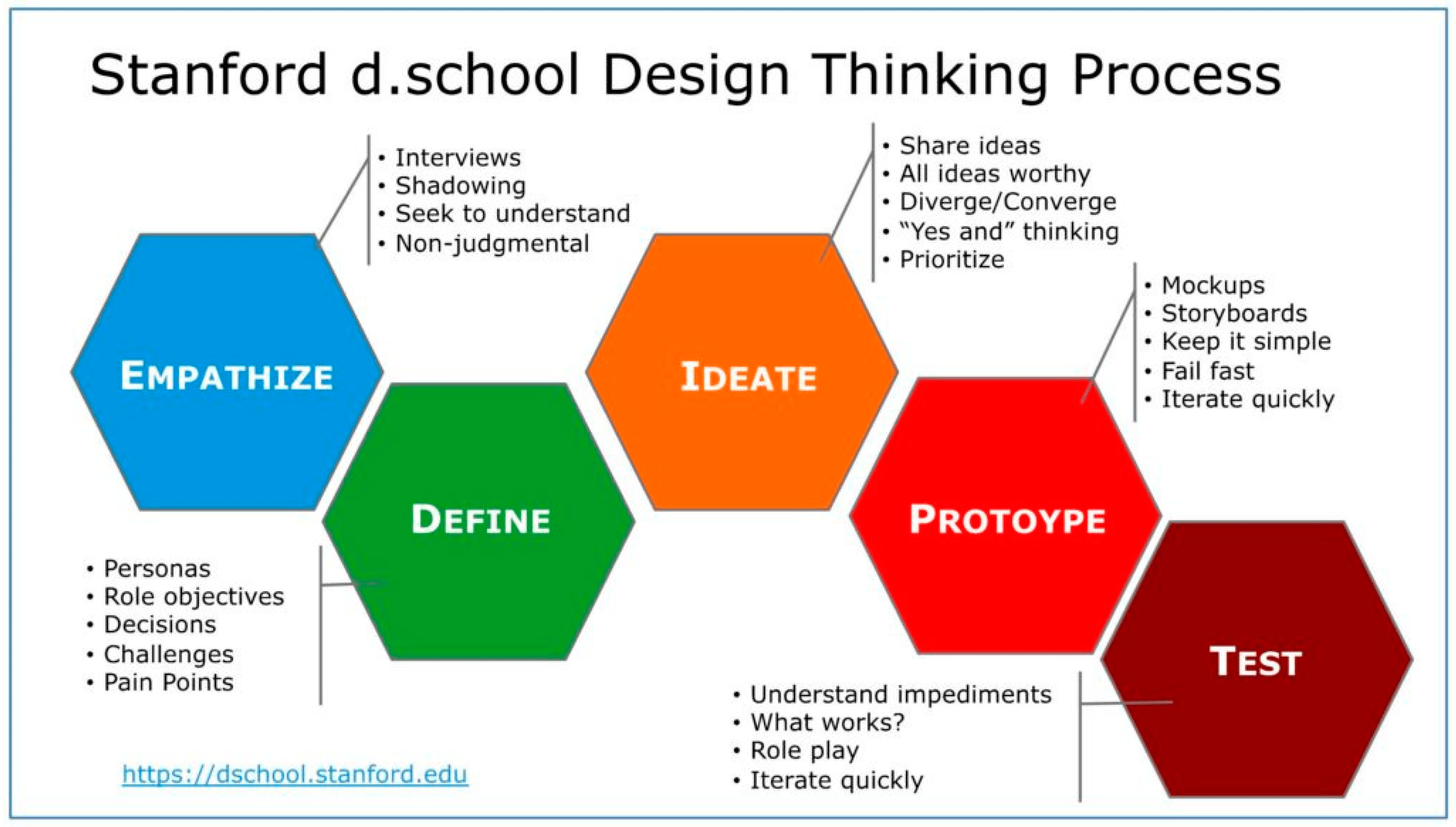
It is end of the academic year and most school teams are getting ready to review last year and plan for the next academic year. If the goal is to create something new, or to drastically improve an existing situation, then design thinking is a good method.
What is design thinking? How can you use it to resolve the challenging situations? Get some clarity on the process first and then carry on.
This is a free newsletter. If you like my content, please subscribe by entering your email ID here.
Three Images of the Week

Two Thoughts of the Week
“It’s not ‘us versus them’ or even ‘us on behalf of them.’ For a design thinker it has to be ‘us with them’” -Tim Brown
“Creativity comes from a conflict of ideas.” — Donatella Versace
One Video of the Week
In all the conversations about improving education for children, the voices of students, teachers and community members are often left out. Educational designer Punya Mishra offers a method to shift that paradigm, taking us through new thinking on the root of success (and failure) at school — and how a totally new, different kind of educational system could better meet students’ needs.
Reading with Ms. Meenu: Tip of the week
The Envelope Please: Predicting Plot and Character
Smart readers are always predicting. They continually speculate on the answers to key questions: What’s going to happen to the main characters? How will the plot resolve itself? What motifs that appeared early in a book will grow in importance? And, at a larger level, what is this book trying to be about? What is the theme, or purpose that is unfolding as I turn these pages?
Of course, most of us veteran readers do this predicting at an unconscious level. In fact, we only notice how much we have been predicting when a character suddenly does something that makes us say, “Wait a minute! That’s not right! She’d never do that! Our students, however, may not have this prediction predilection built into their cranial hard drives quite yet and so this reading activity shows them how to make predicting very conscious and to give some thought to character and theme as well.
When you have finished about a third of a book – when the key characters have been introduced and all major conflicts set in motion it’s time for “ The Envelope Please” . Surprise is an important element of this lesson. Start by telling students to put their books aside and ask your readers that they are going to predict the endings of their books using The Envelope, Please form. This form will have prediction questions about the ending of the book, character change and various clues in the story. Have students quietly and individually complete the form, recording their best guesses and rationales about the outcomes.
Next, have one or two kids share their predictions with the whole class just for general flavor. This won’t be scintillating since not everyone is reading the same book. If kids want to change their predictions based on what these students say, they can amend their forms but shouldn’t scratch out their original prediction. Who knows? Their first instincts may turn out to be right.
The final step comes several days or weeks later, when books are completed. On the final day of discussion, distribute the envelopes to the groups and invite them to unseal their predictions. There may be a few hoots of triumph as prescient kids congratulate themselves on their good guesses, and groans as wrong predictions are revealed.
The important part of the discussion centers around how people made successful predictions. Encourage kids to ask each other: What made you think that? OR how do you see that coming? What were the clues?
This reading activity keeps the enthusiasm around the class and keeps them engaged with the text. It encourages them to work on their thought process and then share their ideas with their peers.
Happy Reading!
Meenu Gera, Consulting home and school librarian and reading guide.
Career assessment, guidance, and placement strategies:
Balancing Academic Rigour and Self-Care in Hoste Lifel
Priya’s mother approached us, worried about her daughter, who was finishing her first year in college. During exams, Priya would unconsciously express her unhappiness to her parents through statements like, ‘I have not slept all night’, ‘I did not have time to eat lunch’, and ‘I always wanted to study BCA but you forced me to do law’. These remarks, along with the more disturbing ones, were causing her mother sleepless nights.
Our career expert began with an informal friendly conversation to understand Priya’s mindset. The discussion revealed that she was neglecting her physical and mental well-being, leading to academic stress during exams. The career expert provided her with practical tips on time management, maintaining a balanced diet, and practicing simple meditation techniques to relax her mind.
As parents, it’s natural to worry about our children. The key is to keep the conversations open and seek the guidance of experts like us.
Case study provided by: Team Fermata, www.fermataco.com
Showcase:
Thrive Beyond School – A unique project for very young children in STEAM education, Hyderabad, Andhra Pradesh
Children explored ways to save water at home and school. They learned about rainwater harvesting—collecting rainwater for later use—and drip irrigation, which waters plants slowly to avoid waste.
Through a fun hands-on activity, they made their own drip irrigation system using plastic bottles and ear buds. They saw how tiny holes let water drip slowly, keeping plants hydrated while saving water.
This activity helped kids understand the importance of water conservation and how small actions can make a big difference! Neev, Mayra, Havishka & Samyuktha:6.7 years old Arnav:5.7 years old

And Finally…

Dear reader,
I work with the school leadership team as an advisor and collaborate with teachers as a pedagogical trainer. I also help parents as a parenting counselor and regularly engage one-on-one with students as a personal guide and mentor. This weekly newsletter shares what I read, learn, and experience.
3-2-1 Tuesdays with Ms. Niv is a newsletter you can subscribe to and enjoy your learning journey with me
 Nivedita Mukerjee