Nivedita Mukerjee
Education consultancy for parents and schools
3-2-1 TUESDAYS WITH MS NIV
Issue #248, 8th April 2025
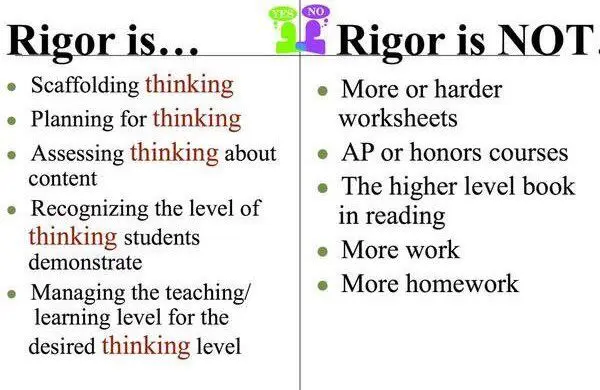
What is rigor? We often hear in schools that we need more rigour in studies. Sometimes parents come to us and say, teachers need to plan for more rigour in the school… what does it mean as per dictionary? what does it mean in education? here are some thoughts worth giving a thought 🙂
rigor : Medicine
- a sudden feeling of cold with shivering accompanied by a rise in temperature, often with copioussweating, especially at the onset or height of a fever.
- short for rigor mortis.
- The meaning of RIGOR is harsh inflexibility in opinion, temper, or judgment : severity.
- strictness, severity, or harshness, as in dealing with people. · the full or extreme severity of laws, rules, etc. · severity of living conditions
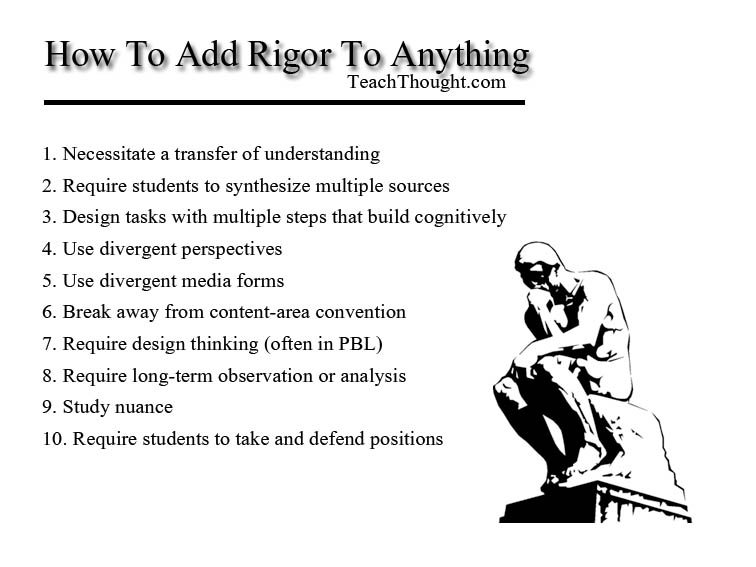
Now, you want to add rigor in education right? as teacher, parent, school management? here are some ways how it might make it meaningful.
This is a free newsletter. If you like my content, please subscribe by entering your email ID here.
Three Images of the Week

Two Thoughts of the Week
“The main point is first get the right people on the bus (and wrong people off the bus) before you figure out where to drive it. The second key point is the degree of sheer rigor in people decisions in order to take a company from Good to Great.”
James C. Collins
“Grow with discipline. Balance intuition with rigor. Innovate around the core. Don’t embrace the status quo.”
Howard Schultz
One Video of the Week
Barry Lane questions the understanding of rigor in education reform. Barry Lane is a writer, filmmaker, songwriter and author. He has worked in schools in all 50 states and abroad teaching writing. For the last 4 years Barry has been making a movie about education in America called, “What are Schools For?” The film examines the roots of educational reform and questions the mainstream assumptions about the purpose of schools. His latest book for teachers is Force Field for Good: Teaching Kindness through Song and Literature and includes 10 original songs to inspire communities of kindness. His recordings include, More Than a Number: Songs for Sane Schools. Available on ITunes and Bandcamp.
Reading with Ms. Meenu: Tip of the week
Reader’s Theater
Readers theater is a great oral interpretation strategy that groups can use to portray a key scene in a book. Although students must examine the text carefully in order to create an effective script, the performance only requires dramatic reading, so groups don’t need to spend a lot of time worrying about costumes, props, blocking or memorizing.
The best way to introduce students to reader’s theater is to have them perform a prepared script from a familiar piece of literature. Draft some students to do a cold reading as the rest of the class follows along. Afterward, have students examine the script and together make a list of the typical readers theater conventions for the presentation of a scene from a novel. Also, have the student compare the original text of the novels with the scripted version. Students should notice the following conventions.
The groups must provide an introduction to the books and scene so that the audience understands what is going on.
· Everyone has a part.
· There can be more than one narrator.
· There are coral parts where more than one person reads at the same time.
· The lines and paragraphs are broken up differently for the script.
· It is ok if lines are repeated for emphasis.
Skits are another way for literature circles to bring their characters to life. The challenge in this project is, first, to pick a couple of high interest scenes that someone who has not read the book can still relate to. Then students must write a script that includes some acting but also significant narration explaining plot details and the characters, so the audience understands what is going on.
Reader’s theater and skits are very effective ways of engaging students into the reading world.
Happy Reading!
Meenu Gera, Consulting home and school librarian and reading guide.
Career assessment, guidance, and placement strategies:
Balancing Academic Rigour and Self-Care in Hoste Lifel
Priya’s mother approached us, worried about her daughter, who was finishing her first year in college. During exams, Priya would unconsciously express her unhappiness to her parents through statements like, ‘I have not slept all night’, ‘I did not have time to eat lunch’, and ‘I always wanted to study BCA but you forced me to do law’. These remarks, along with the more disturbing ones, were causing her mother sleepless nights.
Our career expert began with an informal friendly conversation to understand Priya’s mindset. The discussion revealed that she was neglecting her physical and mental well-being, leading to academic stress during exams. The career expert provided her with practical tips on time management, maintaining a balanced diet, and practicing simple meditation techniques to relax her mind.
As parents, it’s natural to worry about our children. The key is to keep the conversations open and seek the guidance of experts like us.
Case study provided by: Team Fermata, www.fermataco.com
Showcase:
Thrive Beyond School – A unique project for very young children in STEAM education, Hyderabad, Andhra Pradesh
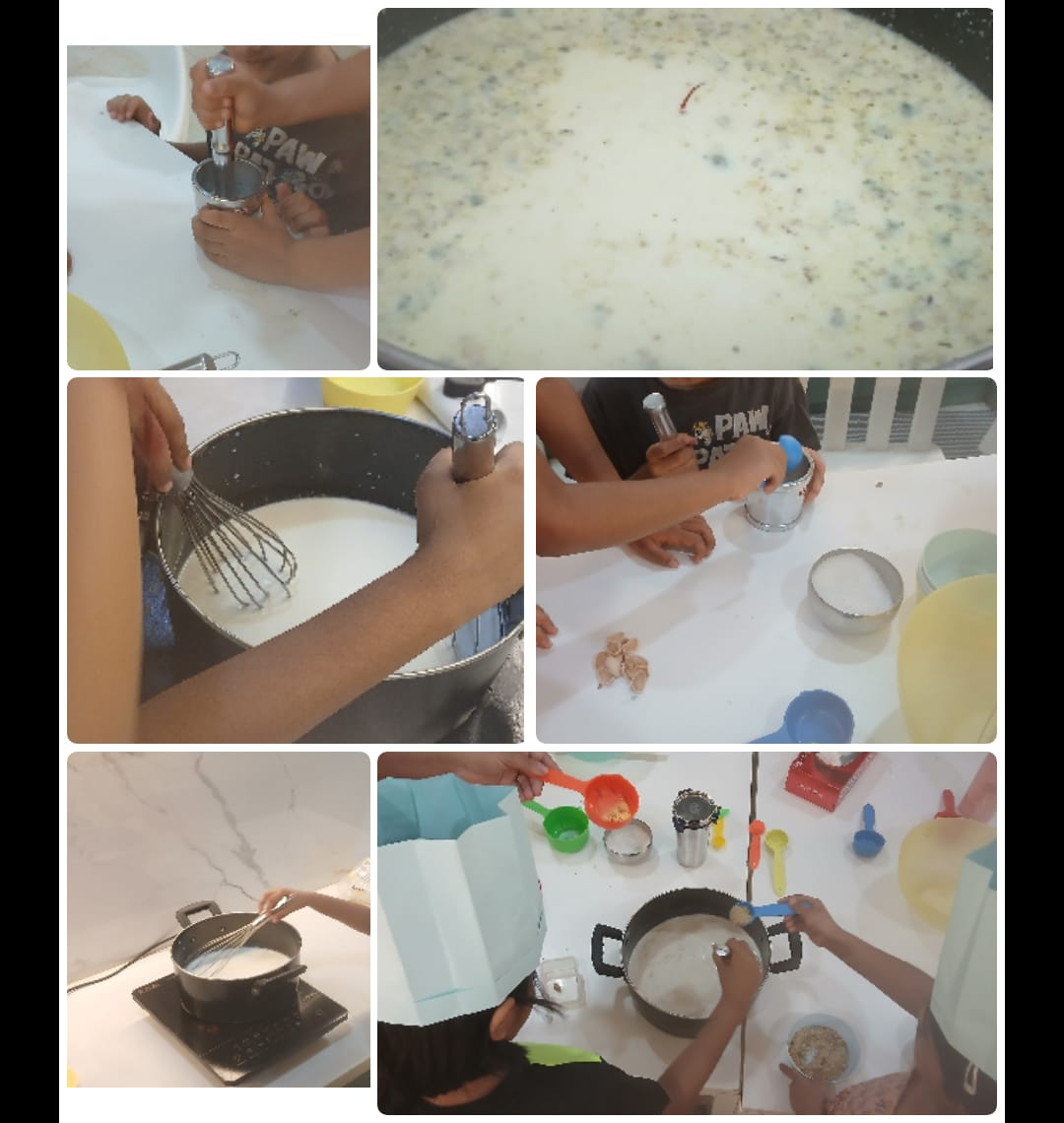
This week, our little chefs had a fun time making Thandai, a yummy Indian drink enjoyed during summer and the Holi festival. They learned why this drink is special and explored ingredients like saffron, which gives a pretty yellow color and a sweet smell. While preparing the drink, the children also picked up many learning skills. They used cups and spoons to measure ingredients (just like in math), noticed how warm milk helped sugar dissolve and saffron release its color (like in science), and used a blender to mix nuts and spices (learning how tools help us). They also used their senses to describe how the drink looked, smelled, and tasted, which sparked their creativity.
It was wonderful to see the children asking curious questions like, “What happens when we mix sugar in warm milk?” Their responses were thoughtful—some said the sugar melts, others said it dissolves. Tara gave a beautiful answer: “When the sun rises, the ice melts. In the same way, when the milk gets warm, the sugar dissolves.” She connected it to the idea of how temperature affects dissolving—a big concept explained in such a simple way!
And of course, the best part was tasting the cool, sweet, and nutty Thandai they made all by themselves! Neev,Mayra & Tashi:6.8 years old Arnav & Tara: 5.8 years old
Dear reader,
I work with the school leadership team as an advisor and collaborate with teachers as a pedagogical trainer. I also help parents as a parenting counselor and regularly engage one-on-one with students as a personal guide and mentor. This weekly newsletter shares what I read, learn, and experience.
3-2-1 Tuesdays with Ms. Niv is a newsletter you can subscribe to and enjoy your learning journey with me.
 Nivedita Mukerjee