Nivedita Mukerjee
Education consultancy for parents and schools
3-2-1 Tuesdays with Ms Niv

Issue #269, 2nd September 2025
What assumptions am I holding that might be limiting the growth of myself and/or others?
As a student: Challenge your beliefs about your own capabilities, learning methods, or what’s “too hard” for you; As a teacher: Push yourself to question preconceptions about students’ potential, effective teaching methods, or rigid curriculum approaches; As a parent: Try to recognize when your expectations, fears, or past experiences might be constraining your child’s development. Here are some provocations for you, read on.
This is a free newsletter. If you like my content, please subscribe by entering your email address here.
Three Images of the Week


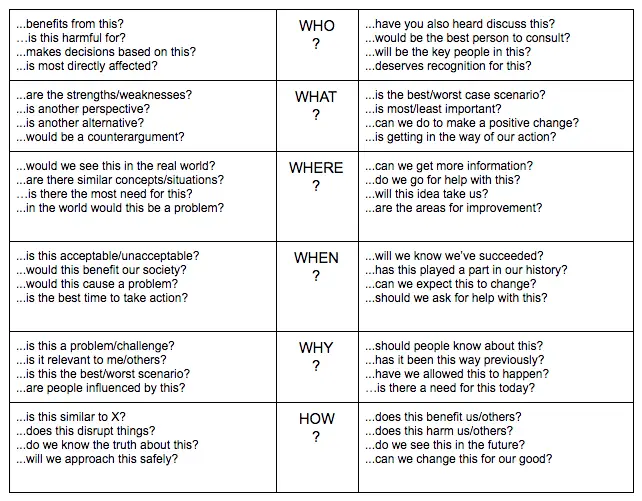
Two Thoughts of the Week
“Remember, we see the world not as it is but as we are. Most of us see through the eyes of our fears and our limiting beliefs and our false assumptions.” Robin S. Sharma
“When you’re surrounded by people who share the same set of assumptions as you, you start to think that’s reality. “Emily Levine
One Video of the Week
Why do we fixate on the things we can see immediately when we crave change?
In this passionate talk Robert Greene shares the key to transforming ourselves and also talks about his own personal transformation and his path to becoming a bestselling author. About Robert Greene Robert Greene is the internationally best-selling author of The 48 Laws of Power, The Art of Seduction, The 33 Strategies of War and The 50th Law (with rapper 50 Cent). His books have been translated into 17 languages. He has worked in New York as an editor and writer at several magazines; and in Hollywood as a story developer and writer. He has lived in Brixton, Paris, and Barcelona; speaks several languages, and worked as a translator. He tweets as @RobertGreene
Reading with Ms. Meenu: Tip of the week
Books at the age from 12 to 24 months:
At this age your kiddos are stacking blocks, pouring sand and water, nesting cups and hustling to combine a lot of different skills. Meantime, they’re gasping for the words they need to express themselves too. Gestures do come into play in a bigger way now. They are already doing some pretty sophisticated coordination of their sounds, gestures and eye gaze to get your attention. Your little one may even start following your directions to pick up toys or point to an object they want. All of this early speech and vocabulary learning is critical for later reading, because for an emergent reader to make sense of a word in print, they need to have heard it before. (Or, usually, many times before). Selecting books that reflect daily life deepens the learning at this age. Little narratives about kids playing, putting on clothes or having breakfast may pique your toddler’s interest. And some children’s authors also take care to make first-word books that are entertaining for parents too by building in as much humor and suspense as a board book can handle. You can even make your own books featuring pictures of friends, family and familiar places. That’s personal relevance in teaching at its best.
Selected 12–24-month milestones: Book Behaviour and Writing:
· Handles standard books
· Turns pages in books
· Enjoys being read to
· Recognizes familiar book’s cover
· Points to and names familiar characters and objects in books
· Points to things they want you to name
· Holds and makes marks with crayons
It is suggested to start creating their personal library at this age by selecting appropriate titles by a professional library expert. And keep on adding titles to their library as they grow older.
Happy Reading!
Meenu Gera
Consulting home and school librarian reading guide
Career assessment, guidance, and placement strategies:
Study in Japan
Do you know?
Japan is globally recognised for technological innovation across several sectors:
1. Robotics & Automation: Especially in industrial automation robots companies like Fanuc, Yaskawa, Kawasaki, and ABB Japan dominate the market. Japan also excels in humanoid and service robots, with notable examples as Honda’s ASIMO and SoftBank’s Pepper.
2. Automotive Industry: Japan is a global leader in automotive engineering and production. Toyota is the largest car manufacturer, while Honda, Nissan, Subaru, and Mazda are renowned for their reliability, innovation, and fuel efficiency.
3. High-Speed Rail (Shinkansen): Japan set global standards with the Shinkansen (bullet trains), famous for high-speed, punctuality, and safety. Japan also advises and collaborates on high-speed rail projects worldwide.
5. Precision Engineering & Materials Science: Japan excels in producing high-precision components for aerospace, medical devices, and semiconductors, along with advanced materials and specialty chemicals.
Top universities in Japan offering undergraduate and postgraduate programs in the areas of Robotics & Automation, Automotive Manufacturing, Consumer Electronics & Gaming, High-Speed Transportation, and Precision Manufacturing include:
- University of Tokyo
- Tokyo Institute of Technology
- Osaka University
- Tohoku University
- Nagoya University
- Kyoto University
- Kyushu University
- Ritsumeikan University
Fermata Career Solutions inspires young individuals aged 13 to 30 to unlock their potential through focused and customised career and college counseling. With expertise in University Readiness, CareerGym, and Master Parenting, the experts empower you to pursue your dreams and shape your future with confidence. More about us on http://www.fermata.com
I Think, I Wonder, I Ask
When a Booker Prize Winner emerges from my city, as an educator, I feel the responsibility to make this work matter for Gen Z students…

A sense of pride fills me when I think about the Booker Prize being awarded to a writer from my own city- Heart Lamp, by Banu Mushtaq (originally written in Kannada), translated by Deepa Bhasti. What makes this even more significant is that the book has its roots in the Bandaya Sahitya (Rebel/Dissent Literature) movement, which opened up space in Kannada Literature for stories that were unheard, raw, authentic, and deeply contextual—stories of survival, resistance, and dignity.
For me, reading Heart Lamp was not just about its literary merit or the brilliance of Deepa’s translation; it was about re-confronting the themes of resistance, power, identity, marginality, and the courage to question.
As an educator, I felt the need to engage students with this literary work to sensitize—to help them see the links between those themes and the realities that still shape our world today. But here is the challenge- how do I make a piece of literature that feels rooted in another time and context, and connect with students today? For many of them, the struggles and issues reflected in these works are not part of their lived experience and their natural spaces of consuming content and expressing themselves are social media platforms rather than books.
Here is what I think we can do- Creating hooks and bridges—between past and present, rebellion and responsibility, rootedness and global awareness. More importantly, creating spaces for students to question, voice their thoughts, and act with responsibility. And perhaps, the real way to honor such a work is not only to celebrate its global recognition, but to use it as a mirror- asking ourselves and our students what it means for our lives here and now!
Three questions for you…
• Do you think questioning authority always leads to progress? Why or why not?
• The book gave space to voices that were long ignored. Whose voices do you think are missing in today’s media/social media?
• What issues from your school, city or community do you wish the world would hear?
– Dr Shreelakshmi, Alumni and Academic Director, Vijaya School Hassan
Showcase: Thrive Beyond School – A unique STEAM education project for very young learners.
The children learned about fossils and paleontologists through a story and hands-on exploration. They discovered that fossils were formed when dinosaur bones were buried under mud and rocks and turned into stone over time. By pressing toy dinosaurs into clay, they understood the process of molding, and by filling the molds with plaster, they experienced casting. They observed textures, shapes, and details like toes and tails, then carefully cleaned and studied their own fossil replicas. Through drawings and reflections, they expressed what they noticed about fossilization.
Samyuktha: 7 years 4 months Neev & Mayra: 7 years Tashi: 6 years 11 months Tara: 5 years 11 months Krisha: 3 years

Dear reader,
I work with the school leadership team as an advisor and collaborate with teachers as a pedagogical trainer. I also help parents as a parenting counselor and regularly engage one-on-one with students as a personal guide and mentor. This weekly newsletter shares what I read, learn, and experience.
3-2-1 Tuesdays with Ms. Niv is a newsletter you can subscribe to and enjoy your learning journey with me.
 Nivedita Mukerjee