Nivedita Mukerjee
Education consultancy for parents and schools
3-2-1 Tuesdays with Ms Niv

Issue #273, 30th September 2025
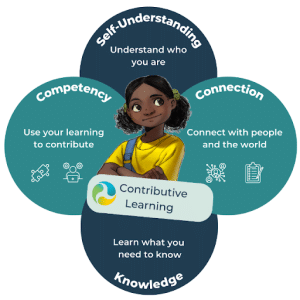
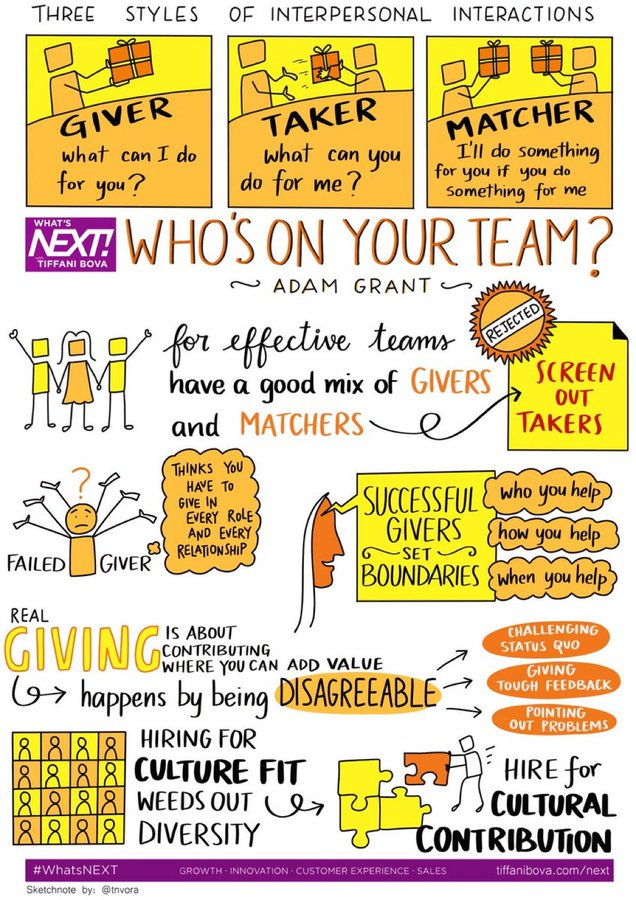
Can you find small ways to add great value to another person’s life? If you are an educator, parent or student, there are multiple ways that you can do so. If you are mindfully doing this, you are also adding value to not only the organisation and/or family you belong to but also to yourself. Sharing your knowledge, a little bit of feedback, connecting people, information sharing whether of a new bookstore or a tutor, a playdate, an interesting event that your colleagues or fellow parents might be interested in. All this makes you ‘givers’. Statistics show that givers win in more ways than one. Success is more about contribution than competition. You will find more insights in the Video of the Week in this issue of the newsletter.
This is a free newsletter. If you like my content, please subscribe by entering your email address here.
Three Images of the Week

Two Thoughts of the Week
“Givers need set limits because takers rarely do.”
― Rachel Wolchin
“The world has takers and givers, the moment you decide to be a taker you will always be in want, scarcity and on downward spiral. Givers are always watered and never wither even in the dry season.”
― Dr. Lucas D. Shallua
One Video of the Week
In every workplace, there are three basic kinds of people: givers, takers and matchers. Organizational psychologist Adam Grant breaks down these personalities and offers simple strategies to promote a culture of generosity and keep self-serving employees from taking more than their share. Adam hosts the TED Audio Collective podcast WorkLife with Adam Grant–a show that takes you inside the minds of some of the world’s most unusual professionals to discover the keys to a better work life. Listen to WorkLife with Adam Grant wherever you get your podcasts.
Reading with Ms. Meenu: Tip of the week
Emergent and Beginning Reading from 5 to 7 years:
At 5 and 6 years old, kids typically speak clearly, tell stories with complete sentences, use the future tense, and say their own full name and address. They can count past 10, draw a person with several body parts and copy triangles and other shapes, and they know a good deal about everyday life, from food to money.
But real differences in their literacy skills become obvious (to them and us) at this point, too. Elementary school classrooms often put reading and writing on display in ways that can’t help but highlight student variations. Everything from the reading group they’re placed in to the work displayed on the bulletin board exposes the differences. it can be agonizing for parents to hear about the social drama playing out in the name of education – tales of one child being put “on the computer” because they can’t read, another checking out the same baby book from the classroom library everyday because that’s what’s on “their level,” and yet another signing their name with a scribble that’s different every time.
Yet all of these kids are on their own unique paths to reading. We just need to clearly identify what they’re working with, so that we may deliver the right experiences, instructions and additional tools. A few quick definitions, based on what science reveals about how beginners learn to read words in and out of context, will help.
- Pre Readers rely mainly on visuals and context clues to make sense of words, They may recognize a word with the context of a logo but they are unable to read.
- Beginning or emergent readers are beginning to apply what they know about letters and sounds to read and write.
- Alphabetic readers have full command of letter-sound correspondences, can decode unfamiliar words and can spell from memory.
- Fluent readers, or consolidated alphabetic readers have forged a solid knowledge of many words, spellings, pronunciations and meanings through deep experience of hearing, saying, spelling and understanding them.
Book Behaviour, Print Awareness and Writing
- Writes full name
- Recognizes upper and lowercase letters
- Connects letters to their sounds
- Tracks print from left to right
- Sounds out words
- Spells phonetically
- Reads and writes simple sentences
- Begins sentences with capital letters
- Attempting punctuation
- Correctly spells frequently used words
Happy Reading!
- Meenu Gera, Consulting home and school librarian, reading guide
Career assessment, guidance, and placement strategies:
ENGINEERING HUB
Do you know?
5 Reasons for Germany being referred to as the Engineering capital of the world:
- World-class engineering expertise
- Home to top engineering global brands like BMW, Audi, Mercedes-Benz, Volkswagen, Porsche, Siemens, Bosch, and more
- Excellence in education and R&D: Germany’s dual education system is structured to create a highly skilled engineering workforce
- ‘Made in Germany’ – a hallmark of technical reliability, precision, and quality worldwide
- Leadership in Industrial Technology
Other strong engineering nations are the USA, Japan, China, and South Korea.
Top universities in Germany to study engineering:
- Technical University of Munich, Germany
- RWTH Aachen, Germany
- Karlsruhe Institute of Technology, Germany
- Technical University of Berlin, Germany
- TU Dresden, Germany
Top universities globally to study engineering:
- Harvard University, USA
- Massachusetts Institute of Technology, USA
- Stanford University, USA
- University of California, Berkeley, USA
- California Institute of Technology, USA
- Princeton University, USA
- University of Oxford, UK
- University of Cambridge, UK
- University of Waterloo, Canada
- University of Toronto, Canada
- National University of Singapore
Top universities in India to study engineering:
- IITs
- NIT Trichy
- VIT Vellore
- IISc Bangalore (top research-driven STEM university)
- BITS Pilani
- Delhi Technological University
- Thapar Institute of Engineering & Technology
- Jamia Millia Islamia
Plaksha University, Mohali, is a new-age, pioneering institution offering BTech programs in four core areas, designed to develop engineering minds equipped with entrepreneurial skills.
Fermata Career Solutions inspires young individuals aged 13 to 30 to unlock their potential through focused and customised career and college counseling. With expertise in University Readiness, CareerGym, and Master Parenting, the experts empower you to pursue your dreams and shape your future with confidence. More about us on http://www.fermata.com
I Think, I Wonder, I Ask
–Dr Shreelakshmi Subbaswami, Alumni and Academic Director, Vijaya School Hassan, Karnataka
School Bells: Does it Ring a Bell with the Old Models of Education?
The ringing of a school bell is such a familiar sound that we often forget to question it. Historically, bells in schools mirrored the rhythms of factories- marking shifts, signaling transitions, and reinforcing punctuality as a social virtue. Their purpose was less about learning and more about order and efficiency. Even today, this practice shapes how we divide learning time in schools from one subject to another.
But must the bell continue to dictate the pace of learning? There are some realistic alternatives. Instead of abrupt ringing every 40 minutes, schools can adopt softer tones or music that signals transitions with less disruption. Some schools have experimented with visual cues on digital boards, where countdowns help both teachers and students prepare to shift. Longer learning blocks- say 60-80 minutes can reduce the number of transitions and allow deeper engagement. Some schools use chimes and hand signals to indicate transitions. Others rely on teacher-led time cues, where the teacher signals the end of a session organically. Even staggering dismissal between floors or grades can ease the stress of mass movement caused by a single bell.
These are not radical changes, but they shift the emphasis from rigid control to flexible choices. They remind us that time in schools can be managed with flexibility rather than rigidity. Perhaps the deeper hope is this: when we loosen the grip of the bell, we make space for rhythms of both learning and learners.
Three questions for you…
- Which parts of the school day feel most dominated by the bell- and how might they be softened?
- How could longer or staggered blocks create calmer transitions in your school?
- If students could imagine alternatives to the bell, what rhythms of learning might they choose?
As we reconsider who controls time in schools, I also invite you to question how much of what we teach, how we teach, and how we assess is still bound by the idea of standardization of education in my next discussion…
Dear reader,
I work with the school leadership team as an advisor and collaborate with teachers as a pedagogical trainer. I also help parents as a parenting counselor and regularly engage one-on-one with students as a personal guide and mentor. This weekly newsletter shares what I read, learn, and experience.
3-2-1 Tuesdays with Ms. Niv is a newsletter you can subscribe to and enjoy your learning journey with me.
 Nivedita Mukerjee