Nivedita Mukerjee
Education consultancy for parents and schools
3-2-1 Tuesdays with Ms Niv
Issue #275, 14th October 2025
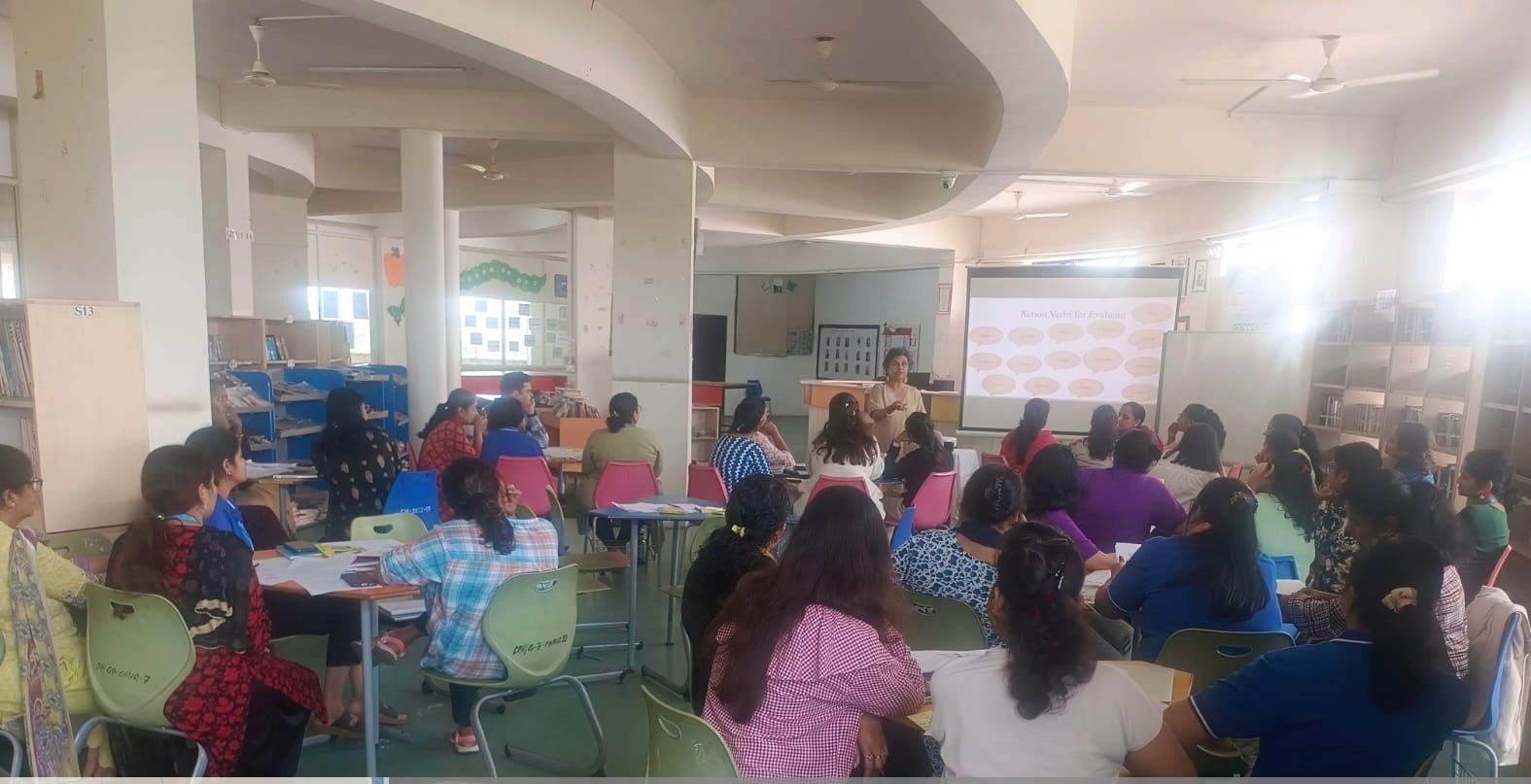
Schools and current education system can be quite the pressure cooker for teacher and students. Thus parents and community as well. The many holidays and celebrations are ongoing and ensuing and the children are not quite looking forward to going back to school, books and test. What can be done to make learning journeys more joyful? Something that our children have to do for all their lives given the changing scenarios they are facing year on year? Go ahead and listen to Ms. Freitag’s talk included in this issue of newsletter.
This is a free newsletter. If you like my content, please subscribe by entering your email address here.
Three Images of the Week


Two Thoughts of the Week
“Every child can learn. Just not on the same day or in the same way.”
– George Evans
“In learning you will teach, and in teaching you will learn.”
– Phil Collins
One Video of the Week
The struggle is real – teaching and learning can be challenging from either perspective. How to use CRSSP strategies to make teaching and learning more engaging. Dedicating her adult life to inspiring her students with discovering their strengths and inspiring personal growth, not only as learners, but as people. Wholeheartedly believing learning can, and should be, both rigorous and fun. Michele started her educational career as a speech/language pathologist and 18 years teaching 3rd grade. For the past 16 years, she has been a well known and respected gifted/talented/enrichment specialist at the elementary school level, challenging students in grades K – 4. During the height of COVID, she spent one year back in the classroom, teaching 4th grade. Michele is involved with Odyssey of the Mind program. She has helped hundreds of students in grades K – 12 improve their creative problem solving skills. For several years, Michele also served as the Director for Camp Invention, a summertime STEM camp. Currently, Michele teaches watercolor painting classes, is an avid crafter, and is very active in her church community.
Reading with Ms. Meenu: Tip of the week
Principle # 2
The More Personal the Lesson, the Better
Helping your child learn to read requires making decision after decision. Which letters or words to teach? Which song to sing or story to tell? When making the calls, err on the side of making the lessons themselves personally meaningful for your child. Sometimes it’s as straightforward as teaching the child to write letters in their name first, making up songs and stories featuring their pets, choosing vocabulary words from their favorite books. Sometimes it’s as deep as practicing fluency by reading aloud texts that affirm and sustain a child’s cultural heritage or community.
To help conceptualize this, researchers have defined three levels of personal relevance, from mere association to usefulness to identification. When a reading lesson centers on a passage about the student’s sport of choice (say, soccer), that’s making a personal association.If you can make it clear how the lesson itself is useful for advancing a goal the child is after (like joining wordplay with older siblings), even better. But if you can make the activity resonate with the child’s sense of self, you’re really cooking with grease. This is what’s going on when a little one named Anna sees the letter A and says, That’s my letter! She’s owning it – and identifying with it. It matters to her and she learns it quickly.
The power of personal meaning also helps explain why parents so often find that something that worked like a charm with one child falls flat with another kid. Kid’s associations, judgements of usefulness and identities vary widely, even when they grow up under the same roof. Locking in on what makes your individual learner tick and facilitating resonant experiences just for them is golden.
Luckily, you have a built-in feedback mechanism for determining what’s working: for your child. Even infants express preferences. A little one might reach for the same book with bold illustrations or lift up flaps over and over again. You may also find that what gives the lesson meaning is you – your demeanor, your engagement, and your responsiveness can be tremendous motivators.
Keep reading and making personal connections to your child’s life! That matters!
Happy Reading!
Meenu Gera, Consulting home and school librarian, reading guide
I Think, I Wonder, I Ask
–Dr Shreelakshmi Subbaswami, Alumni and Academic Director, Vijaya School Hassan, Karnataka
How Art Helps Us to Build Self-Awareness: An Experiment
As educators, we often speak about helping students “know themselves”- their strengths, weaknesses, values, and voices. Yet, if we pause and ask, how do students truly come to know themselves? The answers often circle back to someone else’s opinion- a teacher’s observation, a parent’s feedback, a report card, or a peer comment. Much of a student’s self understanding is mediated through the eyes of others, while very few processes nurture the self’s (student’s) voice: What do I see in myself? How do I learn? What matters to me?
For student leaders, their self- knowledge is even more vital. Leadership begins with self-awareness- the ability to recognize one’s emotions, reactions, and influence on others. Yet, most tools available in schools are evaluative, often judgmental, and rarely reflective. I began to wonder: what if students could explore themselves through a medium that was less evaluative, less fearful, yet deeply revealing?
With my experience in pottery and mosaic work, I curated a session for our student council members to use art as a tool- a mirror for the self and a pathway to understanding the leader within. I wanted to explore how each one could uncover what lies within- their patience, emotions, adaptability, and ways of connecting with others. The focus was not on skill-building but on reflection. Between moments of shaping clay and arranging mosaic tiles, we paused to ask:
- How do I approach something new?
- How do I respond when things don’t go as planned?
- How do I work when others’ styles differ from mine?
Students opened up without fear of judgement. Their strengths, challenges, and leadership qualities- patience, empathy, collaboration- surfaced naturally; as they moulded clay, they also moulded confidence, courage and compassion- essential elements of the leaders they are becoming.
As an educator, I reaffirmed something through this experiment: when we shift from judgement to understanding, learning feels safer, reflection replaces comparison, and growth becomes an inward journey rather than an outward race.
Three questions for you…
- What tools beyond feedback and marks help students see themselves?
- How can art-based reflection be built into teaching?
- How can we model self-reflection as educators ourselves?


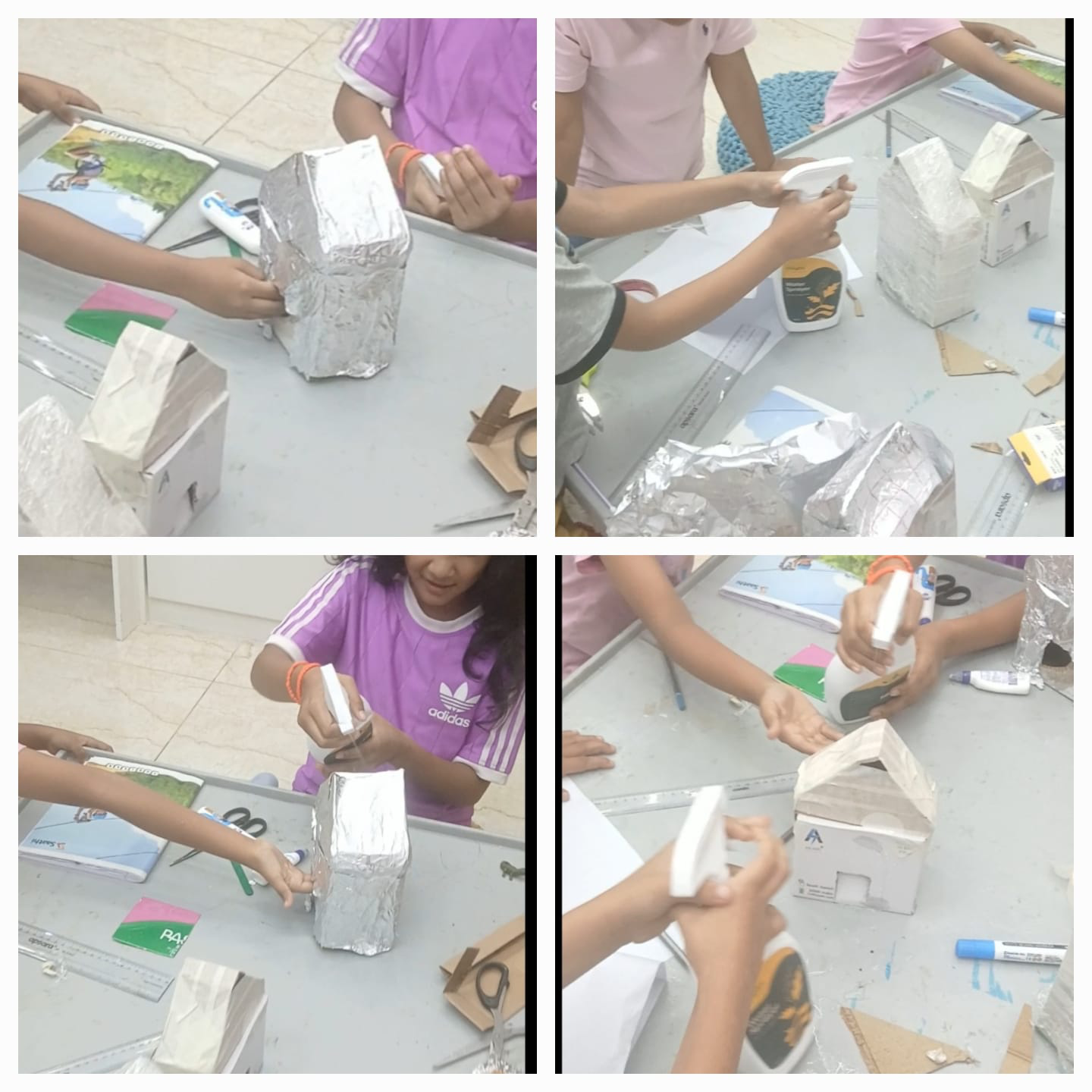
Showcase: Thrive Beyond School – A unique STEAM education project for very young learners.
– Pooja Khatter, facilitator, Thrive
Our young scientists participated in an exciting hands-on activity where they designed and built their own monsoon-proof houses. Through teamwork and experimentation, the children explored how different materials reacted to water and discovered which ones were best for keeping homes dry and strong during heavy rain. This fun and engaging project helped them understand the importance of using waterproof and sturdy materials while also encouraging observation, problem-solving, and creative thinking.
Career assessment, guidance, and placement strategies:
Liberal Arts Colleges & Universities in India: How do they Benefit Students?
Liberal Arts colleges/universities are steadily growing in India, offering students a broad interdisciplinary approach to learning.
The benefits of a liberal arts education are both wide-ranging and deeply focused:
- Focus on skill-building, not just the major – skills like critical thinking, communication, creativity, problem-solving, global perspective and more. The essence is that skills are equally crucial for employability as the core subject expertise.
- This education emphasizes studying a range of subjects in the humanities, social sciences, natural sciences, and the arts, helping students understand the world from multiple perspectives.
- This education benefits the students who are still undecided on their major and/or career goals.
- This education benefits career-oriented students to build interdisciplinary connections and apply knowledge creatively across different fields.
- For parents, this means their children are not limited to one career path. Liberal arts graduates can work in diverse fields like business, policy, technology, education, design, and more.
A liberal arts education is not about producing specialists but well-rounded thinkers and responsible citizens. Top institutions focusing on this education are:
- Flame University
- Ashoka University
- Krea University
- Shiv Nadar University
- Ahmedabad University
- Azim Premji University
- OP Jindal Global University
- Symbiosis School of LIberal Arts
- And more
In today’s fast-changing world, success depends not just on what you know, but on how you think, adapt, and communicate. Liberal arts education prepares students for this reality by helping them connect ideas across disciplines and approach challenges with creativity and confidence.
Fermata Career Solutions inspires young individuals aged 13 to 30 to unlock their potential through focused and customised career and college counseling. With expertise in University Readiness, CareerGym, and Master Parenting, the experts empower you to pursue your dreams and shape your future with confidence. More about us on http://www.fermata.com
Dear reader,
I work with the school leadership team as an advisor and collaborate with teachers as a pedagogical trainer. I also help parents as a parenting counselor and regularly engage one-on-one with students as a personal guide and mentor. This weekly newsletter shares what I read, learn, and experience.
3-2-1 Tuesdays with Ms. Niv is a newsletter you can subscribe to and enjoy your learning journey with me.
 Nivedita Mukerjee