Nivedita Mukerjee
Education consultancy for parents and schools
3-2-1 Tuesdays with Ms Niv

Issue #283, 2nd December 2025
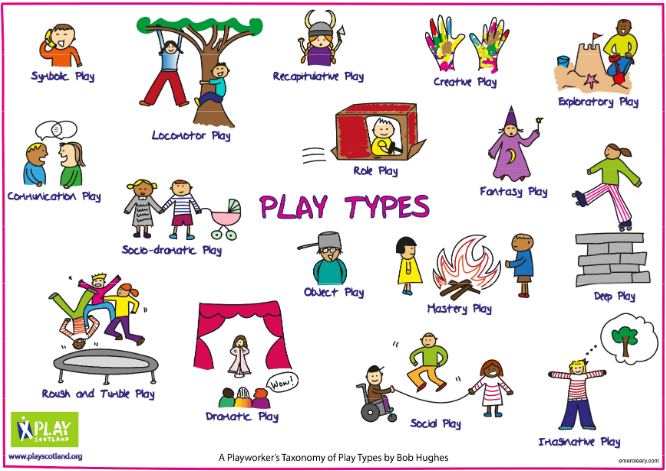
Next weekend, parents how about prioritising playtime for your child at home and dear teachers, create some time everyday in the school timetable for some unstructured play.
Why?
Play is essential for children’s cognitive, social, and emotional development, allowing them to explore ideas, practice skills, and make sense of the world through hands-on experience. When children are given unstructured time to play freely, they develop creativity, problem-solving abilities, and resilience as they navigate challenges and invent their own games.
Dedicating sufficient time for play—without rushing or over-scheduling—helps children build confidence, form meaningful relationships, and discover their interests in ways that structured activities alone cannot provide.
5 Everyday Items for Play at School and Home:
- Cardboard boxes (for building forts, cars, houses, or imaginative spaces)
- Kitchen utensils and containers (for pretend cooking, measuring, and sensory exploration)
- Blankets and pillows (for creating dens, obstacle courses, or cozy reading nooks)
- Natural materials like sticks, stones, and leaves (for outdoor creativity and nature play)
- Art supplies like paper, crayons, and scissors (for drawing, cutting, and creative expression)
This is a free newsletter. If you like my content, please subscribe by entering your email address here.
Three Images of the Week


Two Thoughts of the Week
“Play gives children a chance to practice what they are learning.”
- Fred Rogers
“Children learn as they play. Most importantly, in play children learn how to learn.”
- O. Fred Donaldson, Ph.D., play researcher
One Video of the Week
A little bit of playtime can have big benefits for a child’s developing brain, but adult participation is a crucial ingredient for best results. Early-education leader Jesse Ilhardt makes the case for you to put down the phone, pick up the make-believe tea cup (or that blanket-superhero cape) and take the time to experiment with imagination during kids’ most formative learning years. Directed by Sinan Göksel, Studio Big Box.
Reading with Ms. Meenu: Tip of the week
Raising a Reader:
Phonological Awareness plays a big role in raising a reader. Whenever urgency or anxiety you feel about raising a reader needs to be held at a distance during the actual work. In fact, to the greatest extent possible, building phonological awareness needs to look, talk, walk and act like play.
It’s not drill and kill. It’s singing “The Name Game.” It’s talking in Pig Latin. It’s playing I Spy with beginning sounds or rhyming words instead of colors. (I spy something that rhymes with tike. Yes, the bike!).
When you recite nursery rhymes, you’re heightening the kid’s sensitivity to the syllables and the beginning, middle and ending sounds within words. The stress patterns of classics like “Jack and Jill went up the Hill” help them learn about syllables and rhymes, important phonological awareness skills. And the alliteration in a rhyme like “Peter Piper Picked a Peck of Pickled Peppers” accentuated the /p/ sound and distinguishes it from surrounding sounds, a finer-grained level of phoneme sensitivity.
Spoonerisms are another fun source of phonological play. Sometimes they occur naturally in conversation when you accidentally say things like I “zipped the skoom meeting” instead of “I skipped a Zoom meeting”. But you can intentionally mix up initial sounds as a game, and give examples by saying: “Let’s mix up some sounds Instead of saying, “It’s dinnertime,” we can say, “It’s tinnertime”.
The lesson from all this is that you can easily build phonological awareness anytime, anywhere, with just your voice and your child’s attention.
A great irony of raising readers is that the critically important, life-trajectory-altering, high-stakes work of building these foundational skills is best done with the lightest, nearly imperceptible touch. The subtler the accumulation of moments of speech, song, and play over the course of years, the better, experts agree.
You may have noticed that this discussion of phonological awareness slid into talk of teaching letter sounds. And that’s the fact of raising real readers you’re going to be teaching many skills simultaneously. Spellings, pronunciations, and meaning are all intertwined in learning and memory. To achieve this whichever approach we want to take (books, wordplay, visual cues etc.) remember to keep it fun and be encouraging. Reading should be done for the love of reading NOT for the sake of it!
Happy Reading!
Meenu Gera
Consulting home and school librarian reading guide.
I Think, I Wonder, I Ask
–Dr Shreelakshmi Subbaswami, Academic Director, Vijaya School Hassan, Karnataka

Learning at Pace, Not in Race
Somewhere along the way, schooling has become a sprint. A 40-minute class feels like a countdown timer- teachers rushing to cover content, students racing to respond, and everyone silently competing against the clock. But learning is not a race, it is a human process that unfolds at its own pace. Every child and every adult learn differently at their own pace.
Last week during a Show and Tell, a five year old paused mid- sentence. She was thinking- eyes searching as she tried to recall the right word. Before she could find it, a well- meaning teacher jumped in, prompted her, and pushed her forward. The child repeated what she was told. I wondered: What would she have said if we had waited just ten seconds longer?
In another instance, a child was solving a new math problem. He paused, unsure. The teacher grew nervous- What if he cannot do it? But when we gave him time, we could see the progress- he tried, peers supported him, he tested his own reasoning and eventually arrived at the correct answer- with joy on his face.
We do this every day. We complete children’s sentences. We nod too quickly, signaling right or wrong before they have had a chance to struggle with an idea. We rush them through cognitive struggle, denying them the joy of discovering their own thinking. We call it helping- but sometimes, is it actually robbing them of the process.
Children need time to think, try, fail and try again. Our role as educators is not to accelerate learning, but to respect the pace, to trust that students can reach understanding without us spoon-feeding the way.
One change that helped us slow down was extending time blocks in Early Years classrooms. The shift was visible- calmer teachers, thoughtful students, deeper engagement. Time became a gift.
Imagine what education could be if we stopped racing…
Three questions for you…
- What do we lose when we rush learning?
- When was the last time you waited long enough for a child to truly think?
- What practices can you bring into your classroom to give more time to yourself and your students?
Career assessment, guidance, and placement strategies:
Summer Programs at ATLAS SkillTech University, India
Planning for the summer school has started. We bring you the prestigious, well-known, and lesser-known summer programs for career clarity and academic development. We have been sharing the details of engaging summer programs offered by universities in India and abroad. This issue talks about the two-week residential summer programs offered by ATLAS SkillTech University for grade 9-12 students:
- ISDI Design Summer School
- Understand Design Disciplines
- Kick Start your design portfolio
- Network, collaborate, and co-create with like-minded individuals
- Enhance your skills and competencies
- ISME Business School
- Understand your management disciplines
- Articulate your statement of purpose
- Network, collaborate, and co-create with like-minded individuals
- Enhance your skills and competencies
- uGDX – Tech Summer School
- Understanding new age technologies
- Get a peek into your future at a Tech School
- Network, collaborate, and co-create with like-minded individuals
- Enhance your skills and competencies
Fermata Career Solutions inspires young individuals aged 13 to 30 to unlock their potential through focused and customised career and college counseling. With expertise in University Readiness, CareerGym, and Master Parenting, the experts empower you to pursue your dreams and shape your future with confidence. More about us on www.fermataco.com
Fermata Career Solutions inspires young individuals aged 13 to 30 to unlock their potential through focused and customised career and college counseling. With expertise in University Readiness, CareerGym, and Master Parenting, the experts empower you to pursue your dreams and shape your future with confidence. More about us on www.fermataco.com
Showcase: Thrive Beyond School – A unique STEAM education project for very young learners.
– Pooja Khatter, facilitator, Thrive

Tashi actively participated in our 3D shapes lesson and confidently identified shapes such as the cube, cuboid, cylinder, and rectangular prism. She was also able to describe each shape by sharing the number of faces, edges, and vertices.
Tashi made meaningful connections to real life by identifying examples like a door, ice cubes, and a bottle cap. She enjoyed the hands-on activity where she used popsicle sticks and clay to build her own 3D models. She also demonstrated careful work while making a paper box, following the lines and folding the net correctly to form the shape.
The session concluded with a reflection activity, where Tashi wrote her answers thoughtfully in her notebook, showing her understanding of the day’s learning.
Dear reader,
I work with the school leadership team as an advisor and collaborate with teachers as a pedagogical trainer. I also help parents as a parenting counselor and regularly engage one-on-one with students as a personal guide and mentor. This weekly newsletter shares what I read, learn, and experience.
3-2-1 Tuesdays with Ms. Niv is a newsletter you can subscribe to and enjoy your learning journey with me.
 Nivedita Mukerjee