Nivedita Mukerjee
Education consultancy for parents and schools
3-2-1 Tuesdays with Ms Niv

Issue #286, 23rd December 2025
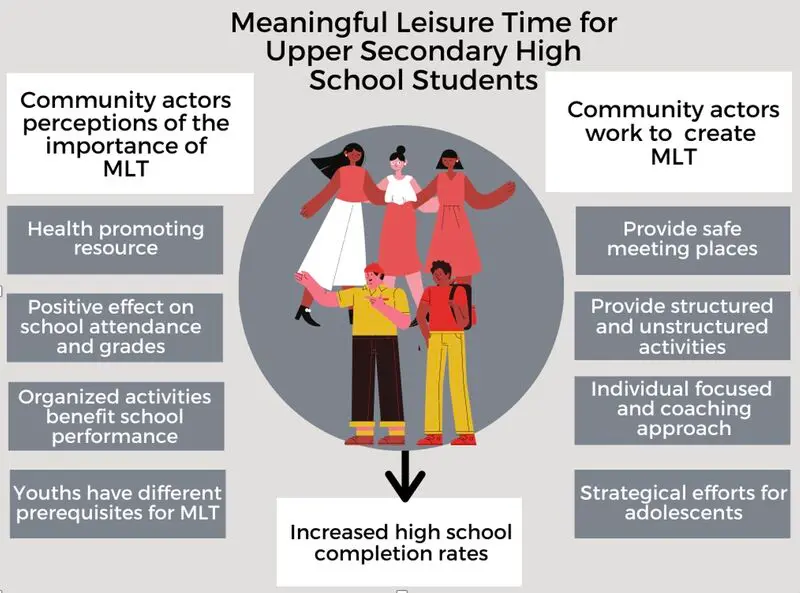
1. Does your child/student have unstructured time for self-directed activities?
2. Is there time for meaningful social connection outside academic settings?
3. Does your child/student show signs of balance rather than chronic stress?
The goal isn’t just quantity of free time, but quality—time that genuinely restores, connects, and allows for growth beyond academic achievement. If you and your child/student has it then congratulations! well done you. If not, let us aim for it in 2026, a brand new year awaits.
This is a free newsletter. If you like my content, please subscribe by entering your email address here
Three Images of the Week


Two Thoughts of the Week
FUN is the safety-valve to let off the steam pressure out of the boiler to keep the old thing from busting. ~Josh Billings, revised by H. Montague
It is in his pleasures that a man really lives, it is from his leisure that he constructs the true fabric of self. ~Agnes Repplier
One Video of the Week
In a society that increasingly measures our worth based on productivity, busyness, and achievement, are we ever really “off”? As Marina Cooley argues, if we identify and limit the hidden work in our lives, we will access true leisure, which simultaneously can unlock creativity and calm the nervous system. Marina Cooley is an Assistant Professor of Marketing at Goizueta Business School. Prior to joining Goizueta, Marina spent more than 15 years in strategic marketing roles at Coca-Cola and Lavva and worked as a management consultant at IBM. A storyteller at heart, she has been featured in the New York Times and Yahoo Finance and honored as one of Poets & Quants 40-under-40 Best MBA professors. In addition to teaching marketing, Marina researches the topic of leisure, specifically focusing on how to approach life design and work/life balance in a way that makes space for discretionary time. She shares these learnings in an undergraduate course titled “Personal Development” and with graduate students via “Life Design for the Modern MBA.”
Reading with Ms. Meenu: Tip of the week
How Parents Can Spur Spelling:
Successful storytime means a comfy setting, good books and page turning performances. By comparison, spelling with your child feels stripped down, a cappella rather than musical theater. There’s no deferring to an author’s words, an illustrator’s images, or a character’s voice to guide the lessons or drive engagement. Still, talking about words and segmenting them into letters can bring a mindfulness, care and engagement to family life that’s just as vital and powerful as a read-aloud.
Parents have ample opportunity, through the days and years to meaningfully explore and cultivate spelling with children. We’ve got the time even if it doesn’t always feel that way and can build the expertise to teach kids fruitful strategies, encourage interest in words, and help them become more reflective and analytical about their writing. Let’s discuss these ways to support strong spelling at home.
Consistently draw attention to Print: Kids learn a lot about spelling without being explicitly taught, and this learning begins as soon as they pay attention to written words, typically around 3 years old. Their environments – the books, signs and other text around – provide the raw material for subconscious learning. Whenever kids lock in on the letters in books, on signs, on toys and elsewhere, they soak up and analyze visual characteristics of written language.
Kids instinctively pickup the relative frequency of different letter combinations from repeated exposure to writing in their environment and they apply this statistical knowledge to even their earliest spelling attempts. This unconscious awareness of visual patterns in spelling develops long before they learn that letters represent speech sounds or start trying to spell phonetically. Researchers call this process “statistical learning” because these spelling efforts are informed by how frequently a child has seen letters appear in certain combinations, order and positions.
Parents aid statistical learning by facilitating lots of exposure to print. In the beginning, this requires an adult directing the child-for instance, pointing to the text accompanying an illustration in a picture book, or their name on a piece of paper.
Stay tuned with next week’s newsletter on more strategies to support strong spelling at home.
Happy Reading!
Meenu Gera
Consulting home and school librarian reading guide.
I Think, I Wonder, I Ask
–Dr Shreelakshmi Subbaswami, Academic Director, Vijaya School Hassan, Karnataka
Do Longer School Calendars Actually Help Us Learn Better?
In school, we often ask this, almost instinctively: More working days mean better results, right? But pause for a moment and reflect- how many days do we actually spend in school, as students and as teachers? And more importantly, what do those days feel like?
All boards mandate a fixed number of working days. Somewhere along the way, productivity got equated with longer hours and academic success with packed calendars. So we quietly trim holidays, shorten mid-year breaks, and stretch school hours- often in the name of “syllabus completion”. In reality, teacher burnout and student fatigue are no longer exceptions; they are patterns, especially at this time of the year.
If teachers and students are engaged for more than 210-220 days a year, can we truly expect rejuvenation, reflection or freshness? Research supports what simple reflection already tells us: learning deepens where there is time to rewind and re-visit the concepts, not when we relentlessly push forward.
Students and teachers don’t thrive when they are constantly on ‘work mode’. They thrive when they have time to read beyond textbooks, explore interests, travel, play, sit in silence or even do nothing. These moments outside school are not distractions- they are experiences. And classrooms become richer when both teachers and students bring lived experiences, curiosity and renewed energy into shared spaces of learning.
Three questions for you..
- If you had fewer days, what would you choose to do more intentionally?
- How often do we pause to ask students how they are experiencing school, not just how they are performing?
- Do we provide teachers time within the school calendar to plan, reflect, and collaborate?
Career assessment, guidance, and placement strategies:
Young Thinkers Program offered by Shiv Nadar University
As quoted on the website, ‘ The Young Thinkers Forum is an extraordinary platform dedicated to guiding high school students, specifically those in grades 9th to 12th, on a journey of self-discovery and personal growth. Our mission is to help young individuals identify their areas of interest and equip them with the knowledge and skills to pave the way for a successful and fulfilling career.’
The list of engaging, fulfilling, and learner-centric programs offered by Shiv Nadar University are:
- Young Thinkers Forum (YTF) Winter School
- Young Thinkers Robotics Winter Camp
- Shiv Nadar Internship Program 2026
- Young Thinkers Forum Summer School
- Young Thinkers Forum Masterclass
- Young Thinkers Weekend Program
To know more visit: https://snu.edu.in/ytf/
Meet the University Official in person on Jan 10th at the College Fair at Capston High School, Hoskote, Bangalore, hosted by the school in collaboration with Fermata Career Solutions.
Fermata Career Solutions inspires young individuals aged 13 to 30 to unlock their potential through focused and customised career and college counseling. With expertise in University Readiness, CareerGym, and Master Parenting, the experts empower you to pursue your dreams and shape your future with confidence. More about us on www.fermataco.com
Showcase: Thrive Beyond School – A unique STEAM education project for very young learners.
– Pooja Khatter, facilitator, Thrive
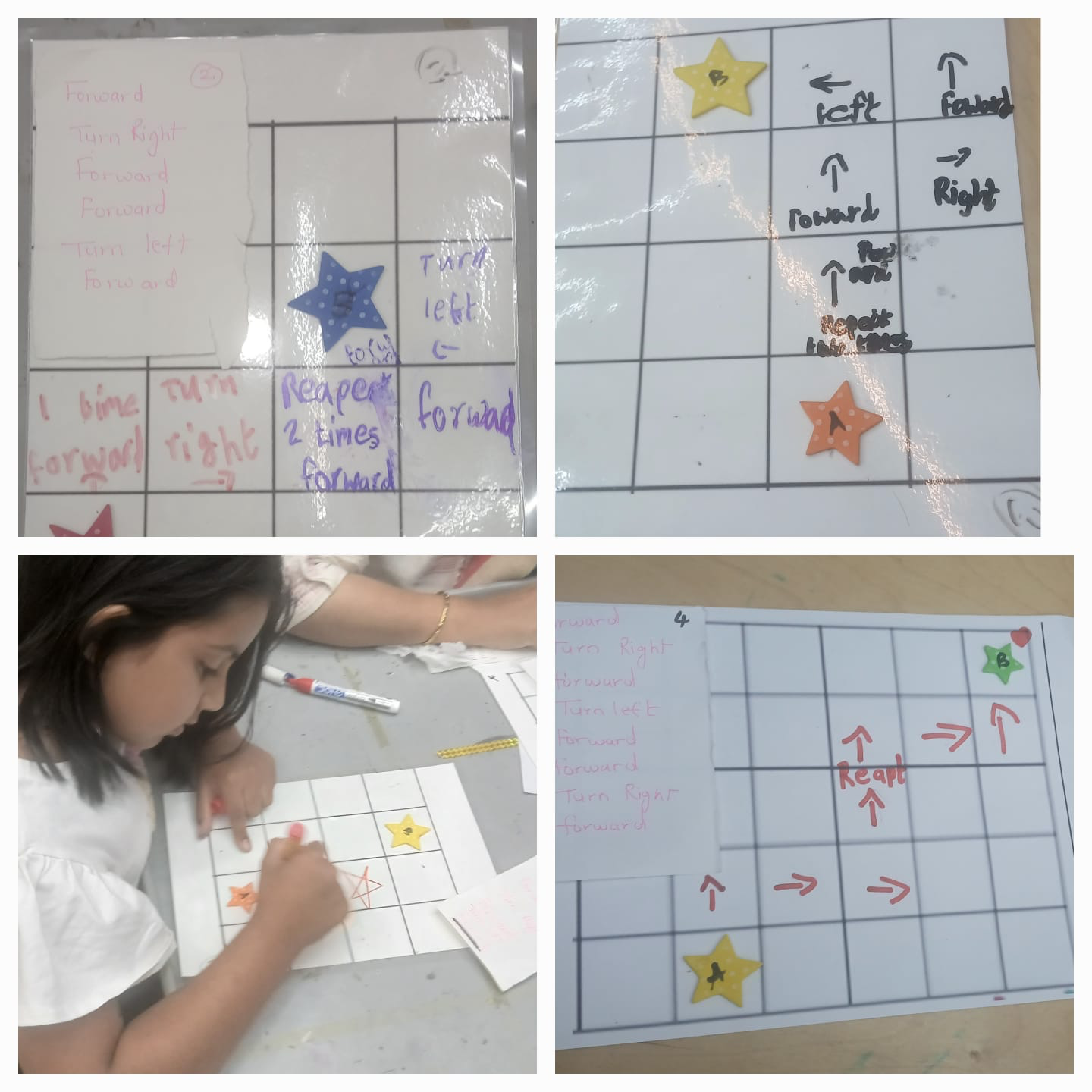
The children were able to recall and share the rules of the unplugged coding activity. They explained that a programmer needs to give clear instructions and correct directions for the robot to move. During the discussion, the children also shared their understanding of key coding terms: they said that ‘loop’ mean repeating steps again and again, and ‘debugging’ means finding and fixing an error.
The children demonstrated their understanding by following the instructions on their grids. They wrote clear codes, used directional steps, and applied repeat loops correctly. Neev and Mayra showed strong and clear understanding of the activity, while Tashi took more time because of irregular attendance. Samyuktha also showed her understanding using stars and arrows to represent the steps in her own creative way.
The class ended with HOTS (Higher Order Thinking Skills) questions, and the children wrote answers in their notebooks, showing good reflection and comprehension.
Dear reader,
I work with the school leadership team as an advisor and collaborate with teachers as a pedagogical trainer. I also help parents as a parenting counselor and regularly engage one-on-one with students as a personal guide and mentor. This weekly newsletter shares what I read, learn, and experience.
3-2-1 Tuesdays with Ms. Niv is a newsletter you can subscribe to and enjoy your learning journey with me.
 Nivedita Mukerjee