Nivedita Mukerjee
Education consultancy for parents and schools
3-2-1 Tuesdays with Ms Niv
Issue #292, 3rd February 2026
Is our view a narrow focus? Are we more myopic in our vision? Do we think of ourselves as an individual or a family or a school in a city? Do we think of education in terms of school exam boards? Are we confined to our own pin code or a global village? What is our approach to teaching – learning practice oriented towards? What kind of interdisciplinary studies are we incorporating in our curriculum? Is there enough collaborative practice in the pedagogy to ensure that our students and children grow up to solve problem of the community as a commuity. Are we able to combine the scientific and artistic perspective? What about individual and global perspective?
This is a free newsletter. If you like my content, please subscribe by entering your email address here.
Three Images of the Week
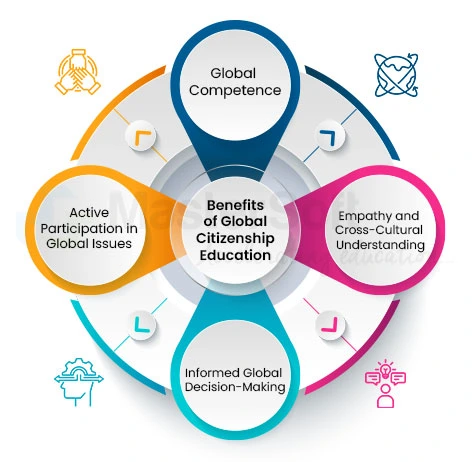
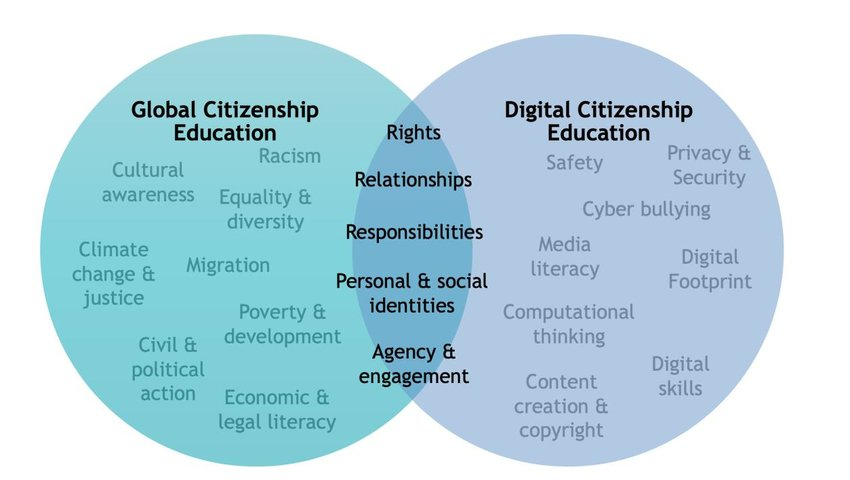
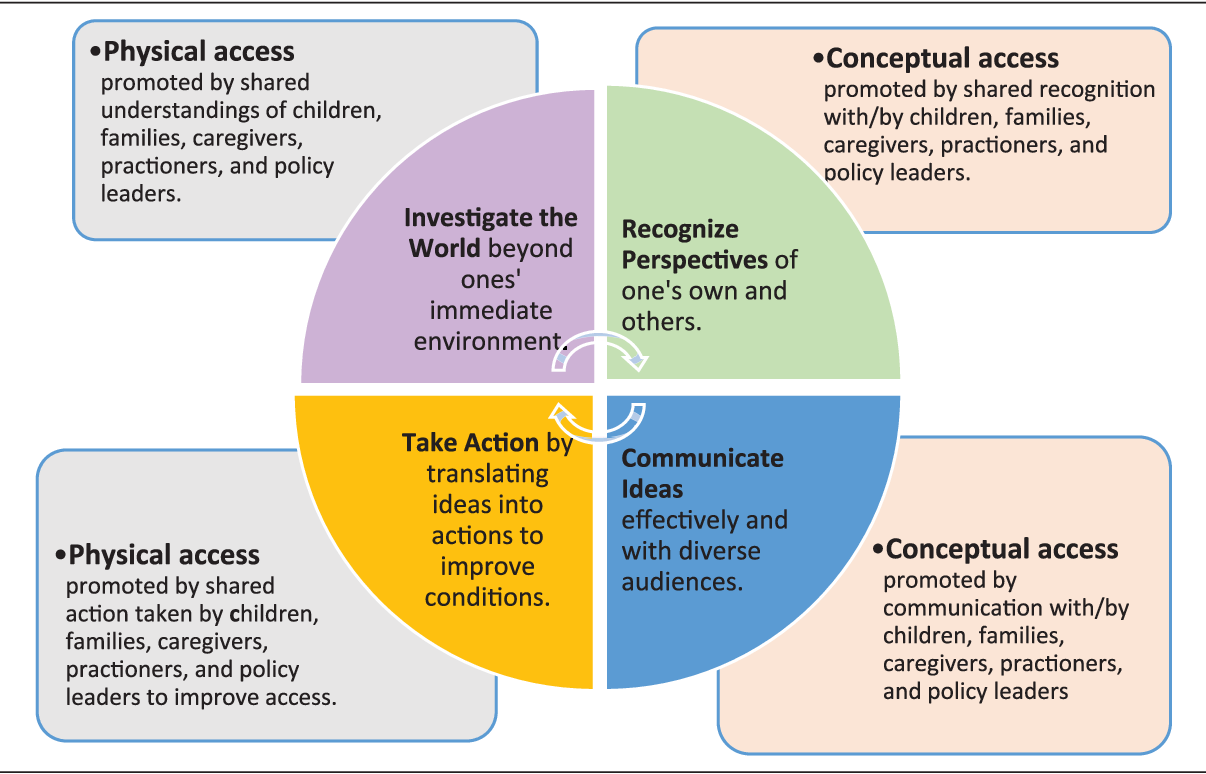
Two Thoughts of the Week
“Education is the most powerful weapon which you can use to change the world.”
-Nelson Mandela
“Education makes a people easy to lead but difficult to drive: easy to govern, but impossible to enslave.”
–Peter Brougham
One Video of the Week
Studying today means to transform into a global citizen. In his talk Albrecht Classen explores the importance of learning and embracing global cultures and accepting diversity and multiculturalism. Dr. Albrecht Classen is University Distinguished Professor and Undergraduate Advisor in the Department of German Studies. Dr. Albrecht Classen was born near Bad Hersfeld in Northern Hesse, Germany. He studied at the universities of Marburg, Erlangen (Germany), Millersville, PA (USA), Oxford (Great Britain), Salamanca (Spain), Urbino (Italy), and Charlottesville, VA (USA). He received his Ph.D. from the University of Virginia in 1986. He has a broad range of research interests covering the history of medieval and early modern German and European literature and culture from about 800 to 1800. He has published more than 90 scholarly books, critical editions, translations, and textbooks, and 9 poetry volumes of his own (May 2017). At the latest count he has published 630 scholarly articles and 2380 book reviews.
Reading with Ms. Meenu: Tip of the week
Digital Libraries Are on the Rise — Do We Still Need Physical Libraries?
Digital libraries are becoming more popular every year. With eBooks, audiobooks, online databases, and learning platforms available at the click of a button, information has never been more accessible. For many users, especially busy families, students, and professionals, digital libraries offer unmatched convenience. But as this trend grows, an important question arises: Do we still need regular, physical libraries?
Why Digital Libraries Are Gaining Popularity
The appeal of digital libraries is easy to understand. They allow users to:
- Access materials anytime, anywhere
- Search information quickly and efficiently
- Support remote learning and research
- Use accessibility tools such as text-to-speech and adjustable fonts
Digital collections have expanded access to knowledge, especially for those who cannot easily visit a physical library. They have also played a critical role in keeping learning uninterrupted during times of change and uncertainty.
What Physical Libraries Still Offer
Despite the growth of digital resources, physical libraries continue to play an essential role that technology alone cannot replace.
Libraries are more than book storage spaces. They are places where:
- Children discover a love of reading through hands-on experiences
- Students find quiet, focused spaces for study
- Families attend storytimes, workshops, and community programs
- Individuals receive guidance from trained library professionals
- Communities come together in safe, inclusive environments
For many readers, especially young learners, the act of holding a book, browsing shelves, and reading without screens supports deeper concentration and stronger literacy development.
The Human Connection Matters
One of the greatest strengths of traditional libraries is the human connection. Librarians help readers find the right book, guide research, and encourage curiosity. These personal interactions foster confidence, critical thinking, and a lifelong relationship with learning—something digital platforms cannot fully replicate.
Not Either–Or, but Both
The future of libraries is not about choosing between digital and physical—it’s about balance. Digital libraries expand access and convenience, while physical libraries nurture engagement, community, and deep learning.
Together, they:
- Support diverse learning styles
- Bridge the digital divide
- Promote both innovation and tradition
Looking Ahead
As digital libraries continue to grow, regular libraries remain just as relevant—perhaps even more so. In a fast-paced, screen-heavy world, physical libraries offer something increasingly valuable: space to slow down, connect, and learn meaningfully.
Happy Reading!
Meenu Gera Consulting home and school librarian reading guide
I Think, I Wonder, I Ask
–Dr Shreelakshmi Subbaswami, Academic Director, Vijaya School Hassan, Karnataka
Beyond Borders: Bringing the World into Our Classrooms
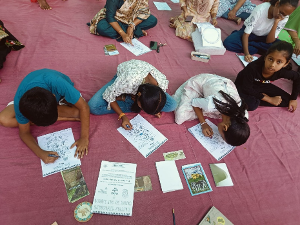
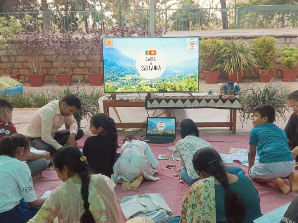
Growing up in a small town often meant limited exposure to different cultures, people, and nations. Our understanding of the world was shaped largely by the movies we watched, the brief references in textbooks, or the occasional tourist we noticed from a distance. I was always curious about how people lived elsewhere—what choices they made, what they valued, and what their everyday realities looked like.
As a researcher, educator and traveller, I later had the opportunity to visit several countries and, more importantly, to engage deeply with people from different parts of the world. Listening to their perspectives on culture, politics, geography, history, education, the environment, and social issues expanded my worldview in ways no textbook ever could.
When I returned to my school as an educator, I wanted to share these experiences with our learning community, so I began curating sessions and school bulletins where we explored countries not as tourists, but as fellow human beings—understanding their commonalities, unique identities, challenges, and aspirations. The intention was simple: to sensitise students and teachers to the world beyond borders and nurture a sense of oneness—Vishwa Manava, the global citizen.
I believe that when students begin to see themselves as part of a shared humanity, they develop empathy and respect for diversity, and ultimately are encouraged to take responsible action.
Three questions for you…
- How consciously do you bring global perspectives into your classroom or school practices?
- What tools or strategies can help students recognise human commonalities across cultures?
- How can local issues be connected to global challenges meaningfully?
Showcase: Thrive Beyond School – A unique STEAM education project for very young learners.
– Pooja Khatter, facilitator, Thrive
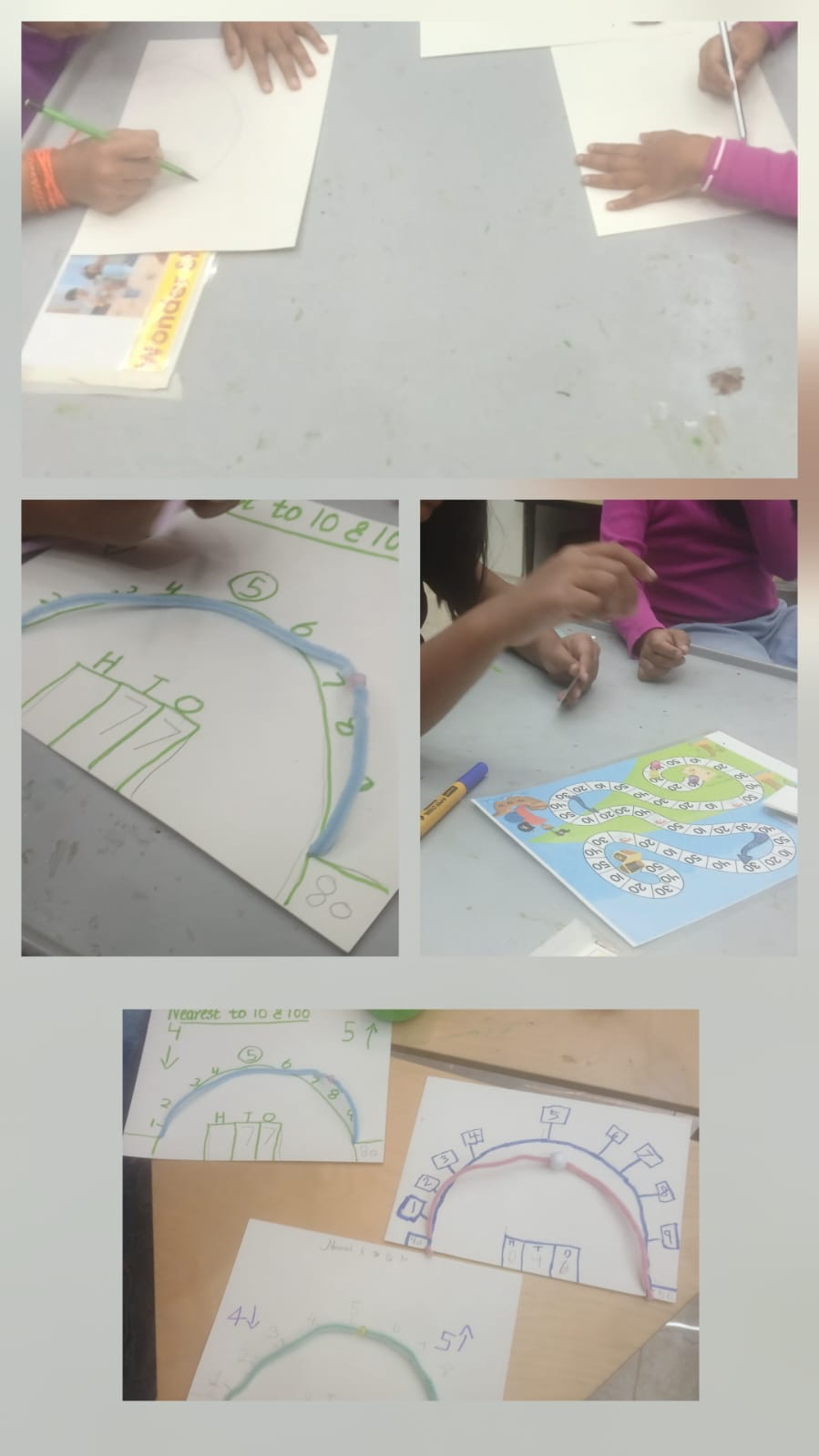
Activity: Comparing, Patterns & Rounding of Numbers
The class focused on place value and number sense through hands-on math activities. The children compared three-digit numbers by checking the hundreds, tens, and ones places and practiced using greater than, less than, and equal to symbols with number cards and pipe cleaners. They explored number patterns by adding 10 and 100, made predictions, solved problems independently, and identified which digits changed. Samyuktha extended the learning by suggesting adding 1, while Havishka completed the task with peer support. The session concluded with rounding to the nearest 10 and 100, introduced through a video, reinforced through a math art activity, and practiced using a Nearest to 10 board game.
Havishka & Samyuktha: 7.10 years
Tashi: 7.5 years
Dear reader,
I work with the school leadership team as an advisor and collaborate with teachers as a pedagogical trainer. I also help parents as a parenting counselor and regularly engage one-on-one with students as a personal guide and mentor. This weekly newsletter shares what I read, learn, and experience.
3-2-1 Tuesdays with Ms. Niv is a newsletter you can subscribe to and enjoy your learning journey with me.
 Nivedita Mukerjee