Nivedita Mukerjee
Education consultancy for parents and schools
3-2-1 Tuesdays with Ms Niv
Issue #294, 17th February 2026
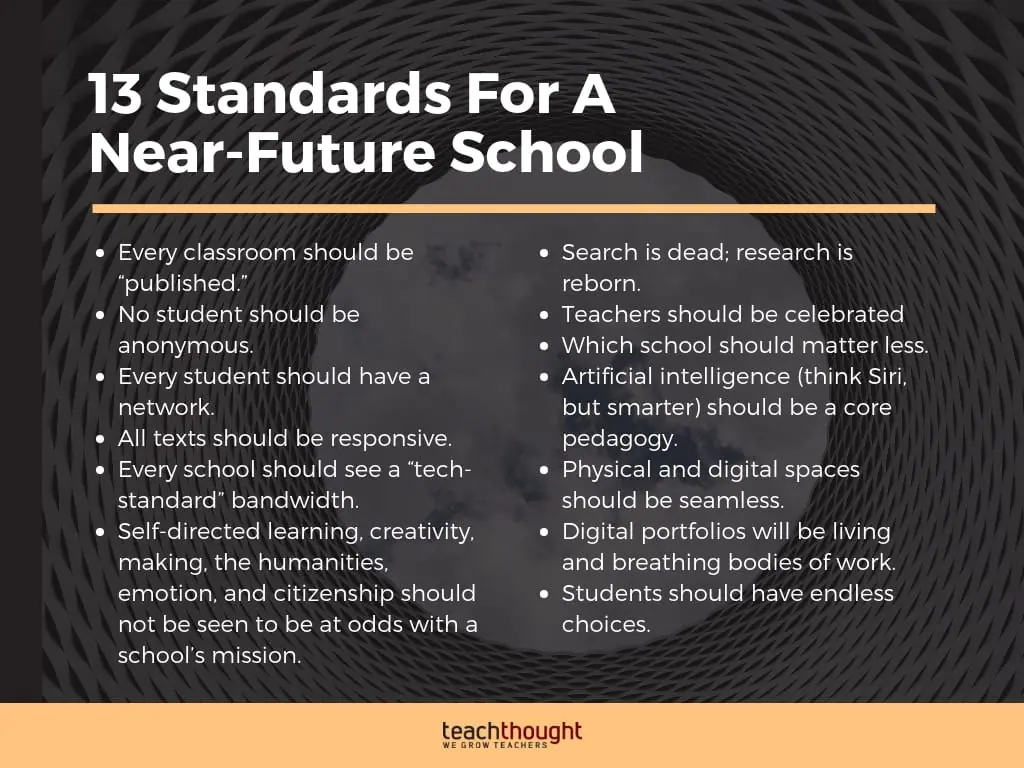
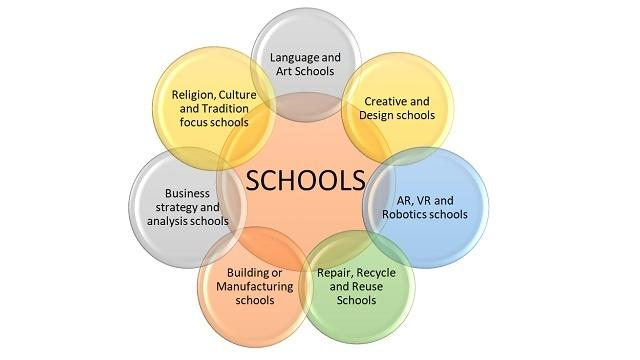
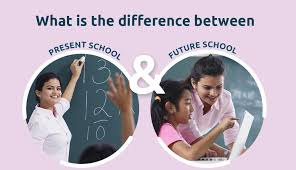
Are you happy with how your child’s school is aligned with life preparation? As a teacher, does your school culture allow you to move from standardised tests to sparking innovation? How do we envision our students’ future in the very near term? Their world is changing from mere manufacturing to continuous innovation. Does our school timetable accommodate that? Are the teachers being trained to incorporate student voice and choice alongside individualised learning opportunities? How do you provision for discourse and rhetoric analysis in your regular lesson plan? Automation and AI are slowly but surely moving structured jobs from the economy. When do you think we should unschool?
This is a free newsletter. If you like my content, please subscribe by entering your email address here.
Three Images of the Week
Two Thoughts of the Week
“In the end, the secret to learning is so simple: forget about it. Think only about whatever you love. Follow it, do it, dream about it. One day, you will glance up at your collection of Japanese literature, or trip over the solar oven you built, and it will hit you: learning was there all the time, happening by itself.”
― Grace Llewellyn
“I think the big mistake in schools is trying to teach children anything, and by using fear as the basic motivation. Fear of getting failing grades, fear of not staying with your class, etc. Interest can produce learning on a scale compared to fear as a nuclear explosion to a firecracker.”
― Stanley Kubrik
One Video of the Week
As a leading venture capitalist, Ted Dintersmith lived and breathed the world of innovation. He has seen first-hand how quickly automation is eliminating the structured jobs in our economy, as well as the opportunities for young adults who are bold, creative, and entrepreneurial. As Ted shifted his focus to the future of our schools, he realized that the core purpose of our schools has been lost in a wave of testing, data, and accountability. In this talk, Ted underscores the potential for our kids and our country if we educate to our innovative and creative strengths, and trust our schools and teachers to prepare our kids for life, instead of for standardized tests. After a twenty-five year career in venture capital, Ted Dintersmith is now focused on issues at the intersection of innovation and education. In the fall of 2012, Ted served as part of the delegation representing the United States at the United Nations General Assembly, where he focused on global education and entrepreneurship. The first two films he executive produced – Most Likely To Succeed and The Hunting Ground – premiered at Sundance, 2015. His website http://www.edu21c.com describes his initiatives and he can be followed @dintersmith. Ted is a Partner Emeritus with Charles River Ventures, a leading early-stage venture capital firm. Independent industry analysts ranked Ted as the top-performing venture capitalist in the United States for the 1995-99 period. Ted earned a Ph.D. in Engineering from Stanford University, and his undergraduate degree from the College of William and Mary, where he earned High Honors in Physics and English.
Reading with Ms. Meenu: Tip of the week
Raising Young Readers: Helping Children Fall in Love with Libraries from an Early Age
In today’s digital world, screens are everywhere—televisions, tablets, and phones often become the easiest way to keep children occupied. While technology has its place, early and meaningful exposure to books and libraries plays a powerful role in shaping a child’s lifelong relationship with reading, learning, and curiosity. Libraries are more than buildings filled with books; they are welcoming spaces where children can explore stories, ask questions, and develop essential literacy skills. Helping children become comfortable with libraries from an early age can gently shift their attention away from screens and toward richer, more interactive learning experiences.
Start Early: Make Books a Daily Companion
Literacy begins long before a child can read on their own. Reading aloud to babies and toddlers builds vocabulary, listening skills, and emotional connections. When books become part of daily routines—bedtime stories, quiet afternoon reading, or family read-alouds—children naturally associate reading with comfort and joy. Parents and even grandparents can model positive reading habits by letting children see them read books, magazines, or newspapers. Children imitate what they observe, and when reading feels normal at home, visiting the library feels like a natural extension of that habit.
Introduce the Library as a Fun and Familiar Place
A child’s first library visit should feel exciting, not intimidating. Regular visits—even short ones—help children feel comfortable with the space. Let them explore children’s sections, touch books, choose their own stories, and participate in library programs such as storytime, sing-along sessions, or craft activities. Giving children ownership over their book choices fosters independence and confidence. When children are allowed to select books that interest them—whether about animals, trucks, fairy tales, or superheroes—they are more motivated to read and return.
Create Meaningful Screen-Free Moments
Rather than eliminating screen time entirely, families can create intentional screen-free moments dedicated to reading and conversation. Setting aside even 15–20 minutes a day for shared reading can make a significant difference. Replacing passive screen viewing with interactive storytelling helps strengthen attention span, imagination, and comprehension skills. Libraries support this balance by offering engaging, screen-free environments filled with stories, puzzles, games, and hands-on learning opportunities that stimulate curiosity without overstimulation.
Make Library Visits a Family Tradition
When library visits become part of a family routine, children begin to see them as special and enjoyable experiences. Weekly or biweekly visits create anticipation and excitement—returning books, choosing new ones, and attending programs together builds positive memories tied to reading. Libraries also offer opportunities for social interaction, allowing children to see other families reading and learning together. This sense of community reinforces the idea that reading is valued and shared.
Planting the Seeds for Lifelong Learning
By introducing children to libraries early and encouraging meaningful engagement with books, we give them tools that last a lifetime. Libraries nurture imagination, critical thinking, and a love for learning—qualities that screens alone cannot replace. When children grow up seeing libraries as welcoming, exciting places, they are more likely to become confident readers, curious learners, and regular library visitors. In doing so, we help them look beyond screens and discover the endless worlds waiting inside books.
Happy Reading!
Meenu Gera Consulting home and school librarian, a reading guide
I Think, I Wonder, I Ask
–Dr Shreelakshmi Subbaswami, Academic Director, Vijaya School Hassan, Karnataka
Homework: Habit, Burden, or Bridge?
Reviewing homework recently made me pause and question its purpose, process, and outcome. What are we really building through homework — learning or compliance? If parents are reteaching concepts at home, we must ask: Is the homework reinforcing learning or exposing teaching gaps?
Homework, in its truest sense, should be independent work. It should be something the child has already learnt in class, homework should be for reinforcement, revision, or meaningful extension. It should help transfer abstract classroom skills into authentic, real-life contexts. Not copying. Not dependence. Homework should foster responsibility, independence, and connection between home and school.
Before assigning the next homework, review your last five homework assignments and reflect: You can use the following considerations.
| Dimension | Criteria |
| 1. Purpose & Alignment | Homework aligns with learning objectives and curriculum. |
| 2. Cognitive Challenge | Tasks promote reasoning and problem-solving, not rote work. |
| 3. Clarity & Accessibility | Instructions and expectations are easy to understand for all students. |
| 4. Feedback & Evaluation | Teacher (or peer) feedback is timely, actionable, and constructive. |
| 5. Engagement & Motivation | Homework invites student interest and personal connection. |
| 6. Equity & Inclusion | Homework is fair for diverse students. |
| 7. Progress & Reflection | Homework supports self-assessment and growth tracking. |
Three questions for you…
If you reviewed your last five assignments, what would you change tomorrow?
What kind of choices do you offer students in their homework?
As a parent, what role do you play in your child’s homework?
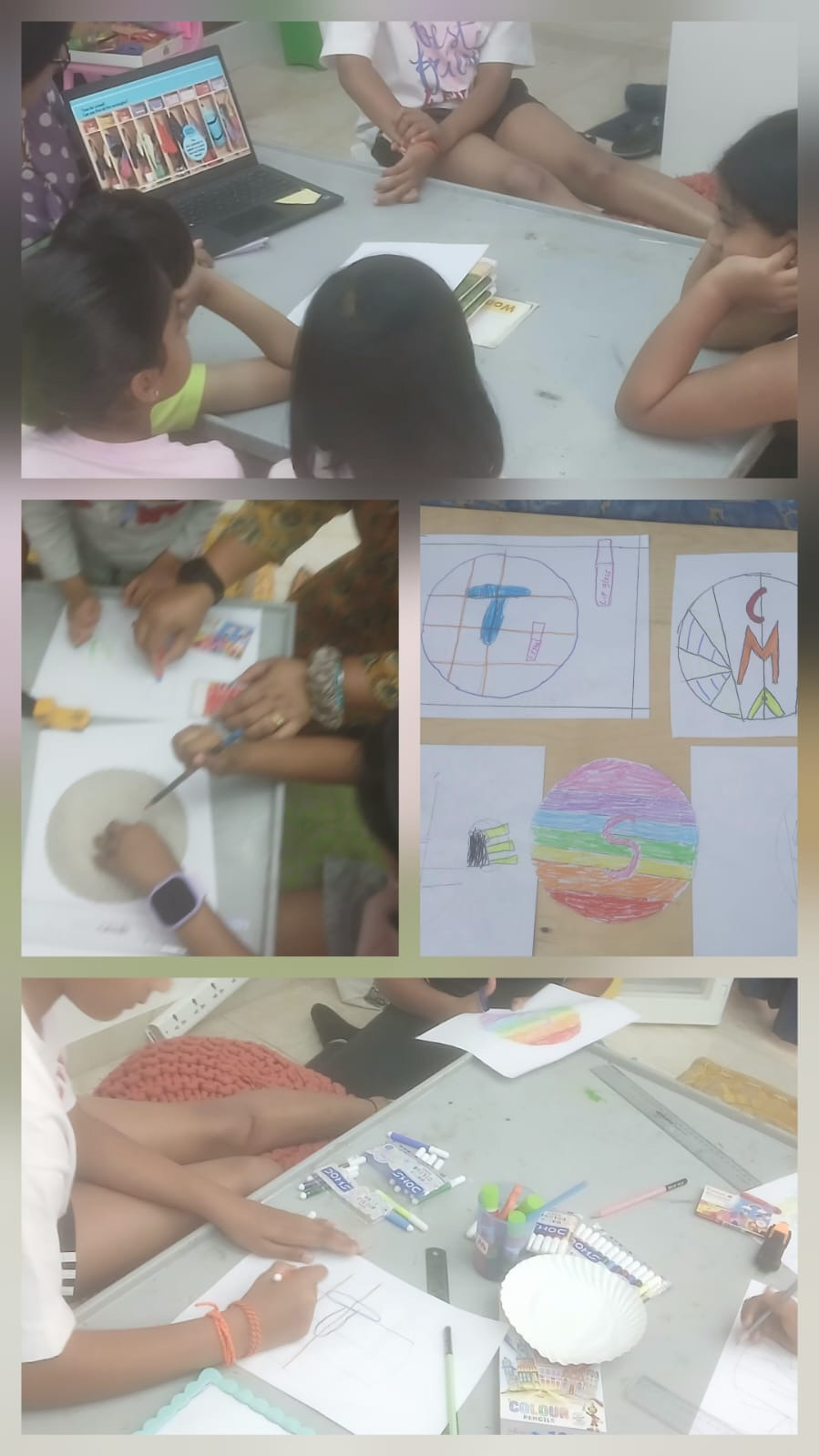
Showcase: Thrive Beyond School – A unique STEAM education project for very young learners.
– Pooja Khatter, facilitator, Thrive
Geometric Forms in Graphic Design
The children actively participated in the shapes and logos activity. They confidently shared their observations from the video and identified different shapes in objects around them. During the discussion on logos, they connected the concept to real-life examples such as school logos, brand logos, and logos on their clothes.
The children showed curiosity as they identified shapes used in different logos. They demonstrated creativity while designing their own logos and converting them into 3D models. Overall, the activity reflected good observation skills, participation, and understanding of shapes in real-life contexts.
Rudhra – 3.7 years
Tashi, Neev & Mayra– 7.5 years
Havishka & Samyuktha – 7.10 years
Dear reader,
I work with the school leadership team as an advisor and collaborate with teachers as a pedagogical trainer. I also help parents as a parenting counselor and regularly engage one-on-one with students as a personal guide and mentor. This weekly newsletter shares what I read, learn, and experience.
3-2-1 Tuesdays with Ms. Niv is a newsletter you can subscribe to and enjoy your learning journey with me.
 Nivedita Mukerjee