Nivedita Mukerjee
Education consultancy for parents and schools
3-2-1 Tuesdays with Ms Niv

Issue #295, 23rd February 2026
Do you remember who first read to you — and what you felt? Which student made you fall in love with reading all over again? If you could live inside any book, would you ever want to come back? Whose voice do you hear when you read in silence? What would you lose if books disappeared tomorrow? Is there a book you’ve been avoiding — and why? When did a story tell you something about yourself you weren’t ready to hear?
This is a free newsletter. If you like my content, please subscribe by entering your email address here.
Three Images of the Week
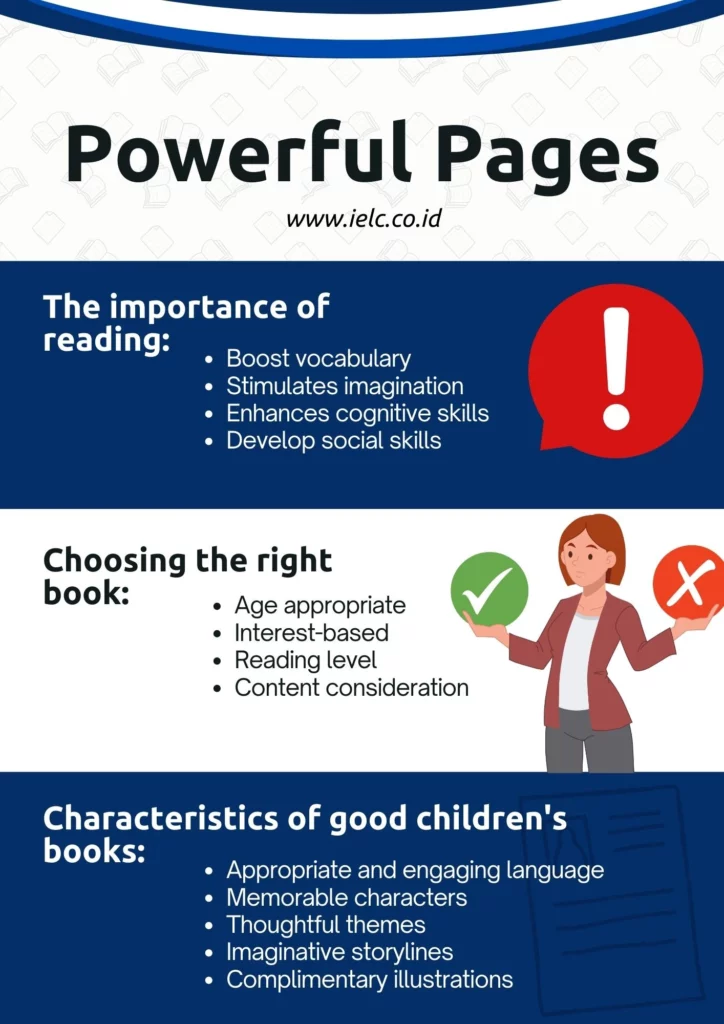
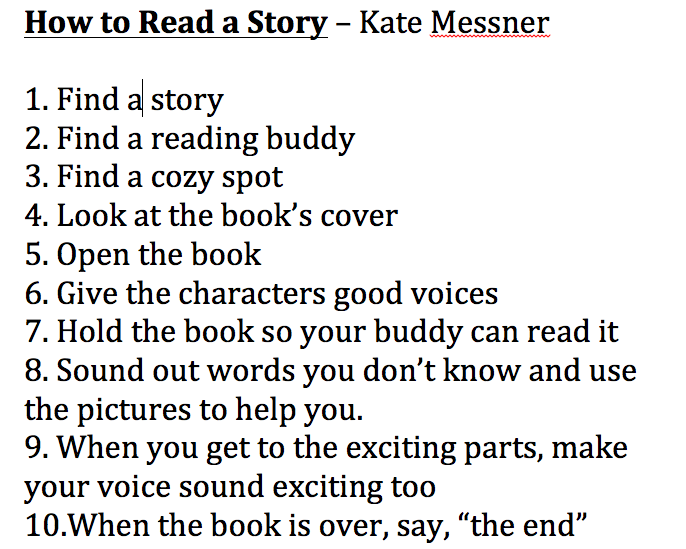
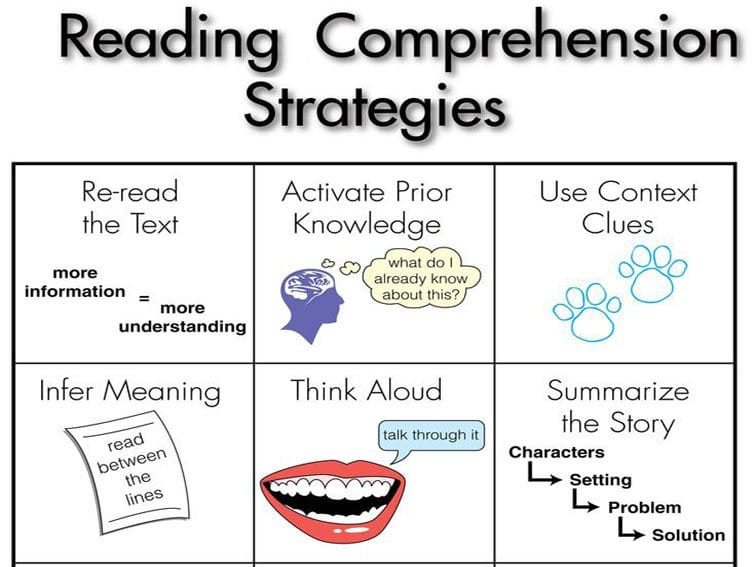
Two Thoughts of the Week
A book is a gift you can open again and again. —Garrison Keillor
One of the greatest gifts adults can give—to their offspring and to their society—is to read to children. —Carl Sagan
One Video of the Week
Why reading is so important in today’s society – a 9 year old’s perspective Luke is passionate about reading and believes the reduction of readings is causing a lot of society ills.
Reading with Ms. Meenu: Tip of the week
A New Chapter in Reading: The Rise of Personal and Curated Libraries
In today’s digital world, more and more families and schools are enjoying the experience of reading and owning physical books. Personal home libraries and curated school libraries are emerging trends that provide comfort, connection, and curiosity in reading.
Bringing Books Back Home: Many families are making the idea of a home library into something special. It is more than just a collection of books. It is a space where stories come alive, where imaginations grow, and where quiet moments of discovery are shared. Parents are discovering that creating a “family library” fosters a love of reading in children and sets the tone for lifelong learning. The goal for having a personal home library is to make books visible, accessible, and loved. Ideas For Families: Show your family interests with the books you display. Pair old favorites with new stories that reflect today’s world. Read together. Reading bedtime stories to children creates lasting family bonds. Talking about the stories builds important social skills. It is great to see how the new curated school library collections are becoming purposeful spaces. These spaces foster similar social opportunities with school-age children. Rather than overwhelming students with books, most librarians and educators are utilizing curation—thoughtfully choosing titles to enrich the cerebral and emotional diversity of the students.Strong Foundation as a Human Being: A thoughtfully curated school library is about more than the academic realm. It is a venue for the students to discover self-identity as well as to see the world from the perspectives of others. Through books, the students develop empathy, creativity, and self-confidence. These libraries have transformed into educational centers for social and emotional learning and to foster curiosity.
- Create themed book collections around topics like kindness, resilience, or sustainability.
- Student engagement: Invite students to suggest titles as part of the readers advisory programs. Conduct Literature Festivals. Publish an annual literature magazine that should include student work on poetry, short stories and even art collection.
- Community integration. Collaborate with local libraries or authors to refresh collections and maintain inclusivity.
The Magic of intentional choice both personal and school libraries relish the same celebration: Reading is more enjoyable when it is purposeful. Whether it is families picking bedtime stories or schools refreshing their collections, the most important aspect is inspiring spaces for readers to explore. Despite our increasingly digital world, books offer a timeless experience. These curated libraries are a space for the mind to blossom, for the family to unite, and for the community to connect around important stories.
Happy Reading!
Meenu Gera Consulting home and school librarian, a reading guide
I Think, I Wonder, I Ask
–Dr Shreelakshmi Subbaswami, Academic Director, Vijaya School Hassan, Karnataka
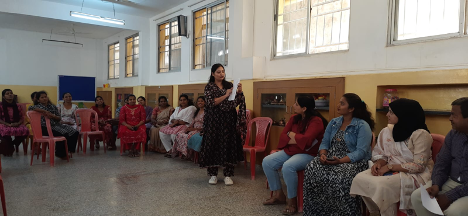
Parents as Partners Not Mere Participants
In most schools, engagement with parents happens on a need basis- a PTM, a result day, an annual meeting. We share progress reports, percentages, improvements, and concerns. Conversations revolve around academic performance, for some, it becomes a moment to complain about the child, share concerns about the system.
Rarely we share something deeper—our vision.
Why we do certain things in certain ways. Why we introduce specific programmes. Why we organize events that seem, at first, “extra.”
Traditionally, when schools organise an event, we inform parents about the what and the how. The agenda, timings, the roles, and all the preparation details. We communicate logistics efficiently. As we began planning the first-ever literature festival in our city, we asked ourselves: What can we do differently this time? How do we move from mere information-sharing to partnership-building with parents? We chose to begin with the why.
Why a literature festival? Why now?
What do we want children to experience?
What kind of culture are we trying to build?
How will this sustain reading practices beyond two days?
We shared the thought behind the initiative—the larger vision of nurturing a reading culture in Hassan. When we shared this, we could feel in the air that parents were interested- they were invested in the initiative. Some asked- “How can we contribute?” That question itself showed us the difference …
I believe, connecting at the vision and thought level, is the most sustainable way in building culture. When parents understand the why, they align with the journey. When they align with the journey, children benefit, and when children benefit, culture builds…
Three questions for you…
- In what ways do you currently approach building partnerships with parents?
- How often do you share the vision behind your initiatives—not just the logistics?
- What would shift in your school if conversations began with why instead of what?
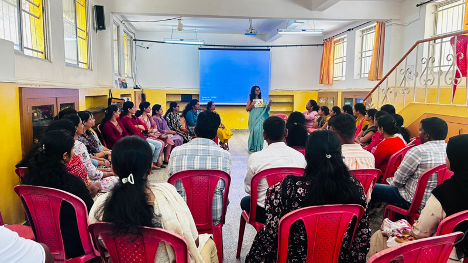
Showcase: Thrive Beyond School – A unique STEAM education project for very young learners.
– Pooja Khatter, facilitator, Thrive
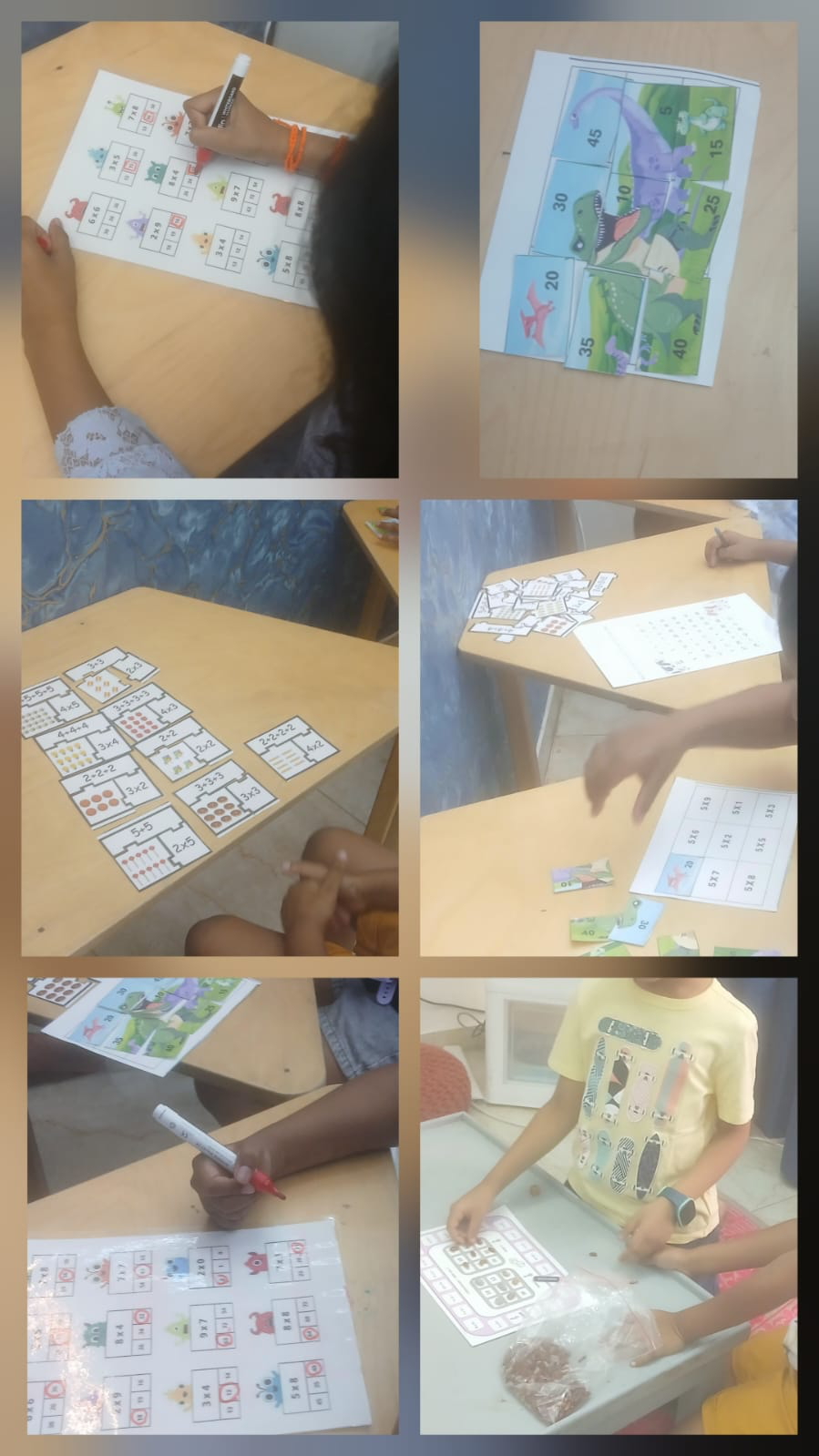
Math Through Riddles and Puzzles
In our STEAM session, children explored mathematics in a fun and engaging way through riddles and problem-solving challenges. The class began with a mystery cover page that encouraged students to observe, predict, and think critically about what they were going to learn. As “math wizards,” they discussed different strategies such as multiplication, addition, subtraction, division, and skip counting instead of counting one by one.
The riddle challenge, made exciting with a response bell and scoreboard, motivated students to think quickly and apply logical reasoning. They solved creative riddles related to fish, grapes, ants, camels, and snails using grouping, repeated addition, and skip counting. The session concluded with multiplication puzzles, a math board game, crossword puzzles, a maze, and skip-counting activities.
The activities helped the children to strengthen their problem-solving skills, mental math strategies, logical thinking, and teamwork. Most importantly, it showed them that mathematics can be playful, interactive, and full of discovery.
Maira – 6 years old
Tashi, Neev, Mayra, & Yuvaan – 7.5 years old
Samyuktha – 7.10 years old
Dear reader,
I work with the school leadership team as an advisor and collaborate with teachers as a pedagogical trainer. I also help parents as a parenting counselor and regularly engage one-on-one with students as a personal guide and mentor. This weekly newsletter shares what I read, learn, and experience.
3-2-1 Tuesdays with Ms. Niv is a newsletter you can subscribe to and enjoy your learning journey with me.
 Nivedita Mukerjee