Nivedita Mukerjee
Education consultancy for parents and schools
3-2-1 Tuesdays with Ms. Niv
Issue #298, 17th March 2026
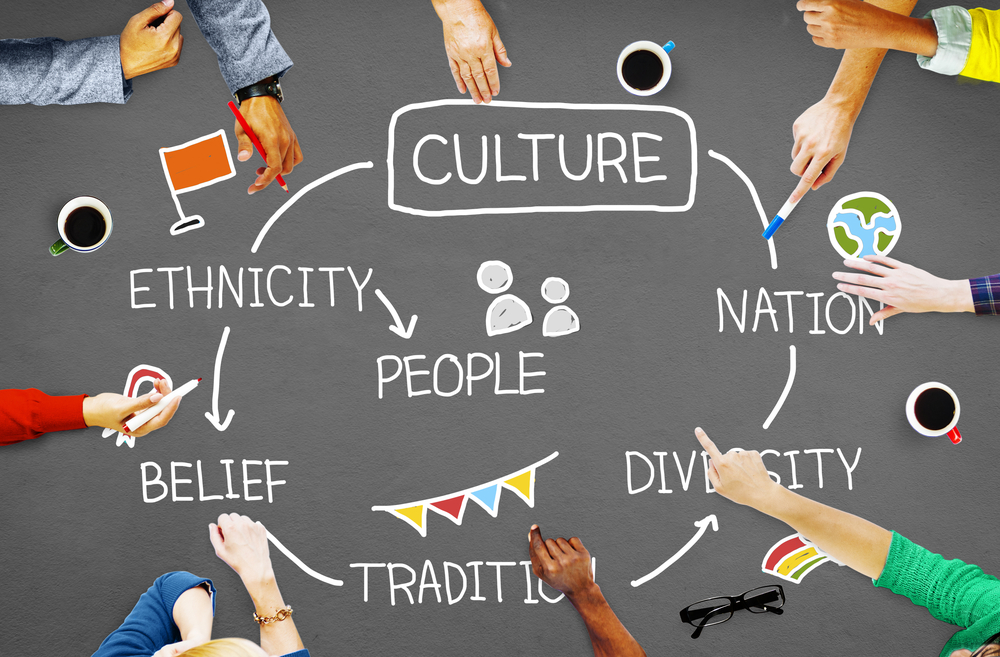
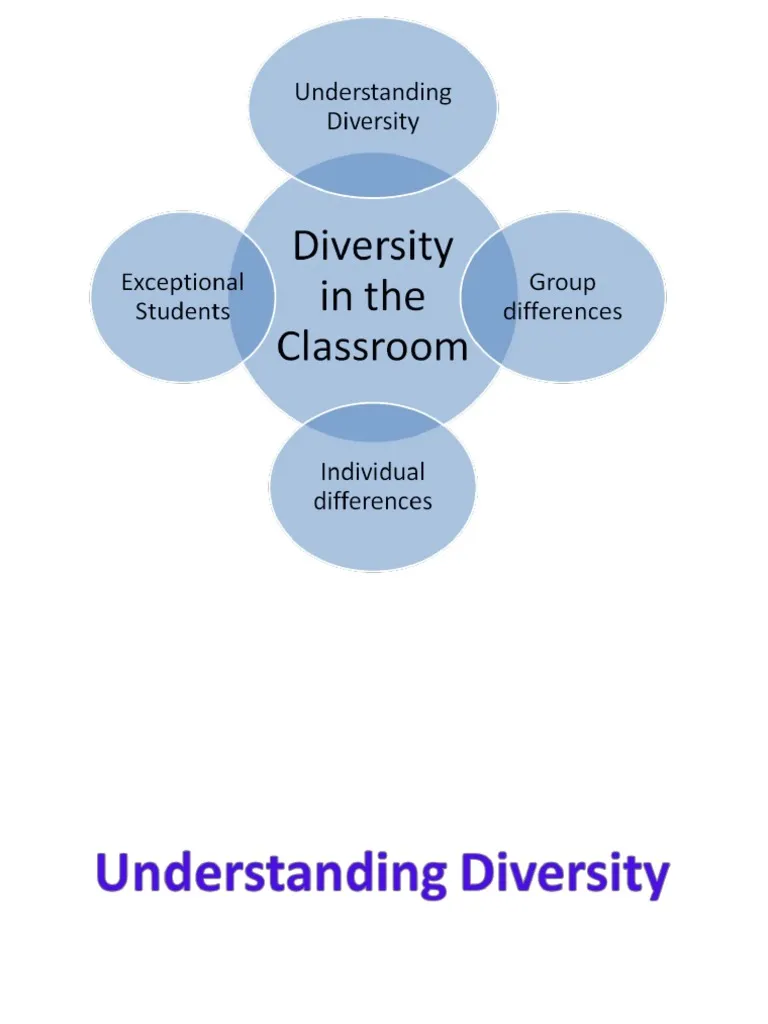
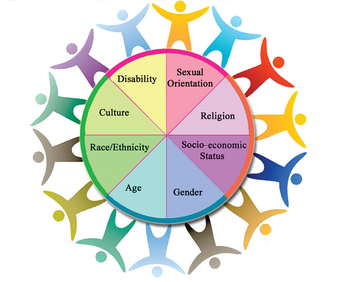
Eid Mubarak! Ugadi Subhakankshalu! Whichever one – or both? May peace and joy come to our families and all around us soon. Health and prosperity will follow. Learning will come at different times, in different ways, to different people. What does diversity look like to you? within yourselves? within your classroom? Your homes and schools? Do you seek diversity? How comfortable and curious about it are you? I have been a research scientist, a television journalist, a magazine editor, an educator, a social investor… besides being a daughter, mother, wife, sister-in-law, daughter-in-law… I am a Bengali-speaking person who thinks in Hindi. I experiment with Kannada, Marathi, and Punjabi. The language I write in is English. In our hyphenated existence, how diverse or multifarious are each of us? How do we cultivate diversity within ourselves and around us?
This is a free newsletter for parents, educators, and students. If you like my content, please subscribe by entering your email address here.
Three Images of the Week
Two Thoughts of the Week
If we cannot now end our differences, at least we can help make the world safe for diversity. John F. Kennedy
It is time for parents to teach young people early on that in diversity there is beauty and there is strength. Maya Angelou
One Video of the Week
Rebeca Hwang has spent a lifetime juggling identities — Korean heritage, Argentinian upbringing, education in the United States — and for a long time she had difficulty finding a place in the world to call home. Yet along with these challenges came a pivotal realization: that a diverse background is a distinct advantage in today’s globalized world. In this personal talk, Hwang reveals the endless benefits of embracing our complex identities — and shares her hopes for creating a world where identities aren’t used to alienate but to bring people together instead.
Reading with Ms. Meenu: Tip of the week
Information Equity in Libraries: Creating Fair Access for All
Libraries have long stood as symbols of knowledge, opportunity, and community. At the heart of their mission is a powerful idea: information should not belong only to those who can afford it, reach it easily, or already know how to use it. This belief is closely tied to the concept of information equity, which means ensuring that all people have fair and meaningful access to reliable information, resources, and learning opportunities.
Information equity goes beyond simply making materials available on a shelf or online. It recognizes that people come from different social, economic, cultural, linguistic, and educational backgrounds, and that these differences can affect how easily they access and use information. True equity means removing barriers so that everyone, regardless of age, income, language, disability, or location, has the opportunity to benefit from knowledge and participate fully in society.
Libraries play a critical role in advancing information equity because they serve diverse communities with diverse needs. For some users, equity may mean access to books and reading materials that reflect their language, culture, and lived experiences. For others, it may mean free internet access, computers, e-books, assistive technologies, or help with digital tools. In many cases, it also means providing guidance so users can understand, evaluate, and apply the information they find.
In school libraries, information equity is especially important because it supports both academic growth and personal development. Students should not only have access to textbooks and research tools, but also to a wide variety of literature that helps them see themselves and understand others. When library collections include diverse voices and perspectives, they affirm students’ identities while also broadening their understanding of the world. This helps create a more inclusive reading culture and a more equitable learning environment.
Public libraries also promote information equity by supporting lifelong learning. They often become essential spaces for newcomers, job seekers, seniors, parents, and underserved communities. A public library may help someone apply for employment, access government services, learn a new language, attend a digital literacy workshop, or simply find trustworthy health and community information. In this way, libraries do more than provide resources—they empower people to make informed decisions and improve their quality of life.
Another important aspect of information equity is representation. If library collections and services reflect only dominant perspectives, many users may feel excluded or unseen. Equitable libraries make intentional efforts to include materials that represent different cultures, languages, identities, and experiences. This creates spaces where all community members can feel recognized, respected, and valued.
Information equity also requires libraries to think about accessibility. Information is not truly equitable if it is available only in one format or only to those with certain skills. Libraries must consider accessible formats such as audiobooks, large-print books, captioned media, screen-reader-friendly platforms, and inclusive programming for users with different abilities. Equity is achieved not when resources exist, but when people can actually use them.
In today’s world, where misinformation and digital barriers are growing concerns, the role of libraries in promoting information equity is more important than ever. Libraries help individuals develop the skills to search for reliable information, think critically, and engage responsibly with the world around them. They are not just centers of access, but centers of empowerment.
Ultimately, information equity in libraries is about fairness, dignity, and opportunity. It reflects the belief that every person deserves the chance to learn, grow, and participate fully in society through access to meaningful information. By committing to information equity, libraries continue to fulfill one of their most important purposes: opening doors for everyone.
Happy Reading!
– Meenu Gera Consulting home and school librarian, a reading guide
I Think, I Wonder, I Ask
–Dr. Shreelakshmi Subbaswami, Academic Director, Vijaya School, Hassan, Karnataka
When Every Child Answers Differently…
During this time of the year, we review the curriculum, revisit our pedagogy, and ask whether we have reached the milestones and learning outcomes we had set for ourselves. It is a necessary ritual of schooling. As we were reviewing our literacy curriculum, we began to question the learning outcomes.
In many literacy classrooms, learning is often measured by how closely a student’s answer matches the one provided in the notes. After a unit is taught, a familiar cycle follows: a set of questions, a set of answers, practice writing them, and finally reproducing them in examinations. But do our questions allow students to think, or do they simply expect a recall?
This time we asked what kinds of assessments might allow differentiated answers, responses that reflect how each child has understood a text or connected it to their experiences, or interpreted its meaning. When every student is working toward the same answer, we miss the richness of diverse perspectives that comes out of that classroom.
This is where writing compositions, reflections, and open-ended questions become important. They give students time, space, and language to articulate their thoughts. They allow learners to engage with ideas, make connections, and develop their own voice.
Of course, schools still require common learning outcomes. But should the path to those outcomes always look the same? We know that differentiation is not easy, yet it is one of the important shifts we need to make if we want thinking classrooms where all children are engaged meaningfully in learning.
Three questions for you…
- How often do students get opportunities to give answers that differ from the “model answer”?
- What kinds of assessments allow children to express their own interpretations?
- How can teachers balance common learning outcomes with diverse ways of reaching them?
Showcase: Thrive Beyond School – A unique STEAM education project for very young learners.
– Pooja Khatter, facilitator, Thrive
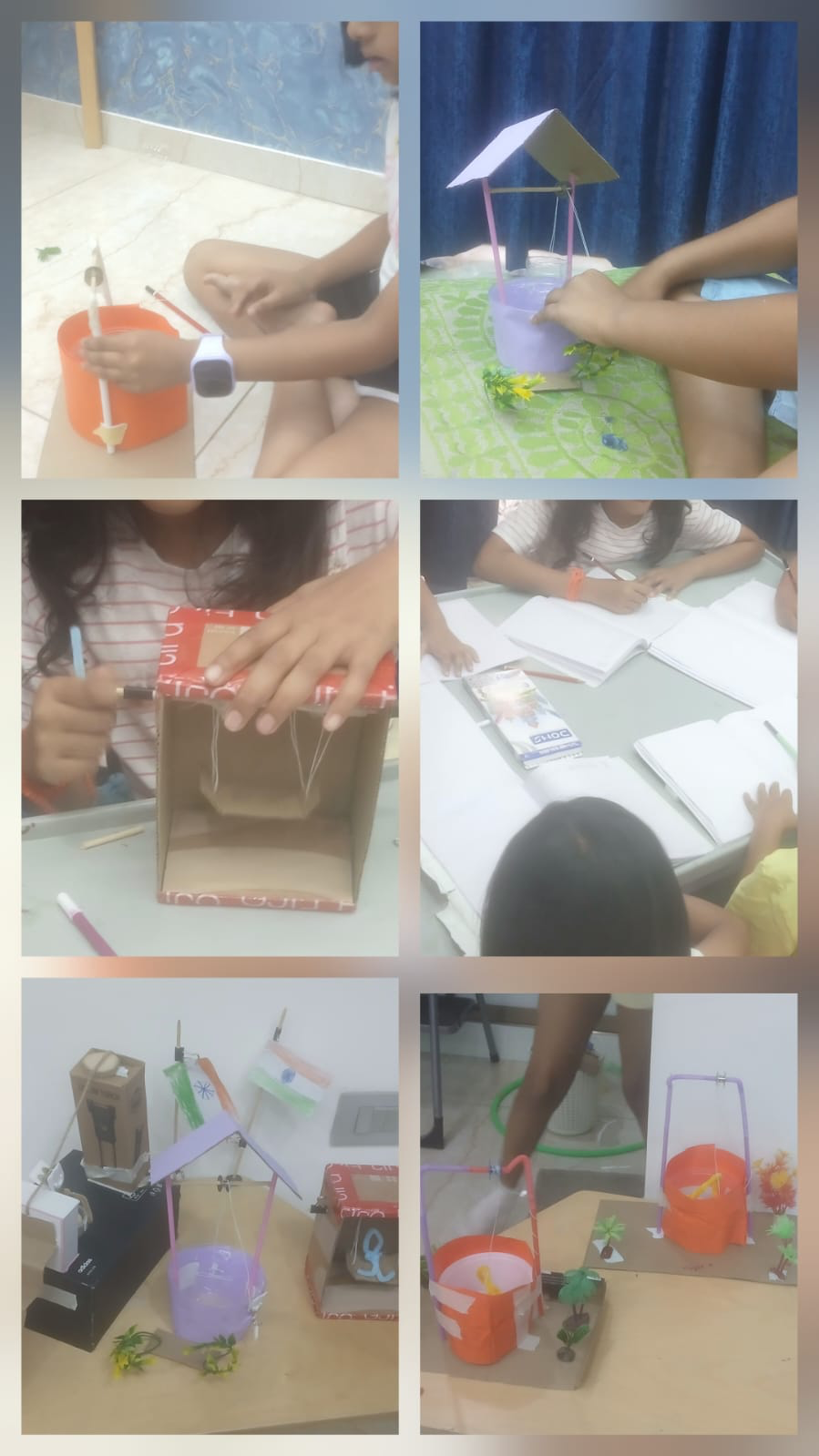
Exploring Simple Machines: Understanding the Pulley
The class began with a discussion where the children recalled the simple machines they had learned earlier, such as the lever, wheel, and axle. They shared real-life examples and discussed how simple machines help make work easier.
To introduce the pulley, the children explored different ways people lift heavy loads. They first tried lifting a bucket using their hands and then used a pulley setup. Through this comparison, they observed that the pulley made the task easier and required less effort.
The children also observed a zip line model, watched a short video, and saw a flagpole demonstration to understand how a pulley works and how it changes the direction of force.
In the next session, the children answered questions about pulleys and acted out pulling an invisible rope to show how a pulley moves objects. They then designed and built their own pulley models using materials such as cardboard, straws, wheels, binder clips, and thread. The children created models like a well, zip line, mini flagpole, and elevator and shared their work with the class.
These activities helped the children understand how pulleys work and how simple machines make work easier, while also encouraging creativity and problem-solving.
Maira – 5.5 years
Yuvaan, Neev, Mayra, & Tashi – 7.7 years
Samyuktha & Havishka – 7.11 years
Dear reader,
I work with the school leadership team as an advisor and collaborate with teachers as a pedagogical trainer. I also help parents as a parenting counselor and regularly engage one-on-one with students as a personal guide and mentor. This weekly newsletter shares what I read, learn, and experience.
3-2-1 Tuesdays with Ms. Niv is a newsletter you can subscribe to and enjoy your learning journey with me.
 Nivedita Mukerjee