Nivedita Mukerjee
Education consultancy for parents and schools
3-2-1 TUESDAYS WITH MS NIV
Issue #22 / December 8, 2020
Have you incorporated brain breaks in your virtual sessions? Drink of water, yoga poses, quick song, a cartoon picture…
Many students find it very hard to sit for long time in the classroom, more so in a virtual classroom. Have you suggested what parents can do to provide some kind of flexible seating for their child’s study area? Besides the academic tools for learning, considering use of social tools seriously can help children work better, focus more and persevere through their learning journey. Check out today’s news letter for tips on home learning from an educator and parent and listen to the TedTalk of this very cool Principal who managed to do this with ingenuity.
Three Images For The Week
For educator, parent and student. The Holy Trinity of Education

Two Thoughts For The Week
“The principle goal of education in the schools should be creating men and women who are capable of doing new things, not simply repeating what other generations have done; men and women who are creative, inventive and discoverers, who can be critical and verify, and not accept, everything they are offered.”
―
“To understand a child we have to watch him at play, study him in his different moods; we cannot project upon him our own prejudices, hopes and fears, or mould him to fit the pattern of our desires. If we are constantly judging the child according to our personal likes and dislikes, we are bound to create barriers and hindrances in our relationship with him and in his relationships with the world. Unfortunately, most of us desire to shape the child in a way that is gratifying to our own vanities and idiosyncrasies; we find varying degrees of comfort and satisfaction in exclusive ownership and domination.”
―
One Video For The Week
To get young kids to thrive in school, we need to do more than teach them how to read and write — we need to teach them how to manage their emotions, says educator Olympia Della Flora. In this practical talk, she shares creative tactics she used to help struggling, sometimes disruptive students — things like stopping for brain breaks, singing songs and even doing yoga poses — all with her existing budget and resources. “Small changes make huge differences, and it’s possible to start right now … You simply need smarter ways to think about using what you have, where you have it,” she says.
Olympia Della Flora wants schools to think differently about educating students — by helping them manage their emotions.
She believes that it takes a village to improve schools and has found ways to engage multiple stakeholders in this work including students, staff, parents and community members. She believes that schools should seek ways to address and support the whole child when it comes to learning, addressing not only academics but also social and emotional outcomes.
What can you pick from this talk for your online classes? How can you identify your students feelings and then find appropriate coping strategies for those? Do share.
Guest Column
Noel Almeida, Education Specialist and Improvement Scientist
Schooling from home
“Technique is what teachers use until the real teacher arrives” – Parker Palmer
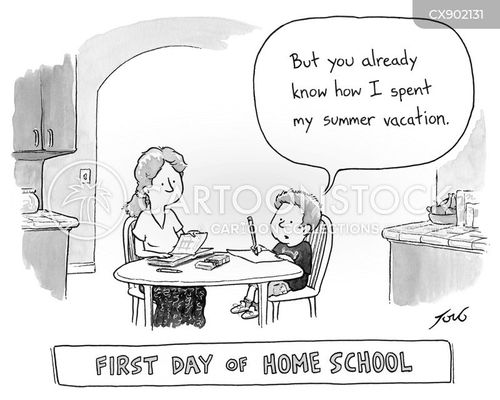
I have always felt called to teach and have had the privilege to teach many times in my life including home-schooling our daughter (Z) for a couple of years. So when the Covid lockdown kicked in, I thought to myself “I’ve got this. I’ve been there, done more than that”. I was wrong. As online classes and lockdown conspired to leave Z and us with many challenges. It was and continues to be hard to get a rhythm going, keep on top of what was taught so as to help beyond contact hours, and manage the emotional wellbeing of a teenager in lockdown.
Locked up teenager.
As online classes started our 15 year old – let’s call her Z – was locked down at home. I also have a job that requires me to work very closely with national leaders of education in India, and they listed similar challenges being faced by teachers. In discussions with top thinkers in EdTech including Prof Liz Kolb we arrived at a few guiding principles that should help if you are a teacher or a parent turned teacher.
PRINCIPLE 1: WHEN IN A HURRY GO SLOW
The tendency at the start and even now is that we must offer immediately all that school offered. This is simply not useful. In trying to do it all we overreach or get overwhelmed. The shift to teaching remotely or via digital means is a new and complex skill. As with any skill, first focus on mastering the essential moves. The essential moves here are understanding how your children respond to screen time and the hyper-focus required in a class, knowing how much content they can take in at one sitting, being able to deliver byte sized content that meets the “optimal” time, planning offline and online activities linked to the online content, and sensing and responding to emotional signals. Take your time to practice these every day while going slow on tech – you don’t need to master the most sophisticated learning management system. You need to learn by trying each of these steps what works and what doesn’t and that takes time.
PRINCIPLE 2: TAKE JUST ONE STEP AT A TIME
Rather than try to attempt the latest and greatest, look at the tools you and your child are familiar with. Even something as simple as a word processor, or video calls on whatsapp or zoom sessions that are recorded or even email can be useful in sharing concepts, getting “in person” time with the child, illustrating something via a doodle or a video or submitting an assignment (via a photo of work that is handwritten). Stick to what you have previously used in the “analog” days and increment by the littlest bit that is needed. This avoids overwhelm. When you are overwhelmed, your child picks it up and could get stressed.
PRINCIPLE 3: KEEP THE CHILD AT THE CENTER
As you progress through the day notice how your plans land on the child in terms of “demands” .. on their time and emotional energies. Plan a schedule that does not overwhelm on any particular day. For example when planning assignments spread them out so – that on one day there are perhaps assignments for just one subject. With digital comes the opportunity to also choose home-specific activities that the child and home care for, rather than a one-size-fits-all set of activities to bring a topic alive.
PRINCIPLE 4: GO ASYNC
The focus that online classes demand is intense. I know from our experience of digital learning at scale that the average time spent uninterrupted on a content is at the very extreme 10 minutes. So chunk it down and make a recording so children can access the content whenever they want and wherever they feel comfortable to study.
PRINCIPLE 5: KEEP IT LIGHT
Children are coping with the stress of such transmission as much as adults are. Keep the emotional state of the child in mind at all times. Are they experiencing stressors of one kind or another due to their home setting, or the absence of “in person” friends? Find ways for them to enjoy fun times as they would in school through the week or better yet through the day.
PRINCIPLE 6: USE TECH TO OFFER OPTIONS
The digital world offers many more options to make a topic engaging or to extend the concept beyond the textbook to the real world. A video with a set of engaging questions on a topic such as microorganisms can be far more powerful than a dry text. If you have the ambition there are even virtual manipulative kits (see the National Library of Virtual Manipulatives for mathematics available here) that allow a child to explore a concept in ways that only an expensive lab would allow.
And as my gym instructor says.. “above all.. love”.. for yourself, for the child, and for the subject to bring all three fully alive. May the force be with you.
Also published here .
Showcase
Our 2-day #entrepreneurship bootcamp is back on popular demand! ✨
After a great response from our first bootcamp in November, we’re relaunching the program.
Learn about
– Principles of #Entrepreneurship
– Problem Solving
– #Creativity
– Story telling
Designed by #IITMadras #alumni entrepreneurs to give you real-life experience of entrepreneurship!
✨LIMITED SEATS!!✨ Register now to ensure your seat!
Registration link: https://rzp.io/l/schooltostartup

And Finally…
3-2-1 Tuesdays with Ms Niv is a newsletter for you to subscribe and enjoy your learning journey with me. Most of you would have been too busy to track trends in education, ponder on most relevant thoughts or deliberate on career choice, parenting or pedagogy. Find it all here. This week, it consists of: 3 images, 2 thoughts and 1 video.
If you want to contribute an article, are organising an event, have a product that you think can be reviewed and/or featured in this news letter, please feel free to write to me at : niveditamukerjee10@gmail.com
This Newsletter is supported by :


 Nivedita Mukerjee