Nivedita Mukerjee
Education consultancy for parents and schools
3-2-1 TUESDAYS WITH MS NIV
Issue # 36 / March 16th, 2021
How long can you wait to get your second marshmallow? a classic delayed gratification test. How about when we put it in the context of how much you are willing to share your bounty with those who do not have it? how can you overcome your procrastination? how can you desist from reacting to your peers as a teenager? what would help you as a teacher/parent to ensure a behaviourally positive response each time your student/child does something annoying?
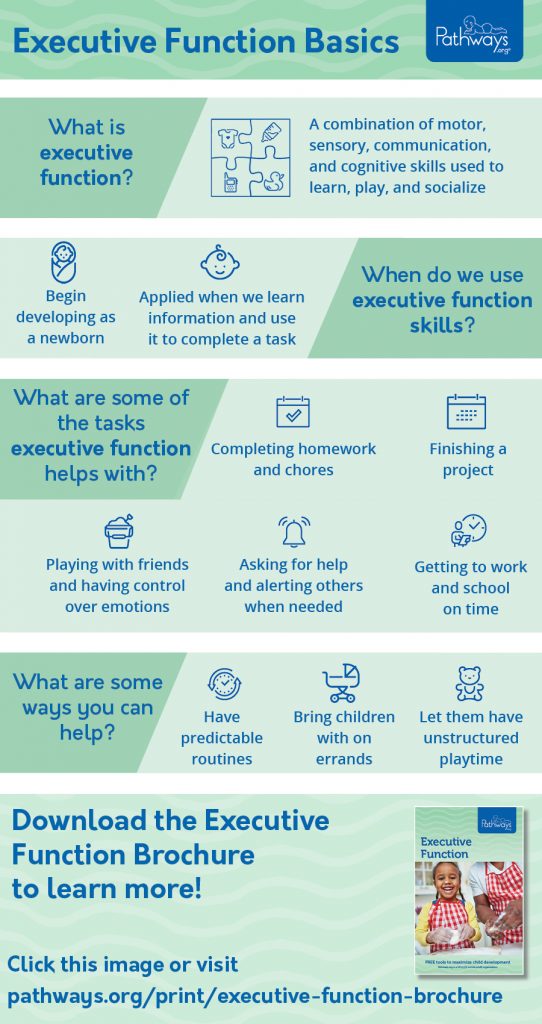
How good are we at planning and then finishing a task that we have started and even how comfortable we are asking for help or adapting to changing situations, depends a lot on how efficient our executive functions are. They are the life skills we need to work on with our students, children and ourselves. Here are a few ways of going about it. Don’t miss Sabine Doebel’s talk on how context and making the goals matter are important for executive functions of the brain.
Read and subscribe this weekly newsletter.
Three Images For The Week


Two Thoughts For The Week
“I must have a prodigious amount of mind; it takes me as much as a week, sometimes, to make it up!”
― Mark Twain
“you must be careful never to allow doubt to paralyze you. always take the decisions you need to take, even if you’re not sure you’re doing the right thing. You’ll never go wrong if, when you make a decision, you keep in mind an old German proverb: ‘The devil is in the detail.’ Remember that proverb and you’ll always be able to turn a wrong decision into a right one.”
― Paulo Coelho
One Video For The Week
You use your brain’s executive function every day — it’s how you do things like pay attention, plan ahead and control impulses. Can you improve it to change for the better? With highlights from her research on child development, cognitive scientist Sabine Doebel explores the factors that affect executive function — and how you can use it to break bad habits and achieve your goals.
And Finally…

Dear reader,
I have been a research scientist, a journalist and an educator for over 3 decades. I read and I write. With this weekly newsletter, I intend to share what I read, learn and experience while I engage with students, parents and teams of teachers across K-12 schools, higher education institutions and ed-tech organisations.
3-2-1 Tuesdays with Ms Niv is a newsletter for you to subscribe and enjoy your learning journey with me. This week, it consists of: 3 images, 2 thoughts and 1 video.
If you have created any material, virtual or physical that you think can be reviewed and/or featured in this news letter, please feel free to write to me at : niveditamukerjee10@gmail.com
Showcase:

This Newsletter is supported by:


3-2-1 TUESDAYS WITH MS NIV
Issue # 35 / March 9th, 2021
How much of who we are is defined by our gender? how much of our gender definitions come from our conditionings? where do the conditionings come from? family? school? neighbourhood? country? our own minds? It has been a year of reflections and redefinitions for many of us for what we hold dear and what can be dropped. How about some biases? Here are some ways to help ourselves and those around us to be better at moving towards a more equitable society.
Three Images For The Week


Two Thoughts For The Week
“Achieving gender equality requires the engagement of women and men, girls and boys. It is everyone’s responsibility.” – Ban Ki-moon
“A feminist is anyone who recognizes the equality and full humanity of women and men.” – Gloria Steinem
One Video For The Week
In India (and many other countries), girls and women still find themselves silenced by traditional rules of politeness and restraint, says social scientist Deepa Narayan. In this frank talk, she identifies seven deeply entrenched norms that reinforce inequality — and calls on men to help usher in change.
Deepa Narayan is an international advisor on poverty, gender and development with more than 25 years of experience working at the World Bank, the UN and NGOs.
Guest column
I am what I am.
I will be who I choose to be.
My abilities define me.
My inabilities challenge me.
My confidence comes from knowing who I am.
- Embrace what you do with the pride of doing it. A woman can care for her children with pride because she enjoys what she can and wants to do for them. If she has to choose at any time between attending a meeting at the office and staying home with her sick child, the choice will be what holds priority at that point. If someone can be with her child so she can attend the very important meeting, she should do it with confidence. If there is no one else she will trust to stay with her sick child, then she would have to reschedule the meeting or have someone else step in to represent her.
- Teach every child, whether a girl or a boy, to learn skills that make them more confident and independent in themselves. Boys and girls should know all they can and be aware of their limitations as individuals and not because they belong to a gender.
- Yes a woman needs the maternity leave, after having a baby, to make sure her body can rest and recuperate after the nine months of adjustments it went through. She also bonds with her child to build the relationship that will sustain the strains of the days ahead. Yes, a man needs paternity leave to get to know his child and build a bond that will be the foundation for the future. He doesn’t need as many days as the mother because his body doesn’t need the rest like hers does. The leave from work is defined by its purpose rather than the gender.
Anita Eipe, Managing Trustee, Samatha Learning Center http://www.samathalearning.com
And Finally…


Dear reader,
I have been a research scientist, a journalist and an educator for over 3 decades. I read and I write. With this weekly newsletter, I intend to share what I read, learn and experience while I engage with students, parents and teams of teachers across K-12 schools, higher education institutions and ed-tech organisations.
3-2-1 Tuesdays with Ms Niv is a newsletter for you to subscribe and enjoy your learning journey with me. This week, it consists of: 3 images, 2 thoughts and 1 video.
If you have created any material, virtual or physical that you think can be reviewed and/or featured in this news letter, please feel free to write to me at : niveditamukerjee10@gmail.com
This Newsletter is supported by:

3-2-1 TUESDAYS WITH MS NIV
Issue # 34 / March 2nd, 2021
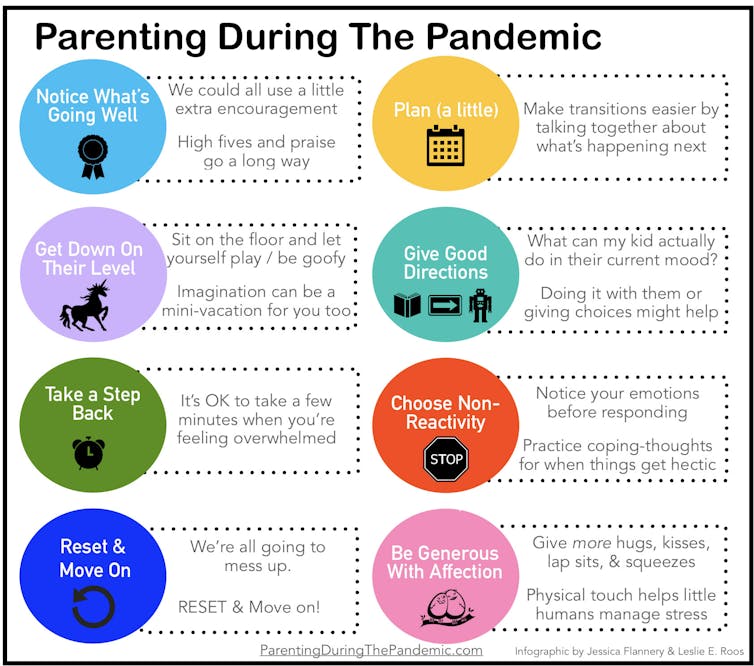
Is it over yet? When will it be? Is it almost done with? Can we go back to where we were in 2019? Well, it is a new world order now. Educators, students, parents… each of us have gone through a year that has changed our world and our view of the world.
We have two choices – we can be bitter or better. We can fixate or we can transform. Here are some tips to move us along the path of choices. Please go ahead, read and subscribe 🙂
Three Images For The Week

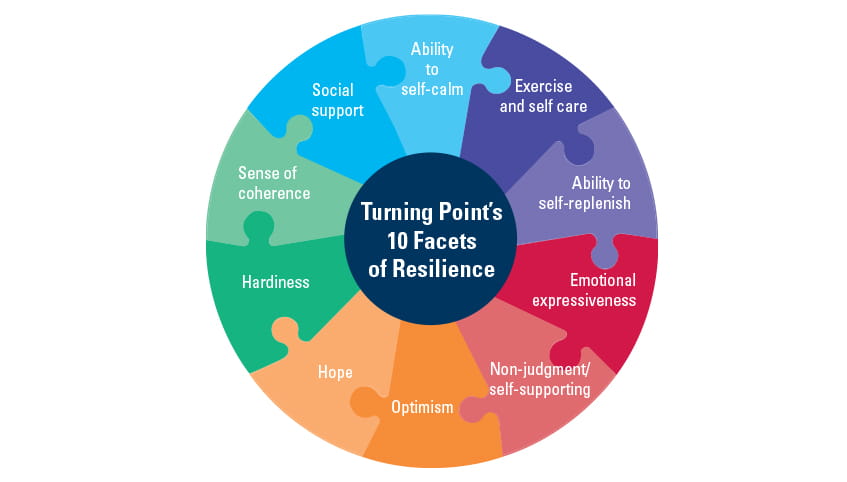
Two Thoughts For The Week
“The secret of change is to focus all of your energy, not on fighting the old, but on building the new.” Socrates
“Nothing in life is to be feared, it is only to be understood. Now is the time to understand more, so that we may fear less.” Marie Curie
One Video For The Week
Exactly when does a pandemic get over?
Explore the three strategies governments and communities can use to contain and end a pandemic, and find out which method is best. An interesting 8 minutes of learning for our children and even us as adults.
How can we synchronise our responses? this is a lesson in history as well.
Guest column
![DSC_7730[4073]](https://niveditamukerjee.com/wp-content/uploads/2021/03/dsc_77304073-e1614658766746.jpg)
PARENTING AFTER 2020
The following points are going make you rethink your actions on Parenting with your Child. This is the perfect time to understand our priorities and act on them. Feel free to connect with me on tejaskolekar.wordpress.com OR mail me at tejas.kolekar@yahoo.com OR YouTube@/SanskrutiEduCare
DUPLICATION IN COVID & LOCKDOW – How many children use mask, panic if don’t used and are habitual to it? Remember, children duplicate Parents.. Make a list, good or bad, what are the things that your child learnt from you during the lockdown. They are going to duplicate you, so don’t panic in front of them because these habits will be with them for the rest of their life, they may not take any risks. We often tell them that failure is the best teacher. Right? Take Control, take care but let them learn to take some calculated risks.
DON’T LET TIME PASS BY, ENGAGE CHILDREN IN PERSONAL DEVELOPMENT, LEARNING VALUES, NEW SKILLS – Children should be taken out, making them sit at home is going to make things worse. Engage them with more tasks rather than just letting the time pass by like new skills, activities, lessons on personal development, managing finance, and nurturing good values.
MENTAL HEALTH IS A PRIORITY NOW – Mental health should be the priority now, every parent should know what their child is going through and help them with it. We always ask for more space and time. During lockdown we had our space and so much of time, what did you do with it? Suicides rates have risen now, we can stop by talking to them.
EXPRESS YOURSELF, RELATION IS MORE IMPORTANT – This is the time to make up for all the differences, show each other the emotions you have, let them know the real you if you haven’t shown it yet. You definitely have children for much more time with you now. Relationship is more important.
BE THE NEXT LEVEL PARENT, UPGRADE WITH TIME – You need to upgrade with time. Today just being a parent providing the basic things isn’t enough. One must upgrade themselves with skills like communication, technology, emotional intelligence, time management.
SCREEN TIME SHOULD BE MONITORED – Screen addiction is a new issue as schools/colleges/government is encouraging students to use cell phones/digital platforms to study has made things even worse. It is now about how much you can control, fix specific time or help them understand the importance of using it rightly. Avoid binge watch, because this adds to more stress and anxiety. Rather explain the importance of reading books and help them cultivate this habit with you.
ARE YOU A COUPLE OR SINGLE PARENT – Don’t run behind the perfect life, you may never feel like you achieved it because there are always some things bothering us. Better be happy in the moment and enjoy your family. We always keep waiting for the perfect day and keep planning for it and later we regret for the opportunities that we missed to enjoy. There are many couples who have lost each other. Single parenting is hard so thank each other if you are together today and work on parenting actively.
HAVE FIXED ROUTINE TO EASE THINGS – The above all things are important, but if you lack proper food, sleep, have good mood to live, plan, you will have certain chemicals in your brain that will not be stable and will constantly keep you away from the right thing you have to do. You may know what to do, but still can’t focus. The reason is you are not stable somewhere, find it out and let go those unwanted things out of your life in order to make your children more stable.
Understand The Parenting Your Child Needs!
Tejas Kolekar is a Personal Coach, Educator, Counselor. He is the Founder & CEO – Sanskruti EduCare
tejaskolekar.wordpress.com; tejas.kolekar@yahoo.com ; YouTube@/SanskrutiEduCare
Showcase
![postcard1.4[4077]](https://niveditamukerjee.com/wp-content/uploads/2021/03/postcard1.44077.jpg)
And Finally…

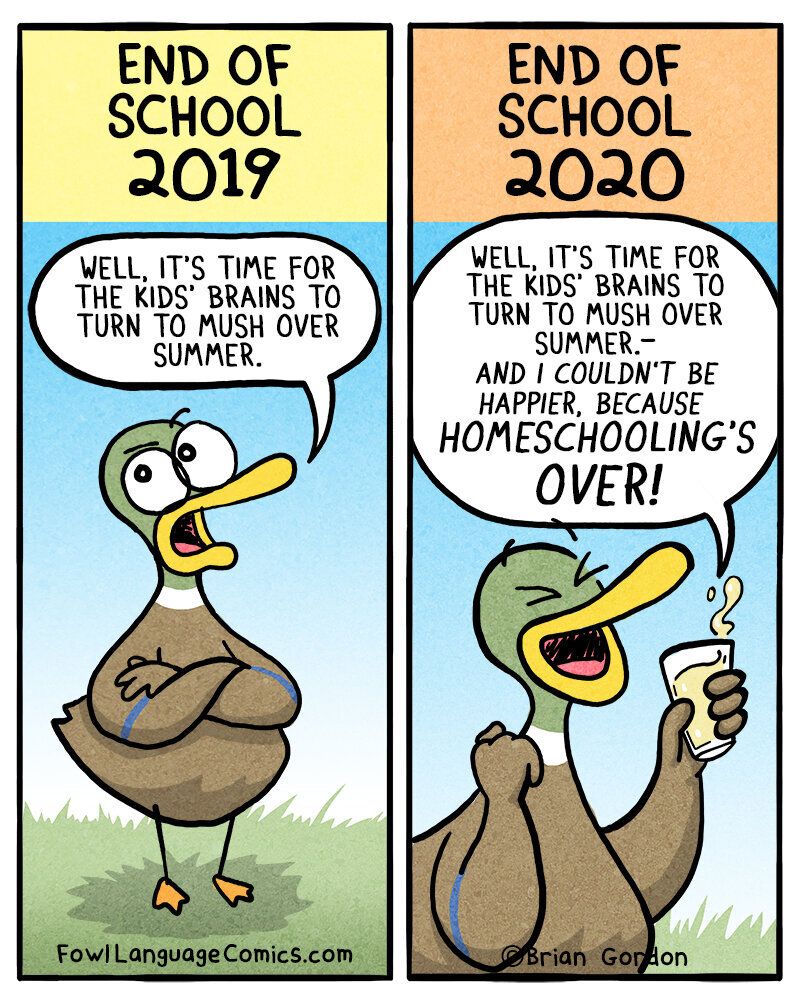
Dear reader,
I have been a research scientist, a journalist and an educator for over 3 decades. I read and I write. With this weekly newsletter, I intend to share what I read, learn and experience while I engage with students, parents and teams of teachers across K-12 schools, higher education institutions and ed-tech organisations.
3-2-1 Tuesdays with Ms Niv is a newsletter for you to subscribe and enjoy your learning journey with me. This week, it consists of: 3 images, 2 thoughts and 1 video.
If you have created any material, virtual or physical that you think can be reviewed and/or featured in this news letter, please feel free to write to me at : niveditamukerjee10@gmail.com
This Newsletter is supported by:
3-2-1 TUESDAYS WITH MS NIV
Issue # 33 / February 23rd, 2021
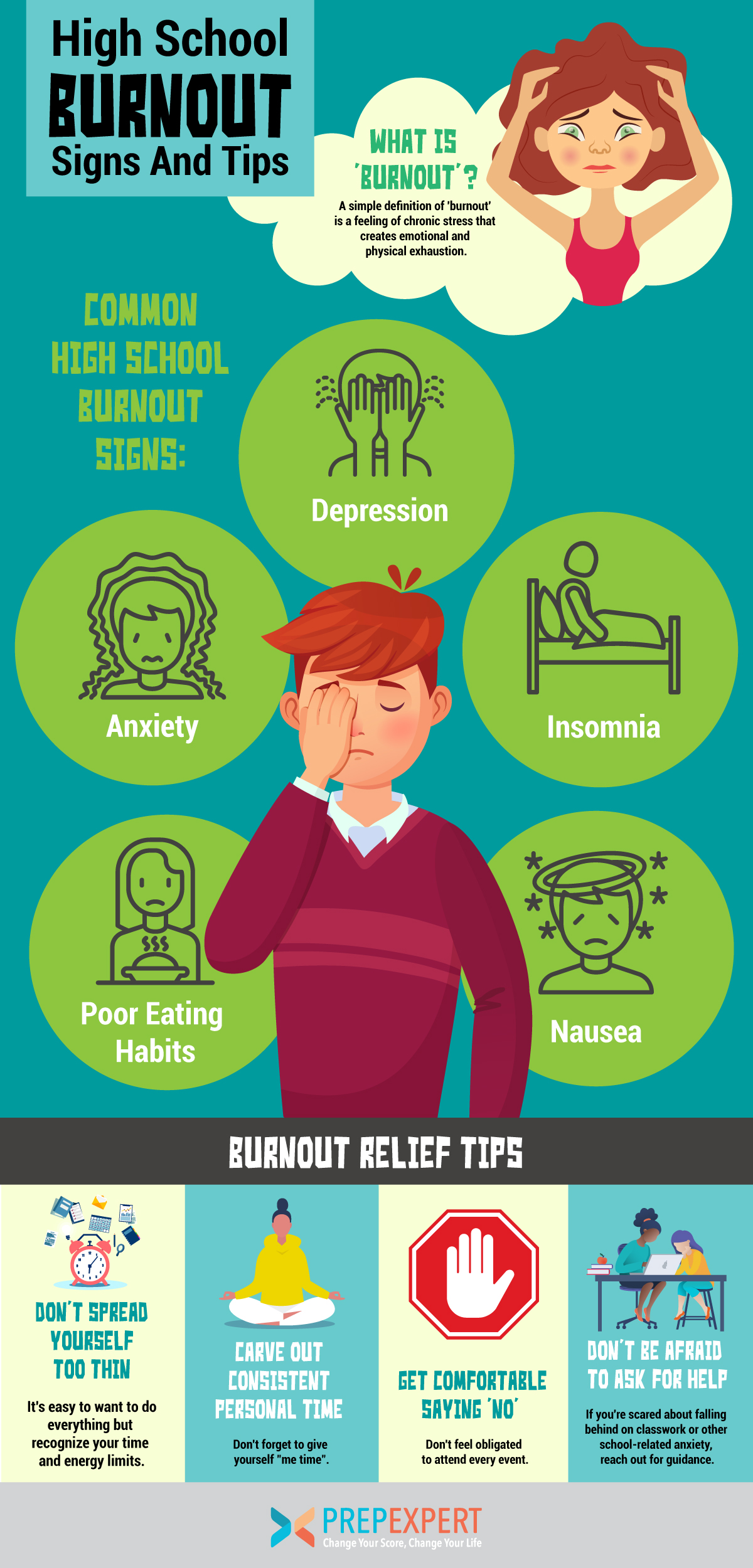
“Stress is a feeling of emotional or physical tension. It can come from any event or thought that makes you feel frustrated, angry, or nervous. Stress is your body’s reaction to a challenge or demand. In short bursts, stress can be positive, such as when it helps you avoid danger or meet a deadline.”
How do students handle stress? how do teachers? how do parents? What creates stress for you and what can you do about it. Tips for you to manage stress in this issue, hope it helps you destress, manage stress and make good use of stress if you can not get away from it.
Three Images For The Week


Two Thoughts For The Week
“If you really want to escape the things that harass you, what you’re needing is not to be in a different place but to be a different person.”
― Lucius Annaeus Seneca, Letters from a Stoic
“The biggest enemies of willpower: temptation, self-criticism, and stress. (…) these three skills —self-awareness, self-care, and remembering what matter most— are the foundation for self-control.”
― Kelly McGonigal, The Willpower Instinct: How Self-Control Works, Why It Matters, and What You Can Do to Get More of It
One Video For The Week
Stress. It makes your heart pound, your breathing quicken and your forehead sweat. But while stress has been made into a public health enemy, new research suggests that stress may only be bad for you if you believe that to be the case. Psychologist Kelly McGonigal urges us to see stress as a positive, and introduces us to an unsung mechanism for stress reduction: reaching out to others.
Showcase

And Finally…

Dear reader,
I have been a research scientist, a journalist and an educator for over 3 decades. I read and I write. With this weekly newsletter, I intend to share what I read, learn and experience while I engage with students, parents and teams of teachers across K-12 schools, higher education institutions and ed-tech organisations.
3-2-1 Tuesdays with Ms Niv is a newsletter for you to subscribe and enjoy your learning journey with me. This week, it consists of: 3 images, 2 thoughts and 1 video.
If you have created any material, virtual or physical that you think can be reviewed and/or featured in this news letter, please feel free to write to me at : niveditamukerjee10@gmail.com
This Newsletter is supported by:
3-2-1 TUESDAYS WITH MS NIV
Issue # 32 / February 16th, 2021
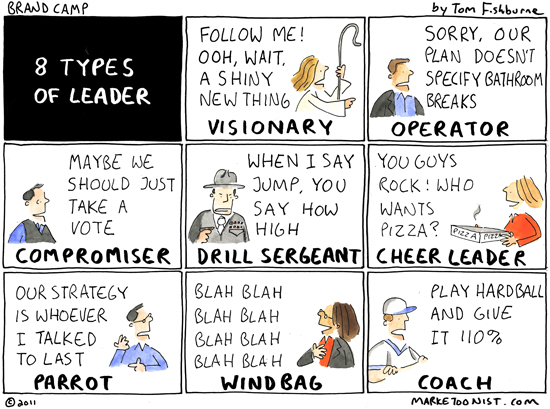
Are you ready to take credit but also accountability? leadership is seldom about how tough, how smart, how fast you are. Can you help the people on the left and right of you? can you support and lead them through? do you have the attitude of leadership? our attitudes come from our belief systems. As educators and parents, we play a very key role in building these beliefs in our students and children, every single day.
Check out today’s issue to help your student, your child and yourself along the journey of your own style of leadership.
Three Images For The Week


Two Thoughts For The Week
A leader is best when people barely know he exists, when his work is done, his aim fulfilled, they will say: we did it ourselves. —Lao Tzu
As we look ahead into the next century, leaders will be those who empower others. — Bill Gates
One Video For The Week
Simon Senek on Why Leadership is a choice. To give and accept help. Learn to listen? learn to be the last speak? hold your opinion till you hear others. Ask questions instead of nodding in agreement and shaking your head in disagreement…
When you choose your leader, what do you look out for? what are your leader’s priorities? is our leader making a better world that we will love to be a part of?
We want to make a world for ourselves that we love, even if we do not like it everyday. Like our students. Like our children. We may not like our students or even our own children particularly on some days but we continue to love them no matter what.
Guest Column
Leadership as an Attitude
Captain Mohit Tomar

Leadership Trainer, Indus School of Leadership
Home 3
Throughout ages, the concept of leadership has been decoded and demystified in myriad ways but every time it defeats the assigned definition. What makes this indispensable component of human race so elusive and inexplicable? First, its ‘non-stationary’ characteristic which makes it ever-evolving and adapting to the new era. As humans transited through different eras and epochs, the narrative of leadership too changed to suit the new requirements of the time. Second, different contexts or ‘domains’ demands a different understanding and utility of leadership. As such, the concept of leadership transformed over a period of time into new shapes and shades from autocratic to servant, visionary to situational, inborn to trainable, traditional to radical and so on, to serve the purpose of guiding the leaders.
However, in delving deeper and peeling off the contextual layers, at the core certain universal, timeless and self-evident principles emerge which decides the meaning and means of leadership. The forms may change but the fundamentals remains fairly constant. One of the most famous definition, by General Montgomery, truly brings out the essence of the concept called ‘leadership.
“Leadership is the capacity and will to rally men and women to a common purpose and the character which inspires confidence”.
These profound words by one of the stalwarts of military leadership portray the true meaning of leadership by capturing the physical, intellectual, emotional and most importantly, the spiritual dimensions of leadership. As a ‘capacity,’ it is a hard skill that needs to be acquired throughtraining and experience. The mention of ‘men and women’ denotes the socio-emotional precinct of a leader which demands him to connect to people. Every leadership endeavor affects people in a positive way. A leader need to ‘inspire confidence’ through his ability to produce results wherein his wisdom and judgement play a key role. Most importantly, the ‘common purpose’ is the real driving force of leadership which fuels all other aspects. This spiritual root of every leadership endeavor cannot be bought or borrowed but has to be searched within and ‘without’ through one’s journey of life, and may need a divine providence along with one’s experience, exposure and education. The ‘alone’ time of retreats and reflections, by default or design, of all leaders caters to this precept of leadership. The ‘purpose’ is the cause from which arises the vision, goals and objectives of the leader. Last, but most importantly, the ‘will’ is a key factor to initiate the whole journey. It is this deciding power which ultimately determines the leader’s initiative and industry.
The key question arises – is Leadership an Attitude? Without catering to this principle of leadership, the whole concept of leadership will crumble due to lack of foundation. ‘Will’, in humans, the power or capacity to choose among alternatives or to act in certain situations, independently of natural, social, or divine restraints. It is the capacity to decide, whether to act or not act. Leadership is generally understood using the scientific philosophy wherein the measurable is measured. But the scientific boundaries find it difficult to capture or contain its spiritual essence. As such, our understanding floats around the traits, skills and styles of leadership but what primes a person for leadership is missed.
We need to dig deeper and get to the root cause. What acts as a launch-pad for a leader, his decision and initiation? Even with all the capacity and an important cause, a leader may not be born. Leadership starts with a Decision. There is enough to be done in this world… enough to be rectified and repaired. But very few people are ‘moved’ to take a decision, because the initiative and industry to change will emerge from the need ‘within’. It is an inside job. The sense of ownership and response-ability will impact the person to take a decision and lead. It all depends on ‘how we see the world?’ Firstly, ‘something is not right’ and secondly, ‘I should do something about it’.
We all have ‘a way’ to see the world around us which somewhere is affected by the world we carry within us. A human is unique due to his or her belief systems otherwise, physically or intellectually or even emotionally, we all are similar. This belief system is the software we carry within us and all individual beliefs are the applications that decide our output. These subtle beliefs determines the way we see and interprets the world around us – our attitude. They decide whether we look at things like a helpless and hapless organism, or decides and takes a decision to bring a change not only around us but also within us. As a human, we have the capacity and will to even program us through a right belief system. The old irrelevant regressive beliefs need to be replaced with progressive, positive and powerful beliefs. A human is a collection of a few of his or her most deeply embedded beliefs and as such, they need to be reviewed and replaced if not providing the right attitude. The central dogma of all leadership endeavors is
belief -> attitude -> decision -> action
Elucidating this key aspect also explains the cause of all conflict and consternation. In real sense, no one is wrong, as everyone is right in one’s judgement and wisdom as per one’s beliefs. What makes a leader truly ‘pathfinder’ is his or her capacity to see the situation in a particular way. The challenge, chaos and complexity of a situation which is so truly an innate nature of ‘nature’ is just a way of life to emerge and evolve. The test and tribulations of time bring the best in a leader if one sees the situation in an optimistic and opportunistic way.
Every species, since last 3.8 billion years, have displayed its leadership through an attitude to bring a positive change within or ‘without’ to bring in survival, sustainability and success. It is this attitude of ‘life’ itself to not give up but be proactive and productive, which created conditions for the human race to come into existence. We need to be grateful to the first fish which moved to land, the first primate who got down of the trees, first Homo erectus to catch hold of fire, …. the first person to sail across seas and mountains, first person to change from hunting animals to harvesting crops, first person to explain the laws of nature, first person to think of going to the moon, and so on. Each of them not only ‘showed a way’ but brought a positive change for species and races to flourish and fruit. They all displayed an attitude – ‘a change is required and I need to do something’.
As such, we can conclude, that attitude is the key to great leadership. It is ‘how we see the world’ and ‘how we see ourselves’. The world is in dire need of positive changes, whether it is environment, society, business, education, politics or any other domain, to make it a better place. But we will be passive bystanders till the time we change the way we see the world around us. The groundbreaking need to happen within self where we need to develop and display a higher sense of empathy and emotional quotient. The positive and proactive attitude emanating from the powerful beliefs will determine the quality of decision and action, in essence, the leadership being displayed.
An ex-Army officer and an IIM alumnus, with diverse experiences ranging from military to corporate to education, Capt. Mohit Tomar, lives his purpose and passion of unlocking human potential through his innovative and insightful training programs.His book ‘When Journey Becomes the Goal’ is one of the best sellers on Amazon. His passion for challenging experiences enables him to inspire his participants in the spirit of ‘leading by example’

Showcase
And Finally…
Dear reader,
I have been a research scientist, a journalist and an educator for over 3 decades. I read and I write. With this weekly newsletter, I intend to share what I read, learn and experience while I engage with students, parents and teams of teachers across K-12 schools, higher education institutions and ed-tech organisations.
3-2-1 Tuesdays with Ms Niv is a newsletter for you to subscribe and enjoy your learning journey with me. This week, it consists of: 3 images, 2 thoughts and 1 video.
If you have created any material, virtual or physical that you think can be reviewed and/or featured in this news letter, please feel free to write to me at : niveditamukerjee10@gmail.com
3-2-1 TUESDAYS WITH MS NIV
Issue # 31 / February 9th, 2021
To turn mirrors into windows…that is the purpose of education. Educators are often told but we sometimes forget. Both as a parent and as an educator when we are teaching and nurturing our child or student. When we include all children in our institutions of education and all adults in the society, the view from the window shows us a whole new world. We just have to open the eyes of our minds and heart to it. Here are a few tips that would help us as students, teachers and parents.
Capacity to develop 21st century skills has inclusion, diversity and empathy at the very foundation of what is needed to succeed as citizens of today.
Three Images For The Week
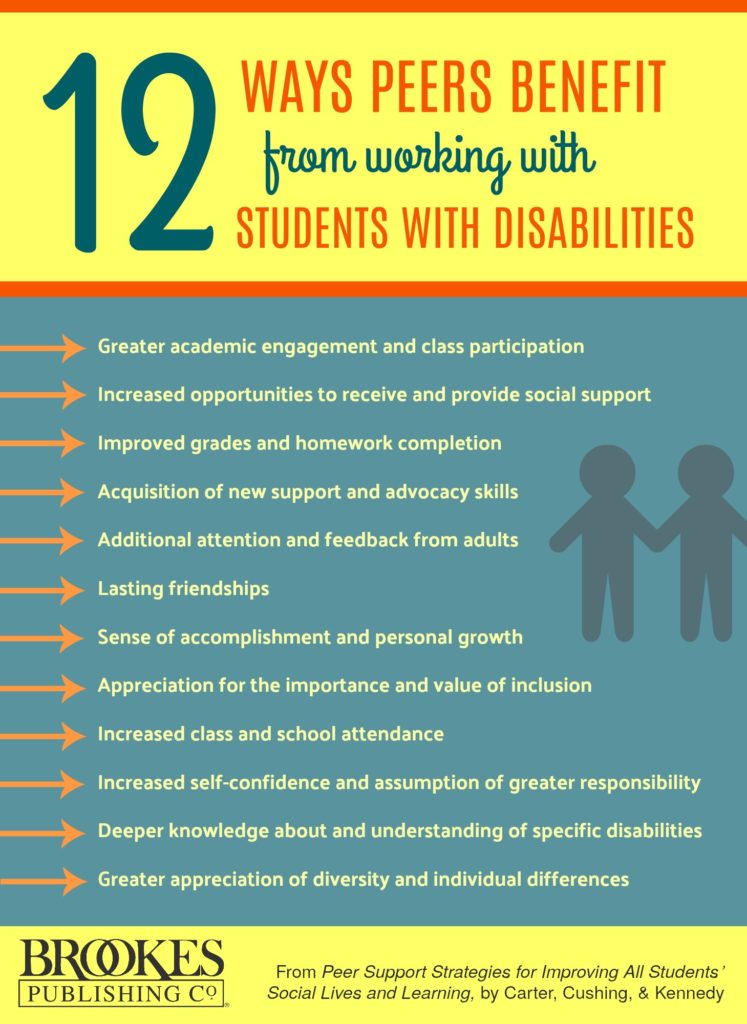


Two Thoughts For The Week
You have brains in your head. You have feet in your shoes. You can steer yourself any direction you choose. You’re on your own. And you know what you know. And you are the one who’ll decide where to go.
Dr. Seuss
Everybody is a genius. But if you judge a fish by its ability to climb a tree, it will live its whole life believing that it is stupid.
Albert Einstein
One Video For The Week
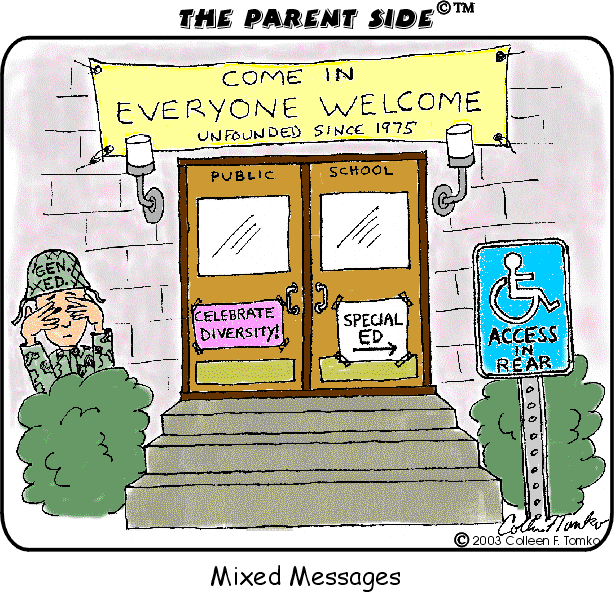
Can changing how we address differences in the classroom raise the bar for every student while creating a more compassionate, inclusive culture better suited to complex problem solving in the world?
In this emotional talk, education leader Heidi Heissenbuttel explores the how and why of a new school model based on inclusivity in the classroom. As an education leader for nearly three decades and a parent for two, Heidi has been a fervent advocate within schools as well as the broader community of parents and families to ensure children’s learning strengths are addressed, and, more importantly, that they feel empowered to communicate within the educational system for themselves and others.
Guest Column
Manju Balasubramanyam,
Principal at Delhi Public School Bangalore North
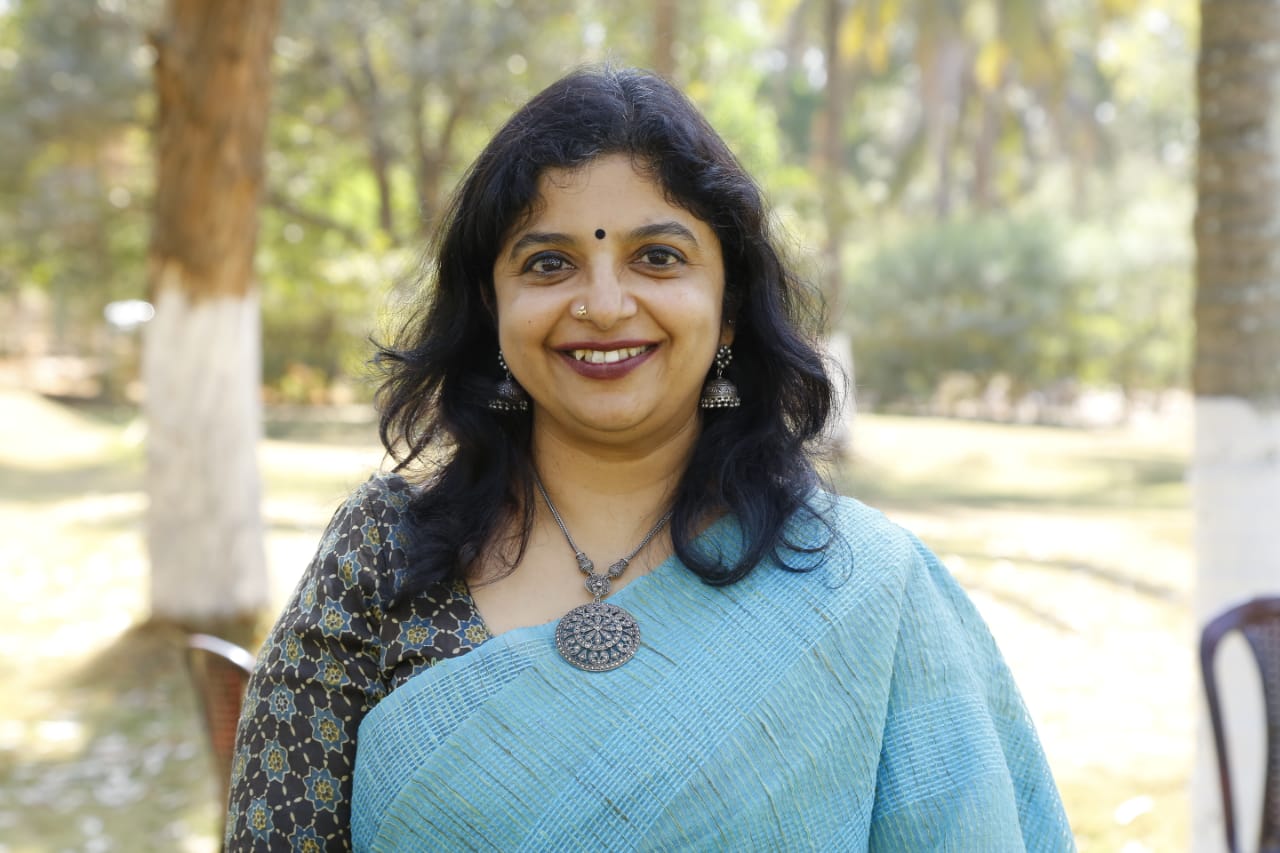
Role of a Leader in Inclusive School Education
“Inclusion is not bringing people into what already exits; it is making a new space, a better space for everyone” George Dei
Why should schools be inclusive?
Schools need to be inclusive because ALL children should have access to education and education is a fundamental right. We need an education system that focuses on the child’s abilities, attitudes, skills and competencies. Inclusive set ups help in building meaningful relationships, friendships and associations which enable children to accept and understand one another’s needs and personalities. Children who grow in such a nurturing environment are confident, able to interact with one another and the world around them. School Education must ensure that children develop these skills in a safe, secure, loving, joyful, non-threatening space.
The role of the school Principal is the most critical while building an inclusive school climate. The Principal’s role in creating an inclusive culture, implementing change, facilitating change systematically, leading her /his team to adopt new attitudes, practices, engage with community and be an advocate of inclusion is vital.
Head of schools who believe in inclusion understand that a diverse school eco system is dynamic, vibrant, growing and thriving. When children from varied socio economic backgrounds, religions, ethnicities, cultures, languages and abilities come together on the same platform a rich and colourful tapestry of love, affection, respect and tolerance automatically gets woven. In such schools while individual strengths are honed and weaknesses are overcome individually, collective responsibility and growth becomes a natural way. Principals who believe in inclusive education are extremely aware that one needs to constantly strive to ensure the vulnerable and the marginalized are always included and are treated with sensitivity and care.
Principals who celebrate diversity live and breathe inclusion. They are convinced that no child should be left behind and are constantly innovating and implementing policies and practices that support inclusion. From writing a well-balanced inclusive policy, recruiting teachers, counsellors and special educators, training the entire staff on inclusive practices, making their school physically accessible, creating Universal Design in Learning (UDL) curriculum, they breathe and live inclusion. They invest time in adopting best practices, building relationships with all stakeholders and the community and creating opportunities for growth and sustainable development for all.
Principals with an inclusive attitude understand that inclusivity is a collaborative effort and a shared responsibility. They help empower all teachers to understand inclusion better and create opportunities for them to collaborate and problem solve with one another and with experts in the community. They ensure that there is a free flow of ideas and thoughts between the school and the larger community outside. They constantly endeavour to create new opportunities with organizations and associations nationally and internationally that showcase their school’s work while at the same time creating a learning laboratory for their students and staff.
When leadership is inclusive work spaces cease to be just work places. Teachers, students and support staff begin to grow and bloom in this environment which is empathetic, loving and caring. This magical school then becomes the epitome of lifelong learning.
“Inclusive leadership is not a destination. It’s a journey that requires humility, curiosity and courage” – Thais Compoint, author of “Succeed as an Inclusive Leader”
Showcase
Anita Eipe Abraham, Managing Trustee, Samatha Learning Center
Change for Success
We have been through the year 2020, a year like no other. It was a year that we worked from home and our children were confined indoors. It was the year when we saw more of our families than we did usually. It was a year when we got to see the inside of our child’s class. It was a year we got to see how our child was as a student.
Now we are all preparing to go back to regular school routines, come June 2021. A question we need to ask is, have we edited our expectations of education, exams and results? As a parent do I expect myself to get back to the normal I knew before the Pandemic or am I mentally and emotionally prepared for the possibility of a new normal in every area of my life? As teachers and educators are we expecting our work in schools to go back to what did, as we did it when we left off in March 2020? Are we also open to the changes we will see in our children and students? Are we going to continue to measure performance with the same yardstick used pre-pandemic?
The impact of this past year has been big on the students. They have better awareness of their capabilities and abilities, and how they are being rated on the scale of success. Some are more confident in themselves and are now bigger risk takers than before. Some are reeling under the stress of thinking that their inabilities are a sure sign of failure in life. Some students more confident in the support system at home and some have become aware of the vast opportunities in the cyber world that they are now familiar with and have learnt to access.
All this is important for us to think about, being the impactful adults; be it as a parent or as an educator; in the lives of our children. Diversity in the classroom is not going to be limited to those with diagnosed disabilities. Different kinds of challenges are going to be huge roadblocks for even those who function neuro-typically. There is no way we can wipe out the impact of this past one year. The consequences, as in everything, are always a mix of good and bad. We may mostly focus on the positives that have come from these strange days of the pandemic. We do however need to address the negatives too. What we have to start doing differently ourselves is to think differently so that we make the best of the outcome. Let us figure out some of the possible changes we can bring to our way of thinking. Increased accommodations in our academic system will see more children included rather than being thrown out from schools, for any number of varied reasons.
- Focus on the strengths: We all, however old we may be or however experienced we may be, are a mix of strengths and weaknesses. So what is it that gives some us the opportunity to succeed over others? Look back to find the origin of your success. You will see that when our strengths and abilities were focused upon, we find the confidence to persevere and face challenges. That is what our children need from us and we will see them flourish.
- Support the challenges effectively: When we positively support a child with their challenges, we see them slowly becomes their strengths. What is most important is to search for the core reason for the challenge and work with that. What we usually see is the symptom of the challenge the child is facing, and not the cause itself. For example, Sam was a very disruptive child in class, especially when there was work assigned. Sam was sent to a counsellor for behaviour therapy. It was when Sam met with the special educator that things changed. The educator realised that Sam had vision issues which made reading tedious and hard. He did not want to be called a poor reader. He would rather be naughty and have the attention of all his friends. So, once he got the help to improve his vision, he was very happy to make the effort to show his progress.
- Find the blend that works most effectively for the child: School is an integral part of the growing years of every child. What the school can provide must be ensured for the child. What the school cannot provide for the child but is essential for his/her developmental progress must be supplemented separately. A good combination of all resources is what would work the best. Timely intervention saves money, trauma and heartache.
At Samatha Learning Center (at HSR layout, Bangalore, India), remedial sessions are offered to students in mainstream schools. The counselling gives parents the perspective they need to plan well for their child. The intervention sessions supplement what the schools provide and fill the gaps and address the concern areas. The one-on-one sessions provides the timely support to give the student every opportunity to catch up with their peer group.
Samatha Learning Center
Call: +91-9844155434; Email: samathalearningcenter@gmail.com http://www.samathalearning.com
_____________________________________________________________________________
Dear reader,
I have been a research scientist, a journalist and an educator for over 3 decades. I read and I write. With this weekly newsletter, I intend to share what I read, learn and experience while I engage with students, parents and teams of teachers across K-12 schools, higher education institutions and ed-tech organisations.
3-2-1 Tuesdays with Ms Niv is a newsletter for you to subscribe and enjoy your learning journey with me. This week, it consists of: 3 images, 2 thoughts and 1 video.
If you have created any material, virtual or physical that you think can be reviewed and/or featured in this news letter, please feel free to write to me at : niveditamukerjee10@gmail.com
And Finally…
This weekly newsletter is supported by:
3-2-1 TUESDAYS WITH MS NIV
Issue # 30 / February 2nd, 2021
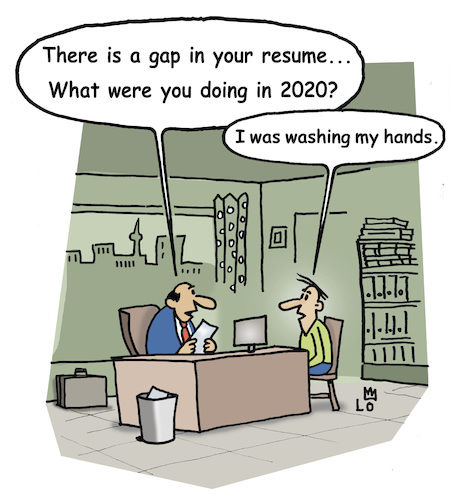
Have you written your resume yet? Is it something you want to write just before placements start? Or is it something you plan to build over your student years. Do you review it periodically to reflect upon who you are and what do you want from your student and/or work life in the future. What excites you? Are you doing more of what you like as a student in high school? as an undergraduate? while doing masters? What does it tell others about you and most importantly what does it make you think about your future intentions of your ideal work life. To be able to enjoy your work life, reflecting on what you like, acting on what you like and getting better at it, building your profile around it is key so that you find the work that matches your interests and purpose. Here are some tips to write your resume and think about aspects that you might want to focus on as you get ready to make sure that you enjoy a long period of work life.
Three Images For The Week
/high-school-resume-examples-and-writing-tips-2063554-Final-8e4b3a34dbcf438aa9a006cf310b6c1f.png)
/student-resume-examples-and-templates-2063555-FINAL2-20a50e978d4a4e0e95796ed0322ef73f.png)

Two Thoughts For The Week
Experience is not what happens to a man.
It is what a man does with what happens to him.
—Aldous Huxley
It is what a man does with what happens to him.
Choose a job you love, and you will never have to work a day in your life.
—Confucius
One Video For The Week
Finding a job used to start with submitting your résumé to a million listings and never hearing back from most of them. But more and more companies are using tech-forward methods to identify candidates. If AI is the future of hiring, what does that mean for you? Technologist Priyanka Jain gives a look at this new hiring landscape.
Showcase
What does it take to build Professional Skills?
Professional skills cannot be developed only through workshops that build concepts. It needs a combination of theory and hands-on experience to learn the same. Internships are considered the best way to gain these skills as they provide a real-world experience that bridges the gap between gaining knowledge and applying the same. Such experiences also provide an opportunity to understand how the real world works along with building professional skills.
Many schools & colleges are now making internships mandatory for their students. But how many opportunities are even available to students in middle schools, high schools and degree 1st or 2nd year?How many of them are actually doing something that they can talk about proudly in their placement interviews? How many are getting managers who are able to invest their time in mentoring and grooming the interns? The last of these is particularly important because managers who are primarily responsible for the intern’s experience, almost never get incentivized or recognized for this effort.
This particular problem became the motivation for me & my co-founder to come together and create the RaiseToPi Ownternship™. here, students can collaborate with their friends from anywhere in the world. They get to work on projects that are meaningful to them and alsoto the real world, while being guided by experienced coaches and mentored by industry experts. In this process of problem-solving. Our program gives them various professional skills like effective communication and collaboration, and specialized aspects like stakeholder management, marketing, systems design, etc. depending on the scope of their projects. By the end of their Ownternship they not only have the much-needed professional skills but they also have a compelling profile that stands out and a story worth sharing in interviews for colleges & jobs.
Sudeepta Banerjee
Co-Founder RaisetoPi.org
Curious to know more about our Ownterns & their projects? Check out our website- www.raisetopi.org
_________________________________________________________________________________________________________
I have been a research scientist, a journalist and an educator for over 3 decades. I read and I write. With this weekly newsletter, I intend to share what I read, learn and experience while I engage with students, parents and teams of teachers across K-12 schools, higher education institutions and ed-tech organisations.
3-2-1 Tuesdays with Ms Niv is a newsletter for you to subscribe and enjoy your learning journey with me. This week, it consists of: 3 images, 2 thoughts and 1 video.
If you have created any material, virtual or physical that you think can be reviewed and/or featured in this news letter, please feel free to write to me at : niveditamukerjee10@gmail.com
And Finally…
This weekly newsletter is supported by:
3-2-1 TUESDAYS WITH MS NIV
Issue # 29 / January 26, 2021
Censor Harry Potter series. Censor James and the Giant Peach. Censor …….Books, stories, speeches, dresses, races, religion, gender… the list goes on, often offend certain sections of society. Everything can find opposition and every matter can be found offensive. How do we ensure that we are politically correct at all time and in all ways? What are our rights and responsibilities in the free world? People’s sentiments should inspire dialogues instead of hatred says Trisha in the talk in today’s issue.
How do we bring up children in an inclusive, tolerant society which allows for freedom of expression. An education that enriches tomorrow’s citizens freedom of mind. A civilisation of live and let debate.
Happy 72nd Republic day India!

Three Images For The Week


Two Thoughts For The Week
“Freedom is not worth having if it does not include the freedom to make mistakes” – Mahatma Gandhi
“Education is the most powerful weapon which you can use to change the world” – Nelson Mandela
One Video For The Week
Freedom Of Speech and Offense, how often do they exist hand-in-hand? Trisha Unnikrishnan tackles this question through this speech, delving into the differences between speaking up against a person and speaking up against a belief.
https://www.ted.com/talks/trisha_unnikrishnan_does_freedom_of_speech_give_us_the_right_to_offend
This is a weekly newsletter on education. Once a week, curated by me from amongst the articles, videos and long form articles that I read. Most of you would have been too busy to track trends in education, ponder on most relevant thoughts or deliberate on career choice, parenting or pedagogy. Find it all here.
For whom? Students, educators and parents
When? Every Tuesday
Where? my blog post, register with your e-mail id, it is free.
I have been a research scientist, a journalist and an educator for over 3 decades. I read and I write. With this weekly newsletter, I intend to share what I read, learn and experience while I engage with students, parents and teams of teachers across K-12 schools, higher education institutions and ed-tech organisations.
3-2-1 Tuesdays with Ms Niv is a newsletter for you to subscribe and enjoy your learning journey with me. This week, it consists of: 3 images, 2 thoughts and 1 video.
If you have created any material, virtual or physical that you think can be reviewed and/or featured in this news letter, please feel free to write to me at : niveditamukerjee10@gmail.com
And Finally….
This weekly newsletter is supported by:
3-2-1 TUESDAYS WITH MS NIV
Issue # 28 / January 19, 2021
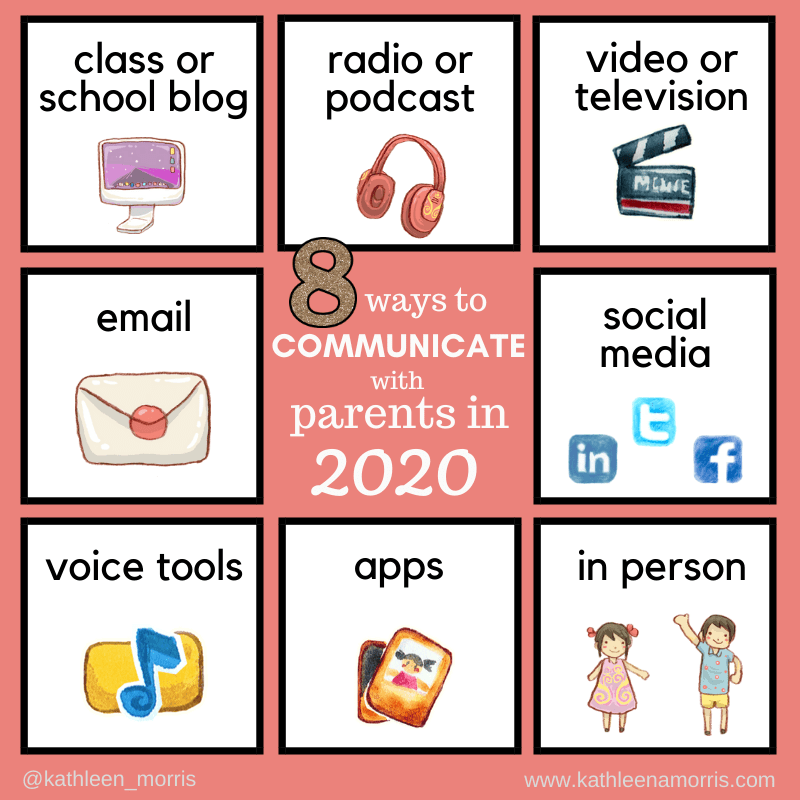
Do you listen in a conversation? or are you formulating a response even as you listen. Do you talk with pauses? giving time for your students to process the information. Do you pronounce all the syllables when you are talking to someone who has less fluency in the language you are communicating? Are you waiting to be amazed by the person with who you are communicating? There are 10 ways to have better communication, says Celeste Headlee in the ted talk that I have shared in today’s issue of the newsletter. Enjoy. And subscribe 
Three Images For The Week


Two Thoughts For The Week
“YOU NEVER KNOW WHEN A MOMENT AND A FEW SINCERE WORDS CAN HAVE AN IMPACT ON A LIFE” ~ ZIG ZIGLAR
“THE MOST IMPORTANT THING IN COMMUNICATION IS HEARING WHAT ISN’T SAID” ~ PETER DRUCKER
One Video For The Week
When your job hinges on how well you talk to people, you learn a lot about how to have conversations — and that most of us don’t converse very well. Celeste Headlee has worked as a radio host for decades, and she knows the ingredients of a great conversation: Honesty, brevity, clarity and a healthy amount of listening. In this insightful talk, she shares 10 useful rules for having better conversations. “Go out, talk to people, listen to people,” she says. “And, most importantly, be prepared to be amazed.”
This is a weekly newsletter on education. Once a week, curated by me from amongst the articles, videos and long form articles that I read. Most of you would have been too busy to track trends in education, ponder on most relevant thoughts or deliberate on career choice, parenting or pedagogy. Find it all here.
For whom? Students, educators and parents
When? Every Tuesday
Where? my blog post, register with your e-mail id, it is free.
I have been a research scientist, a journalist and an educator for over 3 decades. I read and I write. With this weekly newsletter, I intend to share what I read, learn and experience while I engage with students, parents and teams of teachers across K-12 schools, higher education institutions and ed-tech organisations.
3-2-1 Tuesdays with Ms Niv is a newsletter for you to subscribe and enjoy your learning journey with me. This week, it consists of: 3 images, 2 thoughts and 1 video.
If you have created any material, virtual or physical that you think can be reviewed and/or featured in this news letter, please feel free to write to me at : niveditamukerjee10@gmail.com
And Finally….

This weekly newsletter is supported by:
3-2-1 TUESDAYS WITH MS NIV
Issue # 27 / January 12, 2021
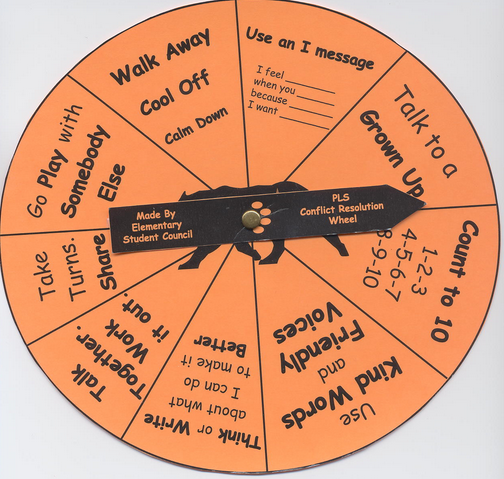
How to solve a problem like Maria… remember that iconic song from one of the most favourite movies of all times, The Sound of Music? Well, over the years parents and teachers have been working with their children together to not just teach them new knowledge but also to learn life skills. A big one being conflict resolution, making and maintaining friends. As the pandemic continues to rage, one thing that our children miss most is their friends. As do we, as grown-ups. Here are some tips to make and maintain friends and also to resolve conflict amongst all ages, as and when they arise. Conflict between parents and children are now more often and intense with most of us living, working, studying at home for over a year now. Find some tips in Dorothy’s talk in the video of the week in this issue to help you mediate.
Please subscribe to my weekly newsletter with your email and enjoy reading it. Don’t miss young Saanvi’s essay in the student voice section on a sweet tale of friendship.
Three Images For The Week


Two Thoughts For The Week
“A true friend is someone who is there for you when he’d rather be anywhere else.” – Len Wein
“The truth is, everyone is going to hurt you. You just got to find the ones worth suffering for.”
― Bob Marley
One Video For The Week
Anybody can help resolve a conflict, says project manager Dorothy Walker. With three simple steps, she shares how you can use positive energy to solve conflicts between friends, coworkers, strangers, kids and beyond.
Dorothy Walker, PMP, is a certified Project Manager at Wells Fargo as well as mediator and facilitator. She is an advocate of conflict resolution and believes that everyone is capable of using positive energy to face challenges and resolve disputes in a more collaborative environment. Walker received her PhD in 2015, writing her dissertation on the effects of energy transference on interpersonal conflicts. She is also a painter, writer and poet, and is currently working with her husband on a book about relationships.
Student voice :
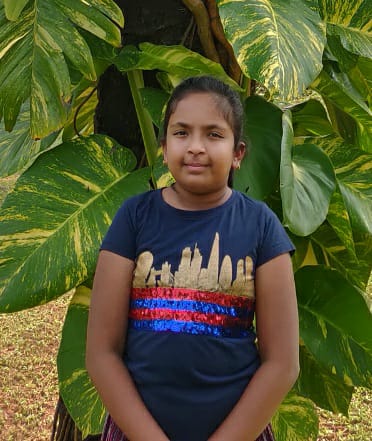 Eternal Friendship, by Saanvi Singhal of Grade 5.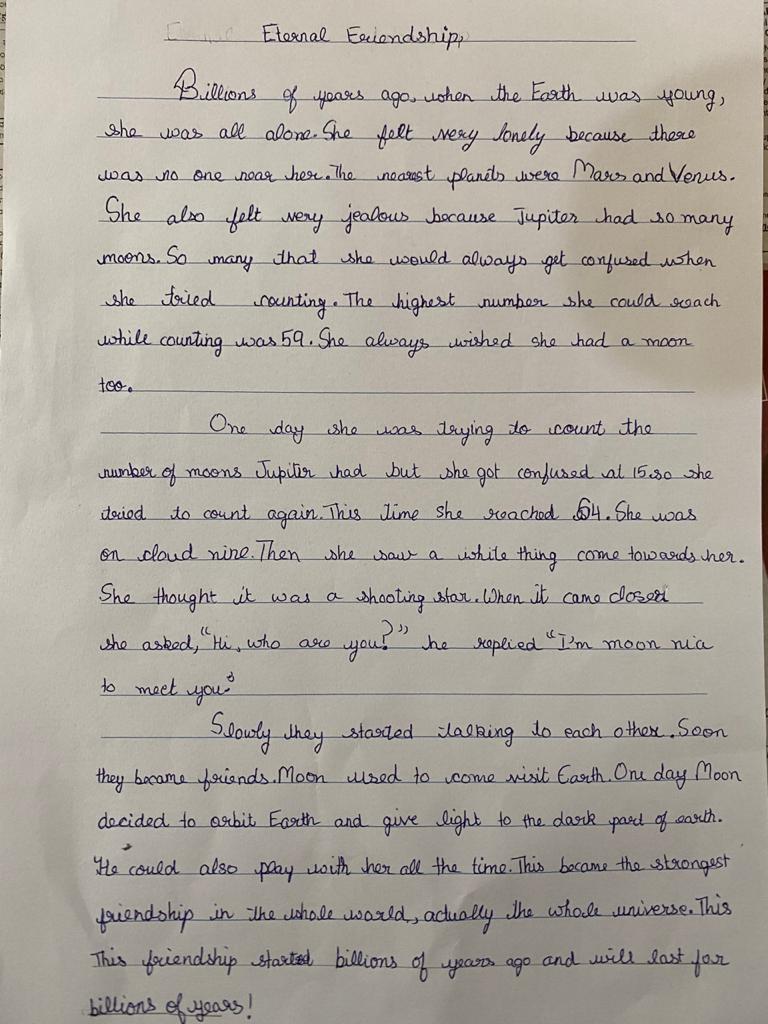
Showcase:
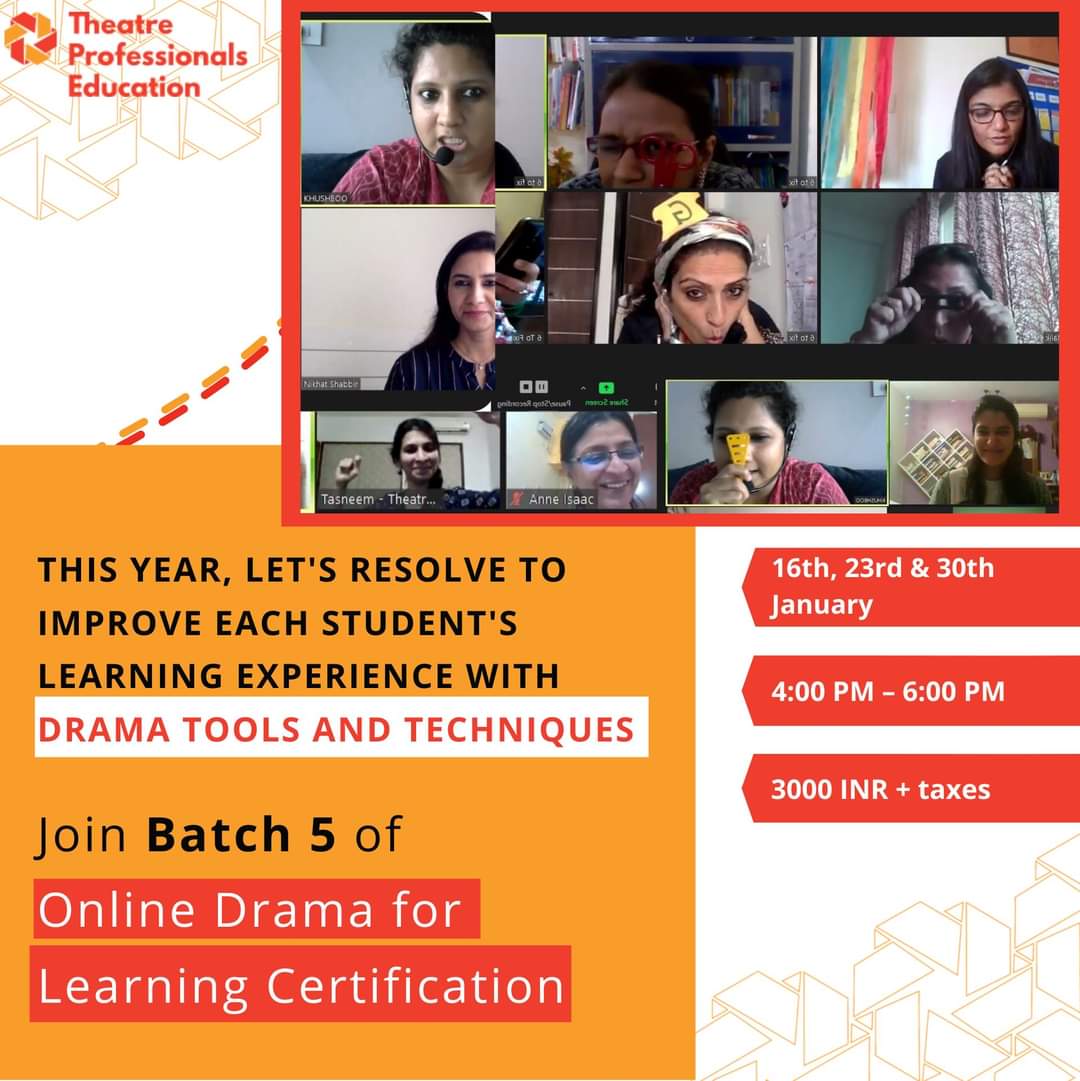
Join our first workshop series for this year- Online Drama for Learning Certification- BATCH 5.
Register here- http://bit.ly/3hmr8GM
Invest your time for three consecutive Saturdays beginning January 16th, 4-6pm to equip yourself with essential drama tools. Help your students embrace socio-emotional development through drama-based learning. Hurry! Last few seats remain.
This is a weekly newsletter on education. Once a week, curated by me from amongst the articles, videos and long form articles that I read. Most of you would have been too busy to track trends in education, ponder on most relevant thoughts or deliberate on career choice, parenting or pedagogy. Find it all here.
For whom? Students, educators and parents
When? Every Tuesday
Where? my blog post, register with your e-mail id, it is free.
I have been a research scientist, a journalist and an educator for over 3 decades. I read and I write. With this weekly newsletter, I intend to share what I read, learn and experience while I engage with students, parents and teams of teachers across K-12 schools, higher education institutions and ed-tech organisations.
3-2-1 Tuesdays with Ms Niv is a newsletter for you to subscribe and enjoy your learning journey with me. This week, it consists of: 3 images, 2 thoughts and 1 video.
If you have created any material, virtual or physical that you think can be reviewed and/or featured in this news letter, please feel free to write to me at : niveditamukerjee10@gmail.com
And Finally….

This weekly newsletter is supported by:
 Nivedita Mukerjee