Nivedita Mukerjee
Education consultancy for parents and schools
3-2-1 Tuesdays with Ms Niv

Issue #263, 22nd July 2025
“Am I solving the problem I think I should solve, or the problem I actually need to solve?”
When you find yourself giving answers like “that’s not how it’s done,” “people like me don’t do that,” or “that would never work,” you’re likely bumping against the walls of your current box. The barriers you’re breaking are often mental ones that existed long before any external obstacles appeared.
So what are the barriers you are breaking for yourself and for your child/student as a parent/educator?
This is a free newsletter. If you like my content, please subscribe by entering your email address here.
Three Images of the Week


Two Thoughts of the Week
“The rooms to explore are not limited only to the ones on planet earth. Don’t be afraid to also explore the spaces above, below, within, and beyond.”
― Mitta Xinindlu
“Traditions are just peer pressure from dead people.”
― Eliot Schrefer
One Video of the Week
What can’t Candace Parker do? A two-time NCAA champion, two-time Olympic gold medalist and two-time WNBA champion, Parker knows what it takes to fight for your dreams. In this inspiring talk, she shares what she’s learned during a career spent not accepting limits — and how her daughter taught her the best lesson of all. “Barrier breaking is about not staying in your lane and not being something that the world expects you to be,” she says. “It’s about not accepting limitations.”
Reading with Ms. Meenu: Tip of the week
Let’s discuss the third lever for Literacy.
Teaching: As educators or even as parents we need to teach reading, not just model it, because (unlike with spoken language) most kids don’t learn to read well without intentional, direct instruction – which many of us are ill-equipped to do so. A lot of times we do see low reading achievement scores among our students and to solve that problem is more gradual and integrated than typical reading instructions. We know that our students have to learn words, so we all get a list of words or stare at them and ask them to memorize these words. A better approach would be to give them multifaceted experience with same word family spellings, pronunciation and meaning. It takes knowledge of all three (preferably in contexts kids care about, like conversation, books they’re reading, even shows they are watching) to make a word stick in memory.
Effectiveness comes with matching the lesson with these words to the child and the moment. Even pull-out vocabulary words on the topic your students are learning in class. This would be helpful to understand the topic and they can relate to it. Depending on their age, stage and interests you could be teaching through song or play, reading or writing or talking and listening.
When teaching, give your students a preview of the insight you’re about to share, so they know what to look and listen for, talk out your thought process step by step and then sum up your point.
The teaching of reading is too important, so let’s learn ourselves and pass it on to our students.
Meenu Gera
Consulting home and school librarian reading guide
Career assessment, guidance, and placement strategies:
Careers in Science, Tech, Engineering & Mathematics
Individuals in these professions engage in scientific exploration and research, working in both laboratory and outdoor environments. They take on roles as scientists, mathematicians, technologists, and engineers, with some focusing on testing and support services. Possible career paths within this field include Engineering, Physical Sciences, Natural Sciences, Mathematics, and Health, Safety, and Environmental Management.
| Astronomer | Atmospheric & Space Scientist | Physicist |
| Aerospace Engineer | Architectural & Engineering Manager | Electrical Engineer |
| Computer Hardware Engineer | Electronics Engineer | Energy Engineer |
| Fire-Prevention and Protection Engineer | Fuel Cell Engineer | Health & Safety Engineer |
| Industrial Engineer | Manufacturing Engineer | Marine Engineer |
| Material Engineer | Chemical Engineer | Mechanical Engineer |
| Microsystems Engineer | Automotive Engineer | Geological Engineer |
| Nanosystems Engineer | Nuclear Engineer | Photonics Engineer |
| Quality Control Analyst | Robotics Engineer | Solar Energy Systems Engineer |
| Environmental Economist | Environment Restoration Planner | Environment Scientist & Specialist |
| Mathematician | Biostatistician | Remote Sensing Technologist |
| Statistician | Ergonomist | Geographer |
| Economist | Industrial Ecologist | Precision Agriculture Technician |
| Cartographers & Photogrammetrist | Climate Change Policy Analyst | Conservation Scientist |
| Anthropologists & Archaeologist | Geoscientist | Hydrologist |
| Biofuels Technology & Product Development Managers | Clinical Data Manager | Molecular & Cellular Biologist |
| Biochemist & Biophysicist | Biologist | Geneticist |
| Microbiologist | Chemist | Material Scientist |
| Bioinformatics Scientist | Zoologist & Wildlife Biologist | Park naturalist |
Fermata Career Solutions inspires young individuals aged 13 to 30 to unlock their potential through focused and customised career and college counseling. With expertise in University Readiness, CareerGym, and Master Parenting, the experts empower you to pursue your dreams and shape your future with confidence. More about us on www.fermataco.com
Showcase: Thrive Beyond School – A unique STEAM education project for very young learners.
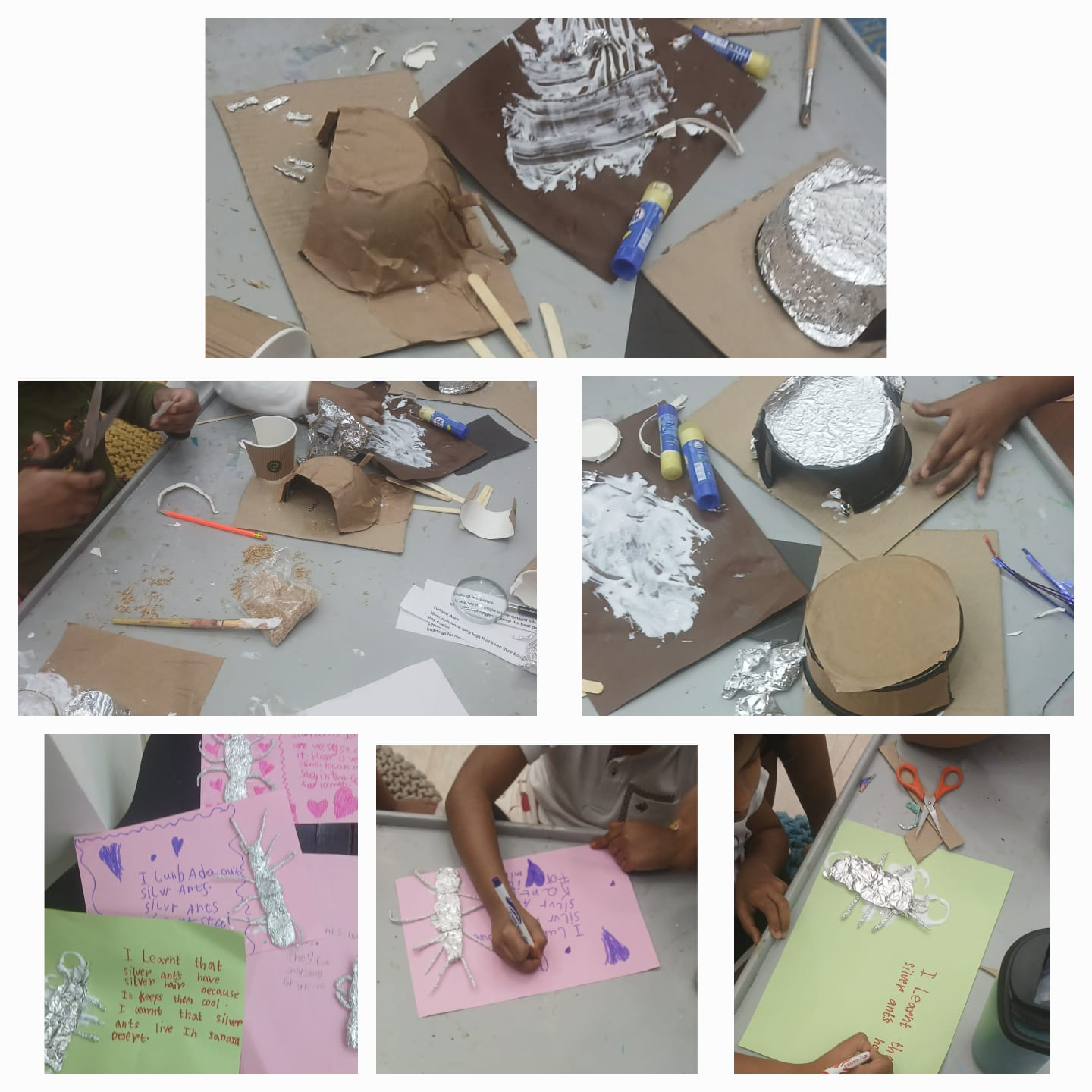
The children explored how animals adapt to survive in extreme environments, focusing on the fascinating case of the silver ant. Through the story of Sammy the Silver Ant, they learned that his shiny silver coat helps him reflect sunlight and stay cool in the hot desert. To understand this adaptation better, the teacher led an engaging activity using black paper, white paper, and foil under a lamp. The children used their hands to feel the heat difference and magnifying glasses to observe the surface textures. They discovered that black paper absorbs more heat and gets hotter, while shiny and white surfaces reflect sunlight and stay cooler. To apply this understanding, the children built mini shelters for Sammy using recycled materials such as white and brown paper and a foil roof.
This helped them explore how reflective materials can keep things cool just like Sammy’s coat. During the group reflection, Samyuktha (7 years 3 months), Tashi, Neev, and Mayra (6 years 11 months), and Tara (5 years 9 months) shared.
Dear reader,
I work with the school leadership team as an advisor and collaborate with teachers as a pedagogical trainer. I also help parents as a parenting counselor and regularly engage one-on-one with students as a personal guide and mentor. This weekly newsletter shares what I read, learn, and experience.
3-2-1 Tuesdays with Ms. Niv is a newsletter you can subscribe to and enjoy your learning journey with me.
3-2-1 Tuesdays with Ms Niv

Issue #262, 15th July 2025
“What would I do differently if I knew that no one else was coming to fix this situation?”
Accountability? Responsibility? Excuse/Blame?
Parents often expect the school to handle learning difficulties, hope teachers will motivate their child, or wait for their child to “mature out of” problems. This question challenges them: What if the teacher can’t fix my child’s study habits? What if the school won’t change its approach? What if my child doesn’t suddenly become responsible? It moves them from “someone else should handle this” to “what’s my role in creating change?”
Teachers frequently feel frustrated waiting for administrators to provide better resources, parents to be more involved, or the system to change. This question makes them confront: What if the principal never gives me more supplies? What if parents don’t respond to my emails? What if class sizes stay large? It shifts focus from “if only I had more support” to “what can I control right now in my classroom?”
Students often think “If only my teacher explained better” or “If my parents helped more with homework” or “The school system should change.” This question forces them to ask: What if I’m the only one who can improve my grades? What if no one else is going to make me study or pay attention in class? It pushes them from “someone should help me” to “I need to figure this out myself.”
This is a free newsletter. If you like my content, please subscribe by entering your email address here.
Three Images of the Week


Two Thoughts of the Week
“A hero is someone who understands the responsibility that comes with his freedom.” -Bob Dylan
“Being responsible is an enormous privilege… It’s what marks anyone a fully grown human.” -Barack Obama
One Video of the Week
Candy draws on her experiences of living with Type 1 Diabetes to illustrate the thought process of chronic illness sufferers. She explains the cycle of self-blame; blaming ourselves for outcomes out of our control, highlighting how biological factors are also at play. Candy Gan is a 3rd year Politics and Philosophy student at the LSE, and winner of the TEDxLSE Student Competition this year. She has lived with chronic illness her entire life, but never publicly discussed it until now. Her passion lies in healthcare policies and reform, specifically how society affects individual health. At TEDxLSE, she will be talking about accountability and responsibility, inspired by her personal experiences with chronic illness.
Reading with Ms. Meenu: Tip of the week
Book Reading:
As we have been talking about different levers for nurturing a child’s development either at home or at school, and of course book reading is pivotal for boosting brain capacity, stimulating language development, spurring vocabulary growth, increasing knowledge about the world, driving kid’s motivation to read on their own and more. Children have so much to learn in the first years of life, and book reading is one powerful strategy to support development as their needs change. Newborns developing their vision may prefer to look at high contrast images like those in black and white board books. Meanwhile 6-12 months olds get their eyes, hands, feet and mouths in on the action by engaging with different page features like textures and flaps. Toddlers are busy building their vocabularies and love simple books full of familiar items, plus a healthy dose of rhythm, Rhyme and repetition.
The benefits of reading aloud shift with the child’s age, needs, interests and the nature of the texts. Over time, family reading introduces more complex and novel words than typical everyday speech facilitates focus on the learning about print and spelling and delivers fodder for greater comprehension, to name a few benefits. Reading together creates rich conversations. Every parent/teacher should be able to select or have a guide to recommend engaging books to maximize learning.
Books are meat and medicine
And flame and flight and flower,
Steel, stitch, and cloud and clout,
And drumbeats in the air.
~ Gwendolyn Brooks.
Meenu Gera
Consulting home and school librarian reading guide
Career assessment, guidance, and placement strategies:
Careers in Information Technology
Professionals in this field use computers and technology to create, manage, and support complex systems that power our digital world. They work with both hardware and software, develop and maintain networks, and ensure smooth communication through telecommunications systems.
International Job Roles & Average Salary per annum
| Data Warehousing Specialist$120k | Computer Network Architect$120k | Database Architects $120k |
| Telecommunication Engineering Specialist $120k | Information Security Analyst$113k | Business Intelligence Analysts $108k |
| Computer Systems Analyst$100k | Health Informatics Specialist $102k | Information Technology Project Manager $98k |
| Geographic Information Systems Technologist $98k | Computer Systems Engineers $98k | Document Management Specialist $98k |
| Computer Programmer$96k | Database Administrators $96k | Web Administrators$98k |
| Software Quality Assurance Analyst & Testers $98k | Video Game Designer $95k | Network & Computer System Administrator $91k |
| Web Developer$87k | Search Marketing Strategist $76k | Computer Network Support Specialist $70k |
This dynamic sector also includes creative roles like graphic designers, game developers, and technical writers, who combine technology with design and storytelling.
Fermata Career Solutions inspires young individuals aged 13 to 30 to unlock their potential through focused and customised career and college counseling. With expertise in University Readiness, CareerGym, and Master Parenting, the experts empower you to pursue your dreams and shape your future with confidence. More about us on www.fermataco.com
Dear reader,
I work with the school leadership team as an advisor and collaborate with teachers as a pedagogical trainer. I also help parents as a parenting counselor and regularly engage one-on-one with students as a personal guide and mentor. This weekly newsletter shares what I read, learn, and experience.
3-2-1 Tuesdays with Ms. Niv is a newsletter you can subscribe to and enjoy your learning journey with me.
3-2-1 Tuesdays with Ms Niv

Issue #261, 8th July 2025
Am I approaching this with curiosity rather than certainty?
This single question cuts across all three roles because it shifts our mindset from passive consumption to active engagement. When we are curious, we naturally ask follow-up questions, look for connections, and seek to understand rather than just get through the moment.
As a parent, it means wondering “What is my child really trying to tell me?” instead of assuming you know. As a teacher, it’s asking “What are my students discovering that I hadn’t considered?” rather than just delivering information. As a student, it’s approaching material with “How does this connect to what I already know?” instead of just memorizing for the test.
Curiosity transforms any situation – whether it’s a difficult conversation, a challenging lesson, or a confusing concept – into an opportunity for genuine learning and growth. It’s the difference between going through the motions and actually extracting value from every experience. What’s your view on this? Have you been more often curious or certain recently?
This is a free newsletter. If you like my content, please subscribe by entering your email address here.
Three Images of the Week


Two Thoughts of the Week
Seize the moment of excited curiosity on any subject to solve your doubts; for if you let it pass, the desire may never return, and you may remain in ignorance. William Wirt
A lot of our creative flow comes from a place of curiosity and exploration. It often feels like we’re excavating and asking questions and not just giving answers but really just exploring. Adrianne Lenker
One Video of the Week
In this deeply inspiring talk, Dr. Tanu Jain shares a powerful message about the beauty and necessity of embracing change. With raw honesty and wisdom, she walks us through the idea that life doesn’t follow a perfect timeline. Instead, our growth often comes through uncertainty, failure and the courage to start over. Whether you’re a student, professional, or someone navigating life’s transitions, this talk will remind you that it’s okay to change, pause, and reinvent yourself. Dr. Tanu Jain holds a Bachelor of Dentistry degree from Subharti College and successfully cleared the Civil Services examination in 2014. Throughout her career, she has maintained a commitment to social service initiatives and has garnered recognition for her motivational speaking engagements, particularly renowned for her mock interview sessions. Dr. Jain recently resigned from her professional position to establish the Tathastu Institute of Civil Services. Dr. Tanu Jain teaches philosophy and ethics and actively engages with various social organizations, contributing significantly to societal advancement. Her overarching goal is to mentor and cultivate students of strong character, instilling in them a dedication to family, society, and the nation, thereby fostering individuals in whom the country can take.
Reading with Ms. Meenu: Tip of the week
Reading Aloud is a multivitamin for kids and a proxy for a good start too. If you do it each night as a parent or daily in your classroom, you can build their brains and inspire a lifetime of literary delight, family bonding and accomplishment.
Of course, there’s more to the story. Reading aloud, though valuable, isn’t everything. It’s time to move beyond fairy tales and to root your own reading story in reality.
There are countless ways that a parent/teacher can make a difference early on, but these are the most powerful ways to leverage as infants and toddlers grow into preschoolers and kindergarteners.
Let’s discuss the research based top six parent levers for literacy each week:
Conversation:
Want your child’s IQ and academic performance to land off the charts? Then launch their learning language development with lots of conversation when they’re young. It’s been proven that kids who engage in more back and forth dialogue with adults when they’re 18 to 24 months old tend to have a significantly higher IQ and better language skills as adolescents than kids who lack frequent back and forth adult child conversations.
The data showed that talkative toddlers with talkative parents/teachers grew into middle schoolers with better reasoning, logic, problem solving abilities, verbal comprehension and vocabulary skills than kids who had experienced fewer “conversational turns” during the pivotal time frame.
It’s amazing to see how verbal exchange works their brain-magic to boost language skills, cognitive capacity and academic achievement down the road. Also, there are some suggested strategies to nurture a child’s linguistic development from day one by exchanging words, gestures, and expressions with them as it is not easy to do in the age of smartphones and social media. But your every effort and attention will show up in their IQ, listening comprehension, and vocabulary scores when they are teens.
Stay tuned for the continuation of this conversation until next week. Till then…
Meenu Gera
Consulting home and school librarian reading guide
Showcase: Thrive Beyond School – A unique STEAM education project for very young learners.
The children took part in a fun, hands-on learning activity about where fish live. They showed a lot of interest and creativity as they talked about what makes a good home for fish and shared their own ideas and stories. Using recycled materials, they built fish habitats, which also helped them learn about taking care of the environment. As a group, they showed a good understanding of how fish, their homes, and nature are all connected.
Havishka: 7 years 3 months old
Tashi:7 years old
Tara: 6 year old

Dear reader,
I work with the school leadership team as an advisor and collaborate with teachers as a pedagogical trainer. I also help parents as a parenting counselor and regularly engage one-on-one with students as a personal guide and mentor. This weekly newsletter shares what I read, learn, and experience.
3-2-1 Tuesdays with Ms. Niv is a newsletter you can subscribe to and enjoy your learning journey with me.
3-2-1 Tuesdays with Ms Niv

Issue #260, 1st July 2025
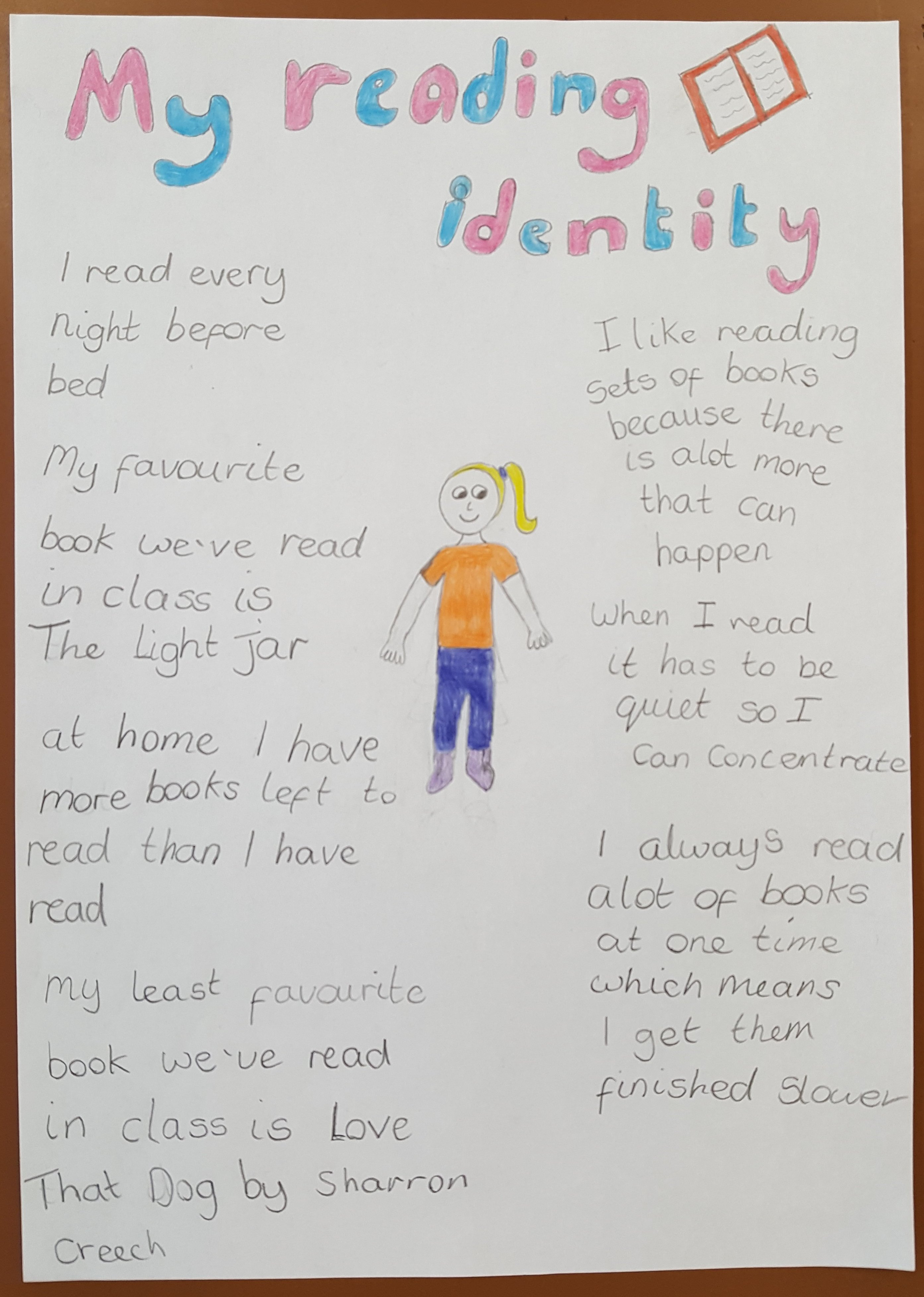
“What kind of reader does your student/ child see themselves as right now?” This question helps you understand the child’s current self-perception. Do they think they’re “bad” at reading, or that reading is boring? Do they only see themselves as capable of certain types of books?
“How can I connect reading to what this child/student already loves and values?” Every child has interests, whether it’s dinosaurs, video games, sports, art, or friendship drama. The key is finding books, stories, and reading experiences that tap into these existing passions.
“What reading successes can I celebrate and build upon?” This shifts your focus from what the child can’t do to what they can do. Maybe they’re great at predicting what happens next in stories, or they remember incredible details, or they ask thoughtful questions. Maybe they love being read to, even if they struggle with independent reading. Recognizing and celebrating these strengths helps children see themselves as capable and builds the confidence they need to take on new reading challenges.
Go on, have a read through this news letter for the next couple of minutes and perhaps you will be able to help your student, your own child or even yourself to build your reading identity.
This is a free newsletter. If you like my content, please subscribe by entering your email address here.
Three Images of the Week


Two Thoughts of the Week
“Few things linger longer or become more indwelling than that feeling of both completion and emptiness when a great book ends. That the book accompanies the reader forever from that day forward is part of literature’s profligate generosity.”
― Pat Conroy, My Reading Life
“One glance at a book and you hear the voice of another person, perhaps someone dead for 1,000 years. To read is to voyage through time.” – Carl Sagan
One Video of the Week
According to the US Department of Education, more than 85 percent of black fourth-grade boys aren’t proficient in reading. What kind of reading experiences should we be creating to ensure that all children read well? In a talk that will make you rethink how we teach, educator and author Alvin Irby explains the reading challenges that many black children face — and tells us what culturally competent educators do to help all children identify as readers.
Reading with Ms. Meenu: Tip of the week
Work towards Raising Readers:
Let’s trace the path to literacy from birth through early elementary school with stories and science that illuminate the way we can influence our kid’s success. It is always suggested and done by many parents to buy picture books, read to kids at night, enrol them in good schools and it’s over.
But the fact is, a more expansive approach is both possible and invaluable today because of the increasing demands of modern work, school and life. Your aim isn’t to do what proved sufficient for some in previous generations, but rather to do what’s like to prepare your children to reach their full potential. Is it enough to just read to them every night? With this fast-paced life surrounded by technology, I wonder about these questions:
· How do you make family reading a habit?
· And if you do, does that ritual really bring about the host of benefits it’s been praised for?
· What else is required for parents to get the job done?
· What are the fun ways to encourage, teach and advocate reading habits for your child?
· How to envision the idea in place that you’ll be better equipped to nurture your child’s literacy, years before they can be expected to distinguish letters or sounds, let alone read words or paragraphs.
Think about all these pointers and stay tuned for the research-based answers in our next week’s literacy article. Until then keep reading!
Meenu Gera
Consulting home and school librarian reading guide
Career assessment, guidance, and placement strategies:
The Healthcare Industry internationally is currently valued at 8.36 trillion and is projected to reach 18 trillion by 2030. Here are the primary 57 patient-centric job roles creating extended jobs for assistants and technologists:
International Job Roles & Average Salary per annum (US market)
| Oral and Facial Surgeon$310k | Gynecologist & Obstetrician$300k | Dermatologist$300k |
| Radiologist$300k | Ophthalmologist$270k | Orthodontist$270k |
| Psychiatrist$250k | Internal Medicine Physician $245k | Pathologist$265k |
| Rehabilitation Physician$235k | Sports Medicine Physician$ 230k | Urologist$ 230k |
| Immunologists & Allergists$230k | Hospitalist$230k | Preventive Medicine Physician $230k |
| Pediatrician$200k | Dentist $165k | Podiatrist$158k |
| Prosthodontist$144k | Optometrist$125k | Nurse Practitioner$120k |
| Pharmacist$118k | Assistant Anesthesiologist$ 120k | Veterinarian$117k |
| Health Service Managers$119k | Medical Scientist$104k | Biomedical Engineers$100k |
| Radiation Therapist$ 95k | Occupational Therapist$90k | Vision Rehabilitation Therapist $ 89k |
| Audiologist$85k | Epidemiologist$87k | Genetics Counselor $86k |
| Dental Hygienist$80k | Sonographer$80k | Speech Language Pathologist $ 86k |
| Acute Care Nurses$ 83k | Chiropractor$81k | Registered Nurse$82k |
| Acupuncturist$73k | Prosthetist$80k | Magnetic Resonance Imaging Technologist $77k |
| Art Therapist$65k | Respiratory Therapist$ 68k | Nutritionist$67k |
| Midwives$65k | Hearing Aid Specialist$60k | Cardiovascular Technician$63k |
| Clinical Laboratory Technician $57k | Cytogeneticist$58k | Recreational Therapist$ 53k |
| Kinesiologist$52k | Licensed Vocational Nurse$51k | Exercise Physiologist$54k |
| Medical Transcriptionist$34k | Endoscopy Technician$41k | Phlebotomist$38k |
Fermata Career Solutions inspires young individuals aged 13 to 30 to unlock their potential through focused and customised career and college counseling. With expertise in University Readiness, CareerGym, and Master Parenting, the experts empower you to pursue your dreams and shape your future with confidence. More about us on www.fermataco.com
The career counselors at Fermat specialize in Profile Building and College Essays. More about us on www.fermataco.com
Dear reader,
I work with the school leadership team as an advisor and collaborate with teachers as a pedagogical trainer. I also help parents as a parenting counselor and regularly engage one-on-one with students as a personal guide and mentor. This weekly newsletter shares what I read, learn, and experience.
3-2-1 Tuesdays with Ms. Niv is a newsletter you can subscribe to and enjoy your learning journey with me.
3-2-1 Tuesdays with Ms Niv

Issue #259, 24th June 2025
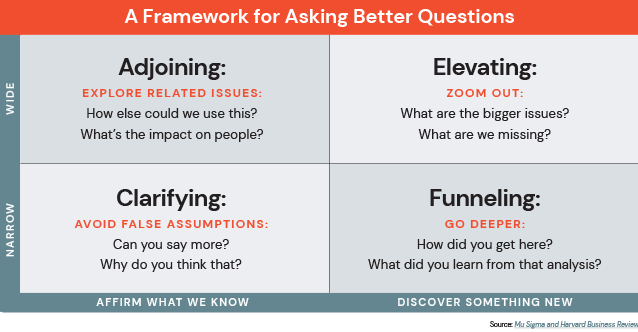
What kinds of questions did you ask today in your conversations? Parents, students, teachers? There are some tips for each of us about asking effective and non-effective questions. Here’s a quick check on your own style:
Parent:
- Effective: “What was the most challenging part of your math homework today, and how did you work through it?”
- Non-effective: “Did you do your homework?”
Student:
- Effective: “I’m struggling with how photosynthesis connects to cellular respiration – could you help me understand the relationship between these two processes?”
- Non-effective: “I don’t get this. Can you just tell me the answer?”
Teacher:
- Effective: “What patterns do you notice in these historical events, and what might have caused them to unfold similarly?”
- Non-effective: “Who can tell me what happened in 1776?”
This is a free newsletter. If you like my content, please subscribe by entering your email address here.
Three Images of the Week


Two Thoughts of the Week
When you ask questions, you send your constituents on mental journeys. – James M. Kouzes and Barry Z. Posner
Computers are useless, they only give you answers. – Picasso
One Video of the Week
The key to deeply connecting with others is about more than just talking — it’s about asking the right kinds of questions, says journalist and author Charles Duhigg. He explores research-backed tools to have more meaningful conversations, sharing a simple yet powerful approach to transform how you communicate.
Reading with Ms. Meenu: Tip of the week
Signs help solve problems:
What’s the purpose of signs, let’s get started by getting your class to think about what would happen if there were no signs. Joan Holub’s picture book Runaway Signs (2020) is a humorous take on just such a scenario. When the signs take a vacation, there is chaos everywhere. No one knows where it is safe to cross the street, where the library is, when the stores are open and even the road crew can’t find where to do their road work. Predictably the only sign that won’t take a break is CAUTION! Let’s set up the same concept by asking our students what would happen in your school if all the signs went on vacation or there were no signs. Students have to all memorize where the gym, learning center and health office are but about a visitor or new student?
It makes sense to have your students dig deeper in a new genre before we ask them to write in it. And this is easy to do right away as schools are full of signs. Go on a sign walk; explore your classroom hallway or school with your class to notice signs. Because sign makers anticipate questions, help your students to figure out which question each sign answers. You could help them start by listing the following.
· Signs for room names or supply labels answer: What is this?
· Signs with school rules or classroom norms answer: How are people supposed to act here?
· Signs like EXIT or Keep Right on the Stairs answer: Where do I go?
· Signs like Family/Teacher Conferences next week and Poetry Breakfast on Monday answer: What special event is coming and when will it happen?
Once your students begin to notice signs, you can help them dig deeper and identify both the purpose of each sign and how the message is conveyed. Ask questions like, “Are the signs long or short?” or What symbols or pictures do they use”? By now they will be ready to sort signs into the types of signage described next.
Happy Reading!!
Meenu Gera
Consulting home and school librarian reading guide
Career assessment, guidance, and placement strategies:
Article 3 -Careers in Transportation, Logistics, and Distribution
Transportation occurs through various modes, including roadways, pipelines, air, rail, and waterways. Individuals in these roles are responsible for planning, managing, and executing the movement of people and goods. Professionals in this field include pilots, air traffic controllers, automotive technicians, bus drivers, and ship captains. They are also involved in the maintenance and repair of vehicles and transportation systems.
Career pathways in this sector include Logistics Planning and Management, Sales and Service, Transportation Operations, and Warehousing and Distribution.
International Job Roles & Average Salary per annum
| Airline Pilots, Co-pilots & Flight Engineers $200k | Air Traffic Controllers $ 125k | Commercial Pilots$115k |
| Captains, Mates & Pilots of Water Vessels$100k | Ship Engineers$95k | Logisticians$80k |
| Logistics Engineers$80k | Logistics Analysts$80k | Locomotive Engineers$75k |
| Aircraft Mechanics & Service Technicians$70k | Avionics Technician$70k | Electrical, Electronics Installers & Repairers, Transport Equipment$70k |
| Gas Compressors & Gas Pumping Station Operators$67K | First Line Supervisors of Helpers, Laborers& Material Movers$60k | Flight Attendants$63k |
| Aircraft Cargo Handling Supervisor$60k | Rail Car Repairers$60k | Mobile Heavy Equipment Mechanics$57k |
| Sailors & Marine Oilers$57k | Airfield Operations Specialist$55k | Bus & Truck Mechanics & Diesel Engine Specialist$55k |
| Automotive Service Technicians & Mechanics $50k | Heavy & Tractor Trailer Truck Drivers$50k | Bus Drivers, Transit & Intercity$50k |
| Cargo & Freight Agents$48k | Freight Forwarders$48k | Motorboat Operators$45k |
| Automotive Glass Installers & Repairers$40k | Billing & Posting Clerks$42k | Bridge & Lock Tenders$45k |
| Ambulance Drivers & Attendants$ 30k | Automotive & Watercraft Attendants$30k |
What Employers Look For
| Attitude | Skills | Knowledge |
| Adaptable | Active Listening & Speaking | High School Diploma |
| Customer Centric | Oral Expression | Degree |
| Public Safety & Security | Problem Solving | Vocational Qualification |
| Analytical |
The career counselors at Fermat specialize in Profile Building and College Essays. More about us on www.fermataco.com
Dear reader,
I work with the school leadership team as an advisor and collaborate with teachers as a pedagogical trainer. I also help parents as a parenting counselor and regularly engage one-on-one with students as a personal guide and mentor. This weekly newsletter shares what I read, learn, and experience.
3-2-1 Tuesdays with Ms. Niv is a newsletter you can subscribe to and enjoy your learning journey with me.
3-2-1 Tuesdays with Ms Niv

Issue #258, 17th June 2025
Where does your child/student play? how much time in your school timetable/home-weekend routine is allocated for outdoor, free, unstructured play? Is the playground natural/nature based or sterile, rubber and metal structure? Last week celebrated international day of play, where did your child/student play?
Here are three natural, easy, and affordable features you can add to create a nature-based playground:
Log Balance Beams and Stepping Stones using fallen tree logs or large rocks arranged at ground level for balance challenges. Simply place them strategically to create paths, balance beams, or stepping stone patterns. They develop gross motor skills and spatial awareness naturally.
Digging and Sand Play Area by designating a section for digging with basic tools like small shovels and buckets. Kids can dig, build, and explore textures while developing fine motor skills and creativity. This connects them directly with earth elements and costs very little beyond the initial setup.
Natural Climbing Structure by creating climbing opportunities using sturdy tree branches, large rocks, or a simple mound of dirt covered with grass. Alternatively, pile up logs or rocks to form climbing challenges. This builds strength, coordination, and problem-solving skills while keeping children engaged with natural materials.
The idea is to encourage unstructured play, connect children with nature, which can be implemented with minimal cost using locally available materials. They also require little maintenance once established and blend naturally into the landscape.
Happy International Day of Play!
This is a free newsletter. If you like my content, please subscribe by entering your email address here.
Three Images of the Week


Two Thoughts of the Week
“Children engage in [free] play because they enjoy it – it’s self-directed. They do not play for rewards; they enjoy the doing, not the end result. Once they get bored, they go on to do something else – and continue to learn and grow.” – Sheila G. Flaxman
“In every real man a child is hidden that wants to play.” – Friedrich Nietzsche
One Video of the Week
Designing playgrounds for happier, healthier kids | Sarah Werner Konradi | TEDxMileHigh
Imagine a playground. You’re probably thinking of hard plastic and rubber, right? Modern playgrounds are boring and sterile and have so little to offer for child development. Landscape architect Sarah Werner Konradi has a better idea. Sarah Konradi is a landscape architect working at the intersection of design, conservation, and health.
As Program Director of the National Wildlife Federation’s Early Childhood Health Outdoors program, Sarah works with underserved communities to re-envision outdoor spaces used by children and families, creating playgrounds that support child development and connection to the natural world.
Sarah lives with her German husband, 9-year-old son, and a cat named Chuck Norris. She is an amateur meteorologist, obsessively following the weather forecast.
Reading with Ms. Meenu: Tip of the week
Show Us a Sign:
Why Study Signage?
Signs play a vital role in our daily lives. Even before students can read words, they know that octagonal red signs mean stop. We teach children waiting to cross the street to look for the white or green walking figure as their cue to step into the crosswalk. Do they wonder what happened in your neighborhood before they lived there? Historic markers provide details that help us connect the present with the past. Maps help us get where we want to go. From the time we are young, signs are a part of our visual landscape and help us mediate our daily lives. In fact, they signal to us where to go, what to do when something will happen, and help us develop a deeper understanding of an event or place. Creating signage requires our young writers to consider audience, purpose and voice, and make decisions about using tools of visual literacy such as icons, arrows, bullets, maps and other types of graphic design elements to communicate effectively and efficiently. Since many of these are already a part of the literacy curriculum, making signs provides an engaging opportunity to apply these writing techniques in authentic ways. Studying signage as a genre requires readers to figure out the message created by a combination of words and images. It’s also a great way for young writers to use short text to problem solve about purpose and think carefully about ways to reach their audience. Because signs are relatively short, involve graphic elements and images and are used for authentic purposes in familiar settings, studying and creating signs offers multiple entry points for students. Not only will making signs provide students with new literacy experiences, doing so will also empower them to contribute to their school community in authentic and significant ways.
Happy Reading and stay tuned until next week to know more about how signs can solve problems!
Meenu Gera
Consulting home and school librarian reading guide
Despite all odds…
(posting it again in this week’s newsletter from last week as many of the readers could not access it)
Can’t fly a plane? Build one.
Not traveled? Become a diplomat.
Struggled in the 10th? top in 12th.
Vidya Stars – In Conversation with Nivedita: Meet Khushi, Rinkesh and Shikha. Stars of 2025 scoring well above 90% and realising their dreams despite all odds. About VIDYA, a school for children from underprivileged backgrounds.
Home
Know more about VIDYA by visiting : https://vidya-india.org/
Dear reader,
I work with the school leadership team as an advisor and collaborate with teachers as a pedagogical trainer. I also help parents as a parenting counselor and regularly engage one-on-one with students as a personal guide and mentor. This weekly newsletter shares what I read, learn, and experience.
3-2-1 Tuesdays with Ms. Niv is a newsletter you can subscribe to and enjoy your learning journey with me.
3-2-1 Tuesdays with Ms Niv

Issue #267, 10th June 2025
“When a lesson fails or students struggle, do I see it as a problem to solve or a reason to give up?” This reveals whether as a teacher you view setbacks as learning opportunities or personal failures, which directly impacts your resilience in the classroom.
“When my child faces disappointment or failure, do I rush to fix it for them or help them work through it?” This shows whether as a parent you’re building their resilience or inadvertently weakening it by removing all obstacles.
“When something gets difficult, is my first instinct to quit or to try a different approach?” This indicates whether as a student you’ve developed the persistence needed for long-term learning and growth.
Suggested here are ways to check and build your mental toughness whether you are a teacher, parent, student.
This is a free newsletter. If you like my content, please subscribe by entering your email address here.
Three Images of the Week


Two Thoughts of the Week
“Nothing can stop the man with the right mental attitude from achieving his goal; nothing on earth can help the man with the wrong mental attitude.” – Thomas Jefferson
“It is not the mountain we conquer but ourselves.” – Edmund Hillary
One Video of the Week
Joe Risser MD, MPH has been doing clinical research for over 40 years. In this insightful talk, he shares important recent findings, with examples and evidence of how anyone can improve their mental toughness. TeamHoodWorldRecords.medium.com #Grit#Plank#MentalToughness#Yoga#Clinical Research #TEDxSanDiego#TEDx#TEDxSpeaker Dr. Joe Risser is a Professor in the Department of Preventive Medicine at UC San Diego and a board-certified physician in Preventive Medicine. With over 40 years of research experience, Joe has pioneered studies on therapies, diagnostics, and behavior change strategies. He chairs the first Department of Clinical Research in one of over 15,000 community clinics in the U.S., serving vulnerable populations. Joe also holds a master’s in Biostatistics, completing his education and residencies at the University of Hawaii and UC San Diego. His lifelong passion lies in studying mental toughness, or “grit,” and its profound connection to the protein Brain-Derived Neurotrophic Factor (BDNF). Joe unveils groundbreaking research on BDNF, sharing the life-saving stories of two extraordinary individuals who embody extreme mental and physical resilience. Joe reveals how anyone can strengthen their mental toughness, making a tangible difference in their lives. http://teamhoodworldrecords.com This talk was given at a TEDx event using the TED conference format but independently organized by a local community. Learn more at https://www.ted.com/tedx
Reading with Ms. Meenu: Tip of the week
Beyond the words themselves: Adding visual cues to strengthen meaning
As we know more about the Word Stones let’s plan word stones can be an opportunity for learning about graphic design. Students can probably describe some of their favorite logos, icons and T-shirts. Ask your students about which fonts catch their eye. Which fonts might they use to convey Christmas or Diwali words? To create a mood? They probably already know that a message in all capital letters implies shouting – how might a particular font help convey the meaning of whisper on a word stone? The size of the word can also send a message; if students fill the whole space of a stone with words “large” and “tiny” that might be found in a small corner of the stone, they begin to see the artistic and symbolic power of visual literacy. Do use books featuring concrete poetry like Meow Ruff(Sidman 2006) or A Poke in the I (Jeneczko 2001) to help students get a sense of how these decisions support meaning. Color wheels, font charts and other tools of graphic design will enable your students to study all the variables that visual artists consider to grab our attention and send a message. These examples of graphic design can be found in all the graphic novels. Here is an example of Word stones with different fonts and colors.

Happy Reading!
Meenu Gera
Consulting home and school librarian, reading guide
Despite all odds…
Can’t fly a plane? Build one.
Not traveled? Become a diplomat.
Struggled in the 10th? top in 12th.
Vidya Stars – In Conversation with Nivedita: Meet Khushi, Rinkesh and Shikha. Stars of 2025 scoring well above 90% and realising their dreams despite all odds. About VIDYA, a school for children from underprivileged backgrounds.
Home
Know more about VIDYA by visiting : https://vidya-india.org/
Dear reader,
I work with the school leadership team as an advisor and collaborate with teachers as a pedagogical trainer. I also help parents as a parenting counselor and regularly engage one-on-one with students as a personal guide and mentor. This weekly newsletter shares what I read, learn, and experience.
3-2-1 Tuesdays with Ms. Niv is a newsletter you can subscribe to and enjoy your learning journey with me.
3-2-1 with Ms Niv: Unlocking Student Potential

Issue #256, 3rd June 2025
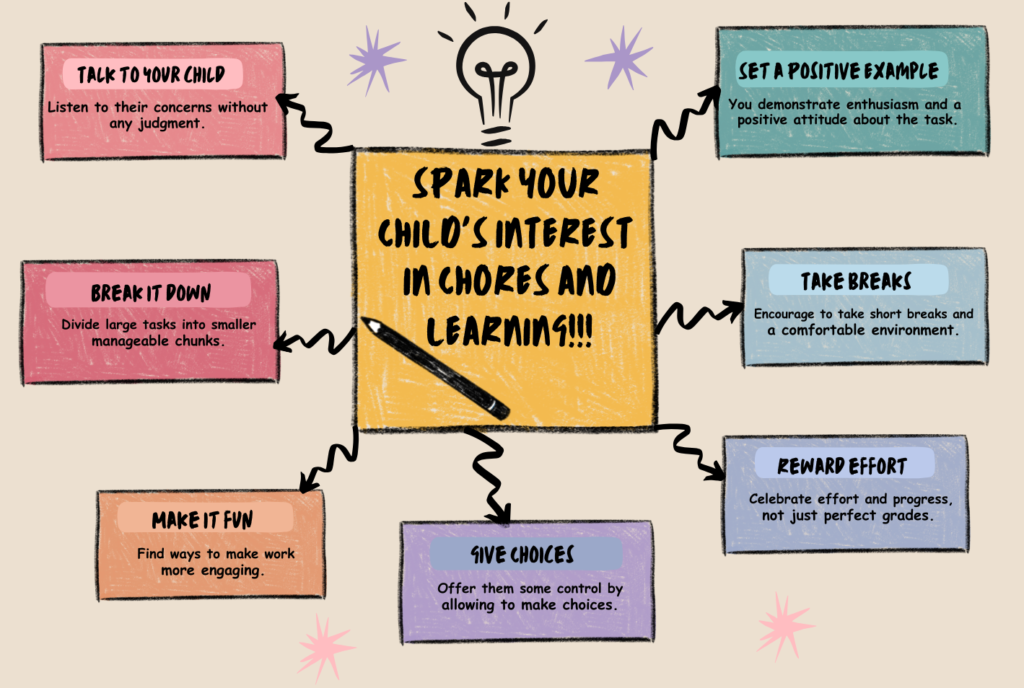
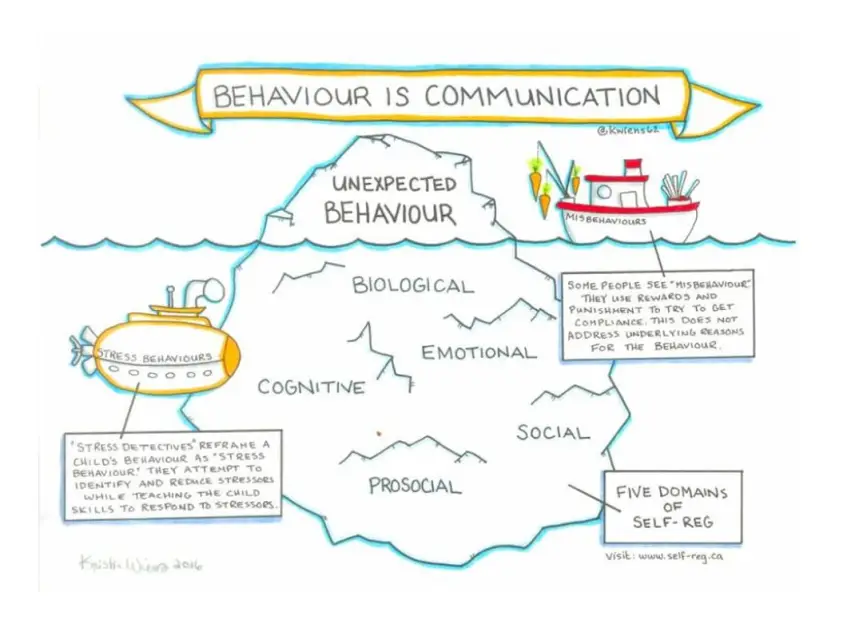
When children with potential fail, is it their fault? Their teacher’s or their parent’s? What could possibly be holding them back from their potential? Does high potential always translate to high achievement? What could be some of the reasons that come between potential and achievement?
Mismatched Learning Environment The teaching methods, pace, or classroom structure may not align with how the child learns best.
Emotional and Social Factors Anxiety, low self-esteem, peer pressure, or social difficulties can significantly impact academic performance. A child who fears failure might avoid challenging tasks, while another might underperform due to family stress, bullying or feeling socially isolated.
Unidentified Learning Differences Conditions like ADHD, dyslexia, and processing disorders often go unrecognized. Intelligent children may develop coping strategies that mask their struggles.
Lack of Appropriate Challenge and Engagement When schoolwork is too easy, gifted children may become bored. They may also become disengaged. These children can develop poor study habits since they’ve never had to work hard. Conversely, if suddenly faced with challenging material without proper preparation, they may encounter academic difficulty for the first time. They may lack the resilience or strategies to push through.
Perfectionism and Fear of Failure Many high-potential children develop perfectionist tendencies that become paralyzing. They may avoid taking risks, procrastinate on assignments, or become so focused on producing perfect work that they fail to complete tasks. This perfectionism often stems from always being praised for being “smart” rather than for effort and growth.
Let us give it some thought. And don’t miss the TED talk in this issue by the gifted child with ADHD diagnosis.
This is a free newsletter. If you like my content, please subscribe by entering your email address here.
Three Images of the Week

Two Thoughts of the Week
“Presuming that a nonspeaking child has nothing to say is like presuming that an adult without a car has nowhere to go.”
― Ellen Notbohm, Ten Things Every Child with Autism Wishes You Knew
“Embrace the unique way your child is blooming — even if it’s not in the garden you imagined.”
― Jenn Soehnlin, Embracing This Special Life
One Video of the Week
Jessica McCabe tell us the story of her life. Once a gifted child with bright future, who later lives a life of a constant failures, because one thing – her ADHD diagnosis. Until one thing changed everything and she realized, that she is not alone. Her Youtube channel HowtoADHD is dedicated to help not only people with ADHD, but also their parents, partners a teachers and to remind them, that they are not alone. Jessica is the author of popular YouTube series How to ADHD focused on educating and supporting ADHD brains around the world.
Reading with Ms. Meenu: Tip of the week
Word Gardens:
What is a Word Garden?
If you’ve played around with magnetic poetry, then you’ve already got the idea of a word garden. Imagine the words on stones, blocks of scrap wood, painted jar lids, or other materials placed in a corner of your playground, a bed of gravel, or any available space. The words might be painted, etched, or written on the stones with chalk or a marker – the result provides many options for wordplay and learning. Like magnetic poetry, students enjoy moving these words around, but word gardens invite participation far beyond the physical task. Your students can leave messages, create poetry, start a discussion, make a joke and just about everything else you can do with words. Deciding which words go together allows students to generate ideas, but they also delight in finding poetry, humor and thoughts from the words that are serendipitously next to each other, creating found poetry.
Logistics: How to make a Word Garden
The beauty of a word garden is that once you have a space, you can launch one simply by finding smooth stones, pieces of wood (sanded), metal jar lids, other smooth surfaces and a box of chalk. Because chalk is a temporary medium, it offers the benefit of allowing students to think of new words. You might keep a master list of words related to your curriculum and invite students to add more. And if it rains, they will be practicing spelling and handwriting by rewriting their favorite words! An added benefit of chalk is that it is erasable and forgiving of mistakes. Other mediums work too and are more permanent; some schools use permanent markers and others have used paint. Jar lids with a coat of paint can provide colorful backdrops for words written with bright colored markers.
We will continue further on more components of Word Gardens in upcoming weeks. Until then… Happy reading!
Happy Reading!
Meenu Gera
Consulting home and school librarian reading guide
Career assessment, guidance, and placement strategies:
Navigating the College Application Journey: 5 Ways Parents Can Empower Their Grade 12 Child
Grade 12 is a whirlwind of emotions, academic pressure, and big decisions, especially regarding college applications. You naturally want to help as a parent, but finding the right balance between support and overstepping can be tricky. This post offers five key tips on empowering your child to navigate this exciting yet sometimes stressful process with confidence and ownership.
- Foster Ownership: It’s Their College List
It’s easy to get caught up in our own aspirations for our children but remember: your child is the one who will be attending college, not you. Encourage them to take the lead in researching institutions and developing their college list.
- Guide Towards a Realistic & Balanced List
While fostering ownership is crucial, providing guidance on creating a realistic list is equally important. A well-rounded college list typically includes a mix of ‘reach,’ ‘target,’ and ‘safety’ colleges.
- Brainstorm Course and Major Choices Together
Encourage your child to think about their passions, strengths, and what subjects genuinely excite them. The goal here is to help them identify areas of study that spark their curiosity.
- Navigating the ‘Course vs. College Name’ Conundrum
For some students, the specific course or program they want to study is paramount, while for others, the prestige or reputation of the college holds more weight. This can be a point of discussion and gentle guidance.
- Be Present: The Power of Silent, Available, and Mindful Support
The college application process is emotionally charged. Your child will experience moments of excitement, frustration, anxiety, and perhaps even rejection. Your emotional support is invaluable.
The career counselors at Fermat specialize in Profile Building and College Essays. More about us on www.fermataco.com
In Conversation with Nivedita
He leads one of the best-known day schools in India. A school that is known for its amazing confluence of an International curriculum, local context, and sustainable design. A school that is decades old and yet, at the frontiers in not just digital learning for its own school community but in supporting other schools as well – modeling it themselves while leading and handholding other institutions.
In the historical town of Jodhpur that is steeped in heritage and culture, there is a quiet revolution going on in school education. At the helm of it is Vaibhav Doshi. An engineer by education and an educator by passion. Vaibhav, along with his sister Archita Tatia are the torch bearers who are showing by doing and sharing their vision and learning with the community of schools and school leadership teams. True to the name of the school, they are the Alma Mater. https://www.almamater.education/
Dear reader,
I work with the school leadership team as an advisor and collaborate with teachers as a pedagogical trainer. I also help parents as a parenting counselor and regularly engage one-on-one with students as a personal guide and mentor. This weekly newsletter shares what I read, learn, and experience.
3-2-1 Tuesdays with Ms. Niv is a newsletter you can subscribe to and enjoy your learning journey with me.
3-2-1 TUESDAYS WITH MS NIV

Issue #255, 27th May 2025
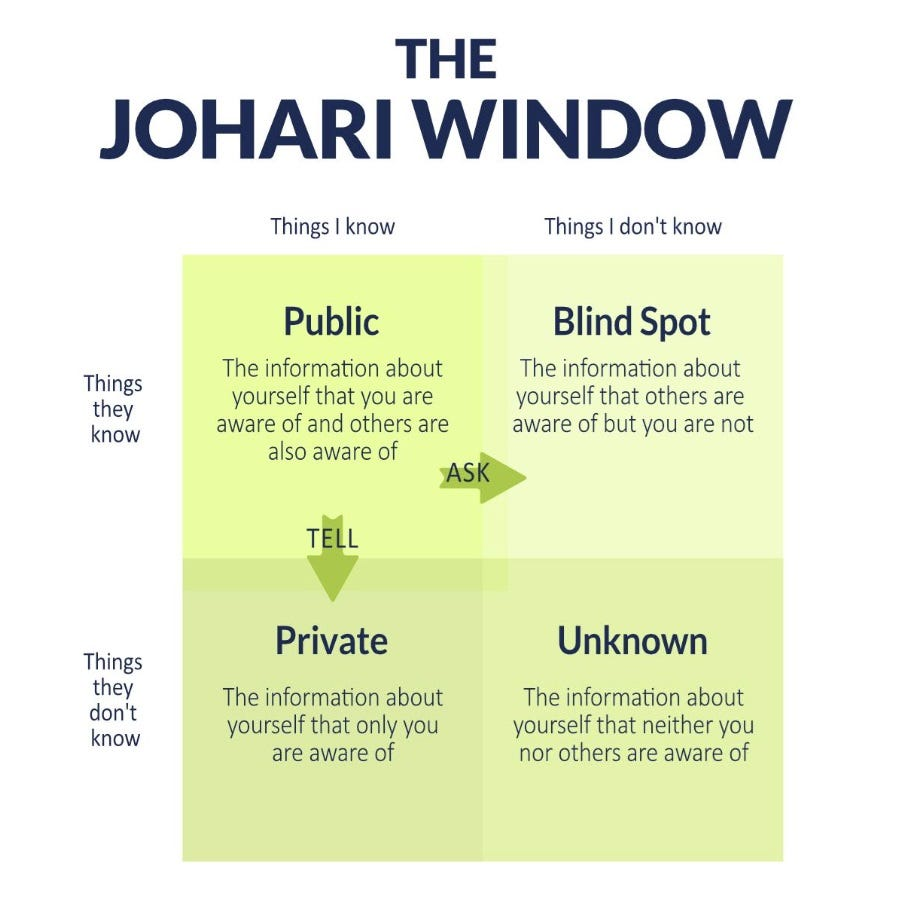
What are your blind spots? As a parent, educator, or student? How do you manage those biases that fester in your blind spot? Here are some ideas that might trigger your thoughts in that direction.
This is a free newsletter. If you like my content, please subscribe by entering your email address here.
Three Images of the Week


Two Thoughts of the Week
Because your brain uses information from the areas around the blind spot to make a reasonable guess about what the blind spot would see if only it weren’t blind, and then your brain fills in the scene with this information. That’s right, it invents things, creates things, makes stuff up! It doesn’t consult you about this, doesn’t seek your approval. It just makes its best guess about the nature of the missing information and proceeds to fill in the scene.
- Daniel Gilbert
Books are, at their heart, dangerous. Yes, dangerous. Because they challenge us: our prejudices, our blind spots. They open us to new ideas, new ways of seeing. They make us hurt in all the right ways. They can push down the barricades of ‘them’ & widen the circle of ‘us.
- Libba Bray
One Video of the Week
Dr Sasha Vassar invites audiences to rethink how information overload shapes perception, revealing how collaboration and fresh perspectives can unlock hidden insights. Where others see superfluity, Vassar recognises hidden patterns; turning the chaos of learning into something luminous. Award-winning researcher and educator Dr. Sasha Vassar bridges computer science, biomedical engineering, and pedagogy, pioneering generative AI tools to enhance learning.
And finally… against all odds
Bhadrasen Negi, VIDYA star alumni – In conversation with Nivedita He worked his way through many homes and realised his dream of becoming an engineer. Here’s an awe inspiring story of how an 8 year old boy from a shepherd family in remote Kinnaur village of Himachal is today leading a successful like of a husband, father and a computer scientist in Los Angeles.
Meet Bhadrasen Negi, Senior Application Developer at Los Angeles County, Los Angeles County Internal Services Department Long Beach, California, United States.
Dear reader,
I work with the school leadership team as an advisor and collaborate with teachers as a pedagogical trainer. I also help parents as a parenting counselor and regularly engage one-on-one with students as a personal guide and mentor. This weekly newsletter shares what I read, learn, and experience.
3-2-1 Tuesdays with Ms. Niv is a newsletter you can subscribe to and enjoy your learning journey with me.
3-2-1 TUESDAYS WITH MS NIV
Issue #254, 20th May 2025
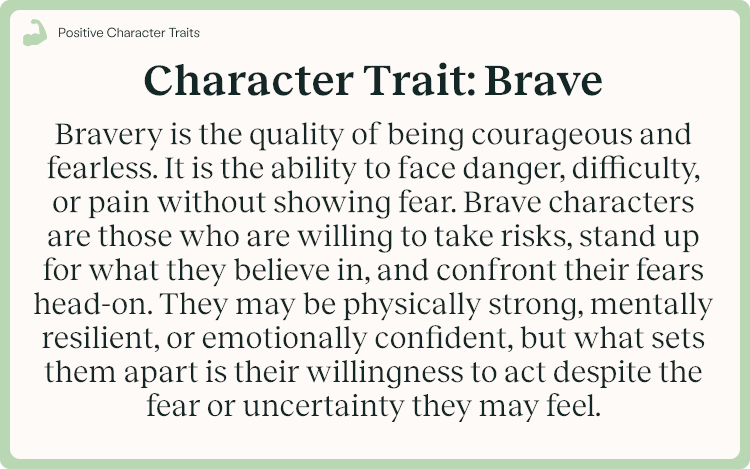
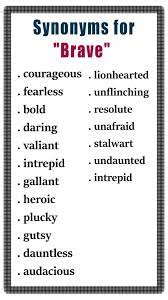
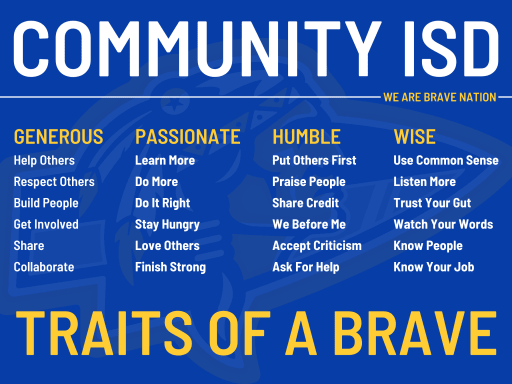
What is it to be brave? What does it look like in situations and what it is not? Mothers day just went by and as I reflected upon myself as a mother, my mother in law, my grand mother and quite a few other mothers that I have known and known of over the years and found many shades of bravery in a whole range of events that happened to happen in our-their lives. Here’s to bravery! Don’t miss the powerful ted talk in this issue to get some more perspective on the shades of ‘brave’.
“Kelly Corrigan’s TED talk “To Love Is to Be Brave” highlights the essence of bravery in family life. She recounts personal and observed moments of immense courage, emphasizing the importance of compassion, listening, and staying present amidst difficult circumstances. The ultimate act of bravery, she suggests, is letting go and allowing loved ones to navigate their own paths. The reward for such bravery is a profound human experience filled with selfless love and humble awe.”
This is a free newsletter. If you like my content, please subscribe by entering your email address here.
Three Images of the Week
Two Thoughts of the Week
“The real man smiles in trouble, gathers strength from distress, and grows brave by reflection.” Thomas Paine
“There isn’t a perfect mom, a perfect house, a perfect kid, a perfect life.
There’s just real.
And real is one mom after another after another after another who wakes in the morning and see those kids who call her mom and pulls herself up and tries.
She stumbles, but stands up.
She worries, but gives.
She loves.
She mothers.”
― Rachel Marie Martin
One Video of the Week
Family life often requires extraordinary bravery, from navigating the daily challenges to surviving the unexpected crises. Author and podcaster Kelly Corrigan offers profound wisdom (and seven key words) to help you focus in on what matters most.
Reading with Ms. Meenu: Tip of the week
A StoryWalk is a way to publish student writing:
You are already finding ways for your students to publish and share their writing and now you have another way to showcase their work. Plan to have each student select a poem from their poetry writing unit to post as a celebratory culmination. Or have them write silly short stories and display them outdoors. Just think of student generated story experiences as other ways to celebrate and enjoy their finished pieces outdoors or even down long school hallways or the wall of the school facing a playground. By doing this you are acknowledging the hard work of your student writers, getting kids outside and experiencing new connections between writing and setting.
StoryWalk connections to literacy development:
In addition to providing the authentic purposes for writing, revision and editing described above, other ways to develop reading and writing strategies and skills will emerge based on your student’s needs and interest.
· Reading aloud/fluency practice: Students who would benefit from repeated reading aloud might take groups of younger children on a guided tour of a StoryWalk. The repeated readings to a real audience would keep the experience fresh and authentic and help build fluency and expression for the host reader. This experience allows students to practice reading aloud, with focus on fluency and prosody, with an authentic purpose. They might read to families, their favorite adults in school, younger students or even friends and classmates.
· Ubiquitous sticky notes: The StoryWalk version! It has been a normal practice for a lot of librarians to use sticky note questions on some of the pages from any of their books. This is always done just to engage the readers in the story. Some of their notes ask readers to dive deeper into the story, and others ask them to apply what is happening in the story to their own lives. For example, At the end of a StoryWalk featuring “Mama Built a Little Nest” there might be hints for finding nests in nearby trees, or suggestions and materials for building your own.
Happy Reading!
Meenu Gera
Consulting home and school librarian reading guide
Career assessment, guidance, and placement strategies:
If you’re a student currently in Grade 11 and planning to apply to universities abroad, you’re at a critical point in your academic journey. With around 4 months before applications open, this is your window to showcase who you are beyond your grades. College admissions teams are not just looking for academic scores—they’re looking for potential, personality, and purpose.
Here are 8 things students can do to strengthen their profile for college admissions:
- Make a list of all co-curricular activities the student has participated in since Grade 9.
- Categorize these activities into hobbies and skills to better understand areas of interest and development.
- Identify the purpose of each activity—whether it stems from interest, showcases leadership, reflects passion, or highlights academic achievement.
- Focus on long-term engagement, as consistency and sustained involvement demonstrate commitment and depth.
- Pursue meaningful activities, such as:
- Learning a skill (e.g., baking, writing)
- Nurturing a talent (e.g., music, art, sports)
- Completing online courses to deepen academic goals
- Giving back to the community through volunteering or service
- Learning a skill (e.g., baking, writing)
- Shortlist key activities—especially if the list is long—that showcase academic interest, leadership, and community service. Aim to develop these over the next 25 weeks.
- Create a LinkedIn profile to begin building a personal brand and professional presence online.
- Demonstrate key traits that universities value, such as problem-solving, risk-taking, leadership, perseverance, and consistency.
Building your profile is not about doing “more”—it’s about doing things that matter, and doing them with purpose and consistency. You already have a story—now is the time to sharpen it and show the world who you are and who you’re becoming.
For career guidance, connect with Team Fermata, www.fermataco.com
Showcase: Thrive Beyond School – A unique STEAM education project for very young learners.
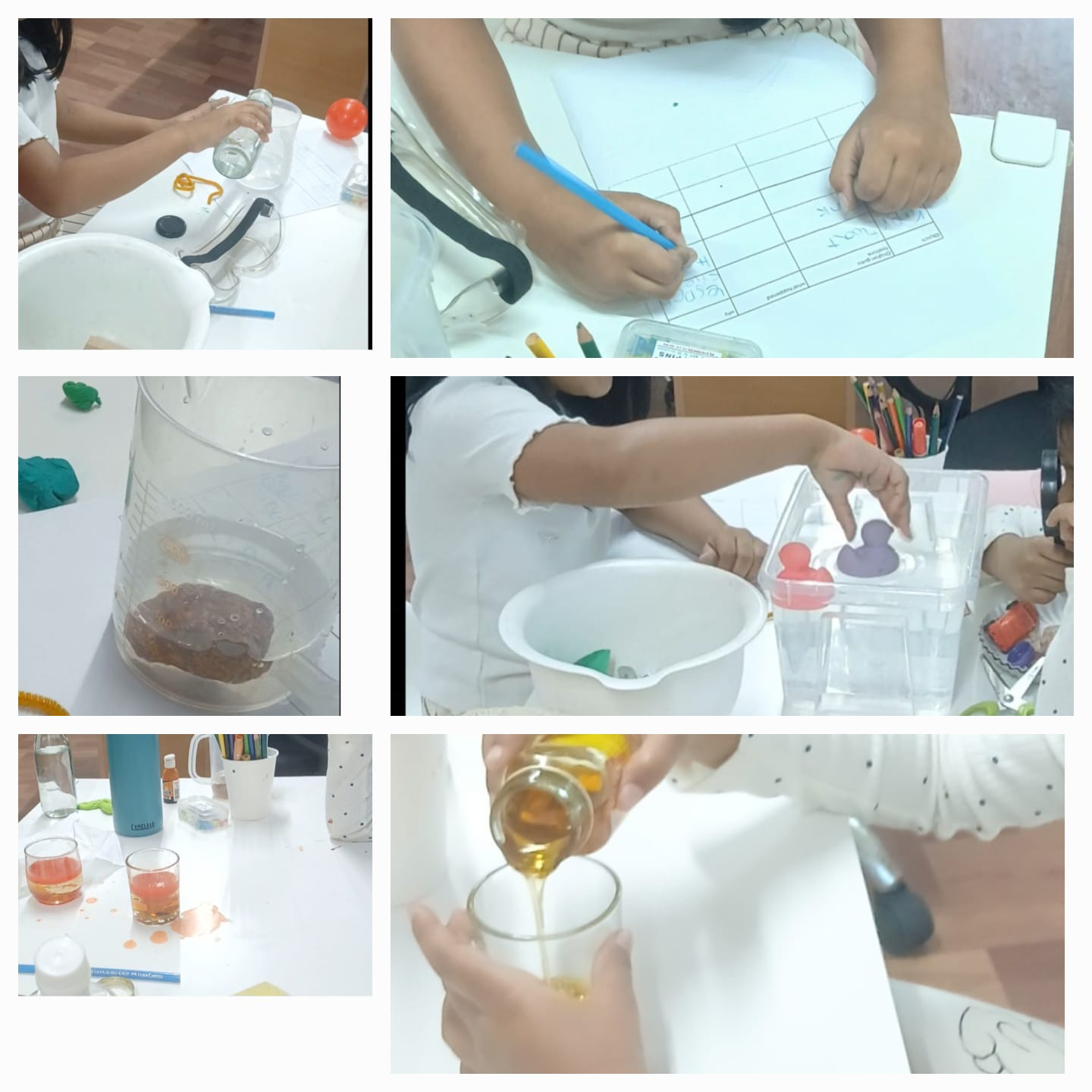
Samyuktha (7 years old) and Tara (5.9 years old) took part in a series of hands-on experiments, including float and sink testing, exploring volume through water displacement, and creating a density column. Through these activities, they learned that density and volume help explain why some objects float and others sink.
In the float and sink experiment, they noticed that lighter materials like plastic or wood tend to float, while heavier materials like metal usually sink. When learning about volume using the water displacement method, they discovered that even oddly shaped objects take up space, and this space can be measured by the amount of water the object displaces. In the density column activity, Samyuktha and Tara were excited to see how liquids such as honey, water, and oil formed separate layers. They understood that this happened because some liquids are denser than others meaning they are heavier for the same amount of space. These experiments helped them build a clearer understanding of scientific concepts in a fun and visual way.
And finally… against all odds
Dear reader,
I work with the school leadership team as an advisor and collaborate with teachers as a pedagogical trainer. I also help parents as a parenting counselor and regularly engage one-on-one with students as a personal guide and mentor. This weekly newsletter shares what I read, learn, and experience.
3-2-1 Tuesdays with Ms. Niv is a newsletter you can subscribe to and enjoy your learning journey with me.
 Nivedita Mukerjee