Nivedita Mukerjee
Education consultancy for parents and schools
3-2-1 Tuesdays with Ms Niv
Issue #007/ August 25, 2020
-
What kind of praise is ineffective, useful or powerful for your student?
-
Do you over-hover during your child’s online class session?
-
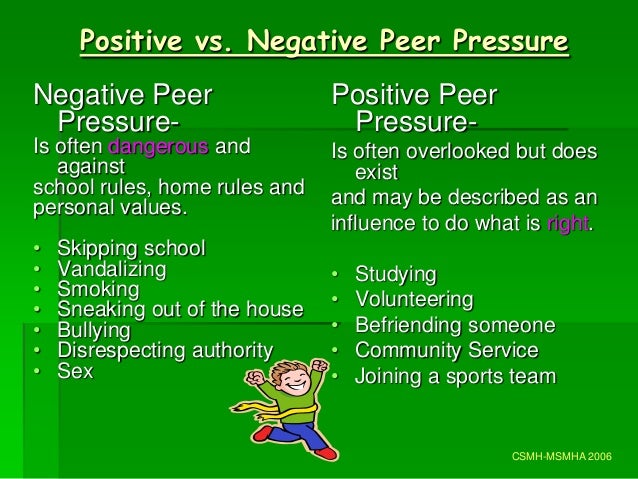
Is peer pressure always negative? Do schools kill creativity?
Find pointers to these and understand computational thinking in a nutshell from a teacher and researcher in the Cambridge University and Microsoft Research Labs.
Three Images For The Week
For Educators Relative effectiveness of the four levels of feedback (adapted from AITSL and E4L, 2017; Evidence for Learning, 2020; Hattie & Timperley, 2007).
For parents 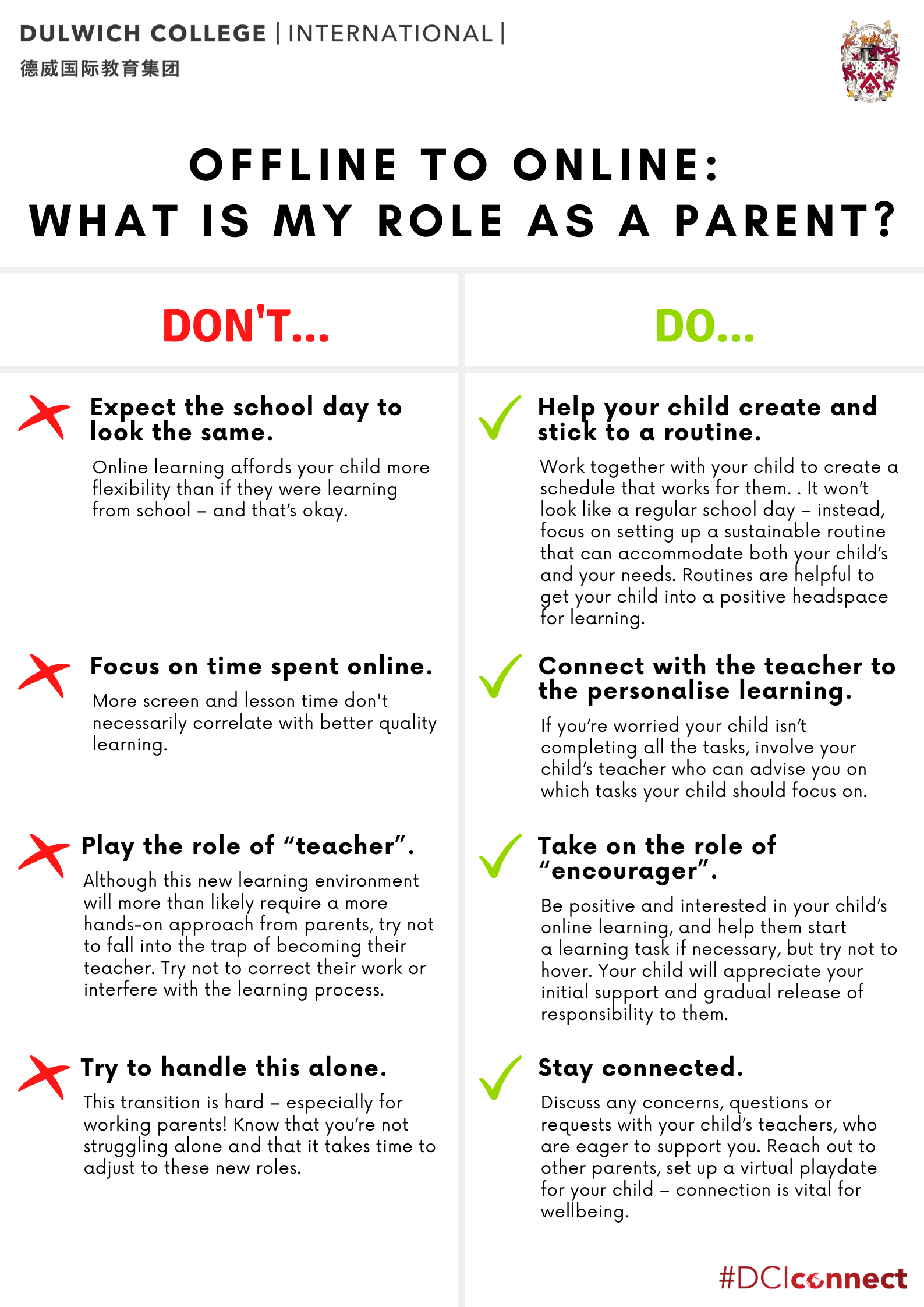
For students
Two Thoughts For The Week
“Give yourself time to learn something new and good, and cease to be whirled around.”
—Marcus Aurelius, Meditations
“When I get a little money I buy books; and if any is left I buy food and clothes.”
—Erasmus
One Video For The Week
In Memoriam
Sir Ken Robinson has died. He was the most watched speaker in TED’s history, with his 2006 talk ‘Do Schools Kill Creativity?’ being viewed online over 60 million times and seen by an estimated 380 million people in 160 countries. Here is a link to his site http://sirkenrobinson.com/


Guest column
Computational Thinking in K-12 Education
Dr. Advait Sarkar 
In recent years, we have seen a flurry of revisions to computing curricula around the world, led by Israel, whose model (broadly speaking) has now been adopted in the UK, South Korea, New Zealand, Australia, Germany, Denmark, and others. The new curricula de-emphasize IT proficiency (such as learning how to use the internet, word processors, etc.) and pull focus towards programming, algorithms, and deeper computing knowledge. In some ways this can be viewed as the discipline of computer science ‘coming of age’ and claiming its legitimacy and primacy as a subject for K-12 education. Its proponents argue that computing is so important and influential that every citizen deserves to have more than a mere superficial understanding of it. The objective is to develop students’ agency in computing that reframes their computing experience from being something that happens to them, as users and consumers, to something that they can understand, influence, produce, and participate in.
‘Computational thinking’ (CT) lies at the core of computer science’s claim to disciplinary legitimacy. What is CT? For starters, it’s not ICT (“information and communications technology”) — that is, the skills necessary to use computers and popular software — although that is important too. Is CT programming? Not quite — while all modern CT curricula incorporate a substantial amount of programming, it’s important that computer science should not be equated with programming, or vice versa. In fact, computational thinking is a set of abstract thinking and problem solving skills that can be learnt and understood even without access to computers (using materials created by the CS unplugged program, for example). These skills include: using abstractions to represent a problem; breaking down problems into smaller parts; and identifying potential solutions that achieve the most efficient utilisation of available resources.
It can be argued that these abstract skills are not unique to computing: using abstraction and decomposing problems are skills taught in maths, science, numerous engineering disciplines, and design thinking, as well. For example, all of K-12 mathematics already teaches children a series of steadily more sophisticated abstractions: using numbers to represent known quantities, symbols for operations, letters for unknown quantities, diagrams for real-world scenarios, and so on. Physics and chemistry each rely on breaking down problems, showing that many natural phenomena can be explained by considering the behaviour of their constituent materials: atomic particles and energy.
So what is different about computing? It’s quite simple, really: the computer. The computer can be considered an assistant who can execute instructions for you with high speed and perfect memory. Computational thinking teaches abstraction and problem solving, but specifically in the context where you have access to such an agent.
For example, a mathematics student might be interested in learning the rules for solving for X (the unknown) in an equation, but a computing student would be more interested in crafting instructions for a computer to solve many equations. The traditional way to solve an equation taught in schools involves ‘rearranging’ the equation until you have isolated X on one side of the equation, and can then calculate the other side using simple arithmetic. The strategies enabled by a computer are very different: for example, it is possible to try billions of potential values for X within seconds, to see if one of them solves the equation. The challenge is to define a good strategy for guessing, to maximize your chances of getting the right answer in the least number of guesses. This is called ‘numerical solving’, it can produce perfect or near-perfect solutions in many cases where the equation cannot be easily rearranged, and is used widely in many scientific and engineering disciplines.
Computing teaches children how to formulate different strategies, compare them, and translate them into a form executable by a computer. Therefore, the problem solving thought process in computing differentiates itself from other disciplines by focusing specifically on designing a suitable problem representation and specifying how the agent must operate within it to reach goals.
Advait Sarkar is a researcher at Microsoft and a lecturer at the University of Cambridge, U.K..
References:- Computing at School: https://www.computingatschool.org.uk/– CS unplugged: https://www.csunplugged.org/en/– Wing, Jeannette M. “Computational thinking.” Communications of the ACM 49, no. 3 (2006): 33-35.- Nardelli, Enrico. “Do we really need computational thinking?.” Communications of the ACM 62, no. 2 (2019): 32-35.- “A is for algorithm”. The Economist. April 26, 2014: https://www.economist.com/news/international/21601250-global-push-more-computer-science-classrooms-starting-bear-fruit
Parent speak
Neelima Meermira, a parent and a Human Resource strategist.

As a parent of a boy in his late teens on the threshold of getting into college, and one who has gone though the grind of all phases of teen age of my child , it is very difficult to crack the code and get the formula of what is right and what is not working for your child – let alone for the entire generation.
Each child is different , ‘coz each set of parents are different and the circumstances at each home are different , there by each child shapes up differently . We should not compare children with one another because they are products of our choices, our successes and our failures.
My son had the good fortune of schooling with Vidyaranya at Hyderabad started by an eminent educationalist Ms Shantan Ramaswar Rao. I had good fortune of interacting with her on few occasions. She taught me an important life lesson , to Trust my Child. This important life lesson has helped me to navigate us ( my son and I ) better during teen age. We could speak about most of the topics. He could share most, if not all of his issues with me.
We do have our share of disagreements , fights , show downs , but we have managed not to carry it to the next day.
Hope this small aspect of my life will help some of you .
Student voice

Ayesha Ahmed, student of grade 3
My Weird Dream
First it all started with me and my friends on Jupiter! I know right crazy I never realized how crazy dreams I could dream. Now let us see what happens in this crazy dream of mine. After sometime Jupiter starting shrinking and I said just jump out of Jupiter or else we might sink into Jupiter. So, we just jumped and we survived! So, one girl just made herself the leader and told to start making codes for some reason. So, as we started, some girl made a code with planets and the leader remembered the Solar System and he told us we might not be in the Solar System and we all were so shocked…… shocked REALLY! It looked like our so-called leader did not know that there is an Asteroid Belt between Mars and Jupiter. Another girl told I shall be the next leader. Then I told start jumping in front and so they did. And we jumped from one planet to another till we reached mars and then I told we have to still go to Earth and when we reached then we realized we were in the Ocean and then I woke up on my bunk bed and hopping with my pillow, saying what a crazy journey that was!!
Showcase: (Advertisement)
Click below and use the code 321NIV to get your special 30% discount.

And Finally
Here’s a poem written by Deepak Pachori, an author, screenplay writer and a film director, Mumbai.
Un-Social Media
सुनो, देखो ये क्या हो रहा है,
जीवन मोबाइल में खो रहा है,
रोक लो, बचा लो इन्हें,
ऐप अब ऐब हो रहा है….

अब नहीं आती,
कोई चिट्ठी या तार
ज़िंदगी का हर सुख-दर्द
वट्सऐप में व्यक्त हो रहा है.
टिंडर में सही-ग़लत की लकीरें
अब धुँधलाने सी लगी है,
ट्विटर में किसी का दर्द
कहीं मज़ाक़ हो रहा है,
सिकुड़ के चना भर हो गया है
आज कल सभी `का दिमाग़
गांधी, टैगोरो आज़ाद को
वो इंटर्नेट पे खोज रहा है.
जो मासूम से हाथ भेजते थे
प्यार भारी चिट्ठि अपनों को,
फ़ेसबुक और स्नैप चैट में
अब सबको अँगूठा हो रहा हैं.
जवानी के आते ही हुस्न जो
छुप जाता था दुपट्टों के पीछे,
देखो अब इन्स्टग्रैम में
इंस्टंट एक्स्पोज़े हो रहा हैं,
पुरानी बात हुई घर में
साथ सब के देखना टीवी
अब वो अकेले यू टूब में
जाने क्या क्या देख रहा है
खाना खाना भूल भी जाए
पावरबैंक ना भूले वो,
डर नहीं मरने का अपने
मरे ना बैटरी डर रहा है
खिंचा नहीं करती तस्वीरें
कैमरों से आज कल
हर शख़्स मोबाइल में अब
बस सेल्फ़ी ले रहा है,
दीपक पचोरी
I have been a research scientist, a journalist and an educator for over 3 decades. I read and I write. With this weekly newsletter, I intend to share what I read, learn and experience as I continue to engage everyday with students, parents and teams of teachers across K-12 schools, higher education institutions and ed-tech organisations.
3-2-1 Tuesdays with Ms Niv is a newsletter for you to subscribe and enjoy your learning journey with me. Most of you would have been too busy to track trends in education, ponder on most relevant thoughts or deliberate on career choice, parenting or pedagogy. Find it all here. This week, it consists of: 3 images, 2 thoughts and 1 video.
For whom? Students, educators and parents
When? Every Tuesday
Where? my blog post, register with your e-mail id, it is free.
If you want to contribute an article, are organising an event, have a product that you think can be reviewed and/or featured in this news letter, please feel free to write to me at : niveditamukerjee10@gmail.com
Please like, subscribe, share, comment. See you next week.
You can find me here:
This weekly newsletter is supported by:


And


 Nivedita Mukerjee
Enjoyed reading all the components of this Tuesday. The article on computational thinking is so enriching. Thanks.
LikeLiked by 1 person
Abstract thinking is hard, but it’s going to be interesting if these topics are introduced a little less abstract for students. Computational Thinking is all about breaking complex problems into smaller steps; I see its advantages not only in the ICT world but in everyday life as well.
Well-explained article on CT!
Sir Ken Robinson, you are a legend!
LikeLiked by 1 person
Sadly education has lost a powerful voice in Sir Ken Robinson!
Nice to be informed about CT which is clearly explained.
LikeLiked by 1 person