Nivedita Mukerjee
Education consultancy for parents and schools
3-2-1 TUESDAYS WITH MS NIV
Issue #16 / October 27, 2020
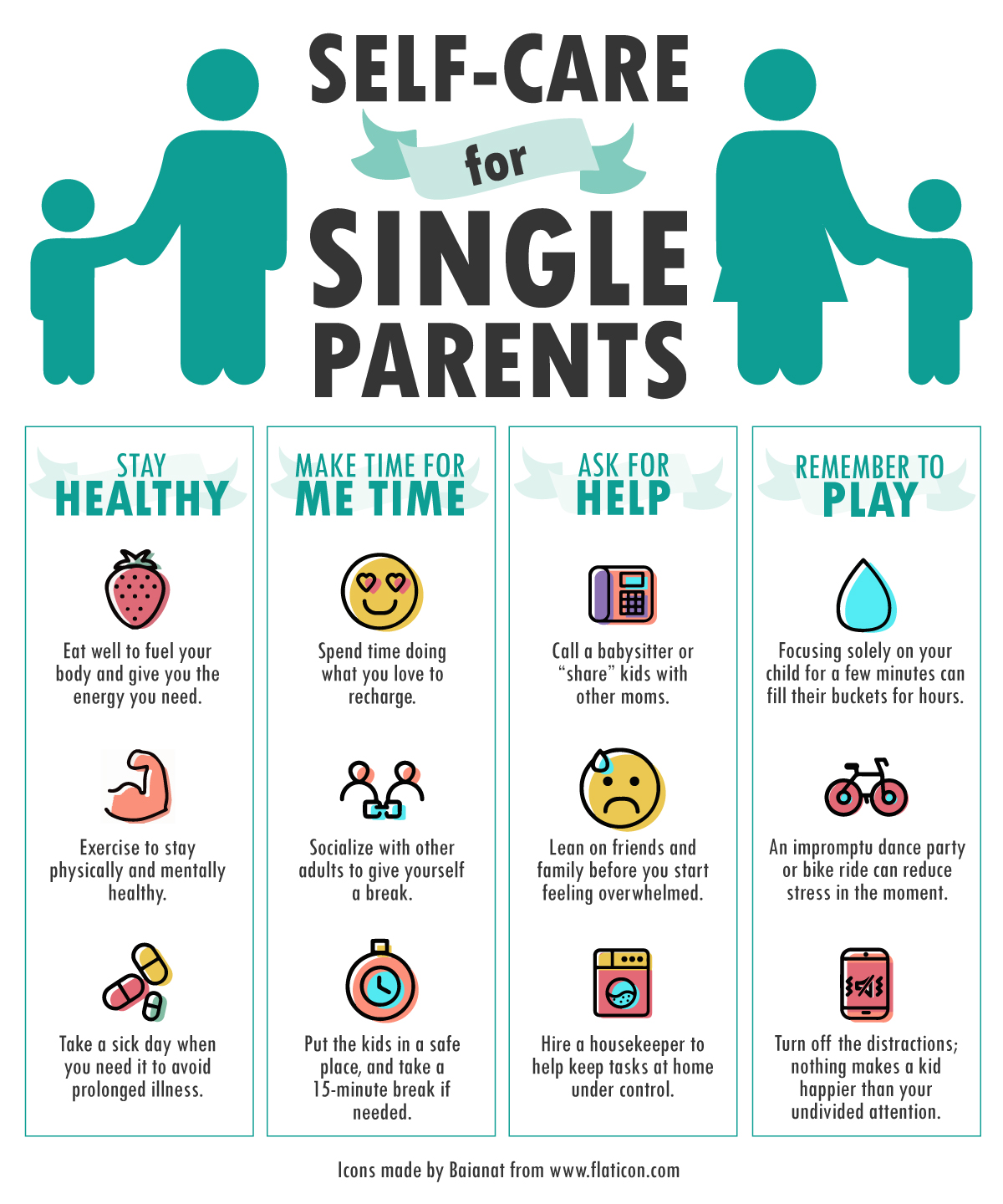
You want to peep into your child’s lives as a parent, then how can you shut them out of yours? Find out how a parent manages to balance this in the parent speak section. Panic attacks in school age children? Mental health days as a school policy same as sick leave? Watch the talk featured in the video section. You want to know more about what teenagers think about mental health – check out a site that has been started by a group of teenagers, featured in the student voice section. In this issue of the news letter, you will find self care tips for students, parents, teachers. Go ahead enjoy the festival season by beginning to take care of yourself. And finally, enjoy making some paper diyas with your family this festival season.
Follow Me
Get new content delivered directly to your inbox.
Three Images For The Week
For educator, parent and student. The Holy Trinity of Education

Two Thoughts For The Week
“As you grow older, you will discover that you have two hands, one for helping yourself, the other for helping others.” — Maya Angelou
“To love oneself is the beginning of a lifelong romance. ” – Oscar Wilde
One Video For The Week
School can be rife with stress, anxiety, panic attacks and even burnout — but there’s often no formal policy for students who need to prioritize their well-being. Hailey Hardcastle explains why schools should offer mental health days and allow students time to practice emotional hygiene without stigma. Follow along to learn how she and a team of fellow teens transformed their advocacy into law.
Hailey Hardcastle is a mental health advocate now and has established a network of student activists in order to make schools a better place for those struggling with mental health challenges.
In 2019, Hailey Hardcastle and her team passed a law in Oregon that allows students to take a mental health day off from school, the same way one would a sick day. Now, she’s working to expand the law to other states and bring more comprehensive mental health resources to classrooms.
Guest Column
Vidhya Nagraj, Principal, Delhi World Public School, Bangalore

Inspired from the book, ‘How schools fail,’ by John Holt
Repetitive corrections
I joined a new school with 5 years of work experience as a teacher. The school followed a child-centric approach in all aspects of schooling. They had a stringent policy; teachers could not reprimand a child for any misbehaviour or poor academic performance. I believed that students should be given freedom with boundaries
Initially, I found working in such an environment very stifling, as I came from the old school of thought that believed in ‘spare the rod and spoil the child.’ I was of the opinion that students should be corrected when they make mistakes.
One day I was called by the Vice-Principal to her office and she showed me a Grade IX homework that I had corrected. She gave me the book and asked me to observe and point out what I noticed. I checked the book and thought that I have probably overlooked some of the errors . I asked her if I could take the book back and recheck.
She replied, ‘Vidhya you seemed to have not understood my question,’ and once again asked me to look closely and observe what was glaring before the eye. I checked and rechecked and replied nothing! I was perplexed as to what she was pointing at.
Then she pointed out all the red corrections that stood out in every answer. The Vice Principal pointed that there were so many red ink corrections all over the book and this had shaken up the confidence of the child. I replied that if I don’t point, how will the child know that he has made mistakes and continue to repeat the mistakes.
I wasn’t convinced with her response, but grudgingly decided to adhere to the school policy thereafter. I started to train myself to write positive feedback in the test papers and in the subject report that teachers had to write.
After working there for nearly 10 years, the school’s approach began to grow on me. These practices became routine and I failed to understand them. Eventually, I moved out of the school. Several students kept in touch with me through social media. One of those students Robin tagged me with a subject report that I had written for him 6 years earlier while he was in Grade X and commented that although he knew that his teachers were lying about him, reading the report made him happy.
What the school had failed to make me understand in 10 years, Robin’s post made me understand at that moment.
Robin told me, ‘Ma’am when I read this report , I know that I didn’t deserve such kind words from you, I knew how I fared.’ Robin went on to tell me that he was nevertheless happy to read such a positive report.
This made me realise that the subject report, grades, scores, or teachers’ opinion doesn’t determine the success or failure of the student. But the positive strokes and teacher’s faith in the child supports in nurturing a growth mindset, and propelling them to work hard and believe that they can do better. Robin’s performance in history was immaterial in the journey of his life.
Parent Speak:
The Remote Button – Parul Saraff is an interior designer and mural artist besides being a parent of a 7th grader.

Since I became a mom, I kept hearing from friends with grown-up kids about how their children’s’ behaviour changed overnight once they turned 12, how they detach!!! In short, how difficult it is to handle the “always-bored teenager”. All of this really left me scared but gradually I learnt that when it comes to parenting, there is no rulebook, no “one size fits all.” All of that “gyaan” written in expensive parenting books is of no actual use once you deal with the antics of your divine angel, turned monster (and not to forget, your worst critic.)
To me, parenting is like a science equation. The final product depends on various factors, variables and non-variables. Without giving too much “gyaan” I would simply like to share some conscious efforts I took while raising my daughter. I won’t say she is not a lesser “rebel” and that I have achieved my goal of being a “perfect parent” but at least we can handle each other. She has a “strong mind” and “voice of her own” but a very “sensitive heart” too.
Age Appropriate
I strongly disliked this phrase when I was in my teens. With raging hormones and physical maturity, one starts to feel that they “know it all” and suddenly their elders slam: “This is not appropriate for you to know.” I used to wonder about replying with: “At least try telling me, maybe I am able to understand. Well, if you don’t tell me I will find out myself.” So as a parent, I make sure that I don’t keep any secrets from my child. We think that certain “inappropriate” topics may scar their fragile and impressionable minds but I feel that the “subtle insult” of hiding information from them would affect them more. What if tomorrow, when they go to college and we wish to know about their friends etc (for understandable reasons) and they end up saying “This piece of information is not age-appropriate for you?” Therefore, maintaining an open atmosphere is crucial.
Never shut them out from your life if you wish to peep into theirs.
Communication is Key
However cliched it may sound, communication is the most important aspect of your relationship with your child if you expect lifetime “transparency” and “attachment” with them. (BTW kids communicate at the weirdest times.) “You know I am busy!” could be reciprocated after a few years.
Argue and win with logic, not authority
Let’s face it, the members of Generation Z are very bright, they do not buy anything without a “logical” and “relevant explanation”.
“Is this the way to talk to our elders? Show some respect!”
This was the staple answer given to us for all of our “whys.” How I hate this word “respect” as I feel it has a hidden undertone of “control”. I feel like there should be “mutual respect” shared between everyone in a family regardless of their age. Being older is not a licence to tame young minds.
“Nothing can grow under shade.”
How much is too much?
Being a parent is so challenging in today’s age. All of these new-age theories like “let them be” and “let them learn from their mistakes” leave me so confused. Actually speaking, our mind knows they are right but at heart, we are “control freak”, “Indian parents” (I am at least.) So how to create a balance? I follow a simple formula. Let them soar as high as they want, make their own decisions and make choices, but keep the remote control with you. Sounds politically incorrect and “old school” right!? Before you judge me just figure this: The buttons of the remote control are not “force” and “over-protection.” They are “trust,” “empowerment,” self-belief and “confidence in your child’s head that whatever happens their parents are there to support them.” Hence proved, mom is always right!!!
Student Voice

Managing our mental health in these tough times
- Sarah Samad, student of Grade 11
It is not unknown that mental health is an extremely important topic. Especially in the recent times of COVID-19, where everybody’s mental health is more vulnerable, it is important that we raise awareness about this issue.
We are now stuck at home, with pretty much no travel except for work, and the occasional outing. Although it might not seem like it, this can take a major toll on our mental wellbeing. With students having to do online school, it can seem like a huge task to catch up with work and stay on par with the syllabus and the rest of the class, as this is a medium we are not used to. I personally am struggling with managing online school, but am sure that it will get better eventually. But it is important to note that all students are different, and might not look at the situation in the same way. Teenagers have been struggling with mental health a lot recently anyways, and with the added pressure of online learning, it just becomes worse. A lot of students might not understand that it can and will get better, and this can effect our outlook and health negatively.
There are various ways that we can help with this, as a student itself, and as the parent. As a student myself, I think it is very important to employ many time management strategies and other planning methods to finish work and not make it a burden. For students entering different milestones like me, moving into 11th grade, it is very hard to get used to the new style of learning. But with the support of our peers, teachers and parents, I am sure it will get better.
Additionally, as parents, support is enough. Just letting their kids – know that it is okay to struggle with this new mode of learning initially – is more than enough. There is a lot of stress on them already, and adding additional stress wont help much, so giving them support would help a lot. Take care of yourselves and those around you, and remember that it’s okay to take a break and rest.
To learn more about mental health and related topics, visit griseo.in
Showcase
Kiran Bir Sethi, Col Sathya Rao, Saraswathi Padmanabhan, Shailaja Rao, Mubeen Masudi, Divanshu Kumar, Pratibha Narayanan… what do these names have in common? A vision for education. Each of them are thought leaders in this space and tell a story of how they are continuously toiling to make their vision a reality.
I have started a series of podcasts : In conversation with Nivedita with educators of today. Those who are breaking boundaries and setting a new paradigm in education. These are short, 20 – 25 minutes of insightful conversations that give a peek into their journeys from vision to action.
These video podcasts are available on my YouTube channel. Here is the link.
https://youtube.com/user/NiveditaMukerjee

Please subscribe and share with fellow educators and edupreneurs. Suggest to me names of such leaders who ought to be featured in this series.
And Finally…
Go ahead, start making these pretty paper diyas with your family and enjoy the festival season with Ms. Sonal.
3-2-1 Tuesdays with Ms Niv is a newsletter for you to subscribe and enjoy your learning journey with me. Most of you would have been too busy to track trends in education, ponder on most relevant thoughts or deliberate on career choice, parenting or pedagogy. Find it all here. This week, it consists of: 3 images, 2 thoughts and 1 video.
For whom? Students, educators and parents
When? Every Tuesday
Where? my blog post, register with your e-mail id, it is free.
If you want to contribute an article, are organising an event, have a product that you think can be reviewed and/or featured in this news letter, please feel free to write to me at : niveditamukerjee10@gmail.com
Please like, subscribe, share, comment. See you next week.
This newsletter is supported by:


 Nivedita Mukerjee
Loved all the columns!
LikeLiked by 2 people