Nivedita Mukerjee
Education consultancy for parents and schools
3-2-1 TUESDAYS WITH MS NIV
Issue # 31 / February 9th, 2021
To turn mirrors into windows…that is the purpose of education. Educators are often told but we sometimes forget. Both as a parent and as an educator when we are teaching and nurturing our child or student. When we include all children in our institutions of education and all adults in the society, the view from the window shows us a whole new world. We just have to open the eyes of our minds and heart to it. Here are a few tips that would help us as students, teachers and parents.
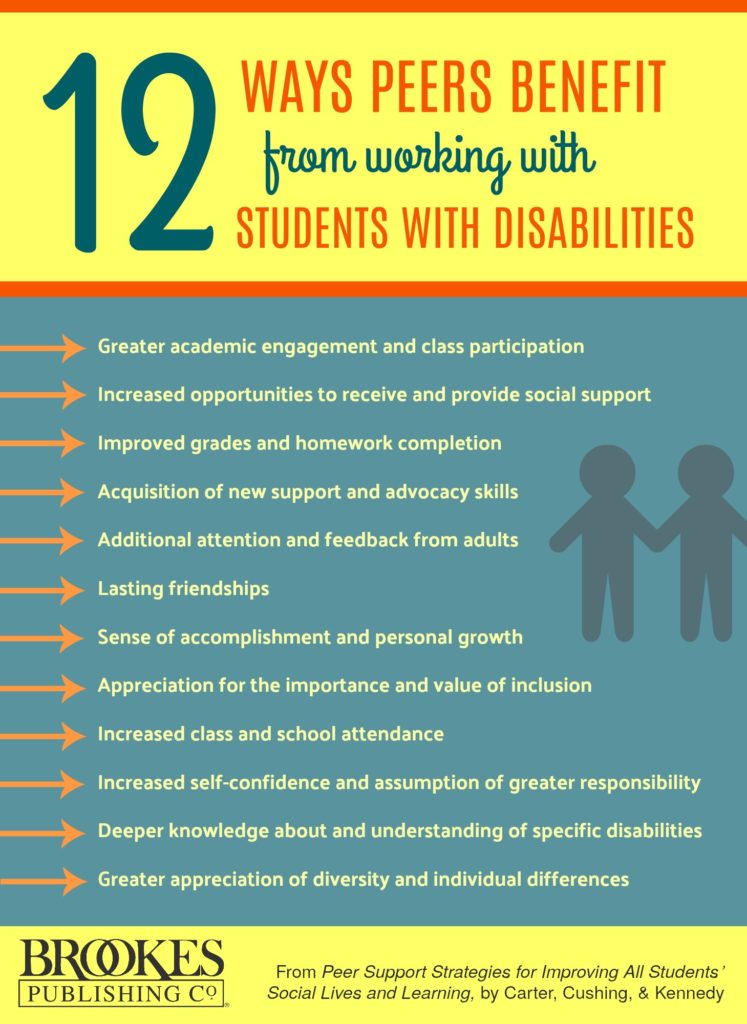
Capacity to develop 21st century skills has inclusion, diversity and empathy at the very foundation of what is needed to succeed as citizens of today.
Three Images For The Week


Two Thoughts For The Week
You have brains in your head. You have feet in your shoes. You can steer yourself any direction you choose. You’re on your own. And you know what you know. And you are the one who’ll decide where to go.
Dr. Seuss
Everybody is a genius. But if you judge a fish by its ability to climb a tree, it will live its whole life believing that it is stupid.
Albert Einstein
One Video For The Week
Can changing how we address differences in the classroom raise the bar for every student while creating a more compassionate, inclusive culture better suited to complex problem solving in the world?
In this emotional talk, education leader Heidi Heissenbuttel explores the how and why of a new school model based on inclusivity in the classroom. As an education leader for nearly three decades and a parent for two, Heidi has been a fervent advocate within schools as well as the broader community of parents and families to ensure children’s learning strengths are addressed, and, more importantly, that they feel empowered to communicate within the educational system for themselves and others.
Guest Column
Manju Balasubramanyam,
Principal at Delhi Public School Bangalore North
Role of a Leader in Inclusive School Education
“Inclusion is not bringing people into what already exits; it is making a new space, a better space for everyone” George Dei
Why should schools be inclusive?
Schools need to be inclusive because ALL children should have access to education and education is a fundamental right. We need an education system that focuses on the child’s abilities, attitudes, skills and competencies. Inclusive set ups help in building meaningful relationships, friendships and associations which enable children to accept and understand one another’s needs and personalities. Children who grow in such a nurturing environment are confident, able to interact with one another and the world around them. School Education must ensure that children develop these skills in a safe, secure, loving, joyful, non-threatening space.
The role of the school Principal is the most critical while building an inclusive school climate. The Principal’s role in creating an inclusive culture, implementing change, facilitating change systematically, leading her /his team to adopt new attitudes, practices, engage with community and be an advocate of inclusion is vital.
Head of schools who believe in inclusion understand that a diverse school eco system is dynamic, vibrant, growing and thriving. When children from varied socio economic backgrounds, religions, ethnicities, cultures, languages and abilities come together on the same platform a rich and colourful tapestry of love, affection, respect and tolerance automatically gets woven. In such schools while individual strengths are honed and weaknesses are overcome individually, collective responsibility and growth becomes a natural way. Principals who believe in inclusive education are extremely aware that one needs to constantly strive to ensure the vulnerable and the marginalized are always included and are treated with sensitivity and care.
Principals who celebrate diversity live and breathe inclusion. They are convinced that no child should be left behind and are constantly innovating and implementing policies and practices that support inclusion. From writing a well-balanced inclusive policy, recruiting teachers, counsellors and special educators, training the entire staff on inclusive practices, making their school physically accessible, creating Universal Design in Learning (UDL) curriculum, they breathe and live inclusion. They invest time in adopting best practices, building relationships with all stakeholders and the community and creating opportunities for growth and sustainable development for all.
Principals with an inclusive attitude understand that inclusivity is a collaborative effort and a shared responsibility. They help empower all teachers to understand inclusion better and create opportunities for them to collaborate and problem solve with one another and with experts in the community. They ensure that there is a free flow of ideas and thoughts between the school and the larger community outside. They constantly endeavour to create new opportunities with organizations and associations nationally and internationally that showcase their school’s work while at the same time creating a learning laboratory for their students and staff.
When leadership is inclusive work spaces cease to be just work places. Teachers, students and support staff begin to grow and bloom in this environment which is empathetic, loving and caring. This magical school then becomes the epitome of lifelong learning.
“Inclusive leadership is not a destination. It’s a journey that requires humility, curiosity and courage” – Thais Compoint, author of “Succeed as an Inclusive Leader”
Showcase
Anita Eipe Abraham, Managing Trustee, Samatha Learning Center
Change for Success
We have been through the year 2020, a year like no other. It was a year that we worked from home and our children were confined indoors. It was the year when we saw more of our families than we did usually. It was a year when we got to see the inside of our child’s class. It was a year we got to see how our child was as a student.
Now we are all preparing to go back to regular school routines, come June 2021. A question we need to ask is, have we edited our expectations of education, exams and results? As a parent do I expect myself to get back to the normal I knew before the Pandemic or am I mentally and emotionally prepared for the possibility of a new normal in every area of my life? As teachers and educators are we expecting our work in schools to go back to what did, as we did it when we left off in March 2020? Are we also open to the changes we will see in our children and students? Are we going to continue to measure performance with the same yardstick used pre-pandemic?
The impact of this past year has been big on the students. They have better awareness of their capabilities and abilities, and how they are being rated on the scale of success. Some are more confident in themselves and are now bigger risk takers than before. Some are reeling under the stress of thinking that their inabilities are a sure sign of failure in life. Some students more confident in the support system at home and some have become aware of the vast opportunities in the cyber world that they are now familiar with and have learnt to access.
All this is important for us to think about, being the impactful adults; be it as a parent or as an educator; in the lives of our children. Diversity in the classroom is not going to be limited to those with diagnosed disabilities. Different kinds of challenges are going to be huge roadblocks for even those who function neuro-typically. There is no way we can wipe out the impact of this past one year. The consequences, as in everything, are always a mix of good and bad. We may mostly focus on the positives that have come from these strange days of the pandemic. We do however need to address the negatives too. What we have to start doing differently ourselves is to think differently so that we make the best of the outcome. Let us figure out some of the possible changes we can bring to our way of thinking. Increased accommodations in our academic system will see more children included rather than being thrown out from schools, for any number of varied reasons.
- Focus on the strengths: We all, however old we may be or however experienced we may be, are a mix of strengths and weaknesses. So what is it that gives some us the opportunity to succeed over others? Look back to find the origin of your success. You will see that when our strengths and abilities were focused upon, we find the confidence to persevere and face challenges. That is what our children need from us and we will see them flourish.
- Support the challenges effectively: When we positively support a child with their challenges, we see them slowly becomes their strengths. What is most important is to search for the core reason for the challenge and work with that. What we usually see is the symptom of the challenge the child is facing, and not the cause itself. For example, Sam was a very disruptive child in class, especially when there was work assigned. Sam was sent to a counsellor for behaviour therapy. It was when Sam met with the special educator that things changed. The educator realised that Sam had vision issues which made reading tedious and hard. He did not want to be called a poor reader. He would rather be naughty and have the attention of all his friends. So, once he got the help to improve his vision, he was very happy to make the effort to show his progress.
- Find the blend that works most effectively for the child: School is an integral part of the growing years of every child. What the school can provide must be ensured for the child. What the school cannot provide for the child but is essential for his/her developmental progress must be supplemented separately. A good combination of all resources is what would work the best. Timely intervention saves money, trauma and heartache.
At Samatha Learning Center (at HSR layout, Bangalore, India), remedial sessions are offered to students in mainstream schools. The counselling gives parents the perspective they need to plan well for their child. The intervention sessions supplement what the schools provide and fill the gaps and address the concern areas. The one-on-one sessions provides the timely support to give the student every opportunity to catch up with their peer group.
Samatha Learning Center
Call: +91-9844155434; Email: samathalearningcenter@gmail.com http://www.samathalearning.com
_____________________________________________________________________________
Dear reader,
I have been a research scientist, a journalist and an educator for over 3 decades. I read and I write. With this weekly newsletter, I intend to share what I read, learn and experience while I engage with students, parents and teams of teachers across K-12 schools, higher education institutions and ed-tech organisations.
3-2-1 Tuesdays with Ms Niv is a newsletter for you to subscribe and enjoy your learning journey with me. This week, it consists of: 3 images, 2 thoughts and 1 video.
If you have created any material, virtual or physical that you think can be reviewed and/or featured in this news letter, please feel free to write to me at : niveditamukerjee10@gmail.com
And Finally…

This weekly newsletter is supported by:


 Nivedita Mukerjee
Good Morning Ms. Niv, I really enjoy going through your newsletter. I remember you giving ideas on how to use thinking routines for teaching Math during one of your sessions. I came across this link on Math Talk and you came to mind: https://www.scholastic.com/teachers/blog-posts/genia-connell/math-talk-101/ Keep up the good work! Regards Indira
LikeLiked by 1 person
Great share Indira. It is lovely to hear that you thought of me and the workshop session.
LikeLiked by 1 person
There is a lot to think about what we want our schools and teachers to focus on ,imagine preparing children for jobs that are not invented as yet . For all we know these children will go to moon or Mars to work. Then the big question is what should we teach them , English, Math and Science or to persevere, adapt , inquire , think , the list is endless!!
LikeLiked by 1 person
So agree with that Noni. Making a big deal of teaching content of any kind or for that matter, a list of skills needs to give way to nurturing an attitude.
LikeLiked by 1 person