Nivedita Mukerjee
Education consultancy for parents and schools
3-2-1 TUESDAYS WITH MS NIV
Issue #233, 24th December 2024
Are you:
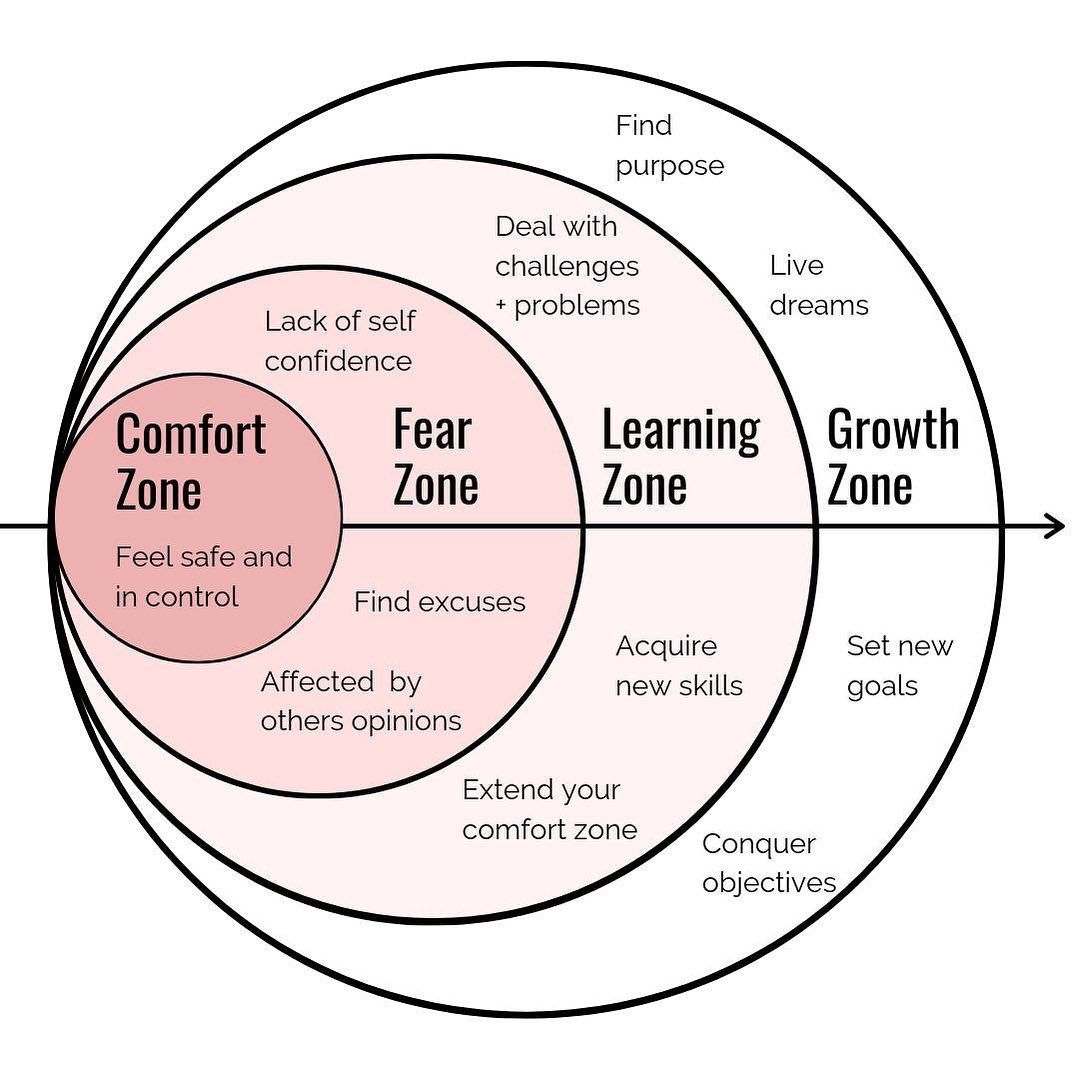
- Making mistakes but remaining engaged and trying new approaches?
- Asking more complex questions that build on previous learning?
- Showing excitement about small victories and breakthroughs?
- Taking longer to complete tasks but producing higher quality work?
- Willingly attempting more difficult problems without prompting?
- Demonstrating resilience when facing setbacks?
- Using more sophisticated vocabulary and concepts over time?
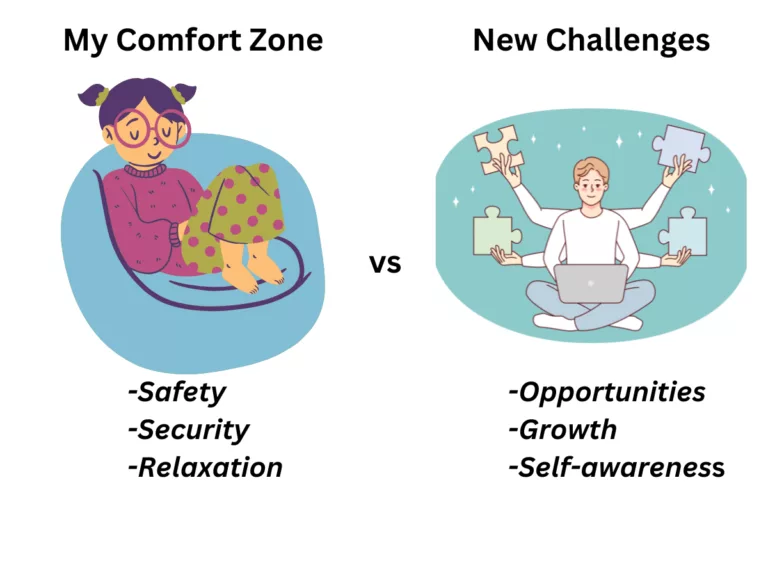
If yes, then you are showing signs of productive challenge and growth. You are out of comfort zone, and into the zone of growth. Wishing you all the best to step out and step into the learning zone. Happy Holidays and more growth in the new year.
This is a free newsletter. If you like my content, please subscribe by entering your email ID here.
Three images of the week

Two Thoughts of the Week
“One element of Madonna’s career that really takes center stage is how many times she’s reinvented herself. It’s easier to stay in one look, one comfort zone, one musical style. It’s inspiring to see someone whose only predictable quality is being unpredictable.” Taylor Swift
“No one goes on a direct path, even though it sometimes feels like your peers might be racing ahead. Everyone’s trying to figure it out. But if you just put yourself out there, step out of your comfort zone, establish yourself in terms of skills, mentorship, but leave space for your passions, then you’re going to turn out pretty well. ” Sal Khan
One Video of the Week
In her talk, she will cover the importance of getting out of your comfort zone. This is an important aspect in everyday life. Saartje will take you through her life and tell you what changed her for the better. Saartje Vandendriessche worked at VRT, a Belgian broadcast, for 17 years? She made several adventurous television shows. Shows in which Saartje had to get out of her comfort zone and was confronted with fascinating challenges
Reading with Ms. Meenu: Tip of the week
Response Logs:
One of the most natural and open-ended ways for a reader to capture their own responses is to keep a personal log or journal. In this special space, the owner can range freely through all the different kinds of thinking that smart readers do as well as choose the best format (words, phrases, lists, sentences, paragraphs, doodles, diagrams and charts) to capture the ideas. Once kids know all the different ways that proficient readers respond, we want them to use the medium that fits best rather than be constrained by a mandated list or format.
For this kind of open-ended thinking and collecting, response logs are a great tool. To get started introducing the idea of reading response logs by showing some good examples of student samples from previous classes or logs you have created yourself. The examples will be most effective if the students are familiar with the text, perhaps a novel they recently read as a class. You can do a “log aloud”, where you hand out a short article and have everyone read together. As a teacher we should model how a skilled reader notices their thinking and jots down its essence. Often this demonstration will lead you back to that familiar list of things that smart readers attend to: questions, predictions, inferences, connections, visualizations.
Here is an example of when students are just starting to use response logs:
Read the article, and then write for two minutes nonstop. Write whatever’s in your mind, wherever your reading is taking you. Remember all your choices of reading strategies. You can write your feelings, reactions, questions, opinions, you can draw or diagram your ideas; you can talk about the author’s style and strategies, but you must keep writing for the whole two minutes and not just write down one or two words and put your pen down.
AND this is how the response logs would become a habit of lifetime.
Happy Reading!
Meenu Gera
Consulting home and school librarian and reading guide.
Student speak:
“Man cannot uncover new oceans if he is not prepared to lose sight of the familiar shores behind him.” This profound statement reflects a universal truth: deep down, everyone grapples with a fear of the unknown. Each of us has our own motivations and experiences that shape this hesitation. Why would we choose to step boldly into the vast and uncertain expanse that lies before us when the comfort of our surroundings feels so cozy and inviting?
There are many answers to the question of whether exploring the unknown is worthwhile, and these answers often come from different perspectives. Some people argue that putting ourselves at risk is unnecessary, while others believe that only by stepping out into the unfamiliar can we truly discover ourselves and our purpose in life. At some point, we all face a choice: to venture into a new environment alone or to stay where we are.
So, how do we make the right choice? How can we determine if the risk is worth the reward? Rational choice tends to favor familiar paths, as we know what to expect and how to react. The unfamiliar path, on the other hand, often seems to carry more risk than reward. However, this perception is not always accurate.
When we stay in our comfort zones, we often behave in predictable ways, following a pattern. Studies have shown that our actions are influenced by our surroundings. For example, if you watch a horror movie with your family, you might hide under the covers when you feel scared. But if you watch the same movie with friends, you may act bravely to avoid seeming weak. Many of us make these adjustments subconsciously in response to our environment.
The real question is: which version of our reactions represents our true selves? Many people believe that their first reaction—shown in the presence of loved ones—reflects their true self, as they feel safe expressing vulnerability. While this may be true to some extent, it is not always the case. In both situations, our behavior is influenced by those around us. When we are with close friends or family, we might feel compelled to show vulnerability, while in a group of peers, we might act tough to avoid appearing weak.
So, how can we recognize when our surroundings are influencing us? The answer lies in self-awareness. When we understand who we are at our core, we can easily identify how people and environments affect us. This awareness allows us to ensure we are being positively influenced.
In what situations can we uncover our true selves? The answer is simple: in the unknown. For instance, when watching a horror movie with strangers, we may feel less pressure to project a certain image because we don’t know them, allowing us to behave more authentically. This genuine reaction—unfiltered by the need to impress others—is what makes exploring the unknown so important.
Through exploration, we learn more about ourselves, which brings clarity to our decisions and ultimately leads to success. While it is common to fear the unknown, we should not let that fear prevent us from discovering ourselves, creating wonderful memories, and experiencing diverse perspectives of the world. Whether it’s moving to a new school, relocating to a different city, or starting a new business, a little courage can reveal that the world has much more to offer than it initially seems.
By Likitha Aaradhya 7th Grade Jain Heritage School
And Finally:

Showcase of the week:

Capstone High was honoured with the prestigious ‘Dynamic Schools’ Award, recognizing our exceptional contributions to the field of education. This esteemed recognition was formally presented during the 12th National Conference on K-12 Leadership. The India School Merit Awards were hosted by Education Today.
At Capstone High, we strive to provide quality and accessible education for our students. We equip them with 21st-century skills and competencies. These attributes nurture them into lifelong learners. We focus on creating a safe and happy environment. Our students love coming to school. They feel empowered by their teachers. As a result, they love to learn. This award reflects the unwavering dedication of our teachers. It also shows the commitment of our students and the entire school community. Together, they focus on fostering innovation and excellence in education.
Team Capstone High
Dear reader,
I work with the school leadership team as an advisor. I collaborate with teachers as a pedagogical trainer. I help parents as a parenting counselor. I engage one-on-one with students as a personal guide and mentor. This weekly newsletter shares what I read, learn, and experience.
3-2-1 Tuesdays with Ms. Niv is a newsletter you can subscribe to and enjoy your learning journey with me.
From the archives
Many of you have been asking for the earlier editions of this newsletter. I am delighted to note that you are enjoying the content served here. Now, with every new issue, I share a link to the newsletter from the archives. These have been published weekly since July 2016.
Here is the link for – issue#009
https://wordpress.com/post/niveditamukerjee.com/3068
Enjoy your learning journey with me.
 Nivedita Mukerjee
This is such a wonderful idea to focus on as we all go into our reflect and select mode end of each year. The stepping out of the comfort zone is a mindset. And as Adam Grant would put it – it is important to make small changes which will eventually make the big shift. Before you begin the process of stepping out know that you are going to fight the biggest challenge of it all – inertia. Status quo. You know what I mean. But it can be as simple as starting to eat a vegetable that you thought you hated all your life (Tomato anyone?). Well as a friend told me once – there are no bad vegetables – only bad cooking. I tend to agree.
So, getting out of the comfort zone brings all types of prizes and surprises. Go for it. But start small. The rest is likely to follow. Happy Holidays everyone.
LikeLiked by 1 person