Nivedita Mukerjee
Education consultancy for parents and schools
3-2-1 Tuesdays with Ms Niv

Issue #281, 18th November 2025
On the hardest days, remember that you’re doing one of the most profoundly human things possible: believing in someone’s potential before they can see it themselves. Every lesson you prepare, every encouraging word you offer, and every moment you choose patience over frustration is an investment in a future you may never see but will absolutely help create.
Your work shapes not just what students know, but who they become—planting seeds of curiosity, confidence, and possibility that will bloom long after they leave your classroom.
Happy Children’s Day to your students/children dear teachers and parents who are teachers from the start of a child’s life and go on being an ‘influencer’ their child’s life as teacher, coach, mentor and cheer leaders.
This is a free newsletter. If you like my content, please subscribe by entering your email address here.
Three Images of the Week


Two Thoughts of the Week
“Nothing that’s worth anything is easy.” —Barack Obama
“Whether you think you can or think you can’t, you’re right.” —Henry Ford
One Video of the Week
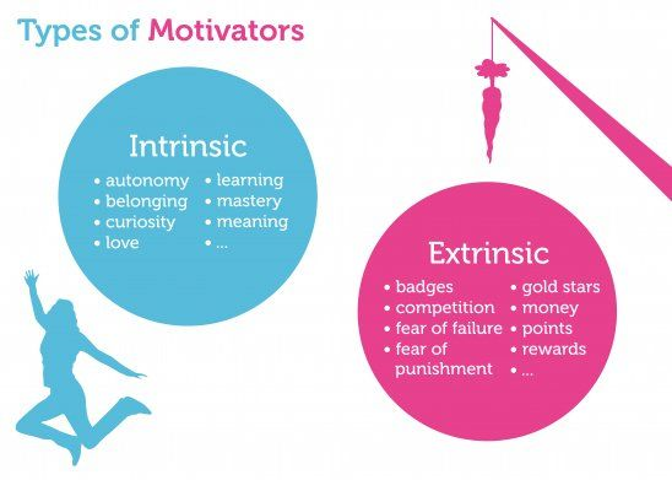
What if everything we think we know about motivation is exactly backwards? In her talk, Dr. Betsy Blackard shares a new perspective on children’s responses to challenges, and offers a fresh idea for how to support them in tapping into their intrinsic motivation. You may just find that you walk away with a new perspective on your own motivation as well! Dr. Betsy Blackard is an expert in how kids work. She has worked closely with children for more than 20 years and has a PhD in Positive Developmental Psychology. Her research focused on the parent-child relationship, including including how parents’ beliefs and behavior impact their children. Her company, Language of Listening®, provides simple, practical tools that really work to help parents get new results for everyday challenges.
Reading with Ms. Meenu: Tip of the week
Our children cannot dream unless they live, they cannot live unless they are nourished and who else will feed them the real food without which their dreams will be no different from ours? — Audre Lorde
Talk Like This:
Beyond the quantity of words you speak, the way you speak them affects different aspects of your child’s language and literacy development. Here are the chief characteristics of nourishing ealy language and how they help kids learn:
Child-Directed: Your words are delivered expressly to and for the child, as opposed to language they pick up indirectly through overheard adult conversations or media. Child-directed speech supports language learning because it provides much more than words. It pairs content with helpful physical, social and other cues.
Melodic: Your delivery is clear, high-pitched, and with more exaggerated vowels than the way you might address adults. Many moms do this naturally, even taking prosody to the point of parody. And for good reason infants prefer listening to this “baby talk,” and that attention may support their ability to discern the sound within words as well as recognize word boundaries and grammatical units.
Loving: Your words and gestures are warm, affectionate, and encouraging, versus stern commands or brusque movements. New research related to how emotion is expressed through movement suggests that by 11 months old kids can detect whether actions like grasping an item are performed with a happy or angry facial expression of their own.
Home Language: You speak in the language you know best, not necessarily the dominant language of your neighborhood or the school your child will attend. This is so that you can give your child the richest vocabulary, most fluent speech and deepest background knowledge to support learning in any language.
Repetitive: You use consistent names and labels for the people and things in your child’s environment, so your little one gets many opportunities to distinguish among words in the stream of speech, make the connections between words and discern word meanings.
Responsive: You listen well and provide feedback that’s contingent on your little one’s babbles, words, facial expressions and gestures. This quality of interaction is predictive of a kid’s language achievements. You also give your little one plenty of time and space to receive what you communicate and to express themselves too.
The nourishment that language provides when parents and children feed one another words, attention and contingent responses is like a holiday fest spread over many courses, punctuated with lively rounds of conversation and laughter.
Happy Reading!
Meenu Gera
Consulting home and school librarian reading guide
I Think, I Wonder, I Ask
–Dr Shreelakshmi Subbaswami, Academic Director, Vijaya School Hassan, Karnataka
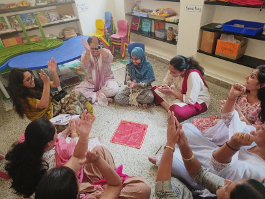
Children Need Play and Educators Do Too
In schools, we often speak about the importance of play for children, but rarely pause to ask what play means for us — the founders, senior leadership team, and educators who carry the weight of reviews, timetables, meetings, events, and constant academic catch-up. Every year, especially during the post-middle-year assessments, I watch us all move through an intense cycle of reviewing student performance, writing reflections, preparing for parent meetings, and modifying strategies.
One practice, though simple, has shown an immediate impact in releasing the pressure and easing the academic load– consciously integrating play into the routine of educators. Just as children need a break from intense cognitive work, educators need it too. Yet as we grow older, play slowly disappears from our lives. With family, friends, or colleagues, we hardly play, except maybe once or twice a year during a teacher’s sports day. Our routines have become all work, all responsibility.
Each time I have seen myself and educators play — whether it was a quick indoor game, a team sport, or even a fun team challenge the impact has been remarkable. Collaboration comes more naturally, hierarchies soften, and productivity improves. More than anything, we reconnect with ourselves and with others.
Play is a low-effort, high-impact practice that can strengthen team spirit, deepen trust, and create happier school cultures. This Children’s Day, let us integrate play into our routines- not as an extra, but as a priority.
Three questions for you…
- How often do you play — indoors or outdoors?
- What games did you enjoy as a child? How can you bring them back into your life?
- What new games would you like to learn?

Career assessment, guidance, and placement strategies:
Summer Programs at University of Oxford
Planning for the summer school has started. We bring you the prestigious, well-known, and lesser-known summer programs from around the world for career clarity and academic development. Last week, we shared the details of the summer program offers by Plaksha University, India. This issue talks about the two-week residential summer programs offered by the University of Oxford for 16-18-year-olds:
- AI and Machine Learning Pioneers Summer School starts on 19 July 2026
- Future Climate Innovators Summer School starts on 19 July 2026
- Future Entrepreneurs Summer School starts on 2 August 2026
Benefits:
- Get hands-on experience by solving real-world problems
- Develop practical skills to complete complex tasks
- Collaborate with like-minded and motivated peer group
- Understand the expectations of the university
- Experience the beautiful campus
- Build essential Life Skills through a residential experience
Fermata Career Solutions inspires young individuals aged 13 to 30 to unlock their potential through focused and customised career and college counseling. With expertise in University Readiness, CareerGym, and Master Parenting, the experts empower you to pursue your dreams and shape your future with confidence. More about us on www.fermataco.com
Showcase: Thrive Beyond School – A unique STEAM education project for very young learners.
– Pooja Khatter, facilitator, Thrive
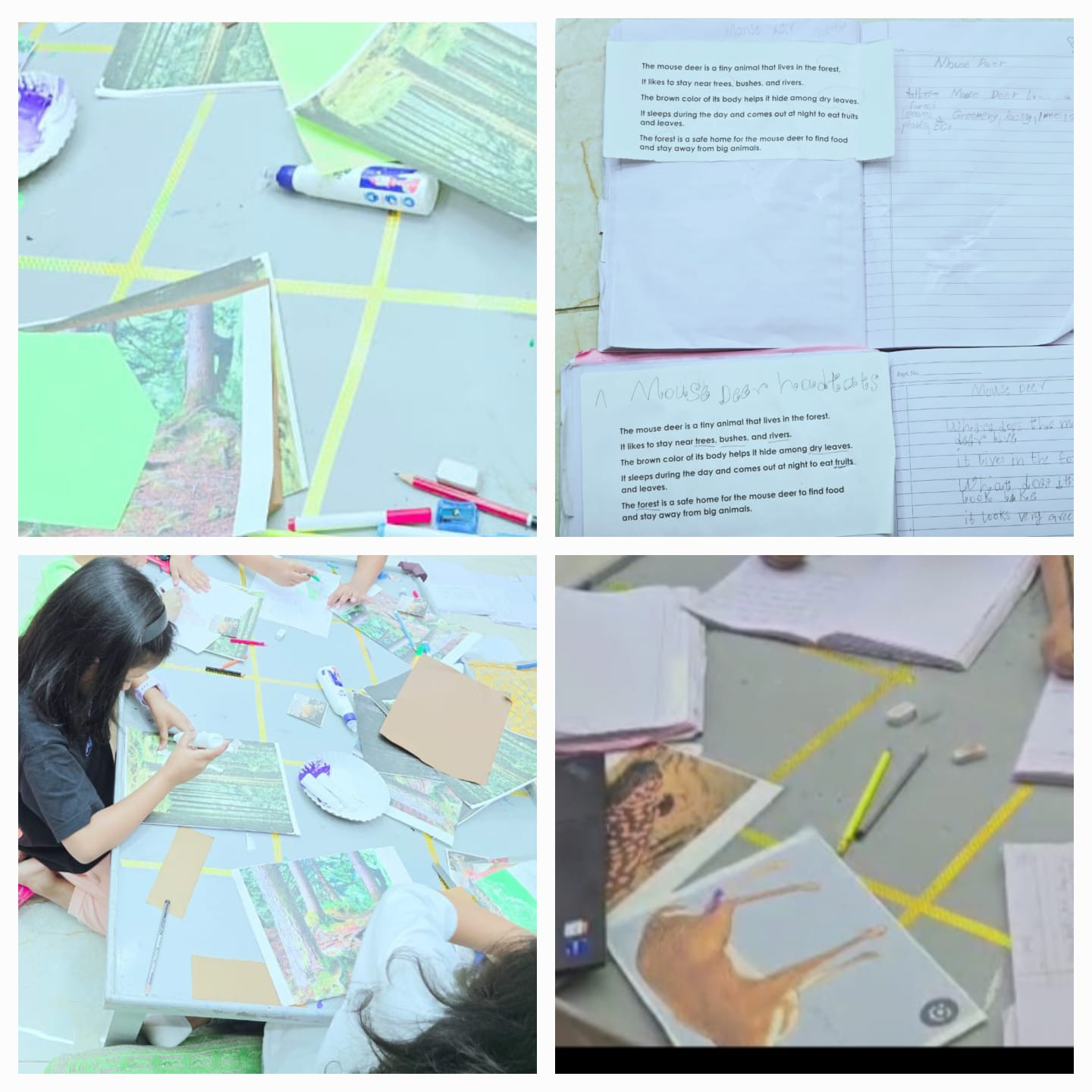
The children explored various habitats—forests, deserts, snowy regions, and grasslands—through a short educational video. They learned that the mouse deer lives in the forest and discussed its food, hiding places, and how it stays safe. During reading time, they took turns reading a short passage and highlighted key words such as forest, trees, leaves, and rivers to strengthen vocabulary and comprehension.
In the art activity, the children created a forest-themed collage and carefully hid small mouse deer cutouts within their artwork. Through this creative experience, they discovered how the mouse deer’s brown coloring helps it blend into the forest, protecting it from predators.
• Samyuktha – 7 years 7 months
• Tashi, Neev & Mayra – 7 years 3 months
Dear reader,
I work with the school leadership team as an advisor and collaborate with teachers as a pedagogical trainer. I also help parents as a parenting counselor and regularly engage one-on-one with students as a personal guide and mentor. This weekly newsletter shares what I read, learn, and experience.
3-2-1 Tuesdays with Ms. Niv is a newsletter you can subscribe to and enjoy your learning journey with me.
 Nivedita Mukerjee