Nivedita Mukerjee
Education consultancy for parents and schools
3-2-1 Tuesdays with Ms Niv
Issue #284, 9th December 2025
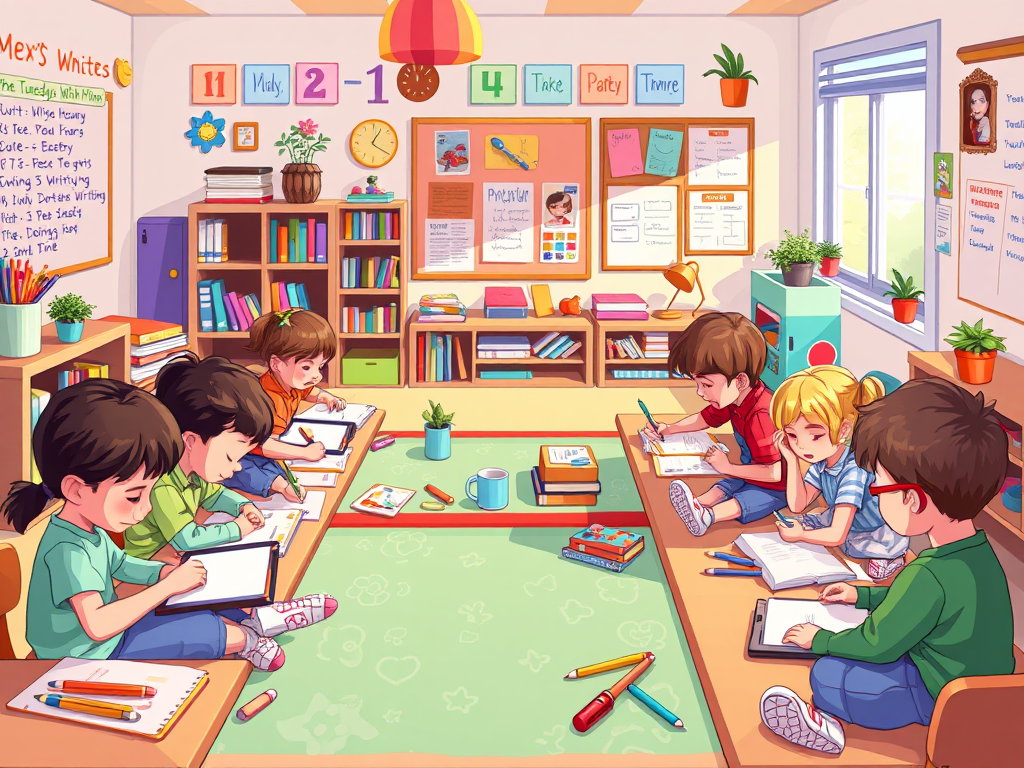
When children choose what to write or how to write, creativity blooms. In classrooms where teachers talk less, listen more, students tend to write more and better. Some tips for parents and educators to support their children/students to enjoy writing:
- Offer writing choice menus: poem, diary entry, comic strip, story, letter, persuasive note, script, riddle, etc.
- Let them choose where to write—on the floor, in the window area, on the carpet, or at the group table.
- Integrate multisensory elements: music, nature walks, object observation, videos—students write from experience.
- Incorporate peer-sharing circles to build confidence and inspiration.
This is a free newsletter. If you like my content, please subscribe by entering your email address here.
Three Images of the Week


Two Thoughts of the Week
Stephen King: “The scariest moment is always just before you start. After that, things can only get better.”
Ralph Waldo Emerson: “The only way to write is to write.”
One Video of the Week
How can high school students develop critical thinking skills, courage to use their voice, and become more effective communicators? Creative writing. It’s powerful… but it’s not what we’re taught in the classroom. In this talk, Anna explains how language arts teachers can prepare their students for The Real World. She shares 3 techniques anyone can use to sprinkle personality into their writing. You’ll also hear the story of a modern one-room schoolhouse that illustrates the toxic environment all schools should avoid
Reading with Ms. Meenu: Tip of the week
Home Language is an advantage for Reading:
Parents who speak languages other than English at home may worry about whether they are pronouncing English phonemes correctly, and they can be hesitant to work on phonological awareness as a result. Don’t even worry about it. There’s evidence to suggest that phonological awareness originally developed in a different language like the parent and child’s first language transfers to phonological awareness and improves word reading skills in English. All languages have underlying sound structures that children need to gain familiarity with, so there’s value in working on phonological awareness in whatever language the parent or caregiver is most comfortable with. Take pride in your first language, keep it central to your child’s life, and seize opportunities for wordplay. You can make up silly sentences with words beginning with the same sound in Hindi or another language just as easily as in English.Use your own language that you’re confident in when they’re little, and get them to hear the sounds in your home language and develop those skills, because that’s an absolute treasure.
There’s beauty and consequence in using your own language. It’s important for little ones that they just start hearing the sounds in their language – being consciously aware of the first sounds and words, listening to the rhythms of their language, and really bringing their attention to the sound structure of their language.
Early on, kids are developing the cognitive ability to hear sounds in words, starting with listening to the rhythms of songs and everyday language. So even if it’s a goal for your child to learn English, in this early stage there’s a benefit to using your home language to build phonological skills. There’s evidence for cross-language transfer.
If you’re good at phonological awareness in your first language, you will pick up those same types of phonological awareness skills when you come to learn a second language. And equally, if you struggle in one language, you will struggle in another. But don’t stop there. If English fluency is your goal, seek out opportunities for your child to gain exposure to English phonemes, the English alphabet, and oral language.
As a parent you don’t have to provide all the language experience your child needs yourself. You can give them the best of what you have and seek out what you can’t directly provide. Sometimes, the conversation partners, word-game players, and nursery-rhyme singers you need may be found in friends or family members who speak the target language, at library programs or in early day care centres. Audiobooks, recorded music, and cartoons in the second language provide language exposure too. Get clear on what you can give, and get intentional about supplementing the rest. This whole process leads to strong reading skills.
Happy Reading!
Meenu Gera
Consulting home and school librarian reading guide.
I Think, I Wonder, I Ask
–Dr Shreelakshmi Subbaswami, Academic Director, Vijaya School Hassan, Karnataka
Writing Beyond Beautiful Letters
Writing is one of the most powerful human abilities, yet somewhere along the way, in many school, writing is still an exercise in perfecting letters rather than a tool for thinking and expression. For years, many classrooms have been obsessed with handwriting drill: hours of copy-writing, pattern tracing, erasing and rewriting…
I often hear teachers say, “Rewrite this, the handwriting isn’t good.” And children follow, practicing the same sentence multiple times, not to improve the clarity of their thoughts. Even in high school, I see students spending precious hours rewriting notes to make them look “perfect”, instead of using those hours thinking deeply, reflecting, and crafting original ideas.
What is good handwriting, really?
It is writing that is legible, comfortable to read, and owned by the writer. It does not need to be artistic, identical, or ornamental. It needs to carry the student’s voice.
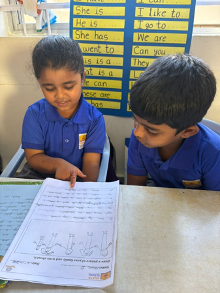
Last week in a Show and Tell session, our five- years-olds proudly read out their writing about families. Nothing fancy. No identical strokes. Just honest, neat, meaningful writing, they had the joy on their faces, as peers, read their words. For all who witnessed this, it was a gentle reminder that writing is meant to be heard, shared, and felt. Not judged for aesthetics.
Expression is a skill, when we nurture it early, children learn to think, reflect, and communicate with courage. Handwriting will follow. It always does.
Three questions for you…
- What strategies do you use to build confident and expressive writers?
- How much should handwriting matter- and why does it matter to you?
- What would change in classrooms if we valued ideas over appearance?

Career assessment, guidance, and placement strategies:
Navigating the College Application Journey: 5 Ways Parents Can Empower Their Grade 12 Child
Grade 12 is a whirlwind of emotions, academic pressure, and big decisions, especially regarding college applications. You naturally want to help as a parent, but finding the right balance between support and overstepping can be tricky. This post offers five key tips on empowering your child to navigate this exciting yet sometimes stressful process with confidence and ownership.
- Foster Ownership: It’s Their College List
It’s easy to get caught up in our own aspirations for our children but remember: your child is the one who will be attending college, not you. Encourage them to take the lead in researching institutions and developing their college list.
- Guide Towards a Realistic & Balanced List
While fostering ownership is crucial, providing guidance on creating a realistic list is equally important. A well-rounded college list typically includes a mix of ‘reach,’ ‘target,’ and ‘safety’ colleges.
- Brainstorm Course and Major Choices Together
Encourage your child to think about their passions, strengths, and what subjects genuinely excite them. The goal here is to help them identify areas of study that spark their curiosity.
- Navigating the ‘Course vs. College Name’ Conundrum
For some students, the specific course or program they want to study is paramount, while for others, the prestige or reputation of the college holds more weight. This can be a point of discussion and gentle guidance.
- Be Present: The Power of Silent, Available, and Mindful Support
The college application process is emotionally charged. Your child will experience moments of excitement, frustration, anxiety, and perhaps even rejection. Your emotional support is invaluable.
The career counselors at Fermat specialize in Profile Building and College Essays.
Fermata Career Solutions inspires young individuals aged 13 to 30 to unlock their potential through focused and customised career and college counseling. With expertise in University Readiness, CareerGym, and Master Parenting, the experts empower you to pursue your dreams and shape your future with confidence. More about us on www.fermataco.com
Showcase: Thrive Beyond School – A unique STEAM education project for very young learners.
– Pooja Khatter, facilitator, Thrive
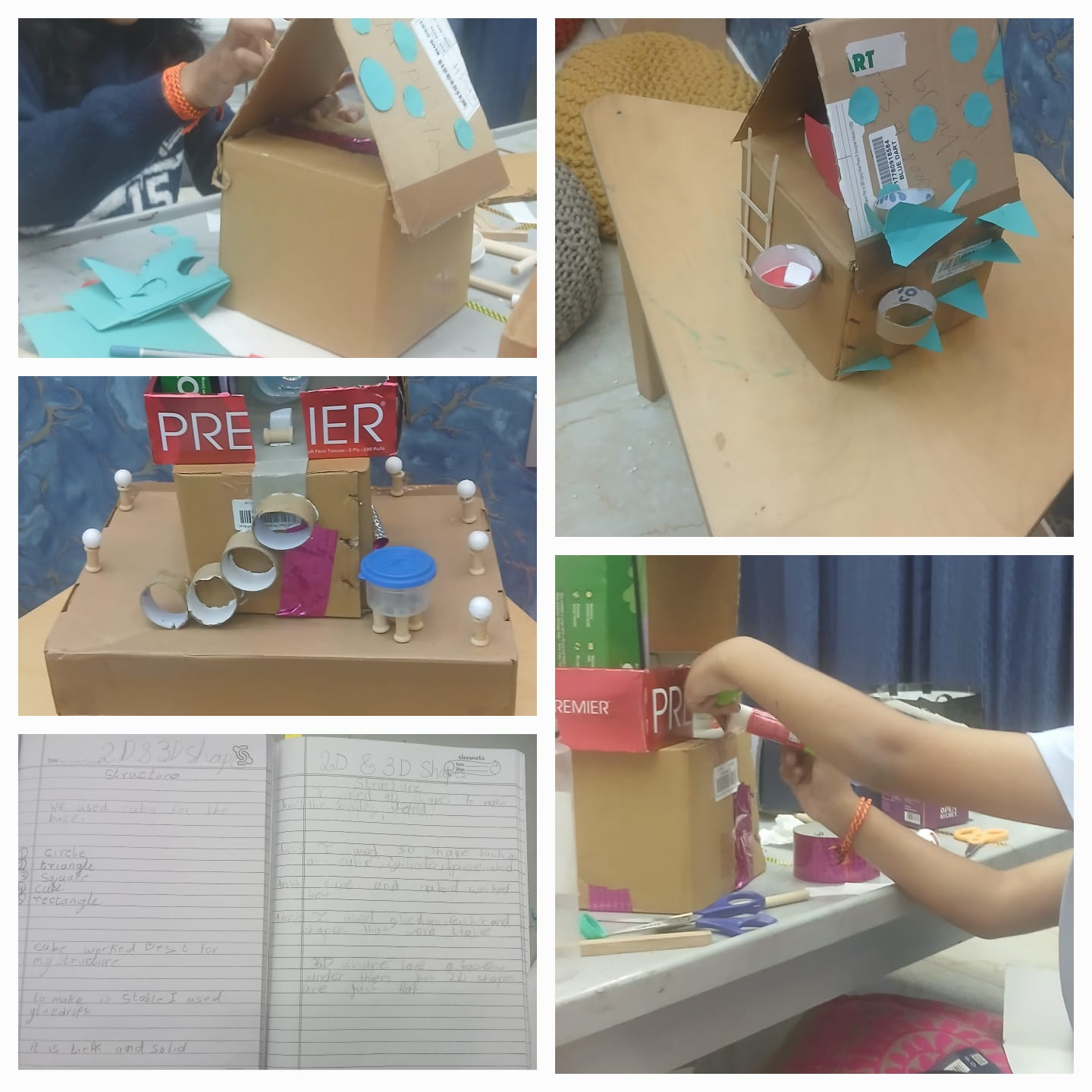
Tashi and Havishka designed a model of their school using recycled materials such as cardboard, boxes, plastic bottles, sticks, plastic containers, and paper roll tubes. They worked like young engineers, carefully focusing on stability and strong structure while building. After completing their models, they confidently spoke about their imaginary schools and identified the different shapes used in their construction. The session ended with Higher Order Thinking Skills (HOTS) questions, which the children thoughtfully answered in their notebooks. Havishka: 7 years 7 months Tashi: 7 years 3 months
Dear reader,
I work with the school leadership team as an advisor and collaborate with teachers as a pedagogical trainer. I also help parents as a parenting counselor and regularly engage one-on-one with students as a personal guide and mentor. This weekly newsletter shares what I read, learn, and experience.
3-2-1 Tuesdays with Ms. Niv is a newsletter you can subscribe to and enjoy your learning journey with me.
 Nivedita Mukerjee
This reflection reminds us that writing is not about perfect strokes but about authentic voices. When children are given choice, encouragement, and freedom to express, they learn that ideas matter more than appearances and that is what builds true confidence.
LikeLiked by 1 person