Nivedita Mukerjee
Education consultancy for parents and schools
3-2-1 Tuesdays with Ms Niv

Issue #296, 3rd March 2026
If I described our school to someone without naming the vision — what words would they use?
Which came first — the vision or the operating model? Did one shape the other, or are they living separate lives?
What are we afraid would happen if we loosened the centre a little? What’s that fear protecting?
Academic excellence and holistic confidence — in our current model, is one being traded for the other?
Ten years from now, when our students describe what this school did to them — what do we want that to sound like?
In my role as school advisor and mentor to leadership teams over the years, these are some of the key questions that I have been discussing with founders and school managements. What would your thoughts look like in response to some or all of these?
This is a free newsletter for parents, educators and students. If you like my content, please subscribe by entering your email address here.
Three Images of the Week
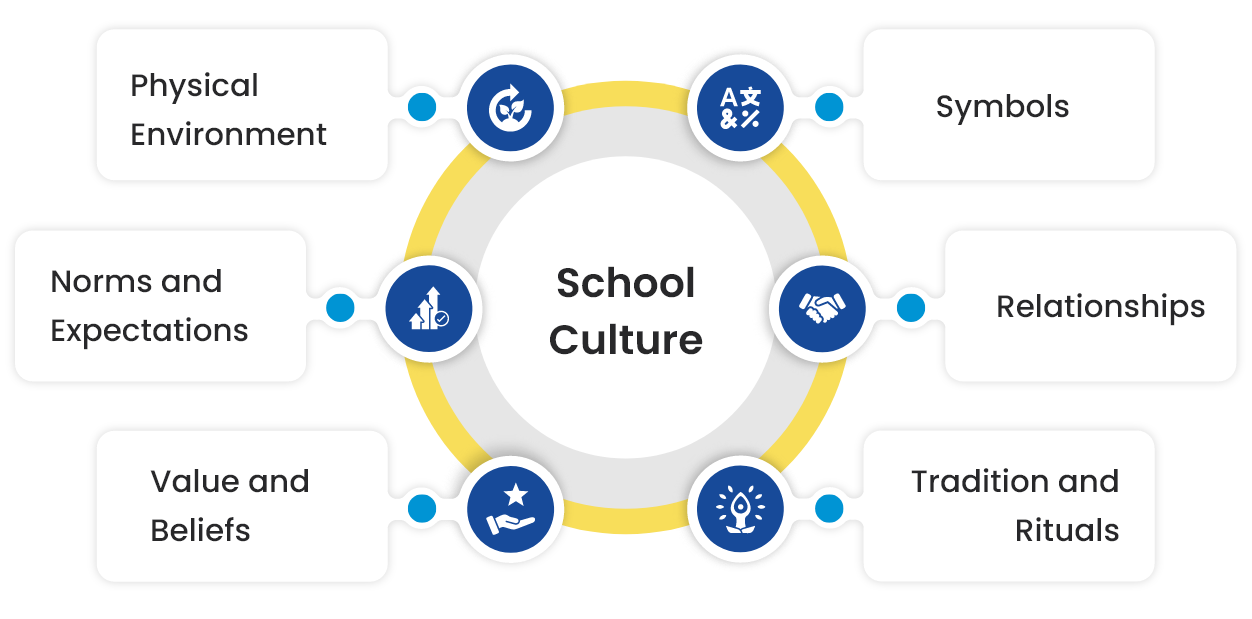
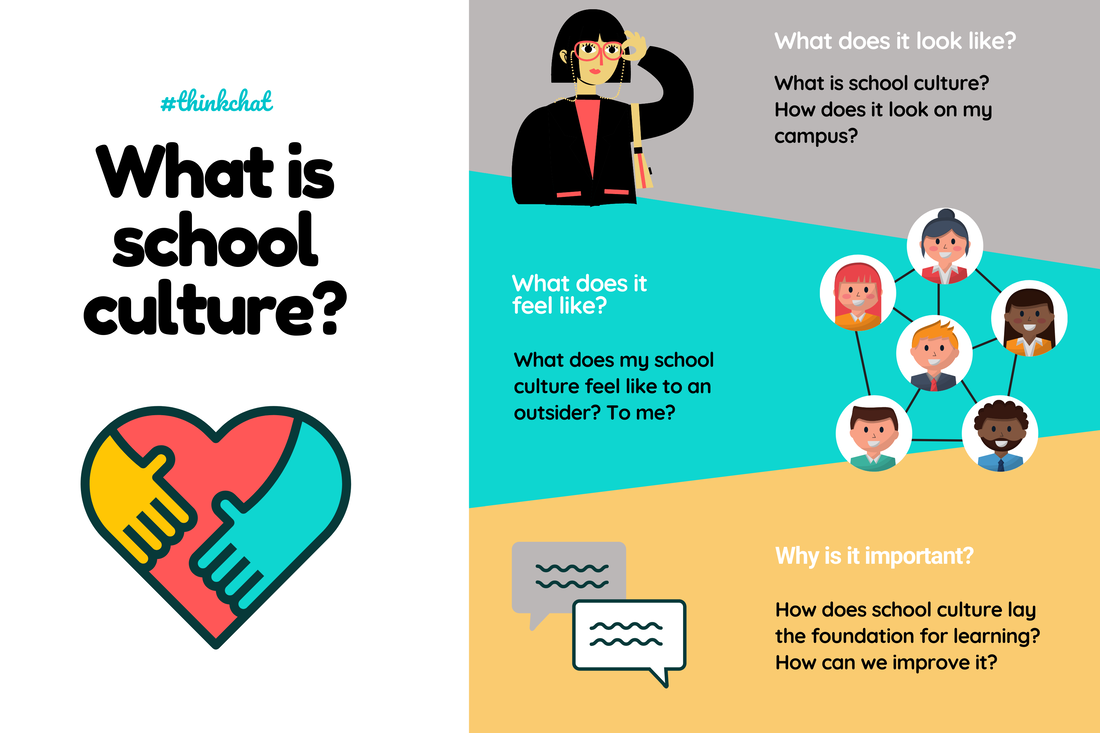
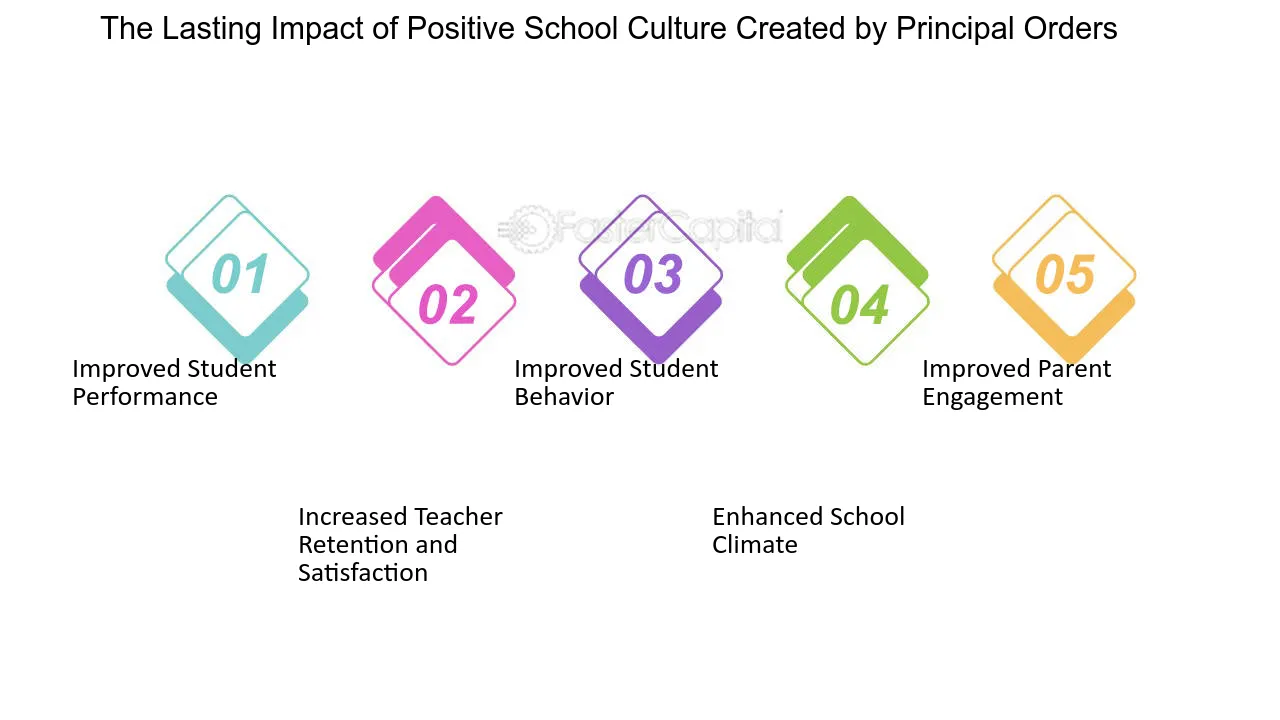
Two Thoughts of the Week
“Culture affects all aspects of a school. It influences informal conversations in the faculty lunch room, the type of instruction valued, how professional development is viewed, and the shared commitment to assuring all students learn. Several examples illustrate its pervasiveness.”
― Terrence E. Deal, Shaping School Culture: Pitfalls, Paradoxes, and Promises
“Every child deserves a champion, an adult who will never give up on them, who understands the power of connection, and insists that they become the best that they can possibly be.”
― Ron Ritchhart, Creating Cultures of Thinking: The 8 Forces We Must Master to Truly Transform Our Schools
One Video of the Week
Our children are more than the sum of their school grades. Behind every exam result lies a whole person with incalculable, untapped potential and myriad facets and capacities just waiting to be discovered. What a child shows she knows in school is not an accurate measure of her lifelong learning ability or her human potential. Schools are for growing minds but nothing stifles growth like ranking or grading. It’s not how smart you are that counts, it is how you are smart. Proficiency in the 3Rs of reading, remembering and regurgitating factual knowledge may get you an A*, but to thrive in adulthood you need deep-down-things that aren’t so easily measured – tacit knowledge gained through our senses, observations and social interactions. The good news is, we have all we need from an early age; and we need to redesign our schools so that our children can pursue their natural inclinations and in so doing find their self-worth. There is nothing in adulthood that an adventurous, untrammelled childhood cannot prepare you for. Andrew has spent twenty years teaching, leading and authoring in education. Still a headteacher, he continues to counter the calls for short-term, measurable outcomes with a cry for long-term gains in creativity, aspirational thinking and positive well-being. He is a champion of adventurous childhood and believes that the most secure adulthood is built on a childhood free from the pressures to prepare for being a grown up.
Shedding light on the ‘invisible curriculum’ in schools has been Andrew’s obsession throughout his teaching and writing career. He holds a BA (Hons) QTS and an MA in Creativity in Education. Currently studying for an Ed.D, he is focused on demonstrating how the ethos and culture of a school has the greatest impact on positive attitudes and behaviours for life.
Reading with Ms. Meenu: Tip of the week
Mirrors, Windows, and Sliding Glass Doors: Why Representation Matters in Children’s Books
In 1990, Rudine Sims Bishop, an educator, constructed a metaphor that has greatly influenced the field of children’s literature and school libraries. She classified books as mirrors, windows, and sliding glass doors. This analogy aids in understanding why authors’ and illustrators’ inclusion of diverse and multi-faceted characters and stories are not just a “nice to have,” but a critical and necessary need.
Books as Mirrors seeing stories that reflect their culture, language, family dynamics, unique abilities, or lived experiences, children see books as books that are mirrors. These stories affirm identity and cultivate a sense of belonging to the community. Schools are making greater efforts to include multicultural books, yet for many students—especially those from historically marginalized communities—validation and acceptance have not yet been a reality. Mirrors reinforce self-worth and confidence, and pride.
Books as Windows: Books can also be windows to lives that differ, and are outside, one’s own. stories offer children the opportunity to experience and understand a rich and diverse world. Windows foster and cultivate understanding, empathy and serve to heighten respect and appreciation for others. In a diverse and interconnected world, being able to understand other lives and perspectives is an incredibly important and essential skill.
Books as Sliding Glass Doors: Some books go even further—they become sliding glass doors. These stories invite readers, not to watch another world, but to step into one. Through the imagination of the storyteller, children gain the ability to perceive different viewpoints and emotionally connect to situations outside of their own world. Teachers can help students walk through these “doors.” Literature can be transformative. It can stretch the limits of a student’s imagination, teach the students to think and feel different, and inspire the student to converse about what has been mentally and emotionally triggered.
School libraries aren’t just a room to store books, they are a place to learn that help shape students’ understanding of themselves and their world around them. Applying Bishop’s framework to collection development encourages librarians and educators to think about the questions: Do our shelves mirror the multitude of identities represented in our students? Do our shelves offer genuine windows into a variety of different cultures and experiences? Do our shelves offer stories that are welcoming, and support readers in their efforts to think and work deeply? Students must have the opportunity to access the shelves to have both a mirror and a window. When balance is achieved, the library becomes inclusive, curious, and a place to grow.
Source: By Rudine Sims Bishop. The Ohio State University. “Mirrors, Windows and Sliding Glass Doors” originally appeared in Perspectives: Choosing and Using Books for the Classroom. Vol. 6 # 3 Summer 1990.
Keep Inspiring our readers!
Happy Reading!
Meenu Gera Consulting home and school librarian, a reading guide
I Think, I Wonder, I Ask
–Dr Shreelakshmi Subbaswami, Academic Director, Vijaya School Hassan, Karnataka
When Vision Extends Beyond School Walls
When we hosted the first-ever literature festival in Hassan, the core objective was not just about books, authors, or student performances. It was about opening our doors to the community.
We often tend to narrow the purpose of a school to preparing individuals for the future- largely the job market. But that cannot be its only role. I strongly believe a school’s purpose cannot remain confined within its walls. A school must expand its vision to include the community around it. It must create meaningful experiences and shared spaces not only for the children within the campus, but for the larger community.
As we shared our vision for the festival with Hassan, something beautiful happened. People with similar intent and interest began to come together. Parents began to see learning beyond textbooks. Educators, librarians, authors and citizens reached out — some wanting to contribute, some simply wanting to be present. We could feel new ideas flowing in, fresh energies entering the space. It reminded me that when a school opens its vision, it gains collective strength.
Events like these are not mere school programmes. They are culture-building blocks. They slowly shape how a city thinks about children, learning, and shared responsibility. Perhaps schools must eventually become community spaces.
Three questions for you…
- In what areas would you like to open your school to the community?
- How do you share your school’s larger vision beyond academic outcomes?
- What experiences can you co-create with parents and local citizens?
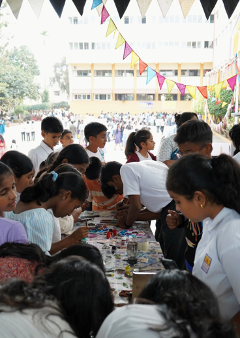
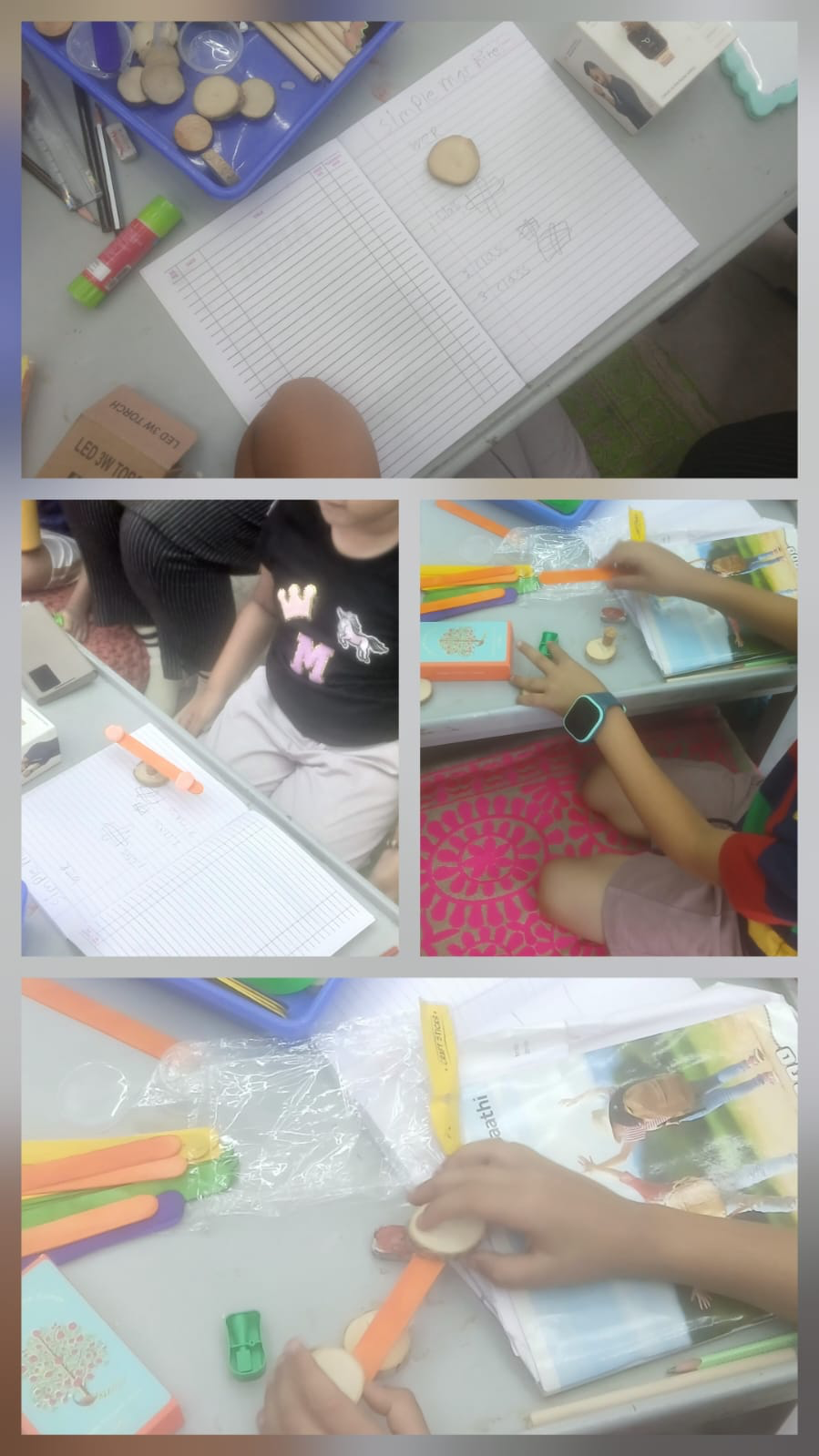
Showcase: Thrive Beyond School – A unique STEAM education project for very young learners.
– Pooja Khatter, facilitator, Thrive
Simple Machines (Lever Model Making)
In STEAM, the class began with a recap of levers using guiding questions. Thrivers confidently recalled that a lever is a simple machine that helps lift heavy objects more easily, and most students remembered the three parts: fulcrum, load, and effort. Through the teacher’s demonstration, they observed how moving the fulcrum changed the level of difficulty, correctly noting that it was harder when placed in the centre and easier when positioned closer to the load.
During the model-building activity, Thrivers designed and constructed their own levers. They tested different positions of the fulcrum and recorded their findings. Some students needed guidance in documenting their observations. The class successfully connected hands-on experimentation with the concept of mechanical advantage. They strengthened their understanding through teamwork, observation, and critical thinking.
Thrivers : Maira:5.5 years, Tashi & Neev: 7 .5 years, Samyuktha & Havishka :7.10 years.
Dear reader,
I work with the school leadership team as an advisor and collaborate with teachers as a pedagogical trainer. I also help parents as a parenting counselor and regularly engage one-on-one with students as a personal guide and mentor. This weekly newsletter shares what I read, learn, and experience.
3-2-1 Tuesdays with Ms. Niv is a newsletter you can subscribe to and enjoy your learning journey with me.
 Nivedita Mukerjee