Nivedita Mukerjee
Education consultancy for parents and schools
3-2-1 TUESDAYS WITH MS NIV
Issue #209, 9th July 2024
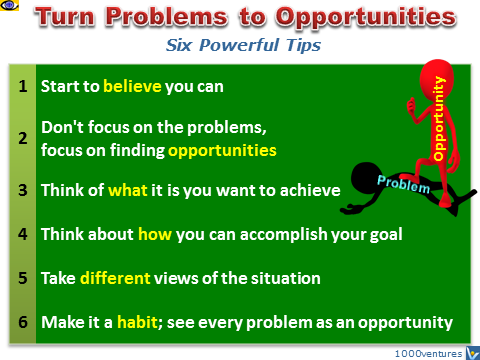
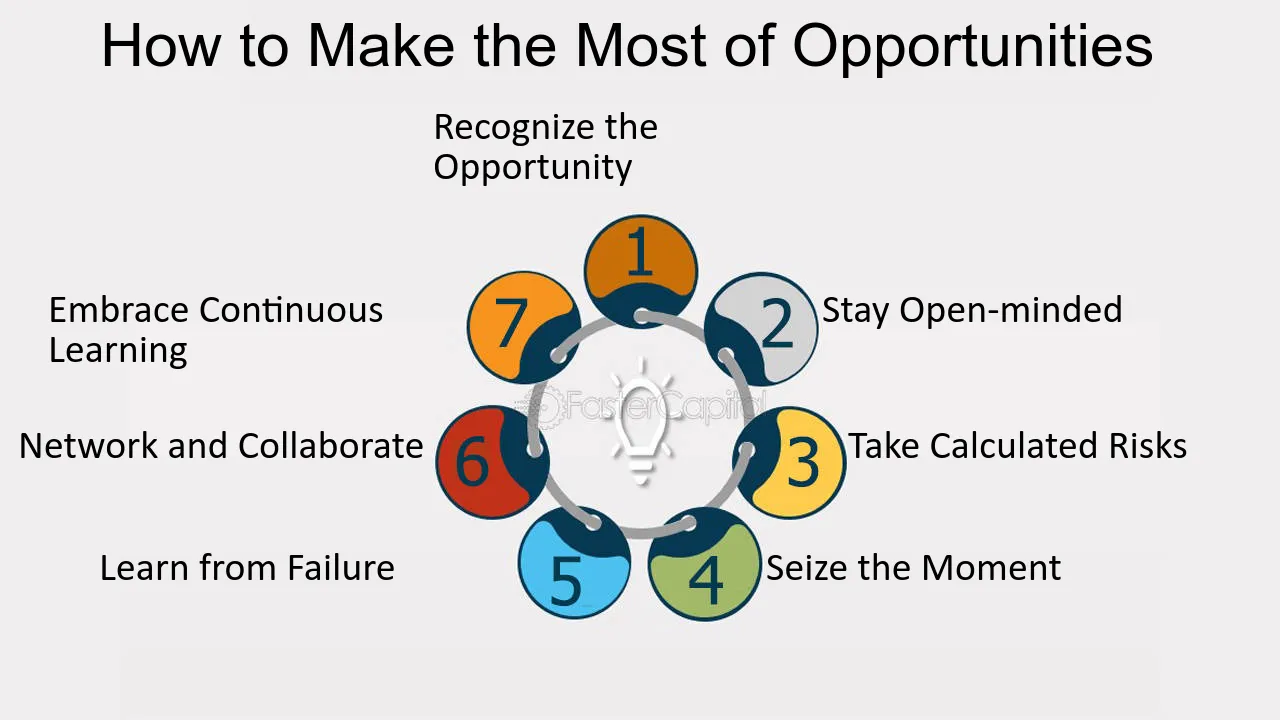
Opportunity or Problem? How can a student prepare their mind to spot opportunities? Prepare your students/child to think and ask – Let them hone their skills to find opportunities in problems even as they grow into adults. Have them ask – Which problems do I or my fellow students face regularly? Are there gaps in services or resources on campus? What emerging trends or technologies could impact education? How can I apply my unique skills or knowledge to solve a problem? Are there internship or research opportunities in my field of interest? What networking events or conferences are relevant to my goals? Can I start a club or organization to address an unmet need? Are there competitions or challenges related to my studies? What local businesses or organizations might benefit from student input? How can I leverage my academic projects for real-world application?
This is a free-to-subscribe newsletter. So, if you like my content, please subscribe to it by putting in your email ID here.
Three images of the week

Two Thoughts of the Week
“The opportunity to secure ourselves against defeat lies in our own hands, but the opportunity of defeating the enemy is provided by the enemy himself. ” Sun Tzu
“Luck is where opportunity meets preparation.” Seneca
One Video of the Week
“Never Miss an Opportunity” Shishu Mandir students in conversation with Nivedita.
Their motto is “Never Miss an Opportunity”. They fall only to get up, motivate each other, and challenge each other to do their best. A team of 10 students from grades 8 to 12 who are about to travel to the United States of America to participate in Unicon21, the International Unicycling Championship. This is an inspiring and impactful story of the students from Shishu Mandir https://www.shishumandir.org/, an institution set up for severely socially and economically underserved children. If you like listening to such amazing stories, please like and subscribe to this channel. Please share with me https://niveditamukerjee.com/contact/ about such inspiring people and I will try to invite them on this channel.
Reading with Ms. Meenu: Tip of the week
Leaning Heavily on Silent Reading:
We as literacy experts want our students to become voracious readers who select books to read for pleasure. We might allow considerable time in our classrooms for them to read. However, it would be shortsighted to expect students’ oral reading fluency to improve by reading independently and silently. It’s been proven, children who struggle when reading texts aloud do not become good readers if left to read silently ; their dysfluency merely becomes inaudible. Silent reading does not provide the practice students need to develop oral reading fluency. Proficient readers tend to love independent reading time because they have established the necessary foundational skills to read well.
As such, silent reading can play an important role in improving and strengthening reading. So now what about less proficient readers? Silent reading time can be a waste of time for them. They might stare into space, pretend to read for the benefit of their peers or take part in some undesirable classroom behaviors. They might be embarrassed to be seen reading the texts that they can be successful with and instead choose a text to impress their peers. So, to improve their reading skills, give options to either read quietly or listen to audiobooks. Listening to audiobooks enables everyone to experience complex texts that build vocabulary background knowledge.
Happy Reading!
Meenu Gera
Consulting home and school librarian and reading guide.
Student career counseling: Opportunities and approaches
Exploring Career Options: Career Counseling & Mentoring, batch of 2028
Student X began with a career assessment and career counseling to decide between humanities and sciences in grade 10. His competencies and interests indicated that he should stay with sciences. He also decided to join integrated coaching to prepare for the JEE entrance exam. Regular career mentoring sessions helped him stay on track, overcome mental barriers and burnout, enabling him to achieve his short-term goals.
While preparing for his board exams and the JEE, he also engaged in college applications, aiming for institutions abroad as well as Ashoka University in India. He received offers from IE University in Spain, Penn State University, Loyola University Chicago, and several others. He scored 93% in his grade 12 board exams and achieved a decent JEE score.
Despite his interest in international trade and politics, he also felt a strong pull towards computer science. Wanting to give himself time to explore his deep interests, he decided to join Ashoka University, one of the best liberal arts universities in India.
Case study provided by: Fermata Career Solutions, www.fermataco.com
Dear reader,
I have been a research scientist, a journalist, and an educator for over 3 decades. I read and, I write. With this weekly newsletter, I share what I read, learn, and, experience. At the same time, I engage with students, parents, and teams of teachers across K-12 schools, higher education institutions, and ed-tech organizations.
3-2-1 Tuesdays with Ms. Niv is a newsletter you can subscribe to and enjoy your learning journey with me.
And Finally…

3-2-1 TUESDAYS WITH MS NIV
Issue #208, 2nd July 2024
Are you a bully yourself? Recognizing bullying behavior in others is quite easy, but can we see those behaviors in ourselves?
Have you ever …
- Repeatedly called someone names?
- Used your size to intimidate or threaten others?
- Made fun of people you perceive as different?
- Made fun of a person’s culture, religion, or disability?
- Said nasty things about another person’s weight, hair color, skin color, or clothes?
- Made fun of a person’s sexuality?
- Spread rumors about someone?
- Excluded someone from your group on purpose?
- Posted or shared nasty comments about another person on a social networking site?
This is a free-to-subscribe newsletter. So, if you like my content, please subscribe to it by putting in your email ID here.
Three images of the week


Two Thoughts of the Week
“Bullying is the result of an unequal power dynamic – the strong attacking the weak.”
Maria Konnikova
“I woke up one day and thought, ‘Enough is enough with bullying myself.’ The war is within you, and that’s also where it’s won. You just have to tackle your insecurities and then let them go. “
Keala Settle
One Video of the Week
In this talk Phoebe Stratford shares her experience with not only being bullied but also being the bully herself and how the realisation of what she was doing changed her.
Phoebe Stratford is a primary school student at Vilnius International School, Lithuania.
Reading with Ms. Meenu: Tip of the week
Reading with Ms. Meenu
As a homeroom literacy teacher how to improve comprehension by developing vocabulary and background knowledge.
Practice Sentence-Level Instruction:
Comprehension instruction can start at the sentence level. By teaching students how to write more complex sentences, we prepare them to understand complex sentences that they encounter in their reading. Reading and writing are, after all, reciprocal processes. You can weave all kinds of sentence-level activities throughout the day. Here are a couple of them.
· Read the two sentences aloud to students and ask them what the relationship is between them.
· List possible joining words that reflect the sentence relationship.
· If students are new to the process, model how to combine the sentences using one of the joining words.
· Give students time to decide how they might combine the two sentences, using the possible joining words that you listed.
· Discuss with students the many possible ways they could combine.
Happy Reading!
Meenu Gera
Consulting home and school librarian and reading guide.
Student career counseling: Opportunities and approaches
Uncovering Strengths and Passions
After three attempts at the NEET competitive exam, a student approached us for guidance on whether to attempt the exam once more. Feeling lost yet hopeful, he sought clarity on his career path. We began with a comprehensive career assessment test and two hours of intense career counseling. This session revealed his strengths, aspirations, and career options beyond medicine, yet still within the healthcare sector.
During our discussions, he mentioned that he had taught himself to play the guitar. This highlighted his determination and discipline in learning new skills and pursuing activities he enjoys. As a result of our guidance, he now has an offer from Manipal University, Bangalore, to pursue a BA in Psychology and from MS Ramaiah Hospital for a BSc in Optometry. He is also awaiting offers from other colleges for BSc in psychology and BSc in cardiac care.
Through this journey, the student discovered new avenues in healthcare that align with his strengths and passions, providing him with a renewed sense of direction and purpose.
Case study provided by: Fermata Career Solutions, www.fermataco.com
Dear reader,
I have been a research scientist, a journalist, and an educator for over 3 decades. I read and, I write. With this weekly newsletter, I share what I read, learn, and, experience. At the same time, I engage with students, parents, and teams of teachers across K-12 schools, higher education institutions, and ed-tech organizations.
3-2-1 Tuesdays with Ms. Niv is a newsletter you can subscribe to and enjoy your learning journey with me.
And Finally…

3-2-1 TUESDAYS WITH MS NIV
Issue #207, 25th June 2024
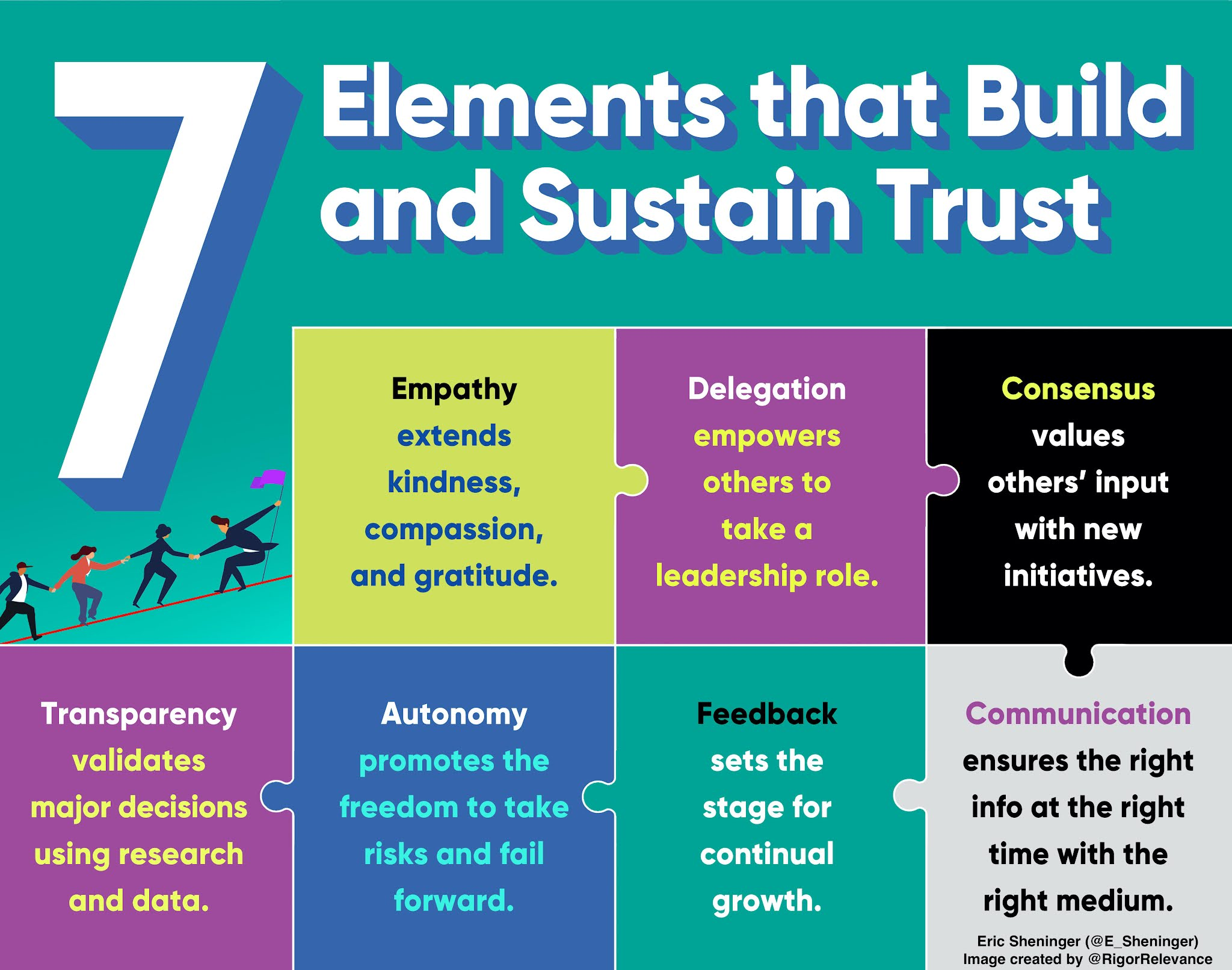
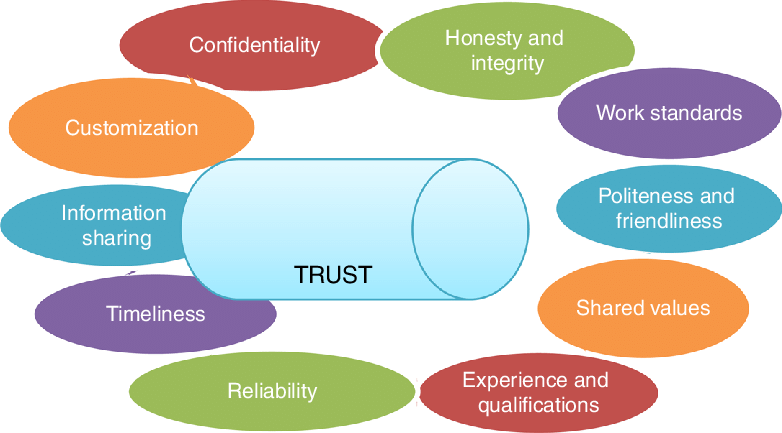
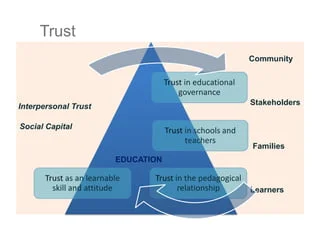
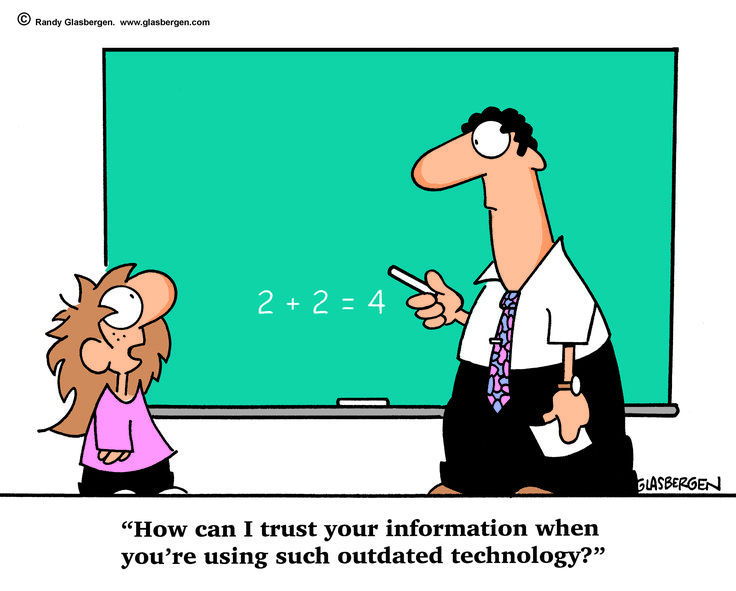
How do you measure up on the trust of your students/children – teachers and parents? Have a go at these.
- Does my teacher genuinely care about my learning and success?
- Will my teacher treat me fairly and respectfully?
- Is my teacher knowledgeable and competent in the subject they’re teaching?
These questions address fundamental aspects of the student-teacher relationship: care, fairness, and competence.
- Will my parents consistently be there for me when I need them?
- Can I be honest with my parents without fear of harsh judgment or punishment?
- Do my parents truly love and accept me for who I am?
These questions address core aspects of the parent-child relationship: reliability, safety in communication, and unconditional love. They reflect a child’s need for security, openness, and acceptance in their relationship with their parents.
This is a free-to-subscribe newsletter. So, if you like my content, please subscribe to it by putting in your email ID here.
Three images of the week
Two Thoughts of the Week
“Parental trust is extremely important in the guidance of adolescent children as they get further and further away from the direct supervision of their parents and teachers. I don’t mean that trust without clear guidance is enough, but guidance without trust is worthless.”
– Benjamin Spock
The greatest sign of success for a teacher…is to be able to say, “The children are now working as if I did not exist.”
Maria Montessori
One Video of the Week
Trust is the foundation for everything we do. But what do we do when it’s broken? In an eye-opening talk, Harvard Business School professor Frances Frei gives a crash course in trust: how to build it, maintain it and rebuild it — something she worked on during a recent stint at Uber. “If we can learn to trust one another more, we can have unprecedented human progress,” Frei says.
Reading with Ms. Meenu: Tip of the week
Reading with Ms. Meenu
Continuing from last week let’s understand how to create a joyful classroom community. Here is our third strategy for this week.
Teach Literary Language:
Characters: The people, animals or other talking objects in a story.
Conflict/Problem: The struggle between the character and him or herself, a character and another character, a character and nature, or a character and their community/world.
Illustrations: The pictures the illustrator created.
Lessons, Moral, Big Idea: The messages that we get from a story and can use in our own lives.
Perspectives: Looking at something in a different way.
Point of view: The author’s choice of narrator(s) or who is telling you the story.
Resolution: When the conflict is over.
Text: The words the author wrote.
Text Clues: Hints that an author gives you about what is happening in the text using his or her words.
These are the best literacy strategies we can always use in our teaching/learning routine.
Happy Reading!
Meenu Gera
Consulting home and school librarian and reading guide.
Student career counseling: Opportunities and approaches
Student X had only six hours to choose between architecture and psychology. I explained the process, which starts with a career assessment followed by a career counseling session. However, her parents suggested skipping the career assessment. The one-hour career counseling session focused on understanding her personality, interests, dreams, desires, strengths, and weaknesses. I provided her with frameworks to think boldly and express her thoughts clearly. Additionally, I showed her a sample career report to illustrate how we can capture her inner traits and map out suitable career options.
The session concluded with the decision that she would take the career test, and both of us would reflect on the discussion and make the final decision in the morning. Student X is an extremely hardworking individual with a deep hunger for learning. She had given both NEET and NATA exams and her NEET score indicated that she should drop medicine as a career choice. She is also a kinesthetic learner. In the morning, she made the final decision to pursue architecture. She will start her course in August at the Gopalan School of Architecture and Planning, Bangalore, India.
Case study provided by: Fermata Career Solutions, www.fermataco.comDear reader,
I have been a research scientist, a journalist, and an educator for over 3 decades. I read and, I write. With this weekly newsletter, I share what I read, learn, and, experience. At the same time, I engage with students, parents, and teams of teachers across K-12 schools, higher education institutions, and ed-tech organizations.
3-2-1 Tuesdays with Ms. Niv is a newsletter you can subscribe to and enjoy your learning journey with me.
And Finally…
3-2-1 TUESDAYS WITH MS NIV
Issue #206, 18th June 2024
While trying to prioritize your efforts and optimize your time, here are 3 questions you could try working on.
For Students:
- What are my short-term and long-term academic and personal goals?
- What areas need the most support, and how can I seek help?
- How do I balance my academic responsibilities with extracurricular activities and personal life?
For Teachers:
- What are the key learning objectives for my students this academic year?
- How can I differentiate my teaching methods to cater to diverse learning styles and needs?
- What resources and support do I need to enhance my teaching and my students’ learning experiences?
For Parents:
- What are my child’s strengths and areas for improvement academically and personally?
- How can I effectively communicate with my child’s teachers to stay informed about their progress and needs?
- What resources and strategies can I use at home to support my child’s learning and development?
This is a free-to-subscribe newsletter. So, if you like my content, please subscribe to it by putting in your email ID here.
Three images of the week


Two Thoughts of the Week
“Time management is an oxymoron. Time is beyond our control, and the clock keeps ticking regardless of how we lead our lives. Priority management is the answer to maximizing the time we have.” — John C. Maxwell
“Most of us spend too much time on what is urgent and not enough time on what is important.” — Stephen Covey
One Video of the Week
How to gain control of your free time | Laura Vanderkam
There are 168 hours in each week. How do we find time for what matters most? Time management expert Laura Vanderkam studies how busy people spend their lives, and she’s discovered that many of us drastically overestimate our commitments each week, while underestimating the time we have to ourselves.
She offers a few practical strategies to help find more time for what matters to us, so we can “build the lives we want in the time we’ve got.”
Reading with Ms. Meenu: Tip of the week
Reading with Ms. Meenu
Let’s continue again and understand how to create a joyful classroom community. Here is our second strategy for this week.
Foster a Growth Mindset:
Imagine: To picture yourself in real or make-believe places or situations.
Mindset: How your attitude shapes the way you think and act.
Notice: Pay attention to what is happening in the world around you or in the words of pictures in a book.
Persevere: To keep trying even when something is challenging. People who persevere don’t give up when things are hard.
Ponder: Pausing and really thinking hard about something before raising your hand or sharing your ideas.
Problem Solve: Using common sense and your schema to figure out different ways to fix or do something.
Think Flexibly: Being able to change your thinking or actions when things don’t go exactly as you thought they would.
Happy Reading!
Meenu Gera
Consulting home and school librarian and reading guide.
Student career counseling: Opportunities and approaches
Shy and simple student X sought help for university applications in September’24, fearing that time was short and she would miss the application deadlines. We accelerated her application process with daily interactions regarding college lists and essays. One major challenge she faced was that, besides her academics, she did not have anything concrete to showcase in her profile. We helped her strengthen her CommonApp essay to reflect her personality well. She submitted all her college applications on time. She received many offers and has decided to join the University of Massachusetts, Amherst, with a scholarship of $15,000 per annum.
Case study provided by: Fermata Career Solutions, www.fermataco.com
Dear reader,
I have been a research scientist, a journalist, and an educator for over 3 decades. I read and, I write. With this weekly newsletter, I share what I read, learn, and, experience. At the same time, I engage with students, parents, and teams of teachers across K-12 schools, higher education institutions, and ed-tech organizations.
3-2-1 Tuesdays with Ms. Niv is a newsletter you can subscribe to and enjoy your learning journey with me.
And Finally…

3-2-1 TUESDAYS WITH MS NIV
Issue #205, 11th June 2024
How do you like to learn new things? (e.g., by reading, watching videos, hands-on activities)
What subjects do you enjoy the most in school, and why?
How do you handle making mistakes or not understanding something right away?
What do you do when you find something really interesting or fun to learn about?
Have you asked your child/student yet? Go ahead, try asking. Some or all of this will lead to interesting conversations and a better understanding of your child/student.
Here are some questions I usually ask when I work with students as a mentor. Try some of these as well.
Can you tell me about a time when you felt really proud of yourself?
What do you do when you feel sad or angry?
Who do you talk to when you need help or advice?
How do you usually solve problems or fix things that go wrong?
This is a free-to-subscribe newsletter. So, if you like my content, please subscribe to it by putting in your email ID here.
Three images of the week


Two Thoughts of the Week
“The more the schemata are differentiated, the smaller the gap between the new and the familiar becomes, so that novelty, instead of constituting an annoyance avoided by the subject, becomes a problem and invites searching.” Jean Piaget
“Mathematics is not the rigid and rigidity-producing schema that the layman thinks it is; rather, in it we find ourselves at that meeting point of constraint and freedom that is the very essence of human nature.” Hermann Weyl
One Video of the Week
This talk explores the concept of memory schemas for close relationships. It argues that these mental frameworks are formed through repeated interactions with primary caregivers during our early years. By understanding these schemas, we can better comprehend the importance of early relationships and how they echo throughout our lives. This knowledge has profound implications, not only for personal understanding and growth but also for addressing larger societal issues such as loneliness and isolation.
She graduated from the Faculty of Education at Charles University and, as part of a long-term scholarship, also studied developmental and applied psychology at University College Cork in Ireland. She obtained a doctorate in comparative literature at the Faculty of Arts, Charles University. The Fulbright scholarship in 2017-18 enabled her to stay at the prestigious Columbia University in New York, where she worked at the Department of Psychology and the Developmental Affective Neuroscience Laboratory.
She returned there again in 2022. Petra Winnette is a certified psychotherapist in the Pesso Boyden System Psychomotor method (USA) and the Dyadic Developmental Psychotherapy method (USA). In 2003, she founded the Natama Institute, a facility focused on providing professional help to children and adults who suffer from the consequences of severe childhood experiences. She is the director of Natama and has extensive therapeutic experience there, as well as leading a research laboratory.
Reading with Ms. Meenu: Tip of the week
Reading with Ms. Meenu
Let’s continue and keep scaffolding the understanding of creating a joyful classroom community. Here is our first strategy for this week.
Use and Explain Key Comprehension Strategies:
Infer: When you infer, you use your schema, the clues from the text, and pictures to figure out what is happening in the story. Some people call inferring “reading between the lines”. Which means figuring out what the author didn’t tell you with his or her words.
Predict: Use clues from the pictures and words to think ahead of your reading or to imagine what might happen next.
Schema: Your schema is everything you’ve experienced so far in your life. The places you’ve visited, the experiences you’ve had, and the stories you’ve heard. Thinking about what you already know or using your schema, helps you better understand stories and situations.
Happy Reading!
Meenu Gera
Consulting home and school librarian and reading guide.
Student career counseling: Opportunities and approaches
Student X approached us for profile-building guidance in grade 9. An IB student, he had decided to focus on biology, chemistry, and mathematics, dropping physics. We began by understanding his interests, hobbies, likes, dislikes, and academic background. He had tried various activities, including football, classical Hindustani music, taekwondo, theatre, and badminton. However, he continued only theatre and badminton in senior school. Student X recognized that he often started activities without completing them. His self-motivation and willingness to seek expert guidance made our work easier. He took foundational NEET coaching in grade 10 to rule out medicine as a career while managing his MYP e-assessment. After grade 10 exams, he began research, and by the end of grade 11, he had published his work under a research guide. His study of biology in grade 11 sparked an interest in nutrition and fitness, leading to an internship at a health and nutrition startup. He was accepted by all four Canadian universities he applied to for undergraduate programs in Life Sciences and Biomedical Sciences. This year, he will be joining McGill University.
Case study provided by: Fermata Career Solutions, www.fermataco.com
Dear reader,
I have been a research scientist, a journalist, and an educator for over 3 decades. I read and, I write. With this weekly newsletter, I share what I read, learn, and, experience. At the same time, I engage with students, parents, and teams of teachers across K-12 schools, higher education institutions, and ed-tech organizations.
3-2-1 Tuesdays with Ms. Niv is a newsletter you can subscribe to and enjoy your learning journey with me.
And Finally…

3-2-1 TUESDAYS WITH MS NIV
Issue #204, 4th June 2024
How has technology impacted how citizens access information and engage in the political process? What are the potential benefits and risks of using social media platforms for political discourse and mobilization? How can technology be leveraged to increase transparency and accountability in government? What measures should address misinformation and fake news on digital platforms? How can cybersecurity measures be implemented to protect the integrity of electoral processes and prevent foreign interference? What ethical considerations surround data analytics and targeted advertising in political campaigns? How can technology facilitate direct democracy and citizen participation in decision-making processes? What is the role of technology in promoting accessibility and inclusion in the democratic process for marginalized communities? How can we address the digital divide and ensure equal access to technology for all citizens? What are the potential implications of emerging technologies, such as artificial intelligence, on the future of democratic governance?
Shall we ask? Shall we discuss this with our students, children, educators, and parents? Democracy in Society and Democracy in Technology. Here are some thoughts.
This is a free-to-subscribe newsletter. So, if you like my content, please subscribe to it by putting in your email ID here.
Three images of the week


Two Thoughts of the Week
“A functioning, robust democracy requires a healthy, educated, participatory followership, and an educated, morally grounded leadership.” Chinua Achebe
“Everybody counts in applying democracy. And there will never be a true democracy until every responsible and law-abiding adult in it, without regard to race, sex, color or creed has his or her own inalienable and unpurchasable voice in government.” Carrie Chapman Catt
One Video of the Week
We don’t have to sacrifice our freedom for the sake of technological progress, says social technologist Divya Siddarth. She shares how a group of people helped retrain one of the world’s most powerful AI models on a constitution they wrote — and offers a vision of technology that aligns with the principles of democracy, rather than conflicting with them.
Reading with Ms. Meenu: Tip of the week
Create a Joyful Classroom Community:
Transforming the Classroom World: The children in our classrooms will have the power to change our world. To prepare learners for the future and help them navigate the present, we teach them much more than content or the “what” of learning. We spend ample time modeling, practicing, and discussing the how and why. The purpose of the read-aloud experiences today is to build a foundation by sharing the What, how, and why of literacy learning in a joyful classroom community. As we layer experience upon experience we will do the following:
· Use and explain key comprehension strategies.
· Teach literary language.
· Develop student’s social and emotional learning.
· Foster a growth mindset.
Lately we all are discussing deeply about social emotional learning. There are many resources that would open conversations about some of the issues. We all know that helping children recognize their thoughts, feelings, and behaviors are interrelated is an early step towards self-awareness and empathy for others. In coming weeks please stay tuned for choosing literacy resources on how to move children towards becoming more self-aware, while at the same time scaffolding their understanding of literary terms and developing their facility with key comprehension strategies.
Happy Reading!
Meenu Gera
Consulting home and school librarian and reading guide.
Student career counseling: Opportunities and approaches.
Student X, a brilliant yet introverted individual, approached us in June 2020 during her grade 12 year, seeking guidance to navigate the university application process and meet its requirements. Despite her exceptional academic performance, which earned her the title of top student in psychology, she lacked additional achievements to showcase in her profile. X harbored aspirations of attending Ashoka University, OP Jindal University, and Flames University. With a deadline of December looming for applications, we had approximately four to five months to prepare.
To tackle this challenge, we proposed that X undertake a short research project within the limited time frame. She enthusiastically agreed and selected the topic “No Plastics” for her research. X diligently worked on various tasks, including literature reviews, drafting primary research questionnaires, collecting data, and writing the paper. Her dedication paid off, as her research paper was published in a reputable journal.
In addition to her research endeavors, X also prepared for the Flames University entrance exam. Ultimately, she chose to pursue her higher education at OP Jindal University, successfully demonstrating her academic prowess and newfound research capabilities.
Case study provided by: Fermata Career Solutions, www.fermataco.com
Dear reader,
I have been a research scientist, a journalist, and an educator for over 3 decades. I read and, I write. With this weekly newsletter, I share what I read, learn, and, experience. At the same time, I engage with students, parents, and teams of teachers across K-12 schools, higher education institutions, and ed-tech organizations.
3-2-1 Tuesdays with Ms. Niv is a newsletter you can subscribe to and enjoy your learning journey with me.
And Finally…

3-2-1 TUESDAYS WITH MS NIV
Issue #203, 28 May 2024
What types of tasks and responsibilities will I have during the internship? What skills or knowledge can I expect to gain from this internship? Will I have the opportunity to work on real projects or assignments related to my field of interest? Will I have a dedicated mentor or supervisor who can provide guidance and feedback throughout the internship? What is the typical schedule and duration of the internship? Is the internship paid or unpaid? If unpaid, are there any stipends or reimbursements available for expenses like transportation or meals? What are the dress code and professionalism expectations for interns? Will I have the opportunity to attend meetings, workshops, or events that can enhance my learning experience? How will my performance be evaluated during and at the end of the internship? Can this internship lead to potential job opportunities or recommendations within the organization or industry? What is the application process, and what materials (resume, cover letter, etc.) are required? Is there any flexibility in scheduling the internship around my school commitments or other obligations? What measures are in place to ensure a safe and inclusive working environment for interns?
Go on ask some or all of these questions as students when you are looking for an internship to hone your skills and to understand the world of careers while you are still studying. Parents, educators, career guides, counsellors can do that as well before suggesting any internships to the students right?
This is a free-to-subscribe newsletter. So, if you like my content, please subscribe to it by putting in your email ID here.
Three images of the week


Two Thoughts of the Week
“Don’t judge each day by the harvest you reap but by the seeds that you plant.”
- Robert Louis Stevenson
“If you can’t fly then run, if you can’t run then walk, if you can’t walk then crawl, but whatever you do you have to keep moving forward.”
- Martin Luther King, Jr.
One Video of the Week
Interns with the Olene Walker Institute of Politics and Public Service will be presenting on the value of internships and how they are not only the foundation to your dreams, but how they are your dream. Presenting in this video will be Stuart Call, a senior in Political Science, India Nielsen, a senior in Communication, and Mandie Barnes, a recent graduate in Communication.
Reading with Ms. Meenu: Tip of the week
Artful Math and Mathful Art:
The Power of Playing with Math and Art Together: Children are natural artists. Anyone who has ever watched a young child draw or paint for the first time knows that children do not require formal lessons or guidance to begin to make art. When given opportunities to explore, children come up with creative ideas, ask and investigate their own questions, and develop a sense of self and community through their art. And the same can be said of their relationship to math! Children are capable mathematicians with their own ideas and ways of problem-solving long before they enter school. Integrating the study of math and art allows children to continue to build confidence in their own ideas as well as to work collaboratively and creatively to explore new ideas.
Here are some ways that art and math can be interwoven meaningfully in the classroom.
· Explore how an art center can give children the time and space to engage with open explorations that highlight mathematical ideas.
· Consider how teachers can invite students to engage in art around specific math ideas.
· Focus on how studying artists as mentors can inspire both mathematical thinking and artistic creativity.
· Reflect on ways that teachers and students can appreciate art and math beyond the walls of the classroom.
Happy Reading!
Meenu Gera
Consulting home and school librarian and reading guide.
Student career counseling: Opportunities and approaches.
Student X, a talented individual with a unique blend of creativity and logic, excelled particularly in subjects such as physics, mathematics, and chemistry, while also harboring a passion for baking. Recognizing the importance of guidance in shaping her academic and extracurricular profile, she sought assistance during her eighth grade. Our collaboration aimed to help her explore her interests comprehensively and develop a well-rounded profile.
Under our mentorship, X engaged in two summer programs dedicated to astrophysics, significantly broadening her knowledge base and gaining practical experience in her preferred field. To further cultivate her passion for baking, she enrolled in weekend classes at a prestigious baking institute in Bangalore. Moreover, she showcased her leadership abilities by running for a student council position at her school. Throughout this period, we ensured she maintained her exceptional academic performance.
When X expressed her aspiration to study in Canada, we worked closely together to compile a university list that aligned with her academic strengths and personal interests. Our collaborative efforts bore fruit when she received offers of admission from the University of Toronto (UoT) and the University of Waterloo. Eventually, she decided to pursue a degree in Mathematical Physics at the University of Waterloo, thereby continuing to nurture her passion for both science and academia. Additionally, she eagerly assumed the role of assistant president of the cooking club from day one.
Case study provided by: Fermata Career Solutions, www.fermataco.com
Dear reader,
I have been a research scientist, a journalist, and an educator for over 3 decades. I read and, I write. With this weekly newsletter, I share what I read, learn, and, experience. At the same time, I engage with students, parents, and teams of teachers across K-12 schools, higher education institutions, and ed-tech organizations.
3-2-1 Tuesdays with Ms. Niv is a newsletter you can subscribe to and enjoy your learning journey with me.
And Finally…

3-2-1 TUESDAYS WITH MS NIV
Issue #202, 21st May 2024
What internship or co-op opportunities are available in my field of study? Are there any undergraduate research projects I can get involved in? What scholarships or grants am I eligible for, and what are the application requirements? Can you recommend any student organizations or clubs that align with my interests? Are there any study abroad programs or international exchange opportunities available? What resources are available to help me with career planning and job search strategies? Are there any networking events or job fairs coming up that I should attend? Can you provide information about graduate school programs in my area of interest? Are there any volunteer opportunities or community service projects I can participate in? What professional development workshops or seminars are being offered on campus? Can you recommend any mentorship programs or opportunities to connect with alumni or professionals in my desired field? Are there any entrepreneurship or innovation competitions or challenges I can participate in?
Here are some questions I would encourage my students to think about and ask around in their school, their college, their network of educators and mentors, and practically any professional adult that is in their network. Opportunities come to those who seek them. Go ahead, be curious, and ask questions!
This is a free-to-subscribe newsletter. So, if you like my content, please subscribe to it by putting in your email ID here.
Three images of the week


Two Thoughts of the Week
“The Chinese use two brush strokes to write the word ‘crisis.’ One brush stroke stands for danger; the other for opportunity. In a crisis, be aware of the danger–but recognize the opportunity.”
― John F. Kennedy
“Not knowing when the dawn will come
I open every door.”
― Emily Dickinson, The Complete Poems of Emily Dickinson
One video of the Week
Everybody has had one, given one, and passed on many, but we are intentionally deciding to offer these opportunities to those who need them the most? Have we chosen the recipients of our opportunities depending on who is here or who is not?
The value of opportunity will explore the idea of consciously selecting against the status quo and the impact that one opportunity can have on many lives. Robert spent his childhood in Lubbock, Texas where he was the second oldest of five born to a single mother. He attended school in the LISD where he was an All- State basketball player in high school, and he attended USW on a basketball scholarship in 2008.
He became a father at the age of 18 but continued to pursue his life goals. At 22 he moved to Colorado Springs with his family. While pastoring a small church he directed a non-profit organization that spearheaded community events, served the under-served youth and elderly, and taught kid’s social skills through urban gardening clubs.
In 2017 he won the Cummins National Community Hero Award for the work in the food deserts within the Springs. In 2018 he was a co-star on a community documentary called The Garden Experience. He has studied topics from landscape design to theology, and now joins the RAMILY as a Junior double majoring in Agriculture Business and Education. He is the proud father of three Alexandria, Isaac, and Jeremiah.
Reading with Ms. Meenu: Tip of the week
Common read-aloud interruptions and how to possibly respond to it:
· Take time to explain rules while doing a read-aloud.
· Be open-minded during quality conversations.
· Invite and take turns to choose students for their opinions.
· Explain to your students the importance of listening to others.
| 1. The minute you hold up a book, children are anxious to tell you “I’ve read that book before” | · Develop a silent signal so that students can show you they’ve read the book before (For ex: Ask kids to put their hand on top of their heads.)· Celebrate rereading by saying something similar to “I’m so glad to see you’ve read this book before, because I have a challenge for you. See if you can notice something you didn’t hear or see the first time you read this book. That’s what keen learners do when they reread.” |
| 2. Students blurt out answers to questions. | · Have a conversation about why it is essential to let their friends have thinking time by asking, “Why do you think it’s important to wait to share your thoughts?” Based on the student’s responses say something like, “When you shout out an answer, that takes away other people’s thinking time and we want to make sure everyone has enough time to think.” |
Happy Reading!
Meenu Gera
Consulting home and school librarian and reading guide.
Student career counseling: Opportunities and approaches.
Case study of the week:
Passionate, focused, and disciplined, Student X transitioned from the CBSE curriculum to the International Baccalaureate (IB) program in grade 5. An enthusiastic reader with robust critical thinking and problem-solving skills, she consistently ranked as the top performer in her class. With a natural aptitude for both numbers and words, she authored her first book in grade 10 followed by a second in grade 11, both of which are available on Amazon. In grade 11, while selecting her subjects, she chose English, Math, and Physics at the higher level, and Hindi, Chemistry, and History at the standard level. Under our guidance, she successfully completed several training programs in astrophysics, authored a research paper in mathematics, and received proper support to prepare for the SAT exam. Her extended essay beautifully integrated English and Mathematics concepts.
When the time arrived to compile her college list, she remained steadfast in her determination to pursue both literature and mathematics. Consequently, she secured admission to her dream institution and is currently excelling at Brown University.
Case study provided by Fermata Career Guidance
Dear reader,
I have been a research scientist, a journalist, and an educator for over 3 decades. I read and, I write. With this weekly newsletter, I share what I read, learn, and, experience. At the same time, I engage with students, parents, and teams of teachers across K-12 schools, higher education institutions, and ed-tech organizations.
3-2-1 Tuesdays with Ms. Niv is a newsletter you can subscribe to and enjoy your learning journey with me.
And Finally…

This newsletter is supported by:


3-2-1 TUESDAYS WITH MS NIV
Issue #201, 14th May 2024
What are the potential consequences of each option? What are my core values and priorities in this situation? What are the opportunity costs of each alternative? Do I have all the relevant information, or is more research required? What have been the outcomes of similar past choices? Who will be impacted by this decision? What is my underlying motivation for each option? Can I live with potential regrets of this choice? Does this choice move me towards my bigger life goals? What does my intuition tell me?
These could be some of the potential questions that you can put out to yourself, your student, your child when you are making choices on almost daily basis.
This is a free-to-subscribe newsletter. So, if you like my content, please subscribe to it by putting in your email ID here.
Three images of the week


Two Thoughts of the Week
“It is our choices, Harry, that show what we truly are, far more than our abilities.”
― J.K. Rowling, Harry Potter and the Chamber of Secrets
“But until a person can say deeply and honestly, “I am what I am today because of the choices I made yesterday,” that person cannot say, “I choose otherwise.”
― Stephen R. Covey, The 7 Habits of Highly Effective People: Powerful Lessons in Personal Change
One video of the Week
David Döbele is a young professional who started his journey on Youtube by sharing his career experiences and struggles with the community. His channel has now become number 1 for business studies and career in his home country Germany. In the meantime he has also co-founded the company Pumpkincareers to help others start their career path in finance and consultancy.
Reading with Ms. Meenu: Tip of the week
Only we can select the books that will broaden our students’ horizons because we know about our learner’s backgrounds, interests, home life, and culture. With this information in mind, I choose these texts that will extend the learning beyond our classroom walls. Looking for particular books that open windows to other places, situations or cultures is just one way to broaden our student’s horizons. Now that we know how to select books, let’s see where to read aloud and breaks are important as well.
A Comfy Place to Read and Listen:
If you don’t know how to create an area to read aloud for your children, here are a few ideas to consider. First, make enough room so that children can sit comfortably in their own space. If you have some cushions or bean bags to throw around the reading area would be a great addition. It should be a cozy corner with books of different genres.
Frequent Brain Breaks:
We know that young children can only sit and listen for a short amount of time. If you are reading and discussing a lengthy book you might consider pausing for a brain break or two. A brain break might be as simple as inviting the children to stand up and play a quick game of Simon Says or asking listeners to stand when they turn and share their thinking.
Happy Reading!
Meenu Gera
Consulting home and school librarian and reading guide.
Student career counseling: Opportunities and approaches.
Case study of the week:
Student X, a dedicated student enrolled in the International Baccalaureate Diploma Programme (IBDP), sought assistance in mapping out his college list during his final term of grade 11. He was passionate about pursuing psychology at the university level, and his Higher Level (HL) subjects included biology, English literature, and psychology, while his Standard Level (SL) subjects comprised mathematics, French, and chemistry.
Initially, X demonstrated enthusiasm and commitment to his academic goals. However, the transition from the CBSE curriculum to the IB curriculum posed challenges that affected his grades, not meeting his expectations. Consequently, he fell behind in his grade 11 finals.
X’s parents held contrasting views on his university choices. His mother advocated for a practical approach, encouraging him to consider a diverse range of university options. On the other hand, his father was adamant about focusing solely on prestigious universities in the United States. This persisted until X’s predicted grades did not meet the requirements for admission to these top institutions.
Our approach to assisting students in mapping their college lists revolves around creating personalized university lists that align with their academic capabilities and aspirations. We prioritize opportunities for acceptance over potential rejections by considering a diverse range of universities that match the student’s profile. By doing so, we aim to facilitate successful admissions outcomes and support their educational journey effectively, ensuring a positive and fair approach to higher education opportunities.
Case study provided by Fermata Career Guidance
Dear reader,
I have been a research scientist, a journalist, and an educator for over 3 decades. I read and, I write. With this weekly newsletter, I share what I read, learn, and, experience. At the same time, I engage with students, parents, and teams of teachers across K-12 schools, higher education institutions, and ed-tech organizations.
3-2-1 Tuesdays with Ms. Niv is a newsletter you can subscribe to and enjoy your learning journey with me.
And Finally…

This newsletter is supported by:
3-2-1 TUESDAYS WITH MS NIV
Issue #200, 7th May 2024
Does reading aloud help in language development? Does reading aloud help in auditory processing? Does reading around promote cognitive skills? Do you think it would help with emotional and social development? What about the role of reading aloud in Brain connectivity – the integration of regions including those responsible for language, visual processing, auditory processing, and memory? and do you think it adds to the motivation and enjoyment of children? if your answer is yes to any/all of the above, read on. Don’t forget to subscribe 🙂
This is a free-to-subscribe newsletter. So, if you like my content, please subscribe to it by putting in your email ID here.
Three images of the week


Two Thoughts of the Week
“Once you learn to read, you will be forever free.” — Frederick Douglass
“So please, oh PLEASE, we beg, we pray, Go throw your TV set away, And in its place you can install, A lovely bookshelf on the wall.” — Roald Dahl, Charlie and the Chocolate Factory
One Video of the Week
Speaking is already in our genes. But reading is not. Until about 100 years ago most people didn’t do it all. When we read fiction especially, we create new pathways in our brain. Reading 30 pages of fiction every night, gets the pathways thicker and thicker. Our brain needs a workout just like our body.
Rita Carter is a writer, broadcaster and journalist who specializes in the workings of the human brain. Her books include the first layman’s guide to neuroscience: Mapping the Mind, which has been translated into 14 languages. For seven years she presented London’s nightly news programme, “Thames News” , and has written for magazines and newspapers throughout the world, including the London Times, Telegraph, Guardian and New Scientist. She has a deep interest in bringing art and science together and is a Patron at the influential London-based Foundation “Art and Mind”. Rita Carter is a writer, broadcaster and journalist who specializes in the workings of the human brain. Her books include the first layman’s guide to neuroscience: Mapping the Mind, which has been translated into 14 languages.
For seven years she presented London’s nightly news programme, “Thames News” , and has written for magazines and newspapers throughout the world, including the London Times, Telegraph, Guardian and New Scientist. She has won many awards for her work, including, on three occasions, the Medical Journalists Association award for excellence and she holds an Honorary PhD in Brain science from Leuven University – one of Europe’s oldest academic institutions
Guest Expert of the Week
Reading with Ms. Meenu
Expressive Oral Reading:
Each of us has our own read-aloud style, and that’s okay. When I’m reading aloud, I think to myself, if I want these kids to love books, this performance has to rival the latest hit movie they are watching. After all, reading aloud, like acting or storytelling, is a performance art. It takes time and intentional practice to get even better. The following are a few qualities of a read-aloud performance that will enrich the experience for your students.
· Match your tone of voice to the mood of the text: When you think about the mood of the text consider the author’s purpose. How does the author want the reader to feel while experiencing the book? For example, I read Ryan Higgin’s rollicking books about Bruce the Grumpy Bear in a humorous and silly tone (except when Bruce is grouchy!). On the other hand, I read Jane Yolen’s (1987) quiet book Owl Moon in a peaceful, childlike tone.
· Vary your pitch: When reading like a small, weak character you might choose a high pitch. When reading like a big, strong like a big, strong character you could use a low pitch.
· Use pacing, pauses, and volume for dramatic effect: When suspense is building, slow your pace, quiet your voice, and insert long, drawn out pauses. On the flip side, as excitement mounts or a chase ensues raise the volume and pick up your pace.
· Read rhyming texts and poetry with rhythm: I often find myself tapping my toes to help me keep the rhythm going as I read rhyming books like The Gruffalo or Doris the Bookasaurus. Reading is just like singing along to your favorite tunes. Some songs are uplifting and others make you cry.
Happy Reading!
Meenu Gera
Consulting home and school librarian and reading guide.
Dear reader,
I have been a research scientist, a journalist, and an educator for over 3 decades. I read and, I write. With this weekly newsletter, I share what I read, learn, and, experience. At the same time, I engage with students, parents, and teams of teachers across K-12 schools, higher education institutions, and ed-tech organizations.
3-2-1 Tuesdays with Ms. Niv is a newsletter you can subscribe to and enjoy your learning journey with me.
And Finally…

This newsletter is supported by:
 Nivedita Mukerjee