Nivedita Mukerjee
Education consultancy for parents and schools
Swiss Knife in Teacher Tool Kit – Strategies for teaching today’s students
At the heart of your effectivity as a teacher lies your ability to understand your learner. This module of professional development is focussed on providing teachers ‘What’ they need in order to provide for in their planning and assessment that will unlock the student outcomes by unlocking their individual abilities.
The module empowers teachers with key strategies like – teaching the students to ask great questions, looking for information from divergent sources, tips for making classwork and homework tasks meaningful and habits of mind.


Going Forward By Looking Back






By encapsulating the highlights from the year, participants use the powerful tool of a guided reflection to plan how to take their learnings forward to the next year/session. They delve upon some deep thinking questions like – What made them perform better? What are their own specific efforts that they are proud of? What are the highlights of the time gone by and what makes them special? What did they do then that was worthwhile and how can they take it forward?
This is a session that takes about three hours of discussing, reflecting, articulating, creating a visual reminder as a portfolio that helps them be their better version in the next year.
Having a difficult conversation with your growing child ? Stop! First practice to differentiate between your thoughts and feelings.

Hey, we need to talk!
Think of a conversation you had with your child/student in the last couple of days that did not have the tone that you wish you/the child had had. It did not end in the result that you had in mind. Got it? Great. Now let us discuss the first and foremost step that you need to practice before you start a difficult conversation.
We all do difficult conversations with children on an almost weekly basis if not every day, whether with our own child, our neighbour’s child, a child in our extended family or with our student if we are an educator. We do it because we care. We care of the impact of their actions on themselves. We care for their emotions. We care because we think we should do it so that they are pre-warned and prepared for what is in store or how will some action of theirs will have a short/long term negative impact on them.
However, more often than not, it ends up as a bit of a preach, a random advice or worse – nagging, that either irritates or frustrates them, driving them away from the discussion. How can we avoid it? Is it the content of our conversation or the form?
Oftentimes, we express our opinion on the child’s action by way of – a feeling and/or a thought. While making a difficult conversation, it is important that we differentiate between the two and articulate our thoughts accordingly in order to have a meaningful, productive and empathetic conversation.
Differentiate between thoughts and feelings
We have feelings as a result of thought. Both play a significant role in how we respond to people and situations and are extremely difficult to separate. The distinction between thoughts and feelings is an essential skill in cognitive behavioural therapy. Thus, it is one of the most difficult tasks I am asking you to consider when you are planning to have a difficult conversation with your child. That is also the reason why it is so important.
We often create feelings based on how we are viewing the situation. Situation might not change, but our perspective can. Many times we use “I feel” interchangeably with “I think”. Feelings, for eg. are – Anger, Fear, Happiness, Sadness, Surprise, Disgust, Trust, Anticipation, Boredom, Joy, Ecstasy, Grief, Rage, Vigilant, Terror, Admiration, Amazement and some more shades of these.
Thinking on the other hand, often follows how you feel. For eg.
- I feel surprised when my child does not pick up after her/him self because I think s/he is lazy.
- I feel sad when my child does not pick up after her/him self because I think s/he is lazy.
- I feel angry when my child does not pick up after her/him self because I think s/he is lazy.
- I feel upset when my child does not pick up after her/him self because I think s/he is lazy.
When we notice or write down the thought plus feeling more accurately, we can quite clearly understand that our emotions are not dictated by our thoughts. You can experience a different feeling on the same thought on different days/situations and your spouse or any other care provider of your child can feel differently on the same thought as well.
What goes wrong with I feel? When actually you could be saying I think? A thought would need to be a statement about a fact, a reality. As such, one should be able to prove or disprove it. By using “I feel” in place of “I think”, we may be trying to short-circuit such examination perhaps even unconsciously. A feeling is internal. It does not/should not depend on external factors. Thus, it does not offer any opportunity for external examination or establishing evidence of.
There can be many reasons why you may not want your thought – “my child is lazy” to be examined :
- You want it to be true (e.g. You also want to be lazy.)
- You fear being wrong. (e.g.you think you are not able to set firm boundaries and establish routines)
- You don’t care about its veracity, only about your feeling as you know the child is selectively lazy and you have feelings about the matters s/he is selectively lazy/proactive about.
- You want to manipulate your child into doing the chores and not discuss the need of doing it.
When you are feeling an emotion that you may not like, evaluating the thoughts that are making you feel like it can be helpful.
You may want to step back and think:
- You are feeling “surprised/sad/angry/upset”
- Your thought of your child being lazy is a sign of your style of parenting
- Your thought that s/he is lazy on matters that you think are important and s/he does not.
- Your thought of your child being lazy is because you fear it will keep her/him from being successful in life
Once you analyse the original thought around your feeling, you may be able to better articulate and discuss with your child on the matter of – not picking after her/himself. So perhaps, instead of saying – I think you are lazy, try using any of your top 2/3 feelings like:
- I feel surprised that you…
- I feel so sad when I see…
- I feel angry when I…
- I feel upset when you …
Once you have done this, the rest is simple. Understand your own “filter” and thus your own reactions. Empathise first. Respond then. React never. Schedule a difficult conversation with a time limit.
Watch this space for more tips on making a difficult conversation with your child/student more productive. Subscribe to my blog so that whenever there is a new post, you get to know it. It is not more than a two or three times in a month.
Share your disappointments and successes with a difficult conversation. How could it have been different? Did you use your thoughts or feelings to guide you through it?
“I want my child to grow up to be a successful adult.” Sounds familiar?


I am yet to meet a parent who is shy of telling that they want their child to be a successful adult. My question to them as perhaps you can anticipate is – How would you define success? Followed by –
– How would you know that your child is successful?
– What would be the measure of that?
– How would the child himself/herself know s/he is successful?
– What exactly is the right age/stage of life that the child should emerge successful?
– What happens once the criteria of success (qualitatively and quantitatively) is achieved?
These look like a series of trick questions, isn’t it? And while you may be able to answer some or all of them with some degree of ambivalence now, these criteria tend to change as you/they grow older. Please understand that shifting of understanding what is success over time – is natural. Our expectations from people and situations keep changing depending on where and how we are at that point in time in our lives and our understanding and expectations in context of that specific time period or situation we are personally in.
I have shared these key elements of looking at and at the same time measuring success with parents over the years and they have found it of help. Being quite timeless, these resonate with most of them. It keeps them moving on the path of supporting their children to be successful adults.
The three key elements of success according to me are:
- Motivation
This is the inner passion that ignites us from within. It is also the will power to start working on a goal and to be able to continue on what has been started. This can range from learning a skill like sport, music, art, language, climbing a mountain or keep a diet regime.
- Inspiration
This is the idea. The muse. The intellectual ecstasy. The eureka moment. This comes from role models, reading, watching, exposure, travelling, seeking challenges outside of comfort zone.
Both of these are feelings. You feel motivated. You feel inspired. As all other feelings – happy/sad, excited/depressed, angry/calm – they come and go depending upon various external factors which impact the environment you are in at that point in time, besides yourself. Psychologically or physiologically.
- Aspiration
This is the hope. Hope to imagine a new self, a new being, a better person. Hope of doing. Hope of achieving. Hope of leaving a mark. Hope of making an impact. When motivations fail, habits break. When rituals no longer motivate. When no one and nothing makes you feel inspired out of your blues. Out of ill health. Out of financial loss. Out of personal loss. Of a constricting circumstance. When it is dark and gloomy. It is hope that keeps one going. For when hope is lost, all is lost.
Aspire does not mean that you push yourself. It means there’s a pull. It is a pull that is larger than motivation, bigger than inspiration. It feels you are being pulled towards a purpose. It is to dream. To have faith that can pull people out of despair. It feels that there is a higher purpose that is driving you to do what you can. It is greater than your person. It is so because you can only aspire to do things for others.


I for instance, constantly aspire to write more and better, have more effective sessions of sharing with the learning community. To share my thoughts and experiences with students, colleagues and parents and learn and grow while listening through theirs. I aspire to motivate. I aspire to inspire others not just by explaining what I am thinking or what I have experienced and learned but also by embodying it. I aspire to find ways and means of impacting education and information dissemination. As a scientist earlier then as a journalist and now as an educator.
Teach your child to aspire. It will help them in becoming all that they can dream of becoming and be their best successful version.

“I wish I knew better then…” has this thought ever been yours? You can avoid or reduce this for your child.

You want your child to make better decisions? Teach them the process of Critical thinking – a 21st century skill.
As parents, we want our children to make good decisions. We want them to know right from wrong. We want them to think through the consequences of making their decisions when we are not around them. When they are adolescents and teenagers with choices abound. We want them to be adults with critical thinking skills. That world where in today’s children will become adults would be very different from our own. You would want to equip them for it. As their parent and as their all-time educator and role model, this is one of our key responsibilities. It is essential for problem solving and has been clearly recognised as a necessary 21st century skill.
Every day we make many decisions. Some days it’s a calm sea with small decisions to make while some days it is an avalanche. All decisions have consequences. Small ones with short term consequences while big ones that would have long term impact on our and our loved ones’ lives. We know that it is impossible to make the right choices or the perfect decision with a fantastic outcome every time. However, there are processes that can help us to make right or almost right ones more often than those that are partially wrong or completely wrong. Critical thinking allows us to carefully deconstruct a problem or a situation, reveal its hidden issues like biases and manipulations, allowing us to make the best decision under the circumstances.
What exactly is critical thinking? Critical – does sound negative. That is because it is not about a choice one makes because it just feels right. It is to scrutinise. It is to approach with skepticism. For all available options. Think for a moment, how do you make your difficult decisions? The toughest ones that have the maximum impact in your life. Most of us do a pro/con list, in our minds or in a note that we physically write down. Some of us rely on gut feel. What other method do you have to help you through the decision making process?
Here are the 5 steps of the critical thinking process that you may want to work through with your child and role model it alongside to make it a habit to fall back on when at crossroads. Practice them yourself to manage your own anxiety while you are making decisions. Remember, you set the tone in the family. Also that, most people (young or old) do not want advice. They just want a trusted sounding board. You don’t have to fix it/solve it/do it. You have to listen, role model and create a clearly visible structure around your thoughts and actions.
- Formulate your question.
Know what you are looking for. This will help you look through some immediate attention grabbers that are obscuring your objective that you want to achieve from the situation like biases and manipulations. This is equally applicable whether it is a habit like a diet choice, a purchase decision while shopping or even a response to a conversation in a relationship.

- Gather information.
There’s so much out there on the internet, in the books, with experts and user testimonies on the matter. A diverse range of sources to gather the same information will give you different perspectives and you’d be able to formulate your own – since you know your situation best and – you have done step no. 1. You have a clear and well defined goal/objective to be achieved in mind.

- Apply the information.
What concepts are at play, what assumptions are you making based on that, what is your interpretation and if those interpretation is logically sound (not emotionally appealing only) This can be done by trying scenario planning. This is much more involved way of deciding than making a straight forward pro/con list. Little stories of how do you think it will play out if in the story (situation) 1. It gets better 2. It gets worse 3. It gets weird. e.g. Going through an assignment/project work – what actions will make it better, what actions will make it worse and what will make it say – better for you and worse for your partner. This can be applied in life situations in adult hood as well.

- Consider the implications.
Immediate and long term. Some immediate ones will make sense long term as well but many immediate ones will not pan out well for yourself/your family/your country/your environment – anything that you care for, long term. This can be done by writing a pre-mortem. So, write the implications of the decision as a devil’s advocate. i.e. Everything that can go wrong. Why it will fail? What are the possible blind spots? What is giving you the false sense of confidence of your success or the promise some person/some institution/some political party is making?

- Explore other points of view.
Views that are divergent from yours. Those that are opposite to what you have concluded. Why are some/many people drawn to that action/conclusion/decision. Even if you disagree with it all. Exploring all viewpoints comes in useful at various points in life whether at work or friendships or even within family. Ask a diverse array of people. Homogeneity drives group think. You start existing in what is called your echo-chamber. Asking people outside of your age/gender/profession not only gets you to explore alternatives, it helps you to evaluate your own choices. It would help you making a more informed decision at that point in time.

This process of using critical thinking skills would not eradicate the possibilities of making difficult or wrong decisions. It would however ,definitely give you and thus by osmosis – your child, the tool to make more thoughtful and more positive decisions to live with. Lesser number of decisions of not having thought through or just “I wish I knew better” as the reason of regret.
So here are your 5 steps to making a thought-through decision:
- Formulate your question.
- Gather information.
- Apply the information.
- Consider the implications.
- Explore other points of view.
This is fairly simple and quite comprehensive method of critical thinking process. Keep them handy for yourself and pass them on to your children. Often enough, when at critical crossroads, in absence of a structure, we jump to conclusions. Regretfully.
Hope this has been helpful. Give it a try and follow this series of Ask Niv on my blog for more on parenting tips. You can subscribe to my blogs to receive an update by email also right here.
The 3 Aces of parenting for you to keep up your sleeve

The jury on parenting is always out. Whenever you think you have mastered the art and science of parenting, a new theory, a new paradigm, a new style is propounded with research, case studies and analytics to back it. However, over the years as a parent and as an educator, here are the three aces for you to ensure a win whatever hand you are dealt with in that ever enchanting game of parenting.
- Stop Comparison
This tops the list. I believe in the quote that comparison is the thief of joy! Parenting is such a long drawn out game that it needs to be joyful for both you and your child. Comparison is worse than criticism, which is plain bad. It just debases the child instead of helping him/her improve which would have been your objective while comparing, isn’t it? It could be comparison with siblings, extended family, neighbors, classmates directly as look s/he is better than you or how come s/he can and you can’t or obliquely as if they are able to you should as well be able to.
Comparing your child to others leads to:
- Self-doubt and low self esteem
- Envy and negativity towards the one/s compared with
- Fragile parent-child relationship
- Nervous child and jittery, indecisive, diffident adult
The world is an oyster for the 21st century child. Appreciating effort, words of encouragement, support when struggling and coping, noticing the strengths, setting mutually agreed expectations from young age and under all circumstances, unconditional love is what you need to make an essential part of your communication with the child, not comparison. Your child needs to know that you have his/her back.
- Create a whitespace
Margins on note books, indentations for new paragraphs, rests in music, negative space in design, transition time between two classroom periods… These are whitespaces. This element of design is critical to bring out the content and help us focus. Similarly, whitespace is also critical for parenting. It is important for you to have a whitespace of your own. For your child to have a white space of his/her own and also for both of you to have a whitespace together. This is the unscheduled time. For you to be on your own. For your child to be on his/her own and for both of you to be together without agenda. This sparks new interests when on one’s own and similarly triggers interesting conversations when you are with your child/ren. Whitespace allows children to learn to think about things. They are not a waste of time, unproductive time or for that matter time to get into trouble. This is the time when no friend, no internet, no author, interrupts their own voice telling them what to think. Similarly, when it is just you and your child/ren, with no agenda of coaching, instructing, asking or answering, conversations happen. That’s when you make the connection with your child as an independent human being. Not thinking of how to mould, shape, motivate – but just to relate.
Here are some tips for creating whitespace:
- Take a break from social media – go for a walk together or sit with a beverage in your foyer, yard or balcony with no device to distract.
- Schedule time when you have no schedule – for yourself, for your child, for both you and your child. If anything comes up at that time, keep it in the parking lot or the it can wait section.
- Create intentional quiet – for a short time perhaps early morning before you buzz off to work and your child sets off to school or before bed time or during bath time even (make the bath time longer on certain days to just be in the tub/pool together). It makes for a very soothing, emotional, calm time for just being together and sharing the moment with your child of varying ages.
- Question everything
This is my personal favourite. Ask why and not what. Question even when you have no answers as it leaves the possibilities open for various kinds of perspectives. Not clear black and white answers. What is the right thing to do at this point in time? replace it with Why is it the right thing to do at this point in time – and you get yourself/your child to do deeper thinking. What is the best way to achieve this goal? replace it with Why is it the best way to achieve this goal? – get what I mean? Just responding to a thought in your own mind or to what your spouse, your extended family, your neighbour, your child’s class teacher – as – can you please share with me why do you think so – will elicit answers that may not be what your assumption is. Same with your child. If the child can answer because… and so that…therefore… it is metacognition. It is critical thinking. It is problem solving while making thinking visible. It is a 21st century skill!
So, when I asked myself as to Why do I think these 3 are the Aces, my top 3? Perhaps because I think they are not about any one particular parenting style or a formula. They are about Parenting Values, thus timeless and borderless.
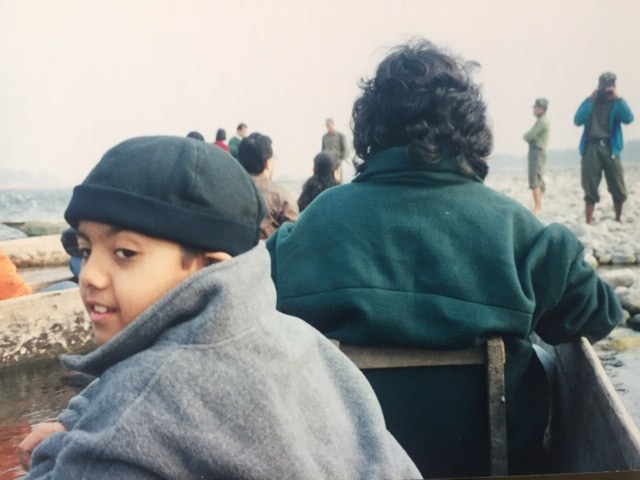
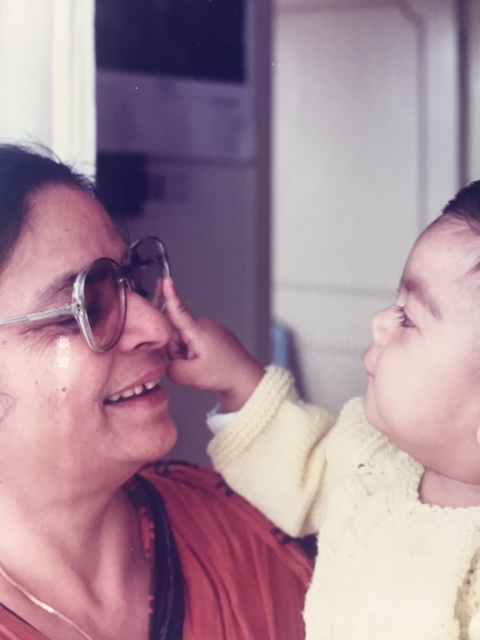
Shared as pictures are my mother with my son and my mother with me, crossing generations.
Why do you think this matters?
Please Share with your thoughts here for all of us to read and question J
It is a JOMO! Raised without siblings.

As an educator, I meet parents with children of various ages and stages of their lives. Many times, while discussing matters of behavior and attitude, parents have brought forth their concerns like:
- whether they should have another child;
- or for that matter now that they are bringing up a single child, after thoughts of should they have had another;
- whether they should adopt another child or perhaps even a pet to give company to their only child to grow up with;
- now that they have one child – what should they do/not do as a parent;
- what should they look out for and what should their concerns be for the future of their decision of choosing to have one child.
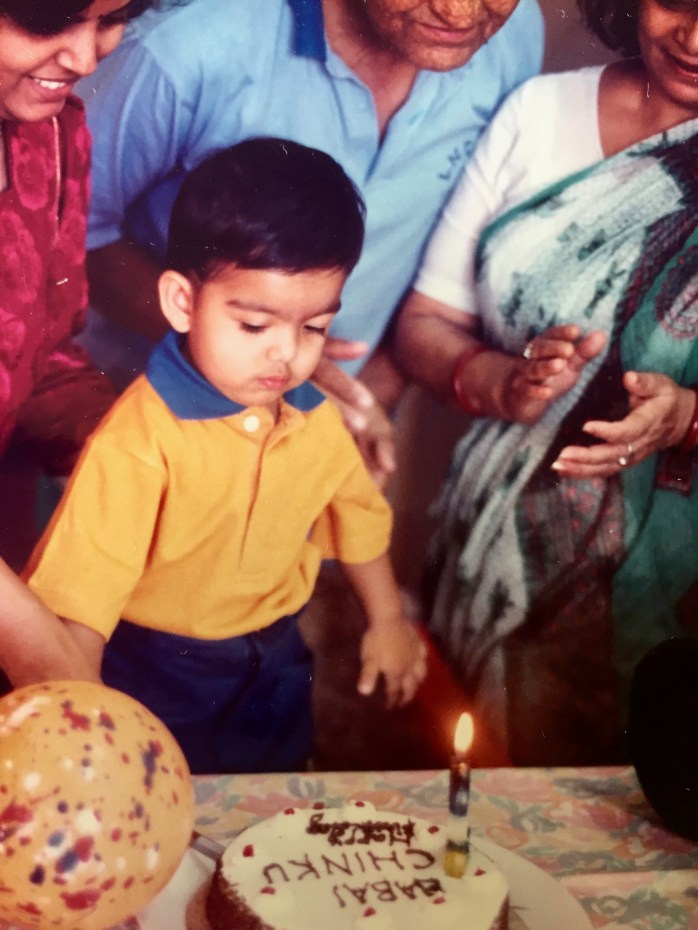
Interesting conversations I have had and heard over the years. First as a child, then as a parent and now as an educator. Here’s my perspective of a single child and mother of a single child. Reflections on the eve of my single child’s 27th birthday J
We chose to have one – and done!
That’s right. For us and also my parents, it was a conscious choice we made. Since I am presenting my personal view point, here are some disclosures to give you an idea where I am coming from. I was raised a single child and my husband(who has one sibling) and I chose to raise a single child as well. I understand from my conversations on this matter over the years that many of us have had one child for varied reasons (not as a choice) like that of late age marriage, fertility matters and assisted pregnancies making it a difficult process to conceiving a second time round, health issues that pre-existed like Type-1 diabetes making the decision of having one child pragmatic, a difficult first pregnancy, full time career choices or separation from the spouse. That was not the case for my mother or for me for that matter despite both of us being career women. We had a support system of extended family to help us manage both career and children. We had normal pregnancies and kept averagely good health.

Since I am an only child, the big cliché about being one did not worry me when it came to my choice of having one.
A single child is often lonely
- A single child gets used to spending time alone and flexing imagination, with contemplation and reflection, with music, with reading, with journaling.
- One learns to develop relationships outside of immediate family, with friends and people of all ages which is a skill that is becoming very significant for the millennials. Especially with younger generation as people of my generation find a gap between the world and themselves if they are not in touch with the youth and children as our worlds vastly differ. Entry for us into this new connected world is through and with the younger generation.
Not having a sibling to continuously being compared or compete with – unwittingly done by parents, family and friends and most definitely in school – gives a sense of internal confidence. A single child grows with a security. I felt less compelled to compete or to put other people down all through the many cross roads of my life.
Neither my son or I turned out to be entitled! Being privileged is not be confused with being entitled. A brat is a brat because how he/she is brought up. My parents could provide for me and us for our son – with much more opportunities than might have been possible with their/our salaried means. Teaching our children gratitude and grace cannot be relegated to having multiple siblings to ensure it. It is a key area of responsibility for the parents (and grand parents in our case as our son was lucky to grow up with both sides of grandparents in our home).

I worry about my son being alone when my husband and I are gone. A situation I am in as both my parents are no more. I also worry about my son having to take care of one or both of us all by himself as we grow older. We live and work in a country different from that of our grown son. My personal existential distress that waxes and wanes over matters that do not get solved by logical and deductive thought processes. For situations that just have to be lived through for the many random factors that occur and affect the outcomes. It is quite the same as that of having one child or more. A decision you just have to live through.
The decision of having one and being done gives rise to several imponderables as:
- It would be nice to have had a sibling whose home one can go to just hangout or decompress or hibernate.
- It would be great to be able to talk about your growing years, about your parents living or long gone.
- It would be so much comforting to be able to share your pain of loss of loved ones.
- It is nice to imagine that if my son had a sibling with whom he would be close to and can grow old with and share his joys and frustrations, help him when we are old and ailing, when he needs to share the care for either of us, when we are gone.
However, these are assumptions. These are imaginary assumptions of the second child/sibling that my son would have had.
These would be correct if:
- The imaginary second child is healthy
- The siblings get along
- They would be in geographies that they can be for each other and us
- That we could afford the same opportunities for both/more children
I would call these the fantasies to come true for the assumptions I made before. My fiercely logical mind knows that those could not have been the basis for us to take on the irreversible decision of having more children than the one I had. So I (and I know that my parents felt the same) chose JOMO (joy of missing out) over FOMO (fear of missing out). My parents discussed often during my years of growing that if they had a second child, it would surely threaten their overall economical and emotional dynamics. Both of them came from large loving and stable families with several siblings (my dad was the eldest of 6, my mother was one of 9 including her twin brother). They would know 🙂
I have many young parents sharing their FOMO with me. It is a choice we make. Parenting is often described to be as more Joy than Fun. I must say that I know for sure, for my parents and then us as parents, we had both Joy and Fun.
Happy Birthday dear son!
Have you lost a friendship? Have you kept some? It’s the friendship month – let’s talk.

Making friends, keeping friends, giving up friendships – A life-skill for us to understand and share with our children and students. Dost dost naa rahaa, pyaar pyaar naa rahaa…(friend did not remain a friend, love, did not remain as love…) released in 1970, sung by Mukesh and written by Shailendra was a great hit at the time and went on to win several awards. I remember listening to this song on a valve radio that we had at home and later during my college days playing it from spool tapes for listeners of AIR – Vividh Bharati, as a radio announcer (no concept of RJ then) . I caught up recently with a class mate of mine. She shared about her pain from the loss of a long term friendship of hers for reasons she could not comprehend and this song sprung to my mind instantly. I have had similar experiences a few times over the last almost fifty years of my life. I have made some lifelong friendships and kept them. Some I have lost for reasons not clearly known to me.


This song from the movie Sangam a Raj Kapoor – Rajendra Kapoor – Vaijayantimala starrer explores why friends do not stay friends forever and love changes its hues with time. Everything is subject to change as that is the nature of our existence. We are moving through not only time and space but also through realities created by our own decisions that we constantly need to make. Jo zindagi ke rah mein, baney thae mere hamsafar, woh mere dost tum hee thae, tum hee toh thae…(who was my guide in the path of life and became my fellow traveler, that friend was you, was it not?)
I could understand the pain of my friend of losing a friend, having gone through it myself. In my quest for rationale, I had turned to reading small bits of writings in philosophy – Indian, Chinese, Buddhist, Greek from various ages. In his ethical masterpiece, The Nicomachean Ethics, Aristotle examines quite extensively on the virtue of friendship. It is a fairly easy read with simple sentences and ideas, making a number of well-reasoned value judgments. His insights have become everyday sayings like “Man is by nature a social animal”.
Who are your 5 closest friends? A question to ask yourself, your children/students. I did that for myself and also as an educator with my students of varying ages. Think of the people you can talk to about anything, the ones you have known for some years, the ones you can always call even if you have not been in touch on an everyday basis. In today’s age of social media – with Facebook friends and What’s app groups existing alongside and overlapping, most of us have more than 150 connections – the supposed maximum number of the meaningful social relationships you can have according to Dunbar’s suggested cognitive limit (Robin Dunbar, British anthropologist, who in 1990s found a correlation between primate brain size and average social group size).


Aristotle describes friendship as reciprocated goodwill. According to him, It is the source of that goodwill which differentiates the three kinds of friendships you can have:
- Friendships of utility: between you and someone who is useful to you. Your carpool buddy, your child’s class parent, your homework/project collaborating friends, your shopping buddy, the guy who helps you with your presentations/technology, your neighbor who watches over your child/dog/parent, or for that matter – I like your face book post you like mine – and in all of these situations, you do something in exchange in some form to keep this going as you scratch my back, I scratch yours – friendship.
- Friendships of pleasure: these are between you and person/people whose company you enjoy and can overlap with the kinds mentioned above. These people you like for their qualities of wit, beauty, intelligence – for some activity like your tennis/golf buddy/gym partner, chit-chatting or sharing a joke, having a coffee or a drink together or spending time in a book club or music circle. This kind of friendship exists as we like some aspects of the other. It is different from friendship of utility as that one exists mainly because that person can help us in some way or the other. This one is not purely utilitarian but adds value to your social life.
- Friendships of the good: this one is based on mutual respect and admiration thus taking the longest time to build. These are enduring friendships. They last when you have similar values. When we have similar visions (not views necessarily) of how the world should be. These friendships typically begin during our school and college days and sometimes during our working adult lives.
Over the years, we accumulate many “friends”. While it is good to have the maximum energy and emotion devoted to the third kind – Friendship of the good, mostly the beginnings of these are in the first two kinds of friendship – you are thrown in together because of certain circumstance (of utility), you come closer over time with some (of pleasure), you nurture them over the years (of good).
So when you lose a friendship, a very painful experience – give it a thought. What category was the friendship actually in? if it falls in the first two, tell yourself – it’s okay. This is also a life-lesson for our children and students especially the adolescents and young adults; to recognise the nature of the lost friendship and agonize over the loss accordingly! This would keep them (and us) balanced in our emotions when we have to decide to preserve a friendship and when we can let go of a friendship. Friendships of pleasure and usefulness are easily dissolved when the other person is no longer pleasant or useful. This is a good point to reflect upon – you have lost a friend because either you/him-her are no longer useful or pleasant in context to each other. All the while keeping in mind that all relationships are subject to change!


What do you think? What categories do your friendships fall into? Can you try for increasing/pruning a certain kind of friendship over the other? Did you know that younger people have more friendship of pleasure and older people of utility? An interesting human insight there.
Note to self, I think I have plenty from category 1, quite enough of 3, however, I think I need to loosen myself and get some more of 2 🙂 Perhaps join that yoga class in the evening or a weekend hobby class of gardening…
“It is a good thing, to have many friends. No one would choose to live without friends even if he possessed all other goods” – Aristotle.
I agree. And I also advocate that – “Har ek friend zaroori hota hai” – (Each (type of) friend is necessary). Go on, make some more and make some of those deeper, freinds with whom you can sing along one of the most loved songs on friendship from one of Bollywood’s iconic movies , Sholay – “Yeh dosti, hum naheen todengey, todengey, dum magar, tera saath na chhodenge…(even after I depart from this life, we shall not part with this friendship, ).
Share with me your friendship types. Your wins and woes. Happy friendship month!
You want to change your child’s behaviour?Here are 5 things you need to know.

Where do you think your parenting responses lie when it comes to behaviour of your child on the spectrum of – Achievement based (western approach) to Pressure based (Eastern approach)? While one is more focused on the goal, the other focusses on the way to achieve the goal. Think of it, are they mutually exclusive when it comes to behaviour? Somewhere on the spectrum perhaps lies the sweet spot of balance that all of us as parents wish to achieve every time we want to address our child’s behaviour. As most matters of parenting, our response reflects our personal values and beliefs.
Here are 5 key things you need to know when you adjust the slider on that spectrum of your personal parenting approach.
- Behaviour is driven by emotions
Open ended surveys of adolescent children and their parents for qualitative analyses have often shown significant differences between what children think their parent’s expectations of their academic and co-curricular goals are and what actually their parents self-reported expectations are. Children have always rated the expectations much higher and as a result felt much more pressured leading to a range of behaviour, from rebelling to depression.
Younger children express it quite similarly. They throw tantrum or ignore your instructions.
- Parenting based on “carrot and stick” does not work
Fear based parenting or reward based parenting works immediately. Fails long term. Parenting is a marathon and not a sprint and thus what works only short term is not a good strategy to adopt. Should you reward when your child shows kindness? Do you reprimand when your child is lying? What would you have liked when you showed such virtue or vice? How was it when you were kind last time? Was the satisfaction it’s own reward? And why did you lie last time – what did you feel about yourself – what situation made you lie – under what situation you would have not lied? You may want to ask these to yourself and then work it out with your child similarly. You will develop your own unique recipe that will work perfectly to suit your personal parenting style.
- Check your definition of mis-behaviour
Much of what we define as mis-behaviour is actually normal and needs to be understood over the growing years of the child. A toddler child will not share his/her toy with another child and is a sensory-motor scientist touching-licking-pulling –spilling – squishing things. A 5-6 year old will play away from parent and have more elaborate discussion of emotions and group rules just as a teenager will turn to their peers for suggestion instead of adults.
- Positive affirmations lead to positive behaviour
Rosenthal and Jacobson’s work on Expectancy Effects demonstrate the power of self-fulfilling prophecy. In their study, students believed to be on the verge of great academic success performed in accordance with these expectations; students not labelled this way did not. Later research and my personal experience as an educator over the years has supported Rosenthal’s original conclusion – that teacher expectations can have a substantial effect on students’ scholastic performance. This works similarly on parental expectations from their children’s behaviour as well. Appreciating the behaviour that is in accordance to your family/personal values, reinforces. Reprimanding an action that you do not want to become a behaviour sometimes brings it to more focus than deserved. Ignoring or calmly mentioning might just be enough. Positive words lead to positive behaviour.
- All behaviours can’t be changed
And that’s okay. If it’s not life threatening and completely amoral, you may want to move on to what you would like your child to do instead of listing what you would not.
The paradox of child-raising is that you truly can raise your child essentially for free, although it will cost you your life. A young parent recently asked me how I felt as a parent as our son is all grown up and independent. I feel great I said, and will continue to be a parent. Parenting? That’s a verb. The action keeps changing with your own and your child’s age and needs.

What is your personal parenting dilemma on behaviour of your child? Sound off below.
Kozhukatta – a children’s book review

Sumi Chandrashekharan’s ‘Kozhukatta’ was read once by me a couple of weeks ago sitting with her, sipping tea in the patio, in about 5 minutes. Yes, it’s about 8 pages, illustrated story book and that’s the time it would take it for an adult to read silently cover to cover. But it is a whole new matter when you read it again, time extends from the 5 minute of quick read to about a good 10 minutes. You discover some new illustrations and several new words that you glazed past in your first read. Then, if you read aloud to yourself, it would take you anywhere from about 15 minutes to as long as 25 minutes. All of this calculation of time taken to read goes for a complete toss if you read it aloud to a child!
That’s right. When you are reading to a child, the story of ‘Kozhukatta’ is exactly that. Something soft, something white, something round, something delicious… literally and metaphorically. The character of forgetful Ponnu is at the same time irritating and endearing. It is that of a child and also of a grown person. The setting is Kerala, a state in the southern part of India and is adapted from a traditional tale but is quite transferable to any geography. On a visit to a friend’s house, forgetful Ponnu is offered delicious dumplings. He has no intention of letting its name slip from his memory… what happens next? Find out in this noodlehead story.
‘Kozhukatta’ – pronounced Ko-rrru-ka-tta, where the zh is like the rrr in purr says a cat (go look for it amongst the many bold and some subtle illustrations on the pages) is a fun read. You can see the author’s understanding as an early childhood educator herself, of what makes a good story for young children. For those who have read stories to children know that children like to listen to the same story over and over again. Young children enjoy simple stories that are layered so that while it is being read to them for the nth time, they can ask you something or exclaim at something or anticipate something each time. Children look at illustrations while you read to them and just you finish the last word or sentence on the page, they are still looking at something on that page and ask you to wait a few seconds more before you flip to the next. The narrative and the illustration of ‘Kozhukatta’ provides adequate opportunities for both.
So this morning when I read ‘Kozhukatta’ the 8 page, 5 minute to read and see book for an adult, the educator in me took a good half hour. I found that crow peeping out from the bush as the birds flew with the word. I discovered that each of the alphabets had a body shape to it – just like I have seen our preschool teachers working it out with the children. That Ponnu had his dress folded up while performing the alphabets just as it is done by men in Kerala when they get up to start a walk or ride a bike!


P.S. I had a noodlehead moment myself as I was telling about the book to a friend whether it was ‘Kozhakattu’ or ‘Kottukazha’ or ‘Kokkazhattu’… So is there a Ponnu – noodlehead story series in there somewhere Sumi from this part of the world?
Illustrated by Zafouko Yamamoto and Published by Tota books, the book is now available in stores and on amazon.

