Nivedita Mukerjee
Education consultancy for parents and schools
3-2-1 Tuesdays with Ms Niv

Issue #287, 30th December 2025
What have I learned this year? What have you learned this year? What has your child/student learned this year – which is not from a video/social media/power point slide/worksheet/written text ONLY? and how much have you retained from that for using next year? What experiences have you gained last year in school/home that you will take with you to next year?
Happy New Year. May we all learn and grow more and better in the next year.
This is a free newsletter. If you like my content, please subscribe by entering your email address here
Three Images of the Week

Two Thoughts of the Week
“Some things are so important that you have to learn about them on your own.”
― Paulo Coelho, The Valkyries
“Comfort and luxury may come with owning a high-end car, yet it’s the occasional travel in a crowded bus that truly imparts priceless virtues of patience and humility, unattainable by wealth alone”
― Shabira Banu Hussain Sumbhaniya
One Video of the Week
Educational revolutionary and educator of gifted & talented students, Adrienne Alexander, makes an informed, entertaining, and passionate case for including experiential learning throughout the school curriculum as a fundamental element, distinct from an optional reward. Adrienne Alexander has worked in education in New Zealand and Australia for nearly 30 years, focusing on gifted education since 2014. Much of this work has been in the private sector working for, and then running, Extension Education which provided experiential learning opportunities for gifted children in Brisbane and on the Sunshine Coast. Adrienne has since been snapped up by Education Queensland and is now teaching a specialised program for gifted children in Brisbane. She continues her passion for immersive experiential learning experiences in her current position as she believes that experiential learning increases student motivation and deepens student understanding of classroom concepts.
Reading with Ms. Meenu: Tip of the week
Strategies on How to support strong spelling at Home: Encourage Writing: Although spelling bee contestants spell aloud to demonstrate their mastery, your child’s earliest attempts will likely be on paper. Nurture their writing by always having paper and crayons or colored pencils on hand for them to scribble away long before they can write letters we’d recognize. It’s a joy to behold the creations that a stack of index cards and a pencil in the back seat of the car can inspire.Children as young as 2 or 3 years old demonstrate some knowledge of writing, even if they have no idea yet that it connects with spoken language. Pretend-writing grocery lists, restaurant menus, signs and so on as part of play at home is a precursor to spelling, too. One day you may notice that those scribbles are running from left to right and top to bottom on the page. Another day some conventional looking letters may start popping up amid the slashes and squiggles. You can ask them what their writing says and even transcribe a traditional version of it below their scribbles. Way to write! What does this say? I see. I would write it this way: The dog is happy (Point to each word as you say it.) Bonus: You get a record of funny stories to revisit and share as they grow.
Applaud Early Spelling:The early quality of your child’s spelling reflects things in their phonemic awareness, letter knowledge and the associations they make between the two. With reading, the letters are given to them and they have to sift through their knowledge of a limited set of sounds to approximate a pronunciation. With spelling, they’re hearing a word, segmenting the sounds and settling on one letter sequence from numerous possible combinations. and writing those with their own spellings is OK. Giving kids the freedom to invent their own spellings doesn’t interfere with their ability to learn conventional spellings later. In fact, researchers say the exact opposite is true: “Allowing children to engage in the analytical process of invented spelling, followed by appropriate feedback by parents/teacher has been found to facilitate learning to read and spell, not hamper the process”.
Happy Reading!
Meenu Gera, Consulting home and school librarian reading guide.
I Think, I Wonder, I Ask
–Dr Shreelakshmi Subbaswami, Academic Director, Vijaya School Hassan, Karnataka
Assemblies or Arrivals? How Do We Really Begin a School Day
Not just on the timetable, but in the bodies, minds and emotions of children and educators. For most of us, the answer is predictable. The bell rings. Children gather in rows and columns. A prayer is recited, an anthem is sung in chorus, and instructions are announced. Then, they disperse into classrooms. It feels orderly, familiar and largely unquestioned. If we pause and look closely, this ritual mirrors more of an industrial workflow than a learning space meant for children.
For older students, a structured assembly may hold some relevance. But for younger children, it sits oddly against their natural rhythms. Early years children are not wired to stand silently in large groups. They arrive bursting with stories, emotions, energy, and the need to connect. Morning is the richest time to listen- to their experiences, their feelings, their worlds outside school. Instead, we often ask them to suppress all of that before learning even begins.
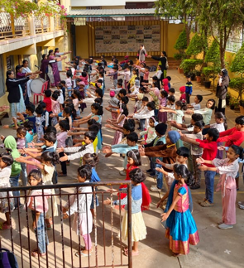
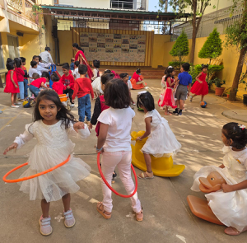
Recently, our early years team made a courageous shift. Assemblies were replaced with play. The silence replaced into movement, laughter, conversation. It was unsettling for adults. The loss of control, the sounds, the unpredictability felt uncomfortable. But something else emerged evidently: joy, social connection and readiness to learn. Teachers tuned in immediately because the children were tuned in first.
After all, if our intent is to learn with joy, our mornings must reflect that belief.
Three questions for you…
– What are the real components of your assembly?
– How do you create time and space for children to interact and arrive as themselves?
– And which long-held practices are ready to replace- with what, and why?
Dear reader,
I work with the school leadership team as an advisor and collaborate with teachers as a pedagogical trainer for whole school development. I also help parents as a parenting counselor and regularly engage one-on-one with students as a personal guide and mentor. This weekly newsletter shares what I read, learn, and experience.
3-2-1 Tuesdays with Ms. Niv is a newsletter you can subscribe to and enjoy your learning journey with me.
3-2-1 Tuesdays with Ms Niv

Issue #286, 23rd December 2025
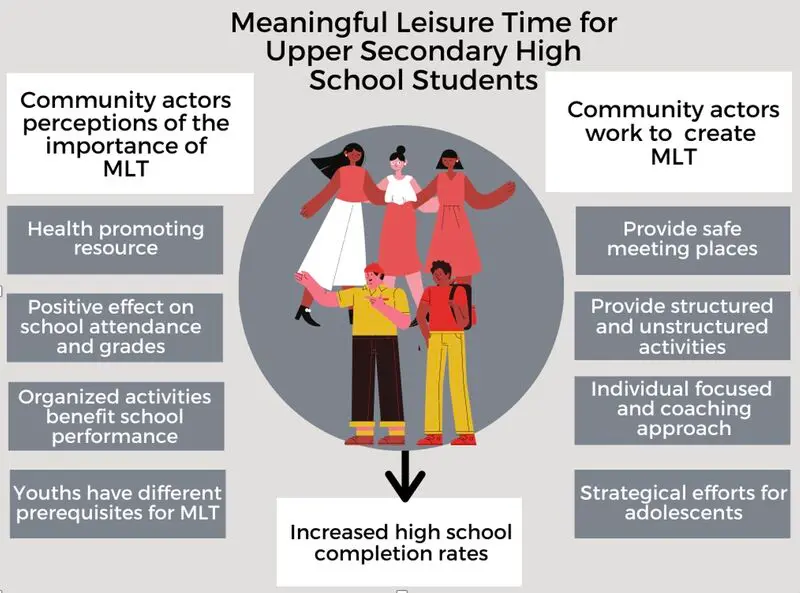
1. Does your child/student have unstructured time for self-directed activities?
2. Is there time for meaningful social connection outside academic settings?
3. Does your child/student show signs of balance rather than chronic stress?
The goal isn’t just quantity of free time, but quality—time that genuinely restores, connects, and allows for growth beyond academic achievement. If you and your child/student has it then congratulations! well done you. If not, let us aim for it in 2026, a brand new year awaits.
This is a free newsletter. If you like my content, please subscribe by entering your email address here
Three Images of the Week


Two Thoughts of the Week
FUN is the safety-valve to let off the steam pressure out of the boiler to keep the old thing from busting. ~Josh Billings, revised by H. Montague
It is in his pleasures that a man really lives, it is from his leisure that he constructs the true fabric of self. ~Agnes Repplier
One Video of the Week
In a society that increasingly measures our worth based on productivity, busyness, and achievement, are we ever really “off”? As Marina Cooley argues, if we identify and limit the hidden work in our lives, we will access true leisure, which simultaneously can unlock creativity and calm the nervous system. Marina Cooley is an Assistant Professor of Marketing at Goizueta Business School. Prior to joining Goizueta, Marina spent more than 15 years in strategic marketing roles at Coca-Cola and Lavva and worked as a management consultant at IBM. A storyteller at heart, she has been featured in the New York Times and Yahoo Finance and honored as one of Poets & Quants 40-under-40 Best MBA professors. In addition to teaching marketing, Marina researches the topic of leisure, specifically focusing on how to approach life design and work/life balance in a way that makes space for discretionary time. She shares these learnings in an undergraduate course titled “Personal Development” and with graduate students via “Life Design for the Modern MBA.”
Reading with Ms. Meenu: Tip of the week
How Parents Can Spur Spelling:
Successful storytime means a comfy setting, good books and page turning performances. By comparison, spelling with your child feels stripped down, a cappella rather than musical theater. There’s no deferring to an author’s words, an illustrator’s images, or a character’s voice to guide the lessons or drive engagement. Still, talking about words and segmenting them into letters can bring a mindfulness, care and engagement to family life that’s just as vital and powerful as a read-aloud.
Parents have ample opportunity, through the days and years to meaningfully explore and cultivate spelling with children. We’ve got the time even if it doesn’t always feel that way and can build the expertise to teach kids fruitful strategies, encourage interest in words, and help them become more reflective and analytical about their writing. Let’s discuss these ways to support strong spelling at home.
Consistently draw attention to Print: Kids learn a lot about spelling without being explicitly taught, and this learning begins as soon as they pay attention to written words, typically around 3 years old. Their environments – the books, signs and other text around – provide the raw material for subconscious learning. Whenever kids lock in on the letters in books, on signs, on toys and elsewhere, they soak up and analyze visual characteristics of written language.
Kids instinctively pickup the relative frequency of different letter combinations from repeated exposure to writing in their environment and they apply this statistical knowledge to even their earliest spelling attempts. This unconscious awareness of visual patterns in spelling develops long before they learn that letters represent speech sounds or start trying to spell phonetically. Researchers call this process “statistical learning” because these spelling efforts are informed by how frequently a child has seen letters appear in certain combinations, order and positions.
Parents aid statistical learning by facilitating lots of exposure to print. In the beginning, this requires an adult directing the child-for instance, pointing to the text accompanying an illustration in a picture book, or their name on a piece of paper.
Stay tuned with next week’s newsletter on more strategies to support strong spelling at home.
Happy Reading!
Meenu Gera
Consulting home and school librarian reading guide.
I Think, I Wonder, I Ask
–Dr Shreelakshmi Subbaswami, Academic Director, Vijaya School Hassan, Karnataka
Do Longer School Calendars Actually Help Us Learn Better?
In school, we often ask this, almost instinctively: More working days mean better results, right? But pause for a moment and reflect- how many days do we actually spend in school, as students and as teachers? And more importantly, what do those days feel like?
All boards mandate a fixed number of working days. Somewhere along the way, productivity got equated with longer hours and academic success with packed calendars. So we quietly trim holidays, shorten mid-year breaks, and stretch school hours- often in the name of “syllabus completion”. In reality, teacher burnout and student fatigue are no longer exceptions; they are patterns, especially at this time of the year.
If teachers and students are engaged for more than 210-220 days a year, can we truly expect rejuvenation, reflection or freshness? Research supports what simple reflection already tells us: learning deepens where there is time to rewind and re-visit the concepts, not when we relentlessly push forward.
Students and teachers don’t thrive when they are constantly on ‘work mode’. They thrive when they have time to read beyond textbooks, explore interests, travel, play, sit in silence or even do nothing. These moments outside school are not distractions- they are experiences. And classrooms become richer when both teachers and students bring lived experiences, curiosity and renewed energy into shared spaces of learning.
Three questions for you..
- If you had fewer days, what would you choose to do more intentionally?
- How often do we pause to ask students how they are experiencing school, not just how they are performing?
- Do we provide teachers time within the school calendar to plan, reflect, and collaborate?
Career assessment, guidance, and placement strategies:
Young Thinkers Program offered by Shiv Nadar University
As quoted on the website, ‘ The Young Thinkers Forum is an extraordinary platform dedicated to guiding high school students, specifically those in grades 9th to 12th, on a journey of self-discovery and personal growth. Our mission is to help young individuals identify their areas of interest and equip them with the knowledge and skills to pave the way for a successful and fulfilling career.’
The list of engaging, fulfilling, and learner-centric programs offered by Shiv Nadar University are:
- Young Thinkers Forum (YTF) Winter School
- Young Thinkers Robotics Winter Camp
- Shiv Nadar Internship Program 2026
- Young Thinkers Forum Summer School
- Young Thinkers Forum Masterclass
- Young Thinkers Weekend Program
To know more visit: https://snu.edu.in/ytf/
Meet the University Official in person on Jan 10th at the College Fair at Capston High School, Hoskote, Bangalore, hosted by the school in collaboration with Fermata Career Solutions.
Fermata Career Solutions inspires young individuals aged 13 to 30 to unlock their potential through focused and customised career and college counseling. With expertise in University Readiness, CareerGym, and Master Parenting, the experts empower you to pursue your dreams and shape your future with confidence. More about us on www.fermataco.com
Showcase: Thrive Beyond School – A unique STEAM education project for very young learners.
– Pooja Khatter, facilitator, Thrive
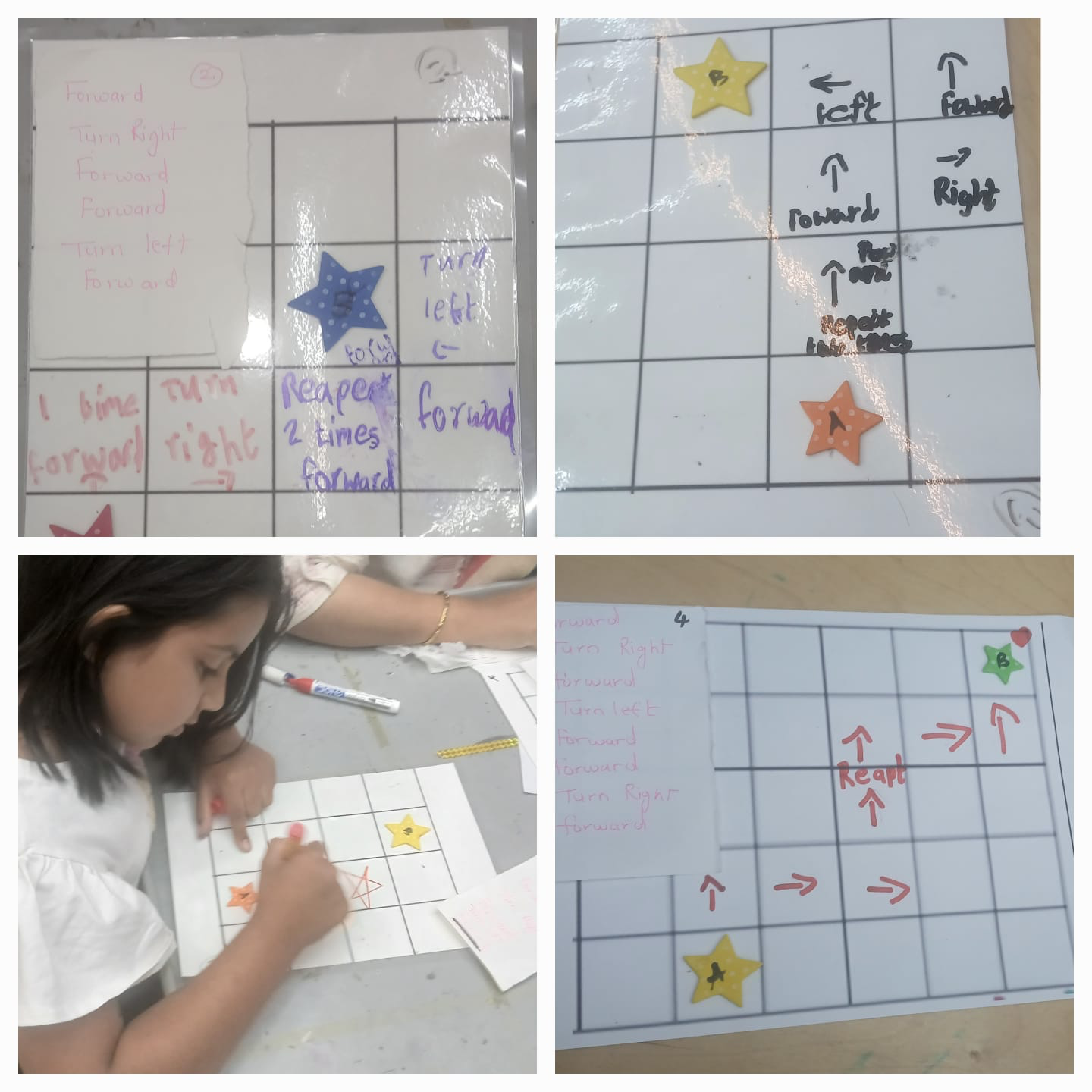
The children were able to recall and share the rules of the unplugged coding activity. They explained that a programmer needs to give clear instructions and correct directions for the robot to move. During the discussion, the children also shared their understanding of key coding terms: they said that ‘loop’ mean repeating steps again and again, and ‘debugging’ means finding and fixing an error.
The children demonstrated their understanding by following the instructions on their grids. They wrote clear codes, used directional steps, and applied repeat loops correctly. Neev and Mayra showed strong and clear understanding of the activity, while Tashi took more time because of irregular attendance. Samyuktha also showed her understanding using stars and arrows to represent the steps in her own creative way.
The class ended with HOTS (Higher Order Thinking Skills) questions, and the children wrote answers in their notebooks, showing good reflection and comprehension.
Dear reader,
I work with the school leadership team as an advisor and collaborate with teachers as a pedagogical trainer. I also help parents as a parenting counselor and regularly engage one-on-one with students as a personal guide and mentor. This weekly newsletter shares what I read, learn, and experience.
3-2-1 Tuesdays with Ms. Niv is a newsletter you can subscribe to and enjoy your learning journey with me.
3-2-1 Tuesdays with Ms Niv
Issue #285, 16th December 2025
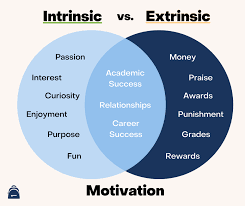
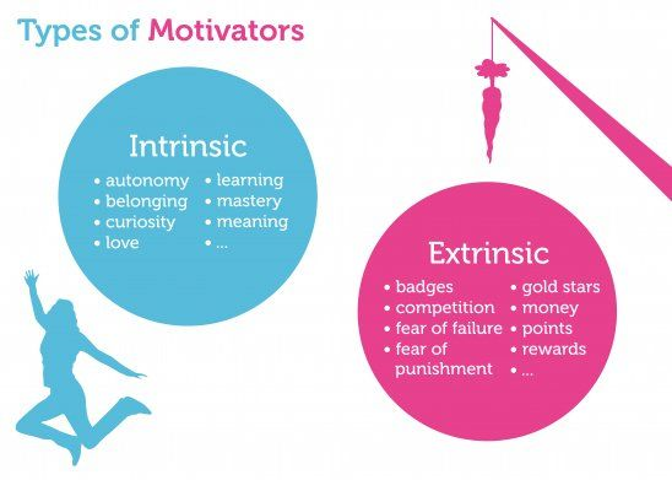
Recipe to kill motivation has 6 key ingredients.
- Expected reward
- Expected evaluation
- Restricted choice
- Restricted time
- Surveillance
- Competition
Do you have any or all of these in your classroom? home environment for your students/children? this is not based on hunches or anecdotal evidences but empirical data and are cross cultural, cross time, cross age groups. Go ahead and continue reading this newsletter.
This is a free newsletter. If you like my content, please subscribe by entering your email address here.
Three Images of the Week
Two Thoughts of the Week
“Brains, like hearts, go where they are appreciated.”
–Robert McNamara, Fmr. American Secretary of Defense
“There is more hunger for love and appreciation in this world than for bread.”
–Mother Teresa, Roman Catholic Religious Sister and Missionary
One Video of the Week
“Cultivating Intrinsic Motivation and Creativity in the Classroom” | Beth Hennessey
Beth Hennessey is a professor of psychology at Wellesley College, and she studies the powerful link between intrinsic task motivation and creativity performance. Hennessey frequently teaches a seminar on the psychology of creativity, a course on research methods in educational psychology, and a class on the psychology of teaching, learning, and motivation. Teaching is what makes her “tick.” She studies it, writes about it, and does it fueled by her own unending intrinsic motivation.
Reading with Ms. Meenu: Tip of the week
Word Wisdom:
As adults, we know that the professional world judges spelling mistakes severely. Errors in job applications and resumes tend to bias recruiters against candidates and harm career advancement, studies show. What we may not fully appreciate is that the consequences of spelling woes emerge in elementary school, long before students enter the workforce.
Here are a few things you need to know now about how spelling impacts children and how you can impact their spelling.
Spelling is integral to developing into a reader and writer. Spelling is the glue that sticks words in memory, renders them instantly recognizable in print, and makes reading them quicker and more fluent. Research studies suggest that the more accurate and stable your memory of a word’s spelling, the faster you’ll read the word. Spelling knowledge has been directly linked to sight-word reading, reading fluency, and even third grade reading achievement scores. And evidence suggests that explicit spelling instruction improves students’ spelling as you would expect, while also supporting better phonological awareness and reading skills.
Spelling errors negatively bias teacher assessments in schools, even when that’s not for the focus of their grading. Appearances matter so much that it’s hard for teachers to separate the content of student writing (the knowledge it displays, arguments it makes, and quality of supporting evidence) from its presentation (handwriting, spelling and grammar). Teachers struggle to fairly and validly view the substance of work that has spelling issues. Thus, students who struggle with spelling are at risk of receiving lower grades in other subjects and having their competency overlooked.
Through the years, you’ll observe volumes of authentic writing in the lists, letters and stories kids pen at home. They are great fodder to identify the words your child wants to use, those they struggle with and what you should teach next. (If you’re ready to assess their spelling chops and they haven’t written anything at home lately, suggest they draw up a birthday or present wish list or write to a friend.
Free from the confines of rigid school schedules, you have more time as parents to instruct your child on the spellings of individual words, when and how they’re needed. By doing this parents can make a huge difference.
Happy Reading!
Meenu Gera
Consulting home and school librarian reading guide.
I Think, I Wonder, I Ask
–Dr Shreelakshmi Subbaswami, Academic Director, Vijaya School Hassan, Karnataka
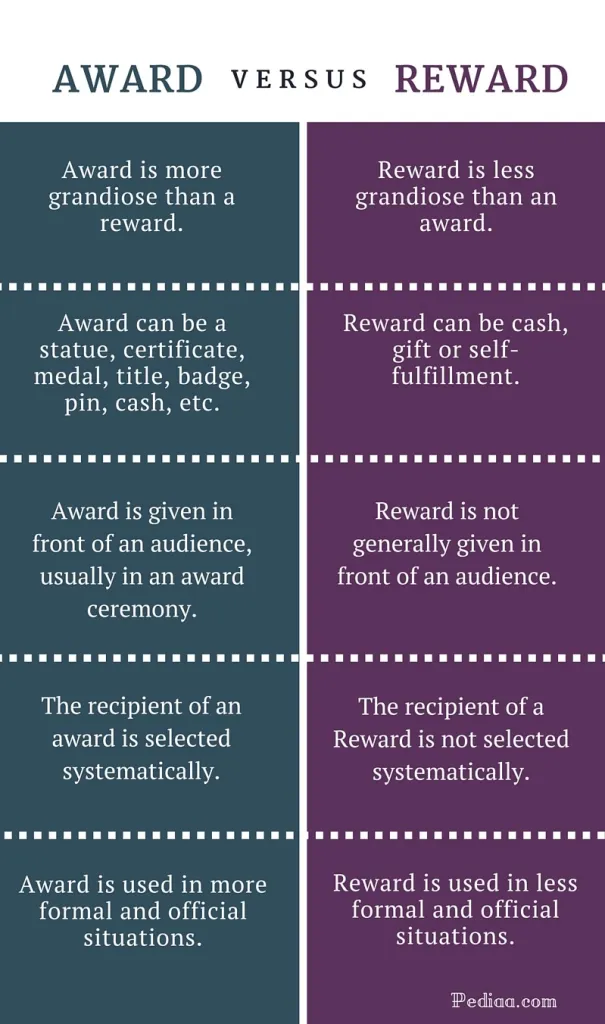
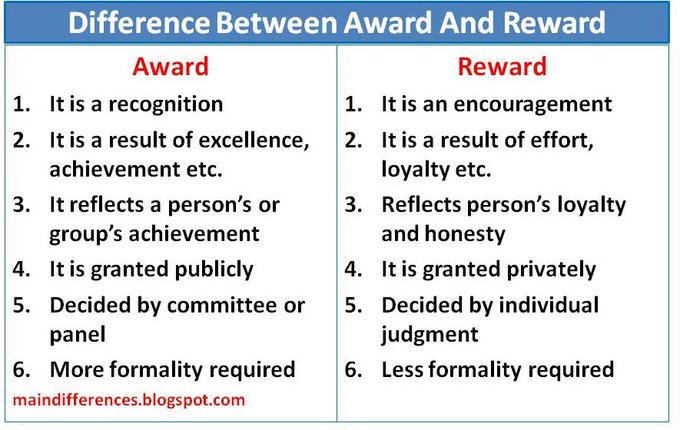
Awards and Rewards- for Efforts or Outcomes?
This time of the year, schools are filled with competitions and announcements. For some children, it is a moment of joy and recognition. For others, it feels heavy-sometimes even intimidating. I have seen both…
Competitions do motivate some learners, yes. But for many, especially in the schooling years, they introduce pressure much earlier than confidence. At an age when children are still building their sense of self, these moments can shape how they see learning, success, and themselves.
This is where we, as educators, can pause and reflect. Are our reward systems inviting children to grow, or are they pushing them to perform? And more importantly, what exactly are we rewarding?
Too often, we celebrate outcomes rather than efforts. We say, “Good job” or “You are a good students” without naming what the child actually did well. Slowly, children begin to associate approval with results, not with the process of learning. In some classrooms, rewards even start to resemble bargaining: “Finish this and you will get that…”. Learning then becomes transactional, not meaningful.
I have seen something else work. When a teacher says, “I noticed you stayed with the task even when it was difficult”, the child engages better. When we say, “You found your own strategy-tell me how,” confidence grows. High-fives, eye contact, genuine curiosity, and asking how and why- these moments reward the now, the efforts.
As schools, we need reward and award systems that build motivation, self-regulation, and identify- that make learning joyful, relevant and self-driven.
Three questions for you…
- What behaviours and efforts do you consistently reward in your classroom?
- Which tasks truly need external rewards- and which thrive on interest and intrinsic motivation?
- How can you make efforts visible, even when outcomes fall short?
Career assessment, guidance, and placement strategies:
Summer Programs at RV University
Step Beyond Textbooks to experience interdisciplinary learning at RV Summer School for Grades 11 and 12. Meet the University Official on Jan 10th College Fair at Capstone High School, Hoskote, Bangalore, to know more about the summer programs offered by the University:
- School of Liberal Arts and Sciences
- School of Design and Innovation
- School of Business
- School of Economics and Public Policy
- School of Law
- School of Films, Media and Creative Arts
Fermata Career Solutions inspires young individuals aged 13 to 30 to unlock their potential through focused and customised career and college counseling. With expertise in University Readiness, CareerGym, and Master Parenting, the experts empower you to pursue your dreams and shape your future with confidence. More about us on www.fermataco.com
Showcase: Thrive Beyond School – A unique STEAM education project for very young learners.
– Pooja Khatter, facilitator, Thrive
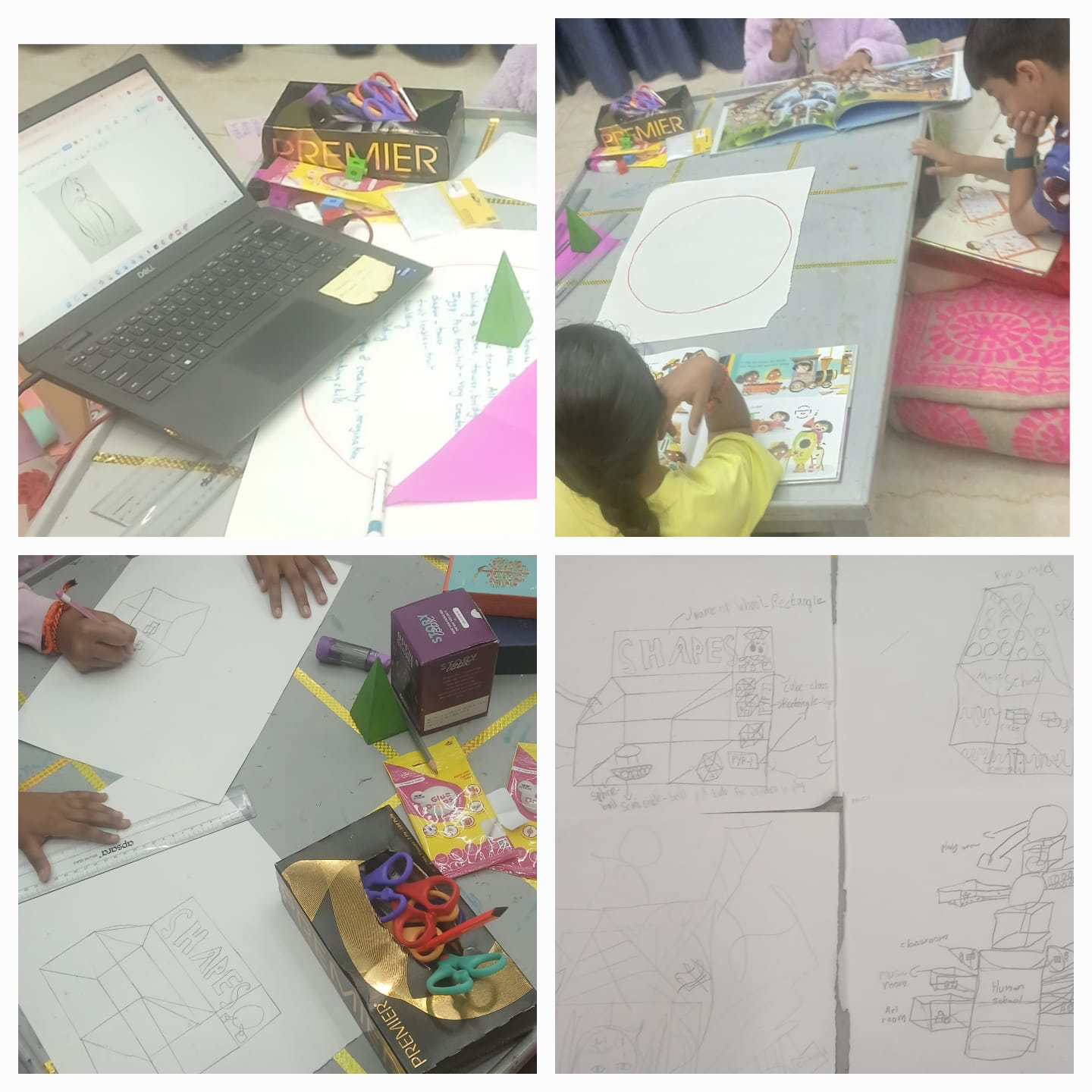
The session began with an engaging book exploration to introduce the concept. The children read and observed Boxitects, The Shape of the World, Iggy Peck, Architect, and Someone Builds the Dream. Following the reading, they shared their understanding of the stories and confidently connected the ideas to the concept they were about to explore.
The children then observed two visuals—a 2D drawing of a cat and a 3D cat craft model. They identified that the 2D drawing could not stand, while the 3D model could stand on the table and looked more realistic. Mayra clearly explained that 2D has two dimensions—width and height—while 3D includes width, height, and length. Tashi made a meaningful connection to prior learning by sharing that a net can be folded to form a 3D shape.
When asked which shapes could be used to build the body of a cat, the children confidently named the sphere, cylinder, cuboid, and cube. The session concluded with the children stepping into the role of architects as they designed a school layout on paper, as a planning activity before moving on to 3D model construction.
Havishka: 7 years 7 months
Neev, Mayra & Tashi: 7 years 3 months
Dear reader,
I work with the school leadership team as an advisor and collaborate with teachers as a pedagogical trainer. I also help parents as a parenting counselor and regularly engage one-on-one with students as a personal guide and mentor. This weekly newsletter shares what I read, learn, and experience.
3-2-1 Tuesdays with Ms. Niv is a newsletter you can subscribe to and enjoy your learning journey with me.
3-2-1 Tuesdays with Ms Niv
Issue #284, 9th December 2025
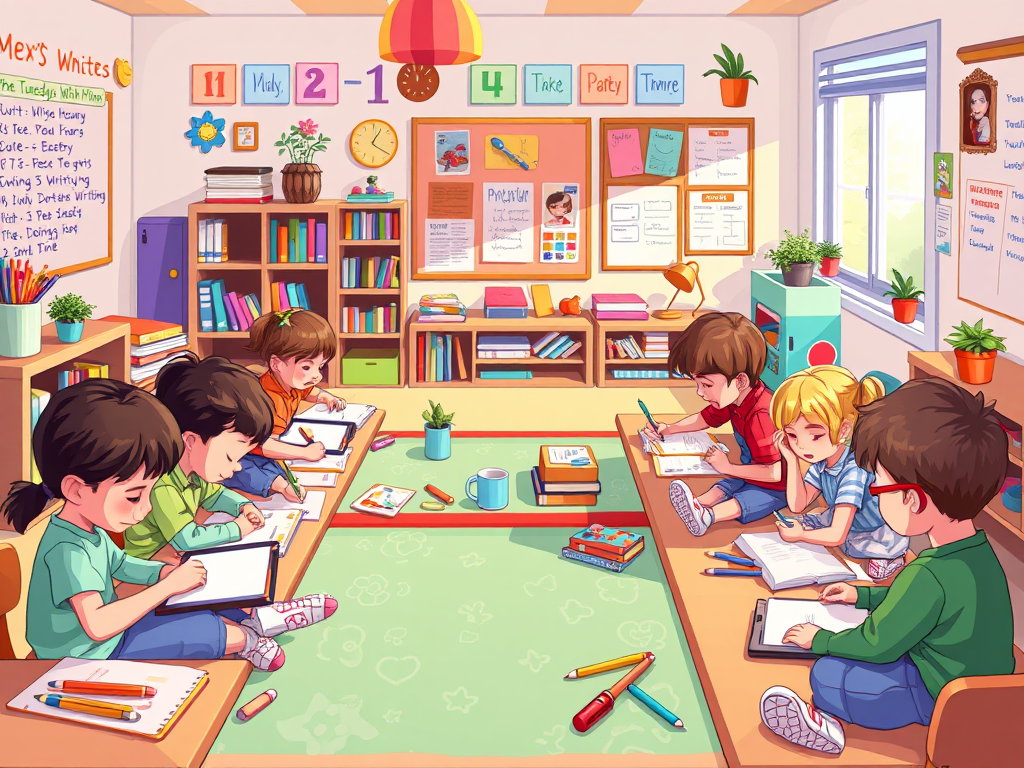
When children choose what to write or how to write, creativity blooms. In classrooms where teachers talk less, listen more, students tend to write more and better. Some tips for parents and educators to support their children/students to enjoy writing:
- Offer writing choice menus: poem, diary entry, comic strip, story, letter, persuasive note, script, riddle, etc.
- Let them choose where to write—on the floor, in the window area, on the carpet, or at the group table.
- Integrate multisensory elements: music, nature walks, object observation, videos—students write from experience.
- Incorporate peer-sharing circles to build confidence and inspiration.
This is a free newsletter. If you like my content, please subscribe by entering your email address here.
Three Images of the Week


Two Thoughts of the Week
Stephen King: “The scariest moment is always just before you start. After that, things can only get better.”
Ralph Waldo Emerson: “The only way to write is to write.”
One Video of the Week
How can high school students develop critical thinking skills, courage to use their voice, and become more effective communicators? Creative writing. It’s powerful… but it’s not what we’re taught in the classroom. In this talk, Anna explains how language arts teachers can prepare their students for The Real World. She shares 3 techniques anyone can use to sprinkle personality into their writing. You’ll also hear the story of a modern one-room schoolhouse that illustrates the toxic environment all schools should avoid
Reading with Ms. Meenu: Tip of the week
Home Language is an advantage for Reading:
Parents who speak languages other than English at home may worry about whether they are pronouncing English phonemes correctly, and they can be hesitant to work on phonological awareness as a result. Don’t even worry about it. There’s evidence to suggest that phonological awareness originally developed in a different language like the parent and child’s first language transfers to phonological awareness and improves word reading skills in English. All languages have underlying sound structures that children need to gain familiarity with, so there’s value in working on phonological awareness in whatever language the parent or caregiver is most comfortable with. Take pride in your first language, keep it central to your child’s life, and seize opportunities for wordplay. You can make up silly sentences with words beginning with the same sound in Hindi or another language just as easily as in English.Use your own language that you’re confident in when they’re little, and get them to hear the sounds in your home language and develop those skills, because that’s an absolute treasure.
There’s beauty and consequence in using your own language. It’s important for little ones that they just start hearing the sounds in their language – being consciously aware of the first sounds and words, listening to the rhythms of their language, and really bringing their attention to the sound structure of their language.
Early on, kids are developing the cognitive ability to hear sounds in words, starting with listening to the rhythms of songs and everyday language. So even if it’s a goal for your child to learn English, in this early stage there’s a benefit to using your home language to build phonological skills. There’s evidence for cross-language transfer.
If you’re good at phonological awareness in your first language, you will pick up those same types of phonological awareness skills when you come to learn a second language. And equally, if you struggle in one language, you will struggle in another. But don’t stop there. If English fluency is your goal, seek out opportunities for your child to gain exposure to English phonemes, the English alphabet, and oral language.
As a parent you don’t have to provide all the language experience your child needs yourself. You can give them the best of what you have and seek out what you can’t directly provide. Sometimes, the conversation partners, word-game players, and nursery-rhyme singers you need may be found in friends or family members who speak the target language, at library programs or in early day care centres. Audiobooks, recorded music, and cartoons in the second language provide language exposure too. Get clear on what you can give, and get intentional about supplementing the rest. This whole process leads to strong reading skills.
Happy Reading!
Meenu Gera
Consulting home and school librarian reading guide.
I Think, I Wonder, I Ask
–Dr Shreelakshmi Subbaswami, Academic Director, Vijaya School Hassan, Karnataka
Writing Beyond Beautiful Letters
Writing is one of the most powerful human abilities, yet somewhere along the way, in many school, writing is still an exercise in perfecting letters rather than a tool for thinking and expression. For years, many classrooms have been obsessed with handwriting drill: hours of copy-writing, pattern tracing, erasing and rewriting…
I often hear teachers say, “Rewrite this, the handwriting isn’t good.” And children follow, practicing the same sentence multiple times, not to improve the clarity of their thoughts. Even in high school, I see students spending precious hours rewriting notes to make them look “perfect”, instead of using those hours thinking deeply, reflecting, and crafting original ideas.
What is good handwriting, really?
It is writing that is legible, comfortable to read, and owned by the writer. It does not need to be artistic, identical, or ornamental. It needs to carry the student’s voice.
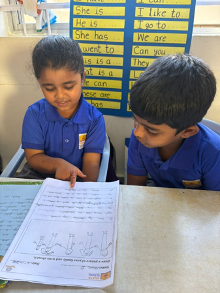
Last week in a Show and Tell session, our five- years-olds proudly read out their writing about families. Nothing fancy. No identical strokes. Just honest, neat, meaningful writing, they had the joy on their faces, as peers, read their words. For all who witnessed this, it was a gentle reminder that writing is meant to be heard, shared, and felt. Not judged for aesthetics.
Expression is a skill, when we nurture it early, children learn to think, reflect, and communicate with courage. Handwriting will follow. It always does.
Three questions for you…
- What strategies do you use to build confident and expressive writers?
- How much should handwriting matter- and why does it matter to you?
- What would change in classrooms if we valued ideas over appearance?

Career assessment, guidance, and placement strategies:
Navigating the College Application Journey: 5 Ways Parents Can Empower Their Grade 12 Child
Grade 12 is a whirlwind of emotions, academic pressure, and big decisions, especially regarding college applications. You naturally want to help as a parent, but finding the right balance between support and overstepping can be tricky. This post offers five key tips on empowering your child to navigate this exciting yet sometimes stressful process with confidence and ownership.
- Foster Ownership: It’s Their College List
It’s easy to get caught up in our own aspirations for our children but remember: your child is the one who will be attending college, not you. Encourage them to take the lead in researching institutions and developing their college list.
- Guide Towards a Realistic & Balanced List
While fostering ownership is crucial, providing guidance on creating a realistic list is equally important. A well-rounded college list typically includes a mix of ‘reach,’ ‘target,’ and ‘safety’ colleges.
- Brainstorm Course and Major Choices Together
Encourage your child to think about their passions, strengths, and what subjects genuinely excite them. The goal here is to help them identify areas of study that spark their curiosity.
- Navigating the ‘Course vs. College Name’ Conundrum
For some students, the specific course or program they want to study is paramount, while for others, the prestige or reputation of the college holds more weight. This can be a point of discussion and gentle guidance.
- Be Present: The Power of Silent, Available, and Mindful Support
The college application process is emotionally charged. Your child will experience moments of excitement, frustration, anxiety, and perhaps even rejection. Your emotional support is invaluable.
The career counselors at Fermat specialize in Profile Building and College Essays.
Fermata Career Solutions inspires young individuals aged 13 to 30 to unlock their potential through focused and customised career and college counseling. With expertise in University Readiness, CareerGym, and Master Parenting, the experts empower you to pursue your dreams and shape your future with confidence. More about us on www.fermataco.com
Showcase: Thrive Beyond School – A unique STEAM education project for very young learners.
– Pooja Khatter, facilitator, Thrive
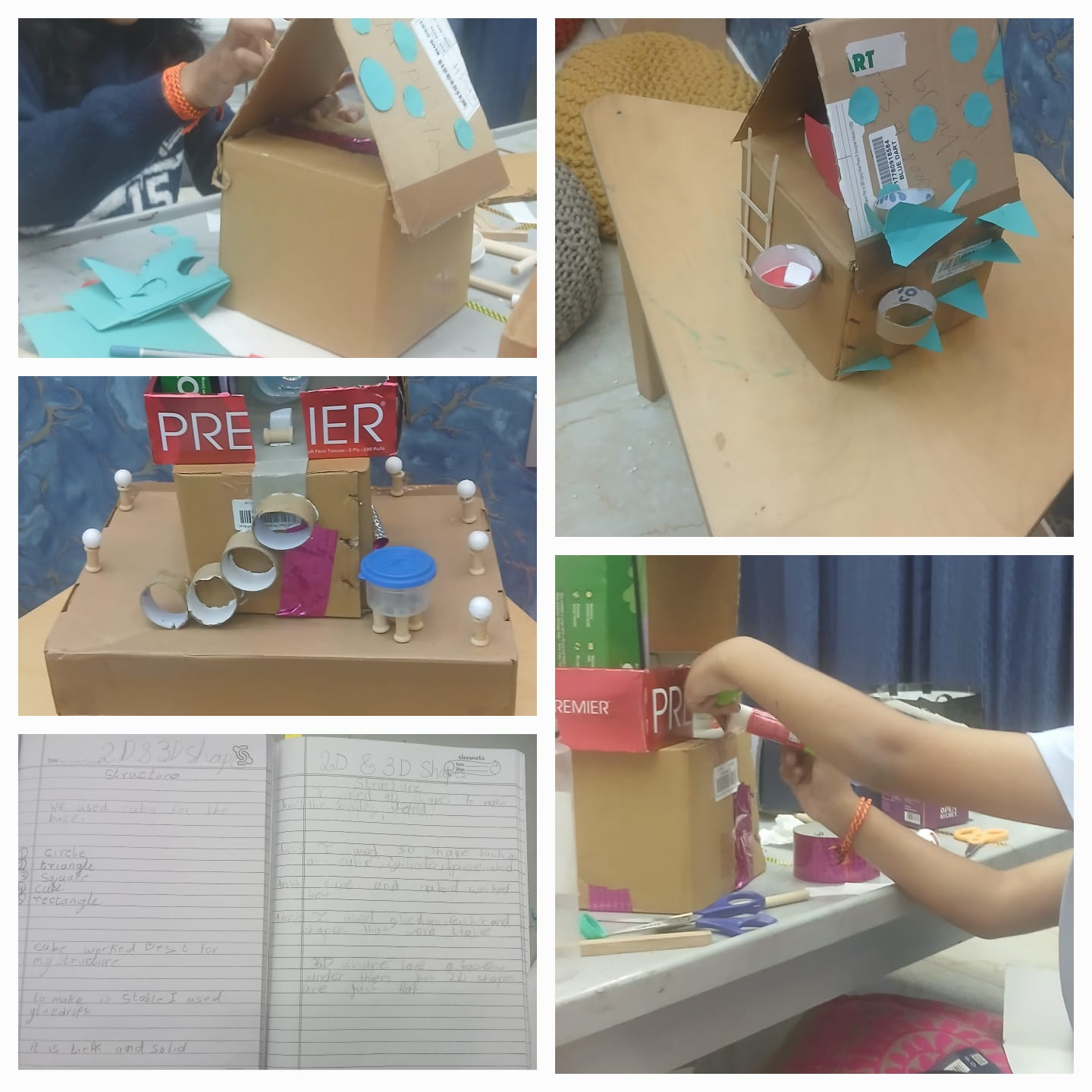
Tashi and Havishka designed a model of their school using recycled materials such as cardboard, boxes, plastic bottles, sticks, plastic containers, and paper roll tubes. They worked like young engineers, carefully focusing on stability and strong structure while building. After completing their models, they confidently spoke about their imaginary schools and identified the different shapes used in their construction. The session ended with Higher Order Thinking Skills (HOTS) questions, which the children thoughtfully answered in their notebooks. Havishka: 7 years 7 months Tashi: 7 years 3 months
Dear reader,
I work with the school leadership team as an advisor and collaborate with teachers as a pedagogical trainer. I also help parents as a parenting counselor and regularly engage one-on-one with students as a personal guide and mentor. This weekly newsletter shares what I read, learn, and experience.
3-2-1 Tuesdays with Ms. Niv is a newsletter you can subscribe to and enjoy your learning journey with me.
3-2-1 Tuesdays with Ms Niv

Issue #283, 2nd December 2025
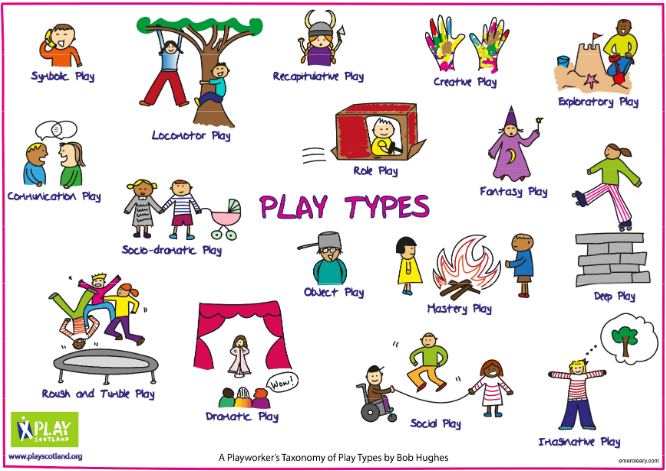
Next weekend, parents how about prioritising playtime for your child at home and dear teachers, create some time everyday in the school timetable for some unstructured play.
Why?
Play is essential for children’s cognitive, social, and emotional development, allowing them to explore ideas, practice skills, and make sense of the world through hands-on experience. When children are given unstructured time to play freely, they develop creativity, problem-solving abilities, and resilience as they navigate challenges and invent their own games.
Dedicating sufficient time for play—without rushing or over-scheduling—helps children build confidence, form meaningful relationships, and discover their interests in ways that structured activities alone cannot provide.
5 Everyday Items for Play at School and Home:
- Cardboard boxes (for building forts, cars, houses, or imaginative spaces)
- Kitchen utensils and containers (for pretend cooking, measuring, and sensory exploration)
- Blankets and pillows (for creating dens, obstacle courses, or cozy reading nooks)
- Natural materials like sticks, stones, and leaves (for outdoor creativity and nature play)
- Art supplies like paper, crayons, and scissors (for drawing, cutting, and creative expression)
This is a free newsletter. If you like my content, please subscribe by entering your email address here.
Three Images of the Week


Two Thoughts of the Week
“Play gives children a chance to practice what they are learning.”
- Fred Rogers
“Children learn as they play. Most importantly, in play children learn how to learn.”
- O. Fred Donaldson, Ph.D., play researcher
One Video of the Week
A little bit of playtime can have big benefits for a child’s developing brain, but adult participation is a crucial ingredient for best results. Early-education leader Jesse Ilhardt makes the case for you to put down the phone, pick up the make-believe tea cup (or that blanket-superhero cape) and take the time to experiment with imagination during kids’ most formative learning years. Directed by Sinan Göksel, Studio Big Box.
Reading with Ms. Meenu: Tip of the week
Raising a Reader:
Phonological Awareness plays a big role in raising a reader. Whenever urgency or anxiety you feel about raising a reader needs to be held at a distance during the actual work. In fact, to the greatest extent possible, building phonological awareness needs to look, talk, walk and act like play.
It’s not drill and kill. It’s singing “The Name Game.” It’s talking in Pig Latin. It’s playing I Spy with beginning sounds or rhyming words instead of colors. (I spy something that rhymes with tike. Yes, the bike!).
When you recite nursery rhymes, you’re heightening the kid’s sensitivity to the syllables and the beginning, middle and ending sounds within words. The stress patterns of classics like “Jack and Jill went up the Hill” help them learn about syllables and rhymes, important phonological awareness skills. And the alliteration in a rhyme like “Peter Piper Picked a Peck of Pickled Peppers” accentuated the /p/ sound and distinguishes it from surrounding sounds, a finer-grained level of phoneme sensitivity.
Spoonerisms are another fun source of phonological play. Sometimes they occur naturally in conversation when you accidentally say things like I “zipped the skoom meeting” instead of “I skipped a Zoom meeting”. But you can intentionally mix up initial sounds as a game, and give examples by saying: “Let’s mix up some sounds Instead of saying, “It’s dinnertime,” we can say, “It’s tinnertime”.
The lesson from all this is that you can easily build phonological awareness anytime, anywhere, with just your voice and your child’s attention.
A great irony of raising readers is that the critically important, life-trajectory-altering, high-stakes work of building these foundational skills is best done with the lightest, nearly imperceptible touch. The subtler the accumulation of moments of speech, song, and play over the course of years, the better, experts agree.
You may have noticed that this discussion of phonological awareness slid into talk of teaching letter sounds. And that’s the fact of raising real readers you’re going to be teaching many skills simultaneously. Spellings, pronunciations, and meaning are all intertwined in learning and memory. To achieve this whichever approach we want to take (books, wordplay, visual cues etc.) remember to keep it fun and be encouraging. Reading should be done for the love of reading NOT for the sake of it!
Happy Reading!
Meenu Gera
Consulting home and school librarian reading guide.
I Think, I Wonder, I Ask
–Dr Shreelakshmi Subbaswami, Academic Director, Vijaya School Hassan, Karnataka

Learning at Pace, Not in Race
Somewhere along the way, schooling has become a sprint. A 40-minute class feels like a countdown timer- teachers rushing to cover content, students racing to respond, and everyone silently competing against the clock. But learning is not a race, it is a human process that unfolds at its own pace. Every child and every adult learn differently at their own pace.
Last week during a Show and Tell, a five year old paused mid- sentence. She was thinking- eyes searching as she tried to recall the right word. Before she could find it, a well- meaning teacher jumped in, prompted her, and pushed her forward. The child repeated what she was told. I wondered: What would she have said if we had waited just ten seconds longer?
In another instance, a child was solving a new math problem. He paused, unsure. The teacher grew nervous- What if he cannot do it? But when we gave him time, we could see the progress- he tried, peers supported him, he tested his own reasoning and eventually arrived at the correct answer- with joy on his face.
We do this every day. We complete children’s sentences. We nod too quickly, signaling right or wrong before they have had a chance to struggle with an idea. We rush them through cognitive struggle, denying them the joy of discovering their own thinking. We call it helping- but sometimes, is it actually robbing them of the process.
Children need time to think, try, fail and try again. Our role as educators is not to accelerate learning, but to respect the pace, to trust that students can reach understanding without us spoon-feeding the way.
One change that helped us slow down was extending time blocks in Early Years classrooms. The shift was visible- calmer teachers, thoughtful students, deeper engagement. Time became a gift.
Imagine what education could be if we stopped racing…
Three questions for you…
- What do we lose when we rush learning?
- When was the last time you waited long enough for a child to truly think?
- What practices can you bring into your classroom to give more time to yourself and your students?
Career assessment, guidance, and placement strategies:
Summer Programs at ATLAS SkillTech University, India
Planning for the summer school has started. We bring you the prestigious, well-known, and lesser-known summer programs for career clarity and academic development. We have been sharing the details of engaging summer programs offered by universities in India and abroad. This issue talks about the two-week residential summer programs offered by ATLAS SkillTech University for grade 9-12 students:
- ISDI Design Summer School
- Understand Design Disciplines
- Kick Start your design portfolio
- Network, collaborate, and co-create with like-minded individuals
- Enhance your skills and competencies
- ISME Business School
- Understand your management disciplines
- Articulate your statement of purpose
- Network, collaborate, and co-create with like-minded individuals
- Enhance your skills and competencies
- uGDX – Tech Summer School
- Understanding new age technologies
- Get a peek into your future at a Tech School
- Network, collaborate, and co-create with like-minded individuals
- Enhance your skills and competencies
Fermata Career Solutions inspires young individuals aged 13 to 30 to unlock their potential through focused and customised career and college counseling. With expertise in University Readiness, CareerGym, and Master Parenting, the experts empower you to pursue your dreams and shape your future with confidence. More about us on www.fermataco.com
Fermata Career Solutions inspires young individuals aged 13 to 30 to unlock their potential through focused and customised career and college counseling. With expertise in University Readiness, CareerGym, and Master Parenting, the experts empower you to pursue your dreams and shape your future with confidence. More about us on www.fermataco.com
Showcase: Thrive Beyond School – A unique STEAM education project for very young learners.
– Pooja Khatter, facilitator, Thrive

Tashi actively participated in our 3D shapes lesson and confidently identified shapes such as the cube, cuboid, cylinder, and rectangular prism. She was also able to describe each shape by sharing the number of faces, edges, and vertices.
Tashi made meaningful connections to real life by identifying examples like a door, ice cubes, and a bottle cap. She enjoyed the hands-on activity where she used popsicle sticks and clay to build her own 3D models. She also demonstrated careful work while making a paper box, following the lines and folding the net correctly to form the shape.
The session concluded with a reflection activity, where Tashi wrote her answers thoughtfully in her notebook, showing her understanding of the day’s learning.
Dear reader,
I work with the school leadership team as an advisor and collaborate with teachers as a pedagogical trainer. I also help parents as a parenting counselor and regularly engage one-on-one with students as a personal guide and mentor. This weekly newsletter shares what I read, learn, and experience.
3-2-1 Tuesdays with Ms. Niv is a newsletter you can subscribe to and enjoy your learning journey with me.
3-2-1 Tuesdays with Ms Niv

Issue #282, 24th November 2025
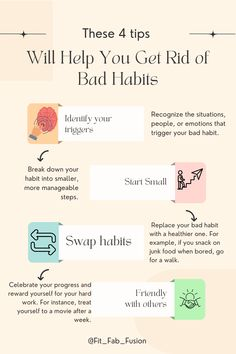
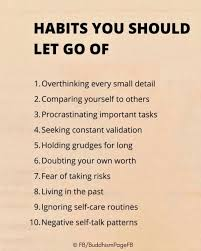
Is this taking time away from things I actually care about? How do I feel immediately after doing this—energized or drained, proud or regretful? What would change in my life if I kept doing this for the next month or year?
The year is almost ending. It’s time to catch up with ourselves as educators, parents, and students. We should ponder over our existing habits.
What usually happens right before I do this (certain time, emotion, place, or person)? Am I using this behavior to avoid something uncomfortable? Do I find myself making excuses or hiding this behavior from others?
This is a free newsletter. If you like my content, please subscribe by entering your email address here.
Three Images of the Week

Two Thoughts of the Week
Whatever you want to do, if you want to be great at it, you have to love it and be able to make sacrifices for it. – Dr. Maya Angelou
“All big things come from small beginnings. The seed of every habit is a single, tiny decision. But as that decision is repeated, a habit sprouts and grows stronger. Roots entrench themselves and branches grow. The task of breaking a bad habit is like uprooting a powerful oak within us. And the task of building a good habit is like cultivating a delicate flower one day at a time.”
― James Clear, Atomic Habits: An Easy & Proven Way to Build Good Habits & Break Bad Ones
One Video of the Week
Can we break bad habits by being more curious about them? Psychiatrist Judson Brewer studies the relationship between mindfulness and addiction — from smoking to overeating to all those other things we do even though we know they’re bad for us.
Learn more about the mechanism of habit development and discover a simple but profound tactic that might help you beat your next urge to smoke, snack or check a text while driving.
Reading with Ms. Meenu: Tip of the week
How Reading Aloud Fortifies Talk?
None of this emphasis on early talk with kids should dampen your enthusiasm for reading aloud. In fact, reading picture books to and with kids boosts their oral-language experience by introducing more and more diverse vocabulary. Researchers at the Ohio State University in collaboration with the Columbus Metropolitan Library estimated that kids whose parents read them five board or picture books a day would have heard 1.4 million more words during story book reading by age 5 than children who were never or seldom read.to. Other studies have found that the vocabulary within picture books is more novel, challenging, and enriching than what’s typically heard in everyday family conversation.
Reading with babies especially is a sensory, dynamic, visceral experience and an efficient vehicle for the back and forth language we’re going for. Every part of the exchange is novel for the infant – the smell of the book, the feel of the pages, and the motion as you move from cover to cover. Not to mention the look of the text and images on the page, and the words, sounds and gestures they elicit from their parent.
With so much going on, where should be a parent focus during Storytime? On the relationship, I say. For the first year of your child’s life, don’t worry about teaching. Stay in Nurture mode. Hold your baby close. Tune in to their responses. Lean in to their coos, babbles, kicks and giggles, and return it all with as much vocabulary rich talk as you can muster. You can’t go wrong when you open a book, read and follow the child’s lead.
As your little one grows into a toddler, preschooler and beyond books can help them learn all kinds of things, from sound awareness and letter knowledge to story structure and science. The possibilities for meaningful, expansive conversation are endless when a well-chosen book, enthusiastic parent and engaged child commune. Visit https://mayasmart.com/reading-for-our-lives/ for a list of recommended reads for each age and stage.
Happy Reading!
Meenu Gera
Consulting home and school librarian reading guide
I Think, I Wonder, I Ask
–Dr Shreelakshmi Subbaswami, Academic Director, Vijaya School Hassan, Karnataka
Look Back to Leap Forward
Looking back is not a mere act of nostalgia; I see it as a powerful tool to understand who we are, what we value, and how we shape the future. The intention of this reflection is simple: to pause, question, and realign ourselves as school leaders, teachers, parents, and students so we can build a more purposeful and relevant present and future.
When I looked closely at the past practices of our 25+ years old school, a place where I studied and have now returned to lead, I realized how much wisdom is there in our history. Some beautiful traditions have faded and need to be revived. Some practices remain strong and must be conserved, and a few must be let go of to make space for new and relevant ways of learning. This process is delicate. It requires sensitivity, trust, reassurance and constant communication with all stakeholders. After all, every decision we make is guided by one purpose- serving the needs of today’s learners as they grow into the world of tomorrow.
Looking back is a practice each of us can adopt. Students can reflect on their habits and ask what they need to start, stop, or continue to grow. Teachers can revisit pedagogies- revive what worked, adapt what needs rethinking, and discard what no longer serves today’s learners. Parents, too, can examine expectations and approaches that shape a child’s learning environment.
Three questions for you…
- What parts of our past are we unconsciously carrying into the future—and should we?
- What parts of our present approach reflect intentional future-thinking, and what parts are merely repetitions of the past?
- Which habits, beliefs, or practices deserve revival, and which ones must we courageously let go of?
Career assessment, guidance, and placement strategies:
Summer Programs at ATLAS SkillTech University, India
Planning for the summer school has started. We bring you the prestigious, well-known, and lesser-known summer programs for career clarity and academic development. We have been sharing the details of engaging summer programs offered by universities in India and abroad. This issue talks about the two-week residential summer programs offered by ATLAS SkillTech University for grade 9-12 students:
- ISDI Design Summer School
- Understand Design Disciplines
- Kick Start your design portfolio
- Network, collaborate, and co-create with like-minded individuals
- Enhance your skills and competencies
- ISME Business School
- Understand your management disciplines
- Articulate your statement of purpose
- Network, collaborate, and co-create with like-minded individuals
- Enhance your skills and competencies
- uGDX – Tech Summer School
- Understanding new age technologies
- Get a peek into your future at a Tech School
- Network, collaborate, and co-create with like-minded individuals
- Enhance your skills and competencies
Fermata Career Solutions inspires young individuals aged 13 to 30 to unlock their potential through focused and customised career and college counseling. With expertise in University Readiness, CareerGym, and Master Parenting, the experts empower you to pursue your dreams and shape your future with confidence. More about us on www.fermataco.com
Showcase: Thrive Beyond School – A unique STEAM education project for very young learners.
– Pooja Khatter, facilitator, Thrive
The children were introduced to the concept of tessellation and watched a short video to understand how shapes fit together without leaving any gaps. They then created their own tessellation art and identified real-life examples such as giraffe skin, snake patterns, walls, and floor tiles. They also wrote their reflections in their notebooks. NEEV &MAYRA: 7years 3 months old

Dear reader,
I work with the school leadership team as an advisor and collaborate with teachers as a pedagogical trainer. I also help parents as a parenting counselor and regularly engage one-on-one with students as a personal guide and mentor. This weekly newsletter shares what I read, learn, and experience.
3-2-1 Tuesdays with Ms. Niv is a newsletter you can subscribe to and enjoy your learning journey with me.
3-2-1 Tuesdays with Ms Niv

Issue #281, 18th November 2025
On the hardest days, remember that you’re doing one of the most profoundly human things possible: believing in someone’s potential before they can see it themselves. Every lesson you prepare, every encouraging word you offer, and every moment you choose patience over frustration is an investment in a future you may never see but will absolutely help create.
Your work shapes not just what students know, but who they become—planting seeds of curiosity, confidence, and possibility that will bloom long after they leave your classroom.
Happy Children’s Day to your students/children dear teachers and parents who are teachers from the start of a child’s life and go on being an ‘influencer’ their child’s life as teacher, coach, mentor and cheer leaders.
This is a free newsletter. If you like my content, please subscribe by entering your email address here.
Three Images of the Week


Two Thoughts of the Week
“Nothing that’s worth anything is easy.” —Barack Obama
“Whether you think you can or think you can’t, you’re right.” —Henry Ford
One Video of the Week
What if everything we think we know about motivation is exactly backwards? In her talk, Dr. Betsy Blackard shares a new perspective on children’s responses to challenges, and offers a fresh idea for how to support them in tapping into their intrinsic motivation. You may just find that you walk away with a new perspective on your own motivation as well! Dr. Betsy Blackard is an expert in how kids work. She has worked closely with children for more than 20 years and has a PhD in Positive Developmental Psychology. Her research focused on the parent-child relationship, including including how parents’ beliefs and behavior impact their children. Her company, Language of Listening®, provides simple, practical tools that really work to help parents get new results for everyday challenges.
Reading with Ms. Meenu: Tip of the week
Our children cannot dream unless they live, they cannot live unless they are nourished and who else will feed them the real food without which their dreams will be no different from ours? — Audre Lorde
Talk Like This:
Beyond the quantity of words you speak, the way you speak them affects different aspects of your child’s language and literacy development. Here are the chief characteristics of nourishing ealy language and how they help kids learn:
Child-Directed: Your words are delivered expressly to and for the child, as opposed to language they pick up indirectly through overheard adult conversations or media. Child-directed speech supports language learning because it provides much more than words. It pairs content with helpful physical, social and other cues.
Melodic: Your delivery is clear, high-pitched, and with more exaggerated vowels than the way you might address adults. Many moms do this naturally, even taking prosody to the point of parody. And for good reason infants prefer listening to this “baby talk,” and that attention may support their ability to discern the sound within words as well as recognize word boundaries and grammatical units.
Loving: Your words and gestures are warm, affectionate, and encouraging, versus stern commands or brusque movements. New research related to how emotion is expressed through movement suggests that by 11 months old kids can detect whether actions like grasping an item are performed with a happy or angry facial expression of their own.
Home Language: You speak in the language you know best, not necessarily the dominant language of your neighborhood or the school your child will attend. This is so that you can give your child the richest vocabulary, most fluent speech and deepest background knowledge to support learning in any language.
Repetitive: You use consistent names and labels for the people and things in your child’s environment, so your little one gets many opportunities to distinguish among words in the stream of speech, make the connections between words and discern word meanings.
Responsive: You listen well and provide feedback that’s contingent on your little one’s babbles, words, facial expressions and gestures. This quality of interaction is predictive of a kid’s language achievements. You also give your little one plenty of time and space to receive what you communicate and to express themselves too.
The nourishment that language provides when parents and children feed one another words, attention and contingent responses is like a holiday fest spread over many courses, punctuated with lively rounds of conversation and laughter.
Happy Reading!
Meenu Gera
Consulting home and school librarian reading guide
I Think, I Wonder, I Ask
–Dr Shreelakshmi Subbaswami, Academic Director, Vijaya School Hassan, Karnataka
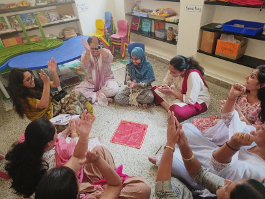
Children Need Play and Educators Do Too
In schools, we often speak about the importance of play for children, but rarely pause to ask what play means for us — the founders, senior leadership team, and educators who carry the weight of reviews, timetables, meetings, events, and constant academic catch-up. Every year, especially during the post-middle-year assessments, I watch us all move through an intense cycle of reviewing student performance, writing reflections, preparing for parent meetings, and modifying strategies.
One practice, though simple, has shown an immediate impact in releasing the pressure and easing the academic load– consciously integrating play into the routine of educators. Just as children need a break from intense cognitive work, educators need it too. Yet as we grow older, play slowly disappears from our lives. With family, friends, or colleagues, we hardly play, except maybe once or twice a year during a teacher’s sports day. Our routines have become all work, all responsibility.
Each time I have seen myself and educators play — whether it was a quick indoor game, a team sport, or even a fun team challenge the impact has been remarkable. Collaboration comes more naturally, hierarchies soften, and productivity improves. More than anything, we reconnect with ourselves and with others.
Play is a low-effort, high-impact practice that can strengthen team spirit, deepen trust, and create happier school cultures. This Children’s Day, let us integrate play into our routines- not as an extra, but as a priority.
Three questions for you…
- How often do you play — indoors or outdoors?
- What games did you enjoy as a child? How can you bring them back into your life?
- What new games would you like to learn?

Career assessment, guidance, and placement strategies:
Summer Programs at University of Oxford
Planning for the summer school has started. We bring you the prestigious, well-known, and lesser-known summer programs from around the world for career clarity and academic development. Last week, we shared the details of the summer program offers by Plaksha University, India. This issue talks about the two-week residential summer programs offered by the University of Oxford for 16-18-year-olds:
- AI and Machine Learning Pioneers Summer School starts on 19 July 2026
- Future Climate Innovators Summer School starts on 19 July 2026
- Future Entrepreneurs Summer School starts on 2 August 2026
Benefits:
- Get hands-on experience by solving real-world problems
- Develop practical skills to complete complex tasks
- Collaborate with like-minded and motivated peer group
- Understand the expectations of the university
- Experience the beautiful campus
- Build essential Life Skills through a residential experience
Fermata Career Solutions inspires young individuals aged 13 to 30 to unlock their potential through focused and customised career and college counseling. With expertise in University Readiness, CareerGym, and Master Parenting, the experts empower you to pursue your dreams and shape your future with confidence. More about us on www.fermataco.com
Showcase: Thrive Beyond School – A unique STEAM education project for very young learners.
– Pooja Khatter, facilitator, Thrive
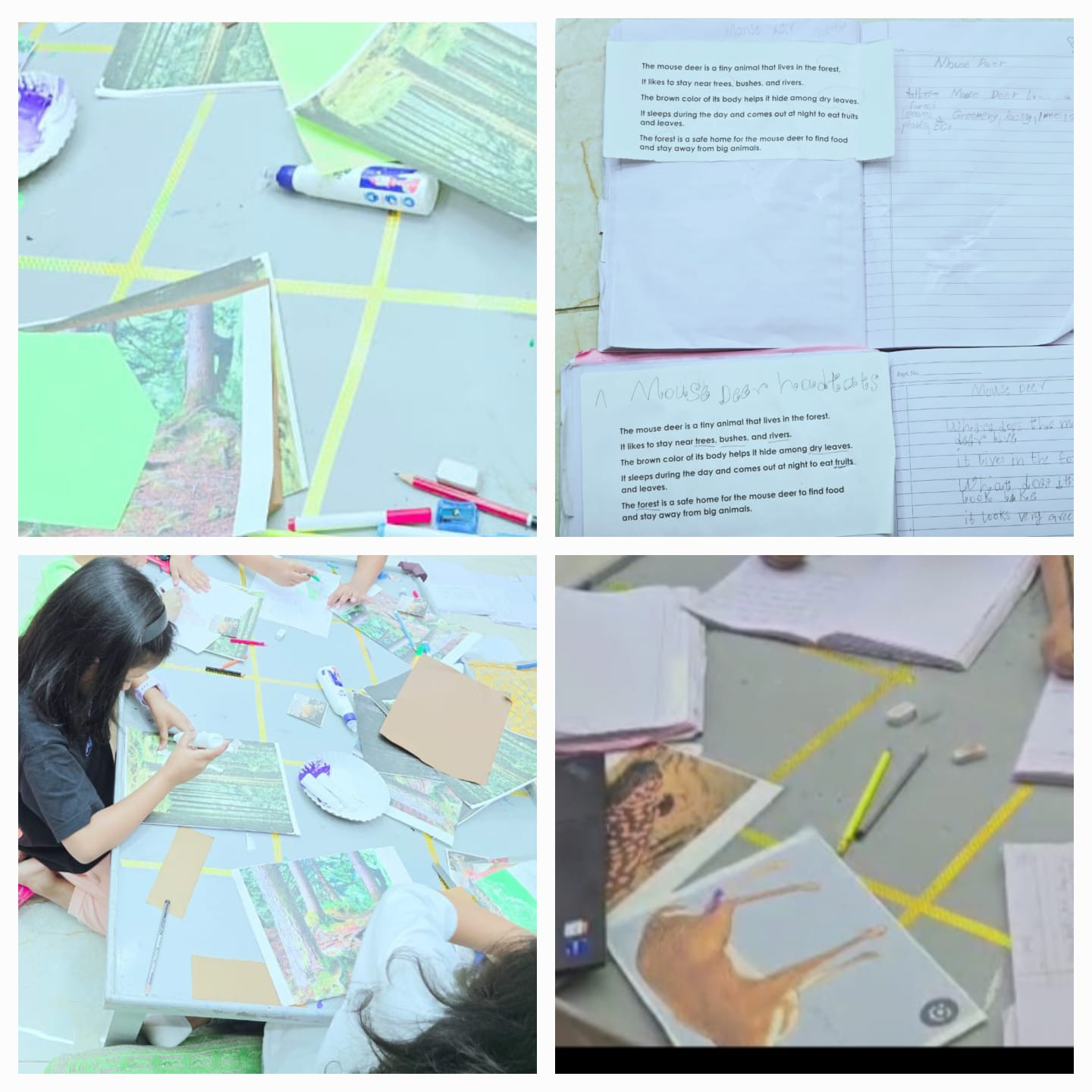
The children explored various habitats—forests, deserts, snowy regions, and grasslands—through a short educational video. They learned that the mouse deer lives in the forest and discussed its food, hiding places, and how it stays safe. During reading time, they took turns reading a short passage and highlighted key words such as forest, trees, leaves, and rivers to strengthen vocabulary and comprehension.
In the art activity, the children created a forest-themed collage and carefully hid small mouse deer cutouts within their artwork. Through this creative experience, they discovered how the mouse deer’s brown coloring helps it blend into the forest, protecting it from predators.
• Samyuktha – 7 years 7 months
• Tashi, Neev & Mayra – 7 years 3 months
Dear reader,
I work with the school leadership team as an advisor and collaborate with teachers as a pedagogical trainer. I also help parents as a parenting counselor and regularly engage one-on-one with students as a personal guide and mentor. This weekly newsletter shares what I read, learn, and experience.
3-2-1 Tuesdays with Ms. Niv is a newsletter you can subscribe to and enjoy your learning journey with me.
3-2-1 Tuesdays with Ms Niv

Issue #280, 11th November 2025
What if someone told you that each of us are not reacting to the world but are responding to our predictions of the world from our past experiences. Check out the ted talk in this issue if this has piqued your curiosity.
How would you enhance your home or classroom environments? How would you improve your interactions and exposures to indoor and outdoor experiences for our children or students? If our goal is to interact with the world around us with curiosity and a spectrum of empathetic emotions, instead of judgment and exclusion, how can we design for it instead of leaving it to chance?
This is a free newsletter. If you like my content, please subscribe by entering your email address here.
Three Images of the Week


Two Thoughts of the Week
“In between every action and reaction, there is a space. Usually the space is extremely small because we react so quickly, but take notice of that space and expand it. Be aware in that space that you have a choice to make. You can choose how to respond, and choose wisely, because the next step you take will teach your child how to handle anger and could either strengthen or damage your relationship.”
― Rebecca Eanes, The Newbie’s Guide to Positive Parenting
“Absence of emotion is not maturity,” she said, “though it’s easy to mistake. Part of maturity is learning to deprioritize emotion, prevent it from taking the reins. But a large part is perspective, long-term decision making.”
― Mishell Baker, Phantom Pains
One Video of the Week
Can you look at someone’s face and know what they’re feeling? Does everyone experience happiness, sadness and anxiety the same way? What are emotions anyway? For the past 25 years, psychology professor Lisa Feldman Barrett has mapped facial expressions, scanned brains and analyzed hundreds of physiology studies to understand what emotions really are. She shares the results of her exhaustive research — and explains how we may have more control over our emotions than we think.
Reading with Ms. Meenu: Tip of the week
Letter Knowledge:
As experienced readers, it’s easy for us to forget that letters are just arbitrary marks on paper. The collection of dots, lines and circles could mean anything. It’s a process to learn to distinguish letters from pictures. It’s also a challenge to remember which letter is which. After all, b and d, for example, are quite similar-looking.
In one of my absolute favorite picture books, An Inconvenient Alphabet, Beth Anderson explores the arbitrariness of our letters in genius fashion as she recounts the true story of Ben Franklin and Noah Webster’s shared belief that English has letters with too many sounds.
Kids need to know about letters and discern the speech sounds within words. But that’s not all; they also need to be able to reliably recall which letters make which sounds so they can decode the print they see.
That’s why the best initial reading instruction in English directly teaches kids the links between letters and sounds, also known as phonics. It’s a basic fact of English that the sounds of the language are represented by the letters of the alphabet. Grasping the connection between the symbols and sounds is a necessary step that puts children well on their way to reading. Memorizing whole words one by one, not so much.
The teaching routine for parents is straightforward: Point to a letter and ask, What sound? If the child gets it right, say, Great work matching the letter to its sound. If they get it wrong, give them a correction. You can make the activity playful by passing a fake microphone back and forth or asking the question in a silly voice — whatever engages the child.
Happy Reading!
Meenu Gera
Consulting home and school librarian reading guide
I Think, I Wonder, I Ask
–Dr Shreelakshmi Subbaswami, Academic Director, Vijaya School Hassan, Karnataka
The Power of Small Shifts: Rethinking Classroom Observations
As a researcher in education, classroom observations were a big part of my work. Most often, I observed as a non-participant—watching to understand what was happening and why, connecting classroom snapshots to educational theory. Early on, I noticed how the very word observation created anxiety. Years of industry-model schooling had conditioned us to see it as evaluation, not support.
When we began our own observation rounds, the purpose was made clear- to connect, impact, and mentor. Each one could help the other grow. Over time, I began to see a constant cycle of observation and reflection: how can our efforts be both effective and efficient within a 40-minute class? How can we make the most of every minute without overwhelming either the teacher or the learner?
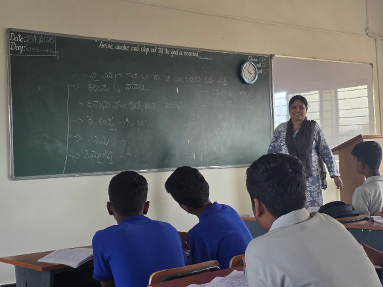
During one such round, a Kannada class stood out. The teacher led a story discussion with thoughtful questions, writing key responses on the board. Yet, engagement was uneven — a few participated while others observed passively. Her focus on the board limited her movement, and students’ thinking stayed anchored to her questions.
After class, we reflected: how could students hold the tool for thinking themselves, rather than wait for the teacher? Together, we co-created a simple thinking template for group work. The very next session was transformational — all students engaged, analyzed the text deeply, discussed ideas freely, and even wrote well. The class shifted from a teacher-led, board-facing activity to a lively circle of shared thinking and writing.
This experience reaffirmed for me that real impact doesn’t always come from grand strategies, but from small, intentional, and doable changes. When observation is rooted in trust rather than audit, change feels both possible and sustainable.
Three questions for you…
How can we make classroom observations feel like support, not supervision?
What is one small change you can make that might shift the way you teach or lead?
Which observation—by a student, colleague, or family—has helped you improve?

Dear reader,
I work with the school leadership team as an advisor and collaborate with teachers as a pedagogical trainer. I also help parents as a parenting counselor and regularly engage one-on-one with students as a personal guide and mentor. This weekly newsletter shares what I read, learn, and experience.
3-2-1 Tuesdays with Ms. Niv is a newsletter you can subscribe to and enjoy your learning journey with me.
3-2-1 Tuesdays with Ms Niv

Issue #279, 4th November 2025
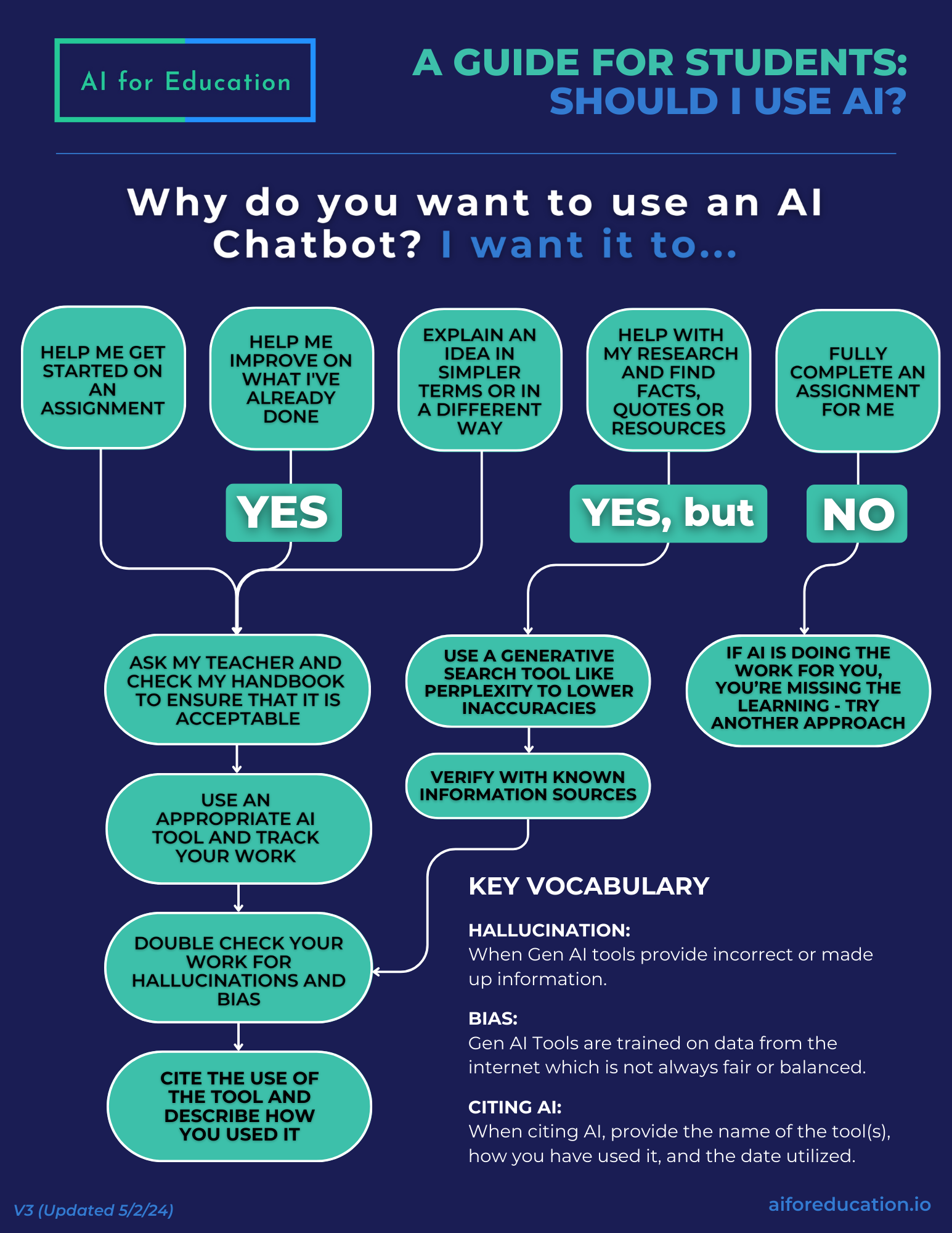
Be intentional about when and why you’re using AI or it will take us as educators and students on the path of:
Reduced critical thinking
Memory atrophy
Decreased problem-solving ability
Writing skill deterioration
Loss of research skills
Weakened creativity
To use AI without these downsides, consider these:
- Use it as a thinking partner, not a replacement for thinking
- Verify important information independently
- Try solving problems yourself first, then use AI to check your work or get unstuck
- Practice skills you care about regularly, even when AI could do them faster
The key is treating AI as a tool that augments your abilities rather than replaces them. What specific concerns do you have about your AI usage?
This is a free newsletter. If you like my content, please subscribe by entering your email address here.
Three Images of the Week

Two Thoughts of the Week
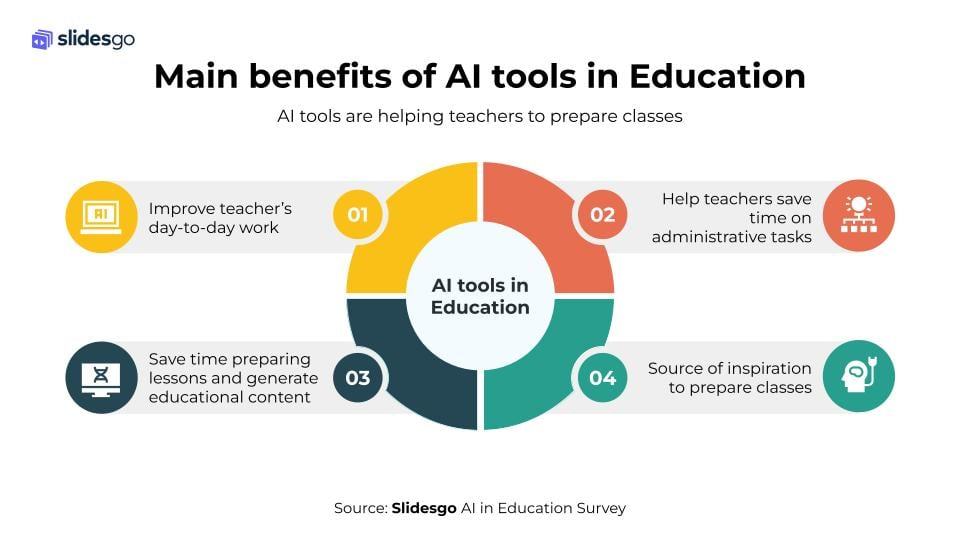
“In the end, if using AI tools cuts your planning time from 30 minutes to 18 minutes—or your grading time from 40 minutes to 22—that extra time it creates is yours. Use it however you wish. Plan out that cool lesson you’ve always wanted to do. Or go home early. The choice is yours. I know this type of decision feels pretty foreign to us—deciding what to do with extra time. Whether we use it to do something amazing for our students or preserve our mental health, everyone wins.”
― Matt Miller
“If you’re a college student preparing for life in an A.I. world, you need to ask yourself: Which classes will give me the skills that machines will not replicate, making me more distinctly human?” New York Times
One Video of the Week
TEDAI Vienna Panel – Protecting human intent in a space of generative AI sameness & infinite outputs
As AI becomes deeply embedded in our creative and decision-making tools, it doesn’t just assist us: it starts to shape what we create, how we think, and even what we value. The promise of generative technology is abundance, but the hidden cost is often convergence / where outputs blur together, and intent is quietly overwritten by default suggestions. How do we prevent the erosion of originality and intention? In this conversation, Microsoft researcher Advait Sarkar unpacks how AI systems subtly influence our intentions and actions, from spreadsheets to copilots, and why friction might be essential to preserve critical thought. Designer and data storyteller Pau Garcia brings a cultural and emotional lens, showing how immersive, sensory storytelling can restore meaning, agency, and surprise in a world increasingly optimized for efficiency. Design is the only instrument we have for reclaiming agency in spaces dominated by automation. Guided by Ioana Teleanu, the three panelists explore what it means to treat AI as a design material – something we can mold intentionally, rather than passively consume – and how to design systems that resist homogenization, encourage human divergence, and protect the fragile spark of intent in an age of infinite outputs.
Reading with Ms. Meenu: Tip of the week
Print Awareness:
Books are a handy tool for teaching an abstract concept – that the lines and curves kids see printed on paper, on products and on signs mean something. Reading together with children presents a great opportunity to bring their attention to letters, words, and the conventions around how they are used. With just over voices and pointer fingers, we can teach the names and roles of key book features (such as author and title) and the direction we read English text (left to right, top to bottom). And its important that we do so with preschool aged children because researchers have found evidence for a causal relationship between their increased contact with print (from teachers, verbal and nonverbal references to text during shared reading four times weekly, for thirty weeks) and their reading, spelling, and comprehension skills two years later.
Teaching about print really is as easy as saying phrases like the following as you lift the cover, turn the pages, and point to relevant print features (no planning or preparation required):
- Look at the words here on the book’s cover. (Point to the words.)
- This is the title of the book. (Point to the book’s title). It says Little Leaders : Bold Women in Black History. What is the title of the book?
- The person who wrote the book is called the author. These words are the author’s name. (Point to the author’s name.) It says Vashti Harrison.
- This is where the bunny is talking. The bunny’s words are in this bubble. (Point to speech bubble.)
In time, you can check your child’s knowledge with questions and requests like: Where do I start reading? Show me the author’s name. Point to the last line.
Also keep in mind that you don’t have to have a book in hand to draw attention to print. There’s a lot of competition for attention on a picture book page — colors, illustrations and even flaps, mirrors, and lift up tabs. You might find better success teaching some elements of print in isolation. Show some love to the solo word or letter on a sheet of paper, a name on a sign or a saying on a graphic tee. There are plenty of chances to bring letters to life by noticing, pointing out, and discussing their features and meaning with kids.
Happy Reading!
Meenu Gera Consulting home and school librarian reading guide
I Think, I Wonder, I Ask
When Did Textbooks Become the Sole Source of Knowledge?
–Dr Shreelakshmi Subbaswami, Alumni and Academic Director, Vijaya School Hassan, Karnataka
This is the time of the year when textbook publishers start flooding schools with samples, promises, and glossy covers. As an academic head, I often find myself overwhelmed—yet deeply aware that I must act as a gatekeeper of what my students will read.
In many schools, the textbook rules as the unquestioned source of knowledge—deciding what to teach, how to teach, and even when to teach. Teachers, unfortunately, are often reduced to implementers, not designers of learning.
Over time, I’ve come across textbooks from even well-known publishing houses with conceptual and factual errors, uninspiring pedagogy, and layouts far from student-friendly. Yet, they continue to dominate classrooms unchallenged.
Today, many publishers market “complete packages”—textbooks bundled with ready-made lesson plans that promise efficiency and convenience. But efficiency at what cost? Such systems stifle teacher thought and reduce educators to content deliverers rather than co-creators of curriculum.
The moment a teacher begins to ask, What is truly worth teaching? What aligns with the essence of my discipline? What fits my pedagogical philosophy?—transformation begins. A transformed teacher seeks knowledge not in one prescribed text but across multiple perspectives—from reference books, lived experiences, community knowledge, and the dynamic world around learners.
Three questions for you…
- Who owns the classroom—the experiences or the textbook?
- What divergent resources—from the community, environment, library, digital spaces—can enrich our classrooms beyond the textbook?
- What challenges might teachers face when there is no single prescribed text, and how can schools support them through collaboration and resource sharing?
Showcase: Thrive Beyond School – A unique STEAM education project for very young learners.
– Pooja Khatter, facilitator, Thrive
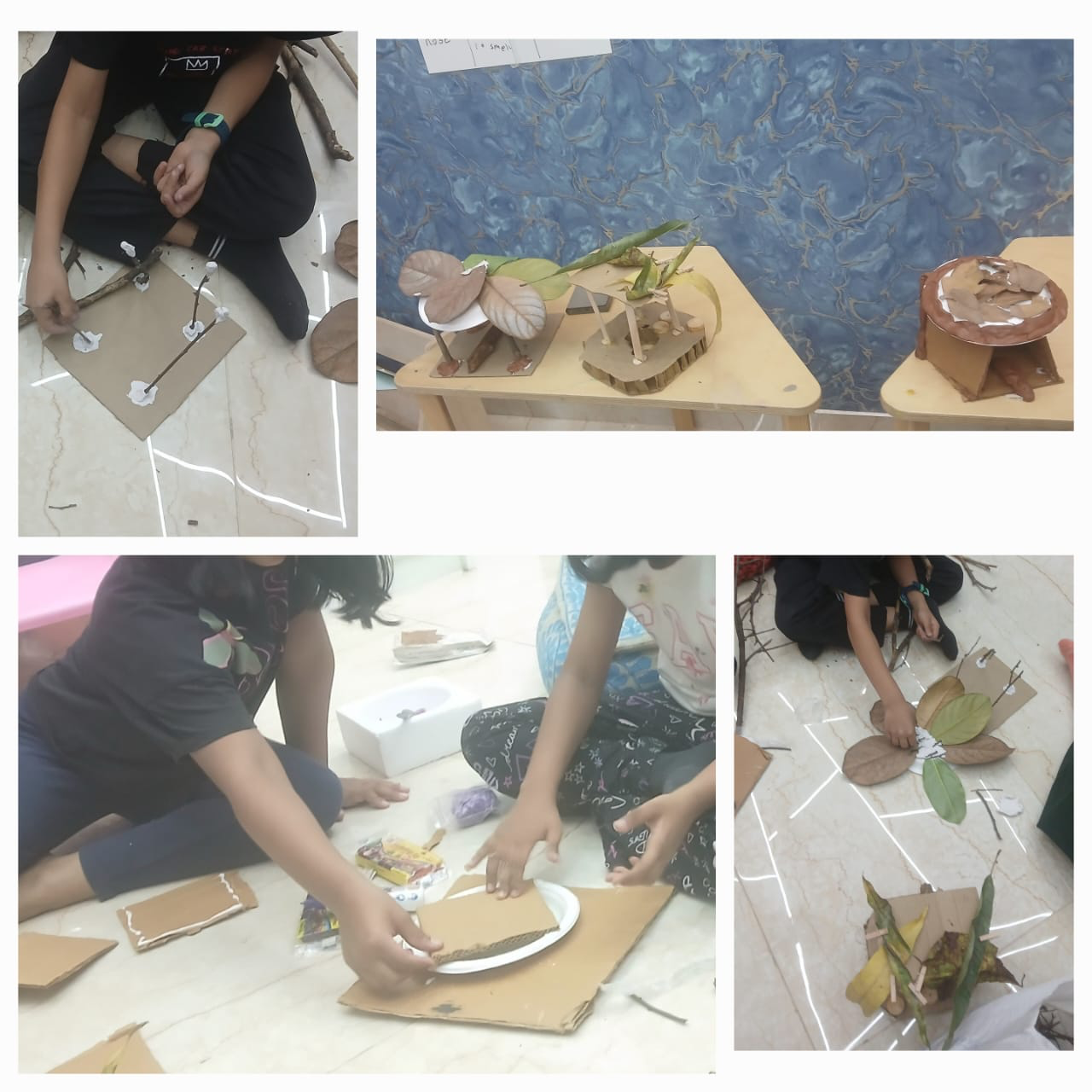
In the Survival through Adaptation activity, children learned how animals stay safe using different defense mechanisms like venom, camouflage, and speed. They watched pictures and videos of animals such as the cobra, Gila Monster, and mouse deer to see how each one protects itself from danger. Then, each child made their own animal shelter using twigs, leaves, clay, and paper plates. While building, they used creativity and problem-solving to make their shelters strong and realistic. Through this activity, children understood how animals use their body features and surroundings to survive in the wild.
Samyuktha: 7 years 6 months old
Neev & Mayra: 7 years 2 months old
Career assessment, guidance, and placement strategies:
Summer Programs in India
The new-age universities in India are not only offering industry-ready undergraduate programs but are also engaging teenagers through hands-on summer programs. Today, we are highlighting two exciting summer programs offered by Plaksha University.
Programs in Engineering and Problem-Solving:
- Young Technology Scholars
- Young Data Scientist
Venue: Residential at Plaksha campus
Duration: 2 weeks
Month: June
Eligibility: Grade 9 -12
Benefits:
Get hands-on experience by solving real-world problems
Develop practical skills to complete complex tasks
Collaborate with like-minded and motivated peer groups
Understand the expectations of the university
Experience the beautiful campus
Build essential Life Skills through a residential experience
Fermata Career Solutions inspires young individuals aged 13 to 30 to unlock their potential through focused and customised career and college counseling. With expertise in University Readiness, CareerGym, and Master Parenting, the experts empower you to pursue your dreams and shape your future with confidence. More about us on www.fermataco.com
Dear reader,
I work with the school leadership team as an advisor and collaborate with teachers as a pedagogical trainer. I also help parents as a parenting counselor and regularly engage one-on-one with students as a personal guide and mentor. This weekly newsletter shares what I read, learn, and experience.
3-2-1 Tuesdays with Ms. Niv is a newsletter you can subscribe to and enjoy your learning journey with me.
3-2-1 Tuesdays with Ms Niv

Issue #278, 28th October 2025
You missed this.
You did this wrong.
You got this much out of this much as score.
Your performance could be better.
OR This is what you missed, this is what could be possible responses, this is how you can improve your score, tell me how you can improve your performance next time.
Think about your feedback as a parent/educator and what it does to your child’s/student’s agency and ownership of their learning and/or behaviour.
This is a free newsletter. If you like my content, please subscribe by entering your email address here.
Three Images of the Week


Two Thoughts of the Week
“Tell me and I forget. Teach me and I remember. Involve me and I learn.” – Benjamin Franklin
“Student agency is that energy that students get when they take charge of their learning and hold themselves responsible for their accomplishments.― Kelly a Flores, Supporting the Success of Adult and Online Students: Proven Practices in Higher Education
One Video of the Week
Building Student Identity and Agency Dr. Dominique Smith is the Chief of Educational Services and Teacher Relations at Health Sciences High and Middle College (HSHMC) located in San Diego, CA. Dr. Smith has helped transform HSHMC to become a restorative school with his efforts in building relationships with students and hearing student voice. His focuses on school wide mind shifts to restorative practices and school equity have taken him across the world to help schools make change.
Dr. Smith has published books with authors Douglas Fisher and Nancy Frey, “Better than Carrots and Sticks” and “Building Equity, Policies and Practices to Empower All Learners,” and “Engagement by Design”.
Reading with Ms. Meenu: Tip of the week
Oral Language:
Oral Language is one of the pillars to get strong reading skills.
Spoken words are the precursor of all precursors to reading. When learning to read, a child can’t make sense of a word in print that they haven’t heard before in life. So parents must carry on conversations from the beginning to build up their kid’s word banks. Research provides evidence that the better children’s vocabularies at kindergarten entry, the better their reading comprehension in third grade, and the better their third grade reading skills, the better their high school graduation rates. Whatever your child’s age, they’ll benefit from more conversation with you.
For optimal brain development, aim for 40 conversational turns per hour when you’re with your little one. It counts as a turn whenever you greet one of your baby’s coos, babbles, words or sentences with a verbal response (or they verbally respond to your words) within 5 seconds. It’s tough to get an exact count, of course, without feedback from a “talk pedometer” like those used by researchers. Just know that most parents speak a lot less than they should and a lot less than they think they do. The lesson here is give your child the best shot at better vocabulary by taking every conversational turn you can.
The central truth every parent must grasp is this: Oral language skills are required for reading. Just as kids crawl before they walk, they talk before they read. And before they talk, babies listen, grunt and coo. We must facilitate and encourage it all.
We talk to our kids for all kinds of reasons in the moment to soothe, to encourage, to entertain, to direct. And there’s power in every word we speak, including the impromptu conversations we have while giving baths, making meals, and playing at home. Delivering a kind of fortified talk that’s extra nourishing to their long term brain, language and social development.
Happy Reading!
Meenu Gera, Consulting home and school librarian, reading guide
I Think, I Wonder, I Ask
–Dr Shreelakshmi Subbaswami, Academic Head, Vijaya School Hassan, Karnataka
Student Agency through a Cultural Lens
If student agency — voice, choice, and ownership is vital for meaningful learning, then understanding it through a cultural lens becomes essential.
We often notice in classrooms that reverence for authority is seen as a virtue. When a student questions an idea, it is often dismissed as over smart or irrelevant. When a learner seeks choice, it is mistaken for entitlement. Respect for teachers, elders, and systems is deeply woven into our social fabric. Yet, somewhere along the way, respect has blurred into compliance, and curiosity began to be perceived as disobedience.
In my discussions with school leaders and researchers around the world, many have shared that bringing student agency into schools is challenging in contexts where the macro-culture rewards obedience, conformity, and discourages questioning. The challenge deepens because teachers themselves emerge from the same cultural background, carrying inherited beliefs about respect, discipline, and hierarchy into their classrooms.
Thus, the macro culture interacts constantly with the micro culture of schools. Together, they determine whether student agency is nourished or neglected.
I believe being cognizant of this interplay is the first step towards change. To move forward, we must make peace with discomfort. Reimagining student agency demands not reform alone, but courage, humility, and continuous dialogue.
Three Questions for You
How can schools align family, community, and classroom practices to create a culture where agency is shared and sustained?
In what tangible ways — through physical spaces, materials, or classroom arrangements — does school reflect or restrict student voice and participation?
In what intangible ways — through language, traditions, expectations, or teacher–student interactions — does your culture nurture or silence agency?
Showcase: Thrive Beyond School – A unique STEAM education project for very young learners.
– Pooja Khatter, facilitator, Thrive
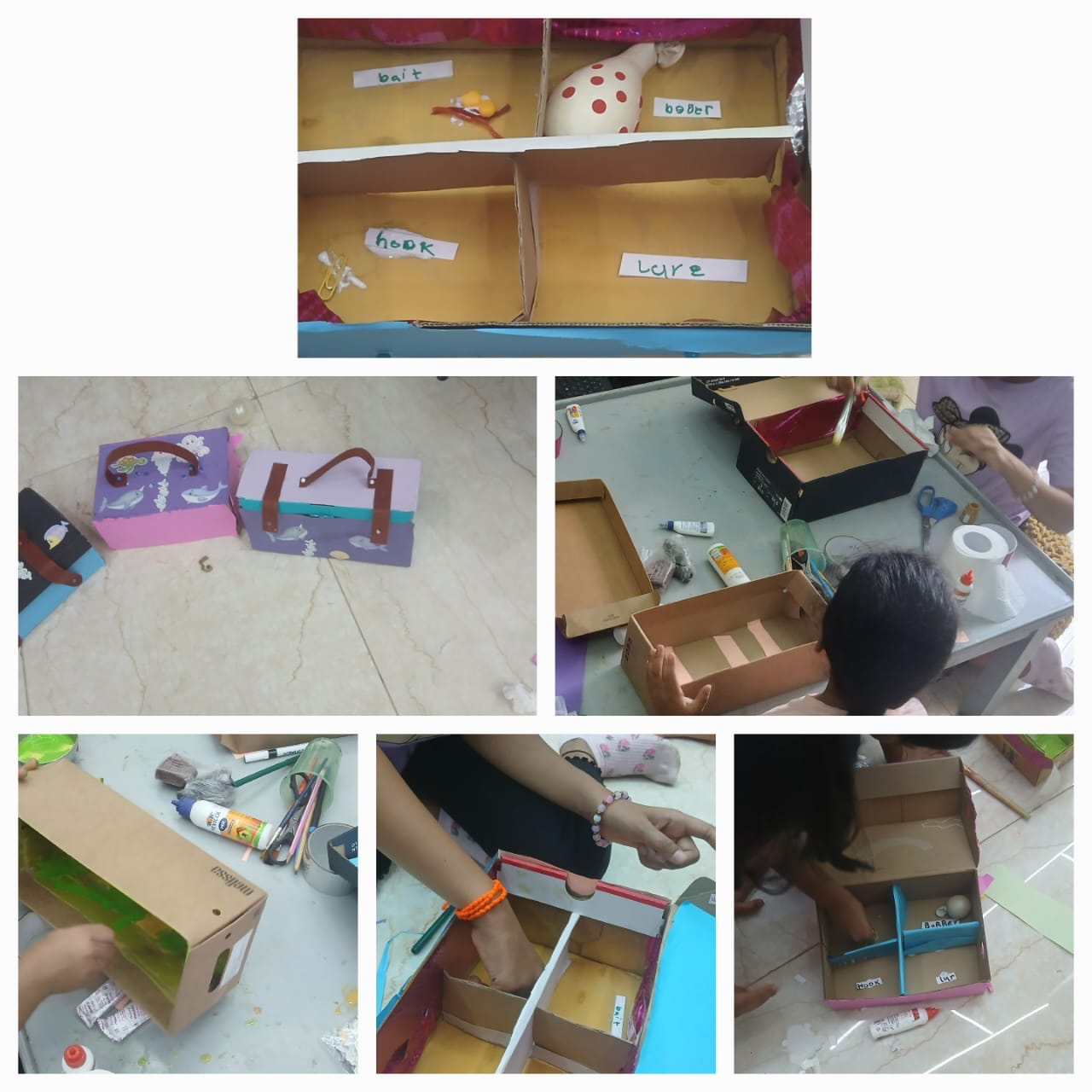
The children learned that a tackle box helps keep fishing tools safe and organized. Working in pairs or on their own, they decorated their own tackle boxes using recycled materials. They used cartons, paints, color sheets, stickers, and strips to create compartments for items like bait, lures, bobbers, and hooks.
This hands-on project encouraged planning, sorting, labeling, and spatial thinking, helping children think like real engineers while having fun organizing their gear. Samyuktha & Havishka : 7 years 2 months old Tashi :7 years old. Tara : 6 years 11 months old
Dear reader,
I work with the school leadership team as an advisor and collaborate with teachers as a pedagogical trainer. I also help parents as a parenting counselor and regularly engage one-on-one with students as a personal guide and mentor. This weekly newsletter shares what I read, learn, and experience.
3-2-1 Tuesdays with Ms. Niv is a newsletter you can subscribe to and enjoy your learning journey with me.
 Nivedita Mukerjee