Nivedita Mukerjee
Education consultancy for parents and schools
The 3 Aces of parenting for you to keep up your sleeve

The jury on parenting is always out. Whenever you think you have mastered the art and science of parenting, a new theory, a new paradigm, a new style is propounded with research, case studies and analytics to back it. However, over the years as a parent and as an educator, here are the three aces for you to ensure a win whatever hand you are dealt with in that ever enchanting game of parenting.
- Stop Comparison
This tops the list. I believe in the quote that comparison is the thief of joy! Parenting is such a long drawn out game that it needs to be joyful for both you and your child. Comparison is worse than criticism, which is plain bad. It just debases the child instead of helping him/her improve which would have been your objective while comparing, isn’t it? It could be comparison with siblings, extended family, neighbors, classmates directly as look s/he is better than you or how come s/he can and you can’t or obliquely as if they are able to you should as well be able to.
Comparing your child to others leads to:
- Self-doubt and low self esteem
- Envy and negativity towards the one/s compared with
- Fragile parent-child relationship
- Nervous child and jittery, indecisive, diffident adult
The world is an oyster for the 21st century child. Appreciating effort, words of encouragement, support when struggling and coping, noticing the strengths, setting mutually agreed expectations from young age and under all circumstances, unconditional love is what you need to make an essential part of your communication with the child, not comparison. Your child needs to know that you have his/her back.
- Create a whitespace
Margins on note books, indentations for new paragraphs, rests in music, negative space in design, transition time between two classroom periods… These are whitespaces. This element of design is critical to bring out the content and help us focus. Similarly, whitespace is also critical for parenting. It is important for you to have a whitespace of your own. For your child to have a white space of his/her own and also for both of you to have a whitespace together. This is the unscheduled time. For you to be on your own. For your child to be on his/her own and for both of you to be together without agenda. This sparks new interests when on one’s own and similarly triggers interesting conversations when you are with your child/ren. Whitespace allows children to learn to think about things. They are not a waste of time, unproductive time or for that matter time to get into trouble. This is the time when no friend, no internet, no author, interrupts their own voice telling them what to think. Similarly, when it is just you and your child/ren, with no agenda of coaching, instructing, asking or answering, conversations happen. That’s when you make the connection with your child as an independent human being. Not thinking of how to mould, shape, motivate – but just to relate.
Here are some tips for creating whitespace:
- Take a break from social media – go for a walk together or sit with a beverage in your foyer, yard or balcony with no device to distract.
- Schedule time when you have no schedule – for yourself, for your child, for both you and your child. If anything comes up at that time, keep it in the parking lot or the it can wait section.
- Create intentional quiet – for a short time perhaps early morning before you buzz off to work and your child sets off to school or before bed time or during bath time even (make the bath time longer on certain days to just be in the tub/pool together). It makes for a very soothing, emotional, calm time for just being together and sharing the moment with your child of varying ages.
- Question everything
This is my personal favourite. Ask why and not what. Question even when you have no answers as it leaves the possibilities open for various kinds of perspectives. Not clear black and white answers. What is the right thing to do at this point in time? replace it with Why is it the right thing to do at this point in time – and you get yourself/your child to do deeper thinking. What is the best way to achieve this goal? replace it with Why is it the best way to achieve this goal? – get what I mean? Just responding to a thought in your own mind or to what your spouse, your extended family, your neighbour, your child’s class teacher – as – can you please share with me why do you think so – will elicit answers that may not be what your assumption is. Same with your child. If the child can answer because… and so that…therefore… it is metacognition. It is critical thinking. It is problem solving while making thinking visible. It is a 21st century skill!
So, when I asked myself as to Why do I think these 3 are the Aces, my top 3? Perhaps because I think they are not about any one particular parenting style or a formula. They are about Parenting Values, thus timeless and borderless.
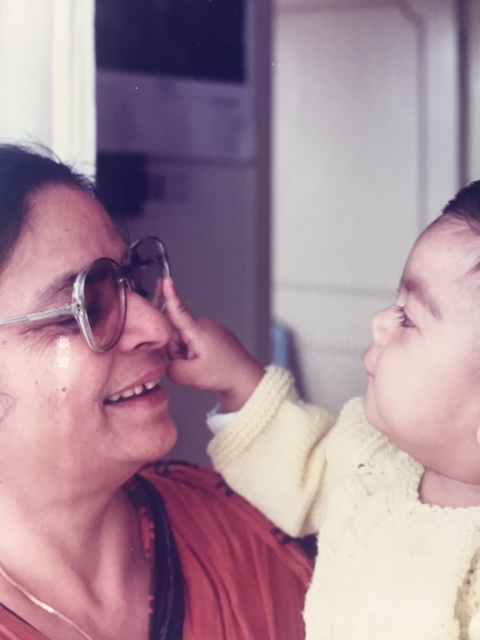
Shared as pictures are my mother with my son and my mother with me, crossing generations.
Why do you think this matters?
Please Share with your thoughts here for all of us to read and question J
It is a JOMO! Raised without siblings.

As an educator, I meet parents with children of various ages and stages of their lives. Many times, while discussing matters of behavior and attitude, parents have brought forth their concerns like:
- whether they should have another child;
- or for that matter now that they are bringing up a single child, after thoughts of should they have had another;
- whether they should adopt another child or perhaps even a pet to give company to their only child to grow up with;
- now that they have one child – what should they do/not do as a parent;
- what should they look out for and what should their concerns be for the future of their decision of choosing to have one child.
Interesting conversations I have had and heard over the years. First as a child, then as a parent and now as an educator. Here’s my perspective of a single child and mother of a single child. Reflections on the eve of my single child’s 27th birthday J
We chose to have one – and done!
That’s right. For us and also my parents, it was a conscious choice we made. Since I am presenting my personal view point, here are some disclosures to give you an idea where I am coming from. I was raised a single child and my husband(who has one sibling) and I chose to raise a single child as well. I understand from my conversations on this matter over the years that many of us have had one child for varied reasons (not as a choice) like that of late age marriage, fertility matters and assisted pregnancies making it a difficult process to conceiving a second time round, health issues that pre-existed like Type-1 diabetes making the decision of having one child pragmatic, a difficult first pregnancy, full time career choices or separation from the spouse. That was not the case for my mother or for me for that matter despite both of us being career women. We had a support system of extended family to help us manage both career and children. We had normal pregnancies and kept averagely good health.
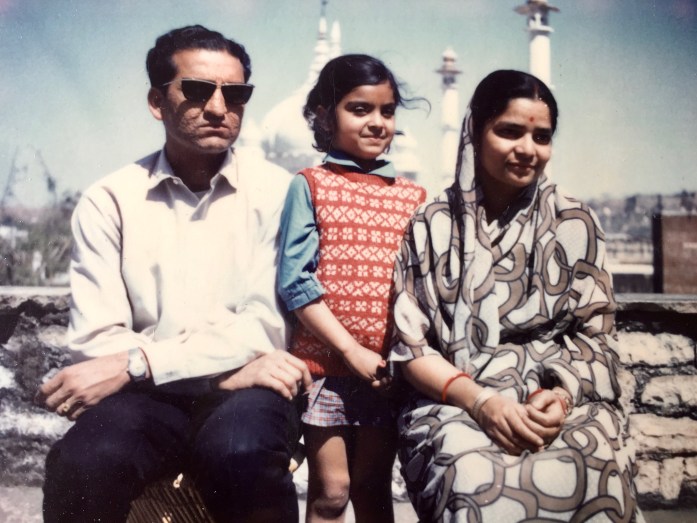
Since I am an only child, the big cliché about being one did not worry me when it came to my choice of having one.
A single child is often lonely
- A single child gets used to spending time alone and flexing imagination, with contemplation and reflection, with music, with reading, with journaling.
- One learns to develop relationships outside of immediate family, with friends and people of all ages which is a skill that is becoming very significant for the millennials. Especially with younger generation as people of my generation find a gap between the world and themselves if they are not in touch with the youth and children as our worlds vastly differ. Entry for us into this new connected world is through and with the younger generation.
Not having a sibling to continuously being compared or compete with – unwittingly done by parents, family and friends and most definitely in school – gives a sense of internal confidence. A single child grows with a security. I felt less compelled to compete or to put other people down all through the many cross roads of my life.
Neither my son or I turned out to be entitled! Being privileged is not be confused with being entitled. A brat is a brat because how he/she is brought up. My parents could provide for me and us for our son – with much more opportunities than might have been possible with their/our salaried means. Teaching our children gratitude and grace cannot be relegated to having multiple siblings to ensure it. It is a key area of responsibility for the parents (and grand parents in our case as our son was lucky to grow up with both sides of grandparents in our home).

I worry about my son being alone when my husband and I are gone. A situation I am in as both my parents are no more. I also worry about my son having to take care of one or both of us all by himself as we grow older. We live and work in a country different from that of our grown son. My personal existential distress that waxes and wanes over matters that do not get solved by logical and deductive thought processes. For situations that just have to be lived through for the many random factors that occur and affect the outcomes. It is quite the same as that of having one child or more. A decision you just have to live through.
The decision of having one and being done gives rise to several imponderables as:
- It would be nice to have had a sibling whose home one can go to just hangout or decompress or hibernate.
- It would be great to be able to talk about your growing years, about your parents living or long gone.
- It would be so much comforting to be able to share your pain of loss of loved ones.
- It is nice to imagine that if my son had a sibling with whom he would be close to and can grow old with and share his joys and frustrations, help him when we are old and ailing, when he needs to share the care for either of us, when we are gone.
However, these are assumptions. These are imaginary assumptions of the second child/sibling that my son would have had.
These would be correct if:
- The imaginary second child is healthy
- The siblings get along
- They would be in geographies that they can be for each other and us
- That we could afford the same opportunities for both/more children
I would call these the fantasies to come true for the assumptions I made before. My fiercely logical mind knows that those could not have been the basis for us to take on the irreversible decision of having more children than the one I had. So I (and I know that my parents felt the same) chose JOMO (joy of missing out) over FOMO (fear of missing out). My parents discussed often during my years of growing that if they had a second child, it would surely threaten their overall economical and emotional dynamics. Both of them came from large loving and stable families with several siblings (my dad was the eldest of 6, my mother was one of 9 including her twin brother). They would know 🙂
I have many young parents sharing their FOMO with me. It is a choice we make. Parenting is often described to be as more Joy than Fun. I must say that I know for sure, for my parents and then us as parents, we had both Joy and Fun.
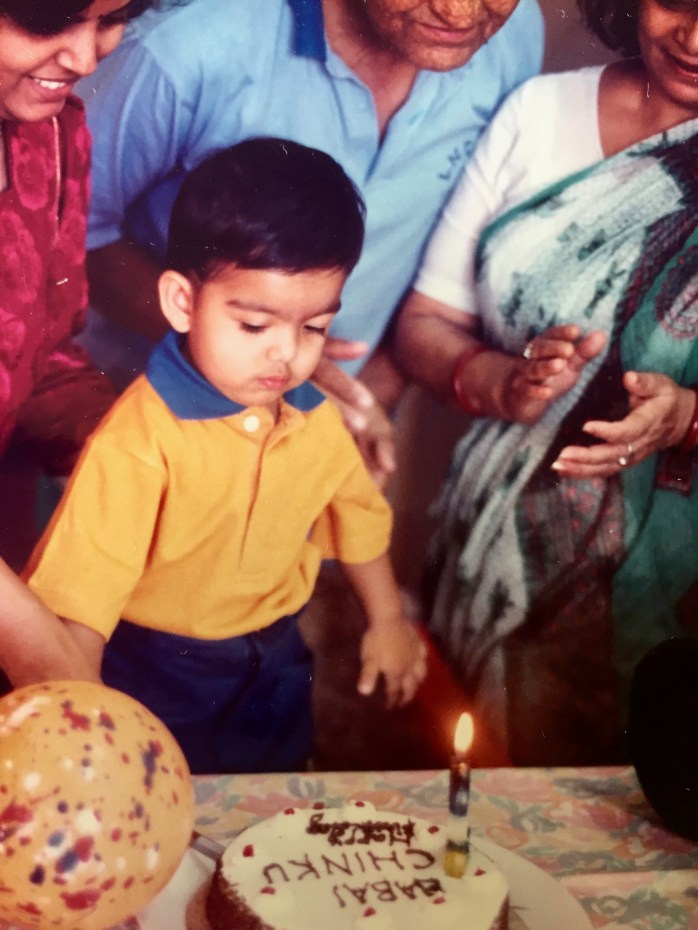
Happy Birthday dear son!
Have you lost a friendship? Have you kept some? It’s the friendship month – let’s talk.

Making friends, keeping friends, giving up friendships – A life-skill for us to understand and share with our children and students. Dost dost naa rahaa, pyaar pyaar naa rahaa…(friend did not remain a friend, love, did not remain as love…) released in 1970, sung by Mukesh and written by Shailendra was a great hit at the time and went on to win several awards. I remember listening to this song on a valve radio that we had at home and later during my college days playing it from spool tapes for listeners of AIR – Vividh Bharati, as a radio announcer (no concept of RJ then) . I caught up recently with a class mate of mine. She shared about her pain from the loss of a long term friendship of hers for reasons she could not comprehend and this song sprung to my mind instantly. I have had similar experiences a few times over the last almost fifty years of my life. I have made some lifelong friendships and kept them. Some I have lost for reasons not clearly known to me.


This song from the movie Sangam a Raj Kapoor – Rajendra Kapoor – Vaijayantimala starrer explores why friends do not stay friends forever and love changes its hues with time. Everything is subject to change as that is the nature of our existence. We are moving through not only time and space but also through realities created by our own decisions that we constantly need to make. Jo zindagi ke rah mein, baney thae mere hamsafar, woh mere dost tum hee thae, tum hee toh thae…(who was my guide in the path of life and became my fellow traveler, that friend was you, was it not?)
I could understand the pain of my friend of losing a friend, having gone through it myself. In my quest for rationale, I had turned to reading small bits of writings in philosophy – Indian, Chinese, Buddhist, Greek from various ages. In his ethical masterpiece, The Nicomachean Ethics, Aristotle examines quite extensively on the virtue of friendship. It is a fairly easy read with simple sentences and ideas, making a number of well-reasoned value judgments. His insights have become everyday sayings like “Man is by nature a social animal”.
Who are your 5 closest friends? A question to ask yourself, your children/students. I did that for myself and also as an educator with my students of varying ages. Think of the people you can talk to about anything, the ones you have known for some years, the ones you can always call even if you have not been in touch on an everyday basis. In today’s age of social media – with Facebook friends and What’s app groups existing alongside and overlapping, most of us have more than 150 connections – the supposed maximum number of the meaningful social relationships you can have according to Dunbar’s suggested cognitive limit (Robin Dunbar, British anthropologist, who in 1990s found a correlation between primate brain size and average social group size).


Aristotle describes friendship as reciprocated goodwill. According to him, It is the source of that goodwill which differentiates the three kinds of friendships you can have:
- Friendships of utility: between you and someone who is useful to you. Your carpool buddy, your child’s class parent, your homework/project collaborating friends, your shopping buddy, the guy who helps you with your presentations/technology, your neighbor who watches over your child/dog/parent, or for that matter – I like your face book post you like mine – and in all of these situations, you do something in exchange in some form to keep this going as you scratch my back, I scratch yours – friendship.
- Friendships of pleasure: these are between you and person/people whose company you enjoy and can overlap with the kinds mentioned above. These people you like for their qualities of wit, beauty, intelligence – for some activity like your tennis/golf buddy/gym partner, chit-chatting or sharing a joke, having a coffee or a drink together or spending time in a book club or music circle. This kind of friendship exists as we like some aspects of the other. It is different from friendship of utility as that one exists mainly because that person can help us in some way or the other. This one is not purely utilitarian but adds value to your social life.
- Friendships of the good: this one is based on mutual respect and admiration thus taking the longest time to build. These are enduring friendships. They last when you have similar values. When we have similar visions (not views necessarily) of how the world should be. These friendships typically begin during our school and college days and sometimes during our working adult lives.
Over the years, we accumulate many “friends”. While it is good to have the maximum energy and emotion devoted to the third kind – Friendship of the good, mostly the beginnings of these are in the first two kinds of friendship – you are thrown in together because of certain circumstance (of utility), you come closer over time with some (of pleasure), you nurture them over the years (of good).
So when you lose a friendship, a very painful experience – give it a thought. What category was the friendship actually in? if it falls in the first two, tell yourself – it’s okay. This is also a life-lesson for our children and students especially the adolescents and young adults; to recognise the nature of the lost friendship and agonize over the loss accordingly! This would keep them (and us) balanced in our emotions when we have to decide to preserve a friendship and when we can let go of a friendship. Friendships of pleasure and usefulness are easily dissolved when the other person is no longer pleasant or useful. This is a good point to reflect upon – you have lost a friend because either you/him-her are no longer useful or pleasant in context to each other. All the while keeping in mind that all relationships are subject to change!


What do you think? What categories do your friendships fall into? Can you try for increasing/pruning a certain kind of friendship over the other? Did you know that younger people have more friendship of pleasure and older people of utility? An interesting human insight there.
Note to self, I think I have plenty from category 1, quite enough of 3, however, I think I need to loosen myself and get some more of 2 🙂 Perhaps join that yoga class in the evening or a weekend hobby class of gardening…
“It is a good thing, to have many friends. No one would choose to live without friends even if he possessed all other goods” – Aristotle.
I agree. And I also advocate that – “Har ek friend zaroori hota hai” – (Each (type of) friend is necessary). Go on, make some more and make some of those deeper, freinds with whom you can sing along one of the most loved songs on friendship from one of Bollywood’s iconic movies , Sholay – “Yeh dosti, hum naheen todengey, todengey, dum magar, tera saath na chhodenge…(even after I depart from this life, we shall not part with this friendship, ).
Share with me your friendship types. Your wins and woes. Happy friendship month!
You want to change your child’s behaviour?Here are 5 things you need to know.

Where do you think your parenting responses lie when it comes to behaviour of your child on the spectrum of – Achievement based (western approach) to Pressure based (Eastern approach)? While one is more focused on the goal, the other focusses on the way to achieve the goal. Think of it, are they mutually exclusive when it comes to behaviour? Somewhere on the spectrum perhaps lies the sweet spot of balance that all of us as parents wish to achieve every time we want to address our child’s behaviour. As most matters of parenting, our response reflects our personal values and beliefs.
Here are 5 key things you need to know when you adjust the slider on that spectrum of your personal parenting approach.
- Behaviour is driven by emotions
Open ended surveys of adolescent children and their parents for qualitative analyses have often shown significant differences between what children think their parent’s expectations of their academic and co-curricular goals are and what actually their parents self-reported expectations are. Children have always rated the expectations much higher and as a result felt much more pressured leading to a range of behaviour, from rebelling to depression.
Younger children express it quite similarly. They throw tantrum or ignore your instructions.
- Parenting based on “carrot and stick” does not work
Fear based parenting or reward based parenting works immediately. Fails long term. Parenting is a marathon and not a sprint and thus what works only short term is not a good strategy to adopt. Should you reward when your child shows kindness? Do you reprimand when your child is lying? What would you have liked when you showed such virtue or vice? How was it when you were kind last time? Was the satisfaction it’s own reward? And why did you lie last time – what did you feel about yourself – what situation made you lie – under what situation you would have not lied? You may want to ask these to yourself and then work it out with your child similarly. You will develop your own unique recipe that will work perfectly to suit your personal parenting style.
- Check your definition of mis-behaviour
Much of what we define as mis-behaviour is actually normal and needs to be understood over the growing years of the child. A toddler child will not share his/her toy with another child and is a sensory-motor scientist touching-licking-pulling –spilling – squishing things. A 5-6 year old will play away from parent and have more elaborate discussion of emotions and group rules just as a teenager will turn to their peers for suggestion instead of adults.
- Positive affirmations lead to positive behaviour
Rosenthal and Jacobson’s work on Expectancy Effects demonstrate the power of self-fulfilling prophecy. In their study, students believed to be on the verge of great academic success performed in accordance with these expectations; students not labelled this way did not. Later research and my personal experience as an educator over the years has supported Rosenthal’s original conclusion – that teacher expectations can have a substantial effect on students’ scholastic performance. This works similarly on parental expectations from their children’s behaviour as well. Appreciating the behaviour that is in accordance to your family/personal values, reinforces. Reprimanding an action that you do not want to become a behaviour sometimes brings it to more focus than deserved. Ignoring or calmly mentioning might just be enough. Positive words lead to positive behaviour.
- All behaviours can’t be changed
And that’s okay. If it’s not life threatening and completely amoral, you may want to move on to what you would like your child to do instead of listing what you would not.
The paradox of child-raising is that you truly can raise your child essentially for free, although it will cost you your life. A young parent recently asked me how I felt as a parent as our son is all grown up and independent. I feel great I said, and will continue to be a parent. Parenting? That’s a verb. The action keeps changing with your own and your child’s age and needs.

What is your personal parenting dilemma on behaviour of your child? Sound off below.
Kozhukatta – a children’s book review

Sumi Chandrashekharan’s ‘Kozhukatta’ was read once by me a couple of weeks ago sitting with her, sipping tea in the patio, in about 5 minutes. Yes, it’s about 8 pages, illustrated story book and that’s the time it would take it for an adult to read silently cover to cover. But it is a whole new matter when you read it again, time extends from the 5 minute of quick read to about a good 10 minutes. You discover some new illustrations and several new words that you glazed past in your first read. Then, if you read aloud to yourself, it would take you anywhere from about 15 minutes to as long as 25 minutes. All of this calculation of time taken to read goes for a complete toss if you read it aloud to a child!
That’s right. When you are reading to a child, the story of ‘Kozhukatta’ is exactly that. Something soft, something white, something round, something delicious… literally and metaphorically. The character of forgetful Ponnu is at the same time irritating and endearing. It is that of a child and also of a grown person. The setting is Kerala, a state in the southern part of India and is adapted from a traditional tale but is quite transferable to any geography. On a visit to a friend’s house, forgetful Ponnu is offered delicious dumplings. He has no intention of letting its name slip from his memory… what happens next? Find out in this noodlehead story.
‘Kozhukatta’ – pronounced Ko-rrru-ka-tta, where the zh is like the rrr in purr says a cat (go look for it amongst the many bold and some subtle illustrations on the pages) is a fun read. You can see the author’s understanding as an early childhood educator herself, of what makes a good story for young children. For those who have read stories to children know that children like to listen to the same story over and over again. Young children enjoy simple stories that are layered so that while it is being read to them for the nth time, they can ask you something or exclaim at something or anticipate something each time. Children look at illustrations while you read to them and just you finish the last word or sentence on the page, they are still looking at something on that page and ask you to wait a few seconds more before you flip to the next. The narrative and the illustration of ‘Kozhukatta’ provides adequate opportunities for both.
So this morning when I read ‘Kozhukatta’ the 8 page, 5 minute to read and see book for an adult, the educator in me took a good half hour. I found that crow peeping out from the bush as the birds flew with the word. I discovered that each of the alphabets had a body shape to it – just like I have seen our preschool teachers working it out with the children. That Ponnu had his dress folded up while performing the alphabets just as it is done by men in Kerala when they get up to start a walk or ride a bike!


P.S. I had a noodlehead moment myself as I was telling about the book to a friend whether it was ‘Kozhakattu’ or ‘Kottukazha’ or ‘Kokkazhattu’… So is there a Ponnu – noodlehead story series in there somewhere Sumi from this part of the world?
Illustrated by Zafouko Yamamoto and Published by Tota books, the book is now available in stores and on amazon.
“Can We Bring Them Down?” An illustrated e-book for young children from TanaBana series.

“Can We Bring Them Down?”, is the third illustrated story book for young children in the series of TanaBana. It is free for you to read and share with your friends and family.
Can We Bring Them Down?(Click to download PDF)
If you have missed out on the other two books, here are both the links for you to download and enjoy.
I can see a rainbow (Click to download PDF).
Hi! I am Kyra (Click to download the PDF)
TanaBana, means warp and weft of a weave, in the Hindi language. And that’s what it is. A story woven with the ‘Tana‘ of ideas, and the ‘Bana‘ of pictures from everyday events that happen in a child’s life. The idea of this series emerged, during a conversation amongst a couple of us friends who share the passion of story, of education. The precious nano interactions that take place every day amongst young children and between a child and an adult in their environment have the possibility of making a deep and meaningful impact on the mind of a growing child.
We would love to hear your and your child’s feedback on any aspect of the book. Let us know what you liked and what we can do better. We hope you and your child enjoy reading it as much as the TanaBana team enjoyed weaving it.
If you like what you find here, please like the post, share your comments and follow my blog.
Problem solving is a skill. You can teach it to your child.

 Everyting is figureoutable – Marie Forleo.
You can figure it out! Just start taking action, take a grab at it and see where it leads you!
The shuttle cock is stuck on the tree while your child is playing a game of badminton in your house compound with a couple of his friends. What does he do? Rushes to call the watchman to bring it down? Runs to get a pole to shake the branches? Opens a new box of shuttle cocks? And if he does that, does he leave the shuttle up after he finishes the game? You can assume that your child can think of all of the above and some more. Or can he? Does he figure it out? Does he talk to his team mates to sort it out? Does he come running to you for help in the first instance or after exhausting all options? What is your reaction? Which one of the following is the closest to your response:
- Go figure it out; Stop playing badminton, play something else; I told you not to play in the yard; Take out another shuttle cock; Let’s see how we can get it down; Don’t bother me now I have other things to attend to, go study.
Flash back to baby days. The toy rolls under the sofa. What did you do? Rushed in and pushed the sofa aside and get the toy out? found a stick to nudge it from underneath the space? Quickly fetched another toy? Sat down with your toddler and wonder together what is to be done at that point in time and why which option is best in the given circumstances?
We all understand that managing our own emotions and role modelling our actions-reactions to situations is one of the fundamentals of teaching skills and attitudes to our children.
“The problem isn’t a problem, the problem is your attitude to the problem” Captain Jack Sparrow.
How do you approach a problem yourself?
- Do you anticipate a problem? if you do that how do you mitigate the negative impact?
- When a problem erupts suddenly – what is your response to it? Fear, anger, denial, acceptance, seeking assistance? Using it as a practice ground?
- When sometimes you react in ways that you regret, do you apologize to your kids because you are still learning and parents make mistakes too?
What is the lens with which you perceive something as a problem?
- Your child behaves in a way that clash with your beliefs.
Example: Your child can’t finish the food served to him/or he has served himself.
- Your child’s behaviour may evoke a childhood memory and response.
Example: Your child not performing academically at a level you expect him/her to and you feel as if you failed as a parent. This could be because only when you got a good grade, your parents found you worthy of attention.
- Your child’s behaviour may evoke a traumatic state or event.
Example: If you broke your nose playing soccer as a kid and you are scared every time your child ties up his cleats.
During a stressful parenting moment, when you may “lose control”” and let your amygdala hijack your logic, i.e. when your emotions control your reactions, you possibly stop thinking about how your child is perceiving you and your reactions. This can be very scary to kids. You are at that point in time, modelling to your child: this is how it is an expected and accepted reaction to stress.
How do you teach a skill on which you yourself are yet to get mastery over? Well, one way is to learn it together.
Here is an effective 5 step strategy for you to try out.
- Whose problem is it? Understand that entity.
Is it one person’s problem? If yes, then who is that person. If it is a group like a family or friends’ problem, then understand the dynamics of it. If it is your own problem, then reflect on it. The problem and the one who has it form an inseparable dynamic. That is why one solution can’t fit all even if the problem is seemingly similar. It may be a localised problem like a broken toy or an out there problem like poverty and illiteracy. The solution will need to emerge based on the one who is affected. Poverty in America, Africa, India need different solutions. “Broken toy” problem of a 6-year-old child with many other toys, of a 6-year-old child with special needs, of a 6-year-old child who has suffered a loss recently will all need to be addressed completely differently.
- What is the problem? Define it.
The problem is the sum of something actual and somethings perceived. For e.g. A child going to a new school after a change of city was excited at first but is anxious now. What is the real issue? What is the perceived one? The child can’t locate the class room/rest room/lunch room? The child is uncomfortable in the new uniform? new environment? No-buddy for play time? Or the child is feeling lost and lonely. What could you do to understand the issues? What can you do to help your child help himself to find his way through? For this situation will get repeated when the child moves into another school, another college, another job, another relationship.
- What if? Brainstorm the possible solutions and consequences of each.
Could there be different ways to approach the problems? Simulation computer games like Simcity, Mindstorm, Robot kit, board games like Chess, Lego kits, puzzles of various kinds build those skills at all ages to try and approach a situation in multiple ways.
- Check it out.
Try out the most plausible solution or eliminate the obvious improbable/unacceptable solutions. Pilot it, share and take feedback, iterate, tinker. Try again. Fall again, fail better.
- Go for it.
Only those who will risk going too far can possibly find out how far one can go.
T. S. Eliot.
Nivedita Mukerjee is a journalist, educator and parent. She writes about matters that concern a child’s success and well-being. She can be reached at https://about.me/niveditamukerjee
Independence by Grit

Give the gift of GRIT to your child this year on Independence Day.


For our generation it is an accepted socio-cultural norm to live one’s lives on other people’s terms and expectations of us, primarily our parents. Many of us continue to perpetuate this because it’s the only worldview we have been taught. However, we all quite understand that our children, most of them millennials, are growing up in a world that is encountering paradigms significantly different than ours. New career options, new technologies, new ways of communication. Its a whole new world order reflected in news media, sci-fi movies and popular television serials like Stranger Things, Orphan Black, Sense8 etc. A world with a perspective that we cannot possibly prepare our children for with our own set of knowledge and skills. What we can instead do is work on the third aspect of this holy trinity of survival kit – attitude.
This Independence Day, let us offer the gift of GRIT to our children. Falling, as you know by now, is not the issue. We fell. They will fall too. It is the attitude of rising from falls that needs passion and perseverance. A combination of these two attitudes make what we now understand as Grit.
Psychologist Angela Duckworth, recipient of the prestigious MacArthur Fellowship, also known as the “Genius Grant”, in her book, Grit: The power of passion and perseverance (and her immensely popular Ted Talk) explains why Grit is important and what is its correlation with success.
Grit, gives us the motivation to achieve our objectives through persistent effort. It is essential to accomplish anything of significance. It is also one big factor that makes your child independent of circumstances that s/he encounters throughout life. Grit is something that can be nurtured and grown within oneself. It’s that lifelong gift which becomes the source of power with consistent use.
We don’t always get to see anything beyond the end result. Both, of failure and success. For most struggles are endured alone or behind closed doors and not shared. Think of it, how often have our parents discussed their struggles with us? If they have discussed the difficulties or struggles, did they also share along the way which strategies were used? Which ones failed and which ones were useful and why? What kind of energy and effort was needed to come out of it? Where did they muster that Grit from? Which matters they persevered and which ones they gave up and why? What about you? How often do you share your challenges and your strategies to overcome them with your growing and even grown up children? Or with your spouse ? Most of the time, the struggles and the strategies are in one’s mind and heart. Are you ‘giving up’ or ‘holding up’ – using your attitude of Grit.
How does one harness Grit? What does it entail? How can you possibly “gift” Grit when it is so intrinsic whilst gift implies something completely extrinsic. That is where the significance of parenting comes in.
Parenting is a verb. It is a role performed. It can be for your biological child, for your adopted child, for your neighbour or relative’s child, for your student and so on. Any adult who interacts with a child performs some aspect of the parenting role. For those of us who do that on a daily basis, here are a few pointers to gifting our children with Grit.
Passion: the first half of Grit
How does one define it? How does one find it? One thing must be clear, passion is to be understood not in the granularity but in the big picture. It can’t just be temporary excitement. Nor does it have to be a thing that you love every component of. It’s a combination of deep interest and meaning.
How do you live it and share it with your child?
-If you are into sports, share with your child the passion of your sport and the fact that you may not like the fact of getting up 5 am in the morning to practice or prepare your body. But you do it for you like the big picture of what sports means for you.
-If you are a teacher, share with your child your passion and satisfaction you get of sharing knowledge and mentoring young minds. Also share the fact that you may not like doing some of the drudgery that comes along with it, like filling up lesson plans or administrative documentation, assessments or difficult parent teacher meetings. Yet the impact your teaching has on young minds, helping shape lives – is what you look forward to.
-If you are into music, share with your child the passion you have and what music means to you. Share the tedious practice you underwent or are still undergoing over several years. That oftentimes you were possibly at the brink of giving up but continued nevertheless as you had the eye on the big picture.
You can draw this out for any profession/entrepreneurship. Each of it has a big portion that can come under drudgery or routine or preparation, which comes attached for completing the big picture.
Amitabh Bachchan, the iconic actor comes to my mind as an epitome of the combination of passion and perseverance – Grit! His journey from voice narrator in Mrinal Sen’s Bhuvan Shome to supporting actor in Anand and angry young man in Zanjeer to the iconic Deewar. Sholay released on 15th August, 1975 and the rest is history. Or is it? We know the successful ones and we also know that most of his early films did very badly. Fatal injury and recovery during shooting of Coolie in Bangalore. The Bofors scandal followed by financial crisis, ABCL debacle to the point where his home nearly got auctioned. He went on to working on his comeback and how! From what became the household lexicon of “lock kar diya jaye?” in KBC TV series and many a Film awards and honorary doctorates, books, temples and memorials later to the current celluloid success of Paa, Piku and Pink.
Perseverance: the second half of Grit
When reality falls short of expectations. Many of us give up because we don’t fully realize what it takes. The mind set of perseverance is about seeing failure differently. How to use failure as a tool rather than a hindrance? How does one be honest with self and consider the pain of defeat before accepting that it’s worth enduring towards the goal one has set out to achieve.
How do you live it and share it with your child?
The story of the Three little Pigs is read out to all children at some point in time of growing up, in school or at home. Hard work pays off – is a well-known adage that is sermonised ever so often in parenting and teaching. For a good reason! It surely must have been difficult for the third pig to persevere even after his other brothers built their homes of straw and sticks with very little time and effort, isn’t it? The third pig however knew it was worth enduring all the hassle and drudgery for the matter of long term safety. All the brothers did have the knowledge that there was a big-bad wolf out there. They all had the skill to bring a strong house. Whereas only the third pig had the Attitude.
- Share your story of persevering for the long term safety, joy, success in the face of difficulty, hardship and failures with your child.
- Share how you have saved and invested even when you wanted to spend, it will teach them delayed gratification and how it works towards financial independence.
- Share with your child how you got up and went to work every day because you thought what you were doing is important and significant as contribution to family and work.
- Share with your child your trysts and tribulations during your years of education and skill acquisition and how you went through with the right attitude as you considered these were key requirements for success in any domain.
Grit is an attitude which can be acquired and honed. Continue to build yours along with your child and find success in your parenting goals. We all have our own ideas of success, and the word itself isn’t worth generalising. To me, it correlates with time invested.
Meaningful success takes a long time, and the longer it takes, the more opportunities arise for failure and disinterest. Grit plays the role of the discipline of a recurring deposit or systemic investment plan – if you will, for long term gains. Of course, time alone doesn’t drive progress. Feedback, along with deliberate and effective practice, are needed, too.
Benjamin Jones and Bruce Weinberg published a paper, Age dynamics in scientific creativity, in which they analyzed 525 Nobel prizes awarded between 1900 and 2008. The study was to see if there was a link between age and when important discoveries were made. They found that with a few exceptions, all winners produced their greatest work well past the age of 30.
It’s easy to say you need passion and perseverance to succeed, but it’s also important to know what these two entail. If your child is young, you have a high degree of control on your child. As the child grows, while your control decreases, your influence starts to show. If you want your child to show Grit in their attitude, start early by sharing your personal stories of Grit. Your efforts to come out of loss and grief. Of reinventing after job loss. Of getting out of your comfort zone and staying there until you were enjoying it. The pictures here give a glimpse into mine as I cycled through a high altitude terrain of Ladakh with a bunch of my teenage students. At the time I was 50year old with a fairly sedentary lifestyle.
So the next time you grit your teeth and continue with effective and involved parenting which by all means is tedious – know that you are showing Grit for the long term success of your child. All the best to us on living and gifting Grit. Do share your thoughts and stories of your Grit.
Happy Independence Day!

5 effective and time tested ideas for motivating your child

5 effective and time tested ideas for motivating your Child.
“You can steer yourself any direction you choose”. – Dr. Suess. His book Oh, the places You’ll go? has been one of the most popular choices as the graduation gift for the preschool children over the years. The intention is to reinforce the belief that children are naturally endowed with curiosity and the capability to work on their curiosity. Children believe that they can do everything! They always imagine what they want in great zest and detail. It is up to us as adults – both parents and teachers to not shake off that belief as we are the biggest influencers around them. A big responsibility that, isn’t it?
What drives children to do things that they should and stop what they shouldn’t? As adults, we know that how we respond to what is happening around us is always up to us. We are in control of our responses with the deeper understanding of the fact that whatever is happening around us, to us, with us, may not be under our control at all times. What we do is take control of our actions in a given situation. Once that is done, we can increase our circle of influence to situations or people around us. There would still remain a wider area, that would always be outside of our control but will influence our wellbeing. How can we instil that attitude of optimism and grit? How can we exemplify that to our children?
Kids have a strong sense of connection with parents and that is a very powerful tool for motivation. Studies have shown that children who feel secure in their attachment to their parents are more resilient. It is known now that character strengths like curiosity and self-control are teachable skills.
How shall we invest in their character? Here are 5 effective and time tested ideas for your consideration:
- Rewards and consequences
- It is true that rewards can sometimes be useful in getting things done in the short term. This works in organised sports. However, it is also true that when this is applied to manage behaviour, your child will become dependent on rewards. Consequently, when the reward stops, the behaviour stops. When the reward is not good enough, the behaviour is also not good enough. The benchmark of the quality and quantity of the reward will continuously need to rise higher if reward is used regularly to motivate your child.
- Even if the activity you want your child to engage in is intrinsically enjoyable, if your child associates it with extrinsic motivation, the child will stop doing the activity if there is no extrinsic reward as it has been observed that a reward centric method somehow extinguishes the child’s passion.
- Conversations
- When your child complains about a task at hand, share your thoughts on why you think the activity is useful. If your child is unwilling to clean up the room, understand why – is he/she tired or bored or finds the task too complicated and possibly does not know where to start from. Same goes for homework and any action that is considered as a chore by the child.
- Avoid using should or must as part of the instruction. Replace them with could, consider, because, however etcetera and get on the same side of the problem as your child. Work out the solution together.
- Understanding
- Lace your asks for tasks that are particularly disliked by your child with creativity – like using a puppet or a song during clean-up time.
- Use challenge for tasks that you want done quickly, example – racing a sibling home from the park.
- Give choice for non-negotiables. Say for dinner time, child can sit either next to you or next to dad. For brushing – it can be before bath or after. You get the drift.
- Expectation setting
- Set realistic expectations from your child by understanding the actual capabilities and interests while you set the bar. The key word here is “realistic”. For this you need to keep a very open mind. Children blossom at different rates.
- Appreciate when some expectations are met or exceeded. For example – if the child has got a B+ after getting C or is practicing regularly for a match or a concert, praise the effort that he/she is putting in.
- Role model
- This is simple but often forgotten in the pressure of parenting. When you are working and your child needs your attention, instead of saying wait a minute and then take half hour, give realistic time for the wait. If it’s urgent, address it right away. Remember, everything that the child wants you to hear is important. You would want your child respond to you similarly, for example – when you headed to the airport and are waiting for your child to join the group, at that point in time, “just a minute” by your child will mean exactly that.
- Show by example how conflicts can be resolved by modelling it yourself. For e.g. when you have differences with your spouse or with anyone that the child can see or hear, be mindful of the tone of your voice, your body language, the approach you are taking for conflict resolution. These are all learned behaviours.
- If you want the child to learn their manners, you are the best role model. Starting from using please and thank you to whoever serves you, including your house staff. Also, not using language you don’t approve of for your child, yourselves at any time.
Here are a few suggestions to take your understanding further:
- Read :
- How Children Succeed: Grit, Curiosity, and the Hidden Power of Character. By Paul Tough
- http://www.huffingtonpost.com/julie-handler/50-inspiring-childrens-books-with-positive-message_b_1557914.html?slideshow=true#gallery/229352/0
– great list of books to have in your child’s home library.
– check out this ted talk by Rita Pierson. She calls for educators to believe in their students and build connections with them
– a Tedx talk by Jennifer Nacif who tells parents exactly how to motivate your children, by changing your ways from manipulations to motivation.
For years it has been believed that cognitive capabilities are the key drivers of success. However, over the years, research has shown as has my experience of being an educator, that persistence and grit, self-control and optimism are some of the key qualities that help children succeed and remain happy. A strong and positive relationship with parents motivates the child to not only achieve but exceed their own capabilities.
Nivedita Mukerjee is a journalist, educator and parent. She writes about matters that concern a child’s success and well-being. She can be reached at niveditamukerjee10@gmail.com.
A version of this post is also published here:
https://www.parentcircle.com/article/5-proven-ideas-for-motivating-your-child/
Boosting concentration and memory power in pre-schoolers

Within their first couple of parent-teacher meetings the preschool teachers repeatedly hear the following concerns, with varying degrees of anxiousness :
“My child can’t sit still for 5 minutes!”
“My child day dreams randomly while doing something and sits at a task unfinished.”
“I can’t seem to get my child to finish even a simple puzzle.”
Does any of the above sound familiar to you?
Here are some ways that you can help your child concentrate better:
- Consider the challenge level of the work. Sometimes the task is too easy and sometimes too difficult. The level should match the capability and/or instructional range of the child’s age.
- Try motivating by using sand timers of varying lengths of time as per the task as visual reminder for the task underway. It can become a game later to beat the timer as proficiency and concentration increase. This is a good way of self-monitoring as well.
- Break up the task into steps to give multiple achievement levels within the overall task as steps. Solving a small portion of the puzzle or colouring one portion of the picture or making a part of a clay model etc.
- Check for any environmental factor that might contribute to distraction. For e.g. Fan above the head or air-conditioning unit sound, open window to noisy street/moving people, uncomfortable seating, fidgety student (at school) or sibling (at home) next to him/her etc. A change of place might just make it several notches more conducive to focus on task at hand.
- Peers or buddy system in class might work for assisting and/or encouraging the child to focus and finish the work, especially if it is a collaborative project.
- Sometimes sitting next to teacher/teaching assistant in the class or parent at home while the parent is doing their own work and role modelling focus on task, works as a visual reminder to stay on task.
- Sometimes young children find it helpful to talk about what they want to write or do and then do it, as it helps them get clarity as to what they are setting out to do.
You would need to keep re-evaluating the suggestions mentioned and discuss the same with your child’s teacher to figure out what works for your child and in which situation. As your child grows, crossing various milestones in his/her preschool years, the needs and thus the techniques to enhance concentration, would change.
Games and activities that help building capability to concentrate in your child:
For pre-schoolers, there are several simple games and activities that you can engage in with your child at home, to help him/her focus on a given task while having loads of fun. A lot of them are variations of dot to dot activities that build up the attention span while improving the hand-eye coordination and teaching number, colour, pattern etc. Here are a few references for free printables :
http://www.education.com/worksheets/preschool/dot-to-dots/
http://www.preschool-printable-activities.com/dot-to-dot-printables.html
There are YouTube videos that guide you to make your own dot to dot activity sheet like this one:
https://www.youtube.com/watch?v=5rb8Dynf0js
There are some memory games available online for kids like:
http://www.memozor.com/memory-game-online-free/for-kids
http://www.sproutonline.com/games
Many activity kits and board games for memory building for young children are available, for example :
http://www.activityvillage.co.uk/memory-games
http://littlebinsforlittlehands.com/10-best-preschool-board-games/
Amongst the concerns that parents of a pre-schooler may have on their child’s attention span, I have often heard parents wondering :
“Is it normal for my child to be bouncing up and down while watching TV?”
“ My child moves on to playing with another toy even as he has taken out something else to play with!”
“My child can’t hold a conversation or a line of thought.”
“Does my child have ADHD?”
While ADHD (Attention-deficit hyperactivity disorder) is one of the most common brain-based condition of childhood, all restless ness cannot be labelled as ADHD.
What is ADHD? Before you get worked up, here’s a link for you to know more:
http://www.webmd.com/add-adhd/guide/attention-deficit-hyperactivity-disorder-adhd#1
The children with ADHD may not:
- Be able to filter out unimportant visuals and audio from what is relevant and important to them.
- Focus for age-appropriate durations without getting distracted.
- Concentrate on one instruction or activity at a time.
- Hold a string of thought or a conversation.
- Follow a task with oral instructions.
The signs of ADHD also change over time. The struggles that a child suffering with ADHD in preschool will go through would be quite different in elementary, middle and high school. You may consider early intervention once you have observed your child carefully, discussed with the child’s teacher, consulted your child’s paediatrician and consulted the learning specialists or specialists like audiologist (for hearing issues), speech pathologist (for speech and language related issues), neurologist, behavioural paediatrician etc. Observe your child and make notes so that you can share the same with the teacher/s and specialists for better understanding.
As an educator, some activities that I have seen having positive influence on memory and focus are :
- Rhymes and poems- with chanting, clapping and movements associated with them.
- Stories – listening to and sequencing activities associated with stories that keep the child engaged and are great fun to recall, talk about the characters and wonder what could happen if they were one of the characters. This can be done with any of the children’s stories, without any special aids. The children can draw, make play-dough characters or play dress up. All of which would need the child to stay focussed on the story and it’s various elements.
- Role playing – if there are other children participating in the story telling-playacting then it is even better as they as give cues to each other for the sequence. In that process, they can all be focussed on the same activity for a fairly long time with each other’s help.
- Outdoor games, obstacle course, Simon says and I Spy with my little eye.
Each of the above help in the following ways:
- Exercise their working memory.
- They have to adjust to each other’s imagination.
- They have to keep track of and relate to what has happened and what is anticipated.
- They have to problem solve – like play two or more characters if there are less members in the game or figure out way through various barriers in the obstacle course indoors/outdoors.
- Most of these activities, whether rhyming or navigating obstacles are interactive and multi-step towards achieving completion.
Some of my all-time favourite outdoor games for pre-schoolers can be found here :
http://www.education.com/activity/preschool/outdoor/
You can try including these activities in your everyday routine:
- Making cookies and chapatti/paratha.
This is an all-time favourite sensorial activity – kneading dough is fun, messy, works out the muscles of fingers and arms; following a recipe also helps your child to plan a sequence of actions and possibility to modify when repeated. Opportunities of creativity with different kinds of ingredients to add to cookies and/or stuffing the parathas, making variations to tweak them to their own and their family/friends suggestions and taste is very good for their emotional and cognitive capabilities. Both of these support development of executive function.
- Mystery bags/feely bags.
These require specific use of working memory. As you put in familiar objects, whether the child’s toys or everyday items that child is familiar with like cell phone, spectacle case, toffee etc. and ask the child to feel the objects from outside or by putting the hand inside the bag and guess what they are. It would need the child to use their sensory information of touch to imagine the shape and form of the object to recognise it.
Relationship of aerobic fitness and motor skills with memory and attention in pre-schoolers(Ballabeina): A cross-sectional and longitudinal study done by Iris Niederer, Susi Kriemler, Janine Gut, Tim Hartmann, Christial Schindler, Jerome Barral and Jardena Puder led to the conclusion that –
“…In young children, higher baseline aerobic fitness and motor skills were related to a better spatial working memory and/or attention at baseline, and to some extent also to their future improvements over the following 9 months.”
Here’s a link to their study.
https://bmcpediatr.biomedcentral.com/articles/10.1186/1471-2431-11-34
Based on their results, they have suggested that exercises involving specific mental processing, including executive functions like reasoning, problem solving, planning etc. which go on to help in managing time and paying attention – are most suitable to trigger overall cognitive development in young children. They further mention that their data contributes to the emerging field of brain fitness and highlight the importance of a promotion of physical education.
The link above will take you to a list of 8 key executive functions that your child needs in order to organise their time and work. Each of these may be strengthened using various strategies that would help your child organise and act on information received. You can help your child or take him/her to a specialist to learn ways to hone them or work around, if there are issues in this area.
To help your child with improving their working memory, you will find some very useful tips here:
http://learningworksforkids.com/2013/04/5-ways-to-maximize-attention-and-boost-memory/
Choice of appropriate diet is essential in helping your child focus:
High sugar foods set kids up for a mid-morning energy crash. Proteins and complex carbs, that take time to digest, make ideal breakfast combinations not only for adults, but more so for kids whose day might peak with literacy/numeracy – high cognition activity in the mid mornings. Options of oatmeal or upama, eggs and toast/French toast, rava idlis with grated vegetables, dal-dosas, dal and vegetable mixed parathas, nuts and berries, whole wheat bread and cheese or peanut butter and jelly, whole wheat crackers or tortillas with cheese, these coupled with unsweetened juice, chocolate milk, fruit salads with curd are good to keep your child going through the day without the sugar crash and feeling sluggish, lethargic, anxious and distracted.
Include your child in planning for his/her meals from the time you visit the grocery store. Have them help you pick up the fruits and vegetables they would like to be served up. It is a sensorial experience for them and they remember and enjoy their meals when they have picked it up themselves. The four nutritious groups you need to keep in mind to include in each of the meals would be:
- Starchy foods
- Fruits and vegetables
- High iron and high protein foods
- Milk (check the contents of whole and skimmed in order to ensure that it contains Vitamin D and A), cheese, curds/yoghurt
The foods to be limited and/or avoided would be:
- Sweets and chocolates
- Salty foods (avoid chips and salty snacks like papads, pakodas, samosas; use herbs and spices to flavour the food instead of salt) The FSSAI recommends only 2g of salt a day for pre-schoolers.
- All whole grains only (they might feel full before they have eaten enough)
- Raw or partially cooked eggs, shell fish, large fish that might contain high levels of mercury
- Whole nuts (they might choke)
- Tea and coffee (they reduce the absorption of iron from foods)
- Carbonated drinks (can damage teeth)
Fussy eaters under 5 year old, might need supplements containing Vitamins A and D. This can be done under advisement from your paediatrician.
A study, “Impact of iron supplementation on cognitive functions in preschool and school-aged children : the Indian experience” By Subadra Seshadri and Tara Gopaldas talks about the significance of managing iron levels for young children. Click here to read more.
http://ajcn.nutrition.org/content/50/3/675.2.short
Finally, developing executive functions – attention, impulse control, working memory, planning – all are a combination of nature and nurture. And while it might be hard to change IQ, it is definitely possibly to improve a child’s ability to concentrate and increase executive functions. Do remember however, keeping on task longer should not be confused with compliance, obedience, sitting quietly or staying still etc. It has to be about children to persist to achieve the goal they have set for themselves and solve the problems to satisfy themselves and not for consequence of reward or punishment.
Nivedita Mukerjee is a journalist, educator and parent. She writes about matters that concern a child’s success and well-being. She can be reached at niveditamukerjee10@gmail.com.
This post has also been published by 6D news. Please find the link here : http://6dnews.com/boosting-concentration-memory-power-in-pre-schoolers/
A version of this post has also been published here:
https://www.parentcircle.com/article/boosting-concentration-and-memory-power-in-pre-schoolers/
 Nivedita Mukerjee