Nivedita Mukerjee
Education consultancy for parents and schools
3-2-1 TUESDAYS WITH MS NIV
Issue #15 / October 20, 2020
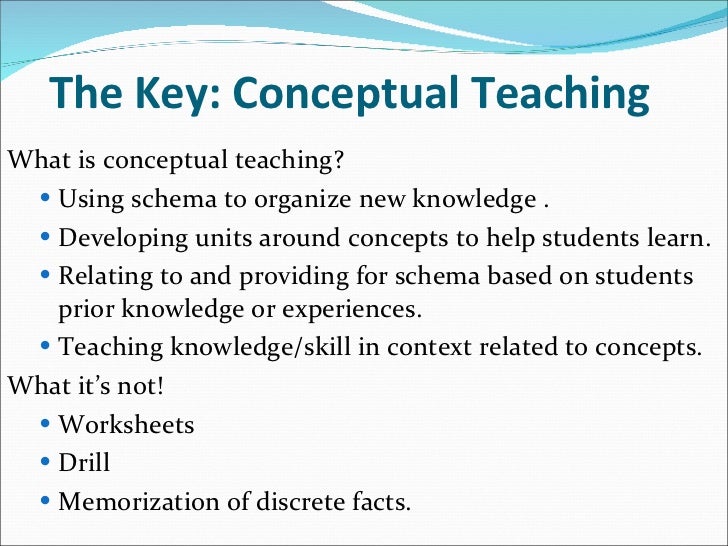
Disconnected learning is not just difficult, it is fragile. Thus the case for conceptual learning. Right? Does it help us understand life in the 21st century? Does song, dance, art, poetry help? Does it make sense if the 12 year old composes a Rap while learning layers of atmosphere? When does play stop and creative thinking begin? Get some answers and find more questions for yourself, in this week’s newsletter. Do some thinking with your hands while you make rockets, as you reach the And Finally… section.
Do share and subscribe.
Follow Me
Get new content delivered directly to your inbox.
Three Images For The Week
For educator, parent and student. The Holy Trinity of Education.


Two Thoughts For The Week
‘You must understand the whole of life, not just one little part of it. That is why you must read, that is why you must look at the skies, that is why you must sing and dance, and write poems and suffer and understand, for all that is life.’ Jiddu Krishnamurti
‘I never teach my pupils; I only attempt to provide the conditions in which they can learn.’ Albert Einstein
One Video For The Week
At the Serious Play conference, designer Tim Brown of the ‘Innovation and Design’ firm IDEO, talks about the powerful relationship between creative thinking and play — with many examples you can try at home (and one that maybe you shouldn’t).
Guest Column

Vishnuteerth Agnihotri, Chief Learner at GenWise TalentDev Pvt Ltd.
Cooks Vs Chefs: A Case for Conceptual Understanding
Can we see an object in a completely dark room after some time? Where does the mass of a large tree weighing several tonnes come from…given that it started off as a seed that weighed just a few grams? Such questions can puzzle even the best among us. This is because developing conceptual understanding requires ‘connecting the dots’ between different things we learn, that are seemingly unrelated.
While the ‘exam economy’ places little value on conceptual understanding, for someone looking at long-term learning, it is clear that factual knowledge and procedural skills must be accompanied with conceptual understanding. Conceptual understanding is important, even if it takes more time initially, because-
- Disconnected learning makes things more difficult than they need to be. e.g. a child not seeing the connection between ratios, percentages, fractions and decimals may resort to arbitrary procedures
- Learning is fragile when disconnected. Without an understanding of foundational concepts, further learning is built on a weak edifice. Unlearning wrong ideas later can be quite painful.
- Aiming for conceptual understanding, requires active engagement with connecting different ideas and builds the capability to ‘think from first principles’.
There is a striking example of the value of conceptual learning from a researcher, Liping Ma, who studied the different methods in teaching subtraction employed by US teachers vis-a-vis Chinese teachers. Take the sum
52 -19
In the US, students are expected to ‘borrow’ 1 from 5, subtract 9 from 12 to get 3 in the units place, subtract 1 from 4 to get 3 in the tens place to arrive at the answer of 33. In contrast in China, students would perform the same subtraction by ‘regrouping’ the numbers in question. Thus a student may perform the subtraction by doing (40 + 12)- (10 + 9)= (40-10) + (12-9)= 30 + 3= 33.
Liping Ma found that Chinese students significantly outperformed American students on such questions on international tests like TIMSS. Her research shows that lacking an understanding of the procedure they were employing, American students tended to slip up; some students even felt anxious about the procedure because of ‘borrowing 1 from 5 and not returning it’.
Elon Musk has spoken about the importance of thinking from first principles, which is closely related to conceptual understanding in my opinion. He explains how thinking from first principles is needed to innovate and uses the analogy of a chef vs a cook to make his point.
“The chef is a trailblazer, the person who invents recipes. He knows the raw ingredients and how to combine them. The cook, who reasons by analogy, uses a recipe. He creates something, perhaps with slight variations, that’s already been created. If the cook lost the recipe, he’d not know how to cook the dish. The chef, on the other hand, understands the flavor profiles and combinations at such a fundamental level that he doesn’t even use a recipe. He has real knowledge as opposed to know-how.”
To sum up, there’s nothing wrong with being a ‘cook’; in fact we all need to be ‘cooks’ in many areas of life, following certain recipes. But there may be areas in life where we want to be chefs…. we want to be trailblazers, and for that we need to work towards conceptual understanding and developing the capability to think from first principles.
If this post has piqued your interest, you could take the Science & Math ‘Concepts Quiz’ at https://bit.ly/ConceptQuiz (for kids) or https://bit.ly/ConcepTest (for grownups). You can also contact the author of this post at vishnu@genwise.in and read a longer version of this post at https://bit.ly/GWconceptual .
Parent Speak

Geetha Upadyayula is a passionate freelance writer who believes that life is the biggest teacher. She has two beautiful daughters who inspire her every day.
https://www.juggernaut.in/search?q=geetha%20upadyayula
I vividly remember my earnest effort to establish transparency with my nine-month-old firstborn. I would always keep her informed about what errands I was running and when I would be back. I firmly believed I was setting a tradition of dialogue between us, one that we would keep alive forever.
The unjust ask of having only picture-perfect conversations with our children could be the cause of disappointment and anxiety among both parties. It is the difficult and messy arguments that have defined my relationships with both my daughters. The fact that we aren’t scared of having them is the key to an honest road ahead. Innumerable heated discussions, hours of chatting and catching up, and incessant laughter over silliness have resulted in building trust.
We have made it a point to constantly work around the house, and have found our shared joy in cooking with the kitchen being the fulcrum of our home. Outsourcing these jobs, though seemingly economical, can prove very costly in the future. We’ve learnt and advocated the dignity of labor, self-dependence, awareness, mutual respect, and the joy of resourcefulness. Seeing our children as little people who can be taught to be responsible, kind, and considerate can set very different prospects.
In today’s world of instant gratification, another significant tool I’ve found is the art of saying no. The dwindling number of practitioners of this art is directly proportional to the guilt-ridden minds of parents. I believe children need parents to be parents and not just friends. Knowing when to step in and step back has helped me immensely in striking the right balance between being completely permissive and overly strict.
I had read somewhere, many years ago, that our children come through us but not from us. They are with us but they do not belong to us. We don’t own them. More than twenty years and two children later I truly appreciate the essence of those lines. I have learnt that the only way to gain respect is to show respect for your children and treat them as you would want to be treated.
Student Voice
Here’s what you get when you have fun when you learn. Rap along with these two Grade 7s, Ridhi Jain and Jinal Manihar – atmospheric eh? Enjoy.
Clouds are the roof,
Air is the breath,
If Troposphere wouldn’t be there,
We would all be dead.
The clouds are clear,
In stratosphere,
Less turbulence, the more jets fly,
Here the famous ozone lies
will we need woolens the higher we go!!
Oh no-no-no.
Then comes the naughty layer,
Which is called the mesosphere,
It extends upward to a height,
Most meteors burn-in might,
Darkness all over,
It gets colder.
Now it’s the ion layer,
Which is called the thermosphere,
Many satellites orbit the sphere,
And the auroras occur here.
Then extends the exosphere,
Up in the air.
- By Jinal Manihar

Atmosphere Atmosphere Atmosphere
Today we are gonna talk about atmosphere
The first layer is the troposphere
It has life giving AIR here
With rain bearing clouds everywhere.
Atmosphere Atmosphere Atmosphere
2nd layer is the stratosphere
It has the hot air balloon in the sky, airplanes flying by
Atmosphere Atmosphere Atmosphere
3rd layer is the mesosphere
It has the shooting stars looks like a beautiful dream that we are waiting for hours
Atmosphere Atmosphere Atmosphere
4rth layer is the thermosphere
It has the aurora having
Amazing light from its reflection
Atmosphere Atmosphere Atmosphere
The last layer is the exosphere
The last layer is the exosphere
Having the spacecraft and the satellite in the sky
So that we can watch cricket matches live.
Atmosphere Atmosphere Atmosphere
Life giving, life saving feature!
- By Ridhi Jain
Showcase
Kiran Bir Sethi, Col Sathya Rao, Saraswathi Padmanabhan, Shailaja Rao, Mubeen Masudi, Divanshu Kumar, Pratibha Narayanan… what do these names have in common? A vision for education. Each of them are thought leaders in this space and tell a story of how they are continuously toiling to make their vision a reality.
I have started a series of podcast : In conversation with Nivedita with educators of today. Those who are breaking boundaries and setting a new paradigm in education. These are short, 20 – 25 minutes of insightful conversations that give a peek into their journeys from vision to action.
These video podcasts are available on my YouTube channel. Here is the link.
 https://youtube.com/user/NiveditaMukerjee
Please subscribe and share with fellow educators and edupreneurs. Suggest to me as well names of such leaders who ought to be featured in this series.
And Finally…
Rocket that flies without noise and fire! check out this fun activity with Ms. Sonal.
3-2-1 Tuesdays with Ms Niv is a newsletter for you to subscribe and enjoy your learning journey with me. Most of you would have been too busy to track trends in education, ponder on most relevant thoughts or deliberate on career choice, parenting or pedagogy. Find it all here. This week, it consists of: 3 images, 2 thoughts and 1 video.
For whom? Students, educators and parents
When? Every Tuesday
Where? my blog post, register with your e-mail id, it is free.
If you want to contribute an article, are organising an event, have a product that you think can be reviewed and/or featured in this news letter, please feel free to write to me at : niveditamukerjee10@gmail.com
Please like, subscribe, share, comment. See you next week.
This newsletter is supported by:
3-2-1 TUESDAYS WITH MS NIV
Issue #14 / October 13, 2020
Easy choices are, well – easy to make. One alternate trumps the others in more than one ways. In a hard choice one alternate is better in one way, another one is better in some other way. Neither is better than the other over all. What do you do? Flip a coin? Go for the safer option? In this issue, find some infographics that will help clear the muddy waters around hard decisions. Listen to Ruth Chang in the video of the week in her life altering talk on How To Make Hard Choices. Don’t miss playing with Bangles this festival season with your family, check out the And Finally.. section with Ms Sonal.
Subscribe, share, comment. Feel free to follow me on social media where I post education related content.
Follow Me
Get new content delivered directly to your inbox.
Three Images For The Week
For educator, parent and student. The Holy Trinity of Education.


Two Thoughts For The Week
“You can’t make decisions based on fear and the possibility of what might happen.”
― Michelle Obama
“It is often said that a wrong decision taken at the right time is better than a right decision taken at the wrong time.”
― Pearl Zhu, Decision Master: The Art and Science of Decision Making
One Video For The Week
The world of value is different from the world of science. That is the stuff of hard decisions we face as humans. In both small and big tasks. Here’s a talk that could literally change your life. Which career should I pursue? Should I break up — or get married?! Where should I live? Big decisions like these can be agonizingly difficult. But that’s because we think about them the wrong way, says philosopher Ruth Chang. She offers a powerful new framework for shaping who we truly are.
Guest Column
Pavitra Umashankar, Teach For India Fellow.

Corona Diaries
I started this year with a lot of enthusiasm, a new zeal. I knew this year is going to be different. I had in August 2019 taken part in the assessments “Teach for India” conducted. I was impressed by their professionalism, to select teachers for government and low income private schools, a profession that is thought of not so highly in our society. I was supposed to start my stint in “Teach for India” with a one month long training in May in Pune. I had many years of corporate experience but this was going to be different. I was already dreaming about “back to college days” fun, staying in FLAME hostel with lot of fresh graduates and feel as one myself. I was getting set to be away from home for a month and have a lot of Vada paavs in the streets of Pune.
I was thinking of booking flight tickets and news of Corona Virus in China spreading trickled in slowly. The news of COVID in China did not make much of an impact considering we do not watch TV at home. Newspapers did not color as scary a picture as television and other media would do. On the day of March 20th, PM Modi announced banning of all international flights. The PM then came on national news channels and announced a complete lockdown from March 25th 2020. I stocked up few groceries and essentials that would last for a month. It was a time to bond with family and spend some quality time at home. It was time to try out all new recipes. It was also a time to efficiently divide and finish all the chores at home with good planning since the maids would not enter the community. Least did I know a different story unraveled in many many lives across the country.
Today after 6 months of the complete lockdown, with Vada Paavs of Pune still a far dream, with the online training that was imparted to us, I sit in my room, teach 20 plus kids on zoom every day and a different story unfolds every single day. My students’ parents belong to the informal sector as we call it, but they are the engine which runs the economy. My students’ parents are auto drivers, cab drivers, factory workers, garment industry workers, small business owners and BMTC workers. I now realize firsthand what lockdown is for them. Some of them have one basic smart phone at home, that affordability was there till last year. Today they have to manage to educate their kids with that one smart phone at home. They are struggling to pay the admission and tuition fee of 5000/- to school couple of months after online teaching has started.
My students have charmed me. I am particularly impressed with one girl in my class. Gunashree has very good RC, writing and Math ability as per her performance report last year. Her mother is a single parent trying to make ends meet. She works in a small hotel washing vessels, but dreams big for her child. Gunashree is 9 years old who gets up in the morning cooks for her brother and herself while her mom goes to work. She is the first one to login to online class at 9:30 A.M every day through a phone, a phone which I could give Gunashree because of the funding from a good Samaritan. Gunashree is so full of life, her beaming, confident voice on zoom answering all the questions and Math challenges that her Ma’am throws at her.
I prepare colorful ppt’s for my students, call up parents almost every day and entice them towards online learning with an intention to increase attendance only to realize that when my student strength in zoom is more than 10, my students on their phone interspersed with poor connectivity, constantly get disconnected, some of them are barely able to hear me. I then realized that being a elementary school teacher is 80% drama and 20% teaching and that is what keeps me going today. Dramatizing the teaching and learning
If not anything I have learnt a lot in this lockdown. I have learnt important life lessons. “Teach for India” in their one month training taught us “how to teach/ the pedagogy/dealing with any situation with a lot of empathy”, but the kids teach you a lot more on a daily basis. They have accepted their new teacher and given her a lot of love without meeting her face to face even once. They are malleable, they are the sponge which sees you and absorbs. There seems to be no end in sight for the pandemic but seeing the joyful faces of my students everyday morning have taught me that it does not take a lot to be happy
In awe of the ever adaptive world
Parent Speak



Student Voice
Akshitha Upadyayula, Student of Grade 12

“If I had an hour to solve a problem I’d spend 55 minutes thinking about the problem and five minutes thinking about solutions.” – Einstein
At first glance, this seems quite counter-intuitive since we have been taught that knowing the right answer is extremely important. However, Einstein seemed to believe that our ability to correctly identify the problem is directly proportional to the quality of the answer.
To understand a problem better you must be open to the possibility that there is more than one solution and actively question it. Challenge your previous values, assumptions and principles in an attempt to rethink and reinvent yourself.
Asking questions stimulates critical thinking – where the aim is not to make you afraid of having the wrong answer, but for you to closely examine and clearly articulate your beliefs. This is termed “productive discomfort”.
As students, we must understand that questioning is both the art of learning and the best evidence of understanding. Pursuing fearless thought, dedicated action and forgiveness for ourselves is something we cannot be taught but can discover through the process of questioning.
The beauty of this process lies in the idea that we don’t have to feel the burden of having all the correct answers. We have the freedom to come up with questions that lead to the heart of the problem. We will be able to stand by our values knowing that we have delved into ‘why’ we see the world the way we do.
These skills are vital to our growth and the way we approach the world. So I invite you to ponder over the thought that the “quest is for the question, not the answer” and see what you make of it.
Showcase
Saraswathi Padmanabhan, founder Diya Ghar.

Diya Ghar is an NGO for children of migrant labourers. We run Montessori Preschools and Day Care Centres in Bangalore. Our focus is nutrition, education and community engagement.
When the COVID19 pandemic hit us, our migrant communities were affected very badly. Children are now in a very vulnerable state and without an intervention like ours they are at the risk of developing nutritional deficiency. Their development is also hampered due to lack of stimulation and activities. We have therefore changed our model to continue to support children and their families during this time. Our interventions include:
- Nutrition: We are providing nutritional supplements (milk, eggs, porridge mix) for all children and distributing dry ration kits for families who are in desperate need.
- Parent Empowerment: Through a curriculum of weekly video sessions we are teaching parenting skills and activities that they can do with their children. We follow up with calls and community visits.
- Early Childhood Education: We are supporting the development of children by sharing video content. We follow up with calls and community visits.
Four year old Srinivas joined Diya Ghar in the beginning of February 2020. His family is from Bellary. They came to Bangalore about 5 years ago and they work as construction labourers. Srinivas was very malnourished and initially didn’t like to drink the porridge in school. He was also a shy boy who took a couple of weeks to join the group activities. What he loved doing was sitting by himself in the reading corner and going through story books. When we introduced activities using beads and cloth pins, we noticed that his fingers were very stiff. We were happy to see improvement over the month. He also started drinking porridge!
And then preschools were closed on March 10th 2020! We wondered how Srinivas was doing. We then started giving his family and the community dry ration kits and also nutritional supplements for the children (milk, eggs, porridge mix). We were surprised to hear that Srinivas enjoyed drinking the porridge. We then started sending his parents videos of activities to do. His mother understood the importance of Srinivas doing activities to strengthen his muscles. We were delighted when they sent us a picture of him doing an activity with clothes pins! His mother tells us that he loves to listen to videos on spoken English and is repeating a few words. We are glad that even during this pandemic, Srinivas can continue to get nutritious food, do activities to aid his growth and continue to learn!

www.diyaghar.org, contact@diyaghar.org, +91 63607 09332
_______________________________________________________________________________
And Finally..
Ms Sonal shares how you can learn and play with Bangles this Navratri in this fun video. Enjoy.
_________________________________________________________________________________________________________
3-2-1 Tuesdays with Ms Niv is a newsletter for you to subscribe and enjoy your learning journey with me. Most of you would have been too busy to track trends in education, ponder on most relevant thoughts or deliberate on career choice, parenting or pedagogy. Find it all here. This week, it consists of: 3 images, 2 thoughts and 1 video.
For whom? Students, educators and parents
When? Every Tuesday
Where? my blog post, register with your e-mail id, it is free.
If you want to contribute an article, are organising an event, have a product that you think can be reviewed and/or featured in this news letter, please feel free to write to me at : niveditamukerjee10@gmail.com
Please like, subscribe, share, comment. See you next week.
This newsletter is supported by:


3-2-1 TUESDAYS WITH MS NIV
Issue #13 / October 6, 2020
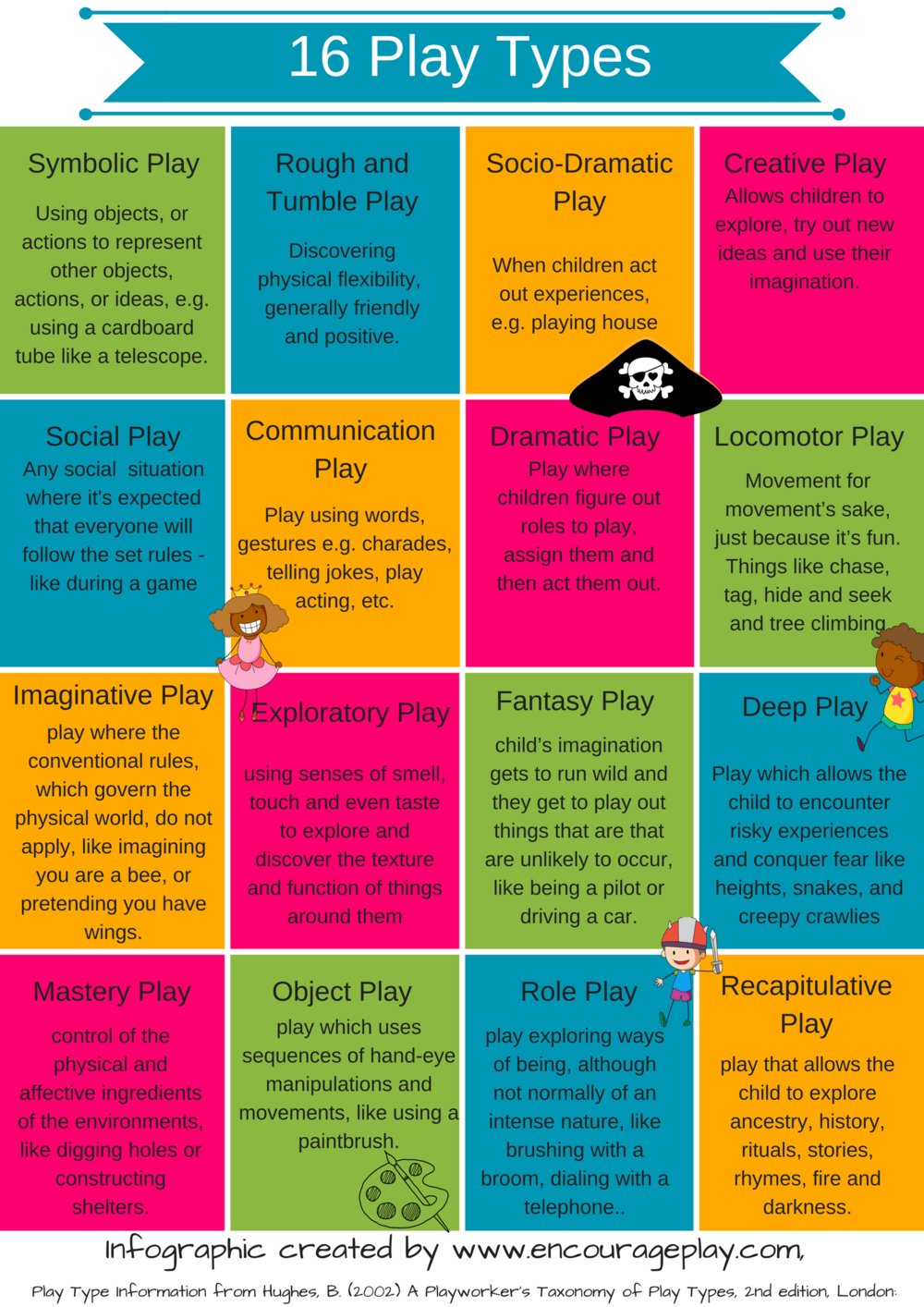
Have you been playing enough? Or for that matter at all lately? Was it outdoors or indoors? Was it a board game or a card game? Was it a virtual game? Was it for learning and education? Did you play with “Smart Materials”? When you play it is for fun. It’s creative. It prepares you to fail and try again. It lets you find new ways of approaching problems. Play is important. Play is necessary. For life and longevity. For having a say in your future. In this week’s issue I share an interesting collection of readings for you – whether you are a student, parent, or educator. Don’t miss the math “carry forward” DIY educational aid in the And Finally section.
Subscribe, share, comment. Feel free to follow me on social media where I post education related content.
Follow Me
Get new content delivered directly to your inbox.
Three Images For The Week
For educator, parent and student. The Holy Trinity of Education.


Two Thoughts For The Week
“Life is more fun if you play games.”
― My Uncle Oswald
“We do not stop playing because we grow old, we grow old because we stop playing!”
―
One Video For The Week
Caterina Mota is a social scientist and a maker. She plays with “smart materials”. Ink that conducts electricity; a window that turns from clear to opaque at the flip of a switch; a jelly that makes music. All these things exist, and Catarina Mota says: It’s time to play with it. Enjoy this talk as she takes you on a tour of surprising and cool new materials, and suggests that the way we’ll figure out what they’re good for is to experiment, tinker and have fun with.
Guest Column
John Mason, Urban Planner, Carter Jonas U.K.

Principles for Play Spaces
Article 31 of the UN Convention on the Rights of the Child states that children have the right to engage in play and recreation. “Play” is what children and young people do when they follow their own ideas and interests, in their own ways and for their own reasons – in other words, what they do when they aren’t being told what to do by adults!
Play areas are a vital component of our urban spaces. They can provide safe and stimulating outdoor environments that can encourage physical and imaginative activity, and develop social skills (and citizenship) through encouraging interaction with other children from a range of backgrounds.
Organised playgrounds first appeared in cities in the late 1800s, driven by reformers who wanted to protect children from the dangers of street play and mould them into healthy, active citizens. Playgrounds today come in a wide variety of shapes and sizes, with designs guided by psychologists, educators and architects.
Following a century of playground design and research, the following elements are critical considerations in making successful play spaces.
- Flexibility: play spaces should provide opportunity for solitary and group activity, and parts which can be constantly adapted and reimagined by their users. This could be as simple as piles of leaves and sticks, or physical equipment without prescriptive uses such as climbing frames. Children should be able to create and adapt their own environments.
- Variety: play spaces should comprise a variety of spaces, levels, planting, textures, and colours. This encourages imagination and creativity, and will provide opportunities for a wide variety of children.
- Accessibility: play spaces should be accessible both in terms of proximity to their intended users, and in offering opportunities to children of differing abilities and ages to encourage social interaction and mixing.
And which factors are not as important?
- Cost: whilst a standard “kit” of equipment such as swings and slides can be cheap to install, maintain and replicate, they offer little in the way of imaginative or creative play, and children can grow quickly bored of them.
- Safety: playgrounds focused on safety can be known as “KFC” playgrounds, standing for Kit, Fence and Carpet. Whilst designers and parents can be worried about the scope for children to get hurt (and the potential for litigation), risk-taking is a vital component of child development, encouraging goal setting, confidence and self-esteem. If environments are too “safe” then children, particularly older ones, rapidly lose interest.
- Aesthetics: this is often of more interest to designers and parents than the children. Junkyard playgrounds comprising old bricks and bits of wood may look “untidy” to adults, but can be highly stimulating, creative and educational environments for children.
More than half of the world’s population lives in urban areas. With increasing numbers of children growing up in cities, their ability to play and spend time outdoors is diminishing. And whilst adults are often worried (understandably) about letting their children out unsupervised, an increasing number of children are suffering from inactivity and obesity. In India it is predicted that 17million children will be obese by 2025[1]. With our cities becoming ever denser and crowded, it has never been more important that educators, parents, designers and municipal governments work together to ensure that children have equitable access to good quality play space.
[1] Krishnaswarmy Sashindran, V and P Dudeja, Obesity in School Children in India https://www.intechopen.com/online-first/obesity-in-school-children-in-india
Parent Speak
Sudeepta Banerjee, Mother of Shenaya Bhattacharjee 12 & Shereen Bhattacharjee 9 and an entrepreneur.
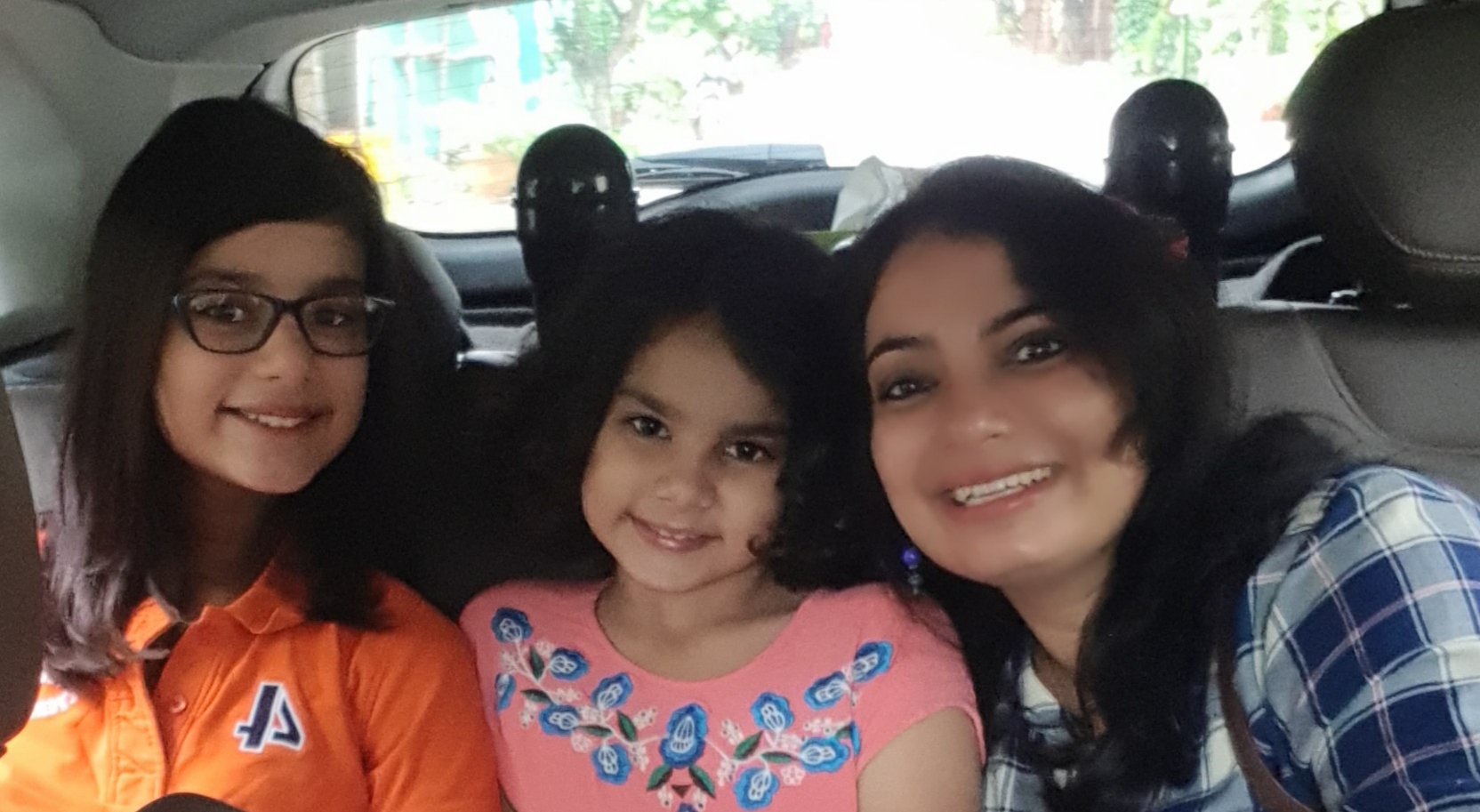
Trust me, just like many moms around the world I have lost my patience several times on my girls because of repetitive questions about when they can start doing everything like before? Then that one statement that most parents including me are really scared of these days, and our kids use it abundantly ‘I am Bored’. One such day after gaining my calm back & while feeling terribly guilty, I dived deep into this problem of kids being bored all the time, means I don’t remember being bored at their age (12 & 9). That’s when I realized that I used to explore as a child. My parents did not have enough resources or time to keep spending on me and plan every hour of my day and that actually helped. I explored, failed multiple times & then achieved success and was so busy in this process that I never felt bored.
This was a great realization for me and now it has been three months of us allowing them to decide what they want to do and how they want to do it. We just hang around to guide them when they need. This has ensured the disappearance of the word ‘bored’ from my house. They are super curious and forever exploring and hence, extremely happy and energized.
Student Voice
Prateek Doshi, student of Grade  9
9
Virtual Gaming : Blessing or Curse
Everything has pros and cons. According to me, I think that different kinds of virtual games are made for different kinds of people according to their needs and sensitivity.
Virtual gaming has a lot of advantages like we get to experience new things, it is entertaining and even improves our decision making and cognitive skills.
It can also be harmful to us due to the violence or the different kinds of content which some can’t tolerate. Sometimes, it may also lead to cybercrime or excess of addiction which can result in depression and/or anxiety. It may cause a kid to purchase any virtual item for real money which could cause some harm to the financial stability of a family. But this is not much prevalent in India.
So, to conclude, there should be limits/disclaimer every time the game is opened/started for different age groups and people. Parents should also keep a check on their children and how they are socialising/playing their games. They should also set flexible time limits for the games and the time limits should be according to the child.
Showcase

PlayKnow (https://playknow.in/) is a digital intervention in education and the goal is to build a simple technology platform to enable teachers with technological tools and make learning engaging and interesting. That is why we named it: Play Know.
The journey of PlayKnow started in 2013 with a single App called Mixup
https://play.google.com/store/apps/details?id=com.playknow.mixup.ui
Now we have many apps and an integrated platform supporting learning with Videos and activities.We have used PlayKnow Apps in One billion literates foundation, Building Blocks and a school for Tribal in Karumandurai. The teachers can create contextual content and create activities for their lessons like MCQ, Fill in the blanks, Match the following.Today’s digital native students are thrilled and enthusiastic to use digital mediums, PlayKnow apps leverage this to make learning interesting.
Since these digital apps are non-judgmental and satisfies the curiosity of the digital natives, the students have no inhibition to experiment and try multiple times, which is fundamental to learning.The PlayKnow apps have rich UI and are self-paced so each student learns at his own pace. The App gives applause and credits and motivates the students.
Like Microsoft’s new catch phrase ‘Invent with Purpose’, from the initial design we were conscious to make sure the Apps work offline to seamlessly work where there is no Internet and use technology to solve a problem. With lot of advancement in technology like Chatbots, AI etc.., we believe there is lot more exciting ahead in this journey.
Mahadevan is a Software professional and a consultant for various organisations. He is a technology volunteer for onebillionliterates.org besides other nonprofits.
And Finally
Here’s a “carry forward” resource for early year numeracy with Sonal Chawda. A DIY video that is Fun and Easy-Peasy 🙂
3-2-1 Tuesdays with Ms Niv is a newsletter for you to subscribe and enjoy your learning journey with me. Most of you would have been too busy to track trends in education, ponder on most relevant thoughts or deliberate on career choice, parenting or pedagogy. Find it all here. This week, it consists of: 3 images, 2 thoughts and 1 video.
For whom? Students, educators and parents
When? Every Tuesday
Where? my blog post, register with your e-mail id, it is free.
If you want to contribute an article, are organising an event, have a product that you think can be reviewed and/or featured in this news letter, please feel free to write to me at : niveditamukerjee10@gmail.com
Please like, subscribe, share, comment. See you next week.
3-2-1 TUESDAYS WITH MS NIV
Issue #12 / September 29, 2020
Have you ever tried reading simultaneously two books on the same idea or two contemporary writers or two philosophers or two leaders involved in the same events? Like reading Jesus and Buddha simultaneously? Comparative reading works for academics and research. It works great in daily life too says Lisa Bu in this entertaining talk in the video of this week. Try it out for yourself, your child, your students. Do check out tips on reading books for your kid and how you can teach yourself narrative writing. After all your own stories are the most interesting ones for yourself and those around you. Meet Sumi, author of children’s’ books, and what she has to say about noodlehead stories – an all-time favorite genre for the young and not so young. Don’t miss the story written by a 4th grader in the student voice and a poem in the And Finally section. Enjoy reading.
Subscribe, share, comment. Feel free to follow me on social media where I post education related content.
Follow Me
Get new content delivered directly to your inbox.
Three Images For The Week
For educator, parent and student. The Holy Trinity of Education.


Two Thoughts For The Week
“Fiction is the lie through which we tell the truth.”
―
“I have claimed that Escape is one of the main functions of fairy-stories, and since I do not disapprove of them, it is plain that I do not accept the tone of scorn or pity with which ‘Escape’ is now so often used. Why should a man be scorned if, finding himself in prison, he tries to get out and go home? Or if he cannot do so, he thinks and talks about other topics than jailers and prison-walls?”
―
One Video For The Week
What happens when a dream you’ve held since childhood … doesn’t come true? As Lisa Bu adjusted to a new life in the United States, she turned to books to expand her mind and create a new path for herself. She shares her unique approach to reading in this lovely, personal talk about the magic of books.
Guest Column
Sumi Chandrashekharan, educator and author of childrens’ books.

Albert Einstein said, “If you want children to be intelligent tell them fairy tales. If you want them to be more intelligent tell them even more fairy tales.” Fiction describes imaginary places, relationships and even entire worlds. When we read we feel the emotions of the characters and imagine the worlds that they inhabit. So, there is no doubt that reading develops empathy and strengthens imagination and nurtures intelligence.
Where would society be without empaths who care and visionaries who see? Every manmade wonder started in somebody’s imagination or by someone visualising a solution to a problem where others could not. Fortunately we have a variety of fiction available to stimulate our children’s brains – one such is the “Noodlehead” genre.
Humour comes from a place of playfulness and as children are playful by nature they are drawn to humorous stories. Humour also teaches, as books that employ humour represent a reality that is a mix of laughter and tears, light-heartedness and despair, highs and lows. Understanding humour pushes children to read between the lines and look at things differently.
Noodlehead stories which are humorous stories with a fable-like quality abound in world folklore for these reasons. A noodlehead is a well-intentioned but foolish person to whom we can relate with. We have all stepped out wearing something ‘wrong,’ or discovered a misplaced item in an odd place (I have found my glasses in the freezer!). The consequences of such lapses remind us not to take ourselves too seriously, letting us (and others) laugh at ourselves. Noodlehead tales tend to be far-fetched – magnifying the particular flaw in the noodlehead’s thinking to push the readers’ imagination beyond the ridiculous. In many stories, the noodlehead follows instructions too literally and misses what is glaringly obvious because of it.
In keeping with the saying ‘Fortune favours fools’, noodlehead stories usually end well. The extremes of plot make the contrasting positive ending a huge relief as the character is a well-meaning soul and someone we all relate to – usually, ourselves.
The embedded message could also well be that life isn’t always fair and in the case of the noodlehead we don’t mind because even the most foolish can achieve good if they follow the wisdom of others and take a wholehearted shot at life, despite their flaws.
Noodlehead stories work despite featuring adult protagonists. The naivete and childlike qualities of the characters make children easily relate to them and their blunders funnier. The young reader is also able to travel a wider landscape piggybacking the foolish adult.
The story told in Kozhukatta is one adapted from the version my grandmother narrated and one of the many tales about princes and princesses that I remembered. Other Noodlehead examples: Amelia Badelia, some Jataka, Birbal, Tenali Raman tales.
P. S. Reading demands more engagement than watching films. When the brain pays more attention it retains more and it would be a mistake to think that books can be replaced by film if we want to raise empathetic, imaginative and intelligent humans.
Parent Speak
Mommy of 3. Sahada Rahiman www.instagram.com/mumsytales

A question my eldest daughter keeps asking me:
When will we go back to school mama!? She is a child who always looked forward to going to school every day. I would always wonder at the eagerness on her face to go to school, to meet her friends and to learn something new each day. She was always enthusiastic about going to school.
And now, that excitement has gone. The pandemic took the entire world by surprise. In the beginning, it all seemed good that the kids were safe and secure within their homes and weren’t exposed to the dangers outside. Online education commenced and we felt all was going well. There also came a time, where online learning was discouraged and children aimlessly sat at home having no productive work or learning.
I run my own page on Instagram where I share my parenting journey with my children. We share creative play, good reads, crafting, activities, food recipes for mommies. I try my best to keep my kids indulged and engaged in all sorts of learning activities at home but now I feel what they are missing is the social touch.
I feel going to school is such a necessity for children in their growing years. They aren’t meant to be cooped up within their home walls but they need to be exploring the outdoors with children their own age enjoying their youth and learning along the way. Social interaction with children of their own age is a must. Group learning is excellent for children to practise leadership skills, build healthy relationships in the classroom, interact with each other and to observe how their peers solve problems.
However, parents too are citing a lot of difficulties with online education:
- Establishing a daily routine for kids isn’t a norm anymore.
- Balancing out household chores and responsibilities and teaching kids has become a challenge most parents are facing nowadays.
- Regulating a wakeup and bedtime schedule has gone for a toss.
- Keeping children interested and focused on their schoolwork has become quite a task.
I really wish the situation would normalise soon, where we won’t take education for granted anymore and cherish and value the facilities provided to us. Stay safe.
Student Voice
Nabeeha Rao, Student of grade 4
MR.TIDY TRILLIONS – THE MAN WITH A GOLDEN BROOM STICK
Once upon a time there lived a very rich man called Mr Tidy Trillions. The people called him Mr Tidy Trillions because he always carried a broom stick in his hands and it was made out of gold! Now you might be thinking the same as I do, that why would he carry a broom stick and that too made out of gold? I’ll tell you why – he was always so clean and rich he could make a pool to dive in diamonds. There was not a spot dirty on his things; he would always wear the finest clothes made out of silk and leather. First he would always clean the road on which he had to go through with the golden broom stick and then walk on it. One day when Mr Tidy Trillion got up, he saw that his golden broomstick was gone! As he saw that he was shocked and quickly called the police. The police came running and asked him that what the emergency was, he said that his golden broom stick was gone! The police then ran out of the room and searched everywhere in the house but they could not find anything. Then it was said that whoever found the missing golden broom stick would get 30 billion dollars and it was stamped onto every magazine, newspaper and just everywhere, even on the TV. So, everyone in town began to search but alas, they couldn’t find a clue. The next day news came to Mr Tidy Trillions that his clever friend Mr Clever, the master of smartness (or Mr Clever in short) was coming to visit him.
When he heard the news he was delighted because Mr Clever, the master of cleverness could help him find the golden broom stick and the criminal. When Mr Clever – the master of cleverness came the first thing they talked about was the golden broom stick. The next day Mr Clever summoned some of the closest people. They all asked Mr Clever about what does he want to do with them. Mr Clever said all of you have to take these magic books to your houses and at night keep them under your pillow and if you have taken Mr Tidy Trillion’s golden broom stick, the book will write it down by itself. And remember not to open the books. The next day all of them brought the books back. Mr Clever, the master of smartness, opened everyone’s books, and then he said to Mr Tidy Trillion that one of his friends, Billy Billions had taken the golden broom stick. But Mr Tidy Trillions could not believe and asked about what evidence does he claim? Mr Clever said that I wrote – he/she has the golden broom stick in their books and no one except from Billy Billions has erased what was written inside the book. Then Mr Tidy Trillions asked Billy Billions if that’s a truth – Billy Billions said yes and hence immediately Billy Billions was sent to the dungeons, and the guards were asked to search Billy Billion’s house and bring back the golden broomstick. Finally, Mr Tidy Trillions said good bye and thanks to Mr Clever for helping him find his beloved broom stick.
And they, i.e. he along with his beloved golden broomstick, lived happily ever after!
Showcase
To make reading fun for your child, register for online literacy sessions with Meenu Gera.

And Finally
Enjoy this poem with Pooja Khare, Special Educator. The setting, the emotion, the poetry – all a treat. Enjoy.
3-2-1 Tuesdays with Ms Niv is a newsletter for you to subscribe and enjoy your learning journey with me. Most of you would have been too busy to track trends in education, ponder on most relevant thoughts or deliberate on career choice, parenting or pedagogy. Find it all here. This week, it consists of: 3 images, 2 thoughts and 1 video.
For whom? Students, educators and parents
When? Every Tuesday
Where? my blog post, register with your e-mail id, it is free.
If you want to contribute an article, are organising an event, have a product that you think can be reviewed and/or featured in this news letter, please feel free to write to me at : niveditamukerjee10@gmail.com
Please like, subscribe, share, comment. See you next week.




3-2-1 TUESDAYS WITH MS NIV
Issue #11 / September 22, 2020
Are you being primed to influence your choice that you will make later on? If you want to teach your child/student/yourself to exercise free will and not be directed by a person or media, listen to the talk in the video of the week. Discipline is misunderstood often by the millennials. Read on to find six tips, two thoughts and an account of personal experience of an educator and a grand parent.
Please subscribe with your email id here and feel free to share, comment and contribute your thoughts and articles to the news letter.
Three Images For The Week
For educator, parent and student. The Holy Trinity of Education.


Two Thoughts For The Week
“Seek freedom and become captive of your desires. Seek discipline and find your liberty.”
– Frank Herbert
“Discipline is wisdom and vice versa. ”
– M. Scott Peck
One Video For The Week
Are you in control of your choices? Magic tricks might reveal otherwise, says scientist and illusionist Alice Pailhès. Watch closely as she performs magic tricks that unveil how your brain works, how you can be subtly influenced and what that means for free will and your day-to-day life.
Did she guess your card right?
It is politicians, marketeers, store shelves …. who are influencing us. It is also the Alien of Artificial Intelligence from the various social media sites that follow us and put our minds in a bubble that is influenced in making decisions that we falsely assume is our free will.
What is our option?
Guest column

Nandini Natarajan, Educator and scholarship manager, VIDYA integrated development for youth and adults.
I was a Software Engineer, I entered the IT field with lots of excitement and worked in the sector for a few years. But somewhere deep in my heart, the quest and ambition of becoming an educator was always an impending thought. Thanks to the Almighty and to my Gurus I was able to achieve the dreams and now I am an educator in the field since 10 years and I work as a scholarship manager in VIDYA trying to bring out the best from my students and of course learning a lot.
According to me, learning and teaching always go hand in hand and I strongly believe that teaching by imparting the core values of life along with the technicalities in subjects shall make learning a lifelong enjoyable and an ever cherishing experience. As a teacher who has been teaching English over a decade, I firmly reinstate and reiterate the points of giving a strong foundation in the early years of education in a child’s life. This strong foundation of knowing the functional and semantics of the language will bring interest and liveliness in learning. Once the foundation is set, the other areas of fine tuning always happen in a smooth way. As a teacher, I consciously work out on giving my students a firm foundation of the subject and with due interest, practice and diligence, it paves the way of success to the roads of wisdom and knowledge. According to me, holistic education always comes as a package of imparting core values of discipline, attitude and empathy with education. A teacher also needs to take the role of a good friend and a parent to inculcate the values of teaching and that will always remain in the minds of children forever. I am happy and proud that I have inspired my students in some or other ways for which I owe my gratitude to my gurus, mentors, parents and well-wishers.
Learning becomes an enjoyable experience if only it is never seen as a burden but as a process of urge and inclination to knowing about the facts and vales around us. Teachers can facilitate and kindle the curiosity of learning among their students in so many ways. One of which I follow is teaching the core values of life lessons and incorporate into the subject such that the learning gets blended in a beautiful way and sustains forever. As adults we sometimes cease to learn and feel that we have completed that phase in our life. The irony is learning and teaching will keep the spirit of life burning within us even as we grow. A teacher who has constantly imbibed and inculcated these values has never failed to remain in the memories of children and they continue inspire others in the same way.
Of course the journey of learning in life has some interesting and tough challenges ahead. The confidence, resilience and learning that a child possesses during his/her early days will help his/her cross these challenges and yield the expected results. As a teacher, I strongly believe that it is the attitude that brings the best out of students and each teacher and parent should be instrumental in bringing out the desired impact that the world would like to witness.
Parent speak

Arundhati Shiggaon, an educator, a parent and a grand parent.
Discipline Diaries
Disciplining children is one of the most debated and difficult parts of being a parent or an educator.
Karan is uncontrollably loud .He is stubborn and answers rudely when spoken to at school. Myra is prone to throwing tantrums when she does not get her way . It’s an utter nightmare to take Tanya visiting. She will pick what she likes and wants to take it home. Sounds familiar ? We are talking about some common behaviour patterns that parents and educators may have to deal with at some point.
A few tantrums or arguments once in a while is acceptable . But if such behaviour becomes a daily occurrence then it is a cause for concern . Now the burning question is how to inculcate discipline in young children? Are there yardsticks for Normal Behaviour? Or does it depend on their emotional development, nurture and environmental factors? Let’s see . Sharing some gentle and positive strategies that have helped me .
Learning by example:
Show children what is acceptable and what is not . Most often we tell them the right from the wrong but forget that there are so many zones in-between these two. Model your behaviour and reactions.
Talk about consequences:
Be calm yet firm while explaining the consequences of unacceptable behaviour. Follow through when you notice that some chore is not done. Like toys strewn about. Remind and remind with love.
Set boundaries and expectations :
Let children know what the rules are and be consistent that they are followed. Be sure to explain in age appropriate language so they understand.
Listen to the heart :
Listening is an important skill. Young children may not always articulate well so be fully present for them. Hear them out and ask how they would like to deal with their problem. It’s a powerful tool to reinforce certain behavior patterns.
Validate them :
Kids need to know when they do something good or something not so nice. Point it out by saying “ I loved how you picked up the beads and organised them “ Or “How do you think Hunter felt when you spoke to him like that ?“ This will invite them to think about their behaviour .
Call a time-out:
A time out can be useful when a specific rule is broken. This discipline tool works best by gently warning children that they will get time out if they don’t stop. Explain with as little emotion―as possible, and remove them from the situation for a pre-set length of time that you think is appropriate .
Learning from mistakes , even your own:
Remember that, as a parent or as an educator you have to cut yourself some slack when you feel out of control. Just make sure your child is in a safe place and then give yourself a few minutes to relax. When you are feeling better, go back, hug each other and start over again .
I will leave you with a quote by L.R. Knost “It’s not our job to toughen our children up to face a cruel and heartless world. It’s our job to raise children who will make the world a little less cruel and heartless.”
Student voice
Ramit Jaiswal, student, Grade 9

How Is the Indian Media Diverting Us from the Actual Problems.
I think we all know that the current Indian media is talking a lot about the controversy of the Murder of Sushant Singh Rajput, how Rhea Chakraborty was involved in the drugs case, how Kangana Ranaut’s office was destroyed, why does Prashant Bhushan needs justice, How PUBG MOBILE was banned & FAU-G is releasing, Etc. But we have a bigger problem in our hands. The Indian economy could be in a huge depression. The COVID 19 pandemic is rapidly increasing & not stopping in India, but the Government doesn’t care & they are not postponing the JEE & NEET exams. I think this shows the failure of Democracy & the failure of free & fair media. There is an easy solution to this, stop giving TRP to those channels who talk about one & only one topic. They are probably trying to hide the Truth. In my opinion, the one journalist that I trust the most is Sir Ravish Kumar. He is known to report actual problems & he has exposed many truths in front of the world, Indian media is the Titanic ship which is about to hit a glacier & drown, but Ravish Kumar is the captain of the Ship who is trying his best to stop it.
Showcase
Theater Professionals Education – register for an online certificate course here.
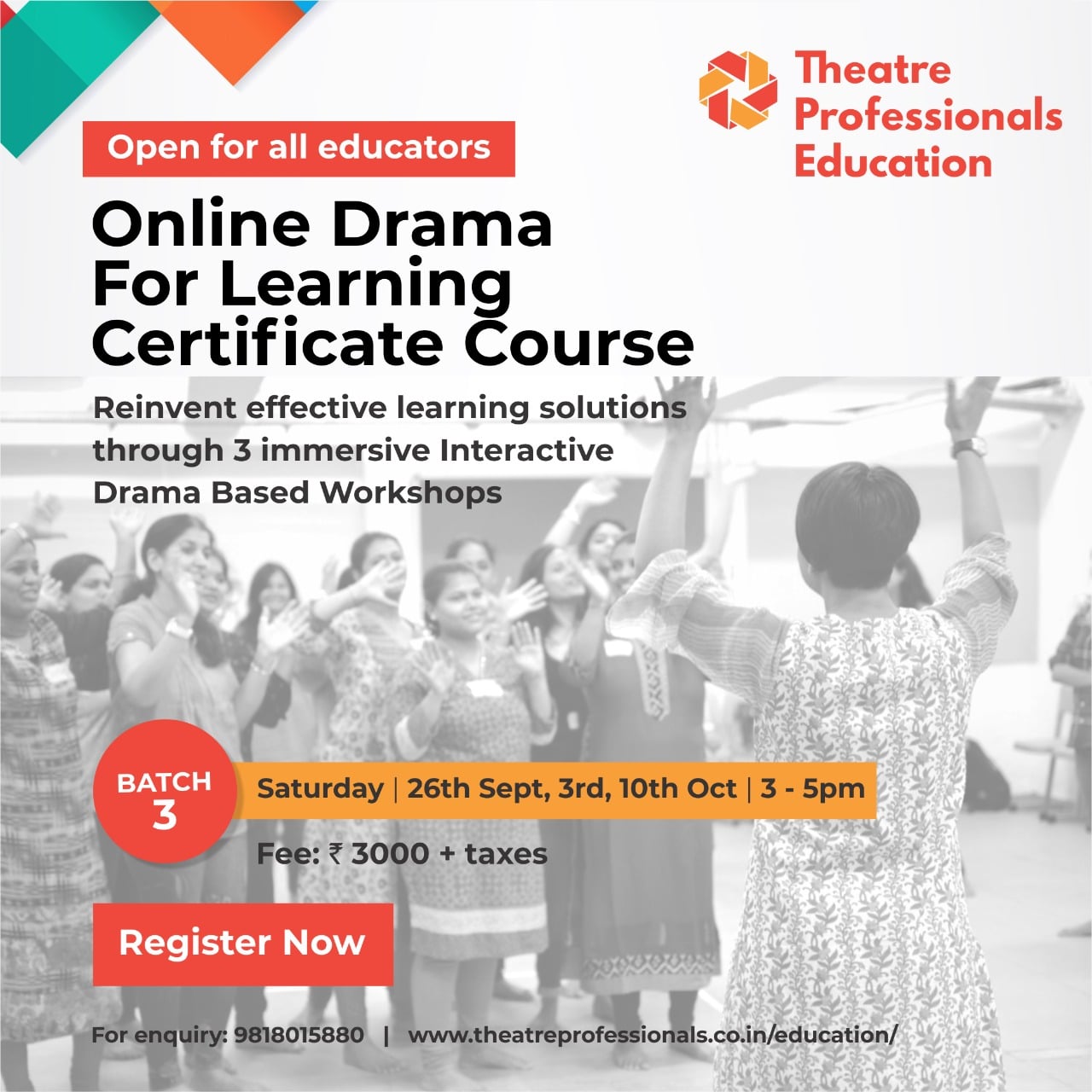
Register now for Batch 3 of our very successful Online Drama for Learning Certificate Course now with new dates viz. 26th September, 3rd and 10th October.
Learn how you can create interactive and immersive solutions to engage learners and improve learning sessions.
Feel empowered and employ effective, tried and tested learning solutions to keep learners involved.
Hurry up, last 10 seats left!
Please click here to register and for more details
https://theatreprofessionals.co.in/…/online-drama-for…/
And Finally
Super easy to make and fun for the children is this magic slider – check out this video of Sonal Chawda.
3-2-1 Tuesdays with Ms Niv is a newsletter for you to subscribe and enjoy your learning journey with me. Most of you would have been too busy to track trends in education, ponder on most relevant thoughts or deliberate on career choice, parenting or pedagogy. Find it all here. This week, it consists of: 3 images, 2 thoughts and 1 video.
For whom? Students, educators and parents
When? Every Tuesday
Where? my blog post, register with your e-mail id, it is free.
If you want to contribute an article, are organising an event, have a product that you think can be reviewed and/or featured in this news letter, please feel free to write to me at : niveditamukerjee10@gmail.com
Please like, subscribe, share, comment. See you next week.
This newsletter is supported by
And
3-2-1 Tuesdays with Ms Niv
Issue #10 / September 15, 2020
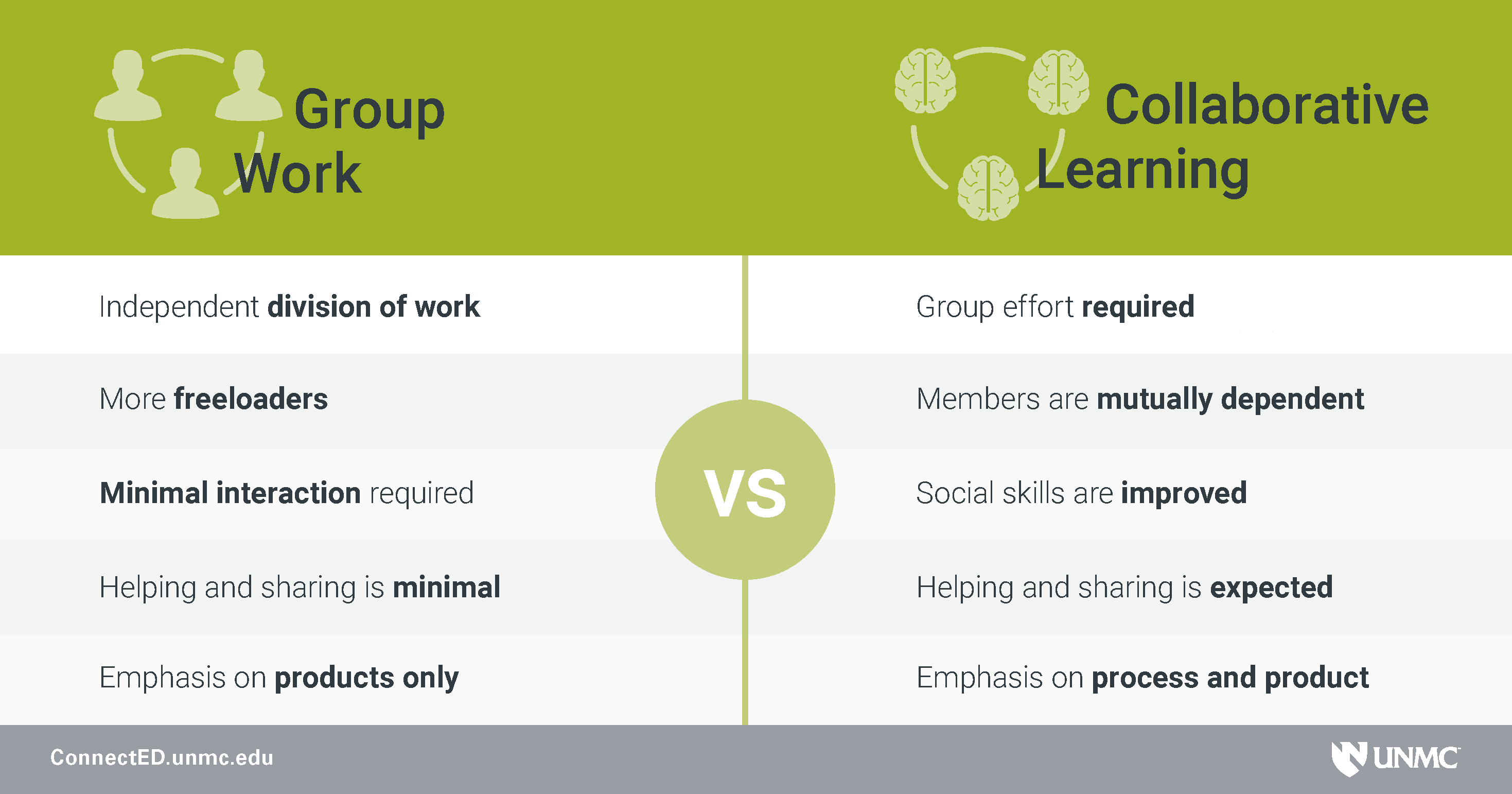
Did you know creative abrasion, creative agility, creative resolution are the three key processes that underpin innovation? Have you ensured your students understand the key components of collaboration? Learn from Meenu Gera, a much loved teacher-librarian, how to grow a reader in your child in 3 simple steps and tips of trust from a parent of two grown men.


Three Images For The Week
For educator, parent and student. The Holy Trinity of Education.


Two Thoughts For The Week
- “Alone we can do so little; together we can do so much.” – Helen Keller
- “None of us, including me, ever do great things. But we can all do small things, with great love, and together we can do something wonderful.” – Mother Teresa
One Video For The Week
Innovation is about collective genius. It is not about the AHA moment. It is not about a flash of inspiration! It is a type of collaborative problem solving. There is a paradox at the heart of innovation. Exhilarating and scary at the same time.
What’s the secret to unlocking the creativity hidden inside your daily work, and giving every great idea a chance? Harvard professor Linda Hill, co-author of “Collective Genius,” has studied some of the world’s most creative companies to come up with a set of tools and tactics to keep great ideas flowing — from everyone in the company, not just the designated “creatives.”
A good one to watch individually or even with your students. I loved the story of how Pixar gets around to working in teams, in a long messy process and brings us memorable characters and movies.
Great leaders, create a world where people want to belong! it is not necessary to have a pre-ordained vision and a defined path for all to walk on. Innovation takes a village. Build a village for your team 🙂
Guest column :

Making Connections
I’ve invested myself in libraries, books and professional resources for the past twenty-two years. I started my career with a traditional method of librarianship and have seen the transformation of libraries to automated libraries, focus on how to implement reading techniques, suggesting reading materials and so on. Libraries have seen vast changes from cataloguing cards to MARC records. Accession Registers to scanning barcodes, but it is still serving as a place for information. It offers us free access to a wealth of information whether its online, in print or in person.
During this great journey of librarianship, the core lesson learnt is how Reading is such a great yet simple tool for making connections with our loved ones. Reading helps us make connections. It doesn’t matter if you are reading to your own child or reading aloud to your students. You see the spark of curiosity in their eyes. Through read aloud you make a bond. Books make memorable journeys within. When readers make connections to the texts they read, they’re more likely to understand what they read and remember it. Reading helps our brains process information both visually and verbally more effectively. Reading improves every aspect of a person’s communication skill.
Though it sounds like helping kids make connections to their texts is complicated and involved, it’s not. Strong readers make connections every time they read, and they do it without batting an eye. Connecting is natural and habitual for strong readers. They connect to characters and events in texts; they connect to settings, themes, and messages in texts.
There are three main ways that readers make connections to texts:
- they make connections between the text and themselves or their own life;
- they make connections between the text and another text they’ve read;
- they make connections between the text and what they know about the world around them.
A simple book like “A Very Hungry Caterpillar” by Eric Carle can teach a toddler how to say “Green weef” (Green Leaf).
In this modern time of eBooks, Kobo readers and so many more online resources – we tend to get distracted by online world. But do they make our kids connected or curious about learning? How do we bring this idea of connection, home for our kids? How do we gently urge them into making connections so that they become stronger readers? It’s Simple.
Whether they like the book or not isn’t relevant. You can initiate the connection conversation any time you’d like, any day of the week. If your child is curious about dragon flies, let them draw dragonflies, discuss facts about it. If your child is fussy about eating home made or traditional food, read books about how foods around the world are so different. Read books about where you would like to travel with your family.
Love of reading comes from within, just make a little effort by selecting the right book for your reader and with a habit of reading every night, the magic will work at the snap of a finger. Just like that. Happy Reading!
Parent speak:
Sangeeta Ghoshal, a parent, creative director, thespian and an artist

Student voice:
Kshirasagarika Mushunuri, student of higher education.

When I finished grade 10 and began plus 2, everyone’s focus seemed to be on two things- where I was going to college and what I was going to study. The ‘what’ was clear from day 1 of grade 11- Psychology. The ‘where’ was a huge question mark. When the time finally came to decide, my parents and I unanimously decided that the choice was York, in the UK. The process to getting there wasn’t easy. There were two major problems that arose- (i) making my parents believe that I was ready to live by myself; and (ii) finances.
The process of making my parents believe that I was ready to move away was perhaps the hardest of the two. Me moving out was an understandable source of anxiety for my parents — I had never lived away from them, and now I was talking about moving countries! Knowing this, I began to do small things like learning how to cook, doing more chores around the house and becoming more accountable with my schoolwork.
I wanted to show my parents that I was responsible with money, and understood the costs behind going abroad. I wanted to be able to contribute towards paying for my program abroad, and the one way for me to do that was to find a scholarship. So, I dove headfirst into research for scholarships.
The year before college was definitely challenging, but it was also extremely eye-opening. It helped me understand that, at that point, I was definitely not ready to move out. That pushed me to learn. Perhaps, that was the most important learning of all.
Showcase:
3-2-1 Tuesdays with Ms Niv is a newsletter for you to subscribe and enjoy your learning journey with me. Most of you would have been too busy to track trends in education, ponder on most relevant thoughts or deliberate on career choice, parenting or pedagogy. Find it all here. This week, it consists of: 3 images, 2 thoughts and 1 video.
For whom? Students, educators and parents
When? Every Tuesday
Where? my blog post, register with your e-mail id, it is free.
If you want to contribute an article, are organising an event, have a product that you think can be reviewed and/or featured in this news letter, please feel free to write to me at : niveditamukerjee10@gmail.com
Please like, subscribe, share, comment. See you next week.
This weekly newsletter is supported by:
And:


Have you subscribed yet?
3-2-1 Tuesdays with Ms Niv
Issue # 009, September 8, 2020
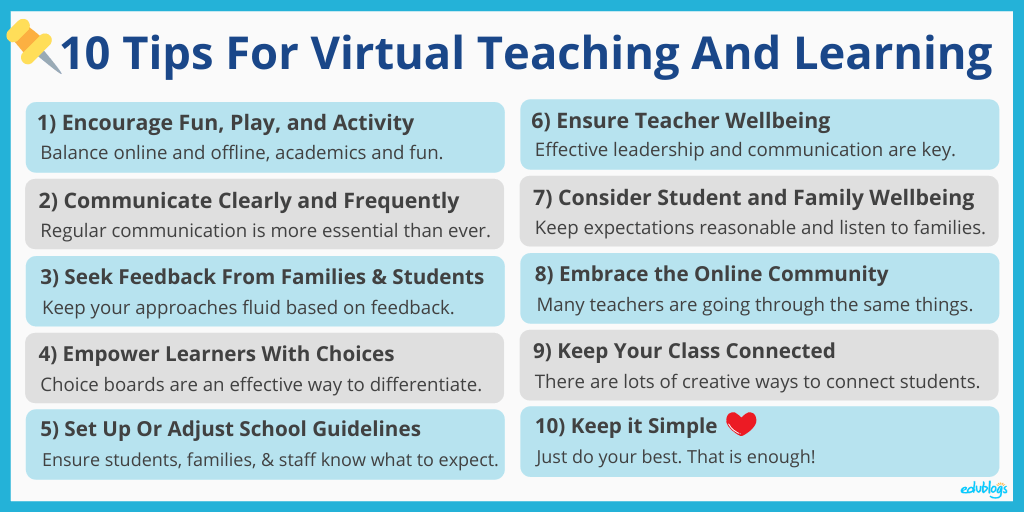
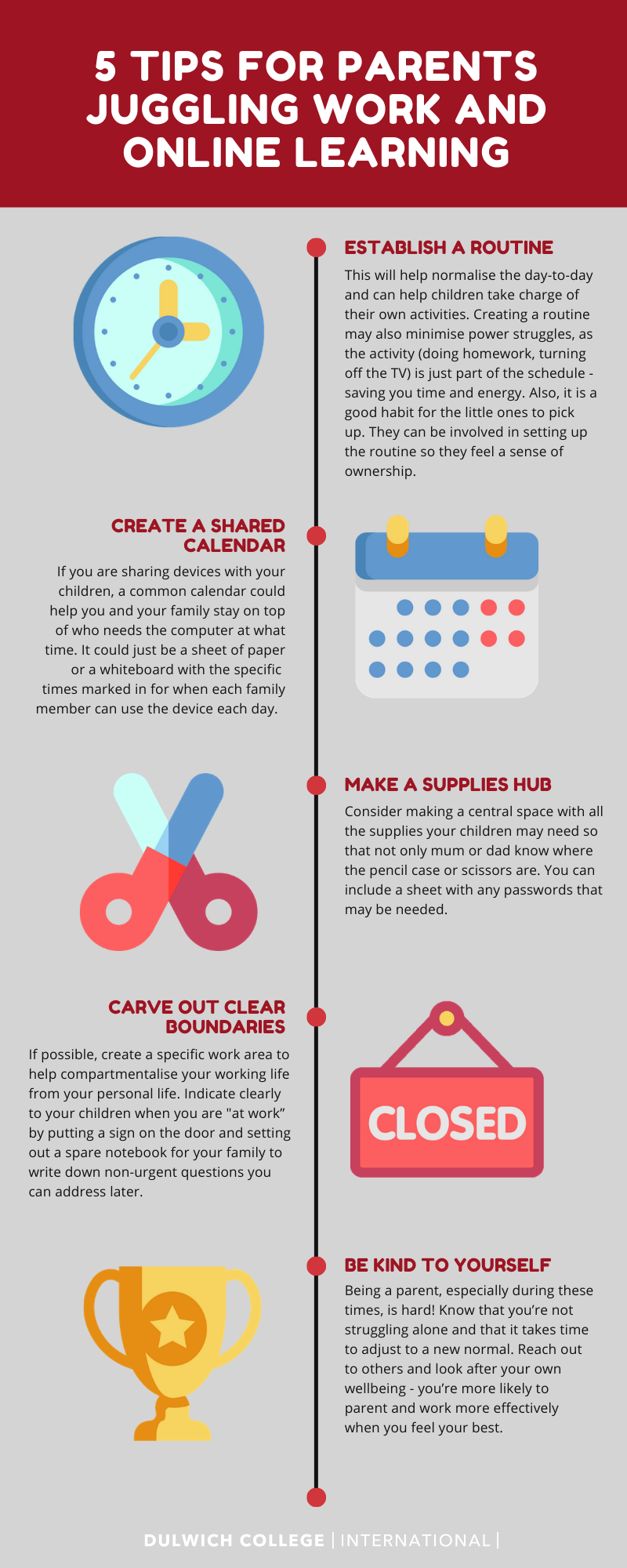
Are you aware how your mind reacts to loneliness, failure, rejection and understand how to practice emotional first aid? Have you considered making a supplies hub at home with the things that your children come to you most of the time for, that they can access without help from mom and dad? Check out the new playbook of Common Ground Collaborative Founding Director Kevin Bartlett who reimagines education such that everyone wins. Don’t miss listening to the lovely children’s action song “Chanaa kisne boyaa” with Sonal this time in and finally.
Subscribed to this weekly news letter yet?
Three Images For The Week
For Educator, Parent and Student. The Holy Trinity of eduction today.

Two Thoughts for The Week
“The roots of education are bitter, but the fruit is sweet.” Aristotle
“Education is the most powerful weapon which you can use to change the world.” Nelson Mandela
——————————————————————————————————————————————-
One Video For The Week
Loneliness creates a deep psychological wound. It distorts our perceptions and scrambles our thinking. We sustain psychological injuries more often than we suffer physical ones. Injuries like failure, rejection, loneliness, despair. Injuries that get ‘infected’ worse, if we ignore them. Right? They can impact our present and future lives in a dramatic way. Oh you are feeling sad? Just shake it off! It is in your head. Even though we know of scientifically proven ways to address them. We don’t ask a person with a broken leg to walk it off! There is need to practice emotional first aid. Guy Winch tells us why.
Guest column :


The game in question is ‘The Learning Game’ – not too far-fetched a metaphor for what goes on in schools. As we navigate through the unprecedented challenges of COVID-19, it seems that a lot of us are looking for a new playbook.

If we play with the metaphor, it’s not hard to see that for our students, in terms of lifelong impact, learning is really the only game in town. How odd then, that we never teach them how to play. Some students work it out and become, by the norms of schooling, the winners. Many don’t….and you know the rest.
Now let’s re-imagine learning as a game where every learner is a winner, which is the least they deserve and the least their parents expect.
Speaking of parents, learning is the only game where they are utterly excluded from the secret codes of the game. We say, ‘We need to educate our parents’, but we somehow don’t get round to it. Imagine how the game would be if parents were equipped as well-informed players.

Of course, in order to teach key aspects of the game to our students and parents, we’d have to understand it ourselves. We’d need a clear, common, communicable way of getting the game organized.
The Common Ground Collaborative (CGC) has spent the last 10 years doing just that. Moving learning and schooling from complexity to clarity, from compliance with things we don’t believe in to co-creation of things we do, from silos to systems. Moving to one connected Learning Ecosystem, in fact. Everything to do with learning, teaching and assessing simplified, synthesized, systematized.
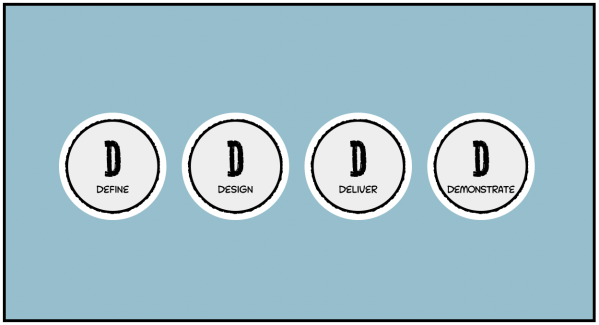
As a methodology for this work, we used inquiry, puzzling away at the four essential questions that framed the challenge: Define: What Is Learning? Design: What’s Worth Learning and Why? Deliver: How Do We Build Learning Cultures? Demonstrate: How Do We Show What We’ve Learned? 4 D’s = 1 Learning Ecosystem.
Along the way we created a definition of the learning process that is clear and simple enough to drive the processes of teaching and assessing and to provide a shared learning language with students and parents, inviting them off the bleachers and into the game. Conceptual, competency and character learning; we are building experts in all three with clear, practical strategies.
We came up with a compelling answer to the Design Question, ‘What’s Worth Learning…and Why?’ with a Conceptual Map of learning organized under 6 Human Commonalities, shaping a connected Learning Matrix comprising Learning Modules driven by Compelling Questions. At the time of writing we have 70+ teachers worldwide co-authoring sample Learning Modules in multi-school teams in the CGC Home Hackathon. We include student voice and choice by inviting them to self-write Modules in response to the question, “What Would You Fight to Learn?”. We have tackled methodology by establishing shared Learning Principles and translating them into Learning and Teaching Practices, and developed simple, qualitative Self-Assessments for students.

We wrestled the learning design dilemmas to the ground one by one until we had the system completed and connected. As we did so, we were addressing, in advance, the issues that COVID19 has raised: the student who has to self-regulate overnight without the necessary competencies, the parent who goes from bewildered outsider to home educator in that same blink of an eye. The school that realizes that less had better be more because we can no longer even pretend to cover all this stuff. The need for a common language and shared principles to turn loose assemblages of people into true learning communities.
The whole picture of this work is now available in an unusual genre for learning work, a graphic novel entitled The Learning Playbook. For those who want to play with these ideas, get in touch. The CGC team is eager to share. These are tough times in the learning game but what better time to take a long, hard look at how we’ve been playing, and to build a radically different Playbook? kevin@thecgcproject.org
Parent Speak :
Sarbani Das, a parent and a teacher.
Are you finding it tough managing your little Columbus always at home now? At times, managing remote work and a super active preschooler at home can be stressful and frustrating. But considering there is no other option, I would like to think positively and take this as a learning opportunity.
As a teacher, I have seen parents doing wonders in their child’s education and development. Presently, I am also trying to do my part efficiently and effectively. I do a lot of talking with my daughter. I tell her stories, ask her to use golden words whenever there is a need, and ask simple questions (like – Where are your shoes? Or how are you? Or what is your name? etc). I always encourage her to answer in full sentences.
Is only talking enough to manage a toddler at home? No.
I read books to her. I have seen she becomes super happy whenever she sees a new book. In fact, I have bought almost all the books of Eric Carle. And she is kind of obsessed with ‘The Very Hungry Caterpillar’. If I am busy with something, she does picture reading. Sometimes, she asks me a lot of questions and I love to answer. We play, build things, and solve many picture puzzles together. Actually, I try to engage her in different activities to develop some of her 21st-century skills.
Do I always think positive? Don’t I get stressed or frustrated?
I am a human being and make my share of mistakes quite often. There comes the role of my super supportive family; without which I would have not got the strength and optimism to manage a super active toddler at home along with my work.
Student voice:
Pihu Sarraf, student of Grade 7
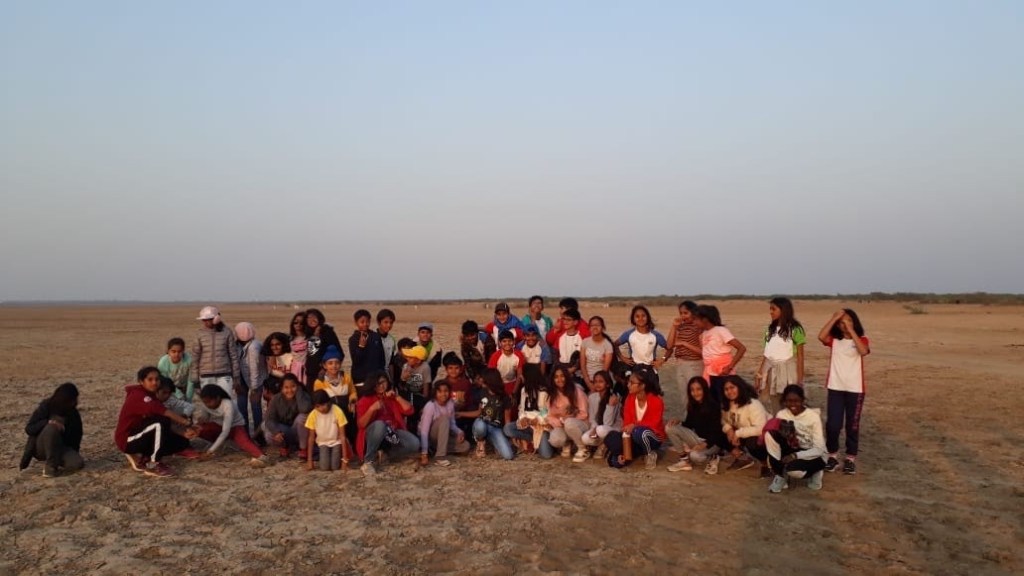
Online learning may be the “need of the hour” and the most practical option right now but never will it bring me that feeling – I felt going to school.
I often used to take school for granted. During these troubled times, I have understood the privilege that is associated with education. Learning about the importance of education makes me think way more highly of it than I did before. I have found myself not wanting to accept that I am no longer in Grade 6 which was without a doubt one of the best years of my life. In 6th grade, I learnt so much about hard work and feeling accomplished. Going to school in general, being on campus causes me to experience an indescribable roller coaster of emotions.
Going to school and being around my friends made me feel extremely satisfied. I had an uncontrollable smile painted on my face and laughed endlessly at absurd things throughout the day. I was genuinely very happy.
I miss climbing up the three flights of stairs to reach my classroom which I never thought I would. I miss doing the homework that I forgot last minute. I miss sharing my lunch with my friend and laughing my head off during that one hour break we got. I miss filling in my diary with the day’s homework. I understand that online learning has very well taken care of our minds, but what about our hearts?
Showcase:
(An Advertorial)

Team Fermata is hosting “Career Gym” conference 2020 with an objective of building awareness around lesser-known but lucrative career options that many families are not aware of.
In this Conference, we expect 14-24 years young adults and their parents, to shortlist and attend topics of their interest and topics you want to know more about. We shall be covering 21 career domains in extensive details via 19 very renowned practising career experts.
Students and parents can register and can interact with experts. In addition, we are offering a Free personalised career assessment report along with 30 minutes of FREE career counselling session with an expert, worth Rs 3000, as part of the registration costing only Rs 999.
In the past, we have worked and changed lives of 1000’s of students. A time during and post-COVID requires us to go an extra mile and help students become even clearer of their career choice.
Shortlist your 10 best topics and block your time.
More about the conference, speakers and registration can be checked here: http://fermata.co.in/event/career-gym-2020.html#
About Fermata: Fermata Consulting is a 12-year-old organization headquartered in Bangalore. The Career Counseling vertical is 3 years old and the team works with 13-30 years old young adults, helping them design/redesign their career path.
The team comprises of career counsellors, psychologists, mental health professionals and industry experts with an average experience of 25 years each. The team has served clients in India and abroad.
And to register please click on this registration link – https://imjo.in/vTSTG5
_______________________________________________________________________________________
And Finally
A delightful set of stories and songs from Sonal Chawda, a preschool expert and consultant. Happy teachers day once again. Hope you all had a great one with your colleagues and students, not to miss out on parents as well who have been co-teaching with teachers this year, more than ever. Enjoy!
If you have created any material, virtual or physical that you think can be reviewed and/or featured in this news letter, please feel free to write to me at : niveditamukerjee10@gmail.com
I have been a research scientist, a journalist and an educator for over 3 decades. I read and I write. With this weekly newsletter, I intend to share what I read, learn and experience as I continue to engage everyday with students, parents and teams of teachers across K-12 schools, higher education institutions and ed-tech organisations.
3-2-1 Tuesdays with Ms Niv is a newsletter for you to subscribe and enjoy your learning journey with me. Most of you would have been too busy to track trends in education, ponder on most relevant thoughts or deliberate on career choice, parenting or pedagogy. Find it all here. This week, it consists of: 3 images, 2 thoughts and 1 video.
For whom? Students, educators and parents
When? Every Tuesday
Where? my blog post, register with your e-mail id, it is free.
If you want to contribute an article, are organising an event, have a product that you think can be reviewed and/or featured in this news letter, please feel free to write to me at : niveditamukerjee10@gmail.com
Please like, subscribe, share, comment. See you next week.
This weekly newsletter is supported by:




And:


3-2-1 Tuesdays with Ms Niv
Issue #008/ August 1, 2020
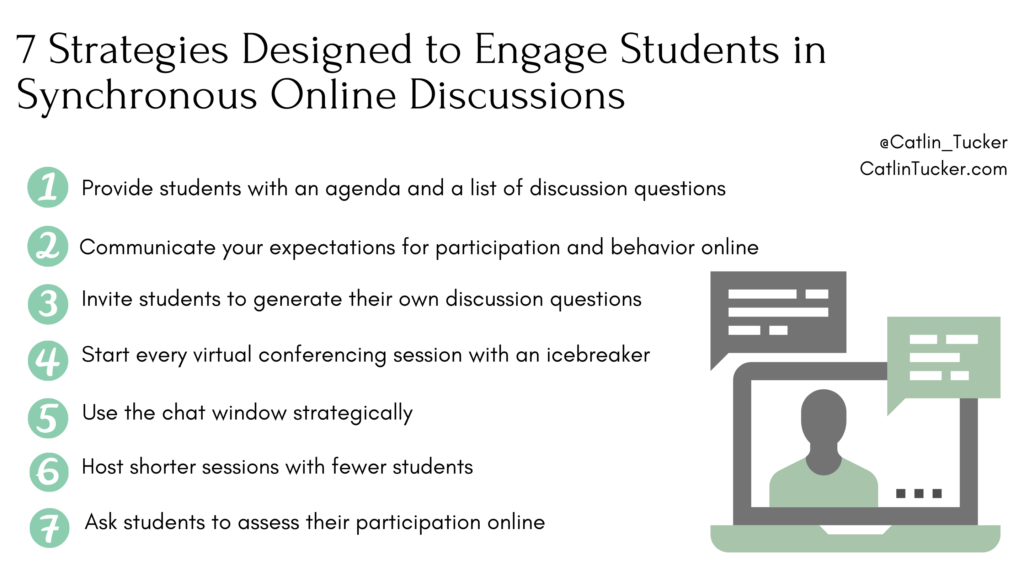
Low on data and storage while teaching and assessing? Use WISE app. It is free. One of the great stories featured in Atma Nirbhar Bharat, meet Mubeen, the young social entrepreneur and educator. Synchronous online classes? Find some strategies to ensure student engagement. Having trouble communicating with your child’s teacher? Get some quick tips. The onus of making a child attend his classes from home seems to rest on the parents. The teachers are struggling to switch to a newer method of connecting with the students, dealing with technical challenges, where most of the children score a brownie point. How do we approach this quagmire? Read the guest column to get some advice from Mohana, a counsellor.
Three images of the week
For Educators/Parents/Students. The holy trinity of education.

Two Thoughts For The Week
“Teaching is a very noble profession that shapes the character, caliber, and future of an individual. If the people remember me as a good teacher that will be the biggest honour for me.” – A. P. J. Abdul Kalam
“I have always felt that the true text-book for the pupil is his teacher.” – Mahatma Gandhi
Happy Teachers Day!
One Video For The Week
Guest column :
“ It is easier to land on the moon than to change the school system”. I couldn’t help thinking how true this statement is, more so in the days of today, when even a normal activity like going out is plagued with anxiety. As I have worked in various schools, I got to experience the different schools of thought one had about education, but one thought was global: The responsibility of education seemed to rest on everyone else but on the children themselves. And so, the more the children were loaded with learning material, the better the adults felt they were doing their jobs well. But was learning happening I wonder? And taking this perspective in this day of Online teaching, things have only become worse.
The ultimate goal of education system is to shift to the individual the burden of pursuing his education, said John Gardner. But are we doing that today? The onus of making a child attend his classes from home seems to rest on the parents. The teachers are struggling to switch to a newer method of connecting with the students, dealing with technical challenges, where most of the children score a brownie point. So the only way the teachers can cope is to just flood the children with enough work to keep their noses to the grindstone, even when the computer is turned off. Children are so frustrated and overwhelmed by the deluge of work that some of the parents end up doing projects for them. They do not even seem to have time to watch a show, and if it is not classes online, it is tuitions online. And with so much of mandatory screen time, do you honestly think they would be allowed to watch entertainment shows on TV? So this conflict results in a lot of power struggles at home, leaving both the parents and children highly helpless and frustrated. Parents do not have the option of suggesting outdoor activities for these children, even if they make out time from their academics.
Education is what remains after one has forgotten what he has learned in school. It does not need a genius to recognise that, but a genius said it for sure. Albert Einstein was incredibly frustrated by the mechanical discipline of the schooling system. I wonder if it is any different today?
I have been suggesting board games, like Taboo, Ludo, Scrabble, Cleudo, card games that are mentally stimulating, and a lot of pencil and paper games, which the family could get to play together. This also helps in bonding – a fact sadly lacking today in times of both parents working and latchkey children. With the working parents also stuck at home, it is also a way of de-stressing for them. I have had parents who have come back to me extremely grateful that they have been able to devise ways of weaning their children away from video games, and thus also getting to spend family time together. One mother excitedly messaged me saying she did not even know she had half a dozen of these games tucked away in their study, received as gifts but never opened!
How is this connected to education you may wonder? Well, as John Holt said, Learning is not the product of teaching. Learning is the product of the activity of the learners. And what is lacking in today’s education system is just that: Learning. Learning life skills, social skills, and soft skills of healthy competition, learning to give in gracefully when losing a game, learning to step aside to make way for the less fortunate and the like. And while a child may not score A+ in his assignment, he definitely goes to bed less stressed, more happy and more connected with the world than a child who is taught that the only way to get ahead in life is to compete: not with self but with all the others around him.
So can we also have our teachers make learning more interactive and interesting? An experiment in a school in Mallapuram Kerala, using augmented reality to teach children, is a case in point. They are able to have children wanting to attend classes, where they see the solar system, learn about astronomy, and other facts which would otherwise be dull and drab if just taught from a text book.
Instead of complaining about how education is happening today, why don’t we take advantage of the situation and make it more interesting for the children?
Parent Speak :
Rekha Srinivasan, a parent and a marketing professional
From a strict mother to a cheerleader 
Born in a big family of 4 siblings and 25 cousins, I grew up in a strict atmosphere but my life was filled with fun, sacrifices, giving, adjusting and compromises. Whatever I am today is because of the strict and disciplined upbringing of my mother.
When I became a mother, I had a strong conviction to bring up my daughter with great discipline. I decided on the dress that she wore, her hair style, her hobbies etc. My girl was such an obstinate youngster; she would consistently fight back even at that age and I would constrain my sentiment on her. There were days when I would get calls from the school that my little girl is grumbling of stomach pain; however the explanation would be I had put a hairstyle which she didn’t like. She would come home with her rubber bands pulled out and I would get mad at her! At every step there was a challenge and my YES would be her NO.
Soon, I got so drained that I abandoned battling for little things. I began to change myself as opposed to evolving her. I slowly allowed her to do what she liked. My attention changed on imparting great qualities in life instead of focusing on insignificant things. I started talking her language, discuss her likes and dislikes and gave space to do what she liked and at the same time explained the consequence of a particular action and left her to decide and make choices in life. I had instilled lot of fear about me in her heart and I worked out to remove those fears. I understood that the only way I can draw her near is to converse with her as a friend. I would listen calmly to her crushes, her feelings of fear, and her questions and clarify everything with a fair-minded and non critical demeanour. She began to share everything uninhibitedly with me. The nights would be the best time of sharing with laughter and fun. Slowly, I started becoming her cheer leader appreciating, encouraging, acknowledging and empowering for what her identity is! Today the bond that we share is something different.
As she will approach her sweet 16 this December 31st, I am overjoyed to see how she has evolved as a wonderful young lady making her choices independently, while sharing her thoughts with me and asking for my suggestions. As her life progresses, she may fall and fail but I would always stand by her as a cheer leader.
My 2 cents for all the mothers – give your child their space, in that space teach them values and be their cheer leader at all times.
________________________________________________________________________________________________________
Student voice :
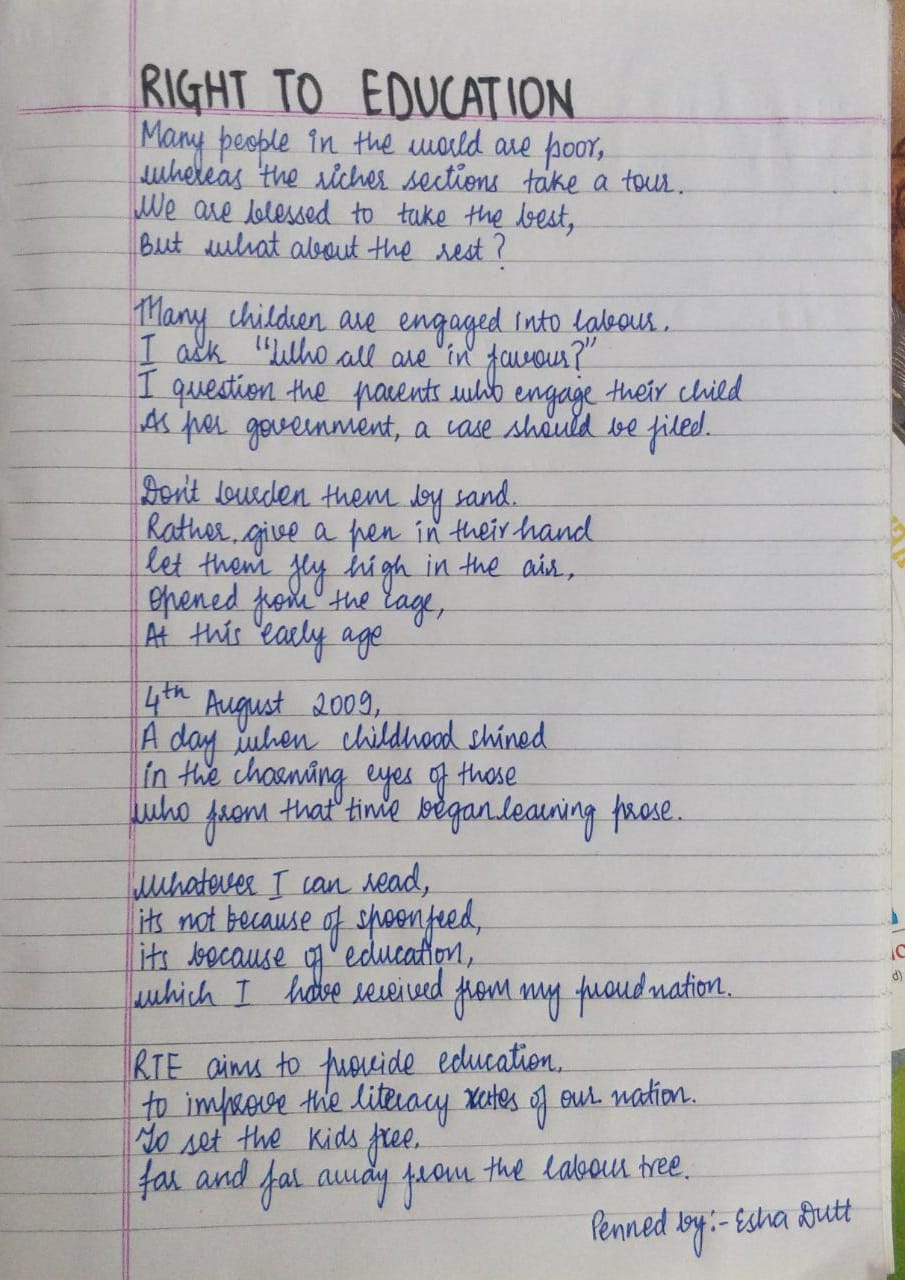

Esha Dutt penned this while in the 10th Grade.
She is now in grade 12.
Showcase:
Wise App: Making online teaching more effective and hassle-free. Works on low internet bandwidth. Free of cost!
WISE App is a digital tool set which enables teachers to conduct online teaching in an effective and comprehensive manner. It enables a teacher to take live classes, send/receive homework/assignments, facilitate discussions and share study material all at one place. Additionally, after every class it generates a downloadable attendance report. It is extremely simple to use and works on low internet bandwidth. It is free of cost.
WISE was created by two IIT Bombay Graduates, Bilal Abidi and Mubeen Masudi. While Mubeen has ben an educator himself for 8+ years, Bilal has worked across multiple tech start-ups. WISE has been created with an aim to democratize education by empowering teachers with the right set of digital tools. WISE has been designed in a manner so that any teacher in India can comfortably use it. WISE was launched in last week of July and currently more than 2000 teachers from across the country are using it to teach their students online. It has been lauded by the Education minister of the country and the MHRD, India. It is Government of India’s one of 74 “Atma Nirbhar Bharat” stories.
It is available for download from both, the android’s playstore and the iOS’s app store.
Download the application
Android: https://play.google.com/store/apps/details?id=com.wise.app
Apple: https://apps.apple.com/app/id1525875644
Web: http://www.wiseapp.live
Go through the videos on how to use here: https://www.youtube.com/channel/UCu8h72x3qD5DbAtM6JMtOsw




And Finally :
If your teens (or yourselves) have had enough of sudoku/online games/puzzles, take a break for some highbrow colouring. Museums and libraries around the world make colouring books based on their collections.
http://library.nyam.org/colorourcollections/
There are more than 500 colouring books you can print out as pdf that will tickle your right brain 🙂


3-2-1 Tuesdays with Ms Niv
Issue #007/ August 25, 2020
-
What kind of praise is ineffective, useful or powerful for your student?
-
Do you over-hover during your child’s online class session?
-
Is peer pressure always negative? Do schools kill creativity?
Find pointers to these and understand computational thinking in a nutshell from a teacher and researcher in the Cambridge University and Microsoft Research Labs.
Three Images For The Week
For Educators Relative effectiveness of the four levels of feedback (adapted from AITSL and E4L, 2017; Evidence for Learning, 2020; Hattie & Timperley, 2007).
For parents 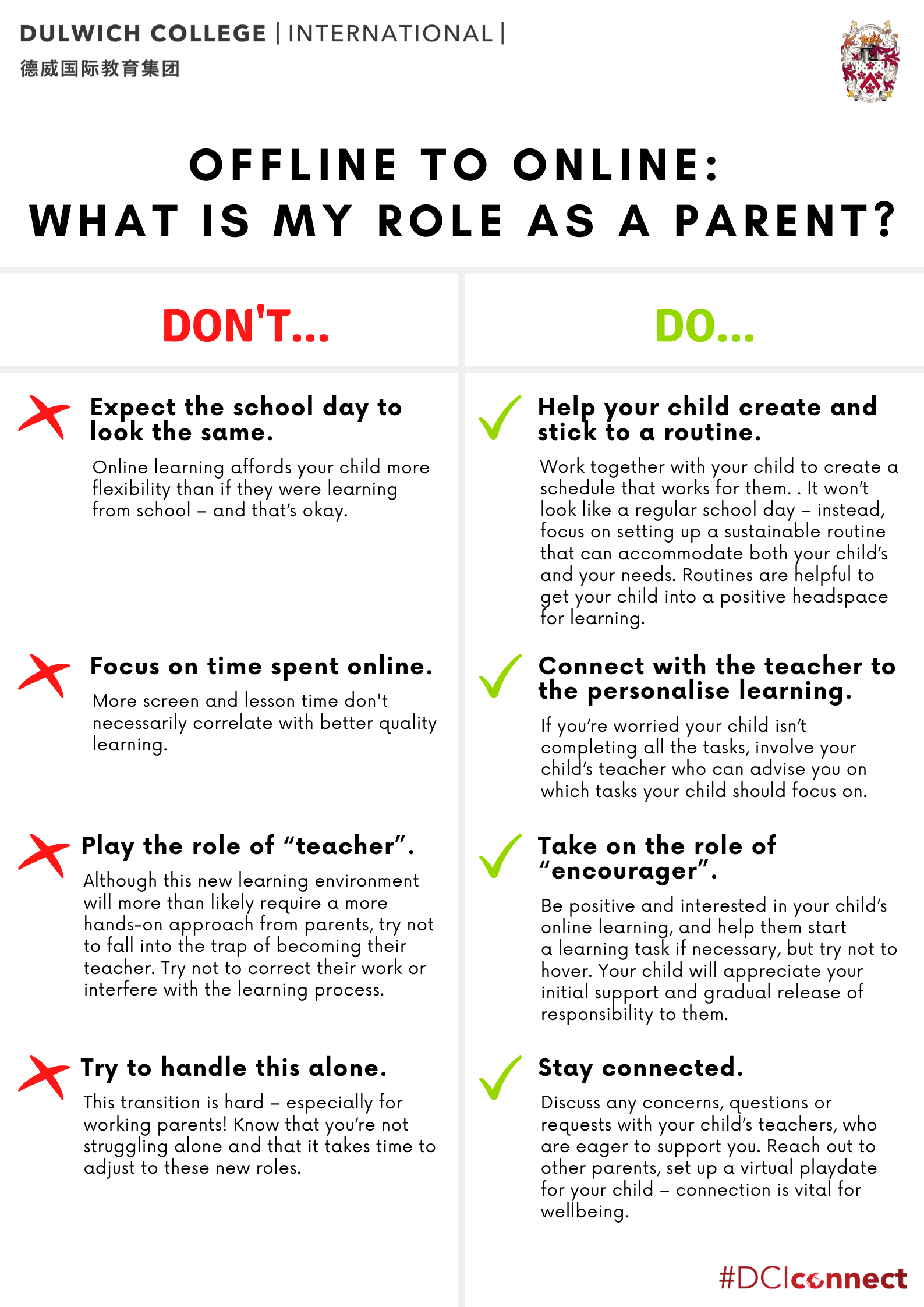
For students
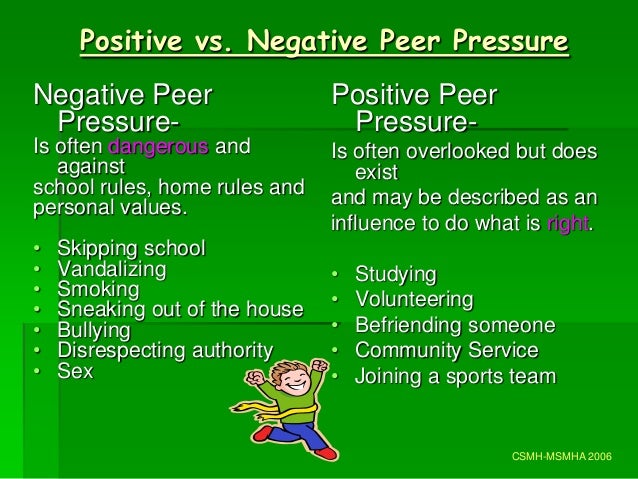
Two Thoughts For The Week
“Give yourself time to learn something new and good, and cease to be whirled around.”
—Marcus Aurelius, Meditations
“When I get a little money I buy books; and if any is left I buy food and clothes.”
—Erasmus
One Video For The Week
In Memoriam
Sir Ken Robinson has died. He was the most watched speaker in TED’s history, with his 2006 talk ‘Do Schools Kill Creativity?’ being viewed online over 60 million times and seen by an estimated 380 million people in 160 countries. Here is a link to his site http://sirkenrobinson.com/
Guest column
Computational Thinking in K-12 Education
Dr. Advait Sarkar 
In recent years, we have seen a flurry of revisions to computing curricula around the world, led by Israel, whose model (broadly speaking) has now been adopted in the UK, South Korea, New Zealand, Australia, Germany, Denmark, and others. The new curricula de-emphasize IT proficiency (such as learning how to use the internet, word processors, etc.) and pull focus towards programming, algorithms, and deeper computing knowledge. In some ways this can be viewed as the discipline of computer science ‘coming of age’ and claiming its legitimacy and primacy as a subject for K-12 education. Its proponents argue that computing is so important and influential that every citizen deserves to have more than a mere superficial understanding of it. The objective is to develop students’ agency in computing that reframes their computing experience from being something that happens to them, as users and consumers, to something that they can understand, influence, produce, and participate in.
‘Computational thinking’ (CT) lies at the core of computer science’s claim to disciplinary legitimacy. What is CT? For starters, it’s not ICT (“information and communications technology”) — that is, the skills necessary to use computers and popular software — although that is important too. Is CT programming? Not quite — while all modern CT curricula incorporate a substantial amount of programming, it’s important that computer science should not be equated with programming, or vice versa. In fact, computational thinking is a set of abstract thinking and problem solving skills that can be learnt and understood even without access to computers (using materials created by the CS unplugged program, for example). These skills include: using abstractions to represent a problem; breaking down problems into smaller parts; and identifying potential solutions that achieve the most efficient utilisation of available resources.
It can be argued that these abstract skills are not unique to computing: using abstraction and decomposing problems are skills taught in maths, science, numerous engineering disciplines, and design thinking, as well. For example, all of K-12 mathematics already teaches children a series of steadily more sophisticated abstractions: using numbers to represent known quantities, symbols for operations, letters for unknown quantities, diagrams for real-world scenarios, and so on. Physics and chemistry each rely on breaking down problems, showing that many natural phenomena can be explained by considering the behaviour of their constituent materials: atomic particles and energy.
So what is different about computing? It’s quite simple, really: the computer. The computer can be considered an assistant who can execute instructions for you with high speed and perfect memory. Computational thinking teaches abstraction and problem solving, but specifically in the context where you have access to such an agent.
For example, a mathematics student might be interested in learning the rules for solving for X (the unknown) in an equation, but a computing student would be more interested in crafting instructions for a computer to solve many equations. The traditional way to solve an equation taught in schools involves ‘rearranging’ the equation until you have isolated X on one side of the equation, and can then calculate the other side using simple arithmetic. The strategies enabled by a computer are very different: for example, it is possible to try billions of potential values for X within seconds, to see if one of them solves the equation. The challenge is to define a good strategy for guessing, to maximize your chances of getting the right answer in the least number of guesses. This is called ‘numerical solving’, it can produce perfect or near-perfect solutions in many cases where the equation cannot be easily rearranged, and is used widely in many scientific and engineering disciplines.
Computing teaches children how to formulate different strategies, compare them, and translate them into a form executable by a computer. Therefore, the problem solving thought process in computing differentiates itself from other disciplines by focusing specifically on designing a suitable problem representation and specifying how the agent must operate within it to reach goals.
Advait Sarkar is a researcher at Microsoft and a lecturer at the University of Cambridge, U.K..
References:- Computing at School: https://www.computingatschool.org.uk/– CS unplugged: https://www.csunplugged.org/en/– Wing, Jeannette M. “Computational thinking.” Communications of the ACM 49, no. 3 (2006): 33-35.- Nardelli, Enrico. “Do we really need computational thinking?.” Communications of the ACM 62, no. 2 (2019): 32-35.- “A is for algorithm”. The Economist. April 26, 2014: https://www.economist.com/news/international/21601250-global-push-more-computer-science-classrooms-starting-bear-fruit
Parent speak
Neelima Meermira, a parent and a Human Resource strategist.
As a parent of a boy in his late teens on the threshold of getting into college, and one who has gone though the grind of all phases of teen age of my child , it is very difficult to crack the code and get the formula of what is right and what is not working for your child – let alone for the entire generation.
Each child is different , ‘coz each set of parents are different and the circumstances at each home are different , there by each child shapes up differently . We should not compare children with one another because they are products of our choices, our successes and our failures.
My son had the good fortune of schooling with Vidyaranya at Hyderabad started by an eminent educationalist Ms Shantan Ramaswar Rao. I had good fortune of interacting with her on few occasions. She taught me an important life lesson , to Trust my Child. This important life lesson has helped me to navigate us ( my son and I ) better during teen age. We could speak about most of the topics. He could share most, if not all of his issues with me.
We do have our share of disagreements , fights , show downs , but we have managed not to carry it to the next day.
Hope this small aspect of my life will help some of you .
Student voice

Ayesha Ahmed, student of grade 3
My Weird Dream
First it all started with me and my friends on Jupiter! I know right crazy I never realized how crazy dreams I could dream. Now let us see what happens in this crazy dream of mine. After sometime Jupiter starting shrinking and I said just jump out of Jupiter or else we might sink into Jupiter. So, we just jumped and we survived! So, one girl just made herself the leader and told to start making codes for some reason. So, as we started, some girl made a code with planets and the leader remembered the Solar System and he told us we might not be in the Solar System and we all were so shocked…… shocked REALLY! It looked like our so-called leader did not know that there is an Asteroid Belt between Mars and Jupiter. Another girl told I shall be the next leader. Then I told start jumping in front and so they did. And we jumped from one planet to another till we reached mars and then I told we have to still go to Earth and when we reached then we realized we were in the Ocean and then I woke up on my bunk bed and hopping with my pillow, saying what a crazy journey that was!!
Showcase: (Advertisement)
Click below and use the code 321NIV to get your special 30% discount.
And Finally
Here’s a poem written by Deepak Pachori, an author, screenplay writer and a film director, Mumbai.
Un-Social Media
सुनो, देखो ये क्या हो रहा है,
जीवन मोबाइल में खो रहा है,
रोक लो, बचा लो इन्हें,
ऐप अब ऐब हो रहा है….

अब नहीं आती,
कोई चिट्ठी या तार
ज़िंदगी का हर सुख-दर्द
वट्सऐप में व्यक्त हो रहा है.
टिंडर में सही-ग़लत की लकीरें
अब धुँधलाने सी लगी है,
ट्विटर में किसी का दर्द
कहीं मज़ाक़ हो रहा है,
सिकुड़ के चना भर हो गया है
आज कल सभी `का दिमाग़
गांधी, टैगोरो आज़ाद को
वो इंटर्नेट पे खोज रहा है.
जो मासूम से हाथ भेजते थे
प्यार भारी चिट्ठि अपनों को,
फ़ेसबुक और स्नैप चैट में
अब सबको अँगूठा हो रहा हैं.
जवानी के आते ही हुस्न जो
छुप जाता था दुपट्टों के पीछे,
देखो अब इन्स्टग्रैम में
इंस्टंट एक्स्पोज़े हो रहा हैं,
पुरानी बात हुई घर में
साथ सब के देखना टीवी
अब वो अकेले यू टूब में
जाने क्या क्या देख रहा है
खाना खाना भूल भी जाए
पावरबैंक ना भूले वो,
डर नहीं मरने का अपने
मरे ना बैटरी डर रहा है
खिंचा नहीं करती तस्वीरें
कैमरों से आज कल
हर शख़्स मोबाइल में अब
बस सेल्फ़ी ले रहा है,
दीपक पचोरी
I have been a research scientist, a journalist and an educator for over 3 decades. I read and I write. With this weekly newsletter, I intend to share what I read, learn and experience as I continue to engage everyday with students, parents and teams of teachers across K-12 schools, higher education institutions and ed-tech organisations.
3-2-1 Tuesdays with Ms Niv is a newsletter for you to subscribe and enjoy your learning journey with me. Most of you would have been too busy to track trends in education, ponder on most relevant thoughts or deliberate on career choice, parenting or pedagogy. Find it all here. This week, it consists of: 3 images, 2 thoughts and 1 video.
For whom? Students, educators and parents
When? Every Tuesday
Where? my blog post, register with your e-mail id, it is free.
If you want to contribute an article, are organising an event, have a product that you think can be reviewed and/or featured in this news letter, please feel free to write to me at : niveditamukerjee10@gmail.com
Please like, subscribe, share, comment. See you next week.
You can find me here:
This weekly newsletter is supported by:
And

3-2-1 Tuesdays with Ms Niv
Issue #006 / August 18, 2020
Do you know what a teenager thinks about ‘discussing depression’? Are you a teacher freaking out at the prospect of discussing taboo topics with your students? A parent concerned about internet safety for your child? A student worried about long hours of being cooped up inside without physical activity? What is your parenting mantra? What can you do to make remote teaching more effective? And finally, don’t miss the tune at the end for a jig with your family :). Enjoy reading this news letter that has something for students, parents and educators every week.
Three Images For The Week
For Educators:

For parents :
For students :
Two Thoughts For The Week
“A child free from the guilt of ownership and the burden of economic competition will grow up with the will to do what needs doing and the capacity for joy in doing it. It is useless work that darkens the heart. The delight of the nursing mother, of the scholar, of the successful hunter, of the good cook, of the skilful maker, of anyone doing needed work and doing it well, – this durable joy is perhaps the deepest source of human affection and of sociality as a whole.”—Ursula K. Le Guin, “The Dispossessed: An Ambiguous Utopia”
“Don’t limit a child to your own learning for he was born in another time.” – Rabindranath Tagore.
One Video For The Week
Taboo topics? yes. Reproduction. Sex. Gender. Religion. Race. Caste. Politics. Equity. Inclusion. Fairness. Justice. Drugs. Depression. Punishment. Consequence. Consent. Whether you are teacher or a parent, you must have faced it at sometime for sure or will face it as your child grows up to be an adult. How did you deal with it? Did you fight – shut down the conversation? Or flight – changed the topic quickly, diversion? Or froze – for some moments before just moving on to some other room or carried on with your task ignoring it completely? What would you have rather done?
Often deliberate avoidance of these taboo topics when they come into conversation speaks volumes to the students/children and they interpret it to be as taboo. Something to be embarrassed about, scared of, to be held as a secret, to go to other sources to seek answers or satisfy curiosity. Sources whose narrative you have no control over. Right? Here are some pointers from this 4th grade teacher to help you navigate these with your child/student. They have a right to think and discuss about it now for they will have to live it in the future.
Guest column

NATIONAL EDUCATION POLICY 2020—THROUGH THE LOOKING GLASS.
The MHRD’s New Education Policy has sent the country’s educationists into a tizzy. The new pedagogical and curricular structure of school education (5+3+3+4) is certainly a positive step towards reducing exam stress and the overt importance given to syllabus completion. However the new system endorsing the vernacular as a medium of instruction is difficult to implement. We don’t have a culturally or linguistically homogeneous population in each state to choose a common language. Text books will have to be now written in vernacular languages, which hasn’t been done even after 73 years of independence! Moreover there will be a dearth of trained qualified teachers in all subjects, who can effectively teach in vernacular.
When the MHRD is focusing on “Ten Bag Less Days” I am not sure whether they are referring to 10 days out of 200+ school working days, in an academic session, or are they referring to 10 days per month. Either ways it is too less for any child to learn a new skill or vocation. Also why not have complete bag less days? That is very much needed for both physical and emotional well-being of the students.
While the NEP talks about skill development and identifying the child’s potential by using AI, it all seems a bit ambitious when there is a dearth of schools in many parts of rural India. Instead of utilisation of unused school space as ‘Samajik Chetna’ centres, more attention can be given to providing basic infrastructure, blackboard, textbooks and trained teachers to the rural schools. Program for social awareness can be included as a continuous annual activity.
Regarding the training of teachers, the government should focus on training in new methodologies, across all boards with continuous assessment, and upgradation of knowledge which has been proposed by the introduction of NPST and ICT, in the NEP2020. What about assessment of both public and private schools which will allow parents and students to assess schools instead of the eyewash of an “inspection” that takes place? That certainly will lead to the qualitative improvement of schools.
However, other features like— flexibility of subject choices, inter-disciplinary teaching methodology, reduction of exam stress, extending RTE to 18 years, emphasis on technology as a teaching methodology are commendable. But what about those learners or teachers whose financial conditions are so dire that they cannot afford technology? That question remains unaddressed.
The efforts to create facilities for students to avail online courses of foreign universities, opening up funding opportunities, making Ph.D accessible to the highest group of learners, are certainly encouraging. The proposal of resource pooling for a cluster of schools is a great idea. The focus on making special provisions for ‘gifted students’, expanding the NIOS and standardising the sign language are also commendable.
While the NEP 2020 is certainly futuristic and ambitious – trying to foster holistic approach from the early childhood stage, it still requires more introspection. Especially when the World Bank’s report estimates that India has over 50 per cent of learning poverty we need to prioritise ideas before implementing it.
Parent speak
“I Want to be a Better Parent than my Parent”. Isn’t this natural? Wouldn’t our parents have tried to be better parents than their parents?

Being a professional career counsellor, I interact with parents, almost on a daily basis. During my discussion with them I always enquire : “What makes you a better parent than your parents?” And I hear a lot of – giving my child a variety of food, more chocolates, more pocket money and a never ending list of material things. These parents take pride in providing more material things. Of course, few of them also highlight more love, more discussions on life lessons and more mentoring. I wish to hear to more about togetherness – reading together, buying books together, playing together, cooking together, watching impactful movies together, relaxing together, cycling together, studying together, learning together, dreaming together and more.
Parenting comes with a lot of responsibility and as a blessing to see your extension. This role starts from the neonatal stage and each childhood memory has a lifelong impact on personal and professional life. To become self aware of our everyday habits, behaviours and communications with our child requires constant introspection. There may be many areas of parenting that you would like to perform better than your parents, but there would also be few areas of parenting in which your parents would have done a better job. Recollecting and reflecting on those and bringing them to practice can strengthen your bond with your child.
Is it easy? As easy as cooking food, playing cricket, coding for a new service? This is a full time job and if accepted with happiness then you are immersed in it and your child’s personality reflects your high spirits. Would you need help? Ofcourse. Talk to your elders, peers or mentors to seek guidance to ease this full time job. Is there a retirement age? Not really, because you don’t want to retire. This is like spending 14 years in ‘Banwas’ as Lord Rama and enjoying the fruits for life!
Then what is the magic that will work? Kids do what we do, and not what we say. You as a parent is the first role model in your child’s life. Though you cannot be perfect, but, you can improve everyday and grow to be a parenting mentor!
Student voice

Humorizing mental illness… Not cool!
Nowadays, I constantly come across people around me not exactly “mocking” mental illness but, using it to add a comical aspect to their current state of mind. If you are a part of Generation Z, I’m certain you have heard people say things like, “Oh my God, I’m so depressed,” “If she gives us more homework, I’m going to commit suicide or something,” or maybe “I’ve gained so much weight I wanna go anorexic.” Whenever I mention that I feel anxious about something or that certain things give me anxiety, I can always expect a slight chuckle from people. If said virtually, an “LOL.”
The problem with this is that it can invalidate the feelings of a person who actually suffers from a mental illness. Which means it can diminish the worth of the challenges someone is facing. Quoting The Times of India: Suicide isn’t fun. Lose a friend or family member and you will understand how real depression is. These jokes hurt people.
Now, I’m not going to sit here and pretend like I haven’t told my fair share of mental illness related jokes. The important thing is growing from your mistakes and knowing the impact your words have.
Showcase: (Advertisement)
Click below and use the code 321NIV to get your special 30% discount.
And Finally
Walk, shuffle, glide, bounce, tip toe… with your child on this song. Enjoy!
I have been a research scientist, a journalist and an educator for over 3 decades. I read and I write. With this weekly newsletter, I intend to share what I read, learn and experience as I continue to engage everyday with students, parents and teams of teachers across K-12 schools, higher education institutions and ed-tech organisations.
3-2-1 Tuesdays with Ms Niv is a newsletter for you to subscribe and enjoy your learning journey with me. Most of you would have been too busy to track trends in education, ponder on most relevant thoughts or deliberate on career choice, parenting or pedagogy. Find it all here. This week, it consists of: 3 images, 2 thoughts and 1 video.
For whom? Students, educators and parents
When? Every Tuesday
Where? my blog post, register with your e-mail id, it is free.
If you want to contribute an article, are organising an event, have a product that you think can be reviewed and/or featured in this news letter, please feel free to write to me at : niveditamukerjee10@gmail.com
Please like, subscribe, share, comment. See you next week.
This weekly newsletter is supported by:
And:

