Nivedita Mukerjee
Education consultancy for parents and schools
3-2-1 Tuesdays with Ms Niv

Issue #279, 4th November 2025
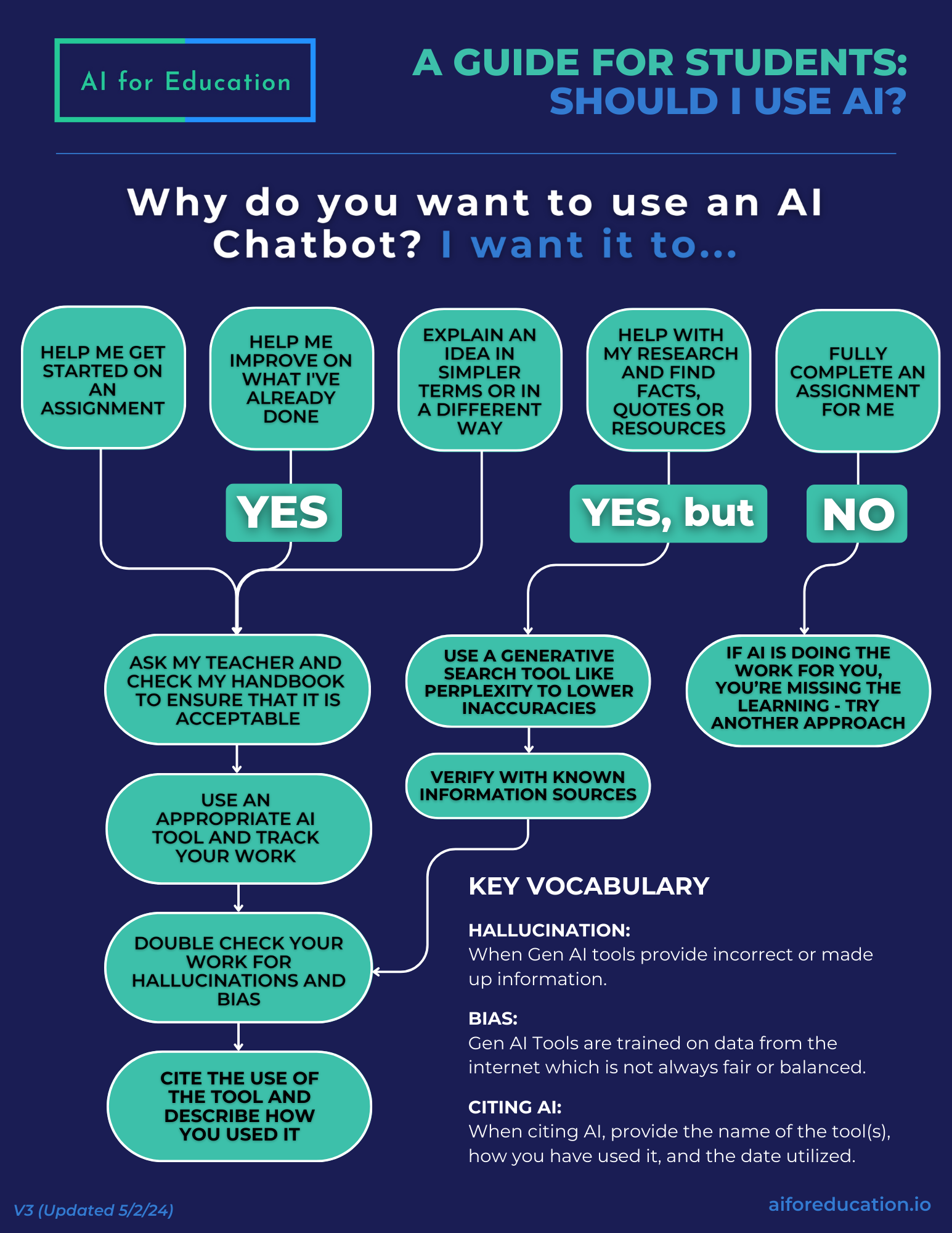
Be intentional about when and why you’re using AI or it will take us as educators and students on the path of:
Reduced critical thinking
Memory atrophy
Decreased problem-solving ability
Writing skill deterioration
Loss of research skills
Weakened creativity
To use AI without these downsides, consider these:
- Use it as a thinking partner, not a replacement for thinking
- Verify important information independently
- Try solving problems yourself first, then use AI to check your work or get unstuck
- Practice skills you care about regularly, even when AI could do them faster
The key is treating AI as a tool that augments your abilities rather than replaces them. What specific concerns do you have about your AI usage?
This is a free newsletter. If you like my content, please subscribe by entering your email address here.
Three Images of the Week

Two Thoughts of the Week
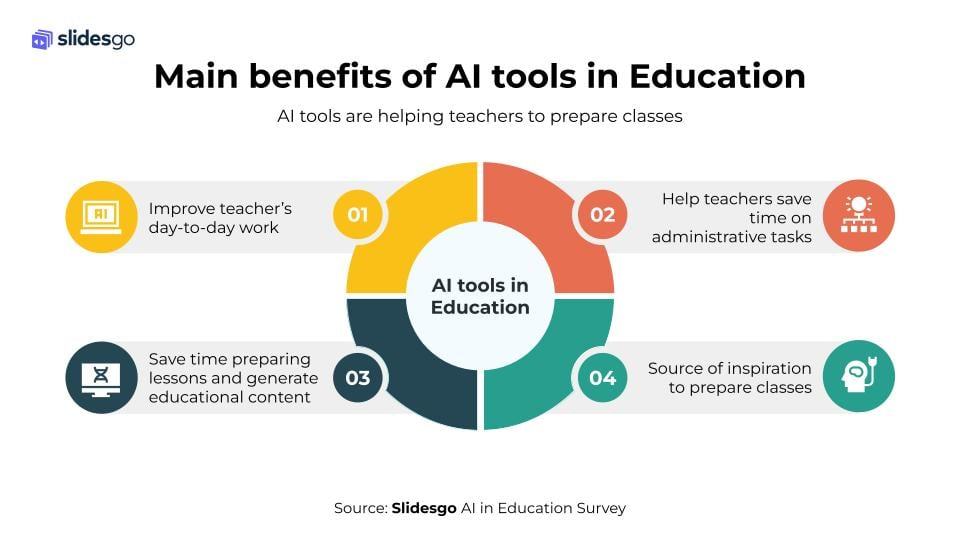
“In the end, if using AI tools cuts your planning time from 30 minutes to 18 minutes—or your grading time from 40 minutes to 22—that extra time it creates is yours. Use it however you wish. Plan out that cool lesson you’ve always wanted to do. Or go home early. The choice is yours. I know this type of decision feels pretty foreign to us—deciding what to do with extra time. Whether we use it to do something amazing for our students or preserve our mental health, everyone wins.”
― Matt Miller
“If you’re a college student preparing for life in an A.I. world, you need to ask yourself: Which classes will give me the skills that machines will not replicate, making me more distinctly human?” New York Times
One Video of the Week
TEDAI Vienna Panel – Protecting human intent in a space of generative AI sameness & infinite outputs
As AI becomes deeply embedded in our creative and decision-making tools, it doesn’t just assist us: it starts to shape what we create, how we think, and even what we value. The promise of generative technology is abundance, but the hidden cost is often convergence / where outputs blur together, and intent is quietly overwritten by default suggestions. How do we prevent the erosion of originality and intention? In this conversation, Microsoft researcher Advait Sarkar unpacks how AI systems subtly influence our intentions and actions, from spreadsheets to copilots, and why friction might be essential to preserve critical thought. Designer and data storyteller Pau Garcia brings a cultural and emotional lens, showing how immersive, sensory storytelling can restore meaning, agency, and surprise in a world increasingly optimized for efficiency. Design is the only instrument we have for reclaiming agency in spaces dominated by automation. Guided by Ioana Teleanu, the three panelists explore what it means to treat AI as a design material – something we can mold intentionally, rather than passively consume – and how to design systems that resist homogenization, encourage human divergence, and protect the fragile spark of intent in an age of infinite outputs.
Reading with Ms. Meenu: Tip of the week
Print Awareness:
Books are a handy tool for teaching an abstract concept – that the lines and curves kids see printed on paper, on products and on signs mean something. Reading together with children presents a great opportunity to bring their attention to letters, words, and the conventions around how they are used. With just over voices and pointer fingers, we can teach the names and roles of key book features (such as author and title) and the direction we read English text (left to right, top to bottom). And its important that we do so with preschool aged children because researchers have found evidence for a causal relationship between their increased contact with print (from teachers, verbal and nonverbal references to text during shared reading four times weekly, for thirty weeks) and their reading, spelling, and comprehension skills two years later.
Teaching about print really is as easy as saying phrases like the following as you lift the cover, turn the pages, and point to relevant print features (no planning or preparation required):
- Look at the words here on the book’s cover. (Point to the words.)
- This is the title of the book. (Point to the book’s title). It says Little Leaders : Bold Women in Black History. What is the title of the book?
- The person who wrote the book is called the author. These words are the author’s name. (Point to the author’s name.) It says Vashti Harrison.
- This is where the bunny is talking. The bunny’s words are in this bubble. (Point to speech bubble.)
In time, you can check your child’s knowledge with questions and requests like: Where do I start reading? Show me the author’s name. Point to the last line.
Also keep in mind that you don’t have to have a book in hand to draw attention to print. There’s a lot of competition for attention on a picture book page — colors, illustrations and even flaps, mirrors, and lift up tabs. You might find better success teaching some elements of print in isolation. Show some love to the solo word or letter on a sheet of paper, a name on a sign or a saying on a graphic tee. There are plenty of chances to bring letters to life by noticing, pointing out, and discussing their features and meaning with kids.
Happy Reading!
Meenu Gera Consulting home and school librarian reading guide
I Think, I Wonder, I Ask
When Did Textbooks Become the Sole Source of Knowledge?
–Dr Shreelakshmi Subbaswami, Alumni and Academic Director, Vijaya School Hassan, Karnataka
This is the time of the year when textbook publishers start flooding schools with samples, promises, and glossy covers. As an academic head, I often find myself overwhelmed—yet deeply aware that I must act as a gatekeeper of what my students will read.
In many schools, the textbook rules as the unquestioned source of knowledge—deciding what to teach, how to teach, and even when to teach. Teachers, unfortunately, are often reduced to implementers, not designers of learning.
Over time, I’ve come across textbooks from even well-known publishing houses with conceptual and factual errors, uninspiring pedagogy, and layouts far from student-friendly. Yet, they continue to dominate classrooms unchallenged.
Today, many publishers market “complete packages”—textbooks bundled with ready-made lesson plans that promise efficiency and convenience. But efficiency at what cost? Such systems stifle teacher thought and reduce educators to content deliverers rather than co-creators of curriculum.
The moment a teacher begins to ask, What is truly worth teaching? What aligns with the essence of my discipline? What fits my pedagogical philosophy?—transformation begins. A transformed teacher seeks knowledge not in one prescribed text but across multiple perspectives—from reference books, lived experiences, community knowledge, and the dynamic world around learners.
Three questions for you…
- Who owns the classroom—the experiences or the textbook?
- What divergent resources—from the community, environment, library, digital spaces—can enrich our classrooms beyond the textbook?
- What challenges might teachers face when there is no single prescribed text, and how can schools support them through collaboration and resource sharing?
Showcase: Thrive Beyond School – A unique STEAM education project for very young learners.
– Pooja Khatter, facilitator, Thrive
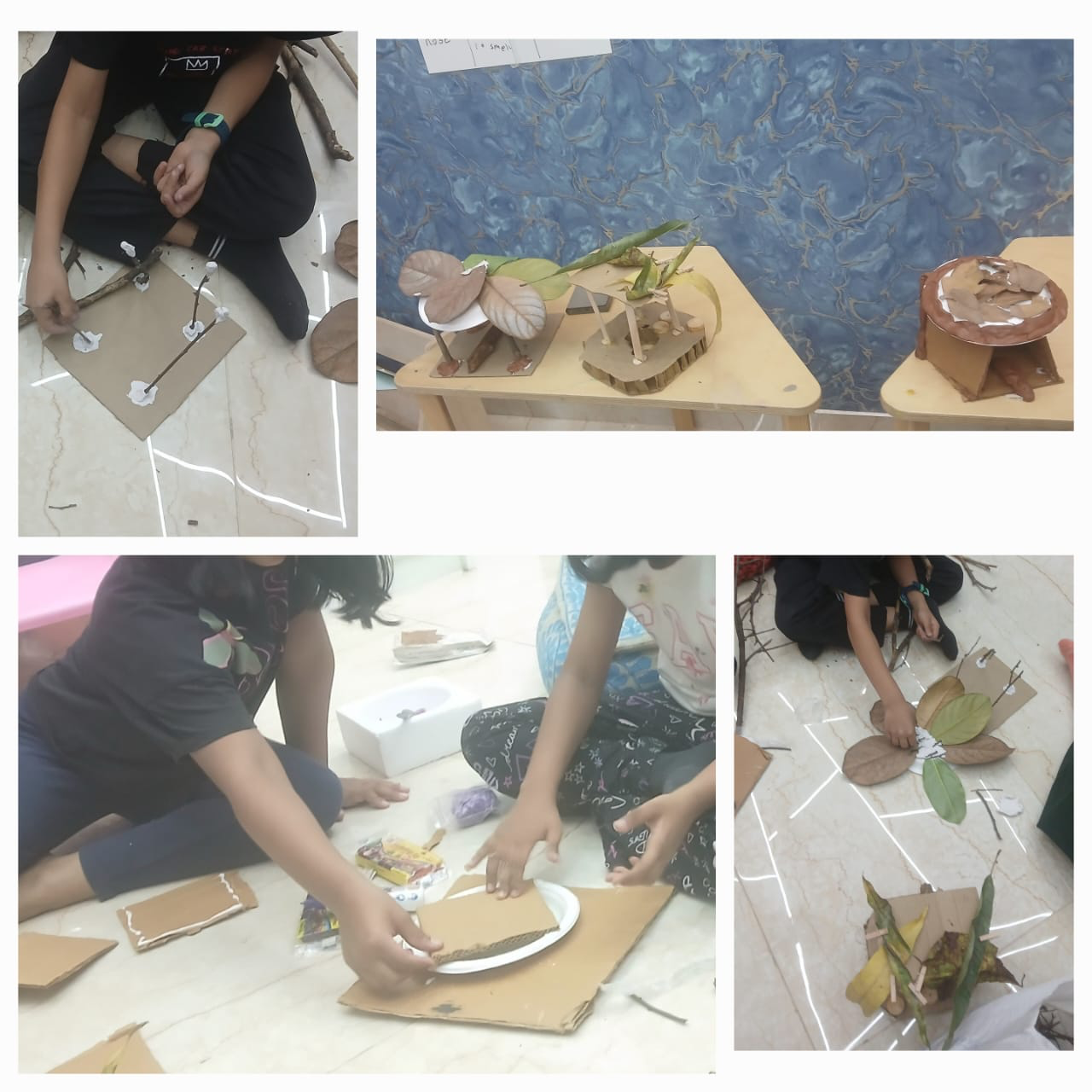
In the Survival through Adaptation activity, children learned how animals stay safe using different defense mechanisms like venom, camouflage, and speed. They watched pictures and videos of animals such as the cobra, Gila Monster, and mouse deer to see how each one protects itself from danger. Then, each child made their own animal shelter using twigs, leaves, clay, and paper plates. While building, they used creativity and problem-solving to make their shelters strong and realistic. Through this activity, children understood how animals use their body features and surroundings to survive in the wild.
Samyuktha: 7 years 6 months old
Neev & Mayra: 7 years 2 months old
Career assessment, guidance, and placement strategies:
Summer Programs in India
The new-age universities in India are not only offering industry-ready undergraduate programs but are also engaging teenagers through hands-on summer programs. Today, we are highlighting two exciting summer programs offered by Plaksha University.
Programs in Engineering and Problem-Solving:
- Young Technology Scholars
- Young Data Scientist
Venue: Residential at Plaksha campus
Duration: 2 weeks
Month: June
Eligibility: Grade 9 -12
Benefits:
Get hands-on experience by solving real-world problems
Develop practical skills to complete complex tasks
Collaborate with like-minded and motivated peer groups
Understand the expectations of the university
Experience the beautiful campus
Build essential Life Skills through a residential experience
Fermata Career Solutions inspires young individuals aged 13 to 30 to unlock their potential through focused and customised career and college counseling. With expertise in University Readiness, CareerGym, and Master Parenting, the experts empower you to pursue your dreams and shape your future with confidence. More about us on www.fermataco.com
Dear reader,
I work with the school leadership team as an advisor and collaborate with teachers as a pedagogical trainer. I also help parents as a parenting counselor and regularly engage one-on-one with students as a personal guide and mentor. This weekly newsletter shares what I read, learn, and experience.
3-2-1 Tuesdays with Ms. Niv is a newsletter you can subscribe to and enjoy your learning journey with me.
 Nivedita Mukerjee
Need of the hour Miss Niv ,as AI permeates every aspect of our lives . Very lucid and informative read and thought provoking too .
LikeLiked by 1 person