Nivedita Mukerjee
Education consultancy for parents and schools
3-2-1 Tuesdays with Ms Niv

Issue #318, 4th August 2026
Are we curating a perfect life for our children, or are we helping them to ‘figure it out’ in the world? Young adults are sometimes stuck between adolescence and adulthood. More youngsters are continuing to live at home than roughing it out on their own. The practice of adult-ing is reducing. Looks like we are missing out on opportunities to raise kids who can step outside their comfort zones.
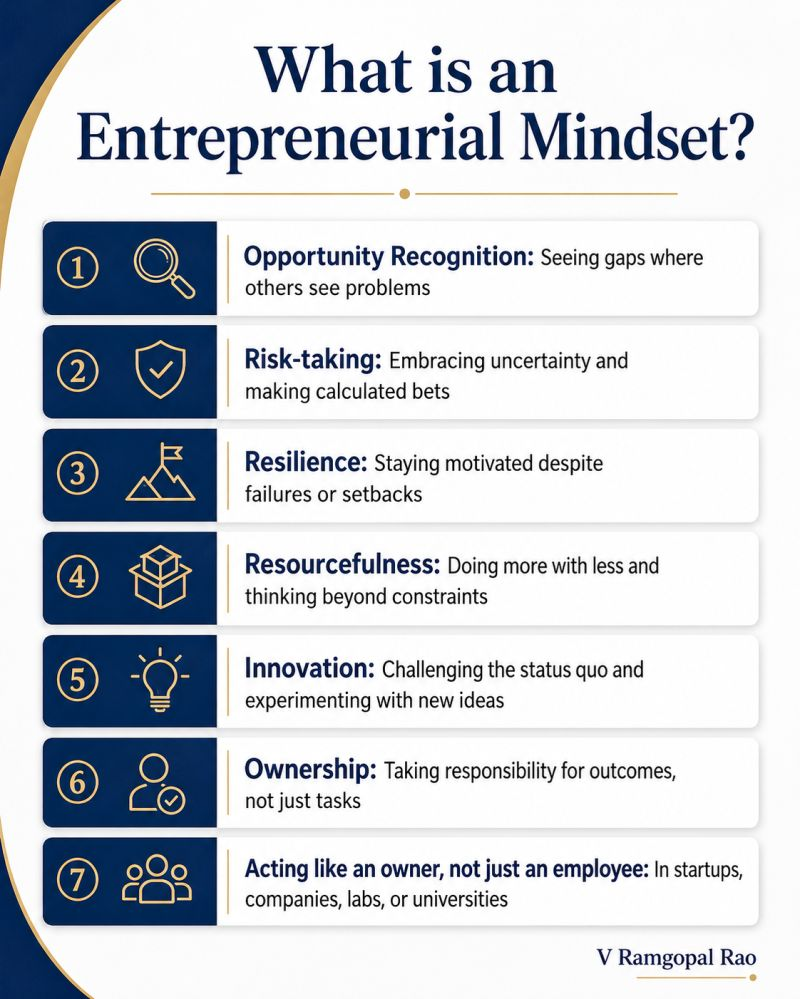
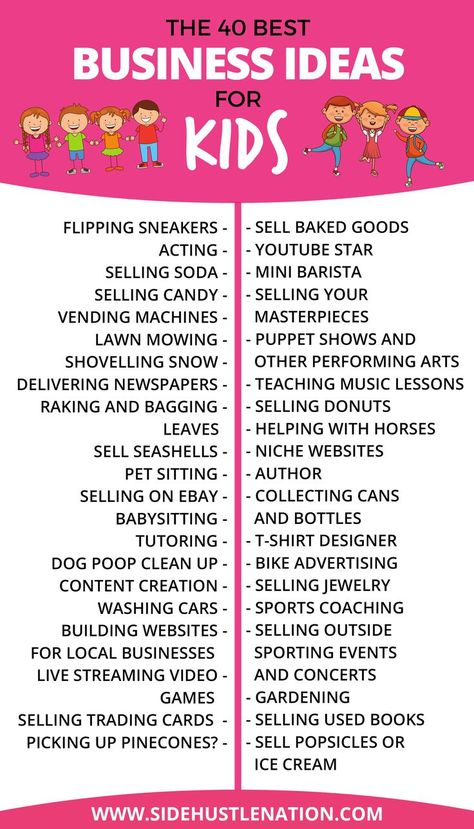
The skills are necessary for living through a changing world. Kids who can view the world from an entrepreneurial mindset are off to a good start. Kids who can help themselves and those around them. Kids who can use the information available, skills they have got, and support they can seek and go out on a limb with it.
What can we do? How might we raise the children with the mindset of changing the world around them? How can we have them take the lead? Thinking like an entrepreneur, whether they become an employee or employer, is important.
This is a free newsletter for parents, educators, and students. If you like my content, please subscribe by entering your email address here.
Three Images of the Week

Two Thoughts of the Week
“If you want something you have never had, you must be willing to do something you have never done.”
— Thomas Jefferson
“Showing up is not all of life — but it counts for a lot.” Hilary Clinton, American Politician
One Video of the Week
How do you raise kids to step outside of their comfort zones and unlock their inner potential? It all starts with helping them develop a resilient mindset. Mother and business owner Tameka Montgomery makes the case for cultivating an entrepreneurial outlook at an early age — and offers five strategies for emboldening young minds to embrace opportunities and solve their own problems, no matter the path they choose.
Reading with Ms Meenu: Tip of the Week
Reading Challenges in the Modern World
Reading is one of the most important skills a person can develop. It improves vocabulary, concentration, communication, imagination, and critical thinking. Reading also helps students perform better in school and allows people of all ages to learn about new ideas, cultures, and experiences. However, many people today face challenges that make regular reading difficult.
One major challenge is the growing influence of social media and digital entertainment. Short videos, notifications, games, and online posts provide quick stimulation and require very little concentration. In comparison, reading a book requires patience and sustained attention. People who spend long periods moving quickly between digital content may find it harder to focus on longer articles, textbooks, or novels.
A lack of time is another common barrier. Students may have homework, extracurricular activities, jobs, and family responsibilities. Adults may be busy with work and household duties. As a result, reading is often treated as an optional activity rather than an important part of daily life. Even setting aside fifteen to twenty minutes each day can be difficult without a regular routine.
Some readers also struggle because they have limited access to books. Books can be expensive, and not every home or school has a large and diverse collection. This is why libraries are so important. Public and school libraries provide free access to books, digital resources, audiobooks, research materials, and knowledgeable staff. Libraries can also help readers find books that match their interests and reading level.
Difficulty understanding the material can also discourage readers. Students may encounter unfamiliar vocabulary, complicated sentence structures, or topics they do not understand. English-language learners and students with learning differences may require additional support. When reading feels frustrating or overwhelming, people may begin to believe that they are not good readers.
A lack of interest is another challenge. People are less likely to read when they are required to choose from books that do not reflect their experiences, cultures, or interests. Reading becomes more enjoyable when individuals have the freedom to explore different genres, including fiction, biographies, graphic novels, poetry, sports books, mysteries, and informational texts.
Reading challenges can affect academic success and personal development. Students who do not read regularly may struggle with writing, vocabulary, comprehension, and research. Limited reading can also make it more difficult to evaluate information, recognize different viewpoints, and form well-supported opinions. In contrast, regular reading strengthens the ability to think deeply and remain focused for longer periods.
These challenges can be addressed through small and practical steps. Readers can begin with short, interesting texts and gradually move toward longer material. Families and teachers can create quiet reading time and encourage discussion about books without turning every reading activity into a test. Audiobooks, e-books, and graphic novels can also help make reading more accessible and engaging.
Schools and libraries have an important role in developing strong readers. They can provide diverse collections, reading programs, book clubs, comfortable spaces, and personalized recommendations. Teachers and library professionals can help students select materials that are both enjoyable and appropriate for their abilities.
Reading may be more challenging in a world filled with distractions, but it remains essential. By improving access, encouraging choice, reducing digital distractions, and creating supportive reading environments, more people can develop lasting reading habits. Reading should not be viewed only as a school requirement. It is a lifelong skill that supports learning, creativity, confidence, and personal growth.
Happy Reading!
For more information please visit: placealibrary.ca
Meenu Gera
Consulting Home and School Library Reading Guide
I Think, I Wonder, I Ask
–Dr. Shreelakshmi Subbaswami, Academic Director, Vijaya School, Hassan, Karnataka
Making Progress Visible
There are days in schools when it feels as though nothing is moving. As an educator, you wonder if students are learning. As a school leader, you question whether systems are improving. As a parent, you wonder if your child is progressing. As a student, you may feel that despite trying, your efforts are unnoticed.
Is this what burnout feels like?
In classrooms, burnout can be triggered by environmental factors, cognitive overload, emotional demands, unrealistic expectations, or the feeling that every day looks the same. I feel, burnout is not only about working too much. Sometimes, it is about working hard without being able to see the movement our efforts are creating. Invisible effort often feels like wasted effort, even when meaningful learning is in process…
Can schools intentionally design processes that make progress visible?
One practice we are exploring is celebrating the process, not just the outcome. A checklist completed, a child reading one more word than yesterday, a teacher trying a new strategy, a team achieving a weekly milestone, or a parent noticing a small positive change, these are all signs of progress. Short-term measurable goals, show and tell for teachers and students, observation notes, and regular acknowledgment of efforts remind us that growth is happening, even if it is gradual.
For me I have observed, when effort becomes visible, hope returns, motivation strengthens. Burnout begins to reduce because people can see that their actions matter. We have started consciously asking “How can I make progress visible enough for myself and others to notice?” rather than asking “Why am I so exhausted?”
Sometimes, the smallest visible step is what gives us the strength to take the next one!
Three questions for you…
- Which of your daily efforts remain invisible, and how might you make them visible to yourself?
- What are the environmental, emotional, cognitive, or physical triggers contributing most to burnout in your classroom or school?
- What simple routines or visual systems could help students, teachers, leaders, and parents notice growth more consistently?
Showcase: Thrive STEAM project, Hyderabad
Pooja Khatter, facilitator
The workshop was filled with curiosity, discussions, and hands-on learning.
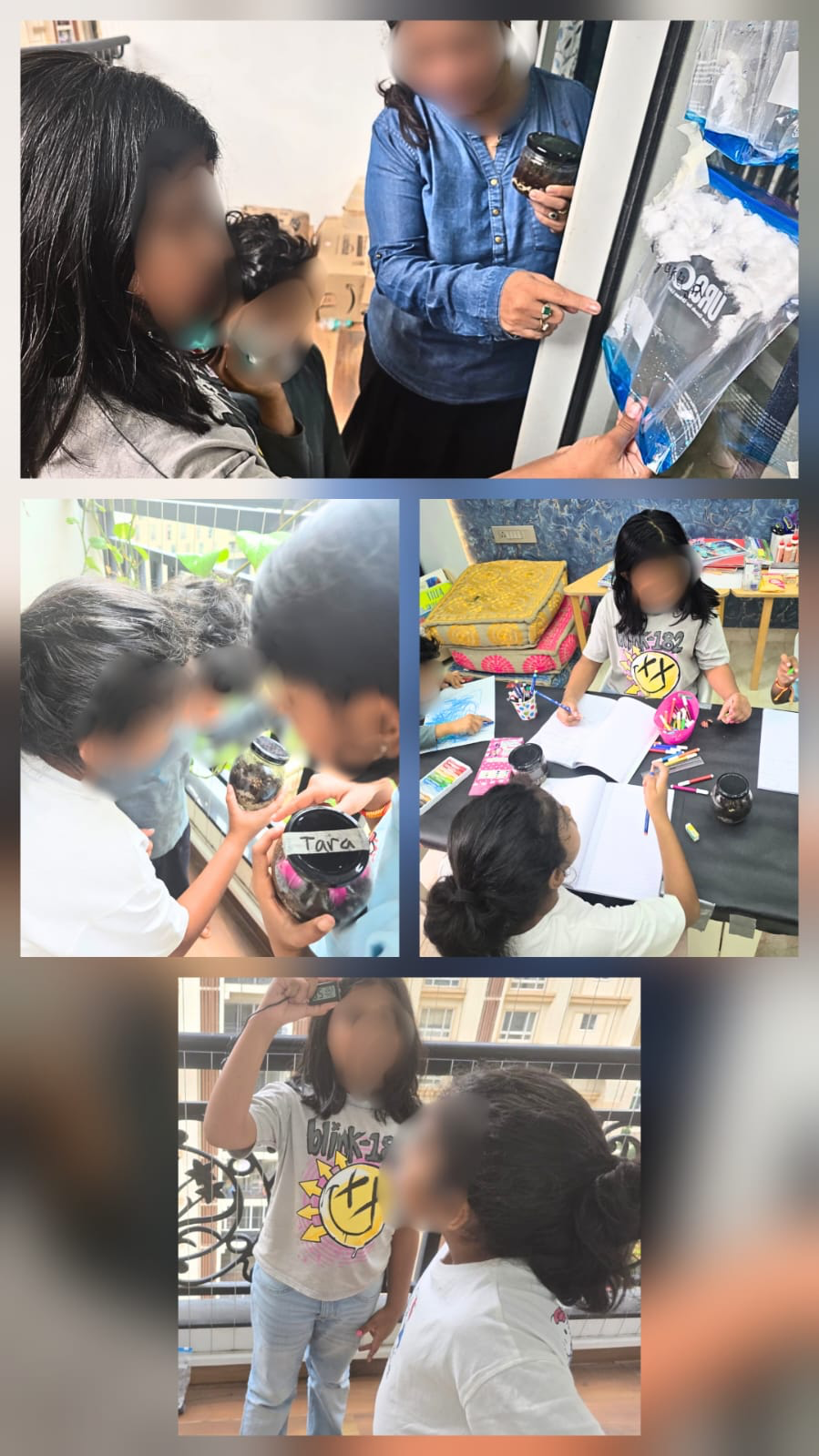
The children began by revisiting the biodome and water cycle in a bag that they had made the previous week. They also reflected on Havishka’s question, “If water is on Earth facing upwards, shouldn’t it float into space?” Before the explanation, the children shared their own ideas. Havishka said that gravity keeps the water on Earth. Samyuktha shared that gravity pulls the water back to the Earth and that the atmosphere protects our planet. Tara explained that gravity is like an invisible force that pulls everything towards the centre of the Earth. Through the discussion, the children understood that gravity keeps water, people, and everything else on Earth from floating into space.
The children then observed their biodomes and water cycle bags after one week and recorded the changes in their journals. They noticed water droplets inside the bag and connected their observations to the stages of the water cycle.
The children used a humidity thermometer to compare the temperature in the washroom, bedroom, and balcony. They noticed that each place had a different temperature because of sunlight, airflow, and the amount of moisture in the air. They learned that humidity is the water vapour present in the air and understood that different places can have different temperatures and humidity levels.
The workshop concluded with a Steam Catcher experiment. The children observed steam changing into tiny water droplets and learned that when water vapour cools, it changes back into liquid water. They connected this process to condensation in the water cycle.
On the following day, the children revised the water cycle through actions and movements. They confidently recalled each stage and then created their own water cycle models using their creativity and imagination.
The younger batch enjoyed a Rain in a Jar experiment. They observed how rain forms inside a cloud and later showed their understanding by drawing the experiment and explaining it in their own simple words.
Krisha & Rudra – 4 years old, Mayra – 6 years old,Tara – 6 years 11 months old
Neev & Yuvaan – 7 years 11 months old Havishka & Samyuktha – 8 years 3 months old
Dear reader,
My work in education includes designing learning ecosystems where students thrive, teachers grow, and schools build lasting cultures of excellence through innovative curriculum, evidence-based practice, and meaningful educational leadership.
Professional development with Ms Niv : Click below to find the teacher and student workshops and trainings I currently offer:
https://docs.google.com/presentation/d/1ypWO8KpVh56vhYqAMH4XoytLRKMXvwpCAfv3l3fryJQ/edit?usp=sharing
3-2-1 Tuesdays with Ms. Niv is a newsletter you can subscribe to and enjoy your learning journey with me.