Nivedita Mukerjee
Education consultancy for parents and schools
The right measure for judging your pre-teen’s academic performance; More or less!

As your child gets to his/her first ‘double digit’ milestone birthday – the big 10, something turns in the attitude of parenting in you. Have you noticed that? All that was cute and cuddly, now looks like a box tied up neatly with a bow of expectations. Of your own. Could be reminiscent of what your family expected from you. Or possibly some of what you expected of yourself. Add to this, what you aspire for your child. So much potential! Alongside these expectations from your child, you also create expectations from yourselves for a new wave of parenting that sweeps over you. Rightly so, for now, the existential nurturing needs that you fulfilled for your child is over taken by the child himself/herself. The child can pretty much take care of all his/her needs. From feeding, bathing to asking and negotiating. Both your and your child’s roles and responsibilities now need to go through an overhaul! Your parenting style needs to move from that of primarily nurturing and stimulating, to providing for wider exposure, higher challenges and connecting-communicating for a deeper relationship.
It is typically around the age of 10, when your child is most likely to be in grade 5, a new sense of independence dawns. Sometimes you will feel that your child is pushing you away. He/she tests the limits that have been set by you over the past years of growing up. What has happened is that your child is changing both physically and emotionally. This has led to significant development in the cognitive as well as social aspects of the child’s personality. The child is now demanding autonomy. Time for you to respect that. However, parental support, supervision, monitoring, tracking performance and growth in various areas assume even greater importance during these pre-adolescent years.
While your child is not a teen yet, he/she is out of his/her childhood. Remember:
- Your child’s pushing you away is nothing personal.
- Keeping small secrets from you is normal.
- Your child will often not respond to your inquiries into his/her routines and about friends.
- Your child expects you to listen but not always comment or advice.
- The child is looking for non-judgmental responses from you.
- Expect that the norms of discipline, school, home-work, family time – all will be re-negotiated.
- To launch themselves to the outside world, they need you as the anchor.
- They want to fit with their friends but they want you to keep them safe
What is it that most children exhibit during these wonderful years of growing out of childhood and becoming an adolescent teen? Over the years of being an educator, I have conducted several sessions on puberty and changes with this age group. Have taught and discussed with them content ranging from lake eutrophication and impact on ecosystem to classification in animal and plant kingdom. From Shakespeare – the bard and Steve Jobs the entrepreneur to Claude Monet – the impressionist. Have travelled with them for days on multiple school trips to a range of destinations, to study history, geography, sciences – all the while understanding each other. I must say, I have enjoyed and learned much about the behaviour of pre-adolescents during these long and intense interactions. What I am sharing below are general characteristics as observed and understood by me. Read this keeping in consideration the understanding that you have of your own child. His/her temperament, factors of home and family, friends in school and neighbourhood, tasks undertaken, maturity level and if there’s any ongoing factor of illness, changes, happenings like birth, death, adoption, marriage etc. – that could potentially put your child either in a state of flux or stability.
These three years are seen as the calm before storm and is actually the best time for both teachers and parents to establish a long lasting connection with the soon to be the belligerent full blown teenager.
The 10 to 12-year old’s behaviour is typically:
- A spectrum. From relaxed and easy-going, to swinging between extremes and settling down, before it all erupts in the teens.
- A talkative, friendly – may sometimes be more self-assertive and border on rude.
- Likes school, is alright with reasonable amount of homework and is good at memorising.
- Is curious, impulsive, interrupts, wiggles and fidgets.
- Enjoys physical activities like swimming, running, climbing, jumping, riding but also tires easily.
- Rebels against you, argues, talk back and name calling is common.
- Is hungry all the time, for food and for experiences.
- Resists tasks that are imposed. Does not care for consequences but has sense of right and wrong so can be reasoned with.
- Shows care for pets and siblings, great age to introduce to community service activities and opportunities to build empathy.
- Enjoys participating in group activities, forming special clubs, presenting skills to peers and competing.
You may want to order yourself a copy of Louise Bates Ames, Frances L. llg and Sidney M Baker’s ‘Your Ten-to Fourteen-Year-Old’. They have presented their observation, consultation and discussion with parents. Loise Bates Ames is also the founder of Gesell Institute of Child Development. You may also want to read Gottman’s book ‘Raising an Emotionally Intelligent Child’.
With all the understanding – of your child’s circumstances and development — should you venture into measuring your pre-teen child’s academic performance.
What should be your method of measuring?
- Standardised tests?
- Personal graphs?
- Individual education plans?
- Profiles of achievements?
- Measuring their co-curricular achievements with academic achievement?
- Personality development with or without academic progress?
Then you also have to answer the following questions :
- How do you wish to track these achievements?
- What should be your response on high/low performance?
- Should you discuss the performance first with the teacher and then with your child or should you do it along with the teacher, or only with your child one on one?
- Should both parents take equal interest and praise/reprimand? Or one of you should take back-seat? Or while one of you measure one kind of performance, the other parent should pursue another?
- How much weightage should you give to the factor of emotional wellbeing of the child vis-à-vis scores in these pre-teen years.
Academic performance is understood to be a measurable outcome of education, vis-à-vis the goals set by the student, teacher or institution and the parent. Most common measure of this achievement is by formative (continuous) assessment or summative (term end test/examinations) assessments. And it’s in this context that you need to argue and ask questions, some of which are listed above. There are no clear answers. Even within standardised tests administered to a class group in the same institution, it is argued whether procedural knowledge (skills and concepts) or declarative knowledge (information on content and facts) should be given more significance. IQ tests are scored by students with higher mental ability and is linked with effort and motivation for achievement in very academic environments. Whereas if your child is attending a school which is more flexible on curricular achievements and has plenty of co-curricular activities or even if your home learning environment is semi-structured, your child’s academic achievement would differ. You must factor in the discourse you have with your child on academic achievement, skill development and expectations of behaviour and attitude.
Another key factor that should be included as you measure your child’s academic performance would be your own academic socialisation. Your socio-economic status and that of your friends and family. Research has shown that the quality of relationship that you have with your child will influence the self-efficacy of your child and thus the academic achievement. Do measure your own quality time spent with your child, while judging your child’s academic performance.
Some of the practical ways to judge your child’s academic performance are:
- To keep an eye on the actual grades achieved in various subjects, in the projects, term reports, graded tasks.
- To chart it with dates and keep a chronological record to discuss if the child is consistently maintaining, improving or regressing in grades.
- To keep the big picture in mind that whether the child is able to understand and apply the material which he/she is working upon and is developing a critical thinking and application based information.
- Take an overview of all the subjects being tackled at the grade level and see if some subjects/topics within the subjects are being understood at the level of mastery and whether some concepts are remaining fuzzy. This may have a compounding impact later especially in Language, Mathematics and Sciences.
- Besides Grades and test scores, be cognisant of participation in extracurricular activities as well. The ability to master a variety of skills in sports, arts, literary areas might support your child to have a well-rounded personality. This is great for the development of the child as well as for senior school/college applications.
- Initiatives, volunteering, leadership positions for organising events and activities in school community and/or in the neighbourhood would stand in good stead for your child and should compensate adequately for any lack of grades/scores.
According to studies conducted by Broh, 2002; Mahoney, Larson, Ecce, and Lord, 2005, participation in extracurricular activities have a positive influence on academic performance. Theatre rehearsal, soccer practice, piano lessons – all contribute towards academic achievement. So, when measuring your child’s academic performance, check out how the child is performing/engaging in the co-curricular activities and check if the graph is positive and indicating growth over time. Positive social relationships and behaviour, developing self-esteem, sense of citizenship – all of these are key markers to keep in mind, while measuring your child’s performance.
One of the areas I have spent most time as a K-12 educator are in discussions with parents to understand the changes that their child goes through at various ages. The ages of 10 to 12, as I have mentioned earlier in this article, are the early adolescent ones. They are not children; they are not young adults. The milestones are not as clearly defined as they are in the preschoolers or early primary years. The boys and girls go through many physical changes and not all of it begins or proceeds at the same pace. Along with the physical changes come the cognitive changes. These are less visible but are palpable to an involved parent. During this time, most of the children learn to think, reason and learn. They are able to conceive of ideas and projects in abstraction. They do not need to see or touch them to plan a project with the materials. They also want to experiment with reasoning and consequences. They can understand complicated emotions like for e.g. the fact that you can hide your sadness with a smile on your face. Your child can start anticipating how you will react to something he/she will say or do and is prepared with an explanation or an excuse or even fabricate a cover up story. As a parent, it is expected of you to be more open, show your trust, be less judgmental in your words as well as show it in your actions. It is important that your child should think it alright to tell the truth to you no matter what has happened.
During these years, it is best that you come to terms with the fact that your child is starting to think with more cognitive maturity, which is almost adult-like, even without having gone through the experiences of adulthood. The mental changes that your child is undergoing, is part of the process of ‘identity formation’. During these years, you will feel that your child is going through phases. It is important for them to go through this and struggle through their understanding of self – as a daughter/son, as a friend, as a class mate, as a student, as a team mate, as a sibling etc. These help them to handle their negative emotions like fear, sadness and anxiety in future. You might observe some contradictory habits like taking a long shower while participating in a marathon for a saving water campaign. He/she may spend hours texting with their friends only to criticize a peer for gossip.
You may want to check out some of the following links for further understanding of early adolescence.
http://www.hunter.cuny.edu/socwork/nrcfcpp/pass/learning-circles/four/Early%20adolescence.pdf
http://www.cdc.gov/ncbddd/childdevelopment/positiveparenting/middle2.html
While you are making an effort to understand your child, make yourself better understood by your child as well. How well does your child know you? Find out with this quiz. Make up some more questions and substitute mummy/daddy as applicable. This might encourage your child to make one on themselves as a result of which you will have known some more about your own child!
Here are 20 questions on you for your child (be prepared for the most unexpectedly honest answers that your child might come up with):
- What makes mummy/daddy happy?
- What makes mummy/daddy sad?
- What makes mummy/daddy laugh?
- What does mummy call daddy when she is upset?
- How does daddy call mummy when he is looking for something?
- How old is mummy/daddy?
- How tall is mummy/daddy?
- How did mummy/daddy look when they were children?
- What does mummy/daddy do best?
- What is the most used phrase by mummy/daddy?
- What is the job of mummy/daddy?
- What does mummy/daddy do when you are not home?
- What does mummy/daddy like best about you?
- What is the favourite place for mummy/daddy that you to go?
- How do you know that mummy/daddy love you?
- If you were to name your mummy/daddy (like they did for you), what would it be?
- If your mummy/daddy were characters in a film/cartoon/computer game, what would they be?
- What is the favourite activity for your mummy/daddy?
- What does your mummy/daddy always say to you?
- How does mummy/daddy make you laugh?
It would take you time to understand your pre-adolescent child and then some more to understand your adolescent child in years to come. As an educator and a parent, my advice would be to have patience, spend time to sit and chat without agenda, listen more – advise less, share more – ask less, understand more – judge less. As for academic performance – discuss more – measure less.
Nivedita Mukerjee is a journalist and an educator. She enjoys travelling and writes about travel and education with equal passion. She can be reached at niveditamukerjee10@gmail.com.
A version of this post has also been published here:
https://www.parentcircle.com/article/how-to-measure-your-preteens-academic-performance/
Hi! I am Kyra – A TanaBana Story Book

Hi! I am Kyra, is the second one in the series of TanaBana. It is free for you to download Hi! I am Kyra (Click to download the PDF) on a device of your choice.
TanaBana, means warp and weft of a weave, in the Hindi language. And that’s what it is. A story woven with the ‘Tana‘ of ideas, and the ‘Bana‘ of pictures from everyday events that happen in a child’s life. The idea of this series emerged, during a conversation amongst a couple of us friends who share the passion of story, of education. The precious Nano interactions that happen every day amongst young children and between a child and the adult in their environment have the possibility of making a deep and meaningful impact on the mind of a growing child.
We would love to hear your and your child’s feedback on any aspect of the book. Let us know what you liked and what we can do better. We hope you and your child enjoy reading it as much as the TanaBana team enjoyed weaving it.
For those of you who missed out on the first one, I can see a rainbow, here’s the link again I can see a rainbow (Click to download PDF). Enjoy!
Things to consider before enrolling your child into an IIT Coaching program
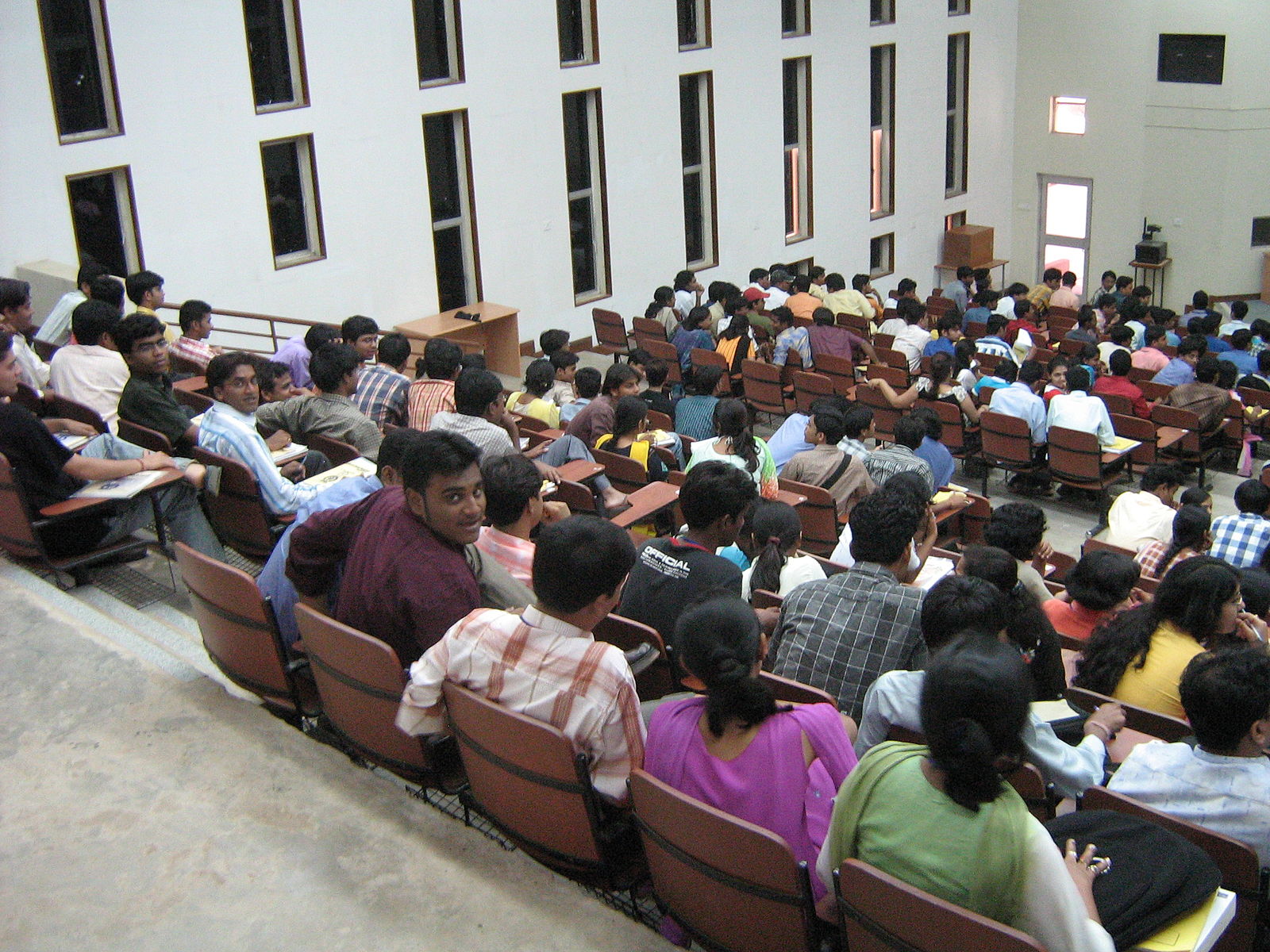
What should you consider before enrolling your child into IIT coaching? The question triggers thoughts in many directions. Is my child interested? Is my child capable? Where can I enrol him/her? Which is the best? What should I look for when I am choosing an institute? Do I send my child out of town? Can my child manage class 11 and 12 along with this preparation? Can after-school tuition replace coaching? Can the child prepare on his/her own? Can I afford it? Is it worth it? What should I do now?
Just for your information, these exams are conducted by the CBSE board. The NCERT books are heavily recommended for the preparation of both JEE (Engineering entrance) and NEET (medical entrance). You may want to keep this in consideration as your child enters the middle school years, if your child wants to consider working towards these entrance examinations over the years. Most definitely in the years of class 9 to 12.
I asked four of my friends what they had to say about their experience of putting their children through the fabled IIT entrance exam.
What they had to say:
- “I had to go through many things before taking a final decision. Adapting to the new place by the child, atmosphere of the institute, teaching quality, behaviour of the teachers were important factors for my decision” says Sanjay Jogai, whose son is currently enrolled in a well-known institute in Chandigarh. His son will write the exam in 2018 but this is a journey, he says, that they are undertaking as a family. Supporting him emotionally, talking to him daily so he does not feel homesick, and motivating him without putting pressure on performance, are things they have had to learn.
- “Before choosing a class, you have to make sure that the child is not interested in just getting marks but also keen to understand concepts. I was very happy with my choice of the coaching institute. They have experienced teachers. That was our main criteria. However, the top three or four batches usually have the good teachers allocated but the rest of the batches are purely to make money” says Seema Raj, whose son attended a well-known institute in Kota. He had been to a coaching institute in Hyderabad while in grade 11 but the family was dissatisfied with its quality. Undeterred, the family moved to Kota to enrol him in a better institute. The risk paid off; Seema’s son was admitted to IIT. He is currently pursuing an MS in computer science from Ohio University. Seema adds that for her, feedback from students who had been to the institute played an important role. She insists that it is key to ensure that the child is really interested in the field they are applying to study. Children who enrol purely because of parental pressure are unlikely to succeed.
- Another parent, Dr. Sunita Vashishtha, expresses that in principle, she is against the idea of coaching institutes, despite their importance to the IIT entrance race. More thought should be given to reducing our reliance on these institutes. Echoing Seema’s sentiments, she says that even students who barely manage their school examinations are being forced into these institutes. The institutes charge a hefty fee in return for which parents can absolve themselves of responsibility. In reality, the children gain an opportunity to move out of the house and away from continuous parental pressure, spending time unwillingly and unproductively at the institute.
- Sonali Shirodkar, a parent from Mumbai, whose son attended a highly sought-after institute, says that your choice must hinge on faculty. They should be knowledgeable, experienced, interact well with students, and most importantly, should have passed the test themselves. Location and commute time is also important. How fees are paid is a factor; flexibility with instalments saves a lot of trouble if classes need to be discontinued for any reason. Many institutes do not offer any refunds. An interesting consideration was that since the classes continue through the summer, most classrooms are air-conditioned. However, these considerations for comfort can be undermined by the fact that seating arrangements are often inadequately matched to class sizes. During some classes, Sonali’s son had one leg out and the other inside the desk for the entire hour of the class!
Some parents mention that it is imperative to check references with families of ex-students for authenticating the institute’s claims. Institutes are notorious for paying toppers and other entrants with no connection to the institute to be able to put their name up on their marketing collaterals, hoardings etc. to enhance their saleability.
Most established coaching institutes offer a variety of courses.
Courses can be of the following configurations:
- A two-year course for students of grade 11, who would like to prepare over two years, allowing time for their school syllabus simultaneously.
- A one-year course for students of class 12, as a compact high-intensity preparation, alongside preparation for their class 12 finals.
- A short-term course for about 4 months, which supplements preparation for just Maths, Physics, and Chemistry.
- A one-year full-time course for students attempting (or re-attempting) the exam after they have completed class 12.
- Distance and online learning courses delivered through booklets, question banks, mock tests, video dispatches as SD cards etc. for lectures and so forth. These are aimed towards students who wish to prepare from their own homes, and/or wish to attend a specific coaching institute that is too distant for commuting. This option is also useful for NRI students.
Seems like a lot of trouble. Do I even need an institute?
Coaching comes with a price, and no student loans are available for it. For most, this is a serious amount of money. Given the immense demand, coaching classes are “one-size-fits-all”. Teachers cannot attend to each student individually. Ultimately, it is the child who needs to put in the effort.
Cracking the IIT entrance exam is a dream for many students and their parents. It is arguably one of the world’s toughest exams. Can it be cracked without coaching? Many do just that: just about half of all entrants, in fact. Nonetheless, coaching is useful if you child needs additional motivation to revise, practice and keep to a schedule.
There are some clear advantages to coaching.
- Healthy competitive interaction with a large group of students.
- Scheduled revisions and practice.
- A current syllabus, relevant to the year of examination, a distinct advantage over independent tutors or self-study as it may not be easily accessible.
- Study material, timetable, conceptual clarifications, and repetition of key concepts, ensuring full coverage of the material.
There are several well-known institutes:
http://www.embibe.com/100marks/jee-main-and-advanced-list-of-best-coaching-institutes/
https://www.toppr.com/bytes/top-10-coaching-institutes/
http://www.indiaeducation.net/top_colleges/coaching/engineering.aspx
http://www.kshitij-iitjee.com/blog/jee-coaching-institutes-in-india-with-remarkable-records
Which is the best? The answer is, simply, the one that most suits your needs.
Here are some pointers to help finalise the one for you:
- Reference check the coaching center. This is the topmost priority. Ask for the yearly enrolment and success rate. Talk to ex-students and ask whether the coaching added reasonable value.
- Check the qualifications of the lecturers and the ratio of permanent to visiting faculty. Ask for a list of the faculty, the exact status of their affiliation, and their experience with the exam. Some institutes hold open days to showcase their faculty and demonstrate lectures. Ask faculty how many years they have worked in IIT coaching and whether they have themselves attempted/passed the examination. Some institutes have ex-IIT’ans teaching various modules.
- Consider the fee structure, instalment provisions, scholarship programs, discounts offered and refund system. Fees vary widely and can range from 50,000 per year to 2 lakhs, sometimes higher. To justify these fees, some institutes offer various “special” facilities such as canteens, libraries etc. However, your focus needs to remain on the quality and track record of the course. Some institutes hold exams to award competitive, merit-based fee discounts, and/or to batch students by ability. Some centres accept instalments, and others offer a partial refund when dropping out depending on attendance.
- Inspect the comfort and seating provisions in classrooms. This is important for your child’s ability to concentrate. The prospect of sitting in a dingy/hot/cold/overcrowded classroom for 4 to 5 hours a day is absolutely mortifying.
- Consider the commute. Timing can be tricky if your child is attending school simultaneously — as these hours add to a regular school day, allow time for rest and recreation.
Additionally, look for:
- Study material offered to each student
- Reference material available in the institute’s library
- Testing frequency
- Methodology to monitor student performance
- Communication by the institute and its faculty with parents
- Timing options
- Criteria for grouping students
- Protocol for the institute to ensure they have incorporated the changes regularly introduced in the examinations, from negative marking, comprehension type questions, Higher Order Thinking Skills, New Question Banks for IQ tests etc.
Once enrolled
Ensure the wellbeing of your child. Discuss what is important. You want the best for the child. Success will be neither achieved nor enjoyed if it comes at the cost of emotional or physical comfort.
Some tips from a school psychologist for aspirants:
- Get a good night’s sleep, 7 to 8 hours every day. Do it at the same time every day. A regular routine facilitates both the sleep and study schedule and you will feel more in control of your life.
- Exercise daily for at least 20 to 30 minutes, whether playing a game with friends, or running/cycling/swimming, or even just stretching with yoga and light push-ups. Exercise aids concentration for the rest of the day.
- Spend some time socialising with friends. Those who are fun and studious help those who are stressed and struggling with studies. This will make you feel good about yourself, and explaining concepts to others gives clarity.
- Prepare regularly, systematically, and cumulatively, instead of waiting until just before tests or examinations.
- You know yourself best, strengths and weaknesses, so be honest to yourself when creating a realistic timetable. Not adhering to your own timetable or procrastinating creates guilt, and the guilt – conscious mind blocks the channels to performance that you are capable of.
Your child will be under a lot of pressure, self-induced, or brought on by their teachers, society, peers, and family. According to Vinita Shah, a career counsellor for the last 13 years, all those around the child should know how to handle this pressure with understanding. Pressure, poorly tackled, can have a lasting negative impact on all concerned. The expectations and dynamics of the whole system surrounding the child should be managed in a balanced manner.
In conclusion:
Granted, getting into IIT is a dream for many, but not getting through should not be regarded as evidence of failure or ineptitude for either child or parent. Such negative thinking impacts self-esteem. IIT is not equal to success. What is success? For parents and children, these are enlightening discussions to be had.
Our adolescents need career counselling, not mere guidance. Emotional support and a rational decision-making process are both essential. A child should be constantly supported through this acute and arduous journey.
According to Prof. Ashok Mishra, ( ex-IITian himself, Ex Dean of IIT Bombay (2004-2008), currently chairman of JEE main and chairperson BoG IIT Roorkee), coaching institutes are serving a purpose of building competency and filling up the lacunae created by inadequacies of the school system. It’s a business borne out of incompetency of the primary service – that of schools. In the report to MHRD on the JEE system, the committee headed by him has made several recommendations. Here’s the link to the complete report:
An excerpt from the report:
The current coaching is a very lucrative ‘industry’. As mentioned earlier, it has revenues of approximately Rs. 24,000 crores per year. However, it seems to fill a void – the absence of good teaching in schools – and does it effectively enough to make lots of money also. It is not always mindless profit, indeed at least some of the Coaching Institutions offer ‘scholarships’ for bright students who can’t afford them otherwise. There are still three objections. · The first is philosophical (yet important). The purpose of education is refinement of the mind not passing an entrance examination. · The second concerns the fact that ‘all work and no play’ makes a plus 12 grade student a dull individual with less involvement in activities other than studies. · The third is that students are forced to waste a lot time commuting in order to avail the benefit of ‘good’ coaching.
As an educator, parent and writer, I think and write about the wellbeing of school age children. Do share your views on this post and follow my blog for more if this space interests you.
A version of this article has been published here https://www.parentcircle.com/article/iit-entrance-coaching-points-to-ponder/
An open letter to fellow educators. Happy Children’s Day!

Dear fellow educators,
14th November was introduced in our country to celebrate and emphasize the importance of children in society and nation building. Happy Children’s Day! It’s time to let them play.
In my years of training, learning and working as an educator, I have heard and read very often: Let the children play. Teach them to be happy. Teach them to respect themselves and others. Give them time to be friends and socialize. To grow as human beings. I believe that all of us as parents and educators, wish to provide for these in our children’s lives. Yet, what is it that we do by design to make time for their leisure during the most crucial years of their journey? How does the ecosystem of school, home and society work towards providing this time for play? Let’s do the math for the hours in a day in the life of a school student. Give or take some minutes, this is what it typically looks like.
- 2 hours to get ready and commute to school
- 7 hours in school
- 2 hour to get home and refresh
- 1 to 3 hours for homework/test preparation/project work
- 1 hour for additional class (creative arts/sports/subject tuitions)
This makes for a gruelling 13 to 15-hour day for a K-12 student. Week after week. On Weekends, there is often make-up class in school, weekend homework or additional prep for test/exam that would be coming up in the following week. On an average, a student spends one to 3 hours a day on homework and school related assignments. Homework has entered into our teaching/parenting conversations… don’t forget your homework tomorrow or else… says the teacher. Do your homework before you go out to play… says the parent. Over the last 100 years, homework has become entrenched in a student’s life.
At one time, rather than diagnosing children with various attention deficit disorders, paediatricians would prescribe more outdoor exercise. I remember, during the time my grandmother was a head mistress in a primary school, she would often come home and talk about how she sent the fidgety ones out running in the school grounds in between the periods! There were discussions on elimination of homework and periodicity of tests for all students under 15 as it stressed them. That was the age when they would go for Matriculation exam – as 10th Grade exit. This is for the years before Intermediate college/ PUC or 11th/12thin school. The cold war made the crisis of homework deeper with assumption that Russian children were smarter, working harder and achieving more in the school. The opinion which was swinging away from homework, swung back and abolishing or limiting homework thought process was overturned. Over the years, homework was looked at taking over outdoor play, creativity and over all social development.
The National Education Association issued this statement in 1966:
It is generally recommended (a) that children in the early elementary school have no homework specifically assigned by the teacher; (b) that limited amounts of homework—not more than an hour a day—be introduced during the upper elementary school and junior high years; (c) that homework be limited to four nights a week; and (d) that in secondary school no more than one and a half hours a night be expected. (In Wildman, 1968, p. 204)
However, through the years, the swing continued on thoughts of what was to be considered good homework and what was bad homework; what was good enough at what age and so forth. For more on the beliefs, moralistic views, puritan work ethic, behaviourism and the cultural stress on performance, here’s a link to an article.
http://www.ascd.org/publications/books/108071/chapters/The-Cult(ure)-of-Homework.aspx
Here’s a list that I tweeted a couple of weeks ago of what possibilities open up when homework does not call dibs on the student’s time.
nivedita mukerjee @nmukerjee1 Oct 26
31 Things Your Kids Should Be Doing Instead of Homework http://www.parent.co/31-things-your-kids-should-be-doing-instead-of-homework/?utm_source=sumome&utm_medium=twitter&utm_campaign=sumome_share …
There’s no arguing that all children need play time, down time and family time. However most of that is taken up by homework time! on weekdays and weekends. What do the best in education system – the Finnish schools have to say about this?
Click on this link for a glimpse into that:
Here’s your 20 question quiz on what you think Homework is. Say True or False.
- It is a necessity.
- It takes all day.
- It lets children work at their own pace, without peer pressure.
- It teaches them responsibility and organization skills.
- It allows time to study for tests and go over class work.
- It is necessary in elementary school.
- It is necessary in primary school.
- It is necessary in middle and high school.
- It shows what an individual student knows not what the next student knows.
- It helps to drill the concepts home.
- It helps in learning habits.
- It helps in practice leading to perfection.
- It helps the student to retain knowledge.
- It has to be fun and interesting.
- It needs to be challenging.
- It should be banned.
- It is a hassle for student and teacher to work on and to grade.
- It comes in way of extracurricular activities.
- It leads to late nights resulting in lack of adequate sleep.
- It causes stress.
As an educator when you plan a homework assignment, what is your objective? How much time should they need to spend on the homework? Do you share that expectation with your students? How much homework is just the right amount for a particular grade? When does it stop being meaningful? The 10-minute rule, which calls for 10 minutes of homework per day per grade is endorsed by some schools. You may want to think about yours.
Yours truly,
Nivedita Mukerjee
A fourth generation educator, aspiring to visit schools in Finland and wishes that teachers and parents question themselves and their school’s policy on homework.
Choosing the best preschool

Choosing the best preschool: how does one do it? This is the biggest question when the time comes to let your child out of your own care.
Over the last several years, I have personally met thousands of parents on this journey. I have had the privilege of understanding their needs and concerns and discussing suitable preschool choices. November is when most schools begin their admissions process for the next academic session. Announcements are made on the school’s website, on various digital platforms, news paper advertisements, pamphlets, hoardings, or to parents directly by sending out mailers and word of mouth. Additionally, some schools process admissions year-round and enroll students when seats become available.
What should you consider when choosing a preschool? First, you must ask yourself: what do I want for my child? How do I picture my child in a few years? Away from home, in a new environment and with unfamiliar adults, the little one starts a journey of learning and independence. This time of life should be filled with love, laughter and joy. Here is a list of considerations to keep in mind as you venture in search of the best preschool.
Tap into your network. Ask around to form your opinion. What do other parents in your neighborhood, extended family, and workplace know about the preschools their children went to or are currently attending? Record these impressions against the shortlist of preschools you are considering.
Develop an understanding of early childhood care. What makes these years so important in your child’s life? How does ECCE (Early Childhood Care and Education) impact the cognitive development and the social/behavioral development of young children? To read about how various faculties of children are shaped by the environment in which they develop, you may refer to:
- Early Childhood Matters
Evidence from the Effective Pre-school and Primary Education project
Edited by Kathy Sylva, Edward Melhuish, Pam Sammons, Iram Siraj-Blatchford and Brenda Taggart.
- Beyond Quality in Early Childhood Education and Care, Postmodern Perspective
By Gunilla Dahlberg, Peter Moss, and Alan Pence
- Early Childhood Education
By Tina Bruce
Educators like Froebel, Montessori, and Steiner agreed that young children learn best when they are given responsibility. They do not need adults to inspire them. They are self-motivated. They also do not need extrinsic rewards. They enjoy experimenting and learning in the process of making errors and making choices while at play. When children initiate their own tasks, they take agency over their own learning. However, when a child is required to follow a task presented to him/her or is expected to do something by way of instruction, it becomes work. When does intervention in a child’s learning become interference? What is an appropriate level of support, cooperation, and encouragement by an adult, so that the child does not get frustrated and flounder? These are some of the issues that you need to be conscious of when seeking a learning environment for your child.
Visit, visit, visit. Most parents I have come across are intuitive about their child’s needs. Visit the preschools, meet the adults present in the environment and see if you can picture your child there.
Here is an information-gathering checklist for your visits:
- Location
- The preschool needs to be near your house or workplace. If neither of these is close to the preschool you finally zero in on, you may need to move. This is important as young children fall sick often and/or get into small accidents. Most preschools do not have full-fledged sick bays or clinics. It will be your responsibility to pick up and attend to your child when the school notifies you.
- Many children are motion sick, especially in the mornings. A short commute, ideally a walk, is the most comfortable option for going to school every day.
- Examine the route to school for congestion during school timings. Check whether the school has clear access to ambulances or fire engines.
- Fee structure
- Preschool is a 3 to 4-year commitment. Ensure you are comfortable with the fee structure accordingly.
- Check whether the fees include things like admission, refundable, donations, tuition, transport, field trips, meals, uniform, stationery, library, co-curricular activities, extended day-care, etc.
- Consider fee escalations and whether that would happen on an annual basis. How have the escalations been in the past? Is there a proposed structure for escalation?
- Some schools accept fees in installments and that could be monthly/bimonthly/quarterly etc., while some need the entire annual fee upfront. Check for provision for refund in case you have to withdraw your child mid-session.
- After preschool, a reasonable amount of money is needed for grade school admissions, so plan the education budget accordingly.
- Environment
- Opportunities for play – outdoors and indoors
- The preschool must have spaces for active play as regular physical activity supports the development of your child’s gross motor skills.
- Look at the timetable and discuss with the school staff the amount of time your child will get every day to engage in physical activity.
- See if the school has a clean sand pit area, large enough for individual and collaborative play, and look specifically for children engaging in both types of play during your visit.
- How is the play area? Are there additional spaces for running around, cycling, throwing the ball, rings, and Frisbees? All of these are important for motor skills, eye-hand coordination, and fun!
- There should be a few other outdoor play opportunities, e.g., a garden, water play, story corner, floor space and sidewalks to scribble on, construction areas with wooden and/foam and/or plastic blocks, etc. for the children to spend time outside of the classroom engaging with various materials and interacting with each other.
- Classroom set up
- When you visit the school, take a look at classrooms for different age groups and other indoor learning areas.
- Are they well ventilated and with natural light?
- Do they look spacious with respect to class sizes?
- What is the arrangement of furniture in the classroom? Do they face the teacher’s desk and sit side by side in cells and rows or do they face each other while they are working?
- Look at the educational aids available in the classroom. Are they accessible easily to the children? Do they need to ask for them from the teacher? Would the teacher be taking them out periodically and sharing them with the children? Are they enough? Are they to be shared? Is there variety within a particular group of educational aids – as in is there a range of puzzles with varying difficulty within the same classroom?
- Is the curriculum the same for all children in the class? As in are the lesson plans and assessment criteria standardized or customized and what is the evidence of that in the classroom layout?
- Snack/Lunch provision, nap area, toilets, and potty training
- Ask if the school provides snacks and/or lunch and if either or both is optional.
- What are the portions? Are they balanced and nutritious? Is there a pre-meal routine for children, like going to the toilet, hand washing, and sitting around with friends? Do the children get to socialize during meal times? Are teachers there to guide them with table manners and the use of cutlery and crockery?
- What is the provision for meal areas and how is it set up?
- Young children might need a nap during their stay in school if it is more than a few hours. What is the provision for that? Would the school be providing bedding or would you need to send them? What is the provision for ensuring children get their own bedding? Is laundry your responsibility or the school?
- If your child is not potty trained then ask if it is a requirement, as some schools need the child to be completely potty trained before starting school. Some schools will allow children in diapers and train them with you as part of the settling-in process. Find out what role you would play in this process and what supplies you need to provide, such as wet wipes, diapers, change of clothes, additional knickers etc.
- What is the provision for diapering in the toilet – diapering mat/table/tissue/washing up/disposal etc?
- Is the toilet is child friendly, supervised yet privacy is managed? Supervision during toilet visits, cleaning routine for toilets, etc. are some of the matters to be kept in consideration when you inspect the preschool’s restroom area during your scheduled tour or open house.
- When you visit the school, take a look at classrooms for different age groups and other indoor learning areas.
- Opportunities for play – outdoors and indoors
- Faculty
- Ask and understand the educational background and experience of the teachers and other staff that interact with your child.
- Do the classroom teachers have adequate ongoing training and professional development for working with young children and planning for a developmentally appropriate curriculum?
- Consider the staff (teaching and non-teaching) to child ratio for the age groups. This might vary from the toddlers to kindergarten years.
- If it is an inclusive school, there should be teachers who have qualifications for being special educators.
- Find out if the staff is trained for the safety of the children – to handle first aid, CPR and fire drill, and evacuation process.
- During your visit to the center, feel the dynamics between the teachers and the children. You will be able to figure out if they are committed, dedicated, and caring to the program and the children if you spend some time in the school/classroom/ playground spaces of the preschool.
- Educational Philosophy
- Does the school have an inquiry and discovery-based program or is it based on drill and practice skills?
- How much structure and flexibility does a typical school day offer to the child?
- Does the school allow for regular interaction and partnership between school and family for the child?
- How often are parent meetings and feedback sessions scheduled? Are there opportunities for parent-teacher conferences outside the schedule?
- What is the school’s methodology for handling discipline? Are there any behavior rules and consequences, and how are they communicated to the children? Are there charts of rewards like stars, frogs on the log etc. for behavioral guidance or is it an empathy and discussion environment or a mix of both? How do the staff show empathy and acknowledge the children’s emotions that go through ups and downs on any typical day?
- There are a number of popular educational philosophies for preschool, some of them are:
- The Montessori method
- The Reggio Emilia approach
- The Waldorf Approach
- The Bank Street approach
- The High/Scope approach
- The Play-way method (a mix of several approaches)
Know and understand each philosophy, and ask which the school uses.
- Besides the educational philosophies, there are some common early childhood education terms that explain the kind of setting and approach with which the learning environments are set up. They are:
- Child-centered (classroom is set up based on student’s interests and not pre-scheduled topics chosen by teachers)
- Teacher-led (where teachers plan the lessons based on set objectives and schedule)
- Child-led (environment that fosters individualized learning experiences)
- Faith-based (programs that are run through church/madrasas/synagogues/Hindu mutths/missions)
- Co-operative (these are run with parents and families assistance)
- Developmentally appropriate (curriculum and activities are planned for the age group of children in a given program or group)
- Pre-kindergarten (or reception or nursery – used for children between ages 3 and 4 where the program is more structured than toddlers but has less expectations of reading/writing than the Kindergarteners)
- Grade school choice
While choosing a preschool, keep in mind the kind of grade school (especially primary school years, grades 1 to 5) you would like your child to attend. These early years will shape the personality of your child.
If the preschool choice you have made has been that of an inquiry-based discovery curriculum, with choices and open-ended activities, then the grade school should support the same. If the choice has been a skill and practice-based curriculum and a structured environment, then the choice for the primary years could be along the same lines.
Middle and senior school choices can be different from the early and primary years as by then you will better understand your child’s needs. The child would have figured out his/her strengths and interests as well. The choice of school environment will therefore be a combination, in varying ratios, of a) structured/open; b) academic/co-curricular oriented; c) sports oriented d) creative arts oriented; e) competitive/collaborative; f) STEM/liberal arts oriented and so forth. How to choose the best grade school for your child? To answer this question requires a separate post, to follow soon.
The jury on parenting is always out. What defines best is debatable. Please share your thoughts and experiences with preschools as a reply to this post, and help other readers form their opinion and make the best choice for their children. I have left some of the questions raised in this post unanswered. Over time, I will share my professional opinion on these in my Ask Niv series.
I can see a Rainbow – a TanaBana story book

‘TanaBana’ is Hindi for the ‘warp and weft’ of a weave. And that’s what it is: a story woven with the ‘Tana’ of ideas, and the ‘Bana’ of illustrations from everyday events in the life of a child. The idea of this series emerged during a conversation between a couple of friends who share the passion of story, of education and of small interactions that can make a meaningful impact on a growing child’s mind.
I can see a rainbow I can see a rainbow (Click to download PDF) is the first in this series. It is free to download on any device. We would love to hear your and your child’s feedback. Let us know what you liked, and what we can improve, be it narrative, or illustration, or how we’re distributing the book.
We hope you and your child enjoy reading as much as my friends and I have enjoyed weaving!
The PDF is a bit large (around 30MB), because it contains several beautiful, high-resolution illustrations that we couldn’t bear to shrink! So it may take a few minutes to download.
An open letter to fellow citizens of Dylan-dom.

Dear fellow citizens of Dylan-dom,
First of all, congratulations to all of us. Bob Dylan was awarded the 2016 Nobel Prize for Literature “for having created new poetic expressions within the great American song tradition.”
As the news came in of Bob Dylan’s winning the Nobel Prize for redefining the boundaries of literature, the Dylan-dom rejoiced! In choosing him for the world’s highest honour, the Swedish Academy has exemplified a radical behaviour. Or have they?
Immediately, ‘The Argumentative Indian’ in all of us (a phrase that has become a part of our lexicon now, borrowed from Amartya Sen — another Nobel Laureate, who won it for economics) was up and about on social media and chat groups.
“Wow, that’s great no? Bob da… Ki Dileyn…” exclaimed the Bengalis. A play on his name, implying Mr. Bob, you did great! Arguably, most Bengalis are great fans of Bob Dylan’s lyrics and find no dissonance with the choice of the Swedish Academy.
“But Nobel Prize for Literature? How is he in the same league with that of T.S. Eliot? Or Gabriel Garcia Marquez? Or Samuel Beckett?” said a message in one of my chat groups.
“Why not? Is the question because he is a musician?” I said. Mr. Dylan, 75, is the first musician to win the award. And, in choosing him, a musician from the popular genre, the Academy has raised the debate: do song lyrics stand on the same pedestal as poetry? Or novels? Pitchfork and Vice have both run articles questioning the choice of Dylan for the Nobel.
My husband says, “I am a fan of Dylan, but the question did come to my mind… can a Nobel be awarded to a songwriter? We must figure out whether any other musician or songwriter have gotten a Nobel prize in the past. We must analyse it to justify it”. To that conjecture, my son, a data scientist who also sings Dylan, says “but this is essentially a qualitative decision based on the definition and criteria set by the Swedish Academy. It ought to be subjective and thus cannot be quantitatively analysed.” I wondered. And pondered further. And when I think, I seek more information on the matter, I continue to argue, and every so often, I write.
Here’s a paragraph from the official website of the Nobel Prize:
https://www.nobelprize.org/nobel_prizes/themes/literature/espmark/index.html
Nobel’s Guidelines and Their Interpretations:
As guidelines for the distribution of the Literature Prize the Swedish Academy had the general requirement for all the prizes – the candidate should have bestowed “the greatest benefit on mankind” – and the special condition for literature, “in an ideal direction”. Both prescriptions are vague and the second, in particular, was to cause much discussion. What did Nobel actually mean by ideal? In fact, the history of the Literature Prize appears as a series of attempts to interpret an imprecisely worded will. The consecutive phases in that history reflect the changing sensibility of an Academy continuously renewing itself.
Debate on if you wish, for it appears as though debate was hard coded in the definition itself.
While at it, perhaps for the next few days, how about we listen to some more of Dylan and perhaps follow him on social media if you like, as I do.
https://twitter.com/bobdylan?ref_src=twsrc%5Egoogle%7Ctwcamp%5Eserp%7Ctwgr%5Eauthor
https://en.wikipedia.org/wiki/Bob_Dylan
https://www.facebook.com/bobdylan/
Congratulations to one of my favorite poets, Bob Dylan, on a well-deserved Nobel. https://t.co/c9cnANWPCS
— President Obama (@POTUS) October 13, 2016
I retweeted it… I agree with it in letter, spirit and tweet! In 2012, President Obama honored Dylan with the Presidential Medal of Freedom. Dylan was awarded by the Pulitzer Prize jury a special citation in 2008 for “his profound impact on popular muic and American culture, marked by lyrical compositions of extraordinary poetic power.”
Born in Minnesota as Robert Allen Zimmerman, Bob Dylan’s grand parents emigrated from what is now Ukraine and his maternal grand parents came from northeastern Turkey. Growing up in Duluth and then Hibbing, he listened to the blues and country stations on radio. As a teenager, it was mostly rock and roll. As he moved to Minnesota druing his University years, he got into folk music. He changed his name to Bob Dylan in 1960s.
For 25 things that you should know about Bob Dylan to participate as an authentic argumentative Indian, go to: http://www.sfgate.com/music/article/Bob-Dylan-obliges-annoying-fan-in-Berkeley-by-8132776.php#photo-1343528
Also, go on spotify or apple music or gaana.com, enjoy Dylan as he explores the traditions in American song – folk, blues, country, gospel and ofcourse rock and roll. Sometimes jazz and even some Irish folk music. He has toured since the late 1980s and performed with guitar, keyboard and harmonica. Bob Dylan shocked the world of folk music almost 50 years ago, by plugging in his guitar. The puritans of folk music exclaimed. But his enigmatic song writing has continued to confound and engage us unfailingly.
In addressing a question on how he thinks up the lyrics:
“I’ll take a song I know and simply start playing it in my head. That’s the way I meditate. A lot of people will look at a crack on the wall and meditate, or count sheep or angels or money or something, and it’s a proven fact that it’ll help them relax. I don’t meditate on any of that stuff. I meditate on a song.” Said Bob Dylan in 2004.
http://articles.latimes.com/2004/apr/04/entertainment/ca-dylan04/5
An all time favourite and one of the first on recall is his “Blowing in the wind” song that was written and released in around 1962/63 as a single and In 1994, the song was inducted into the Grammy Hall of Fame. In 2004, it was ranked number 14 on Rolling Stone magazine’s list of the “500 greatest songs of all times.” The song is said to have been originally written in two verses. After its first public performance around 1962, he added the middle verse to the song. He is said to have been inspired from a passage from the autobiography of Woodie Gurthrie, who was his musical idol, in which he had compared his political sensibility to newspapers blowing in the winds of New York City streets and alleys. It is understood that his reading of it had been a major turning point in his intellectual and political development. He was in his 20s then. When asked later about it in one of his interviews, he said, “I wrote ‘Blowin’ in the Wind’ in 10 minutes, just put words to an old spiritual, probably something I learned from Carter Family records. That’s the folk music tradition. You use what’s been handed down.
Here’s a curated list of Bob Dylan’s songs by Saeed Ahmed, CNN for you to enjoy.
http://edition.cnn.com/2016/10/13/entertainment/dylan-songs-history-trnd/
and a top ten list from youtube:
https://www.youtube.com/watch?v=BG8y0rRYjEI
And my personal favourite: Knockin’ on Heavens Door. A song that my son and my nieces sang when they were younger and also something that my son taught some of the primary school kids at my school a few years ago. Heylin, who wrote Dylan’s biography, described the song as “an exercise in splendid simplicity.” Many other artists have played the cover versions of it. One of which is Eric Clapton’s, to which I am quite partial.
Just last month, September 2016, a 36-CD set by Legacy Recordings was announced that covers the recordings starting with the concert in Sydney, Australia and ends with the one at the Royal Albert Hall, London. Then there’s this list of books that might interest you. Written in 1966, Tarantula is a collection of poems and prose that evokes the turbulence of the times in which it was written, and gives a unique insight into Dylan’s creative word & Dylan Goes Electric which talks about the insight of Woodstock festivals and the music movement of sixties. There’s The Lyrics: Since 1962 by him and the picture books, If Not For You and If Dogs Run Free.
Nobel prize or otherwise, we celebrate you. The “little red notebook,” supposedly stolen from you and circulated among collectors, now held at the Morgan Library and Museum in New York with severely restricted access, is hoped to be seen by us citizens from the Dylan-dom sometime. And amidst these treasures, even as Bob Dylan the man remains an enigma for us, here’s a peek into the secret archive:
http://www.nytimes.com/2016/03/06/arts/music/bob-dylans-secret-archive.html
Yours truly,
Nivedita Mukerjee
Citizen fan from the Dylan-dom
Bullying in school age children-Part 3
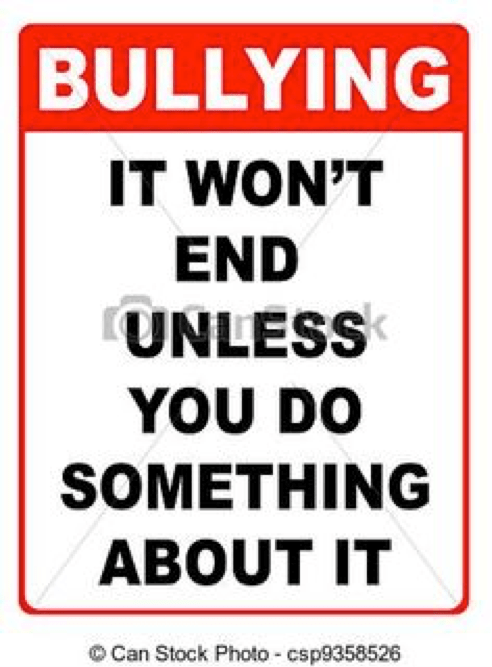
“…making fun of the marginalized and the minority is not comedy, it is bullying and I will contest it.” – Said actor Tanishtha Chatterjee of Parched, a recently released film after a television show made fun of her dark skin. I couldn’t agree more. Bullying won’t end unless we stop it!
Note : Continuing from the past couple of posts in the series, that tackled the understanding of bullying and went on to share facts on the act of bullying so as to be able to prevent it, here’s part 3 of the series where I will share my thoughts on what are the possible warning signs of being victim of bullying and how to deal with the same.
Some of the readers of this blog have shared that they strongly feel that bullies learn from their parents/other adults around them. That they know of some adults who behave as bullies and they can see the impact of this learned behavior on how their children behave with others. That’s right! Children do learn all the time from adult’s actions. When they see the adults around them yelling at others, having a show down, overpowering other adults or even oftentimes by being inattentive or unsympathetic or excluding/ignoring, their children’s views on how to manage stress and conflict form. They start to mimic the adult behavior of how to treat their friends, colleagues and families.
To prevent oneself and children from going down this path, it is suggested that both adults and children must take part in activities, interests and hobbies they like. Volunteer out of school/work space, play sports, join a choir. Children can join a school club with students of common interest just as adults can join a common interest group. This consistently builds confidence and friendships to help protect both children and adults (as we all know, adults bully and get bullied too. One of the readers of this blog exclaimed in her feed back – “but Ms Niv! What about adults bullying adults! What do we do about that?” Pretty much the same I guess. Understand, prevent, walk away or stand up and deal!)
Bullying has severe impact on the emotional and physical safety of young children at school. This in turn impacts their relationship with peers, teachers, parents and adults in their lives. The negativity severely impacts their ability to learn and perform with expected ease and proficiency in school. The best way to address this is by recognizing bullying and stopping it before it starts. For that, school staff and parents must be aware of this and assess student behavior closely, to make schools safer. It is also important to engage parents in this assessment and understanding so as to send out a message of zero tolerance for bullying. Awareness campaigns, discussion forums, school safety committee, buddy support systems can be some of the ways that this issue is proactively tackled.
So what should you look out for? Here are some indicators of bullying:
- Visible, physical injuries on the body of the child that the child is avoiding telling about or is covering up by clothes/makeup.
- Child complains of headaches, stomachaches, complains/fakes sickness or nausea.
- Sudden change in eating habits – eating too less or too much, skipping meals or craving for just one kind of food.
- Shows signs of nervous ness, anxiety, and fear for inexplicable reasons.
- Lack of interest in school, schoolwork, homework, group projects and decline in academic performance.
- Child talks about harming himself or running away from home or changing to another school.
Schools are now creating code of conduct, school-wide rules and an escalation process for reporting bullying, with the clear understanding amongst all that bullying is not acceptable. In parallel, establishing a culture of tolerance, acceptance of differences and mutual respect in assemblies, staff meetings and parent teacher meetings. These cohesive efforts go a long way towards reiterating the school’s philosophy of positive social interactions and inclusiveness.
Just as educating the community on bullying has a role in stopping bullying, the response time to bullying also goes a long way to bring home the message. When we as adults respond consistently and instantly to the behavior, the communication is clear. Stop it on the spot! First. Or if the child has reached out to you, then start with finding out what happened and figure out how best to take it from there. The next step, most important to my mind as a parent and educator is to support both – the bullied and the bully. All children, whether they are the victims or the bullies are affected by the incident. This would ensure that the bullying would not continue and the effect would be minimum on the children concerned.
The children and adults both have to know how to be more than a bystander. When we know what bullying is, we are able to better identify, deal with it, stand up to it and report or walk away. We need to give them the skills of how to do all of these. We as parents and educators need to give them time to talk by keeping the lines of communications open. Even a 15 minutes a day conversation about their day and feelings can reassure them that they can talk to us. Some of the conversation starters (that you must be already doing just continue to do more of it, consistently and calmly, besides regularly engaging with school and school activities) could be :
- How was your lunchtime today? Who do you sit with usually? What did you talk about?
- How was your ride on school bus?
- What do you like best about yourself? (and not your subject, not your teacher, not your school)
- Read class newsletters and school communications with your child, talk about these at home, and make conversations around it.
- Meet the class teachers, school counselor, other parents of the school and go to school events regularly.
- Share with the child who makes yourself happy, safe and loved and ask the child to share the same with you.
- Discuss with your child some of these in some form or the other, at appropriate time (not more than one or two at the same time):
- Do you sometimes have fights with your friends? What do you do when you fight? How do you feel afterwards?
- Do you enjoy your time with your friends?
- Do you have one or few best friends? Tell me about them.
- Do you have some one or some children who are not your friends and you are ok to not talk/play with them?
- Do your friends like you when you are rude? Or bossy? Or teasing others? Do you like doing it?
- When at school, greet the teachers, the support staff, the bus driver.
During these conversations, do discuss with your child, the difference between conflict and bullying. Disagreements, differences and conflicts are normal. These situations get resolved over time. When it is a matter going back and forth, when it is he said/ she said, it is conflict. The emotions felt – of anger and hurt are similar or equal. However, when it troubles the child, hurts and/or saddens the child several times, it is intentional and targeted to hurt, it is bullying.
Sharing some resources here that you might find useful to clarify the difference between conflict and bullying with your child:
http://www.erasebullying.ca/bullying/bullying-vs.php
While we made the journey through understanding, preventing and dealing with bullying in school age children, I am sure there is so much more to be said and understood about this vast and complex issue. However, one thing that is clear to all of us is that it needs to be stopped. Please send in your views and concerns, thoughts and queries. Especially situations that according to you were incidences of bullying and how it was handled. Or was it? How else could it have been handled differently and/or better? Please exclude or change names as necessary to maintain confidentiality. Sharing your experiences will help other readers as well to continue to keep focus on this aspect of our growing children. And thus the impact they will have on the society around them as they grow into responsible adults. Empathy and sensitivity is the need of both studentship and citizenship.
P.S. I have not tackled cyber bullying as yet in any of these 3 articles. Not because it is not important or not prevalent or that it is completely understood. But I will do so soon as part of another series, on digital citizenship.
https://about.me/niveditamukerjee
Bullying in school age children: Part 2

Note: The response to Part 1 has been so encouraging that I decided to publish the Part 2 of the series incorporating some of the reactions I received to Part 1 (which was on understanding what is bullying). This article will enhance our understanding and help us tackle some aspects of preventing it from happening at all.
I will begin this part of the series by picking up from what some of the readers of this blog have shared. What construes an act of bullying? What really are the qualifiers of an act or a person that it can be understood as that of bullying and a bully? One thing that is clear from our definition of Bullying in Part 1 was that there is an imbalance of power. That, the people who bully have some sort of unhinged power over those they bully.
Sharing a video here (about 2.16 minutes) as a starter. You may want to watch the 98 minute documentary Bully (PG13), directed by American director Lee Hirsch.
http://m.imdb.com/title/tt1682181/
You may also consider discussing the topic of bullying before and after watching movies like : Billy Elliot, The Fat Boy Chronicles, Ben 10 Alien Force, Cyberbully, Hercules, Jimmy Neutron, Justice League Unlimited, Spy Kids, The War and Bully, The Avengers. The 2015 film – A Girl Like Her, with teenage girls, is running on NetFlix now and has been shared by one of the readers of this blog as yet another film that one could watch for evoking strong emotions followed by discussions.
October is declared in America as the National Bullying Prevention Month. Parents and schools in various parts of the world are grappling with this and making efforts to prevent and stop bullying by advocacy and awareness. Today’s PTI news item is in all the news papers mentioning that actress Kate Winslet was bullied for being overweight through her school years. http://www.ptinews.com/news/7904110_Kate-Winslet-was-bullied-for-being-chubby- In Bangalore, a community support page for the victims of bullying was started this July and is actively sharing information to stop bullying –https://www.facebook.com/bullying.is.evil/
Here are some facts that you might want to keep in mind while defining the act or the person:
Fact no. 1 – Bullies usually pick on those who have less of social power (peer), psychological power (knowledge and potential of below the belt hurting capability) and of course physical power (in size and/or strength, training/swiftness).
Fact no. 2 – Often enough, people who bully, have suffered the same at some point in time i.e. they have themselves been victim of bullying.
Fact no. 3 – Sometimes, the people who are bullies and have been bullied, suffer with depression and anxiety. More than if they were only bullies or only victims of bullying. These individuals might need more help and counseling as they are likely to swing in their behavior from delinquency to risqué.
Fact no. 4 – Actions like spreading rumors, name calling, willfully excluding a child or group of children from a group activity, subjecting another child/ren to an embarrassing situation by creating it themselves or making them embarrass themselves in front of others are forms of social bullying that need to be recognized by students and teachers. As school is the place where it happens most.
Fact no. 5 – It is assumed that most often bullying has a bias for boys. More often than not, physical bullying does happen in boys but social and psychological bullying happens among girls as well. More often, as the girls grow older.
Fact no. 6 – Many children who bully are insecure about some aspect of themselves and as such have a sense of low self-esteem, many of them may have poor social skills and are anxious or depressed. However there are enough instances when bullies are actually popular boys/girls and have positive self-esteem. These children often are boastful of their behavior and wear bullying prowess as a chip on their shoulder.
Fact no. 7 – It is known that the act of bullying usually happens in secluded spaces, when no other student/teacher/parent is around. However, there are many instances when students pay attention, collude and laud act of bullying and the bully him/herself. Often times, the adults in the environment rarely recognize it as bullying even if they are in the vicinity of the act.
Fact no. 8 – Very often adults and children ignore the bullying, assuming that the issue will resolve itself over time. On the contrary, bullying reflects imbalance of power and it repeats itself. Ignoring indicates to the bully that their action and intention can continue without any consequence. Adults and children, both need to stand up and speak up about bullies and bullying to ensure an incident does not become a habit.
We have understood what construes bullying and are working on possible ways of preventing it we should keep in mind that one of the best ways is to equip our children with the information in a manner that they can prevent it on their own. By giving them scenarios and vocabulary. And keeping the channels of communication open at all times. For example, when you read story books dealing with the subject together at leisure or at bed time often enough, they tend to open up dialogue and helps you understand your child’s emotions and situations better.
Here are some references for your home library:
The Sneetches by Dr. Seuss, for all ages.
This deals with the common peer problems of exclusion and prejudice. The Star Belly Sneetches have a star on their bellies to symbolise superiority and prestige, and the reject the Plain belly sort.
Move Over Twerp by Martha Alexander, for grades 1 to 3
The first day that Jeffrey rides the bus to school, older boys shout at the youngster and remove him from his seat in the back of the bus.
What a Wimp, by Carol Carrick, for grades 1 to 5
Barney and his family move from the city to the country where his mom said that people were so friendly. But, he soon becomes the target of Lenny Coots who targets Barney as his easy, smaller and younger victim.
Bully on the Bus, by Carl W. Bosch, for grades 1 to 6
Written in a “ choose your own ending” format, the reader decides what action to take while dealing with a bully. The reader can choose from many alternatives that including ignoring, talking to an adult, confronting the bully, fighting, and reconciling. There are many options and opportunities for excellent discussions with this book.
Check some more of these popular books listed on these sites:
https://www.goodreads.com/shelf/show/bullying
https://www.commonsensemedia.org/lists/books-about-bullying
http://www.parenting.com/blogs/mom-congress/melissa-taylor/best-5-bullying-books-parents
http://www.scholastic.com/parents/resources/book-list/school/books-about-bullying-middle-schoolers
https://about.me/niveditamukerjee
More on bullying, in part -3 when I will be talking about signs of bullying, effects of bullying, talking about and responding to bullying . Please send in your views and concerns, thoughts and queries. Especially situations that according to you were incidences of bullying and how was it handled. Or was it? How else could it have been handled differently and/or better? Please exclude or change names as necessary to maintain confidentiality. I will include it in the next discussion in this AskNiv series on Bullying. You can post your mail id if you want to be notified when it is published.
Bullying in school age children : Part 1

When I started to discuss about writing an article on bullying, the concerns came pouring in from fellow educators and parents of school going children. Not to mention from children themselves. This is not a new issue. Not a unique challenge for schools. Not something each of us has not known in our growing years. However, the proportions it has taken now, take a look at the few of these links below as a sample – I thought of tackling it one step at a time. It does need to be tackled. It does need to be stopped. And for that it needs to be understood.
14 year old leaps to his death after bullying
West Virginia boy 9 kills bullying family
http://www.dailymail.co.uk/news/article-187330/Boy-driven-suicide-bullies.html
Lawsuit alleges pervasive violence in NYC schools
http://www.huffingtonpost.com/news/school-bullying/
As an educator, for any topic that is vast and complex, one which has varied level of understanding and thus tolerance of by children, parents and teachers in different contexts and geographies, I structured the topic of ‘Bullying’ in three parts. That of understanding, preventing and dealing. What else you would like me to include in this series?
What is understood as bullying in schools and what factors lead to becoming a bully or a child at risk of being bullied?
What does it mean?
The dictionary meaning of Bullying, in Hindi, ranges from ‘Badmaash’ to ‘Gunda’ and ‘Dhaunsia’; ‘Harcelement’ to ‘brute’ in French; ‘Acoso’ to ‘abuso’ in Spanish; ‘ Mobbing’ and ‘Drangsalieren’ to ‘Tyrannisieren’ in German… the words range in intensity. However, the common essence is that of unwanted and aggressive behavior.
What does it look like?
Unwanted, aggressive behavior among school aged children that involves a real or perceived power balance. Often, the behavior is repeated. It may be amongst the same set of children or the bully/bullied might change over time. Or, the circle of influence of the bully might expand. Children who are bullied and who bully others may have serious, lasting problems.
How is a situation identified to be that of bullying?
In order for a situation to be considered as that of bullying, besides the behavior to be aggressive, look out for :
(http://www.stopbullying.gov/what-is-bullying/definition/)
A clear indication of bullying is fundamentally to be understood as an imbalance of power. Children who bully are most likely to use either their physical strength, or access to some secret like an embarrassing information, an escapade, a prank that may be considered unpardonable or unacceptable, a rendezvous that is not acceptable to the family/school/peers of the child/ren who is/are being bullied. Sometimes, children who are popular for their attitude or appearance, or are cognitively sharper etc. use this power to control and /or physically and/ or emotionally/ psychologically harm the other child/children. The imbalance of power can change over time and at different situations, with same or different people. Bullies often make threats, spread rumors, physically attack, verbally abuse, form cliques, exclude the other child/ren from a group.
Who bullies and who gets bullied?
There are several factors that can make a child or a group of children bullies or get bullied.
Some of those who are potential targets for being bullied for example are:
- Children who look different from their peers in some way or the other as obese/underweight, short sighted/astigmatism/wear correction or reading glasses, new to class/section, from different socio-economic strata – poorer or richer, studious/smart/nerd/laggard.
- Children who stammer, appear anxious, have poor body image, exhibit low self esteem.
- Children who have few friends, who are less liked, are less popular, belong less to any group in class/school.
- Children who are annoying, unclean, provocative, smelly or antagonise some child/ren for some reason.
- Children who are depressed, come from in-attentive/broken/separated/ busyfamily, or are over chaperoned and monitored, or are not heard or attended to adequately.
Likewise, there are some factors that can create bullies out of some children. Some of those for example are:
- Children who are very close to their peers over years and are constantly pre occupied towards making themselves popular in any which way they can.
- Children who like to dominate, who like to steer conversations, who like to talk but not listen, who want to compete but not collaborate, who do not like to acknowledge contribution or give credits where due.
- Children who are aggressive, get easily frustrated, think less of others, think of themselves as more competent than others, cannot tolerate those who they or others think are more competent than themselves in any way.
- Children who have contempt for rules, have friends who break them, who want to rebel continuously on every matter and also bully others.
- Children who have seen and experienced verbal and/or physical violence as a way of expressing their views and asserting themselves.
https://about.me/niveditamukerjee
More on bullying, in part -2 . Please send in your views and concerns, thoughts and queries. Especially situations that according to you were incidences of bullying and how was it handled. Or was it? How else could it have been handled differently and/or better? Please exclude or change names as necessary to maintain confidentiality. I will include it in the next discussion in this AskNiv series on Bullying. You can post your mail id if you want to be notified when it is published.
 Nivedita Mukerjee