Nivedita Mukerjee
Education consultancy for parents and schools
3-2-1 Tuesdays with Ms Niv

Issue #311, 16th June 2026
Show up, reach out, check in. Connect, connect connect… that is something we need to weave into our parenting and our school/college/university education. Children, adolescents, adults are growing up to be more lonely and alone in this hyperconnected world. How do you teach them what is really important? how to preserve the relationships that are vital to welbeing? how to show that you care?
Seeking understanding instead of agreement, being curious and not judgmental, work together such that it creates more value for each of us and diversify our circles of relationships.
Last few weeks have brought this to the fore for me and my family. We attended weddings in the family, special milestone birthdays of extended family, spectacular choir performance of my son-in-law, Cambridge Pride, walks in the woods and museums, community libraries, watch party of TV shows, movies, musicals with nos 4 to 40 and with ages 20 to 70 ! what a riot of relationships that have been managed by technology. The intersection of humans and technology has been beautiful, something that has only left me enriched as an educator.
So are you asking chat gpt/Claude et al to formulate your two sentence emails? Or are you using your own voice message or a video call? Are you showing up with calendar matching when invited? How are you leveraging your use of tech for human interactions of any/all age groups, friends and/or family?
This is a free newsletter for parents, educators, and students. If you like my content, please subscribe by entering your email address here.
Three Images of the Week
Two Thoughts of the Week
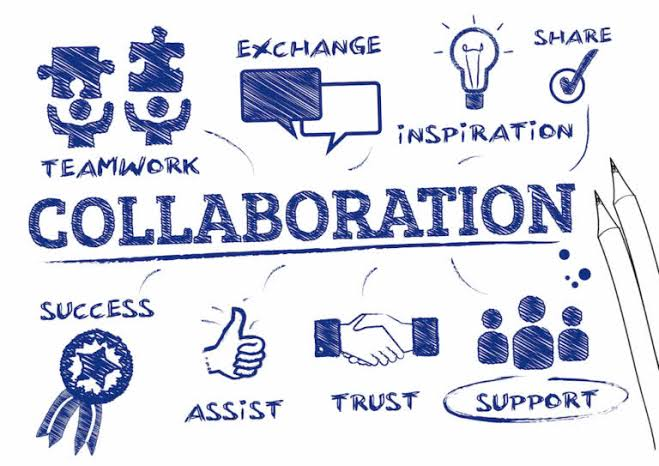
If people work together openly with porous boundaries – that is, if they listen to each other and really talk to each other – then they are bound to trade ideas that are mutual to each other and be influenced by each other. That mutual influence and open system of working create collaboration. Richard Thomas
When you need to innovate, you need collaboration. Marissa Mayer
One Video of the Week
As technology becomes more powerful, our connection to each other is becoming more fragile. In a world where AI can write our messages, respond on our behalf, and simulate interaction, we risk outsourcing the very moments that define how we connect. In this talk, Maya Makarovsky argues that the most important skill in the age of AI is not technical, but rather human. Drawing on global experiences in collaboration and negotiation, she shares a practical playbook to strengthen human connection in an increasingly automated world. Maya Makarovsky is an MIT alum Class of 2025, where she studied Computer Science, Economics, Data Science, and Business Analytics. She currently works as an Associate Consultant at Bain & Company. At MIT, Maya worked across many disciplines and countries, where her experiences in global collaboration and negotiation sparked a passion for bridging technical skills with human connection. She is a recipient of the 2025 Suzanne Berger Award for Future Global Leaders and will return to MIT to pursue a joint MBA and MS in Electrical Engineering and Computer Science through Sloan’s Leaders for Global Operations (LGO) program.
Reading with Ms Meenu: Tip of the week
What does a library mean to me?
A library, to me, is much more than a place filled with books. It is a place of comfort, discovery, learning, and connection. It is a space where people of all ages can come together to read, think, imagine, and grow.
When I think of a library, I think of a welcoming place where everyone belongs. It does not matter how old you are, where you come from, or what stage of life you are in. A library opens its doors to children, students, parents, seniors, newcomers, and lifelong learners. It gives every person the chance to explore knowledge and feel included.
A library is also a place where curiosity begins. A child may walk in looking for one simple story and leave with a new interest in animals, space, art, history, or adventure. A book can open a door to a new world, introduce new ideas, and inspire dreams. In this way, libraries help build imagination and creativity.
For students, a library is a strong support system. It offers books, research materials, quiet study spaces, and guidance from library professionals. It helps students build reading habits, improve their vocabulary, and develop confidence in learning. A good library encourages children not only to read for school, but also to read for joy.
To me, libraries also represent equality. Not everyone has access to books, technology, quiet spaces, or learning resources at home. A library helps bridge that gap. It provides free access to information, digital tools, programs, and community support. This makes the library one of the most important spaces in any community.
Libraries are also places of connection. They bring people together through storytimes, workshops, reading clubs, cultural programs, and community events. They create opportunities for people to share ideas, learn from one another, and feel a sense of belonging.
Most importantly, a library is a place of hope. It reminds us that learning never ends and that every person deserves the opportunity to grow. Whether someone is reading their first picture book, preparing for an exam, searching for a job, or simply looking for a peaceful place to sit, the library is there for them.
To me, a library means possibility. It is a place where stories live, questions are welcomed, and every visitor has the chance to discover something new.
Happy Reading!
For more information please visit: placealibrary.ca
Meenu Gera
Consulting Home and School Library Reading Guide
I Think, I Wonder, I Ask
–Dr. Shreelakshmi Subbaswami, Academic Director, Vijaya School, Hassan, Karnataka
Developing Student Leaders, Not Just Student Representatives
Every year, students step forward to contest student council elections and take on leadership positions across different portfolios. While these roles often involve maintaining discipline, planning events, or assisting teachers, the true potential of a student council goes far beyond these responsibilities.
A student council should have a seat at the table wherever important school decisions are discussed. From shaping the school’s vision to reviewing processes and practices, student voices deserve to be heard and considered; after all, the school is for the students. When students are treated as partners rather than merely implementers, they gain a deeper understanding of not just what decisions are made, but why they are made.
Leadership develops when students are given opportunities to work with their peers on meaningful projects. Whether it is improving reading culture, promoting sustainability initiatives, supporting wellbeing campaigns, mentoring younger students, enhancing school spaces, or gathering student feedback on learning experiences, these projects help students experience leadership in action.
Equally important is creating opportunities for students to work alongside adults. By observing how educators think, plan, communicate, and solve problems, students begin to understand the skills, attitudes, and values that effective leadership requires.
Developing leadership is not something that happens automatically through a badge or a position. Like any area of learning, it requires a structured programme, intentional mentoring, reflection, and practice. The more time we invest in nurturing leadership skills, helping students identify their strengths, and providing authentic opportunities to lead, the more capable, confident, and responsible our young leaders become.
Three questions for you…
- If student council members disappeared for a month, what difference would the school notice?
- How can we intentionally develop student council members into leaders?
- How often do we invite students into conversations about school improvement rather than simply asking them to execute plans?
College advice and career counseling
Building Multiple Pathways to World Class Higher Education in India and Abroad
Over the past few months, many families have reached out to us with questions regarding overseas education, particularly in the United States. While the U.S. continues to be home to some of the world’s leading universities, the current geopolitical environment, evolving immigration policies, visa-related uncertainties, and rising costs have understandably prompted parents to reassess their higher education plans.
At Fermata, we view these developments as a temporary phase rather than a permanent shift. However, we strongly believe that students and families should adopt a diversified university strategy and keep multiple high-quality pathways open.
The good news is that India today offers far more opportunities than ever before. Over the last decade, several modern universities have emerged that provide a world-class undergraduate experience through interdisciplinary learning, liberal arts education, STEM-focused programs, research opportunities, entrepreneurship, leadership development, and global exposure.
We are proud that many students mentored by Fermata have successfully secured admission offers from leading institutions such as Ashoka University, Shiv Nadar University, Vidyashilp University and O.P. Jindal Global University. However, as awareness and demand for these institutions continue to grow, admissions have become significantly more competitive and selective. Strong academic performance alone is no longer sufficient. Universities are increasingly looking for students who demonstrate intellectual curiosity, leadership, initiative, impact, self-awareness, and alignment with their chosen field of study.
Recognizing this shift, Fermata has further strengthened its profile-building and university readiness framework to help students stand out in an increasingly competitive admissions landscape.
Our enhanced approach focuses on helping students:
• Gain clarity on careers, courses, and university pathways
• Build strong academic, extracurricular, leadership, and impact profiles
• Develop research, innovation, entrepreneurship, and community engagement experiences
• Create compelling personal narratives and application strategies
• Prepare for admissions to both Indian and international universitiesIn addition, Fermata has expanded its ecosystem through partnerships and collaborations with international universities that have established a presence in India. These institutions provide students with access to globally recognized education while studying closer to home.
These opportunities include universities such as:
• Illinois Institute of Technology, Chicago
• Victoria University, Australia
• University of Liverpool
• University of Bristol
• University of Aberdeen
• University of YorkThis creates an exciting new category of opportunities for Indian students—combining international curricula, global faculty, industry exposure, and internationally recognized degrees with the convenience and affordability of studying in India.
At Fermata, our objective is not merely to help students gain admission to a university. Our goal is to help them build the competencies, experiences, and mindset required for long-term academic success, career growth, and life readiness.
Reach out to us at harmeet@fermataco.com to start your child’s profile building journey with us.
Dear reader,
I work with the school leadership team as an advisor and collaborate with teachers as a pedagogical trainer. I also help parents as a parenting counselor and regularly engage one-on-one with students as a personal guide and mentor. This weekly newsletter shares what I read, learn, and experience.
Professional development with Ms Niv : Click below to find the teacher and student workshops and trainings I currently offer:
https://docs.google.com/presentation/d/1ypWO8KpVh56vhYqAMH4XoytLRKMXvwpCAfv3l3fryJQ/edit?usp=sharing
3-2-1 Tuesdays with Ms. Niv is a newsletter you can subscribe to and enjoy your learning journey with me.

