Nivedita Mukerjee
Education consultancy for parents and schools
3-2-1 Tuesdays with Ms Niv
Issue #312, 23rd June 2026
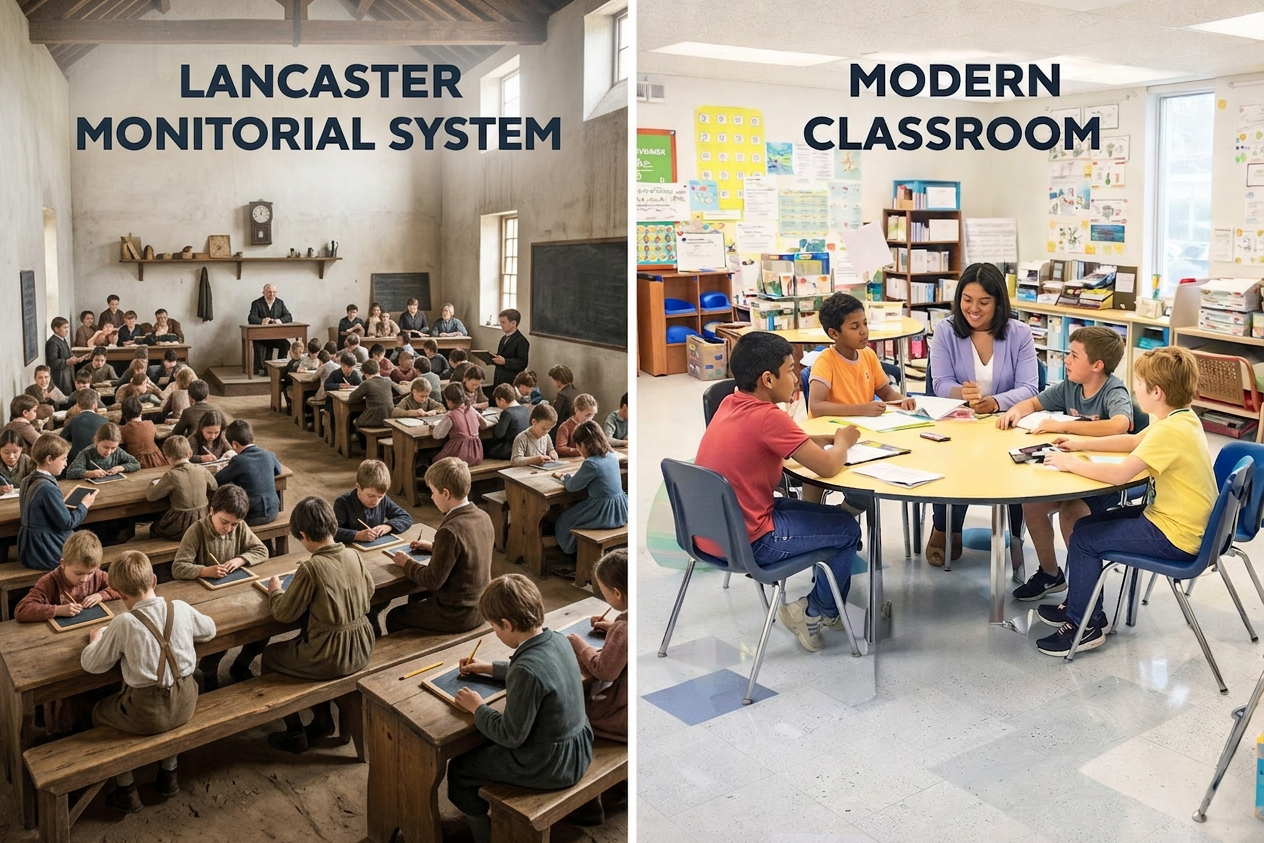
This weekend we went to visit the British Schools Museum. The last Monitorial Schoolroom in the world. Also known as the Madras System or Bell-Lancaster method was an early 19th-century educational approach designed to school hundreds of poor children at minimal cost. A single adult teacher instructed older, advanced students (monitors) who then cascaded that knowledge by teaching small groups of younger pupils.
What was cool about the system? that it could make small groups of learners even in a very large classroom and the education was free, non-denominational. What was not? that all the deliveries to the not so quick learners were by the peers, the motivation was rewards and punishments which were based on shame. What can be done in today’s classrooms when the numbers are still too many for a teacher to give out differentiated learning experiences?
In his landmark 1984 paper, Bloom compared three learning models : Conventional – standard lectures where students are evaluated and graded with no extra help. Mastery Learning: group instruction combined with formative testing, immediate feedback and corrective actions. One-to-One Tutoring: an individualised approach where tutor continuously diagnoses gaps, reteaches material and ensures the student uderstands the concept. He observed that the average student in the mastery learning group scored 1sigma better than the conventional group, and in the tutoring the same student achieved a 2 sigma gain. Which means that a student from the C grade jumps to an A grade equivalent!
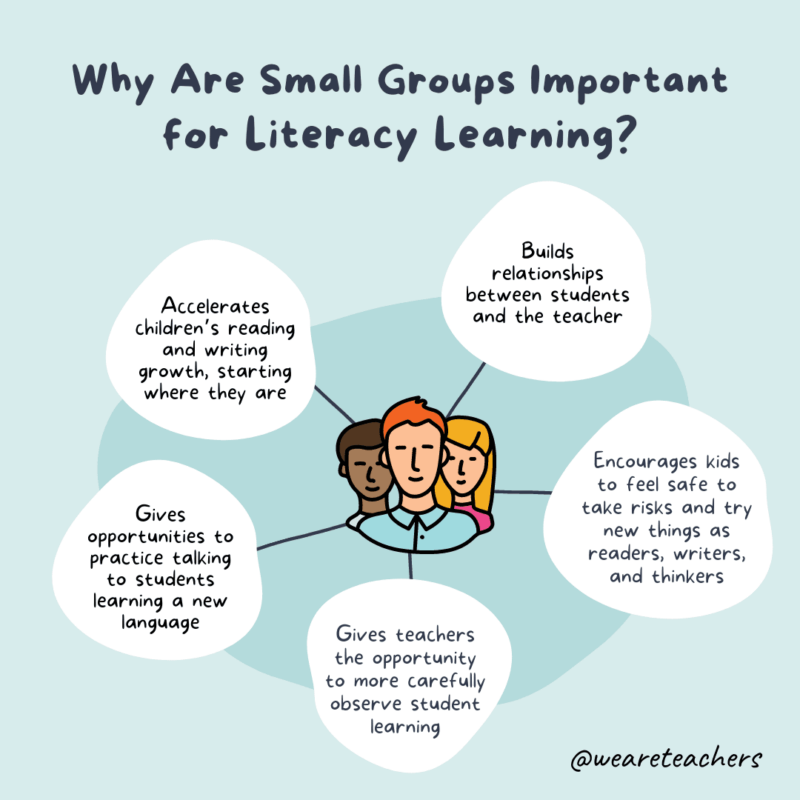
While providing one-to-one tutoring is a challenge, as educators, we are continuing to find pedagogies of group settings that yield results just as effective as one-on-one tutoring. What are your suggestions? Education comes from Educere – to lead forth, draw out, or bring out. It implies extracting or guiding the inherent potential, knowlede, and abilities out from within a learner.
If you have to raise your hands for your voice to be heard, what does it tell about the hierarchy of the learning community in a classroom?
This is a free newsletter for parents, educators, and students. If you like my content, please subscribe by entering your email address here.
Three Images of the Week
Two Thoughts of the Week
“Students also need time to work through the problems on their own, and working in pairs/small groups can help sometimes… Modeling with no actual student practice creates the appearance of a smooth-running classroom, but a class that struggles to learn the material for themselves is a learning classroom.” — Susan Stempel
“Rather than teaching to a singular class consisting of a variety of needs and blanketing that class with generalized academics, each small group can be taught based on needs in this system.” — Master of Education
One Video of the Week
A classroom revolution is overdue, not only for improving learning but for the health of our democracy. In this inspirational talk Katherine Cadwell shares how after 30 years in education she completely flipped her classroom and teaching style. The Harkness method puts the focus of learning back onto the students: teaching them how to ask critical questions and the skills of civil discourse. Katherine has been a teacher at Harwood Union High School since 1981- she is a 2016 recipient of a Rowland Fellowship, the 2016 Foundation for Excellence in Education Award and the 2016 Gilder Lehrman Vermont Teacher of the Year.
Katherine Cadwell explains how shifting away from traditional lecturing towards student-led discussions fosters engagement and critical thinking. This approach tackles the challenges posed by modern technology’s impact on focus and inquiry.
Reading with Ms Meenu: Tip of the week
Reading for English as a Second Language Students
Reading is one of the most important skills for students who are learning English as a second language. It helps students build vocabulary, understand sentence structure, improve pronunciation, and gain confidence in using English in everyday life.
For English language learners, reading is not only about understanding words on a page. It is also about making meaning, connecting ideas, and learning how language is used in different situations. Through reading, students are exposed to new words, phrases, grammar patterns, and cultural ideas that help them become stronger communicators.
One of the best ways to support English as a Second Language students is to provide books that match their reading level and interests. If a book is too difficult, students may feel frustrated. If it is too easy, they may lose interest. A good reading selection should be understandable, engaging, and connected to the student’s age, background, and experiences.
Picture books, graphic novels, bilingual books, short stories, and high-interest books are especially helpful for ESL students. Pictures and visual clues help students understand meaning even when they do not know every word. Bilingual books can also support learning by allowing students to connect their first language with English.
Reading aloud is another powerful strategy. When teachers, parents, or library professionals read aloud, ESL students hear correct pronunciation, rhythm, expression, and fluency. It also helps them understand how English sounds naturally. Students can then practise reading aloud themselves to build confidence and speaking skills.
Vocabulary development is an important part of reading for ESL students. Before reading, teachers can introduce key words and explain their meanings. During reading, students can use context clues, pictures, and discussion to understand unfamiliar words. After reading, activities such as word maps, sentence writing, and oral discussions can help students remember and use new vocabulary.
It is also important to create a safe and encouraging reading environment. ESL students may feel nervous about making mistakes, especially when reading aloud. Encouragement, patience, and positive feedback help students feel more comfortable. The goal should be progress, not perfection.
Libraries play an important role in supporting ESL readers. A well-developed library collection should include books at different reading levels, books in different languages, culturally diverse stories, audio books, and digital reading tools. These resources help students feel included and supported as they learn English.
Reading regularly can make a big difference for English language learners. Even a few minutes of reading each day can improve vocabulary, comprehension, grammar, and confidence. Over time, reading helps ESL students become more independent learners and stronger users of English.
In the end, reading opens doors for ESL students. It helps them learn a new language, understand new cultures, succeed in school, and feel more connected to the world around them.
Happy Reading!
For more information please visit: placealibrary.ca
Meenu Gera
Consulting Home and School Library Reading Guide
I Think, I Wonder, I Ask
–Dr. Shreelakshmi Subbaswami, Academic Director, Vijaya School, Hassan, Karnataka
Who is Teaching in Your Classroom?
Who does most of the talking in your classroom? Who receives the answers? Who gives the feedback? If the answer to all three is the teacher, then there is untapped potential sitting in your classroom.
As teachers, we often ask questions and wait for students to answer us. We expect responses to be reported back to us. But in a class of 30, 40, or even 50 students, how many can we realistically engage with in a single lesson? What happens to the thoughts that are formed but never expressed? The questions that remain unasked? The ideas that never leave a child’s mind?
If the teacher remains the sole source of explanations, feedback, and clarification, much of the classroom’s potential remains untapped. In our pursuit of efficiency, effectiveness, and high-impact learning, we must recognize that students themselves are powerful learning resources. When children are given opportunities to teach, explain, challenge, and support one another, learning extends far beyond what a single teacher can accomplish.
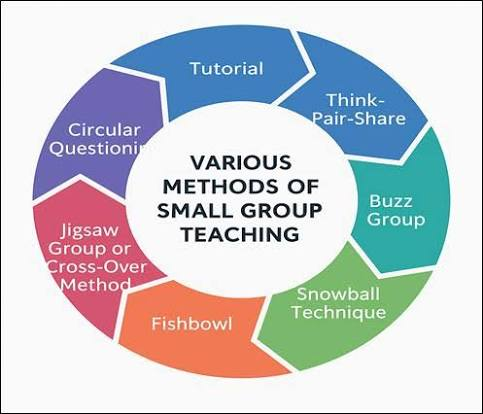
Pedagogies such as Think-Pair-Share, peer teaching, peer assessment, self-assessment, gallery walks, learning stations, collaborative problem-solving, student-led discussions, reflection circles and feedback partners create multiple pathways for participation. They allow every child to process, express, test, and refine their understanding.
I believe the teacher’s role extends far beyond content delivery. It is about intentionally designing experiences where students become active contributors to one another’s learning. When children explain concepts, clarify doubts, provide feedback, and share perspectives, they deepen their learning.
Three questions for you…
- How many students actively contribute their thinking during a typical class period?
- In which parts of the lesson could you include peer-learning strategies best?
- If you were absent tomorrow, how much learning could continue through student-to-student interactions?
Showcase : Thrive STEAM project, Hyderabad
Pooja Khatter facilitator
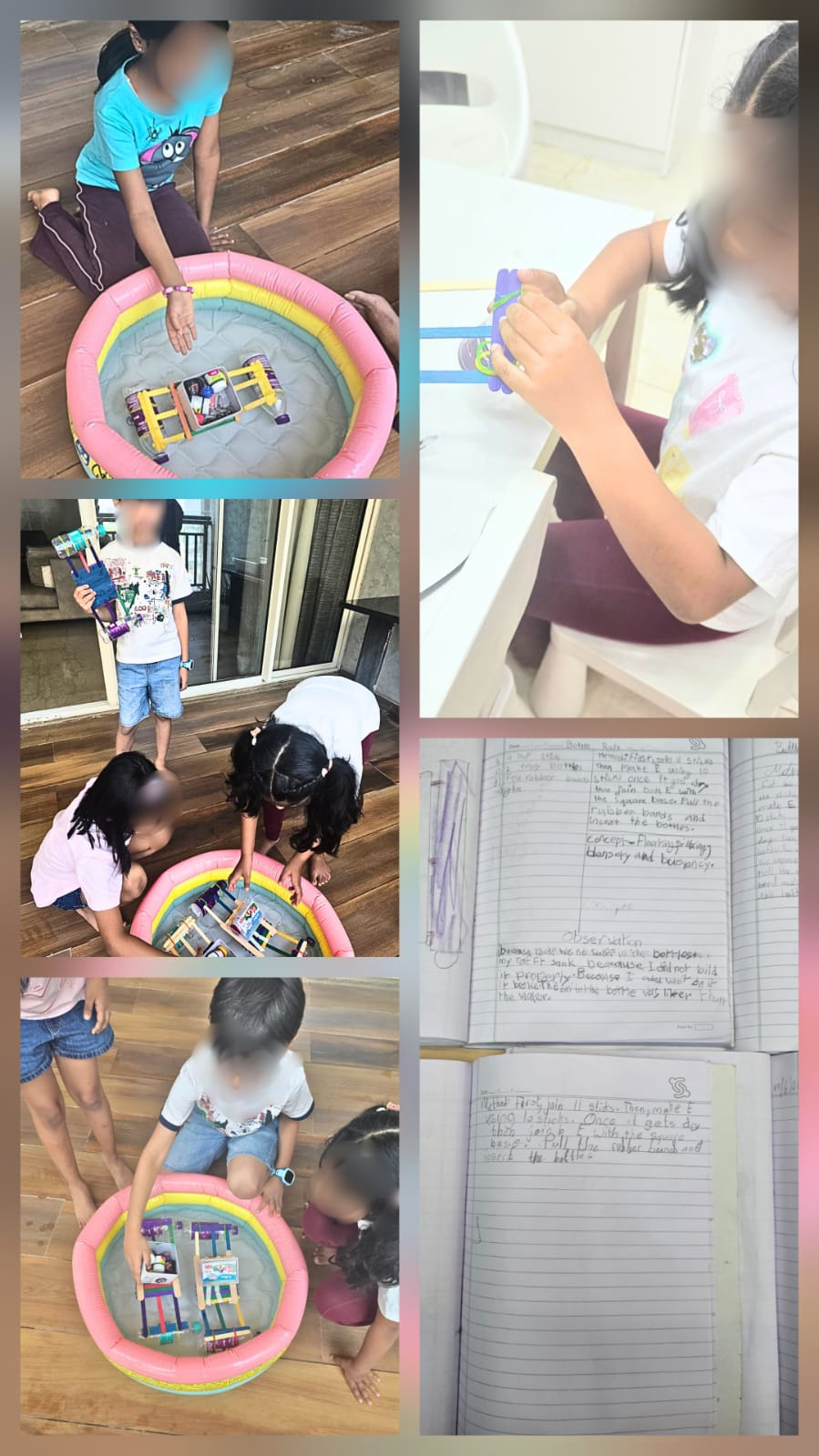
Build a Bottle Raft
This week, the children successfully completed their “Build a Bottle Raft” STEM Lab project. They designed and constructed rafts using plastic bottles and then tested their creations in water.
During the investigation, the children observed that their rafts floated because the bottles contained trapped air. Through hands-on exploration, they discovered that water exerts an upward force on floating objects, helping them stay on the surface. They also learned that objects with air inside are less dense than water, which helps them float.
To extend their learning, the children added weights to their rafts and carefully observed the changes. They noticed that increasing the load caused the rafts to sink lower in the water. Some rafts remained balanced and afloat, while others became unstable, bent, or sank. This led to meaningful discussions about buoyancy, weight distribution, and the importance of designing strong and stable structures.
The activity encouraged the children to think like engineers as they tested, observed, and evaluated their designs. Through this process, they developed a deeper understanding of floating and sinking, structural stability, and how design choices affect performance in real-world situations.
Tara :6 years 10 months. Neev &Mayra: 7 years 10 months. Havishka 8 years 2 months
Dear reader,
I work with the school leadership team as an advisor and collaborate with teachers as a pedagogical trainer. I also help parents as a parenting counselor and regularly engage one-on-one with students as a personal guide and mentor. This weekly newsletter shares what I read, learn, and experience.
Professional development with Ms Niv : Click below to find the teacher and student workshops and trainings I currently offer:
https://docs.google.com/presentation/d/1ypWO8KpVh56vhYqAMH4XoytLRKMXvwpCAfv3l3fryJQ/edit?usp=sharing
3-2-1 Tuesdays with Ms. Niv is a newsletter you can subscribe to and enjoy your learning journey with me.

