Nivedita Mukerjee
Education consultancy for parents and schools
3-2-1 Tuesdays with Ms Niv

Issue #313, 30th June 2026
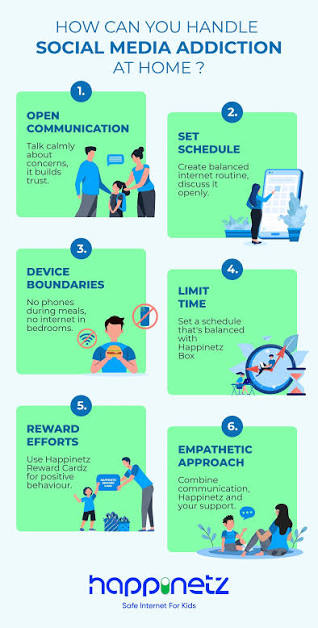
Do you keep your phone next to your bed when you go to sleep? Is it the last thing you look at and the first thing you look at when you get up? What is the total screen time you have on your phone? How much of your screen time is on social media, a game, or anything that pulls you away from an actual physical connection, like interacting in person with a human/animal, or an actual physical activity like playing ball, cooking, or reading a long-form article or a book? If you are a parent, you are being watched by your children and if you are a child, then it is most likely affecting your immediate brain and body development.
Screen time in early years, whether at school or home or a salon or a restaurant or a picnic or a road trip or while you are working and have handed over care giving of your child to the screen… now there’s much data and evidence that it is shrinking your child’s brain, reducing your child’s attention and impacting your child’s mental and physical well-being.
This is a free newsletter for parents, educators, and students. If you like my content, please subscribe by entering your email address here.
Three Images of the Week


Two Thoughts of the Week
“Sean Parker, one of the early leaders of Facebook, admitted in a 2017 interview that the goal of Facebook’s and Instagram’s founders was to create “a social-validation feedback loop . . . exactly the kind of thing that a hacker like myself would come up with, because you’re exploiting a vulnerability in human psychology.”
― Jonathan Haidt, The Anxious Generation: How the Great Rewiring of Childhood Caused an Epidemic of Mental Illness
“What is this little device in your pocket doing to your intimate relationships with others? … To your behavior as a citizen within a society? Maybe nothing! Maybe it’s all totally cool. But maybe not. Do we need it resting by our pillows at night? Do our seven-year-olds need phones? Do we wish to pass down our own dependency and obsession? …. We can’t just let the tech companies decide for us. …. And there are signs that even those working for the tech companies are concerned, which means we should be even more worried about where those stupendously powerful companies are leading us.”
― Matt Haig, Notes on a Nervous Planet
One Video of the Week
Let’s admit it: we, as a society, are addicted to social media. In fact, according to the Pew Research Center, 74% of the 240 million Facebook users check their social media accounts on a daily basis. This social media addiction can have tangible, negative effects in our lives. As a senior in high school, Christa Westheimer experienced the negative effects of social media addiction firsthand. In an effort to create proactive changes in her own life, Christa decided to find ways to become less reliant on her peers, likes, and device. In doing so, she uncovered a one-step solution that has changed the way that she has used social media for the better. Now, she is confident that her social media usage can allow her to make real, positive changes in her surrounding community… and she believes that everyone can make the exact same change in their own lives in order to encounter similar results.
Reading with Ms Meenu: Tip of the week
Reading Helps You Focus Better Than the Dopamine Hit of Social Media
In today’s world, many people spend hours scrolling through social media. Short videos, notifications, likes, and comments give the brain quick bursts of pleasure. This is often called a “dopamine hit.” Dopamine is a chemical in the brain connected to reward and motivation. Social media uses this system by giving people fast and easy entertainment. However, too much of this quick stimulation can make it harder to focus for long periods of time.
Reading works in a very different way. When we read a book, article, magazine, newspaper, or periodical, our brain has to slow down and pay attention. Reading does not usually give instant excitement every few seconds. Instead, it builds concentration gradually. The reader must follow sentences, understand ideas, remember details, and make connections. This process strengthens focus and patience.
Social media often trains the brain to expect quick rewards. A person can scroll from one post to another in seconds. If something feels boring, they can instantly move on. Over time, this can make longer tasks, such as reading, studying, or writing, feel more difficult. The brain becomes used to constant change and quick entertainment.
Reading helps rebuild attention span. When someone reads regularly, they practise staying with one idea for a longer time. This can improve memory, vocabulary, imagination, and critical thinking. Reading also encourages deeper understanding because the reader has time to reflect on what they are learning.
Another benefit of reading is that it creates a calmer mental state. Social media can sometimes make people feel distracted, anxious, or pressured to compare themselves with others. Reading, especially from books, newspapers, or educational magazines, gives the mind a break from constant noise. It allows people to focus on one subject and think more clearly.
This does not mean social media is always bad. It can be useful for communication, news, learning, and entertainment. The problem happens when social media replaces deeper forms of learning and attention. A healthy balance is important.
In conclusion, reading helps develop focus because it trains the brain to slow down, think deeply, and stay engaged. Social media gives quick dopamine hits, but reading builds long-term concentration and knowledge. In a world full of distractions, reading is one of the best habits for improving attention, learning, and mental discipline.
Happy Reading!
For more information please visit: placealibrary.ca
Meenu Gera
Consulting Home and School Library Reading Guide
I Think, I Wonder, I Ask
–Dr. Shreelakshmi Subbaswami, Academic Director, Vijaya School, Hassan, Karnataka
Planning Your Energy, Not Just Your Time
As leaders, we often spend time planning for our school, our students, our teams, and our work. We create annual calendars, monthly goals, weekly schedules, and daily to-do lists around tasks and goals. But do we intentionally plan around our energy? Do we consider what gives us energy and what saps it?
A typical day in school leadership is filled with meetings, classroom observations, mentoring teachers, conversations with parents, student interactions, administrative responsibilities, and constant troubleshooting. By the end of the week, we may have accomplished a great deal, yet still feel exhausted. I think the reason is not always the volume of work; it is often the nature of the work.
Some tasks energize us. It may be mentoring teachers, working with students, designing learning experiences, or building new initiatives. At the same time, there are responsibilities that consistently drain us. These cannot always be avoided, but they can be managed more consciously.
Over the past few years, I have come to realize that leadership is not merely about managing time or being productive; it is about managing energy. This year, I began by understanding myself through a SWOT analysis. I looked not just at my skills but also at my work patterns. This helped me understand what brings out the best in me. What activities leave me inspired? Which ones consistently sap the energy?
Perhaps every leader needs an energy audit alongside the annual school plan. I believe that when we consciously align our work with our strengths and sources of energy, we don’t just become better administrators, we become more present, creative, and inspiring leaders, with the energy to do better.
Three questions for you…
- What leadership responsibilities consistently energize you, and which ones leave you feeling drained?
- What changes can you make to create more space for the work that brings out your best?
- In what ways does your weekly schedule reflect the work that gives you energy?
Showcase : Thrive STEAM project, Hyderabad
Pooja Khatter, facilitator
This week in STEM Lab class, the children explored the concept of waves through a fun and hands-on Wave Machine activity. They began by observing wave diagrams and discussing the difference between high tides and low tides waves.
Using a measuring tape and the example of ripples formed when a pebble is dropped into water, the children observed how waves carry energy from one place to another. They learned that waves move energy, but they do not carry the material itself.
The children then watched a short video on wave machines and built their own models using skewers, clay, and duct tape. While testing their wave machines, they observed how movement travelled from one skewer to the next, creating a wave pattern.
It was a wonderful hands-on experience that helped the children understand wave movement and energy transfer in a simple and engaging way.
Krisha: 4 years. Tara 6 years 10 months. Neev, Mayra, and Tashi 7 years 10 months.


Dear reader,
I work with the school leadership team as an advisor and collaborate with teachers as a pedagogical trainer. I also help parents as a parenting counselor and regularly engage one-on-one with students as a personal guide and mentor. This weekly newsletter shares what I read, learn, and experience.
Professional development with Ms Niv : Click below to find the teacher and student workshops and trainings I currently offer:
https://docs.google.com/presentation/d/1ypWO8KpVh56vhYqAMH4XoytLRKMXvwpCAfv3l3fryJQ/edit?usp=sharing
3-2-1 Tuesdays with Ms. Niv is a newsletter you can subscribe to and enjoy your learning journey with me.