Nivedita Mukerjee
Education consultancy for parents and schools
3-2-1 Tuesdays with Ms Niv
Issue #330, 27th October 2026
Festival season is on us to celebrate with friends and family.
What does celebration mean to you? What does it mean for your students in school?
What does it mean for your family at home?
What makes holidays fun or overwhelming?
Demands on time, attention, energy, money?
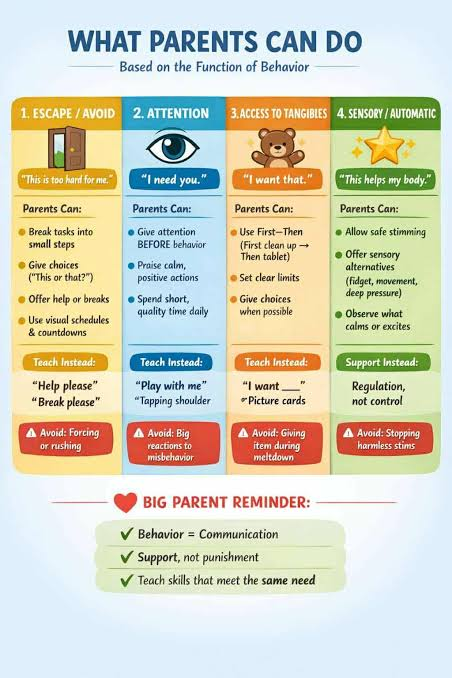
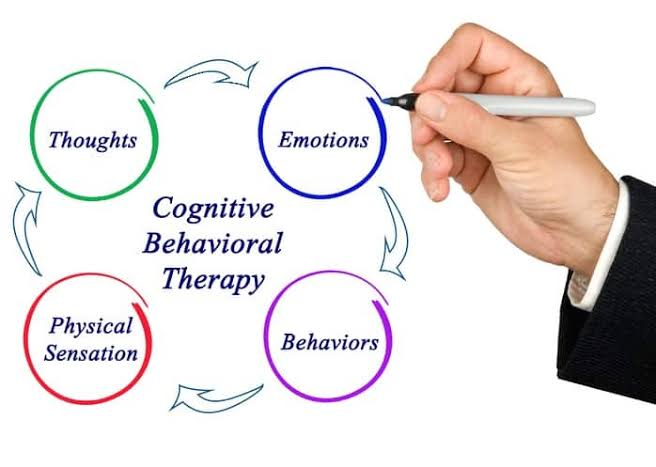
How do you equip yourselves and your students/children at school and at home to manage their expectations and behaviours?
This is a free newsletter for parents, educators, and students. If you like my content, please subscribe by entering your email address here.
Three Images of the Week
Two Thoughts of the Week
“Between stimulus and response there is a space. In that space is our power to choose our response. In our response lies our growth and our freedom.”
― Viktor E. Frankl
“Parents who discipline their child by discussing the consequences of their actions produce children who have better moral development , compared to children whose parents use authoritarian methods and punishment.”
― Simon Baron-Cohen, Zero Degrees of Empathy: A New Theory of Human Cruelty
One Video of the Week
Explore 5 tactics that retailers use to influence what you buy and what you’re willing to pay, and how to avoid being tricked.
You’re about to buy some bargain bin headphones when you spot another sale. A different pair that is more expensive, but selling for half their usual price. Which is the better buy? And how do you know you’re not falling for a retailer’s psychological tricks? Explore common tactics that retailers use to influence what you buy and what you’re willing to pay, and how you can avoid being tricked.
Directed by Homework Studio.
This video was made possible in collaboration with Nobel Prize Outreach, and with support from the Sloan Foundation
Reading with Ms Meenu: Tip of the Week
Reading Creates Thinkers, Dreamers and Empathetic Human Beings
In a world where information travels instantly and opinions are shared in seconds, the ability to think independently has become increasingly valuable.
Reading offers an opportunity to develop that ability.
Books invite readers to slow down, reflect on complex ideas and consider different perspectives. A thoughtful novel may challenge someone’s assumptions, while a biography can reveal the struggles and achievements of another person.
Stories are particularly powerful because they allow us to imagine experiences beyond our own.
A child reading about someone who faces discrimination, loneliness or unexpected challenges may begin asking how that character feels and why they behave in certain ways.
Researchers have examined whether reading fiction can support empathy and perspective-taking. A 2024 meta-analysis found small positive cognitive benefits associated with fiction reading, particularly in understanding other people’s thoughts and feelings. These effects were modest rather than universal.
https://pubmed.ncbi.nlm.nih.gov/38602788
Reading also creates space for reflection. Unlike information delivered through an endlessly changing feed, a book allows readers to stop, revisit passages and form their own interpretations.
This freedom encourages curiosity. Readers can question an author’s ideas, compare different viewpoints or imagine alternative endings.
As artificial intelligence becomes more capable and digital media more immersive, human qualities such as judgment, creativity and empathy remain essential.
Libraries help nurture these qualities by offering readers access to diverse voices and the freedom to explore unfamiliar ideas.
The message: Books do more than develop readers. They help cultivate curious, reflective and imaginative individuals.
Happy Reading!
For more information, please visit: placealibrary.ca
Meenu Gera, Consulting Home and School Library Reading Guide
I Think, I Wonder, I Ask
–Dr. Shreelakshmi Subbaswami, Academic Director, Vijaya School, Hassan, Karnataka; https://vijayaschoolhsn.in/
The Underrated Power of Vocabulary in Education
During my research days, I often heard practitioners comment that researchers and academicians introduce new jargon for ideas that are essentially the same. Some practitioners, may not always recognize the distinctions between these terms and the ideas they represent. However, as a practitioner and researcher, I see vocabulary differently. It is not merely about using the right words, it is about understanding the distinctions between concepts, the knowledge and skills associated with them, and how they translate into practice. A shared vocabulary helps us articulate our practices more precisely, discuss challenges meaningfully and build a common understanding of what we do and why we do it.
Just as a scientific term carries a specific meaning across contexts, we need to give equal importance to vocabulary in education. When teachers use terms such as formative assessment, differentiated instruction or integrated teaching, do they understand what each means and how it translates into practice? Formative assessment, for instance, is not just conducting a test; it involves using evidence of learning to adapt teaching. A shared vocabulary helps teachers discuss what works, identify gaps and improve practice collectively.
I notice something similar in students’ context. When children explain that they are estimating, classifying or inferring, they begin recognising the thinking behind their actions. Similarly, explicitly discussing what it means to be principled, balanced or open-minded helps children connect these attributes to everyday decisions, rather than treating them as words on a classroom display.
At home, too, vocabulary matters. Helping a child distinguish between feeling disappointed, frustrated, anxious and overwhelmed gives them more precise ways to express their needs. Instead of saying, “I am bad at maths,” a child might say, “I understand the concept but struggle to solve problems independently.” That distinction helps an educator/ parent support the learner effectively.
I have seen the impact of building a shared vocabulary among educators and students. When it is meaningfully embedded in everyday practice, it has strengthened communication, deepened learning and helped educators, students and parents work towards a common purpose.
Three questions for you…
- What are the words you use regularly without fully understanding their meaning or implications for practice?
- In what ways can we ensure that teachers share a common understanding of pedagogical terms, rather than merely using them in discussions and documentation?
- How can we help students use precise mathematical, scientific and emotional vocabulary to explain their thinking, rather than relying on generic words such as good, difficult or nice?
Showcase
Thrive, A STEAM project for young learners https://thrivesteam.com/
Facilitator: Pooja Khattar
PRE-LAUNCH: CAN YOU GUESS OUR NEW THEME?
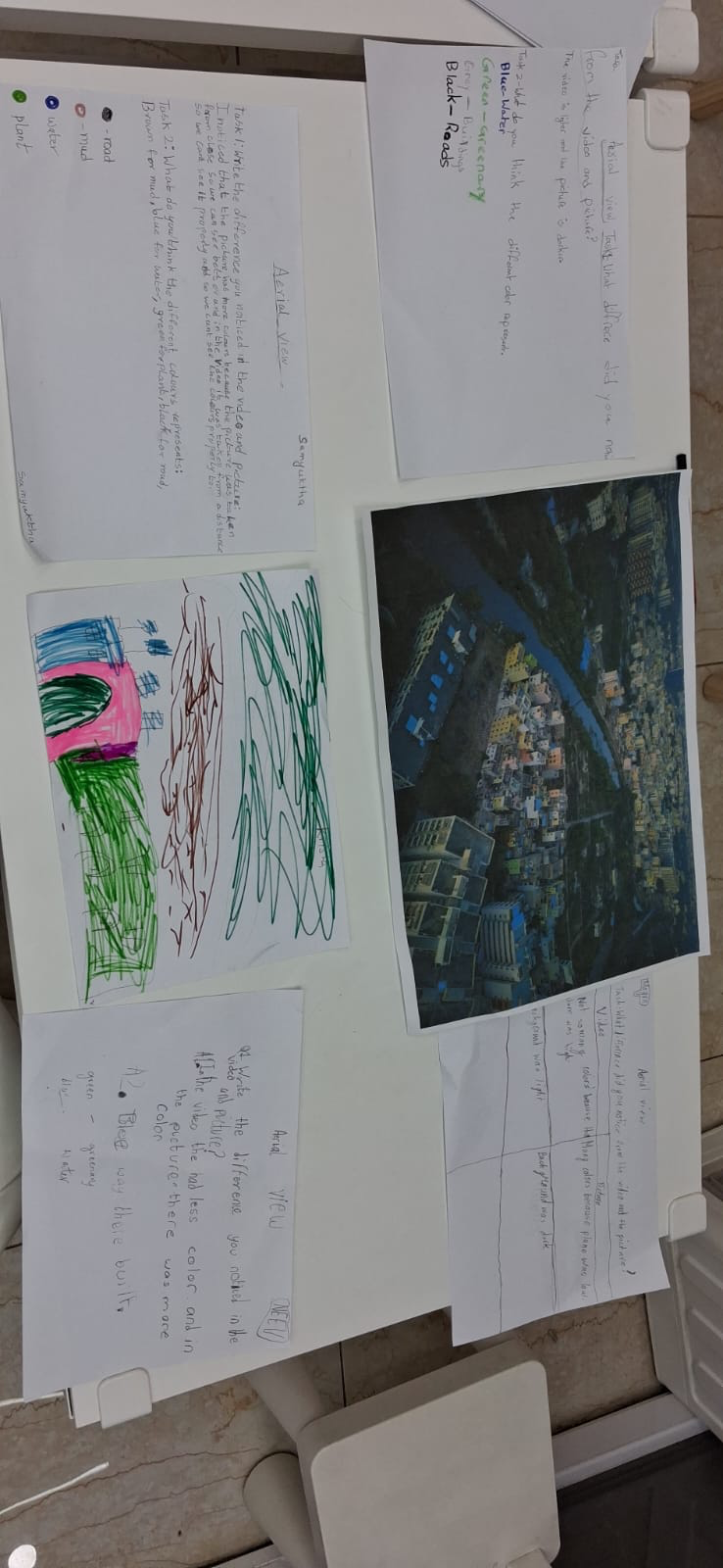
The children began the activity with a pretend aeroplane journey. An aeroplane cutout was attached to a chair to create the experience of sitting inside an aeroplane. As they sat on the chair, they listened to the sound of an aeroplane taking off and flying. They were then asked to look down through the window and observe how things on the ground might look from above.
To give the children a more realistic experience, large aerial-view pictures of Hyderabad were placed on the floor. The children gathered around the pictures and carefully observed what they could see. They noticed buildings, roads, water bodies and green spaces. They also explored the different colours, shapes and patterns in the pictures.
The children shared their observations and pointed out the areas that caught their attention. They used coloured pencils to mark different parts of the pictures and recorded their ideas through drawings and writing.
They noticed that some areas had many buildings close together, while others had more open spaces and greenery. They also identified blue areas as water bodies and observed the lines formed by roads.
Next, the children watched a video taken from an aeroplane. They observed how the ground looked from different heights and compared the video with the aerial pictures placed on the floor. They noticed that buildings and other features looked bigger and clearer when viewed from a lower height. As the aeroplane moved higher, the buildings appeared smaller, and the colours and details became less clear.
The children also recorded their observations about the colours in the aerial pictures. They identified blue as water, green as greenery, black as roads, and brown as soil and mud. They shared their ideas and explained what they thought the different colours represented.
Towards the end of the activity, the children were asked to guess the theme of the upcoming workshop. Based on their observations, they shared ideas such as buildings, aeroplanes, shapes and patterns.
Krisha – 4 years 5 months
Tara – 7 years
Neev & Mayra– 8 years 1 month
Samyuktha – 8 years 6 months
Dear reader,
My work in education includes designing learning ecosystems where students thrive, teachers grow, and schools build lasting cultures of excellence through innovative curriculum, evidence-based practice, and meaningful educational leadership.
Professional development with Ms Niv: Click below to find the teacher and student workshops and trainings I currently offer:
https://docs.google.com/presentation/d/1ypWO8KpVh56vhYqAMH4XoytLRKMXvwpCAfv3l3fryJQ/edit?usp=sharing
3-2-1 Tuesdays with Ms. Niv is a newsletter you can subscribe to and enjoy your learning journey with me.