Nivedita Mukerjee
Education consultancy for parents and schools
3-2-1 Tuesdays with Ms Niv
Issue #321, 25th August 2026
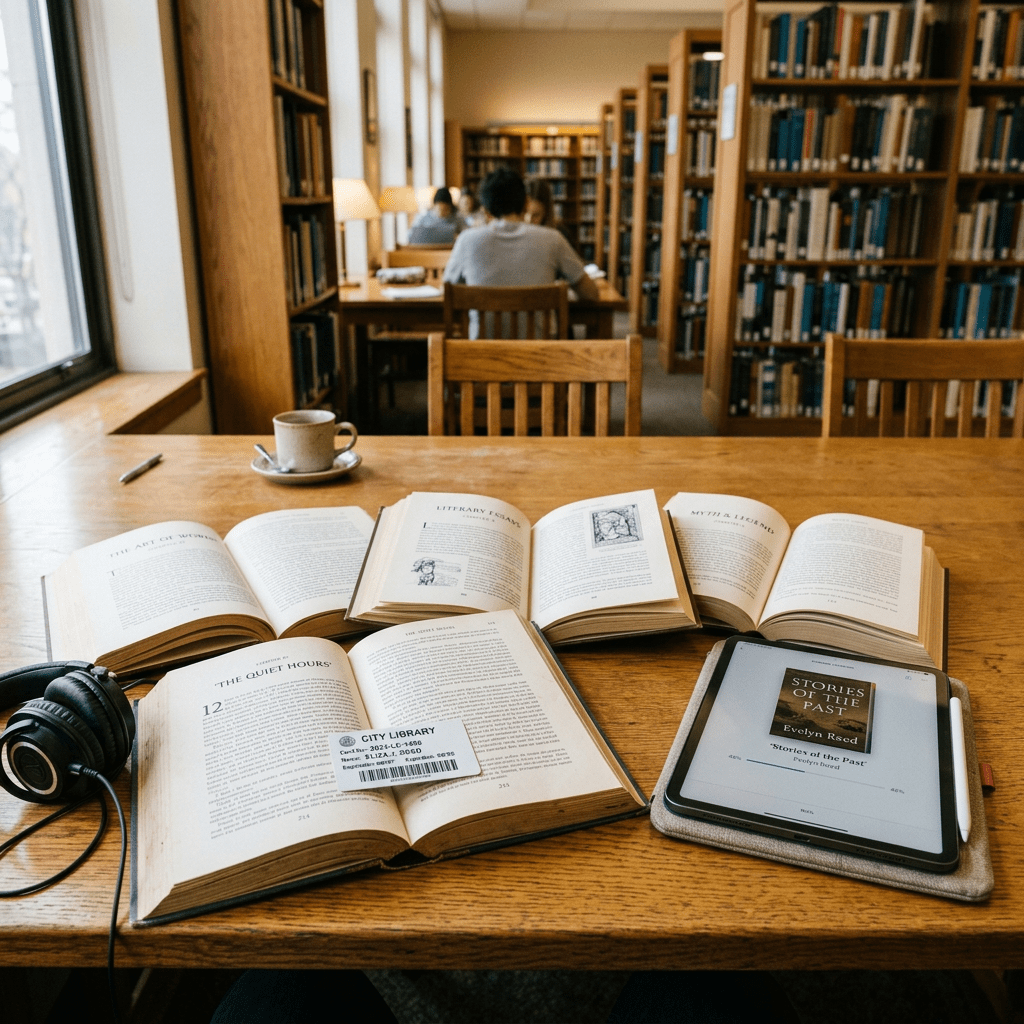
Read when? Read what? Read where? Read how?
Are you reading yourself as a teacher, as a parent? Your child and/or your student will take a leaf out of your book of reading habits 🙂
This is a free newsletter for parents, educators, and students. If you like my content, please subscribe by entering your email address here.
Three Images of the Week


Two Thoughts of the Week
“Books are a uniquely portable magic.”
― Stephen King, On Writing: A Memoir of the Craft
“You don’t have to burn books to destroy a culture. Just get people to stop reading them.”
― Ray Bradbury
One Video of the Week
Speaking is already in our genes. But reading is not. Until about 100 years ago most people didn’t do it all. When we read fiction especially, we create new pathways in our brain. Reading 30 pages of fiction every night, gets the pathways thicker and thicker. Our brain needs a workout just like our body.
Rita Carter is a writer, broadcaster and journalist who specializes in the workings of the human brain. Her books include the first layman’s guide to neuroscience: Mapping the Mind, which has been translated into 14 languages. For seven years she presented London’s nightly news programme, “Thames News” , and has written for magazines and newspapers throughout the world, including the London Times, Telegraph, Guardian and New Scientist. She has a deep interest in bringing art and science together and is a Patron at the influential London-based Foundation “Art and Mind”. Rita Carter is a writer, broadcaster and journalist who specializes in the workings of the human brain. Her books include the first layman’s guide to neuroscience: Mapping the Mind, which has been translated into 14 languages. For seven years she presented London’s nightly news programme, “Thames News” , and has written for magazines and newspapers throughout the world, including the London Times, Telegraph, Guardian and New Scientist. She has won many awards for her work, including, on three occasions, the Medical Journalists Association award for excellence and she holds an Honorary PhD in Brain science from Leuven University – one of Europe’s oldest academic institutions.
Reading with Ms Meenu: Tip of the Week
How Reading Habits are Changing
Reading is still an important part of everyday life, but the way people read is changing rapidly. Printed books are no longer the only option. Today, readers move between physical books, e-books, audiobooks, websites, social media, and other digital platforms. These changes are reshaping not only what people read, but also how long they read and why they choose certain types of content.
One of the biggest changes is the growth of digital reading. Smartphones, tablets, and e-readers make it possible to carry thousands of books and articles in one device. People can read while travelling, waiting for an appointment, or taking a break at work. Digital access has made reading more convenient, especially for people who may not have easy access to a bookstore or library.
At the same time, people are increasingly reading shorter pieces of content. Social media posts, news summaries, text messages, blogs, and online articles have become a major part of daily reading. Instead of spending an hour focused on one book, many readers now consume information in shorter bursts throughout the day. This can make it harder to develop the concentration needed for long-form reading.
Audiobooks have also become much more popular. They allow people to experience books while driving, exercising, cooking, or completing other tasks. For busy readers, audiobooks can make literature more accessible and easier to fit into everyday routines. They have also expanded the idea of what it means to “read” a book.
Social media is influencing reading habits as well. Online communities such as BookTok, BookTube, and book-focused Instagram accounts have introduced millions of people to new authors and titles. A recommendation from a popular creator can quickly turn an older or lesser-known book into a bestseller. Reading is becoming more social, with readers sharing reviews, reactions, recommendations, and reading challenges online.
People are also becoming more selective about what they read. With so many entertainment choices available, readers often choose books that closely match their personal interests. Young readers in particular may be drawn to fantasy, graphic novels, manga, romance, sports stories, or books connected to movies and television. Giving readers more choice can help make reading feel enjoyable rather than simply an academic responsibility.
Libraries are adapting to these changes too. Many now offer e-books, audiobooks, online databases, technology programs, community events, and digital lending services alongside traditional books. Instead of being places used only to borrow books, libraries are becoming broader learning and community spaces.
However, the shift toward digital and short-form content also presents challenges. Constant notifications and endless scrolling can make sustained concentration more difficult. Readers may become accustomed to quickly switching between pieces of information instead of spending long periods exploring one story or idea. Long-form reading therefore has to compete for attention in a way that it did not in the past.
Reading is not necessarily disappearing. Instead, it is becoming more digital, flexible, personalized, and social. The challenge is finding a balance between the convenience of modern reading and the deeper concentration that books can provide. As technology continues to develop, reading habits will continue to change, but the desire to learn, explore stories, and connect with new ideas is likely to remain.
Happy Reading!
For more information please visit: placealibrary.ca
Meenu Gera
Consulting Home and School Library Reading Guide
I Think, I Wonder, I Ask
–Dr. Shreelakshmi Subbaswami, Academic Director, Vijaya School, Hassan, Karnataka; https://vijayaschoolhsn.in/
Are Children Really Reading?
Have you ever seen a child read a passage fluently, only to realise, when you ask what it means or ask them to retell it, that they have no idea?
In the foundational years, children are learning to sound out words, blend them, read fluently and, most importantly, make meaning from what they read. Yet, one practice that continues to prevail in classrooms is repeated reading of the same text. The danger is that children can become so familiar with a passage that they can recite it without really looking at the words. Many may mistake this fluency for reading. But reading is not simply saying the words aloud. It is making sense of them.
For years, mass reading, repeated chanting and memorising texts have been used with the belief that more repetition automatically leads to better learning. But repetition without comprehension takes away the very skill children need to build- to think, infer, question and connect with a text.
This year, we are consciously trying to change this in our classrooms. Before moving a child to a new text, we check whether they can retell the story, answer simple questions and use new words in their own conversations. For children who need more support, instead of repeatedly practising the same passage, we used key vocabulary from the syllabus to create short passages and stories. We curated books, used AI thoughtfully and provided opportunities to read different texts.
The goal was simple: more reading, not more repetition; more meaning, not just more words.
We deliberately change the question we ask- “Can the child read this?” to “What did the child understand from what they read?”
Three questions for you…
- How can we create reading experiences where children are not just decoding words, but questioning, predicting, connecting, interpreting and responding to what they read?
- In what ways might our classroom practices be teaching children to perform reading rather than actually read?
- What opportunities are we giving children to read unfamiliar texts and apply what they know?
Showcase: Thrive STEAM project, Hyderabad; https://thrivesteam.com/
Pooja Khatter, Facilitator
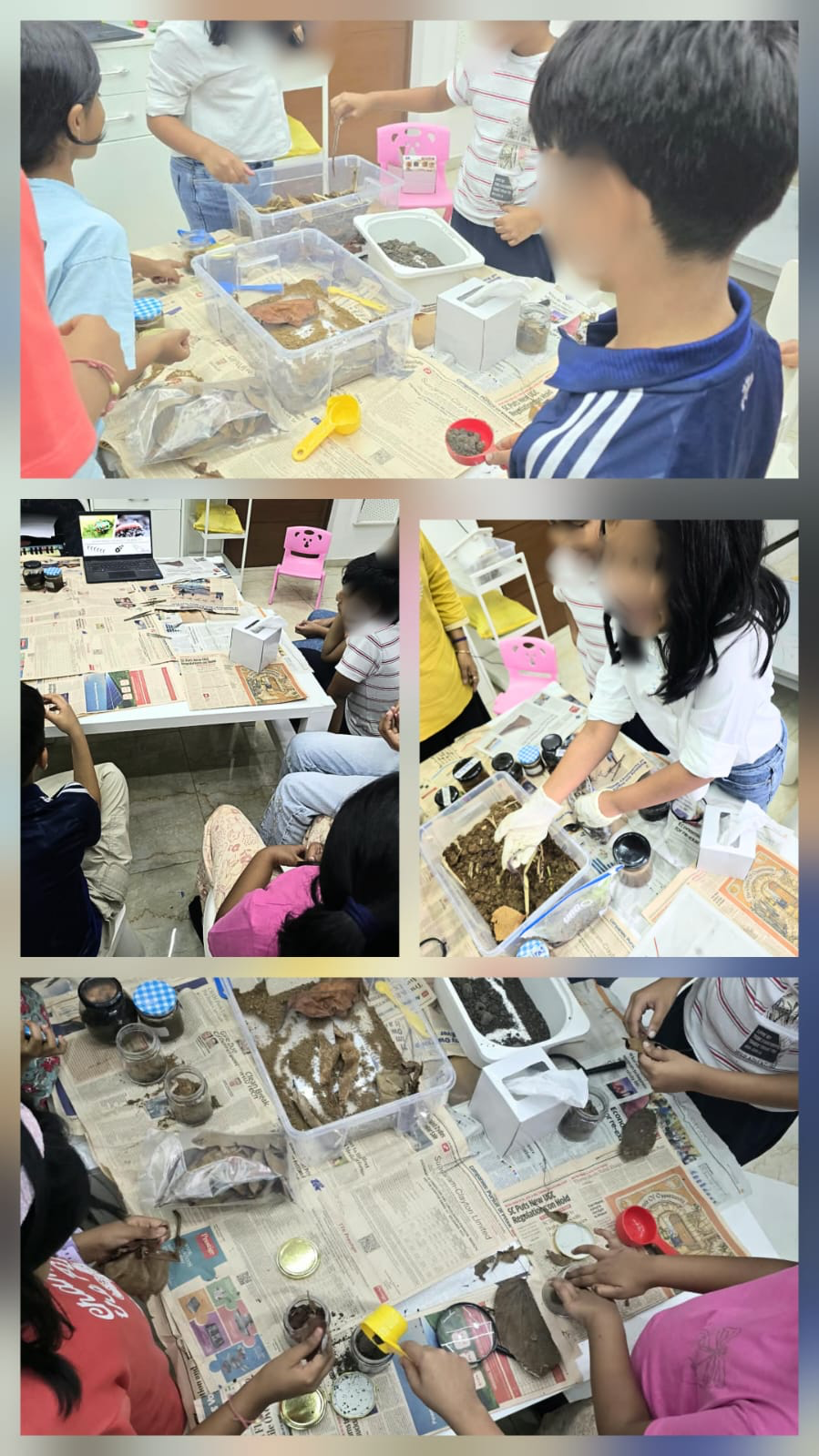
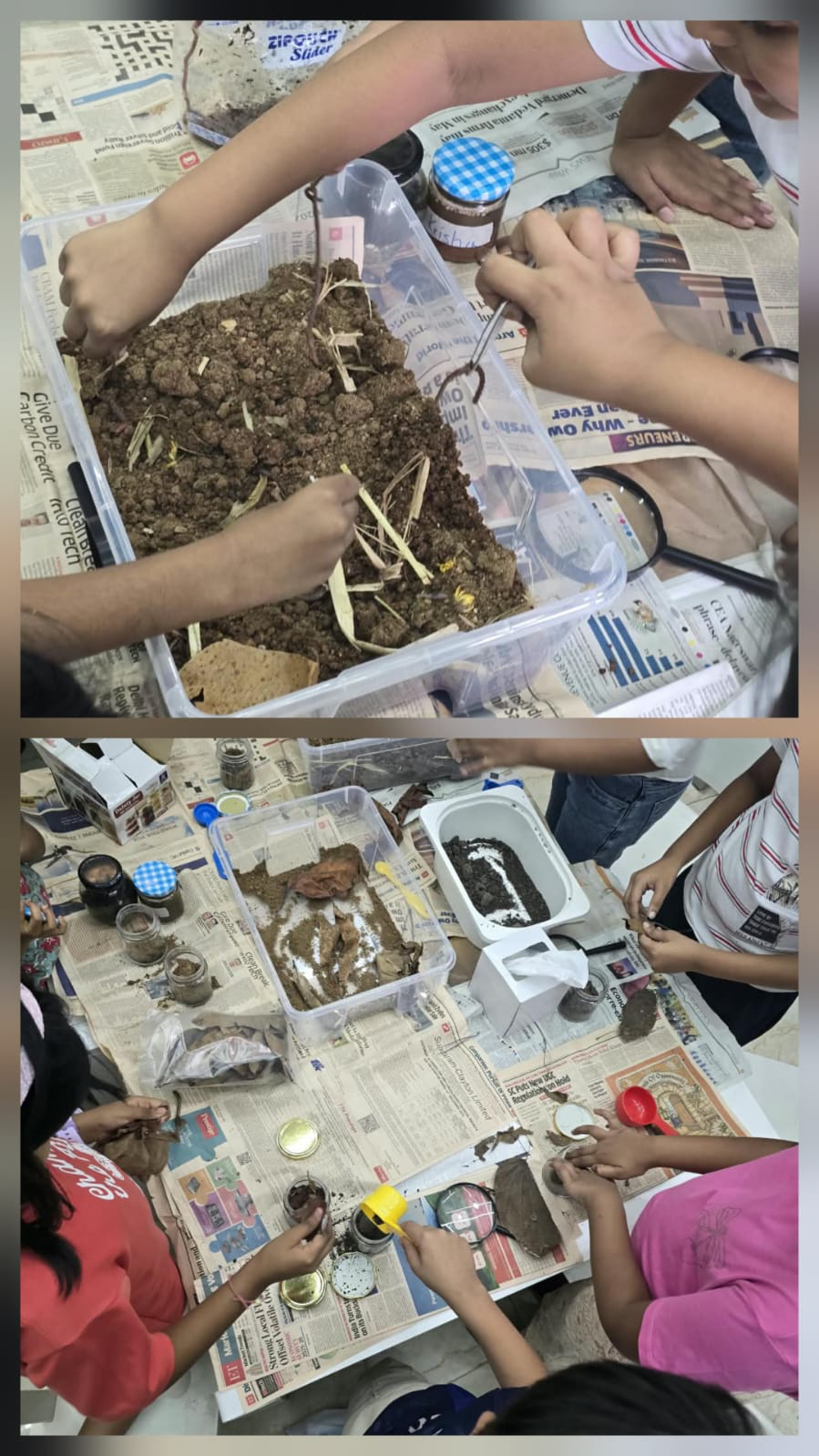
Nature’s Recyclers:The children revisited their learning about soil, seeds, and plant growth by observing the soil-layer jars and germination cups they had prepared earlier. They shared what they remembered about the different soil layers and discussed what seeds needed to grow. They shared that seeds needed air, water, sunlight, and a suitable place to grow. Samyuktha also added that seeds needed soil to grow.
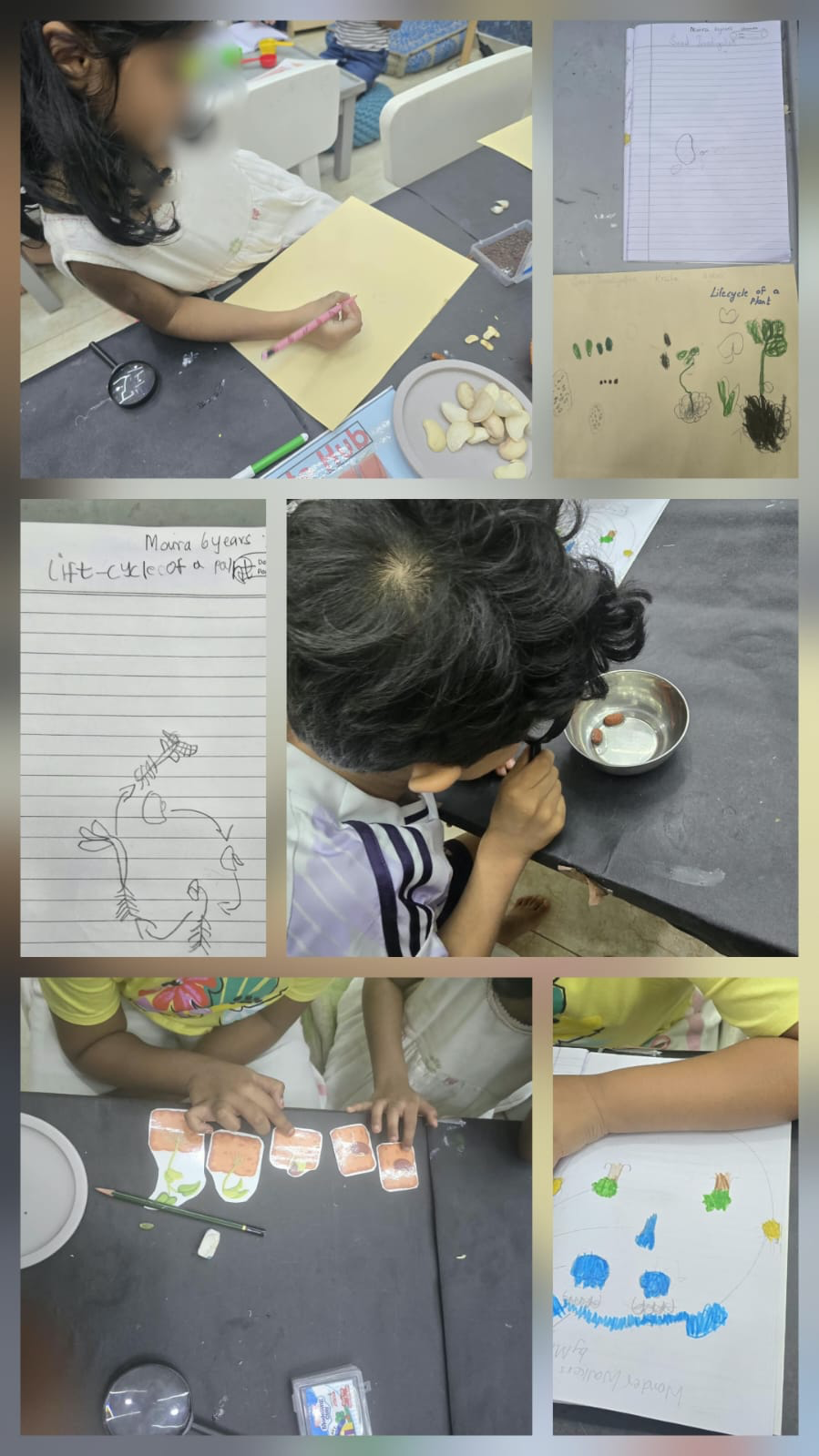
The children discussed the plant life cycle and recalled the stages in the correct sequence: seed, germination, sprout, seedling, adult plant, flowers, and fruits. They connected the stages of the life cycle to their understanding of how healthy soil supported plant growth.
The children then watched a video about earthworms and learned how these little helpers supported healthy soil. After watching the video, they also observed real earthworms. They carefully watched how the worms moved through the soil and shared their observations. They understood that earthworms created tunnels in the soil, which helped air and water reach the plant roots. They also learned that earthworms helped break down dead leaves and other plant materials, adding nutrients back into the soil.
To extend their learning, the children made a decomposition jar using soil, dry leaves, twigs, and small worms. They learned that natural materials slowly break down and return nutrients to the soil, helping plants grow. The children will observe their decomposition jars next week to see what changes have taken place in the dry leaves, twigs, and other materials. This hands-on activity helped them understand how earthworms and decomposers play an important role in keeping soil healthy and supporting plant growth.
Krisha 4 years, Maira and Tara 6 years 11 months, Yuvaan and Tashi 7 years 11 months, Neev and Mayra 8 years, and Samyuktha 8 years 3 months.
Teacher for Teachers
Riddhi Goswami, Facilitator
Exploring Animal Habitats
Our little learners had a wonderful time discovering where different animals live! The class began with a picture discussion featuring various animals and their habitats. Rudra (4 years) and Myra (6 years) enthusiastically shared what they knew about several animals and where they made their homes.
A special moment came when Myra (6 years) sketched a habitat, while Rudra (4 years), busy pasting pictures of sea animals, made a lovely connection — recalling his trip to Singapore and excitedly talking about seeing sharks and touching dolphins this discussion and activities built awareness and understanding of different animals and their natural habitats, expanded vocabulary related to animals, environments, and habitats, enhanced fine motor and creative skills through sketching and pasting activities Fostered the ability to relate classroom learning to real-life experiences.
Dear reader,
My work in education includes designing learning ecosystems where students thrive, teachers grow, and schools build lasting cultures of excellence through innovative curriculum, evidence-based practice, and meaningful educational leadership.
Professional development with Ms Niv : Click below to find the teacher and student workshops and trainings I currently offer:
https://docs.google.com/presentation/d/1ypWO8KpVh56vhYqAMH4XoytLRKMXvwpCAfv3l3fryJQ/edit?usp=sharing
3-2-1 Tuesdays with Ms. Niv is a newsletter you can subscribe to and enjoy your learning journey with me.