Nivedita Mukerjee
Education consultancy for parents and schools
3-2-1 Tuesdays with Ms Niv
Issue #323, 8th September 2026
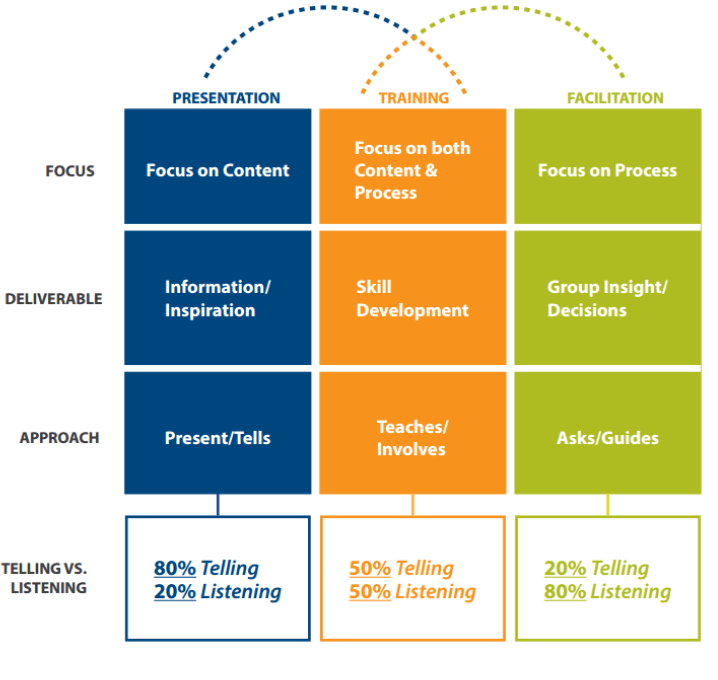
The big questions that were running through my mind this year on Teacher’s Day were :
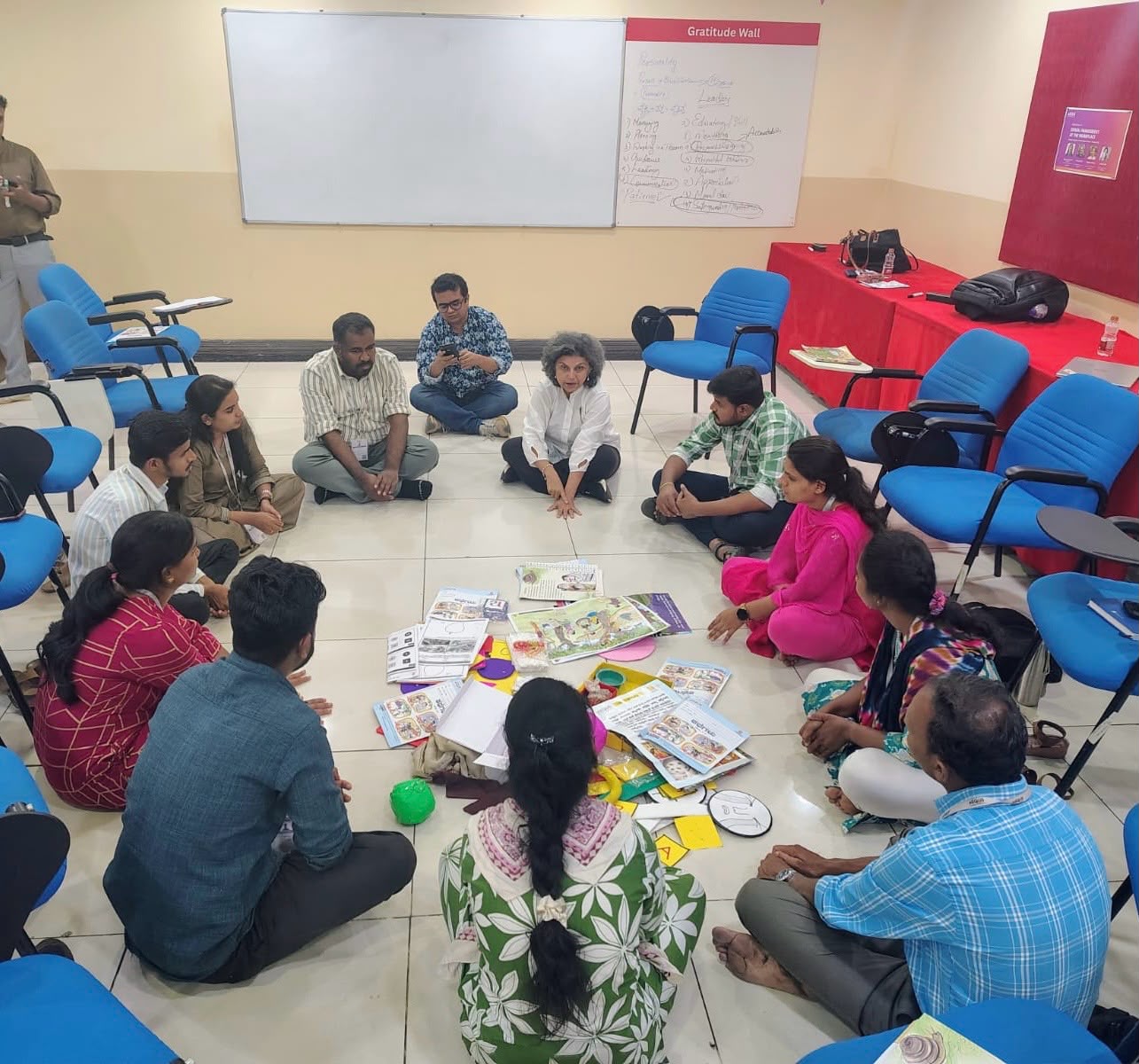
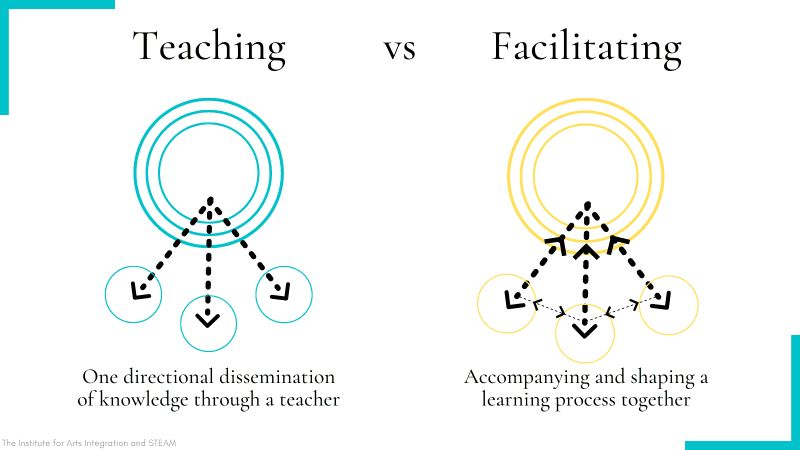
In my sessions of teacher training or classroom teaching, who is doing most of the thinking? Am I doing all the explaining, demonstrating, and giving the answers, or are the children/trainee teachers observing, questioning, trying, discussing, and making meaning? If I stopped talking for 5 minutes, would learning still be happening? Am I asking questions to get the answer I already know or to genuinely discover what children and/or trainee teachers are thinking? Am I trying to make every child and/or trainee teacher reach the same answer in the same way, or am I creating conditions for different ways of thinking and responding?
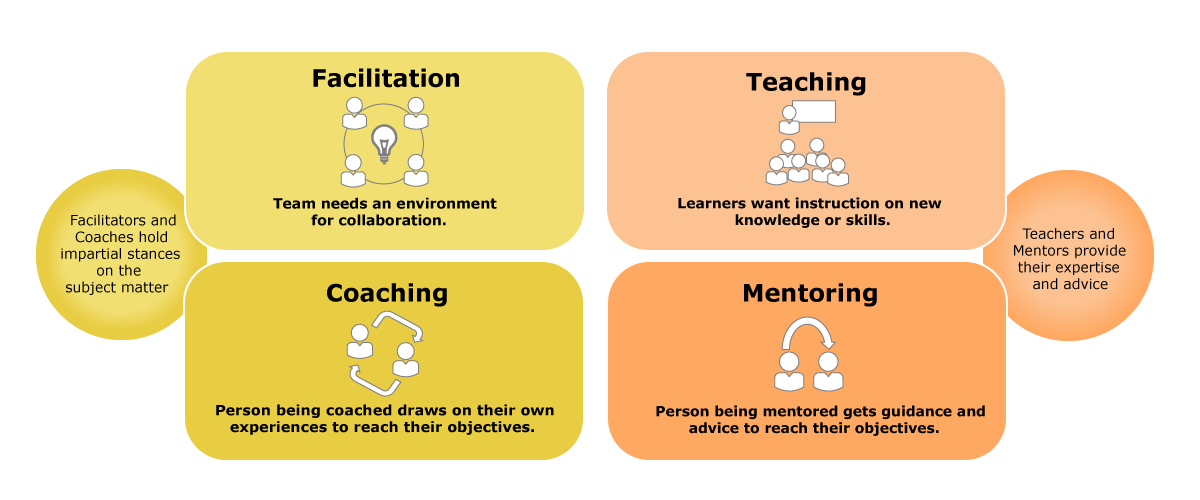
If I am the most active person in the room, I am probably teaching. If the learners are the most active people in the room, I am probably facilitating. What do you think of this one line test question for yourselves as teachers?
Happy Teachers Day! Let there be learning and growth for each one of us.
This is a free newsletter for parents, educators, and students. If you like my content, please subscribe by entering your email address here.
Three Images of the Week
Two Thoughts of the Week
“The principal goal of education in the schools should be creating men and women who are capable of doing new things, not simply repeating what other generations have done.” – Jean Piaget
“The teacher must adopt the role of facilitator not content provider.” – Lev Vygostky
One Video of the Week
Sir Ken Robinson on role of a teacher
Reading with Ms Meenu: Tip of the Week
What We Lose When We Stop Reading
Reading is more than a way to pass the time. It helps us think, imagine, understand others, and make sense of the world. As people spend less time reading books and more time consuming short-form digital content, we risk losing important skills and experiences that develop through sustained reading.
One of the biggest things we lose is our ability to focus deeply. Reading a book requires patience and concentration. We have to follow characters, ideas, and arguments over many pages. When we become used to quickly scrolling through short videos, posts, and headlines, it can become harder to stay focused on one task for a long period of time.
We may also lose some of our critical-thinking skills. Books often present complicated ideas that cannot be understood in a few seconds. Readers have to question information, make connections, notice patterns, and form their own opinions. Long-form reading encourages us to think carefully instead of simply reacting to whatever appears next on a screen.
Reading also builds vocabulary and communication skills. People who read regularly are exposed to new words, sentence structures, and ways of expressing ideas. Over time, this can improve writing, speaking, and comprehension. When reading decreases, we may have fewer opportunities to develop these skills naturally.
Another important loss is imagination. A book does not show us every detail the way a movie or video does. Readers have to picture the characters, settings, sounds, and events themselves. This active use of imagination can strengthen creativity and help people become better at developing original ideas.
We also risk losing empathy and understanding. Stories allow us to experience life through someone else’s perspective. We can enter different cultures, time periods, communities, and personal experiences without leaving our homes. Reading about people whose lives are different from our own can help us become more thoughtful and open-minded.
There is also something valuable about the slower pace of reading. A book gives us space to reflect. We can stop, reread a sentence, think about an idea, or simply sit quietly with a story. In a world filled with notifications and constant entertainment, reading can provide a rare opportunity to slow down and be fully present.
When fewer people read, society may also lose some of its connection to history, knowledge, and culture. Books preserve ideas and experiences across generations. They allow us to learn from people who lived hundreds of years ago and to understand how societies have changed over time. Without strong reading habits, it becomes easier for important knowledge and perspectives to be overlooked.
This does not mean that technology or digital media are harmful. Videos, podcasts, social media, and other forms of communication can all be useful and enjoyable. The problem comes when they completely replace deeper forms of reading.
When we stop reading, we do not simply lose books. We risk losing concentration, curiosity, imagination, empathy, and the ability to engage deeply with complex ideas. Protecting time for reading is therefore not about rejecting technology. It is about preserving a habit that continues to strengthen how we think, communicate, and understand the world.
Happy Reading!
For more information, please visit: placealibrary.ca
Meenu Gera, Consulting Home and School Library Reading Guide
I Think, I Wonder, I Ask
–Dr. Shreelakshmi Subbaswami, Academic Director, Vijaya School, Hassan, Karnataka; https://vijayaschoolhsn.in/
A Teacher Today
India has a long history of the guru-shishya parampara, where the teacher-student relationship was deeply valued. At its heart was the belief that education was more than the transmission of information and the teacher’s value extended beyond the knowledge they possessed.
Over the decades, however, our systems of education have changed. With the emergence of a more neoliberal system, education has increasingly become commodified, and teachers are often viewed as service providers.
Now, we have entered another significant shift where knowledge is no longer difficult to find.
A child can ask a question and receive an answer within seconds. There are online courses, YouTube educators, learning platforms and AI tutors that can explain a mathematical concept, teach a language, demonstrate an experiment or tell a story to thousands of children without ever entering a classroom.
So, what is it that a teacher in a school offers that cannot simply be delivered through a screen?
A simple answer is- our presence. A teacher in a school does not meet a child only for the 40 minutes of a lesson. We see the child as they enter the classroom, how they respond, how they participate, how they learn and sometimes, even when they are not learning. We notice the things that may never appear in an assignment or a test.
A teacher also creates a social world in the classroom. We teach children how to disagree without disrespecting one another, how to listen, how to wait, how to collaborate, how to respond when someone makes a mistake and how to navigate relationships and learn to be part of a community.
A content provider gives access to knowledge.
An educator helps a child make meaning from it.
A content provider can explain.
A teacher can notice.
A content provider can give feedback on an assignment.
A teacher knows when that feedback needs to be encouraging, challenging, gentle or direct.
A screen can provide information.
A teacher becomes part of a child’s lived experience of learning.
This does not mean that online learning, technology or AI have no value. In many ways, they have opened up possibilities for learning that we could not have imagined before. They can expand access, provide multiple ways of understanding a concept and allow children to learn beyond the boundaries of their immediate environment.
Today, the teacher in a school is no longer only a transmitter of content, our role is increasingly about creating connection, nurturing curiosity, facilitating conversations, providing context, offering care, and building a community of learners.
Three questions for you…
- To what degree are we knowledge transmitters, and to what degree are we designers of learning experiences?
- What do we want children to remember about our presence, not just about what we taught them?
- As the role of the teacher continues to change, what parts of our identity as educators do we need to let go of, and what do we need to hold on to?
Showcase: Thrive STEAM project, Hyderabad; https://thrivesteam.com/
Pooja Khatter, Facilitator
Photosynthesis in Action and Solar Energy
The children revisited and recalled their learning about photosynthesis from the previous week. They remembered that plants needed sunlight, water, carbon dioxide and chlorophyll to make their own food. They also recalled that sunlight provided energy and that water travelled from the soil to the leaves.
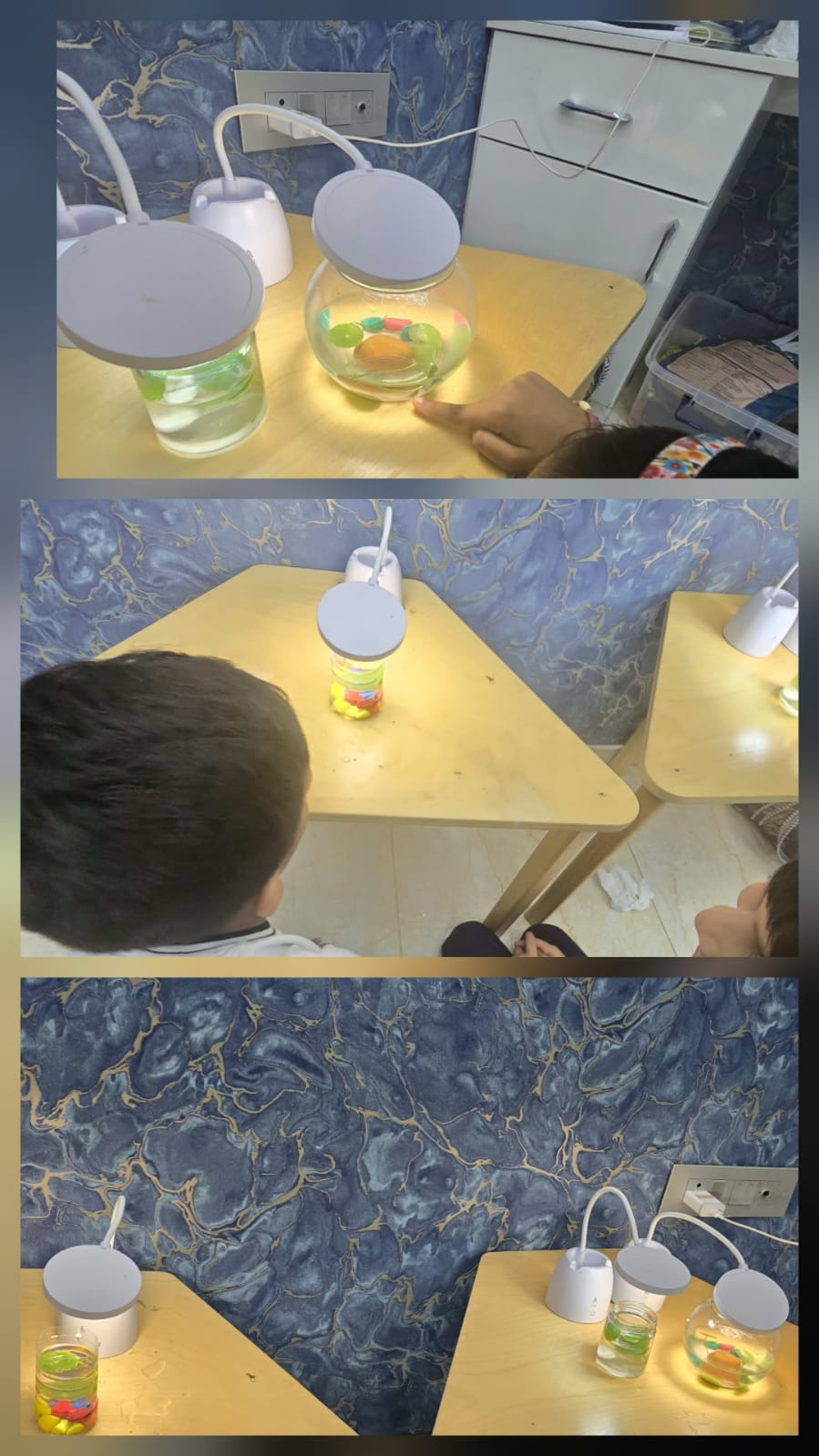
As a buddy activity, the children explored the aquatic bubble experiment. They observed tiny bubbles around the leaves under strong light and linked this to the oxygen released during photosynthesis.
The children also recalled that humans and other living things release carbon dioxide, while plants release oxygen. They discussed why oxygen was important for people and animals.
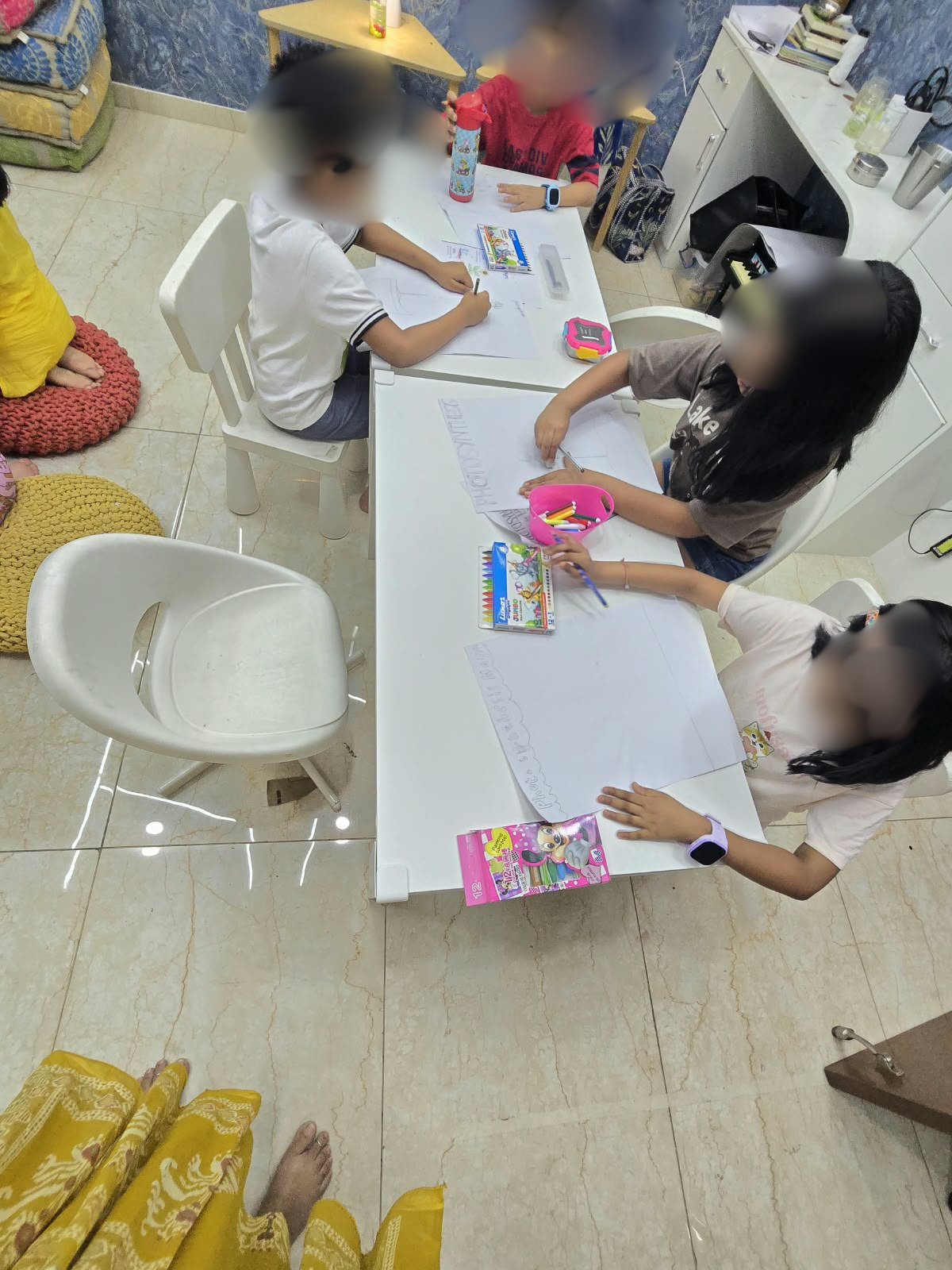
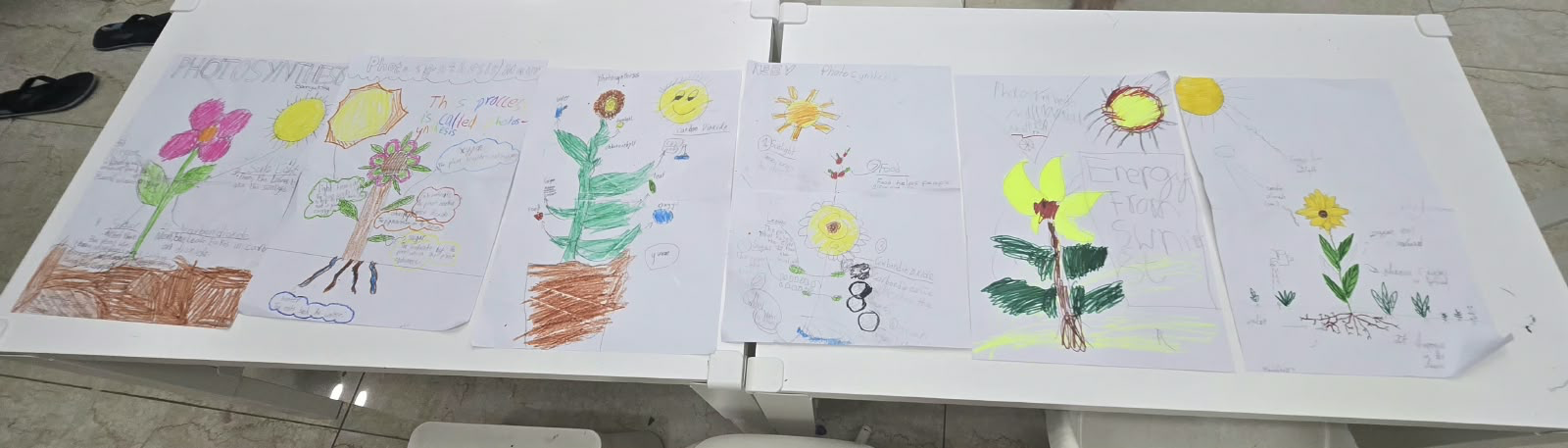
To showcase their learning, the children created A3 photosynthesis posters, using drawings and labels to represent sunlight, water, carbon dioxide, food and oxygen.
Maira – 6 years old
Yuvaan – 7 years 11 months old
Neev & Mayra – 8 years old
Samyuktha & Havishka – 8 years 4 months old
And Finally…
Dear reader,
My work in education includes designing learning ecosystems where students thrive, teachers grow, and schools build lasting cultures of excellence through innovative curriculum, evidence-based practice, and meaningful educational leadership.
Professional development with Ms Niv : Click below to find the teacher and student workshops and trainings I currently offer:
https://docs.google.com/presentation/d/1ypWO8KpVh56vhYqAMH4XoytLRKMXvwpCAfv3l3fryJQ/edit?usp=sharing
3-2-1 Tuesdays with Ms. Niv is a newsletter you can subscribe to and enjoy your learning journey with me.