Nivedita Mukerjee
Education consultancy for parents and schools
3-2-1 Tuesdays with Ms Niv
Issue #325, 22nd September 2026
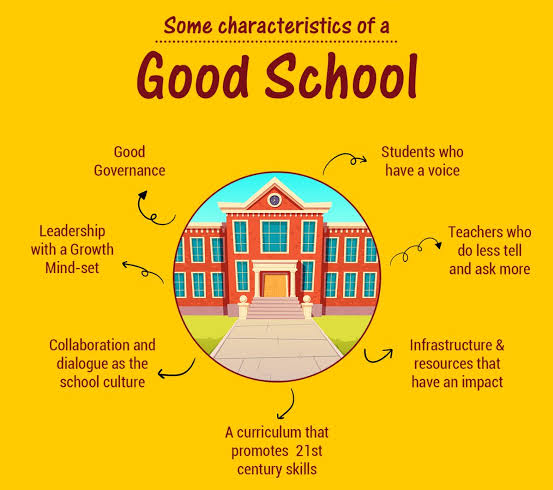
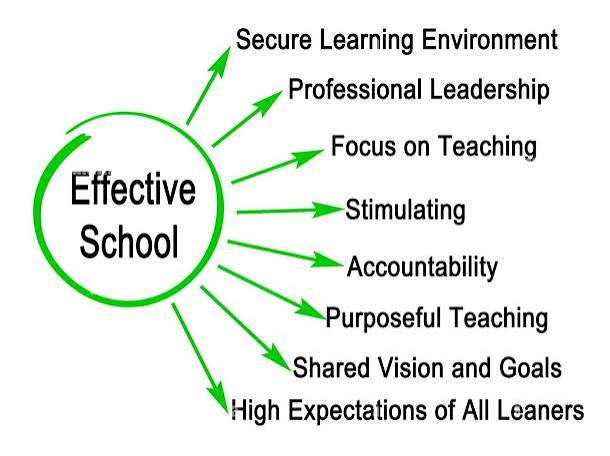
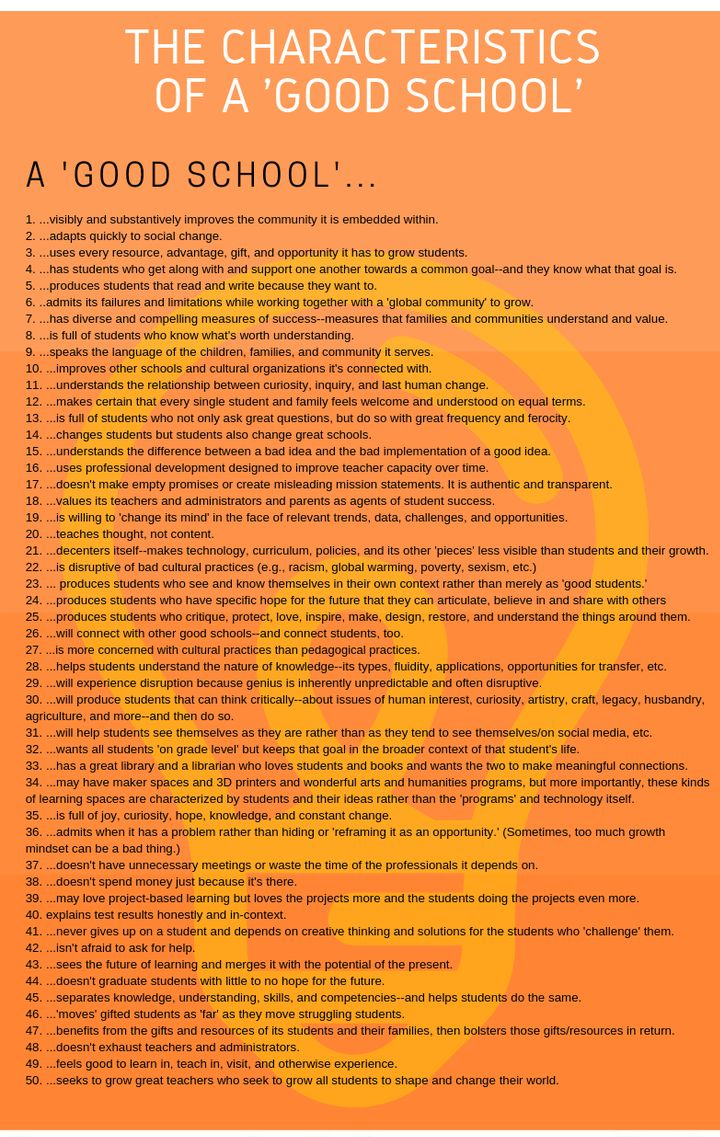
It is a long-term game for countries to invest in education and educational skills. What does good education look like? What does a good school look like? Is there an essentials list for an educational institution, apart from board affiliation and/or board results?
How do you, as a teacher, choose a school to work in? How do you, as a parent, choose a school for your child’s admission? Do you apply different criteria to choose the school when your child is going to a preschool? A primary school? A middle school? A secondary school? or a tertiary educational institution?
What kind of difference does teacher training brings to the quality of teaching-learning environment in an institution of learning? What role do school owners and leaders have in ensuring that teaching reaches all children? What is the overarching role of education policy and government?
This is a free newsletter for parents, educators, and students. If you like my content, please subscribe by entering your email address here.
Three Images of the Week
Two Thoughts of the Week
Children have to be educated, but they have also to be left to educate themselves. – Ernest Dimnet
Education is the most powerful weapon which you can use to change the world. – Nelson Mandela
One Video of the Week
Every few years, countries around the world compete in global rankings to see which nation is deemed to have the best school system in the world. Schools in Asia often get the best results, and other countries like Estonia and Canada are also highly praised. But in many parts of the world there are often huge barriers to getting children into the classroom at all, such as poverty, climate change, and war.
On this episode of The Global Story, Lucy Hockings speaks to the BBC’s Sean Coughlan and Professor John Jerrim, from University College London, about which countries have the most successful education systems in the world and what others can learn from them.
Reading with Ms Meenu: Tip of the Week
Child Reading Literacy and the Role of Public Libraries
Learning to read happens in many places.
Children develop literacy skills at school, at home, with caregivers, and through everyday experiences. But another institution plays an important role in connecting many of these environments: the public library.
Public libraries provide much more than shelves of books. They offer children free access to reading materials, literacy programs, trained staff, digital resources, and spaces where reading can become a regular and enjoyable part of life. They also help parents and caregivers support literacy at home and connect schools, families, and community organizations around a shared goal.
A 2026 report commissioned by the Institute of Museum and Library Services (IMLS) examined research on children’s reading engagement and the role public libraries play within the broader literacy ecosystem. The findings suggest that libraries can support literacy in several interconnected ways—not only by providing books, but by helping create the conditions that encourage children to become engaged readers.
Reading Engagement Is About More Than Reading Ability
When we think about literacy, it is easy to focus on whether a child can read the words on a page.
But reading engagement includes much more.
An engaged reader is interested in reading, motivated to continue, willing to choose books independently, and able to make reading part of everyday life. Developing these habits can be important because children need opportunities to actually use their reading skills.
A child may learn how to decode words in school, but becoming someone who voluntarily picks up a book requires motivation, access, confidence, and positive experiences with reading.
This is where libraries can make a meaningful contribution.
Unlike many formal learning environments, the public library allows children to explore books according to their own interests. They can move between fiction, nonfiction, graphic novels, audiobooks, comics, magazines, and digital materials without every reading experience being attached to a grade or assignment.
That freedom can help reading become something children choose rather than something they are simply required to do.
Libraries Put Reading Within Reach
Access is one of the most fundamental ways libraries support literacy.
Buying books can be expensive, particularly when children quickly move between reading levels and interests. Public libraries give families access to large collections without requiring them to purchase every book a child wants to explore.
That matters because developing readers often need variety.
A child might borrow a stack of books and discover that only one truly captures their attention. That is not necessarily a failure. It is part of discovering what kind of reader they are.
The IMLS report describes public libraries as resource hubs within the literacy ecosystem. Libraries provide books, multimedia materials, technology, physical spaces, and other resources that children and caregivers can use to support reading engagement.
The result is something difficult to replicate with a small collection at home: choice.
And choice can be a powerful motivator.
Libraries Turn Reading Into an Experience
Providing books is only one part of the library’s role.
Libraries also act as direct service providers, offering programs designed to encourage children to interact with books and literacy. These can include summer reading programs, storytimes, book discussions, tutoring, reading clubs, family literacy activities, and other events.
Previous research reviewed by IMLS found promising results from approaches involving read-aloud activities, book discussions, social interaction, support from adults, and community participation. These strategies can help strengthen both children’s reading skills and their motivation to read.
This social side of reading can be particularly important.
A child listening to a librarian dramatically read a picture book is not simply hearing words. They are seeing how stories work, listening to fluent reading, learning vocabulary, asking questions, and sharing the experience with other children.
A teenager participating in a book club is practising comprehension while also learning that reading can create conversation and connection.
Libraries can therefore help transform reading from an isolated academic activity into a social and enjoyable experience.
Supporting the Adults Who Support Children
Children’s literacy development does not stop when they leave school or the library.
Caregivers play an important role in creating environments where reading is encouraged at home. Yet not every parent knows which books are appropriate, how to encourage a reluctant reader, or what kinds of activities can strengthen early literacy.
Libraries can help bridge that gap.
Librarians can recommend books based on a child’s interests and abilities, introduce families to new authors and formats, and provide caregivers with information about reading development.
Storytimes and family literacy programs can also demonstrate simple practices adults can use at home—such as reading aloud, asking questions about a story, talking about pictures, or encouraging children to predict what happens next.
The IMLS research emphasizes that a healthy literacy ecosystem includes caregivers as well as libraries and other community organizations. It describes an effective system as one in which adults understand the importance of early reading and have access to the resources they need to encourage children’s engagement.
In other words, supporting children’s literacy sometimes means supporting the adults around them first.
Connecting Schools, Families, and Communities
No single organization can carry the entire responsibility for children’s literacy.
Schools provide formal reading instruction. Families provide daily encouragement and opportunities to practise. Community organizations may work with children who need additional support.
Libraries can help connect these different parts.
The IMLS report identifies a third important role for public libraries: acting as a convener of community organizations. Libraries can work alongside schools, early childhood programs, healthcare providers, nonprofits, and other organizations interested in children’s reading development.
A library might partner with a school to support summer reading. Another might distribute books through community organizations. A children’s librarian might work with early childhood educators or provide literacy materials that parents can take home.
These partnerships expand the reach of literacy initiatives beyond the library building itself.
This is what it means to think of literacy as an ecosystem. A child does not experience reading through one institution. Their habits are influenced by the combined environment created by families, teachers, librarians, peers, and the wider community.
Digital Reading Is Expanding the Library’s Role
The modern public library is also increasingly digital.
E-books, audiobooks, online databases, educational platforms, and other digital tools have expanded the ways children can access stories and information.
For some reluctant readers, these formats may make reading more approachable. Audiobooks can provide another way to experience complex stories, while e-books can make large collections accessible without requiring a physical visit to the library.
The IMLS review found that libraries have increasingly invested in resources such as e-books and audiobooks, often with the goal of reaching children who might otherwise be reluctant to read.
At the same time, the report highlights an important research gap. Although digital offerings have expanded, there is still limited evidence showing exactly how these resources are changing children’s reading engagement in public-library settings. More research is needed to understand which technologies are most effective, how children use them, and how libraries can combine digital and traditional resources successfully.
Technology therefore should not necessarily replace traditional reading experiences. Instead, it can provide another pathway into reading.
Libraries Can Help Make Reading More Equitable
Public libraries also have a distinctive advantage: their services are generally available without charge.
That makes them particularly important in communities where families may have fewer books at home or fewer opportunities to purchase educational resources.
A library card can open access to thousands of books, digital resources, educational programs, internet access, and knowledgeable staff.
The IMLS report describes public libraries as uniquely positioned to provide children and caregivers with opportunities to participate in reading and related activities at no cost.
However, the report also points to areas where more evidence is needed. Researchers still have important questions about how children’s engagement differs across communities, library systems, funding levels, and local circumstances.
Understanding those differences will be essential if libraries are to reach children who could benefit most from their services.
The Library as Part of a Bigger Picture
It would be unrealistic to expect libraries to solve children’s literacy challenges alone.
Reading development is influenced by education, family circumstances, access to resources, motivation, language, community support, and many other factors.
But public libraries occupy a valuable position within that larger system.
They can provide the books.
They can provide the space.
They can introduce a child to a librarian who knows exactly what book might capture their imagination.
They can show a parent how to make reading part of bedtime.
They can organize a summer reading program that keeps children engaged when school is out.
And they can bring together schools, families, and community organizations that might otherwise work separately.
The 2026 IMLS research ultimately presents public libraries as having three connected roles in children’s literacy: resource hub, direct service provider, and community convener.
Those roles reinforce one another.
A library cannot guarantee that every child who walks through its doors will become a lifelong reader. Research is still needed to determine which approaches produce the strongest outcomes and for whom.
But libraries can create something equally important: opportunity.
They can make books easier to find, reading easier to begin, and literacy something supported not only by schools, but by an entire community.
And sometimes a lifelong relationship with reading begins with something as simple as giving a child the freedom to choose the next book.
Happy Reading!
For more information, please visit: placealibrary.ca
Meenu Gera, Consulting Home and School Library Reading Guide
I Think, I Wonder, I Ask
–Dr. Shreelakshmi Subbaswami, Academic Director, Vijaya School, Hassan, Karnataka; https://vijayaschoolhsn.in/
In the Age of AI, Does Memorizing Still Matter?
Should our children still be memorising mathematical facts, formulas, identities, tables, physics concepts and biological facts in the age of AI?
In a recent interaction with students after their assessments, I noticed a strong resistance to learning some of the facts we once learnt by heart. Their question was simple- “Why should I learn this when I can just ask AI?”
I think, they are right in a way. We do not need to memorise everything. Many facts we once carried in our heads can now be accessed in seconds. But does that mean we should stop building knowledge in our memory? I don’t think so.
Think about a doctor. Knowing medicines, symptoms allows a doctor to think and respond without stopping to search for every piece of information. A musician needs scales and patterns at their fingertips. An architect needs measurements and spatial relationships. A programmer needs to know basic structures and concepts. A lawyer needs familiarity with laws, a teacher needs knowledge of children, curriculum and pedagogy readily available while making decisions.
The point is not memorisation for the sake of memorisation. Memorisation without understanding is rote learning. But when we understand and practise something enough for it to become part of our memory, we are able to retrieve that knowledge when we need it. In that sense, retrievable knowledge becomes a foundation for higher-order thinking. When we have essential knowledge readily available, we have more space to make connections, ask better questions, solve problems and think beyond the obvious.
As educators, when we look at a syllabus, we need to ask, “What is important enough for children to know deeply and retrieve with ease, and what can we confidently leave to the machine?” rather than simply asking, “What should children memorise?”
Three questions for you…
- What knowledge is important enough for children to carry with them, even when AI can retrieve it in seconds?
- How can we distinguish between meaningful knowledge-building and memorisation for an examination?
- What should children understand before they are encouraged to outsource the answer to AI?
Showcase
Thrive, A STEAM project for young learners https://thrivesteam.com/
Facilitator: Pooja Kattar
Building and Testing Biodomes
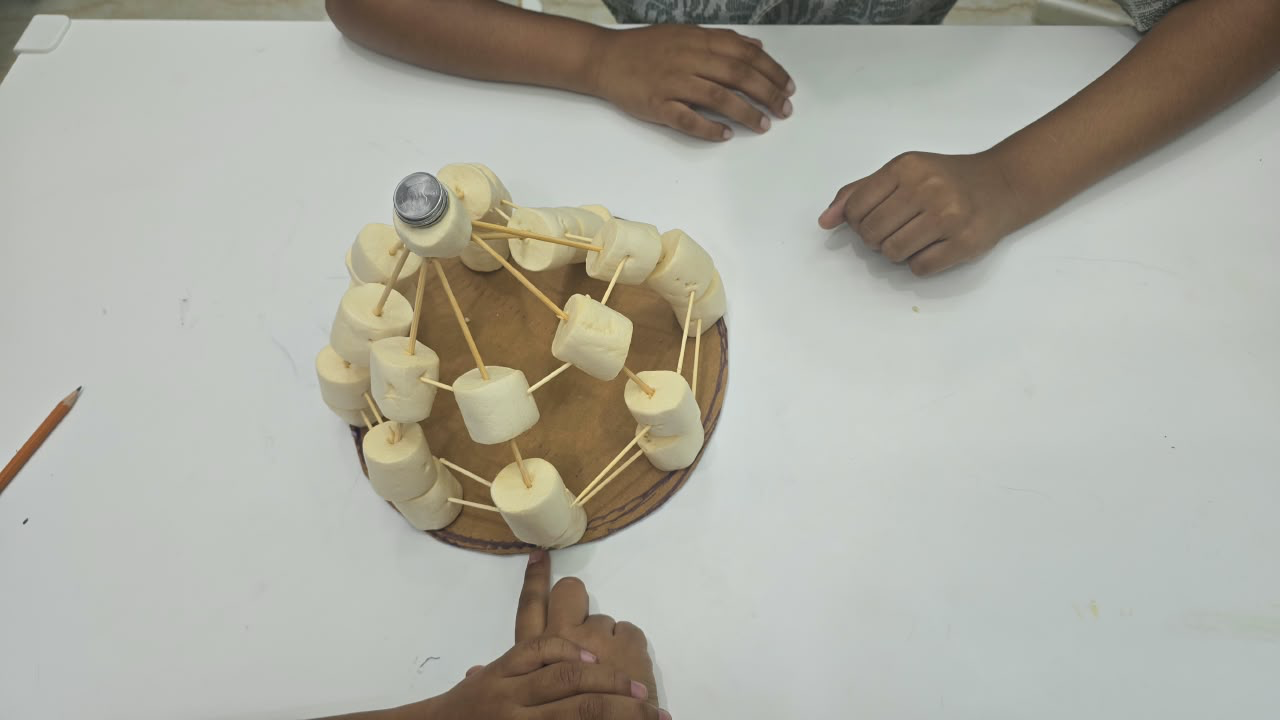
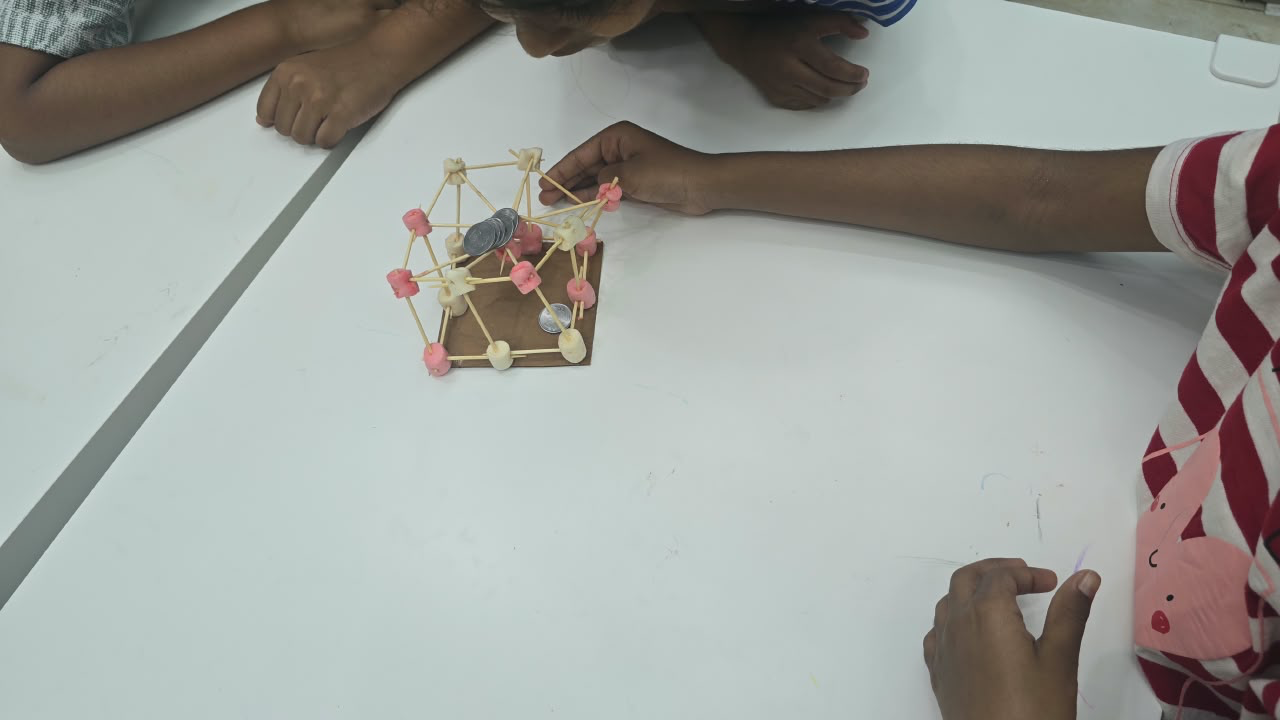
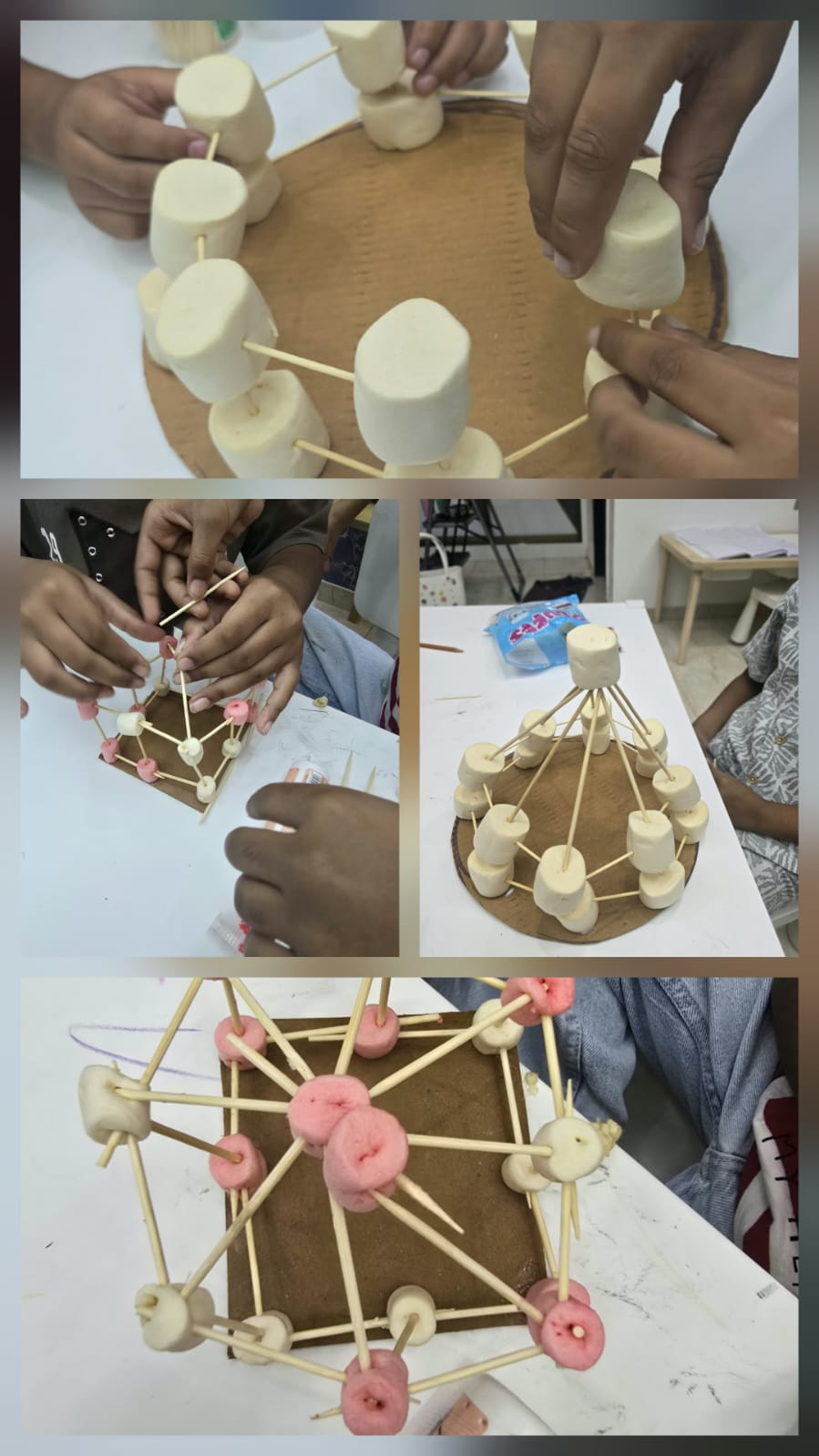
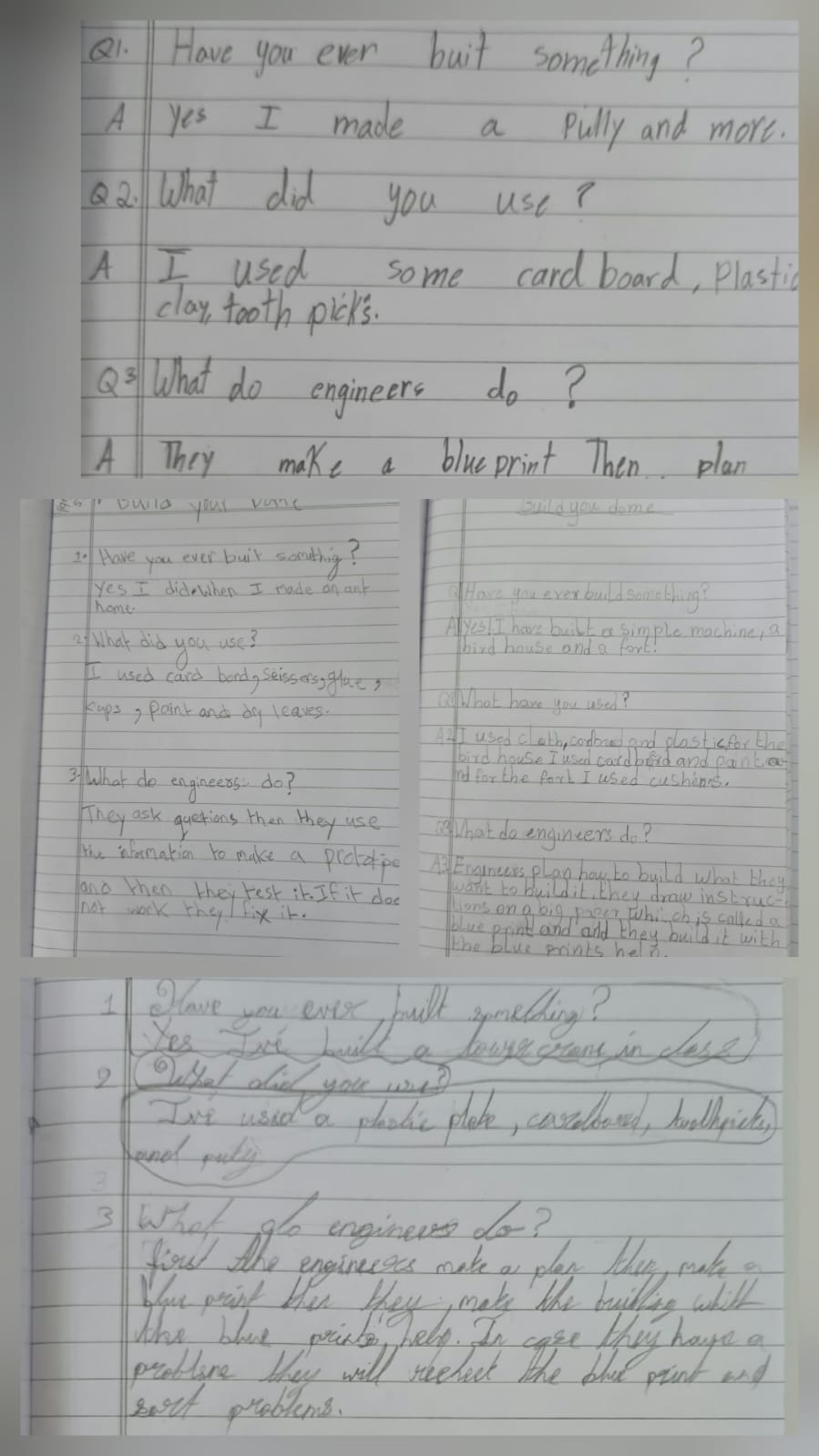
The children began by sharing their ideas about building, the materials they had used, and what engineers do. They then worked in two groups to build biodomes using toothpicks and marshmallows. One group created a circular dome, while the other built a square-based structure.
The children tested both structures by placing coins on them. The dome successfully held six coins, while the flat structure collapsed. Through this challenge, they discovered that shape and structure affect strength and stability, and that dome-shaped structures can spread weight more evenly.
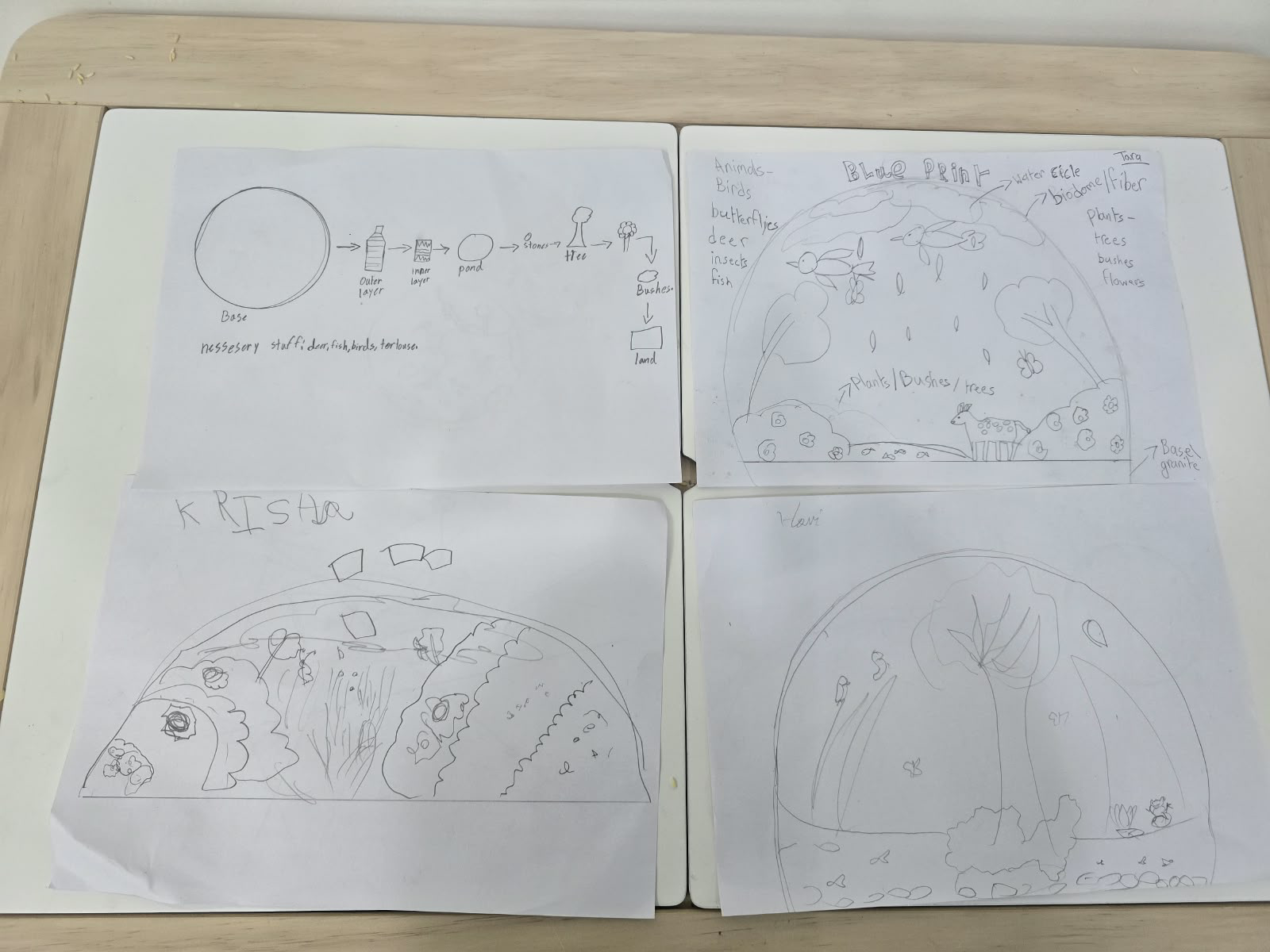
The children concluded the workshop by creating blueprints for their own biodomes, applying what they had learned about planning, building and testing designs.
Children: Krisha :4 years 4 months. Tara 7 years. Yuvaan 7 years 11 months. Havishka and Samyuktha 8 years 5 months.
And Finally…
Dear reader,
My work in education includes designing learning ecosystems where students thrive, teachers grow, and schools build lasting cultures of excellence through innovative curriculum, evidence-based practice, and meaningful educational leadership.
Professional development with Ms Niv : Click below to find the teacher and student workshops and trainings I currently offer:
https://docs.google.com/presentation/d/1ypWO8KpVh56vhYqAMH4XoytLRKMXvwpCAfv3l3fryJQ/edit?usp=sharing
3-2-1 Tuesdays with Ms. Niv is a newsletter you can subscribe to and enjoy your learning journey with me.