Nivedita Mukerjee
Education consultancy for parents and schools
3-2-1 Tuesdays with Ms Niv
Issue #326, 29th September 2026
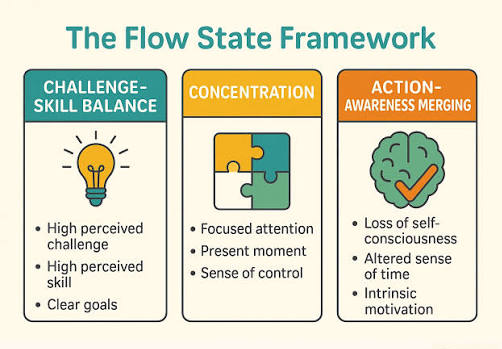
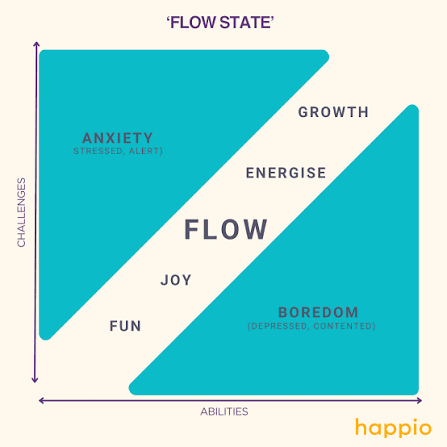
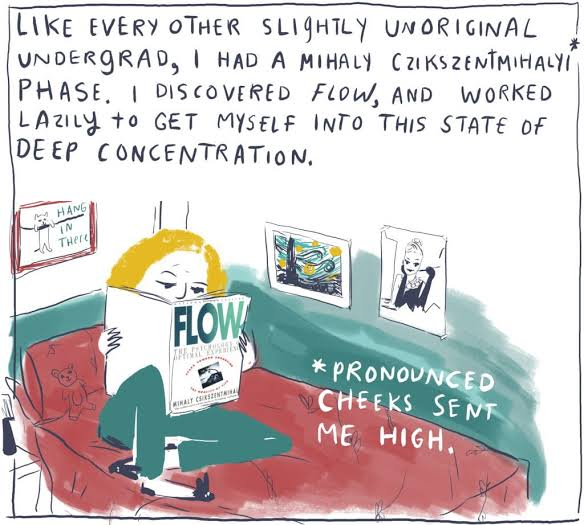
We are all students and teachers and thus have so much to learn from as well as teach each other about the positive power of flow. When was the last time you felt ‘Flow’? A fun way to feel more positive, get more done and get past our struggles with least anxiety and more joy?
This is a free newsletter for parents, educators, and students. If you like my content, please subscribe by entering your email address here.
Three Images of the Week
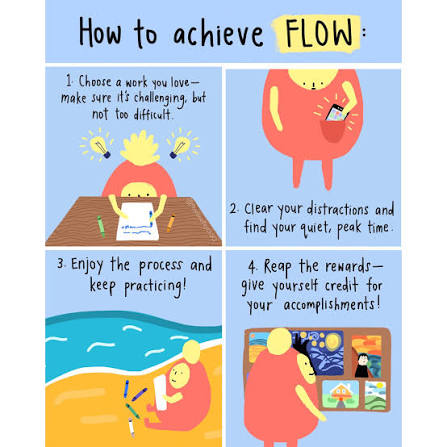
Two Thoughts of the Week
“Spend more time doing things that make you forget about the time.”
― Charlotte Eriksson
“Doing activities that you love to do, even a few minutes a day, can help you experience more flow, improve your well-being, and help you share your unique gifts with the world.”
― Laurie E. Smith
One Video of the Week
Mihaly Csikszentmihalyi explores how entering a state of complete engagement, or flow, transforms everyday activities into meaningful experiences. Through psychological research, they explain how balancing personal skills with challenges leads to heightened satisfaction and creativity.
Reading with Ms Meenu: Tip of the Week
‘I Can’t Afford to Buy All the Books I Read’: What Public Libraries Offer Leisure Readers
For frequent readers, buying every book they want to read can become expensive very quickly. Public libraries make reading more affordable while also giving people access to a much wider range of books, audiobooks, magazines, and digital materials.
Research by Philip Hider found that cost was one of the main reasons leisure readers used public libraries. Many participants simply read too much to justify purchasing every book. Borrowing allows readers to explore new authors, genres, and subjects without worrying about wasting money on something they may not enjoy.
Libraries also make discovery easier. Displays, staff recommendations, book clubs, and large collections help readers find books they might never have searched for themselves. Because borrowing is low-risk, readers can experiment more freely and become more adventurous in what they read.
The benefits go beyond entertainment. Participants in the study said leisure reading helped them learn new information, relax, gain new perspectives, and improve their literacy. Fiction and nonfiction alike can introduce readers to unfamiliar places, experiences, ideas, and ways of thinking.
Libraries also offer a more sustainable model of reading. One physical book can be shared by dozens of people rather than every reader needing to purchase their own copy. E-books and audiobooks further expand access by allowing people to read in different formats and from different locations.
For many participants, reading was not simply another hobby. It was an important part of their everyday lives.
Public libraries help make that reading life possible. They reduce financial barriers, provide choice, encourage discovery, and ensure that access to books does not depend on a person’s ability to buy them.
In the end, libraries do more than lend books. They make reading accessible to everyone.
Happy Reading!
For more information, please visit: placealibrary.ca
Meenu Gera, Consulting Home and School Library Reading Guide
I Think, I Wonder, I Ask
–Dr. Shreelakshmi Subbaswami, Academic Director, Vijaya School, Hassan, Karnataka; https://vijayaschoolhsn.in/
A good thematic exploration is when different disciplines come together to create a holistic learning experience for children. Literacy, numeracy, science, social science and art do not have to be learnt in isolation. Children can explore a big idea through the lens of different subjects, making connections along the way.
In the primary years, understanding the world has traditionally focused on learning facts and listening to teacher-led explanations. Inquiry-based learning, although not new to education, can appear easier to implement than it actually is.
The real shift is in the teacher’s mindset. Inquiry requires teachers to trust that children can learn when meaningful experiences are created for them. It requires us to change the questions we ask, move away from giving ready-made explanations and create space for children to observe, wonder, question, investigate and make sense of what they discover.
This is not always easy. We are so accustomed to explaining concepts that allowing children to struggle, explore and arrive at their own understanding can feel uncomfortable. There are no shortcuts to inquiry-based teaching. It requires patience, thoughtful planning and, most importantly, a willingness to give children agency.
Our thematic exploration of plants showed us this clearly. Children were not simply learning about plants; they were observing, questioning, connecting and confidently expressing their understanding. The learning went much deeper because they were part of creating it.
Three questions for you…
- How can we support teachers shift from explanation to facilitation?
- What strategies can help inquiry become a daily practice rather than an occasional activity?
- In what ways can we recognise and work through the hurdles teachers face while implementing inquiry-based learning?
Showcase
Thrive, A STEAM project for young learners https://thrivesteam.com/
Facilitator: Pooja Kattar
From Blueprint to Biodome
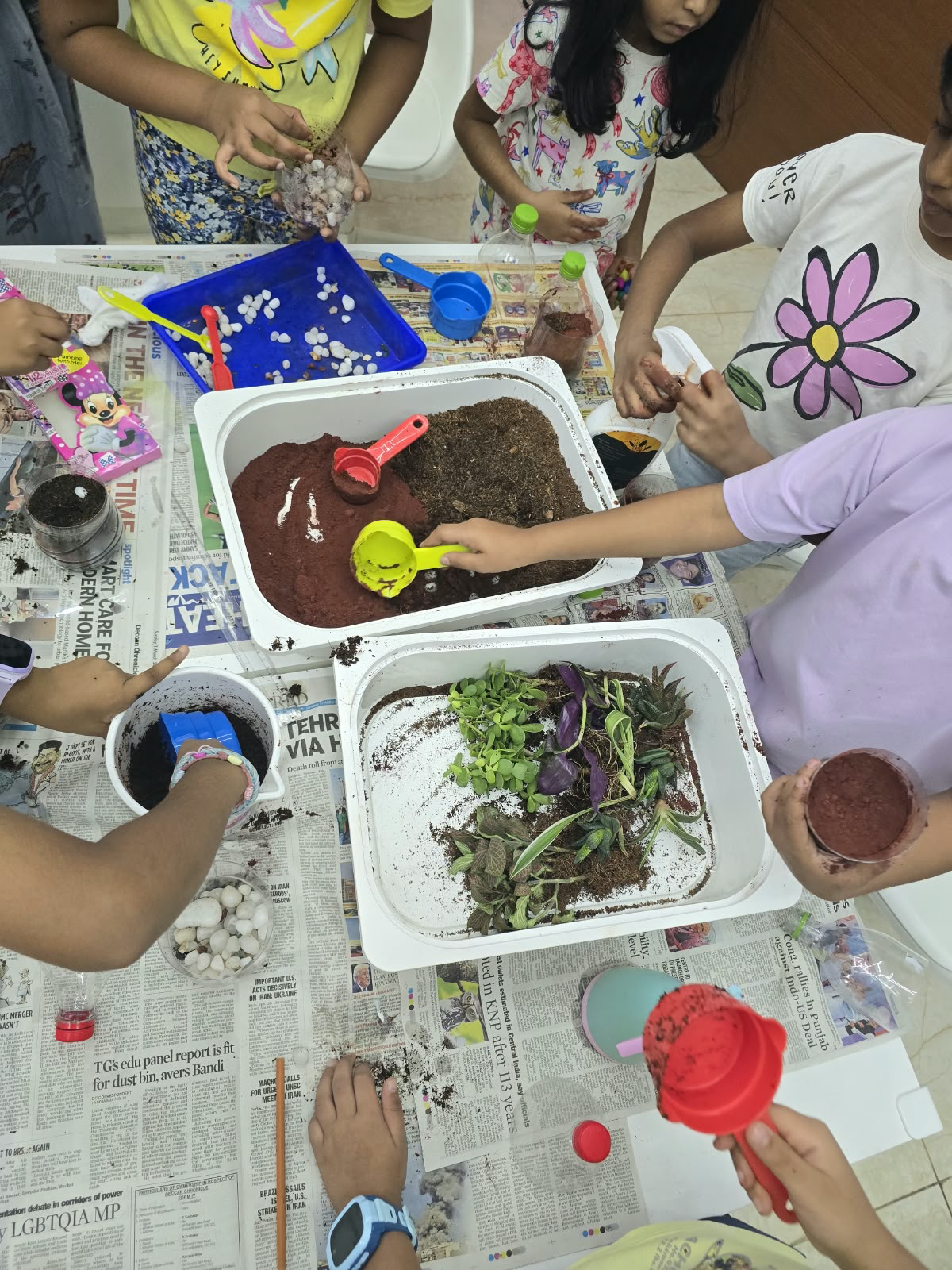
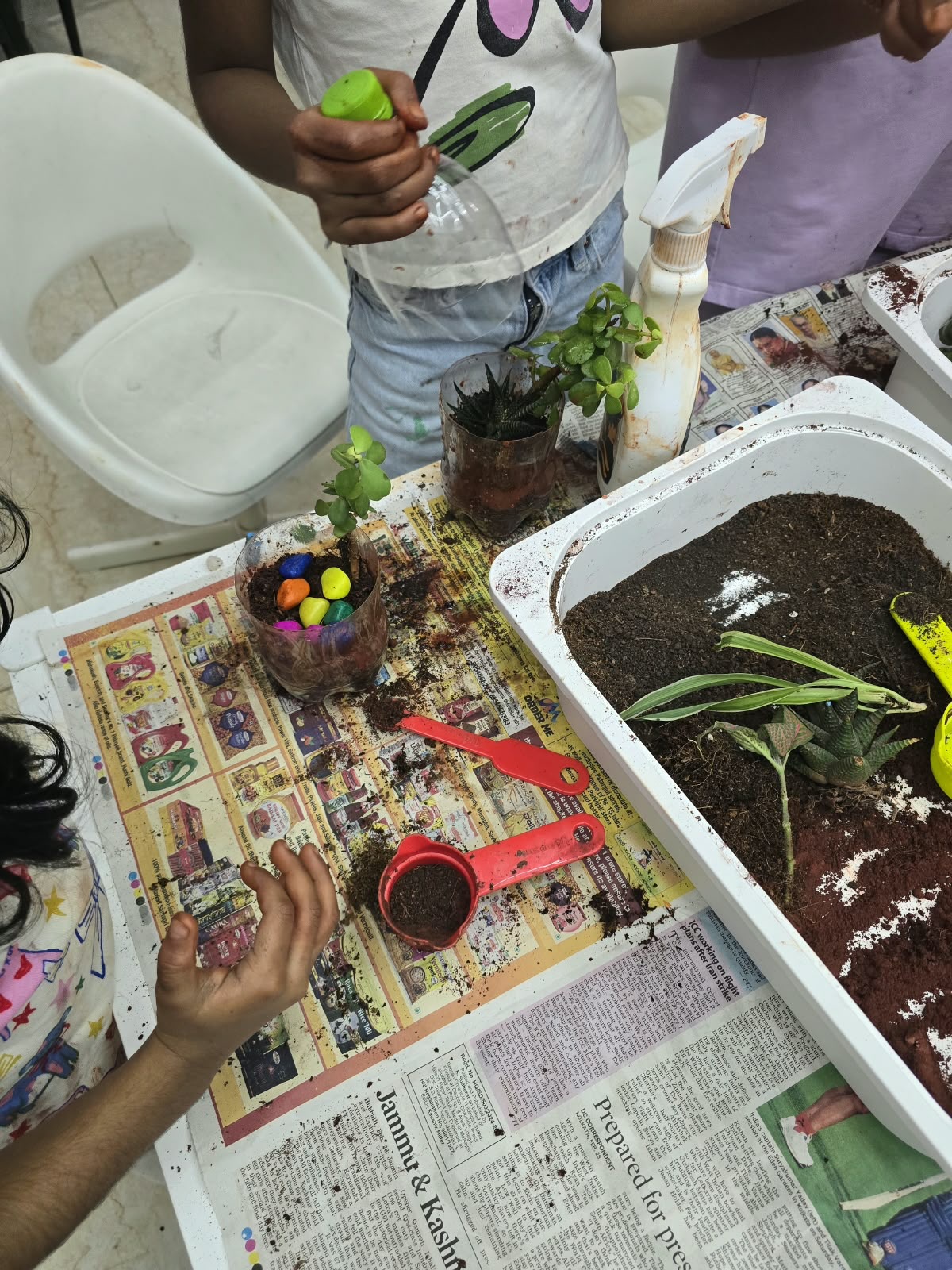
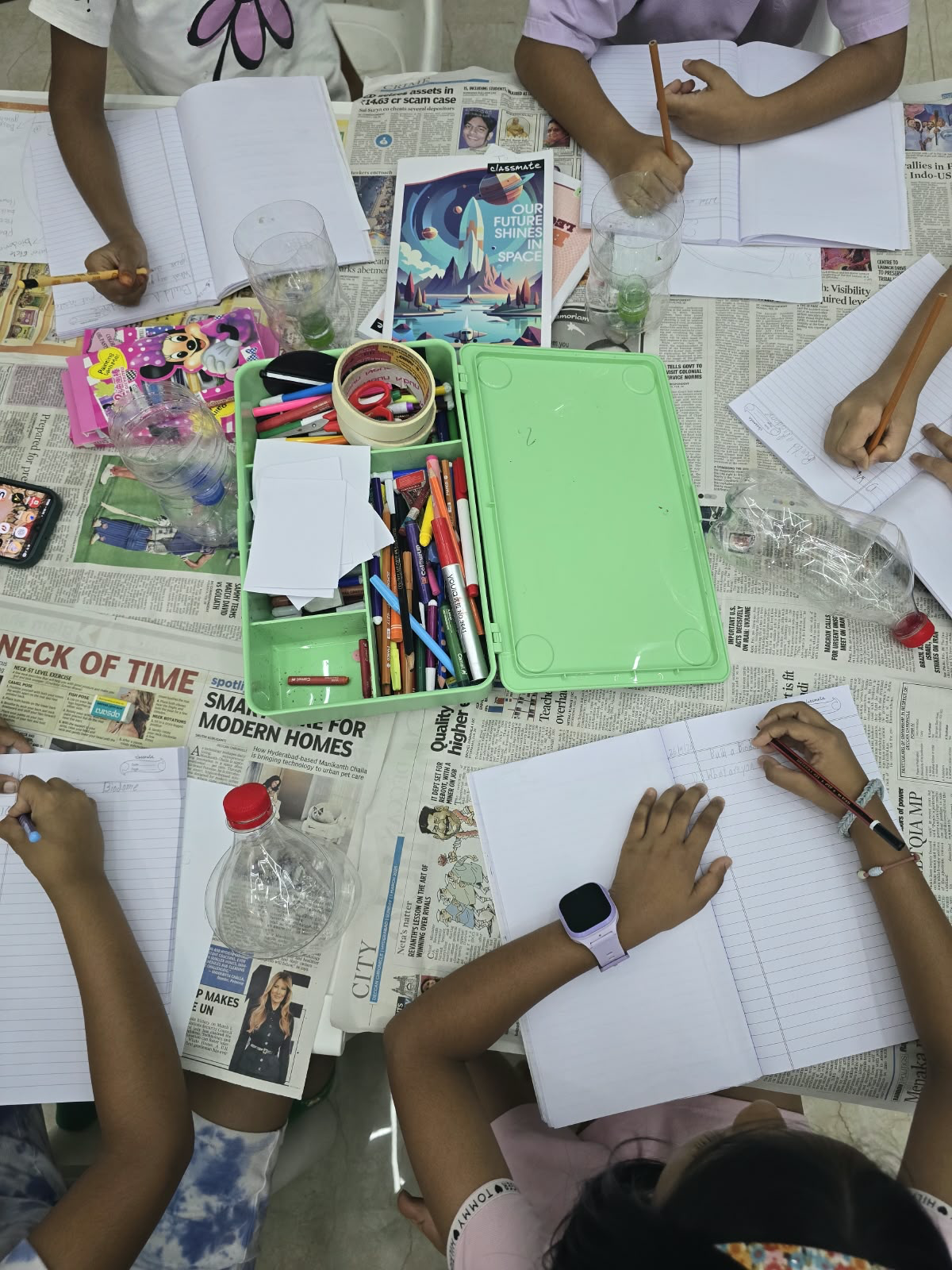
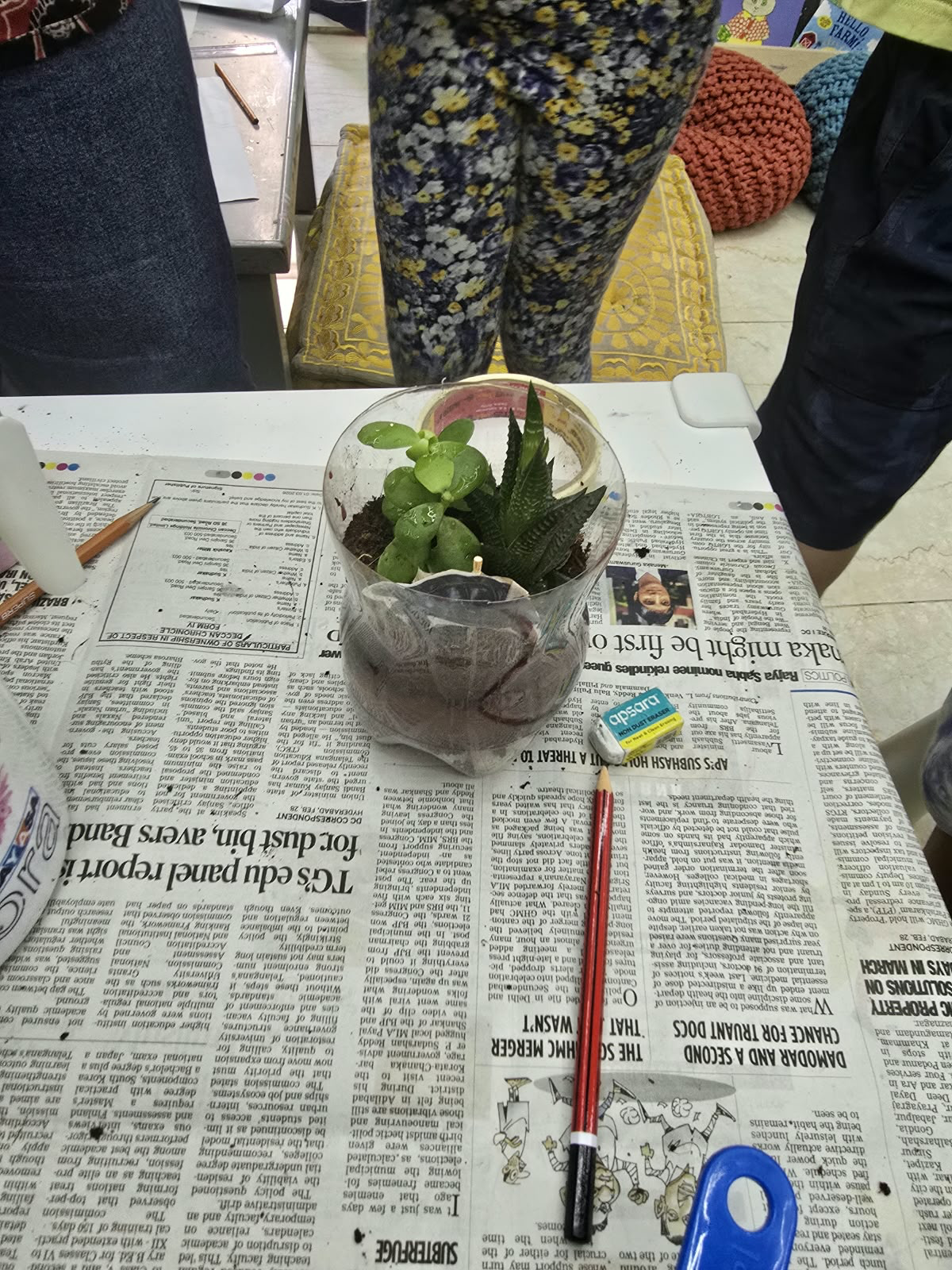
Building on their earlier experience of creating a mini biodome in jars, the children now explored how they could use old recycled plastic bottles to create a larger biodome model.
The children brought their previous learning about plants, soil, water, habitats and ecosystems into this activity. They remembered that plants need water, air and sunlight to grow and discussed why different materials were needed. They shared that gravel helped with drainage and soil provided a place for the plant to grow.
The children also thought about animal habitats while deciding where to place their animal models. They shared ideas such as, “The animal needs water,” “It needs a safe place to live,” and “It needs food.”
They referred to the blueprints they had created earlier and tried to follow their plans while building. When something did not work, they made changes and tried again. They also recalled their earlier learning about the water cycle and discussed how water could move within the biodome.
Through this hands-on experience, the children extended their understanding of living and non-living things, plants, animals, habitats, water and interdependence and applied their previous learning to create a new biodome model.
Krisha – 4 years 5 months
Maira Reddy – 6 years
Tara – 7 years
Yuvan, Mayra & Neev – 8 years
Havishka – 8 years 5 months
And Finally…
Dear reader,
My work in education includes designing learning ecosystems where students thrive, teachers grow, and schools build lasting cultures of excellence through innovative curriculum, evidence-based practice, and meaningful educational leadership.
Professional development with Ms Niv : Click below to find the teacher and student workshops and trainings I currently offer:
https://docs.google.com/presentation/d/1ypWO8KpVh56vhYqAMH4XoytLRKMXvwpCAfv3l3fryJQ/edit?usp=sharing
3-2-1 Tuesdays with Ms. Niv is a newsletter you can subscribe to and enjoy your learning journey with me.